
Cuba’s former president Raúl Castro emerged from relative seclusion to mark his 95th birthday, making his first public showing since facing criminal charges from the United States related to a deadly 1996 aircraft incident, according to official footage released Saturday.
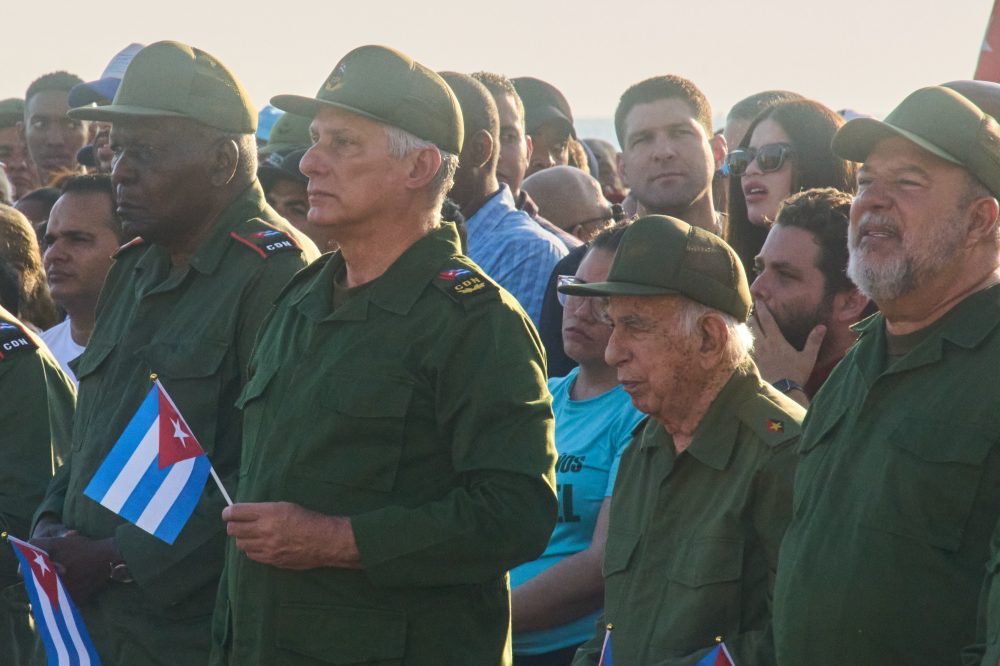
The birthday gathering with senior government figures and military commanders at Havana’s Ministry of Interior on Friday evening provided Cuba’s leadership with a chance to demonstrate solidarity and show resistance against mounting pressure from the Trump administration targeting the economically struggling nation.
Official television coverage showed Castro wearing his signature olive-green military attire as he walked into a crowded auditorium to enthusiastic applause, accompanied by his grandson and security detail member Raúl Guillermo Rodríguez, along with current Cuban President Miguel Diáz-Canel.
Diáz-Canel offered glowing remarks about the “heroism and dignity” shown by Castro and his deceased brother, the key leader of Cuba’s revolution, Fidel Castro. He commended Raúl Castro, who held Cuba’s defense minister position for almost five decades, for his “courage and loyalty (that) made him a target from a very early age for the intelligence services of our enemies.”
Addressing recent provocations from the Trump administration more directly, Diaz-Canel cautioned that “there will be a decisive and resolute battle” should the United States follow through on invasion threats against the island nation.
“Raúl is Raúl,” he declared, repeating the phrase that has been displayed on signs throughout Havana and spread widely on social media platforms following the May 20 US criminal charges against Raúl Castro for murder — seemingly designed to rally national solidarity against the government’s perceived isolation. “Raúl is Cuba, and Cuba is untouchable.”
The Friday evening festivities, held two days following Castro’s 95th birthday, represented an uncommon public showing for the reserved yet powerful Cuban military leader. Despite officially stepping away from political roles in April 2021, Castro reportedly maintains significant political influence.
Last month’s unsealed Justice Department charges allege Castro directed the 1996 destruction of civilian aircraft operated by Miami-based Cuban exiles. This represents the most serious escalation in a series of confrontations since the Trump administration effectively eliminated Cuba’s oil access in January, worsening the island’s ongoing difficulties including power outages and healthcare system strain.
The Trump administration is calling for Cuba’s socialist leadership to free political detainees, enact substantial economic changes and alter its governing approach to prevent becoming a national security concern. Cuban officials maintain they present no danger to the United States.