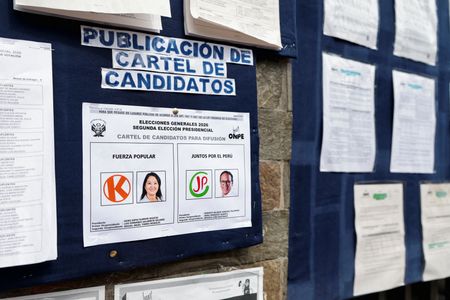

Citizens of Peru headed to polling stations Sunday for a closely contested presidential runoff that could determine whether the South American nation joins a regional conservative movement or stands against it by selecting a leftist leader who has caused market concerns.
The choice comes down to two candidates: conservative Keiko Fujimori, whose father Alberto Fujimori served as a hardline president before being imprisoned for human rights violations, and leftist Roberto Sanchez, a cowboy-hat wearing politician who mirrors the rural messaging of jailed former President Pedro Castillo.
Recent polling data indicates both contenders are locked in a virtual dead heat.
The broader region has witnessed a conservative wave, with Chile, Argentina, Costa Rica and Ecuador all selecting right-wing leaders in recent contests, while Bolivia brought an end to twenty years of socialist governance in its most recent presidential race.
Crime has emerged as the dominant concern among Peruvian citizens surveyed by pollsters. Murder and extortion statistics have skyrocketed, sparking widespread demonstrations and ultimately leading to the removal of former President Dina Boluarte from office.
After previously attempting to separate herself from her father’s authoritarian and hardline crime-fighting approach, Fujimori secured first-round victory in April by embracing his political heritage. She drew parallels between his campaign against left-wing Maoist rebels and today’s battle against criminal organizations.
“We remember her father’s legacy and he built a good government. He ended terrorism; he ended hyper-inflation,” stated Willy Policarpo, 44, an independent worker and longtime “Fujimorista” who made the journey from the central Huancayo region to attend Fujimori’s Thursday campaign finale.
This marks Fujimori’s fourth appearance in a presidential final round. During the 2021 race, she suffered defeat by approximately 45,000 votes, representing slightly more than 0.2%, against Castillo.
Sanchez aims to duplicate Castillo’s success by concentrating on Peru’s second major political concern: economic disparity and the enormous socioeconomic gap separating the capital city of Lima from outlying rural areas.
His platform includes sweeping changes such as drafting a new constitution, restructuring mining agreements, and increasing rural investment. These proposals have found support among various groups, including the nation’s expanding informal mining community, though they have created market anxiety. Peruvian equities declined Friday as polling showed his campaign strengthening to match Fujimori’s support levels.
Political tensions remain elevated following a turbulent first round that generated fraud allegations and protest threats from both sides. The eventual winner must also navigate a divided congress that has removed three presidents over the past five years.
Voting begins at 7 a.m. local time and concludes at 5 p.m. Initial results should emerge within three hours, though final official tallies may require several weeks to complete.