
SEOUL, South Korea — Chinese President Xi Jinping is scheduled to arrive in North Korea’s capital on Monday for his first visit to the country in seven years, marking a significant diplomatic move aimed at strengthening China’s special relationship with North Korea while offering economic and political advantages.
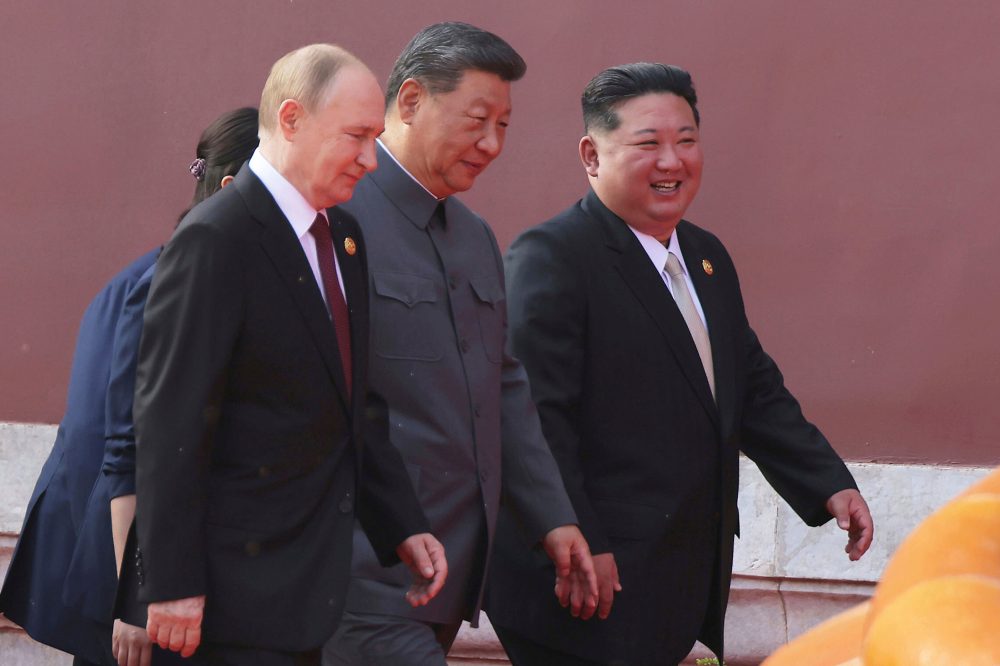
The Chinese leader will spend two days in the country meeting with North Korean leader Kim Jong Un. This will mark their first face-to-face discussion since their September meeting in Beijing, which took place after both attended a military parade alongside Russian President Vladimir Putin and other international leaders.
Officials have not released details about what topics will be discussed. International analysts expect the meetings will significantly impact relations between the two nations and have broader implications, as both countries work to rebuild their historic partnership while facing separate disputes with the United States.
“A Chinese leader doesn’t just visit North Korea because a visit is due. Xi’s trip will have real implications for China-DPRK relations,” said Leif-Eric Easley, a professor at Ewha University in Seoul, using the abbreviation for North Korea’s full name.
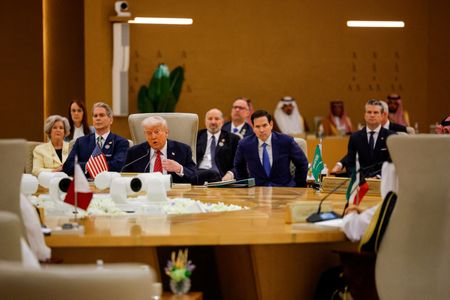
The visit follows Xi’s recent consecutive meetings with U.S. President Donald Trump and Putin in Beijing last month. Xi is scheduled to meet with Trump again during a planned U.S. visit in September.
Xi aims to showcase China’s “sway over the Korean Peninsula” and “a leadership role in entire Northeast Asia in the ages of strategic competitions with the U.S.,” said Kwak Gil Sup, the head of One Korea Center, a website specializing in North Korea affairs.
China has historically served as North Korea’s primary economic supporter and key diplomatic ally. The country is thought to have avoided completely implementing U.N. sanctions against North Korea and provided secret assistance to help its struggling ally survive economically. This year represents the 65th anniversary of when both nations signed a mutual defense agreement.
However, their relationship has faced scrutiny recently, as North Korea has focused on building closer ties with Russia by providing soldiers and weapons for Russia’s conflict in Ukraine. North Korea has received economic and military support from Russia in exchange.
Reestablishing exclusive control over North Korea would provide Xi with an advantage when dealing with Trump, who has consistently stated his interest in resuming diplomatic talks with Kim, according to experts.
“Implementing U.N. Security Council resolutions and enforcing sanctions do not appear to be priorities for China,” Easley said.
In a piece published in North Korea’s primary Rodong Sinmun newspaper Monday, Xi stated that China and North Korea should enhance strategic partnership and collaborate to resist “hegemonism and coercive politics” while working toward an organized multipolar world.
Xi will likely present Kim with economic assistance packages including rice and fertilizer shipments, renewed Chinese group travel to North Korea, and collaborative economic initiatives, according to analysts.
“North Korea can’t solely rely on Russia. It needs to align with China,” Kwak said.
In a Monday editorial, the Rodong Sinmun newspaper described Xi as “the most honored state guest,” noting that the capital’s streets “are filled with an atmosphere of friendship.”
Xi may also avoid pressuring Kim about North Korea’s nuclear disarmament and instead speak generally about peace and stability on the Korean Peninsula. This approach would be crucial for Kim, who desperately wants international acceptance as a nuclear weapons state to justify calls for removing U.N. sanctions against North Korea.
“Chinese officials have taken the position of not speaking publicly about denuclearization on the Korean Peninsula while still maintaining it as a long-term goal. Kim appears to want Xi to accept North Korea as a nuclear neighbor,” Easley said.
Last week, Kim revealed a new facility for producing nuclear materials and promised to strengthen the country’s nuclear capabilities “at an exponential rate.” He also watched sea trials of a new naval destroyer and demanded faster progress in developing a nuclear-equipped navy.
On Sunday, Kim’s sister and senior official, Kim Yo Jong, supported her brother’s position, describing U.S. efforts for North Korea’s denuclearization as an “escapist and anachronistic dream.”
Kim Jong Un has rejected American and South Korean proposals for negotiations and concentrated on expanding and modernizing his nuclear weapons program since his important diplomacy with Trump failed in 2019. The North Korean leader stated in September that he still maintained “good personal memories” of Trump but demanded the U.S. abandon its requirement for North Korea to give up nuclear weapons as a condition for restarting diplomacy.
Experts believe Kim would eventually seek arms reduction negotiations with the U.S. to secure benefits in exchange for partially giving up his nuclear arsenal.