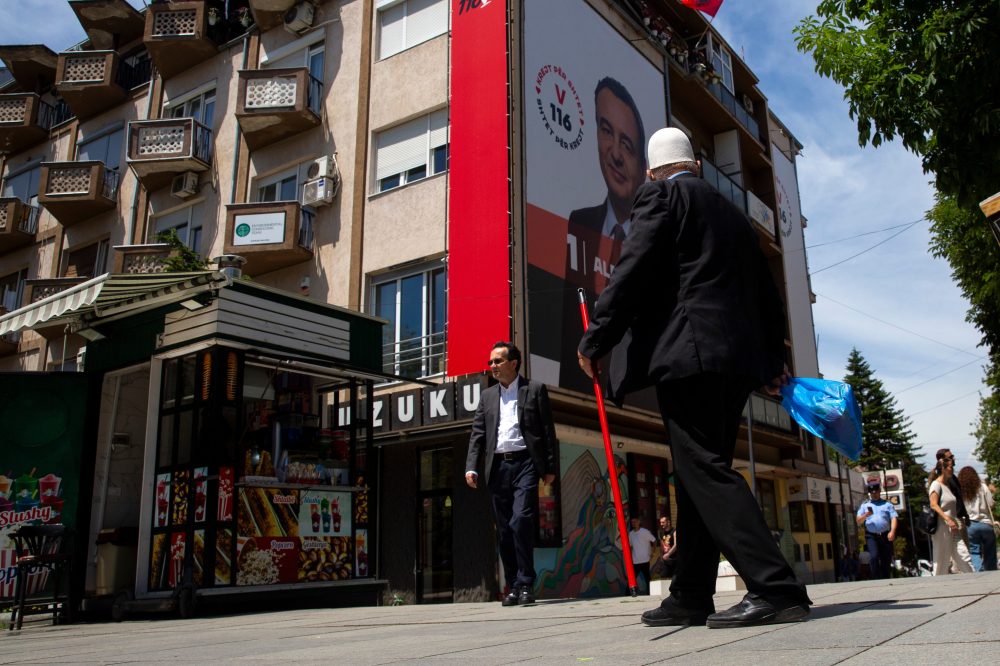

Citizens of Kosovo participated in another early parliamentary election Sunday, marking the third such vote in a year and a half as the small Balkan country struggles to break free from political gridlock while pursuing membership in the European Union and NATO.
The election became necessary when major political parties missed a March deadline to choose a successor for former President Vjosa Osmani. An initial election in February 2025 produced no clear results, leaving Kosovo without an operational government for most of the previous year and necessitating a December election.
This extended political turmoil has damaged Kosovo’s economic prospects, which were already struggling due to worldwide energy shortages and increased fuel costs. The nation, among Europe’s youngest and most economically disadvantaged, broke away from Serbia in 2008 following a 1998-99 conflict that concluded with NATO airstrikes forcing Serbian withdrawal.
The center-left Vetevendosje party, led by Prime Minister Albin Kurti, has maintained a solid parliamentary majority following December’s early election. However, selecting Kosovo’s president requires support from at least 80 members of the 120-seat assembly, demanding wider political cooperation.
Two primary opposition groups, the Democratic Party of Kosovo and the Democratic League of Kosovo, are contesting Kurti’s leadership, claiming he aims to dominate all government institutions throughout the nation.
Osmani, the former president, is campaigning with the opposition LDK faction in this election after breaking ties with Kurti when he declined to support her bid for another presidential term.
As political leaders point fingers over responsibility for the crisis, their failure to find common ground has disappointed Kosovo’s approximately 2 million eligible voters, who prefer government attention on economic issues and quality of life improvements.
Political experts predict minimal shifts in election results compared to December’s voting.
The absence of stable governance has prevented Kosovo from accessing EU and other international funding opportunities. European Council President Antonio Costa visited recently and called on Kosovo to resolve its political paralysis and focus on EU membership goals.
While the United States and most EU nations have recognized Kosovo’s independence, Serbia and its supporters, Russia and China, have not. Both Pristina and Belgrade face pressure to improve their relationship as a condition for advancing their respective EU membership applications.