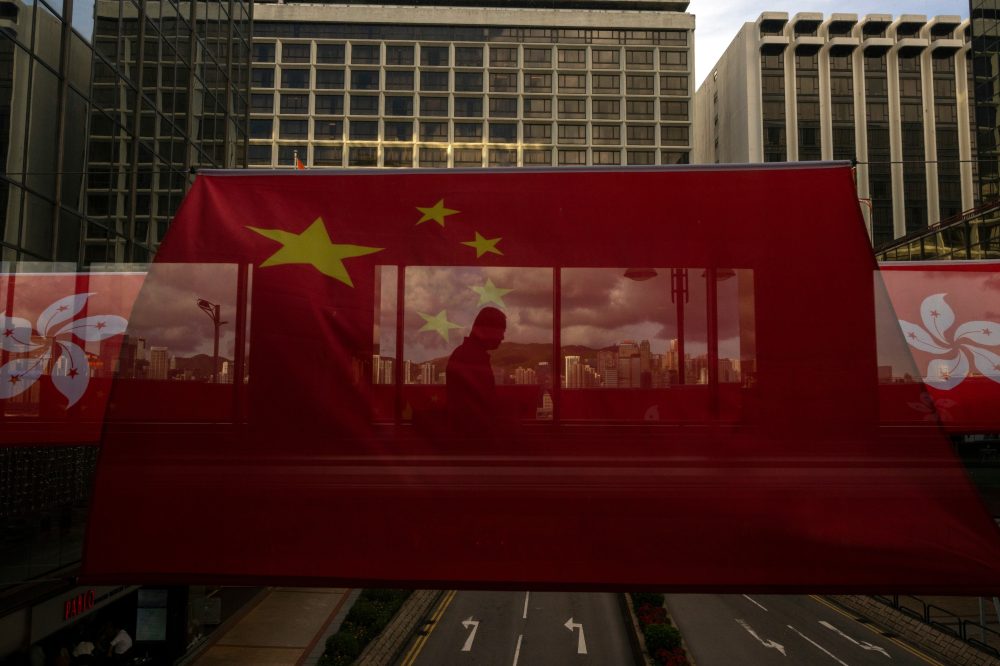

HONG KONG (AP) — Officials in Hong Kong unveiled new legislation Monday that would grant the city’s chief executive authority to classify specific criminal activities as national security violations, marking another step in the territory’s ongoing crackdown on dissent amid concerns about diminishing freedoms.
Following widespread pro-democracy demonstrations that shook the financial center in 2019, Beijing implemented a national security statute that led to the detention of numerous prominent activists. Local authorities added a second security measure in 2024, focusing on additional crimes including espionage and revealing state secrets.
Opponents argue these two security measures have undermined the Western-style freedoms Beijing pledged to preserve when the former British territory returned to Chinese control in 1997. However, officials maintain these laws are essential for maintaining stability in the city.
In documentation presented to lawmakers Monday, the Security Bureau and Department of Justice outlined subsidiary legislation to clearly establish the classification process for “other offenses endangering national security under the law” in Hong Kong.
Officials explained that when the chief executive provides certification determining that actions in a criminal case involve national security, the case would be categorized accordingly.
When defendants face charges for national security violations along with alternative charges for identical actions, those alternative charges would also be treated as national security threats, according to the proposal.
“Amid the present complicated geopolitical landscape, national security risks still exist. Stating clearly the above mechanism by way of subsidiary legislation can improve the legal system and enforcement mechanisms for Hong Kong to safeguard national security,” officials stated in their documentation.
Authorities described the legislation as intended to clarify procedural details and provide more certainty in implementing specific provisions.
“The subsidiary legislation does not involve the creation of any new criminal offense, penalty or enforcement power,” they noted.
Officials said the territory should finish the legislative process “as soon as possible” and will complete the proposed legislation after receiving input from lawmakers. The measure would become effective immediately upon publication in the official government gazette.