
While major technology leaders from companies like Nvidia, Intel and SK Group gathered in Taiwan last week to highlight the island’s essential role in global AI supply chains, tensions with Chinese military forces were escalating in nearby waters.
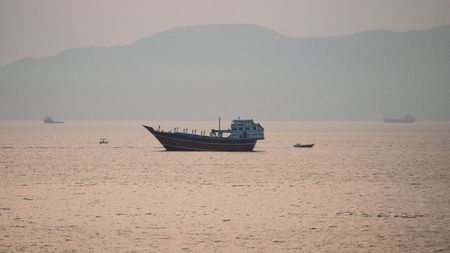
During the final day of the prominent Computex technology conference in Taipei on Friday, Taiwan’s coast guard confronted Chinese vessels in the disputed South China Sea.
“Peace in the Taiwan Strait is vital to the stability of the global economy, and the lifeline of the technology industry,” Taiwan’s coast guard announced in a message directed at a Chinese ship operating near the Taiwan-controlled Pratas Islands.
The island nation hosts TSMC, the globe’s biggest contract semiconductor manufacturer that supplies chips to Nvidia and Apple, plus Foxconn, which serves as Nvidia’s primary server producer, alongside numerous other firms throughout the AI technology sector.
Beijing considers the democratically-run island part of its territory and has intensified military activities to reinforce its territorial claims over recent years, especially during the past month.
Throughout the June 2-5 Computex conference, Taiwan’s defense ministry documented 79 Chinese military aircraft operating in the vicinity of the island, highlighting concerns about potential disruption to global AI supply networks if Beijing follows through on its threats to seize Taiwan through military action.
Chinese forces conducted another “joint combat readiness patrol” around Taiwan on Wednesday.
China’s defense ministry declined to respond to requests for comment regarding its military activities during the conference period.
Massive financial investments are flowing into Taiwan to manufacture the technology components driving the artificial intelligence boom, but significant security concerns remain, according to David Feith, senior fellow at U.S. think tank the Hudson Institute and a former U.S. Deputy Assistant Secretary of State.
“There’s an enormous security threat, and it emanates from Beijing,” he stated to Reuters on Saturday during a forum in Taipei organized by DEST, Taiwan’s National Science and Technology Council-backed think tank.
“I do think that markets globally and governments, I fear, are underestimating the risk of a crisis.”
Nvidia CEO Jensen Huang revealed last month his company intends to invest approximately $150 billion each year in Taiwan, a significant increase from the roughly $10 billion to $15 billion spent five years earlier. AMD CEO Lisa Su, who visited Taiwan shortly before the conference though she didn’t attend Computex, has announced more than $10 billion in investments for Taiwan’s AI sector.
When questioned about security concerns during his Tuesday press conference, Huang deflected the topic, stating supply chains should be as “diversified and as redundant” as possible to ensure resilience, while noting Taiwan technology companies are investing in the United States.
“However, it doesn’t change the fact that Taiwan is incredible at manufacturing, especially technology manufacturing,” he continued. “This is the epicentre of the ecosystem.”
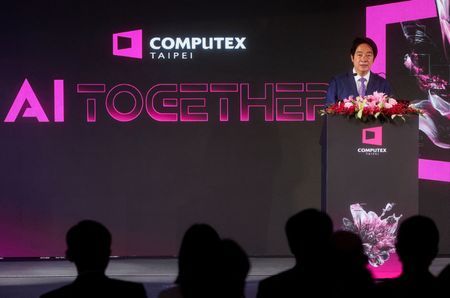
Taiwan President Lai Ching-te addressed the security situation more directly during Computex opening remarks.
“The government will firmly safeguard peace and stability across the Taiwan Strait and is committed to maintaining the status quo,” he declared.
“This is an unwavering national policy, as well as Taiwan’s most responsible commitment to the global technology supply chain.”
The Computex conference included a military component, featuring participation from several drone manufacturers.
The president has prioritized drone technology as a central element of his military modernization strategy.
Palmer Luckey, founder of U.S. drone manufacturer Anduril Industries, which is collaborating with Taiwan on missile development, attended the conference on Thursday. He informed the official Central News Agency that approximately 30 Taiwanese companies now participate in his company’s supply networks.
“There are things in this world that only exist because Taiwan is the leader in technology, and that’s not something that I want to disappear,” he commented.