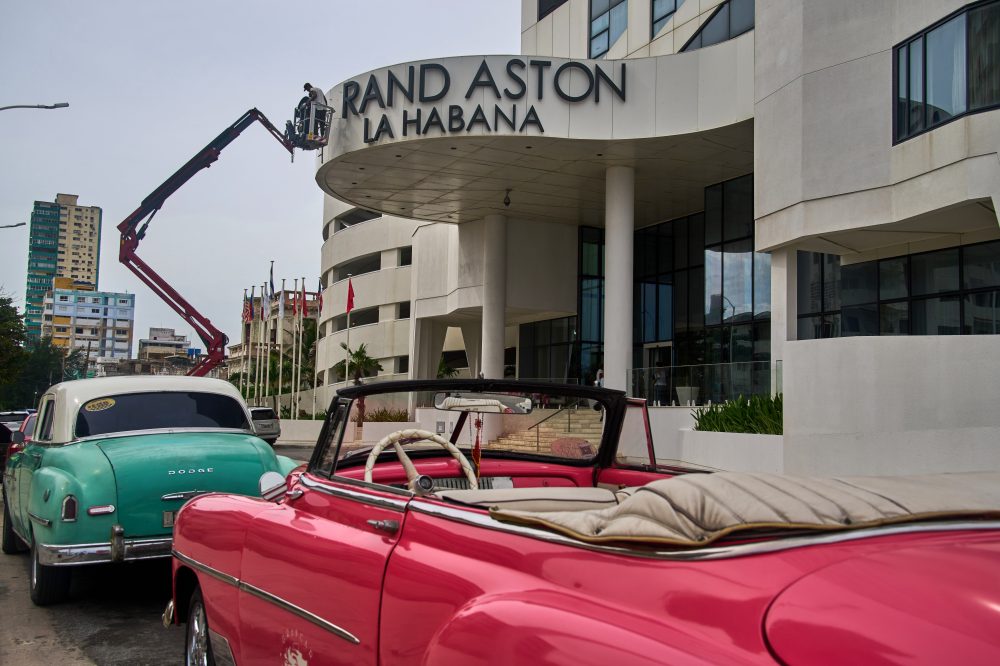

HAVANA — Cuba’s legendary vintage American automobiles, known locally as “almendrones,” are facing their biggest challenge in decades as a severe fuel shortage forces many of these iconic vehicles off the roads.
The classic gas-hungry cars, which have served as essential shared transportation and symbolized Cuban resourcefulness for generations, are now parked unused across the island due to fuel scarcity that began in January. Cuban authorities attribute the crisis to U.S. energy restrictions.
In Las Minas, a community of roughly 2,000 residents near Havana, Diriel Valdez works on rebuilding a 1951 Chevrolet Deluxe outside his humble concrete home on an unpaved street. While the wine-colored vehicle’s body remains solid and its original motor still functions, obtaining gasoline has become nearly impossible.
Valdez joins countless other Cubans relying on a government fuel reservation system through a mobile app that has ironically come to represent the very shortages it aims to address.
“I signed up in February … I’m still somewhere around number 2,800,” said the 27-year-old who runs an auto body shop from his home.
His lengthy wait would eventually yield just 20 liters (5.3 gallons) of gasoline — barely enough fuel, Valdez notes, for a trip to the coast.
The term almendrón derives from the Spanish word meaning almond, referencing the curved silhouette of the massive American sedans brought to Cuba prior to the 1959 revolution.
Throughout many years, trade restrictions, supply shortages and minimal imports transformed Cuban auto mechanics into experts at creative solutions. Motors were replaced, frames reconstructed and spare components obtained from any available source.
During a recent evening in Havana, while yet another power outage plunged most of the capital into darkness, taxi operator Leonardo Daniel González navigated a borrowed bright purple 1948 Chevrolet Fleetmaster through the unlit streets.
“These cars are passed down from generation to generation,” said González, 30. “I had one that belonged to my great-grandfather. It went from him to my grandfather, then to my father, and then to me.”
Cuba faces one of its worst energy emergencies in recent memory. Citizens, already struggling through years of economic hardship and supply shortages, now endure daily power outages lasting as long as 20 hours in certain areas of the nation.
The island generates approximately 40% of its fuel needs domestically and relies extensively on foreign supplies to operate power facilities and maintain transportation systems.
Beginning in January, the Trump administration intensified restrictions on Cuba as part of its continued pressure strategy against the island’s communist leadership. Trump has also warned of potential tariffs against nations that sell or ship petroleum to Cuba, creating additional obstacles for the country’s fuel procurement efforts. Only one Russian oil tanker has reached the island since that time.
Next to his Chevrolet in Las Minas, Valdez, the auto body shop owner, explained how the fuel crisis impacts his business. He acquired auto repair skills from his stepfather and has been fixing classic automobiles since age 13.
“People don’t want to do major repairs anymore,” he said. “A lot of them have their cars parked. They don’t have much hope that they’ll be circulating the way they used to.”
With gasoline becoming increasingly scarce through official channels, numerous motorists are accessing Cuba’s underground market, where fuel can typically be located faster, albeit at dramatically inflated costs reaching $8 per liter ($30 per gallon).
Omar Everleny Pérez, a former economist at the University of Havana’s Center of Cuban Economic Studies, explained that the nation’s transit infrastructure continues to rely substantially on almendrones since contemporary vehicles remain financially impossible for most Cubans.
“They’ve been vital to the transportation of ordinary Cubans,” he said. “Not only in Havana but throughout the country.”
While newer automobiles have become purchasable in Cuba recently, their costs remain far beyond what most government employees can afford, Pérez noted. This reality has helped maintain the elderly American vehicles in service, even as alternative transportation options begin appearing on Cuban roads.
Electric motorcycles from China have grown more prevalent. Compact electric cars are also emerging, supported by an expanding system of solar-powered charging facilities that the government promotes as part of its renewable energy initiative.
In Havana, González remains optimistic about the almendrones’ future. Despite fuel scarcity and dramatically reduced tourism, he continues earning income from the vintage Chevrolet.
“There are … several WhatsApp groups for us to find rides and so on,” said González. “But tourism in Cuba is in very bad shape.”