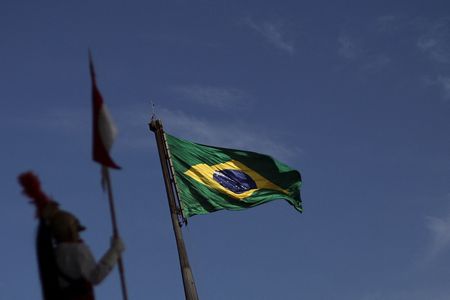

Senior Brazilian ministers and government staff assembled at the presidential palace in Brasília on Thursday to map out the country’s response to the latest round of American tariffs — and sources say the reaction could be significant.
Three people who attended those meetings told Reuters that the options on the table include non-tariff measures targeting the audiovisual sector, as well as pharmaceutical and agricultural patents. These potential steps fall within Brazil’s reciprocity law, which President Luiz Inácio Lula da Silva had previously pledged to use after the Trump administration announced a 25% tariff on a broad range of Brazilian goods on Wednesday. Washington said the tariffs were a response to what it described as unfair trade practices by Brazil.
“How we proceed from here will depend on the instructions the president gives us, but it is highly unlikely there won’t be a tough response,” one meeting attendee told Reuters.
A second source indicated that Brazil is expected to revisit retaliatory measures that were examined last year under the reciprocity law. Those include placing limits on dividend and royalty payments sent abroad by U.S. audiovisual companies operating in Brazil.
The government is also weighing the possibility of suspending patent protections on pharmaceutical products and agricultural seeds.
Brazilian officials in Brasília consider these approaches more attractive than slapping tariffs on American imports, since they would be less likely to create shortages in Brazil’s supply chains or push up prices for consumers.
However, U.S. officials have signaled that Washington would “review its actions” if Brazil moves forward with retaliation — a warning that has rattled Brazilian exporters and prompted some to begin shifting away from the American market.
The pressure is already showing in trade data: Brazilian shipments to the United States dropped 13% during the first half of the year, even while the country’s total exports climbed 5.1% over the same period.
On a separate front, Brazil plans to revive a World Trade Organization dispute it initiated last year over customs duties on electronic transmissions, according to another source familiar with the situation. Restarting that case would allow Brazil to move faster toward establishing a formal dispute settlement panel. A favorable ruling would give Brazil stronger legal footing under international trade rules to pursue retaliatory actions.