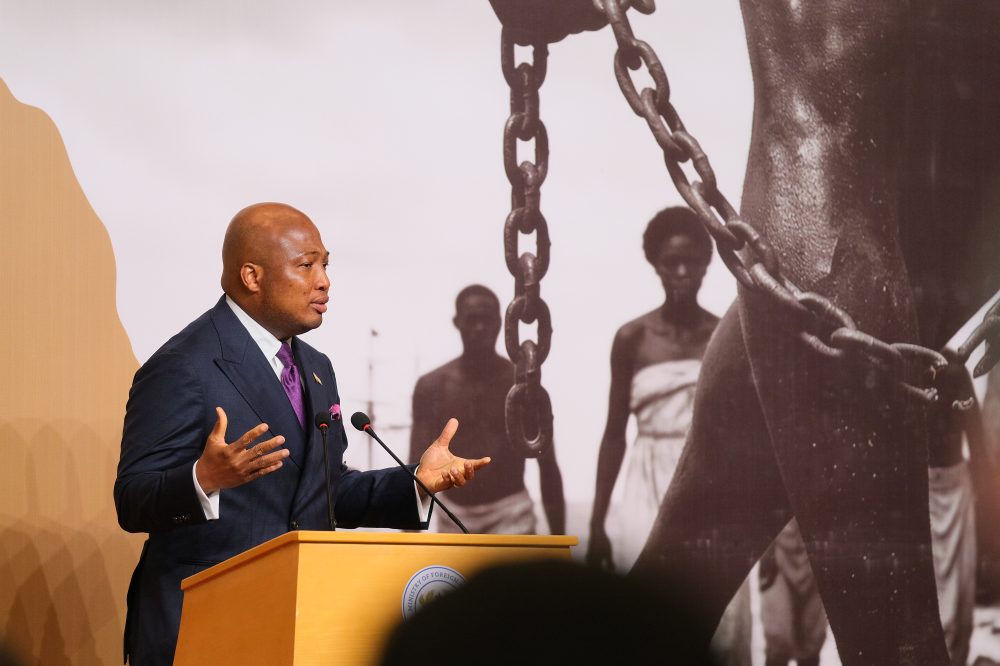

ACCRA, Ghana — Leaders from Africa and the Caribbean gathered in Ghana on Friday, calling on nations that once participated in the slave trade to issue formal apologies and provide reparations for the trafficking of millions of enslaved Africans.
The gathering, dubbed the “Next Steps” conference and held in the Ghanaian capital of Accra, produced a declaration demanding that countries involved in the Atlantic slave trade “offer full, formal and unconditional apologies as a foundational step towards reconciliation, trust-building and reparatory justice.”
The push comes on the heels of a United Nations resolution passed in March that described the transatlantic slave trade as “the gravest crime against humanity.” While the resolution is not legally binding, it carries significant moral weight on the world stage. Conference organizers said their goal was to shift the reparations conversation from symbolic acknowledgment to real, enforceable action — potentially requiring compensation under international law.
Historians estimate that roughly 12 million Africans were forcibly taken by European traders between the 16th and 19th centuries and enslaved on plantations, generating enormous wealth at an immeasurable human cost.
Ghana’s President John Dramani Mahama told delegates that the U.N. resolution had opened a new door for serious dialogue on the issue. He stressed that the lasting damage caused by slavery continues to affect people across Africa, the Caribbean, and the broader African diaspora.
“We’re here because recognition creates responsibility, and because the enduring consequences of this history continue to demand thoughtful, coordinated, and sustained international engagement,” Mahama said, addressing representatives from more than 80 nations.
This is not the first time Ghana has hosted such discussions. At a reparations summit there in 2023, participants floated the idea of creating a Global Reparation Fund, though the details of how it would function were never fully spelled out.
Support for reparations is far from universal in the countries that would be expected to contribute. In the United States, for instance, public opinion leans heavily against the idea. A 2021 Pew Research Center survey found that only about three in ten American adults believed that descendants of enslaved people in the U.S. should receive some form of repayment, whether in the form of land, money, or other means.
Activists supporting reparations argue the effort should go beyond direct cash payments to individuals, and also include development assistance for affected nations and the return of resources taken during the colonial era.