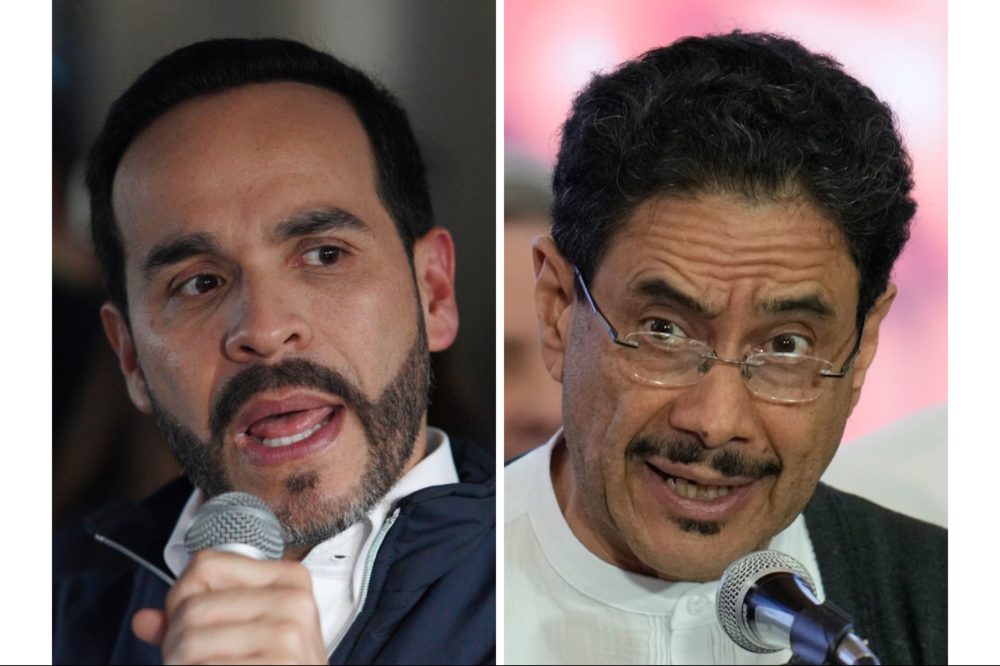

BOGOTA, Colombia — Colombian voters are heading to the polls Sunday for a presidential runoff election that has sharply divided the country, with two very different candidates each promising to end decades of brutal violence that has long plagued the South American nation.
The choice comes down to businessman and attorney Abelardo de la Espriella, a political outsider with a conservative approach, and Iván Cepeda, a sitting lawmaker who carries the torch of outgoing President Gustavo Petro — the country’s first leftist head of state. The two men outlasted nine other candidates in a May 31 first-round vote.
Both men have made security a centerpiece of their campaigns, vowing to protect Colombians from the kind of relentless violence — including car bombings, kidnappings, forced disappearances, and mass displacements — that defined life in the country for generations.
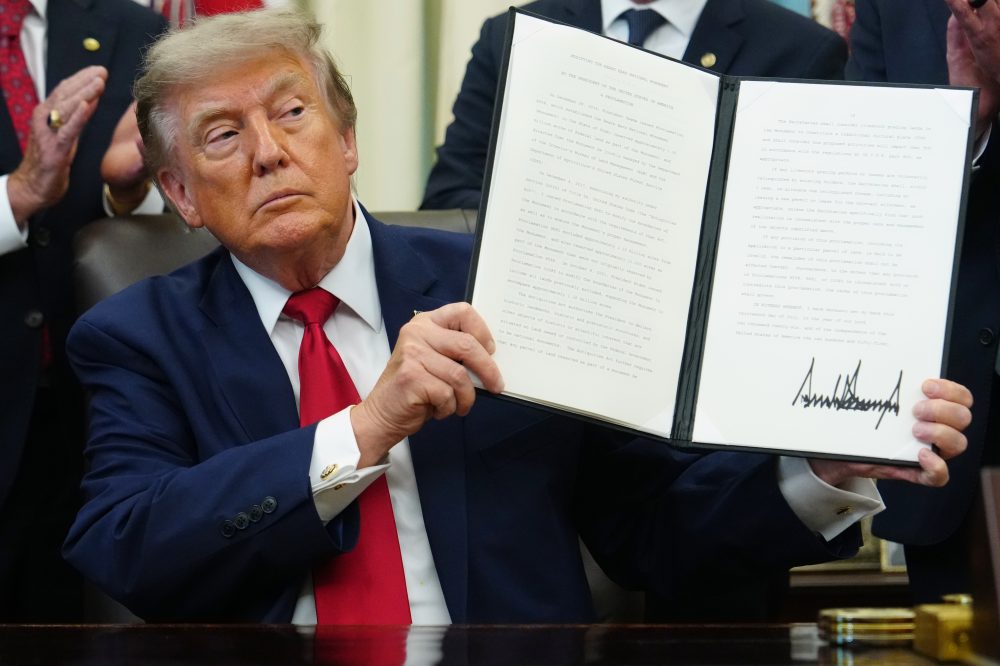
De la Espriella favors a tough-on-crime stance that has drawn an endorsement from U.S. President Donald Trump.
Cepeda, on the other hand, has pledged to build on Petro’s efforts to open dialogue with the country’s various illegal armed factions — a strategy that has largely fallen short of its goals.
The two candidates also disagree on how to fix Colombia’s troubled health care system, its growing national debt, and widespread corruption.
In Bogota, residents expressed anxiety about the nation’s direction. “Right now, what worries me is the polarization that exists between us: there are two very extreme sides, and the violence is concerning,” said John Manrique, a lawyer in the capital who was out walking his dog.
Manrique added: “What I hope is that people accept who won. Let’s accept it, regardless of the side, and try to reach a social consensus. … Let’s not go out and fight.”
According to official results from the first round, de la Espriella received 44% of the vote compared to Cepeda’s 41%. Outgoing President Petro, without presenting evidence, raised doubts about those results after Cepeda — who had led in polls heading into the May vote — not only failed to win outright but actually finished behind de la Espriella.
This election falls a decade after Colombia reached a landmark peace agreement with the Revolutionary Armed Forces of Colombia, known as FARC, which had raised hopes of breaking the country’s long cycle of armed conflict.
However, violence has surged again in the years since, largely because most rebel groups shifted away from ideological motivations and toward the financial rewards of drug trafficking.
Last year, authorities recorded 14,780 homicides — the highest number since at least 2015 — fueled by clashes between illegal armed organizations. One of those killed was conservative presidential candidate Miguel Uribe. Extortion cases have also skyrocketed, with 13,417 incidents reported in 2025, more than twice the number recorded in 2015.
More than 41 million Colombians are eligible to cast ballots Sunday.
De la Espriella, a political newcomer who goes by the nickname “The Tiger,” has vowed to crack down hard on criminal elements and construct 10 large-scale prisons. His model draws inspiration from the approach used by El Salvador’s President Nayib Bukele, which has brought homicide rates down but also sparked allegations of human rights violations.
Cepeda is seeking to continue Petro’s controversial “total peace” initiative, which aims to negotiate disarmament agreements with guerrilla groups and criminal organizations. That strategy, launched in 2022, reached a milestone just Thursday when the first armed group — one with roughly 100 members — surrendered its weapons and began a reintegration process into civilian life. Colombia’s illegal armed groups collectively have more than 27,000 members.
Yamile Guevara, a retired educator in Bogota, argued that Petro’s peace plan simply needs more time, noting that a six-decade-old conflict cannot realistically be resolved in a single presidential term. She also took issue with what she called a persistent distrust of left-leaning politics in Colombia due to its historical ties to rebel movements.
“The left has always been viewed negatively; it has been harsh, and many people have died,” said Guevara, who supports Cepeda. “So, one wonders what’s wrong with people who have forgotten history … how can they not think carefully about which candidate they are going to elect?”
The weeks leading up to Sunday’s runoff have been marked by heated exchanges between the two camps, along with allegations of election fraud, vote-buying, and voter intimidation.
Cepeda has filed formal complaints with Colombia’s Attorney General’s Office and the International Criminal Court, accusing de la Espriella of having connections to paramilitary organizations. De la Espriella has flatly denied those claims.