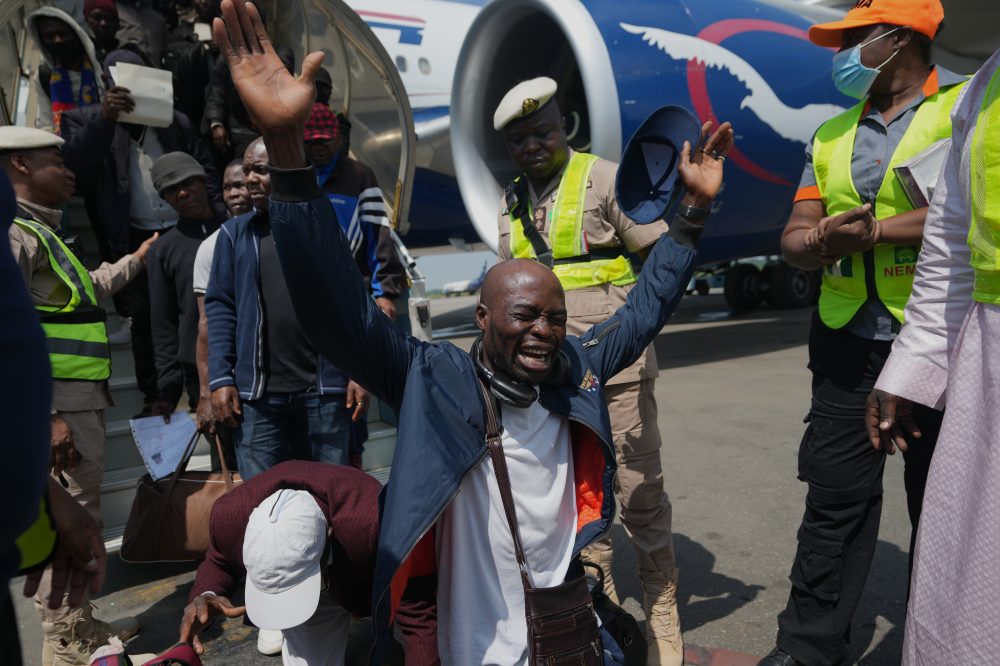

LAGOS, Nigeria — When a plane carrying hundreds of Nigerian nationals escaping South Africa touched down in Lagos last week, passenger Iniebong James felt an immediate wave of relief. That feeling quickly gave way to anxiety.
Nearly two weeks after arriving back in his home country, James, 52, is working to rebuild a life he walked away from a decade ago. In 2016, he packed his belongings and traveled to South Africa on a six-month visitor’s visa — and never left. Without legal permission to remain, he established himself as a car mechanic in the country’s Eastern Cape Province.
Things were manageable until May, when anti-immigrant demonstrators attacked him, leaving him with a head injury, he told The Associated Press.
That attack unfolded against a backdrop of rapidly intensifying hostility toward migrants in South Africa. In recent months, the country has seen marches demanding that undocumented immigrants leave, along with reports of violence directed at foreign nationals.
Governments across Africa have responded by flying their citizens home. Hundreds of migrants from Nigeria and other African nations have been repatriated, with officials pointing to threats of violence and an increasingly dangerous atmosphere.
South Africa has long drawn people from across the continent, including large numbers of Nigerians, because of its comparatively strong economy and greater opportunities. However, that attraction has periodically been met with outbursts of xenophobic hostility. Some South Africans blame foreign nationals for high unemployment, strained public services, and crime.
Before heading to South Africa, James had worked as a truck driver for a haulage company in Lagos. That company shut down in 2016 when Nigeria’s economy slipped into its first recession in roughly twenty years. Unemployment was a concern, but it was the days-long blackouts that ultimately pushed him to go.
To get by on an expired visa, James said he paid community police officers 200 rands — about $12.14 — each week to allow him to keep his shop running. On two separate occasions, he said he paid immigration officers after being arrested. The AP was unable to independently confirm those claims.
James said he is glad to be home and to have his freedom back, but he acknowledges that the economy that once drove him away is now significantly worse, and he fears finding work will be even harder than before.