
LONDON (AP) — A decade has passed since the United Kingdom made the historic decision to leave the European Union, a vote that continues to shape political identities and dismantled a 50-year effort to build closer ties with the European continent.
Known as Brexit — a shorthand for British exit — the departure was set in motion on June 23, 2016, when 52% of voters, totaling more than 17 million people, chose to leave the EU. Despite the slim margin, the vote triggered the most sweeping transformation of British society and its economy since the Second World War.
Like any complicated split, the process of actually completing the break took far longer than expected — nearly five years in total.
The roots of Brexit stretched back to a growing frustration with the EU and with the aftermath of the 2008 global financial crisis. Those who championed leaving argued that Britain, freed from EU constraints, could focus on its own priorities and recapture its former economic strength. Opponents countered that the move would cause economic turmoil and damage the country’s global reputation.
Ten years later, the results are being assessed.
Brexit supporters had envisioned a Britain that would flourish outside the EU by tapping into the bold, entrepreneurial spirit that once made it the world’s dominant economic power. That vision has largely not come to pass.
While the COVID-19 pandemic and the conflicts in Ukraine and more recently the U.S.-Israeli war on Iran have contributed to Britain’s difficulties, the broader economic revival that was promised has not materialized. Businesses have repeatedly complained about the new obstacles they face when trading with EU member nations — the 27-country bloc remains by far the U.K.’s largest trading partner.
Even without formal tariffs on British goods entering the EU, a wide range of non-tariff barriers have emerged, including complicated customs paperwork, border certification requirements, and visa restrictions. Many trade agreements that Brexit supporters promoted — most notably a deal with the United States — have never been finalized.
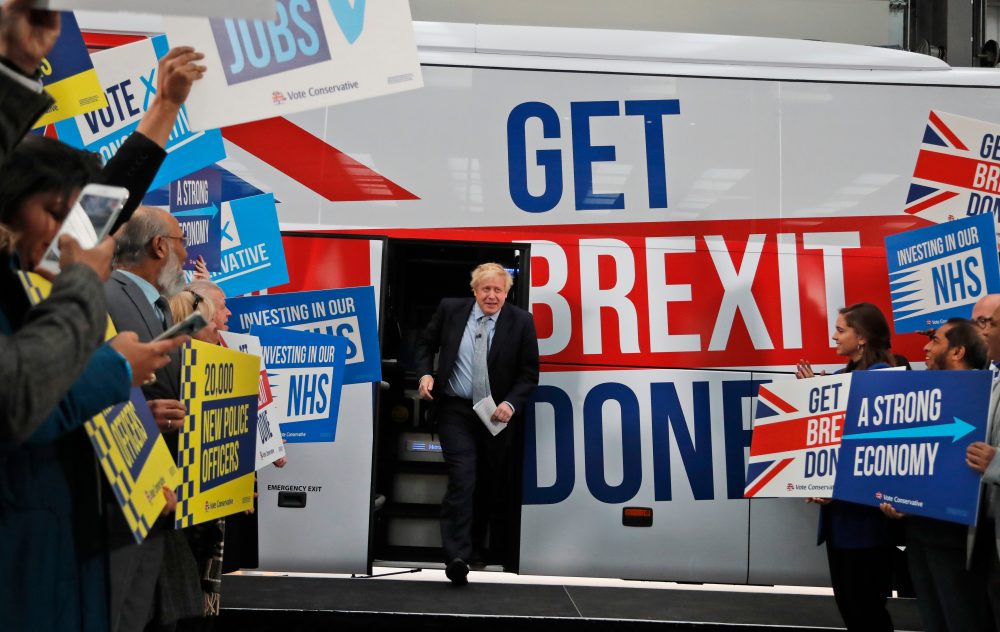
Economic analysts estimate that the British economy is somewhere between 4% and 8% smaller than it would have been if the country had chosen to remain in the EU. That gap translates into significantly lower living standards and billions of pounds less available for public services — including the beloved National Health Service, which Brexit campaigners famously promised would receive an extra 350 million pounds (approximately $468 million) per week. That pledge was prominently displayed on their campaign bus.
Jonathan Portes, a professor at King’s College London, put it plainly: “Brexit has made the U.K. economy smaller than it otherwise would have been.”
Writing for The UK in a Changing Europe think tank, Portes added: “The effect has not been a sudden collapse, but a gradual and cumulative drag on trade, investment and productivity.”
Brexit supporters, however, maintain that the full impact of leaving the EU cannot be judged this soon. They argue that some short-term economic pain was always expected in exchange for greater control over domestic policy — particularly on immigration.
Brexit ended the free movement of people between the U.K. and EU nations, but controlling the borders has produced mixed results. Reining in immigration was a central promise of the Brexit campaign, and the message of “taking back control” struck a chord with many voters.
Net migration from EU countries has dropped sharply. However, arrivals from non-EU nations have surged — partly due to changes in visa rules introduced by the previous Conservative government to address labor shortages in sectors such as elder care.
Overall, there are signs the government is gaining more control over legal immigration. Net migration fell dramatically, from over 900,000 in 2023 down to 171,000 last year.
Even so, public anger over illegal immigration remains intense. Many Britons are particularly upset by the sight of people — often fleeing conflict zones like Afghanistan and Sudan — arriving on inflatable boats after crossing the English Channel. Small boat crossings peaked at 46,000 in 2022 and reached 41,000 last year, making it one of the country’s top political flashpoints despite representing only a small portion of overall migration. Tensions have boiled over, with angry crowds protesting outside — and in some cases attempting to set fire to — hotels being used to house asylum seekers at public expense.
Britain’s political landscape has splintered in the years since Brexit. Support for the two historically dominant parties — the Conservatives and Labour — has eroded. The Conservatives were voted out in 2024 following 14 years in power, a period heavily defined by the ongoing battles over the U.K.’s relationship with Europe.
The Labour government has also struggled to win public confidence, and Prime Minister Keir Starmer appears to be on the verge of announcing his resignation.
Meanwhile, millions of voters are gravitating toward Reform U.K., led by Nigel Farage — arguably the politician most associated with the push for Brexit. His party has topped nearly every opinion poll for more than a year.
At the same time, sentiment toward Brexit itself has shifted. According to two polls from Ipsos, 52% of people in the U.K. would now like to rejoin the EU, compared to 33% who are opposed. The same polling found that 48% believe Brexit has gone worse than expected, while just 9% say it has gone better. Additionally, 48% said they would support holding another referendum on EU membership, versus 27% who would not.
Against this backdrop, the Labour Party has been walking a careful line since winning power in 2024. Having ruled out reversing Brexit — or even rejoining the EU’s tariff-free single market — the party has limited room to maneuver on the issue.
Starmer has been pursuing a “reset” of the U.K.’s relationship with the EU, focusing mainly on reducing trade friction. He had hoped to unveil additional steps at an upcoming EU summit next month — assuming he remains in office.
His most likely successor, Andy Burnham, carefully softened his language on the question of EU membership during a recent campaign, ahead of winning a special election on Thursday. That victory came in a seat that had voted heavily in favor of Brexit, and Burnham fended off a challenge from Reform U.K.
“I am not proposing that the U.K. considers rejoining the EU,” Burnham said. “I respect the decision that was made at the referendum and it is going to undermine everything I have said about strengthening democracy if we don’t respect that vote.”