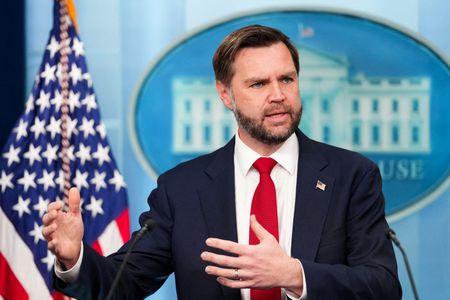

TYRE, Lebanon — Vice President JD Vance departed for Switzerland on Saturday as the White House worked to get stalled negotiations with Iran back on course.
Vance is scheduled to meet Sunday with Iran’s parliamentary Speaker Mohammad Bagher Qalibaf, Foreign Minister Abbas Araghchi, and central bank and oil officials. Mediators from Pakistan and Qatar have also traveled to Switzerland to participate in the discussions.
The goal of the technical-level talks is to work out the finer details of a preliminary agreement signed earlier this week by President Donald Trump and Iranian President Masoud Pezeshkian, which is designed to halt nearly four months of war between the two countries.
The talks nearly fell apart before they began. Vance had originally been set to meet with senior Iranian officials on Friday at a mountainside resort in the small Swiss village of Obbürgen, but Iranian officials initially pulled out due to escalating conflict between Israel and Iranian-backed Hezbollah in Lebanon.
However, U.S. and Qatari negotiators — with assistance from Iran — brokered an arrangement to reduce the active fighting between Israel and Hezbollah, according to U.S. and regional officials who spoke anonymously because they were not authorized to comment publicly. Following that development, Iran’s state media announced Saturday that its top officials would make the trip to Switzerland after all.
Earlier in the day, Iran announced it had closed the Strait of Hormuz, citing what it called a U.S. failure to uphold its commitments under the interim deal by not ending the war. Iran also warned that while its team was heading to Switzerland, progress in the talks would be unlikely unless the fighting stopped.
President Trump responded by threatening to impose American tolls on the strategically vital waterway if a final deal with Iran is not reached within 60 days. In a social media post, Trump said the money would go toward “services rendered as the Guardian Angel to the countries of the Middle East,” while also noting the agreement currently guarantees toll-free transit for 60 days.
The U.S. pushed back on Iran’s claim about the strait. “Iran does not control the Strait of Hormuz. Traffic continues to flow, and U.S. forces are monitoring the situation to ensure this remains the case,” said Capt. Tim Hawkins, a spokesperson for U.S. Central Command. The military reported that 55 merchant ships moved through the strait on Saturday, carrying more than 17 million barrels of oil.
Iranian Foreign Ministry spokesperson Esmail Baghaei said negotiations toward a final agreement would only begin once key commitments are honored. If they are not, he warned, “the memorandum of understanding as a whole will be jeopardized.”
Vance confirmed that top negotiators Jared Kushner and Steve Witkoff were already in Switzerland working through technical details ahead of the broader nuclear talks. The interim deal gives both sides 60 days to reach a nuclear agreement, though that window can be extended given the complexity of the issue.
Pakistani Interior Minister Mohsin Naqvi met with Iranian Foreign Minister Araghchi in Tehran earlier Saturday as part of efforts to help revive the direct talks, according to officials in Islamabad who spoke on condition of anonymity due to the sensitivity of the matter.
The interim agreement, signed earlier in the week, marked a significant milestone but left many questions open. Under the deal, the U.S. lifted its blockade of Iran’s ports and allowed Tehran to sell oil freely — terms that have drawn scrutiny from some members of Congress who have questioned whether the war was worth fighting. The deal also calls for billions of dollars of Iran’s frozen assets to be released.
Complicating the broader peace effort is the ongoing conflict between Israel and Hezbollah. Neither party signed the U.S.-Iran agreement. Hezbollah and Israel entered open war two days after the U.S. and Israel launched strikes on Iran on February 28, with Hezbollah firing rockets and drones at northern Israel while Israeli forces seized large portions of southern Lebanon.
Israeli Prime Minister Benjamin Netanyahu has pledged to keep Israeli troops in southern Lebanon until all threats to Israel are eliminated. Hezbollah, for its part, has refused to stop its attacks unless Israel commits to a full withdrawal from Lebanon.
A new round of U.S.-backed talks between Lebanon’s government and Israel is expected to take place in Washington next week.