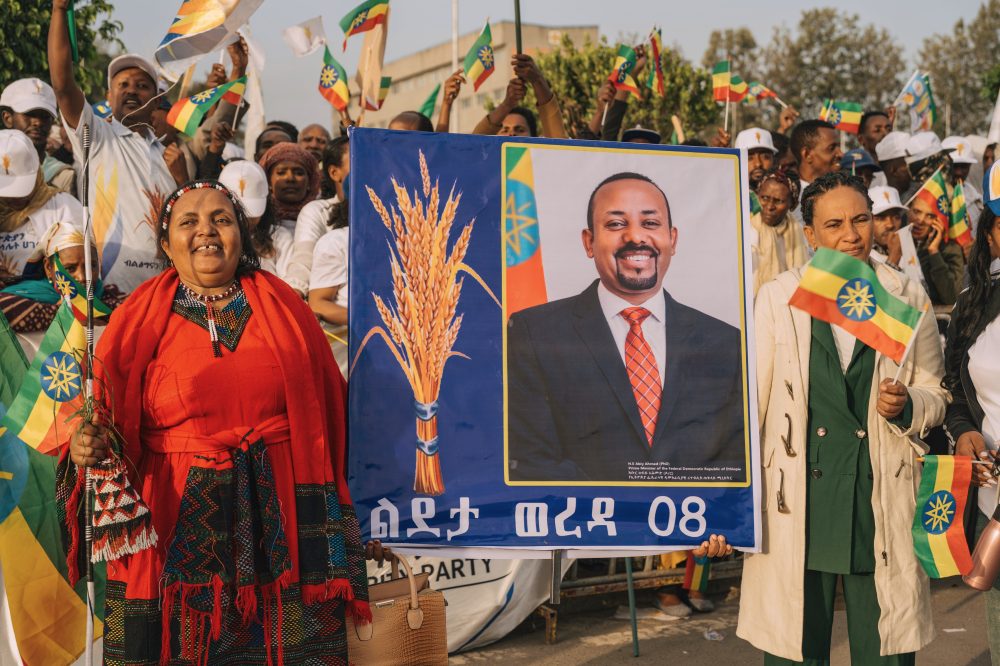

ADDIS ABABA, Ethiopia — Ethiopia’s ruling party has locked in a dominant hold on parliament after final results from the June 1 election were announced Sunday, according to the country’s National Election Board.
Prime Minister Abiy Ahmed’s Prosperity Party claimed 438 out of 501 seats in the House of Representatives. The newly elected parliament is set to gather in October, at which point Abiy is expected to be reelected to serve an additional five-year term.
The election unfolded against a backdrop of violence and political repression. Ongoing conflict in the Oromia and Amhara regions forced 143 polling stations to remain closed on election day, the election board reported. Armed clashes between the Fano militia and federal forces in Amhara, along with fighting involving the Oromo Liberation Army rebels in Oromia, have been central drivers of the instability as the government works to disarm both groups.
Officials reported a voter turnout of 94%. More than 50 million people had registered to vote out of Ethiopia’s estimated population of 130 million, according to the election board.
The Tigray region was once again left out of the election entirely. The area, where hundreds of thousands of people died during a war between federal and regional forces, has now gone without federal parliamentary representation for six years.
Electoral board chairperson Melatwork Hailu defended the process Sunday, saying the board upheld “institutional neutrality and performed its duties solely in accordance with the law and electoral guidelines, without interference.”
International observer missions from regional bodies including the African Union and the Intergovernmental Authority on Development were present but drew criticism for largely staying within the capital, Addis Ababa, rather than deploying widely across the country. Their limited presence still provided the election with a degree of international legitimacy.
The vote drew sharp criticism from opposition figures, many of whom were barred from running. The ruling party’s most vocal critics were either imprisoned, living in exile, or had vanished. Those who did participate in the race said the environment was marked by fear and intimidation, and that the playing field was far from level.
Yitayal Assefa, who ran under the All Ethiopia Unity Party opposition banner and lost his race, spoke with The Associated Press on Sunday. He said the government held an enormous advantage while opposition candidates faced harassment and had little realistic chance of success.
“My participation was not about winning but about fighting for my voice and political ideals within the political spectrum against a government that is assured of a win, win or lose,” Assefa said.
Merara Gudina, a professor at Addis Ababa University and an opposition leader who chose not to participate in the election, told the AP the vote was a “sham” and that the outcome was never in doubt.
He warned the result will “negatively affect the already deteriorating stability of the country.”
Abiy’s government has faced repeated accusations of human rights abuses targeting critics and members of the press, despite pledges of democratic reform and peace that he made in 2020. Abiy was awarded the Nobel Peace Prize in 2019 for resolving a long-running dispute between Ethiopia and neighboring Eritrea. However, the two nations are now at odds, with Addis Ababa accusing Asmara of backing rebel groups to undermine Ethiopia’s stability, while Eritrea claims Ethiopia is threatening to seize its seaport.