
Hundreds of firefighters are working around the clock to battle wildfires in both Portugal and Greece, with neighboring countries stepping in to provide critical support as blazes continue to burn across southern Europe.
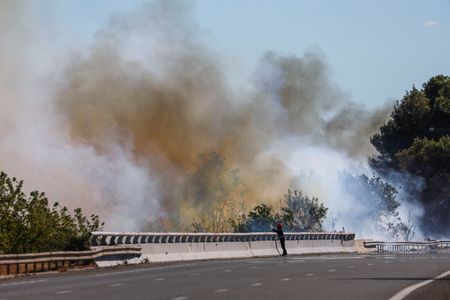
In central Portugal’s Vouzela region, more than 1,200 firefighters supported by nearly 400 vehicles and 15 aircraft have been working to extinguish a fire that ignited Thursday. By Sunday, the blaze had scorched roughly 12,000 hectares — equivalent to about 120 square kilometers or 46 square miles — according to data from the European Union’s Copernicus satellite mapping agency.
The EU’s Civil Protection and Humanitarian Aid agency reported that Spain dispatched 120 firefighters and 45 vehicles to assist Portugal on Friday, while firefighting aircraft from both Italy and Spain were also sent to the region to help combat the massive fire.
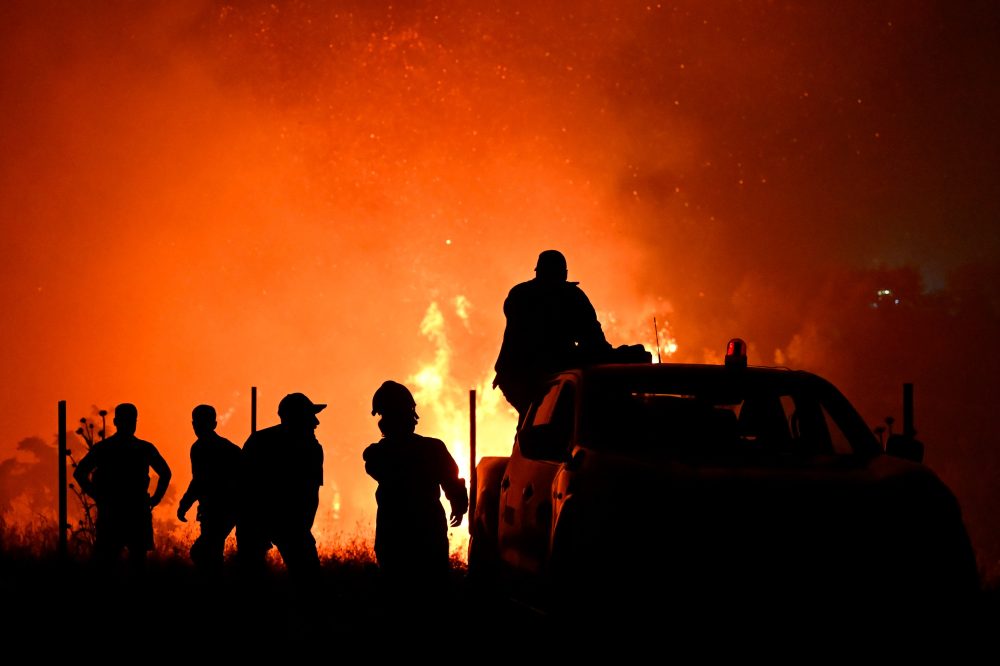
Meanwhile, in Greece, a fast-moving fire broke out Saturday evening at a recycling plant near the Oraiokastro suburb of Thessaloniki — the country’s second-largest city. The blaze prompted evacuation alerts for three surrounding suburbs and a facility that houses 157 people with special needs.
Strong winds fueled the fire overnight, requiring approximately 160 firefighters to battle the flames until water-dropping aircraft could be deployed at daybreak, according to the fire department.
On Sunday, authorities urged residents in parts of Thessaloniki to stay inside their homes and keep windows and doors closed because of toxic smoke coming from the burning recycling facility, which had been engulfed by the wildfire on the city’s outskirts.
Oraiokastro’s mayor, Pandelis Tsakiris, told Greece’s state broadcaster ERT that a number of homes and businesses sustained damage in the fire, though he noted that a full assessment would be needed before a complete picture of the destruction could be determined.
A 76-year-old man was taken into custody on suspicion of accidentally starting the fire. Authorities allege he caused sparks from his vehicle that ignited roadside vegetation. He was scheduled to appear before a prosecutor on Sunday.
The recycling plant fire came just days after a separate wildfire in a nearby area claimed the lives of a 12-year-old boy and his father.
Fire department spokesman Brigadier Ioannis Artopoios, speaking on ERT television Sunday, noted that the vast majority of wildfires in Greece stem from human carelessness — including sparks from farming equipment, tossed cigarettes, and outdoor grills. “This means most of them could have been avoided,” he said.
Greece has long struggled with devastating wildfires during its hot, dry summer months. A 2018 fire east of Athens killed more than 100 people, and a 2023 wildfire that swept through a remote nature reserve in northeastern Greece became the largest wildfire ever recorded within the European Union.
In response to the growing threat — worsened by climate change — Greece has been expanding its use of technology to detect and fight fires. The country is integrating a network of four satellites, launched into low orbit in May, designed to monitor for wildfire activity.
While much of western Europe has endured intense heatwaves this summer, Greece has so far avoided the worst of them. Still, dozens of fires have broken out across the country, affecting both the mainland and its islands.