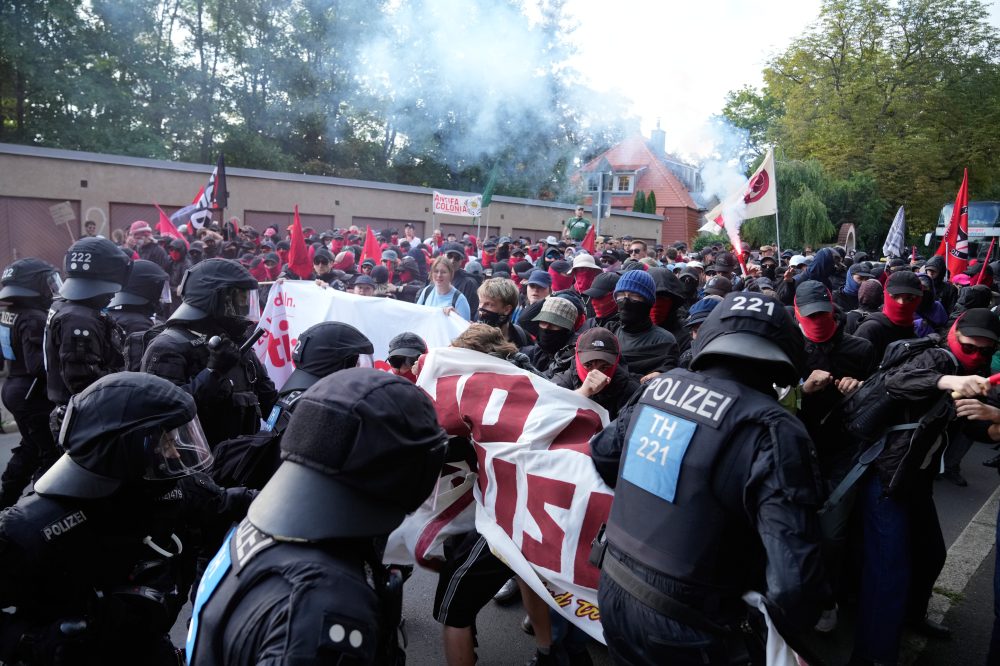

Thousands of demonstrators flooded the streets of Erfurt, Germany on Saturday in an effort to disrupt the national gathering of the far-right Alternative for Germany party, known as AfD. Tensions escalated outside the venue as some protesters came into direct conflict with police officers in riot gear.
The AfD convened in the eastern German city to hold its leadership elections, a process German political parties carry out every two years. The party is working to project a unified image as it moves to extend the leadership terms of Alice Weidel and Tino Chrupalla, who have jointly led the organization for the past four years.
The protests surrounding the convention highlight how deeply the AfD has polarized German society, even as the party holds the distinction of being the country’s largest opposition force at the national level.
The weekend event has stirred additional controversy because it falls near the 100th anniversary of a Nazi Party meeting held in the same area — a gathering that helped solidify Adolf Hitler’s control over the fascist movement. Historians and political rivals argue the timing carries significant symbolic weight, a charge the AfD flatly denies.
Weidel recently declared that “2026 is a year of destiny for AfD.” Established mainstream parties have maintained they will not partner with the AfD in governing coalitions, a position commonly referred to as a “firewall.”
Despite that opposition, the AfD has been capitalizing on widespread frustration with the current government’s efforts to revive a sluggish economy. The party has broadened its appeal well beyond its original focus on restricting immigration, which fueled its initial surge in the mid-2010s.
Looking ahead, the AfD is targeting 40% or more of the vote in a September 6 state election in the eastern region of Saxony-Anhalt. A result at that level could position the party for an outright majority or give it leverage to lure defectors from rival parties — potentially opening the door to its first-ever state governor.