
TEHRAN, Iran — A multi-day funeral got underway Saturday in Iran for the country’s late Supreme Leader, Ayatollah Ali Khamenei, who died at the age of 86 when an airstrike took his life at the outset of the war.
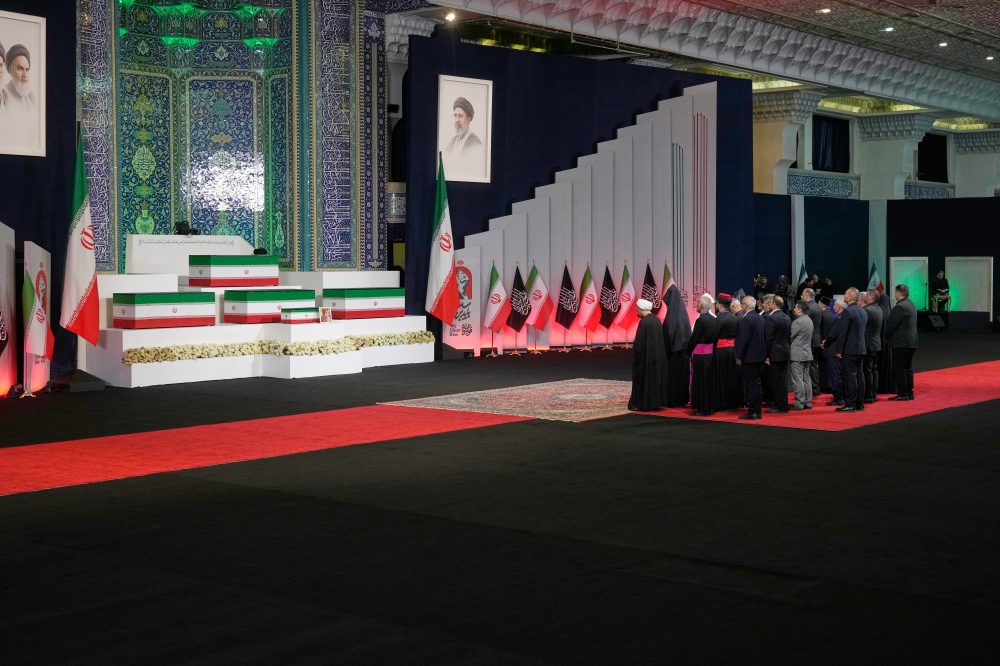
Officials placed Khamenei’s body in a glass-encased casket, which was put on display at the Grand Mosalla in Tehran, the nation’s capital. The sight drew tears from the large crowd of mourners who gathered to pay their respects.
Attendees carried banners and flags throughout the ceremony, while images of Khamenei appeared on billboards throughout the city. Groups of men performed the traditional Shiite mourning ritual of rhythmically striking their chests in grief.
“I am here to say goodbye to my beloved leader Ali Khamenei,” said Hananeh Mousavi, a 27-year-old who came to the funeral with her mother, tears streaming down her face. “I never expected to see such a day. I wish I had died before this tragedy.”
The outdoor stage constructed at the Grand Mosalla was designed to echo the stage where Khamenei once delivered speeches at a husseiniyah located at his compound in central Tehran — a site that was leveled in the Israeli airstrike that also claimed the lives of some of his family members on February 28, the day the Iran war began.
Iranian authorities are anticipating that millions of people will fill the capital’s streets, drawing comparisons to the massive crowds that turned out for the burial of former Supreme Leader Ayatollah Ruhollah Khomeini back in 1989.
“We attended the funeral to show that we are all committed to defend our country and religion,” said Ali Kazemi, who traveled from the northwestern city of Tabriz — roughly 530 kilometers, or about 330 miles, from Tehran — to be present.
A massive public turnout could strengthen the Iranian government’s hand as it navigates ceasefire negotiations with the United States, with Iran seeking to use its grip on the Strait of Hormuz as leverage. Concerns also remain that Israel could launch additional strikes.
Iran’s government chose July 4th — the 250th anniversary of American independence — to begin the funeral proceedings. While officials made no public acknowledgment of the date’s significance, crowds at the Tehran ceremony chanted “Death to America!” — a slogan that has echoed through Iran since the 1979 Islamic Revolution and the subsequent U.S. Embassy hostage crisis.
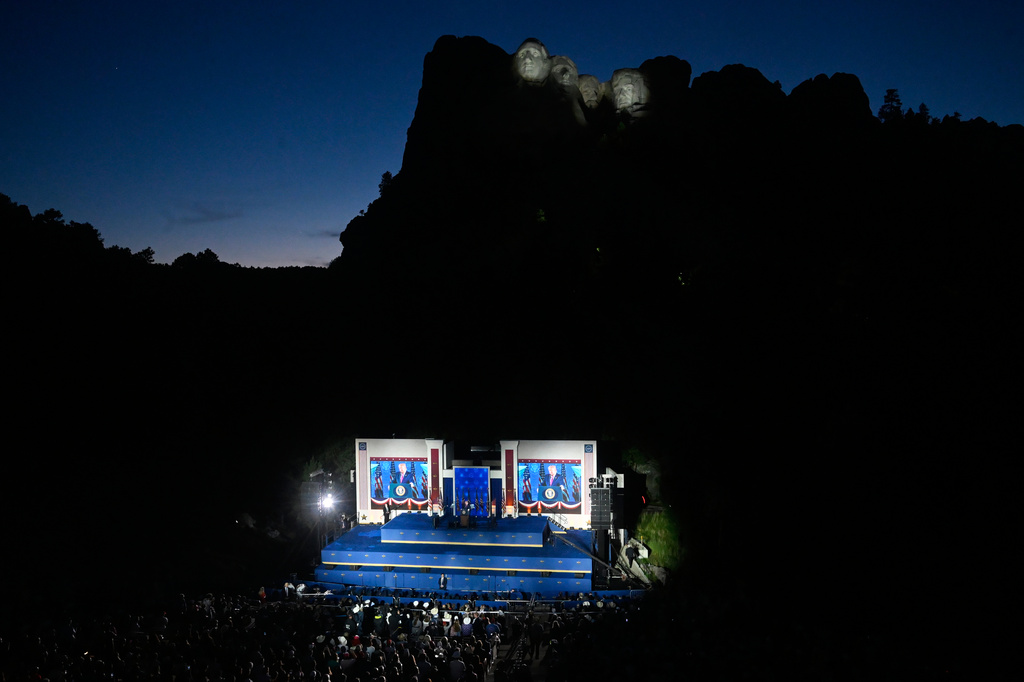
Speaking at the same time before Mount Rushmore in South Dakota, U.S. President Donald Trump addressed the situation directly. “We knocked the hell out of Iran,” Trump said. “They want to settle so badly. We gave them a week off for a funeral.”
Khamenei’s remains are set to be transported to multiple cities in both Iran and neighboring Iraq. Iranian authorities have closed streets, restricted airspace, and suspended normal daily activities in Tehran during the mourning period.
It is still unknown whether Iran’s new supreme leader, Ayatollah Mojtaba Khamenei — son of the late leader — will make a public appearance at the funeral. The elder Khamenei himself was seen weeping at Khomeini’s 1989 funeral, an event that marked the beginning of his decades-long iron-fisted rule over the country.
Israel has repeatedly threatened to kill Mojtaba Khamenei, prompting Iran’s joint military command to issue a warning Thursday urging both Israel and the United States “to avoid any miscalculation” in the days ahead.