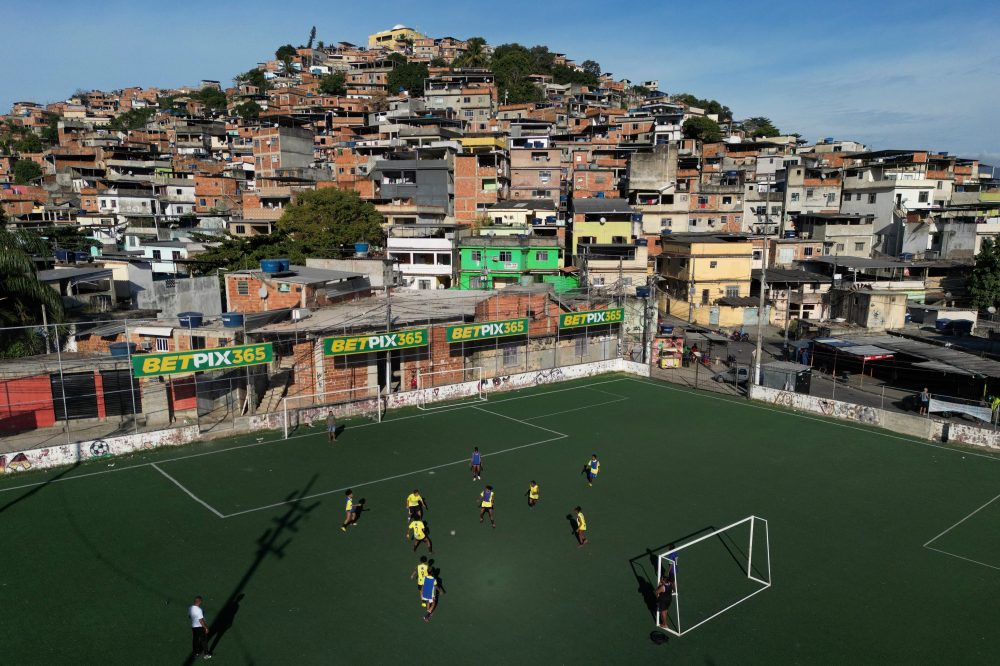

RIO DE JANEIRO — The FIFA World Cup has brought its usual wave of national pride to Brazil, with green and yellow decorations adorning restaurants, bars, and apartment buildings, and soccer dominating nearly every conversation. But alongside the celebration, a troubling issue has moved to the forefront: the flood of gambling advertisements tied to the games.
According to Brazilian fintech company Klavi, which analyzed data from a sample of 1.2 million people, the share of Brazilians placing sports bets has more than tripled since the tournament began — jumping from 11% in May, before the competition started, to roughly 35% by the end of June.
Brazil’s health ministry reports that the number of people seeking treatment for gambling addiction has more than doubled over the past five years. A 2025 study by the non-profit Institute of Studies for Health Policies estimates that betting and gambling cost Brazilian society 38.8 billion reais — approximately $7 billion — each year, while also contributing to rising rates of depression and suicide.
Sports betting was legalized in Brazil in 2018, but unchecked advertising and a lack of oversight created significant problems, leading the government to introduce new regulations in 2023. Earlier this week, Brazil’s Finance Minister Dario Durigan announced that additional regulatory measures were on the way. On Thursday, the Finance Ministry said it had contacted two media outlets and four betting companies, requesting explanations for content that may have violated existing laws. Authorities also ordered the immediate removal of any advertisements found to be breaking current rules.
Brazil has grown into the world’s third-largest sports betting market, trailing only the United States and the United Kingdom, according to a 2023 report from data analysis firm Comscore.
The issue has drawn attention from lawmakers across party lines. During a Senate hearing on Thursday, Sen. Eduardo Girão declared, “We are witnessing a humanitarian tragedy unfolding in Brazil.” The crisis has also prompted prominent musicians, including Gilberto Gil and Caetano Veloso, to join a campaign pushing for stricter gambling laws.
Advertisements that go beyond standard commercial breaks — with live on-air hosts personally endorsing betting platforms and promoting real-time odds during game coverage — have drawn particular criticism. Carolina Terra, a professor at the University of São Paulo’s communications and arts school, warned about the dangers of embedding betting content within broadcasts. “Betting is intended for people aged 18 and over. But when it is embedded in content (…) anyone can be exposed to it, including children, teenagers, and other vulnerable groups. The exposure becomes indiscriminate,” she said.
CazéTV, a streaming platform on YouTube and the only broadcaster in Brazil with rights to all 104 World Cup matches, has been at the center of the controversy. The platform not only ran traditional betting advertisements but also had its commentators promote gambling during live game coverage, blurring the line between endorsement and broadcast journalism.
Brazil’s National Consumer Secretariat, which operates under the Justice Ministry, launched a formal investigation into CazéTV’s World Cup broadcasts on June 24. Shortly after, the country’s advertising self-regulatory body opened three separate proceedings related to betting promotions delivered verbally by on-air personalities, and recommended suspending those ads. In response, CazéTV issued a statement saying it would take a more cautious and specific approach to betting partnerships and return to more traditional advertising formats, while maintaining that its advertising practices comply with Brazilian law.
For some viewers, the betting environment has personal consequences. Michael Marcos, a 22-year-old transport inspector from the northeastern Brazilian state of Alagoas, dealt with anxiety related to gambling last year and took a six-month break — before returning to betting when the World Cup started. “Watching Brazil play is already an emotional experience. But if I bet 1000 reais ($200) on them, the emotion will be even greater because there’s an accompanying tension to do with whether I’m going to win or lose money,” he said. To protect his mental health, Marcos said he is limiting his bets to teams he believes are highly likely to win, such as France, and plans to stop wagering once the tournament ends.
Gustavo Freitas, a 34-year-old advertising professional, said he has spent around $200 on bets since the World Cup began — ten times what he typically wagers in a normal month. He views it as entertainment rather than a money-making strategy. “No one believes they’re going to become rich playing videogames on weekends. It’s the same for betting,” he said. “The problem is thinking that you’re going to find the perfect formula and forgetting the old saying (…): the bank always wins.”