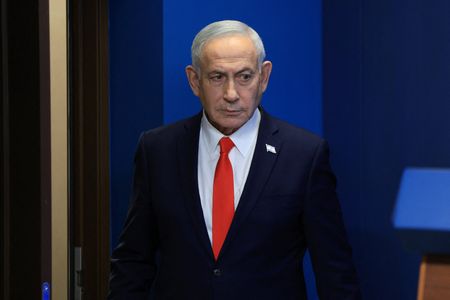

JERUSALEM — In an unprecedented move, members of Israel’s cabinet voted Sunday to openly reject a Supreme Court ruling concerning the nation’s broadcast regulatory authority, sparking fears of a full-blown constitutional crisis.
This marks the first time Prime Minister Benjamin Netanyahu’s government has directly defied a court ruling, though tensions with the judiciary are nothing new. Following the 2022 elections, the government attempted to curb the court’s powers — a move that drew widespread international criticism and triggered massive protests across Israel. Those judicial reform efforts were put on hold after the Hamas attacks of October 7, 2023, though some elements have since been revived.
At the heart of the dispute is a legal requirement that Israel’s Second Authority for Television and Radio maintain a minimum number of members in order to conduct official business. The government contends that because the council no longer meets that threshold, it lacks the authority to approve appointments or carry out other functions. Despite this, on June 17, the Supreme Court ordered the council to press forward regardless.
On Sunday, the cabinet voted unanimously to reject that court order. Communications Minister Shlomo Karhi and Justice Minister Yariv Levin announced the decision in a joint statement. Opposition figures were quick to denounce the move.
Opposition leader Yair Lapid declared that “the government had turned criminal.”
“This is the most serious constitutional crisis in Israel’s history. It’s the destruction of the foundations of our democracy,” Lapid said in a statement.
Karhi and Levin — with Levin being a leading advocate for reshaping Israel’s judicial system — proposed that the government refuse to recognize any decisions or actions taken by the council until the legal membership requirement is satisfied. The cabinet’s formal statement asserted that the court had overstepped its bounds and pledged to “act through all legal means at its disposal to nullify the decision.”
“A ruling that contradicts the law will not be recognised and decisions made under it are null and void,” the cabinet statement read.
Karhi went further, arguing that judges are not lawmakers, and warned that any future decisions made by the media regulator would be “worthless.” Levin added that when parliament passes a law, the court is bound to respect it.
Israeli President Isaac Herzog pushed back strongly, warning that defying Supreme Court rulings threatens national unity.
“I have already made it clear, and I will repeat it again and again — disobedience to a court ruling is a red line that must not be crossed under any circumstances,” Herzog said.
Cabinet Secretary Yossi Fuchs sought to soften the tone of the ministers’ remarks, insisting the cabinet was not calling for outright defiance but rather offering “sharp criticism” of a ruling it believes conflicts with existing law. “The government declared that it will use all legal tools at its disposal to overturn the decision in the future. How do legal tools become disobedience to a ruling?” Fuchs wrote on X.
Netanyahu himself has not made any public comment on the cabinet’s decision, but his political rivals have been vocal. Naftali Bennett, who served as prime minister from 2021 to 2022, warned that “not adhering to court rulings brings anarchy in the streets and the disintegration of our country.”
Gadi Eisenkot, who currently leads in polls as a potential successor to Netanyahu, accused the government of “raising a hand against Israeli democracy” and said Netanyahu was “dividing Israel.”
The cabinet’s defiance could have real-world consequences for Israeli media. It may delay or block the potential sale of Channel 13 — one of Israel’s major commercial television networks and a frequent critic of Netanyahu — to a group of high-tech entrepreneurs. Additionally, the dispute could determine whether the right-leaning, pro-Netanyahu Channel 14 retains its classification as a “small channel,” a designation that provides it with regulatory advantages and exemptions.
No official date has been set for new elections, though one is widely anticipated to take place in September or October.