
Ukrainian drones struck an oil terminal in Russia’s city of St. Petersburg on Saturday, according to Russian officials, as Ukraine continues its sustained campaign against Russia’s energy infrastructure.
Near-daily long-range strikes on Russian oil facilities have triggered a fuel crisis and increased political pressure on the Kremlin, as the full-scale invasion of Ukraine now enters its fifth year.
Gov. Alexander Beglov confirmed that the city’s Kirovsky district, located along the Baltic Sea, was struck. He also reported that air defense systems managed to intercept 72 Ukrainian drones over Russia’s second-largest city and the surrounding area.
Ukrainian President Volodymyr Zelenskyy characterized the assault as part of what he called Ukraine’s “long-range sanctions” against Russia, adding that Ukrainian forces also targeted a military site on Kronstadt island, just off the St. Petersburg coastline.
“The Ukrainian defense forces hit the port oil infrastructure, which earns money for the Russian war, and there were also hits on Kronstadt — an important military target,” Zelenskyy wrote in a Telegram post.
This is not the first time the Kirovsky district has been targeted — it was previously struck in June, just before Russia’s prominent St. Petersburg International Economic Forum.
The Crimean peninsula, annexed by Russia in 2014, has also been hit hard by Ukrainian strikes, prompting local officials to halt gasoline sales to civilians. A separate Ukrainian attack on Saturday in Crimea left one person dead and two others injured, including a 10-year-old child, according to the Moscow-appointed Gov. Sergei Aksyonov.
Russian President Vladimir Putin has downplayed the strikes on Russia’s energy facilities, calling them “not critical,” and has insisted the war will press forward until his objectives are achieved.
Putin has framed Ukraine’s attacks on Russian energy as an attempt to divert attention from battlefield setbacks, though analysts note that Russian forces have seen their advances slow considerably in recent months.
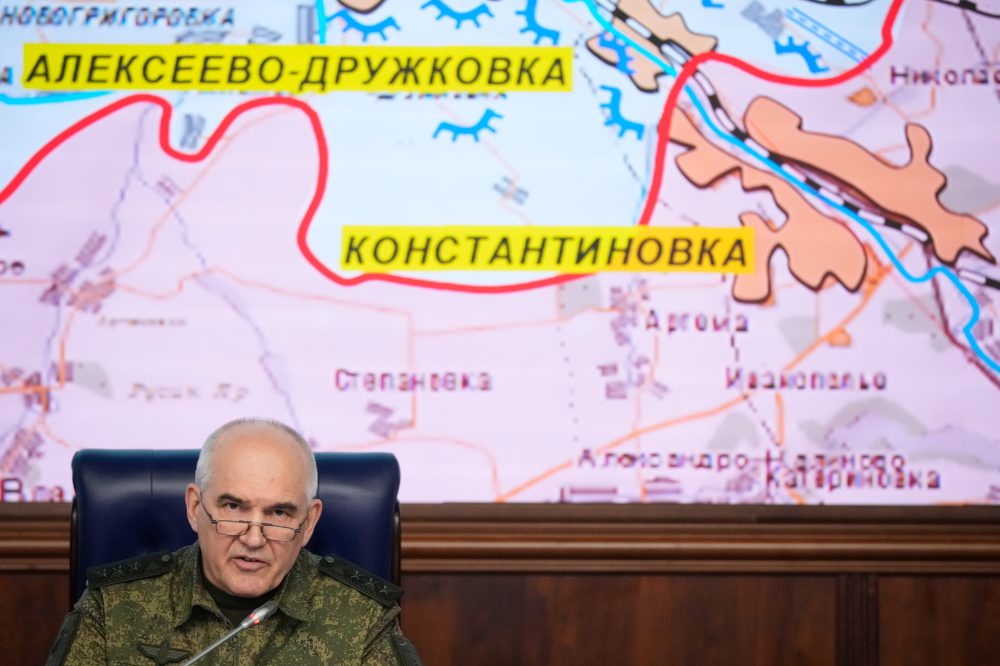
On Friday, Putin visited the Russian military command center overseeing the war in Ukraine, where he received a briefing on the fall of the city of Kostyantynivka following weeks of intense urban combat. He called the capture a critical step toward seizing the nearby cities of Sloviansk and Kramatorsk — the last major strongholds in the heavily fortified “forest belt” of cities in the Donetsk region still held by Ukraine.
Dressed in military fatigues, Putin stated in televised remarks that taking Kostyantynivka, a significant transportation and industrial hub, carries “major strategic importance.”
Ukrainian officials are pushing back on that claim. General Staff spokesperson Maj. Andriy Kovalev, speaking to the Ukrainian outlet Ukrainska Pravda, called Moscow’s assertions “outright disinformation” and said Russian forces had not succeeded in seizing the city.
Despite the fuel crisis, Putin appears confident his government can prevent it from undermining public support for the war he launched more than four years ago. At minimum, the ongoing strikes have made the conflict increasingly real for millions of Russians, chipping away at Putin’s portrayal of the war as something that doesn’t touch everyday life inside Russia.
The border city of Belgorod, which has also been a repeated target of Ukrainian drone strikes, was left nearly without electricity on Saturday following overnight attacks, according to local media reports.
Separately, eight people were wounded — including two children — when a Russian strike hit residential buildings in Ukraine’s southeastern Zaporizhzhia region, local officials confirmed Saturday.