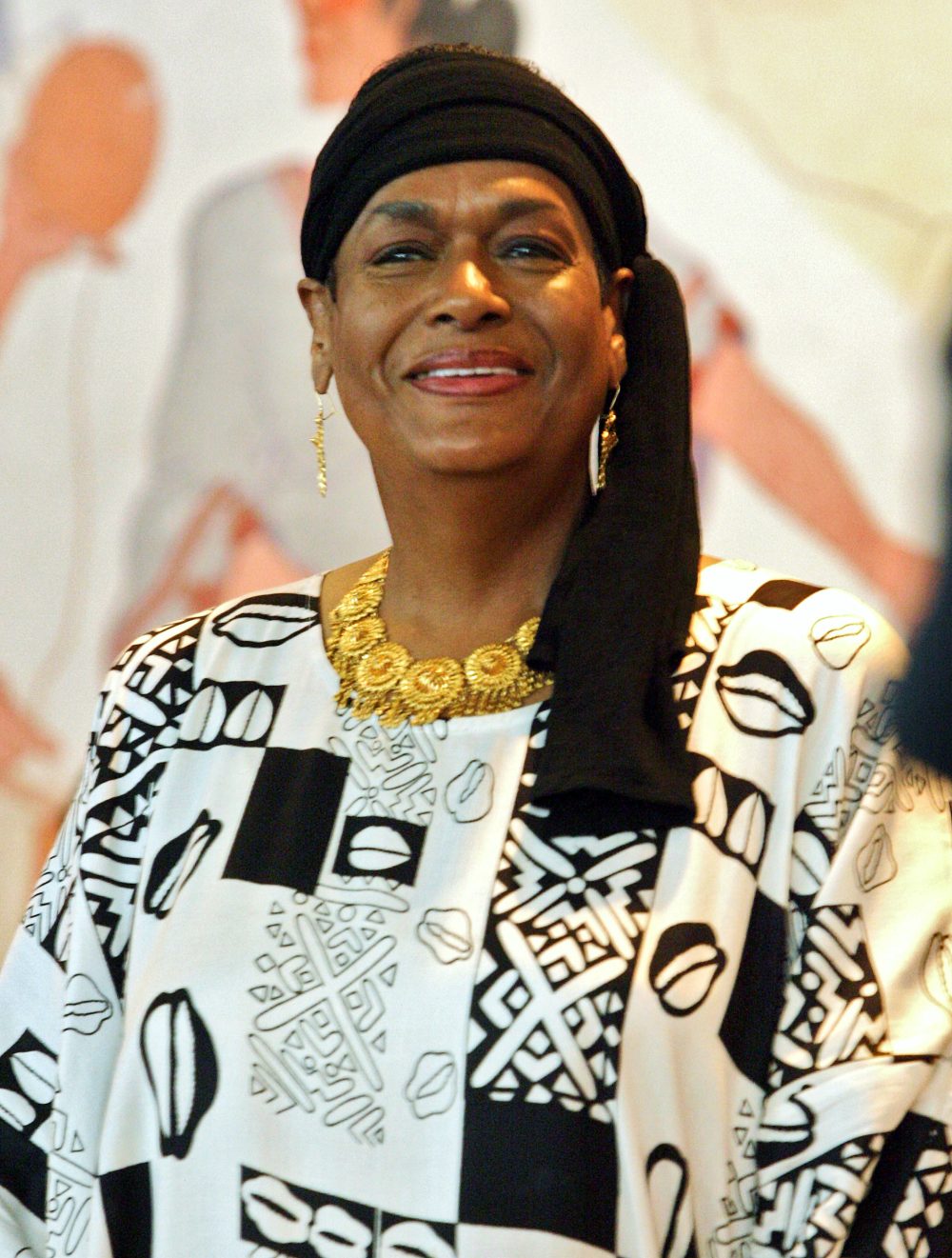

The Nation of Islam has confirmed the passing of Khadijah Farrakhan, the longtime wife of movement leader Louis Farrakhan, who died Saturday at the age of 90.
Known affectionately as “Mother Khadijah,” she spent decades working alongside her husband — a charismatic and often controversial figure — as they together helped shape the Nation of Islam, a movement rooted in Black self-reliance. The couple made their home at Mosque Maryam on Chicago’s south side, which also served as the movement’s headquarters.
The Shura Executive Council released an official statement on behalf of Louis Farrakhan, saying: “The Honorable Minister @LouisFarrakhan with deep sadness yet with profound gratitude to Allah informs you that his beloved wife of 72 years, the first lady of the Nation of Islam, Mother Khadijah has returned to Allah (may Allah be pleased).”
Her death came just seven months after supporters celebrated her 90th birthday. The statement noted that details about funeral services will be shared at a later time.
Mosque Maryam honored her memory, describing her as “a devoted follower” with “a precious soul, a sweet heart.”
R&B artist ZaRio Son Rise also paid tribute on Facebook, writing that she was “a true queen, a righteous woman, and one of the greatest examples of dignity, faith, loyalty, and grace our generation has ever witnessed.”
Born Betsy Ross, Khadijah Farrakhan wed her husband — who went by Louis Walcott at the time — on September 12, 1953, in Boston. Together they raised nine children. Tragedy struck the family twice in recent years: their eldest son, Louis Farrakhan Jr., died in 2018, and another son, Joshua Farrakhan, passed away in 2023.
Khadijah embraced Islam in 1955, the same year her husband joined the Chicago-based organization after being deeply inspired by his Boston friend Malcolm X. Both husband and wife took on new names around that time.
Louis Farrakhan rose to lead the Nation of Islam in the wake of Malcolm X’s assassination in 1965. One of his most celebrated achievements was organizing the Million Man March in Washington in 1995.
Two years after that historic gathering, Khadijah Farrakhan addressed a major assembly of Black women in Philadelphia known as the Million Woman March.
“A nation can rise no higher than its women,” she told the crowd. “We focus on women but cannot lose sight that we must rise as a family — men, women and children.”