
BEIRUT — Shiite Muslims across the globe gathered Thursday to observe Ashoura, a sacred day representing sacrifice and martyrdom that carries particularly deep meaning this year following months of devastating conflict in Iran and Lebanon.
Ashoura marks the death of Imam Hussein, grandson of the Prophet Muhammad, who was slain along with his family and companions at the Battle of Karbala in 680 A.D. after refusing to swear loyalty to the Umayyad caliphate. That event deepened the historic divide between Sunni and Shiite Islam and endures as a powerful emblem of resistance against oppression and injustice.
The timing of this year’s observance is especially significant. Iran and Lebanon — home to two of the world’s largest Shiite populations — have both been caught up in months of war. Iran and the United States launched talks this week aimed at solidifying a fragile ceasefire agreement.
On the first day of the conflict, February 28, Iran’s supreme leader Ayatollah Ali Khamenei was killed in an Israeli airstrike. The 86-year-old was not only Iran’s highest political authority but also held final say over all religious matters and was deeply revered by Shiites worldwide. Ashoura falls just days before his scheduled funeral procession.
The fighting also extended into Lebanon, where Iran’s close ally, the Hezbollah militant group, has been engaged in combat with Israeli forces for months. Hezbollah began launching rockets into northern Israel early in the war in a show of solidarity with Tehran, which triggered a sweeping Israeli aerial campaign and ground invasion that devastated large portions of predominantly Shiite communities in southern Lebanon and Beirut’s southern suburbs.
As Ashoura arrived, more than one million displaced Lebanese citizens were attempting to return to their villages in southern Lebanon — many of which now lie in ruins. Religious ceremonies and sermons in the days leading up to the holy day took place amid the wreckage of destroyed buildings.
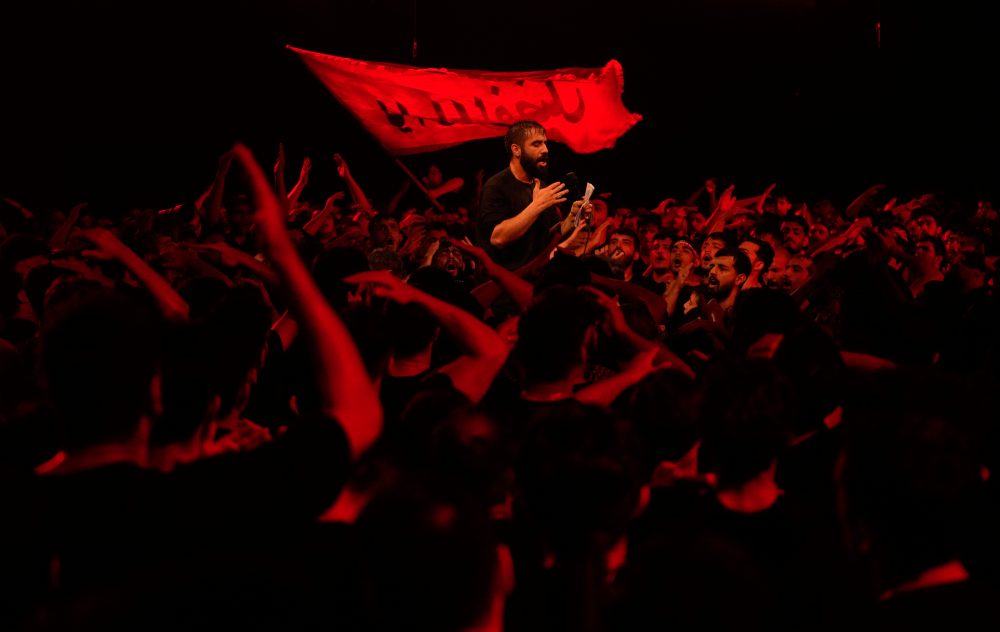
Ashoura, observed on the 10th day of the Islamic month of Muharram, is the most sacred day on the Shiite calendar. Traditional rituals include chest-beating, mourning songs, and public lamentations.
In the Lebanese coastal city of Tyre, families who lost loved ones — whether fighters with Hezbollah or paramedics — wept during a sermon held on the third day of Muharram. A cleric seated between portraits of current Iranian Supreme Leader Mojtaba Khamenei and Hezbollah Secretary-General Naim Kassem drew parallels between the modern-day leaders’ wartime struggles and the historical suffering of Hussein and his companions at Karbala. Red and black banners bearing Hussein’s name were displayed on every street throughout the city.
In Beirut’s southern suburbs, crowds gathered at the grave of former Hezbollah leader Hassan Nasrallah, who died in an Israeli strike in September 2024.
In Pakistan, authorities deployed thousands of police and paramilitary personnel nationwide after intelligence reports warned of potential militant attacks targeting Shiite Muslims, who make up a minority in the predominantly Sunni nation. Militant groups have carried out repeated attacks on Shiite communities, mosques, and religious gatherings over the years, claiming hundreds of lives. Mobile phone service in certain areas was expected to be cut temporarily during mourning processions as a precautionary measure.
At a congregation hall in the eastern Pakistani city of Lahore, Saadia Shah, 33, arrived with her two children and reflected on the day’s meaning. “Imam Hussein is a symbol of the highest struggle and sacrifice,” she said. “His name gives us the courage to stand up to tyranny, to say what is right and oppose what is wrong.”