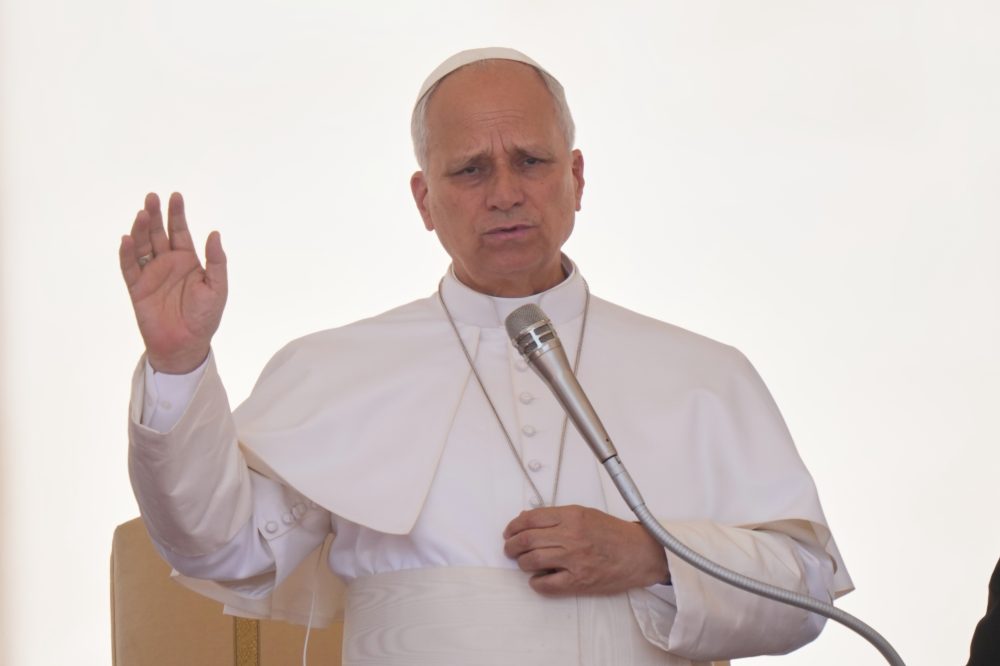

ROME — Pope Leo XIV is making a Saturday journey to northern Italy to honor two towering figures of Christian faith: St. Augustine, the foundational inspiration for his religious order, and Mother Frances Cabrini, a champion of migrants who became the first American-born saint.
The visit falls at the halfway mark of what Leo has planned as a summer 2026 grand tour of Italy — a series of Saturday excursions across the Italian peninsula and its islands designed to help the American pope connect with his new flock.
His first destination Saturday is the Lombardy city of Pavia, where he will pray at the tomb of St. Augustine. Augustine, a fifth-century giant of early Christianity, later became the guiding inspiration for the formation of Leo’s Augustinian religious order.
On the night of his election as pope, Leo declared himself a “son of St. Augustine,” and throughout his first year in the role, he has drawn heavily on Augustine’s writings and teachings, signaling that the ancient saint is central to his papacy.
Augustine was born in the year 354 in what is now Algeria. He spent five years in and around Milan, where he converted to Christianity, before going on to become a bishop. He authored some of the most influential works in Western intellectual history, including “Confessions” and “The City of God,” and developed a rule for monastic life. This past April, Leo traveled to Annaba, Algeria — the modern-day location of ancient Hippo — where Augustine lived, preached, and ultimately died.
Later in the day, Leo is scheduled to visit Sant’Angelo Lodigiano, the birthplace of Mother Cabrini. Cabrini is widely recognized for her tireless work caring for Italian immigrants in the United States around the turn of the 20th century. She died in 1917 as a naturalized U.S. citizen in Leo’s hometown of Chicago. She was later beatified and then declared a saint in 1946 by Pope Pius XII, who described her in a radio address that year as a “heroine of modern times.”
Just last year, Leo’s alma mater, Villanova University, located outside Philadelphia, opened a new campus named in Cabrini’s honor, along with a special Institute on Immigration inspired by her legacy of service to migrants.
Like his predecessor, the late Pope Francis, Leo has embraced the Catholic Church’s Gospel-based call to “welcome the stranger” in his outreach to migrants. Just last week, he spent two days in Spain’s Canary Islands — a key arrival point for migrants crossing from West Africa — where he urged welcoming and integrating those fleeing violence and hardship.
His next planned day trip falls on July 4, when he will travel to Lampedusa, a Sicilian island that serves as a major entry point for migrants crossing from North Africa into Italy.
As the first U.S.-born pope in history, Leo has found himself at odds with the Trump administration over its aggressive crackdown on immigration and mass deportation efforts. That backdrop gives added symbolic weight to his choice to spend U.S. Independence Day on an island synonymous with the migrant crisis.