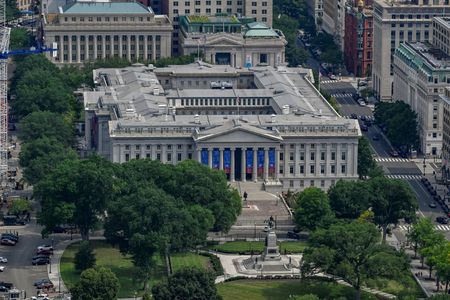

The U.S. Supreme Court has chosen not to allow a Rastafarian prisoner to pursue a lawsuit against prison officials who cut his hair, and legal experts are calling it an unusual blow to religious freedom at the nation’s highest court. Specialists in the field say the case highlights just how complicated religious freedom protections have become in the United States, particularly as the country’s faith landscape grows more diverse. Christians now make up 62 percent of the American population, a significant drop from 78 percent two decades ago. Roughly 30 percent of adults now identify with no religion at all, while the remaining population follows a variety of other faith traditions. Despite the outcome, the Rastafarian prisoner’s case attracted backing from a wide range of religious communities across the country.
The Trump administration is taking steps to bring back a dedicated LGBT option on the 988 mental health crisis hotline for young callers. The hotline currently provides specialized routing for specific groups, including military veterans and Spanish-speaking callers. About a year ago, the administration discontinued the “press 3” option for LGBT youth, citing a lack of funding. Now, officials are working toward restoring the service before the end of the year, following a congressional directive requiring that $33 million be directed toward LGBT-focused mental health programs for youth. Democratic lawmakers were the driving force behind that funding requirement.
A newly released survey from Talker Research shows that Americans remain sharply divided on the subject of Gay Pride Month. According to the poll, 17 percent of respondents believe Pride Month should not be observed at all, while another eight percent feel it has grown excessive and should be reduced in scope. On the other side, 28 percent of those surveyed said Pride Month is meaningful and deserves public support, and 21 percent said they support the concept in principle but acknowledge little personal investment in it. Researchers noted that these views closely mirror political party lines — support for the importance of Gay Pride Month is more than double among Democrats compared to Republicans, and roughly one in three Republicans said the observance should be eliminated entirely.