
ROME — The leader of Latin America’s foremost development bank sat down with Pope Leo XIV this week to make a case for responsible rare earth mining, pushing back against the Vatican’s growing campaign to pull investment from the mining sector.
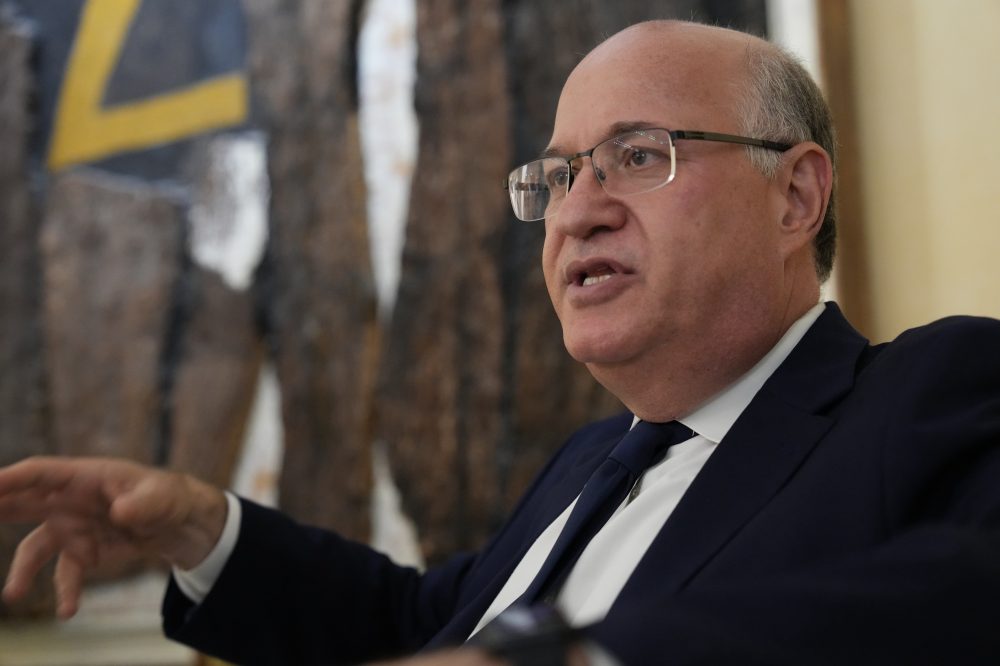
Ilan Goldfajn, who heads the Inter-American Development Bank, held a private meeting with the pope on Friday. He argued that extracting rare earth minerals could bring significant economic benefits to Latin America — as long as proper protections are in place and the wealth generated stays in local communities.
It’s a tough argument to make. For years, the Vatican has stood firmly against large multinational mining operations, particularly in Latin America, siding with Indigenous communities whose lands and ways of life are frequently devastated when mining companies move in.
Goldfajn’s visit came on the heels of a similar meeting earlier this year involving mining industry executives, signaling that he understands how much influence the pope’s voice carries in a region that is overwhelmingly Catholic. His goal appears to be convincing Leo that a cleaner, fairer approach to mining is achievable. Whether that message will land is unclear, given Leo’s personal history in the region and his vocal criticism of the backroom deals mining companies often strike with governments in the developing world.
Governments around the world have flagged dozens of minerals — among them copper, cobalt, lithium, and nickel — as critical to modern technology. The 17 rare earth elements fall within that group and are found in everything from smartphones and semiconductors to electric vehicles and jet engines.
“It’s a unique opportunity for the region, but you need to do it in the right way with the standards, the labor conditions, with the environmental conditions, the governance,” Goldfajn said in a Rome interview on June 18, the day before his papal meeting.
He went on to say, “We have exactly the tools to do that,” pointing out that the Inter-American Development Bank has roughly $4 billion worth of critical mineral projects in the pipeline across the region — primarily in Chile, Argentina, and Brazil — with about three-quarters of that funding tied to private companies. He had just wrapped up a presentation on rare earth minerals at a finance conference aimed at attracting European investors.
Mining carries a long and troubled history across Latin America, stretching back centuries to forced labor, the displacement of Indigenous peoples, widespread deforestation, contaminated waterways, and catastrophic dam failures. Foreign corporations drained enormous wealth from the earth while leaving local populations with little to show for it. During the colonial era, silver and gold were shipped across the Atlantic to decorate Catholic churches in Europe.
Pope Leo spent roughly twenty years working as a missionary in Peru, giving him a firsthand look at what mining does to Indigenous communities and the surrounding environment. He served in Chulucanas, within the archdiocese of Piura — an area with major copper mining operations — and in Trujillo, a region known for its gold deposits. His last assignment in Peru was in Chiclayo, which serves as a major logistics center for the extraction industries of northern Peru.
“He must have seen both sides: the promise, the future, but also the challenges,” Goldfajn said, reflecting on Leo’s years in Peru. He also noted that Leo had welcomed a group of senior mining executives for a private audience in January, and that he had been told by those executives the meeting was “very constructive.”
Just two months after that meeting, however, the Vatican launched a formal campaign urging divestment from mining companies. At a Vatican press conference, senior officials spotlighted an ecumenical Christian network called the Church and Mining Network, which is particularly active in Latin America. The campaign calls on local churches to examine their investment portfolios and divest where necessary, while also helping Indigenous communities understand what kinds of extraction are happening on their lands.
Leo is expected to travel to Peru in November, including to areas where he once served as a missionary. During his April visit to Africa — where he stopped in Cameroon, Angola, and Equatorial Guinea — he sharply condemned what he described as the “colonization” of Africa’s mineral wealth by mining corporations.
Even so, engaging the pope directly makes strategic sense, according to Bryan Harris, managing partner at Sabio, a strategic advisory firm focused on Latin America, who shared his thoughts via email. Harris, who advises international mining companies operating in the region, noted that while the pope alone won’t dictate investment decisions, his influence is significant.
“The decades he spent in Peru give him personal credibility and his messaging on mining sets the tone for how dioceses and parishes across the continent will engage with mining companies and projects,” Harris wrote. “These groups are often the basis of local opposition movements to mining, so the Pope has considerable sway on whether relations are confrontational or conciliatory.”
Harris also cautioned that processing rare earth minerals can be an extremely dirty process, relying heavily on chemicals that can contaminate water supplies if companies’ environmental commitments aren’t closely tracked and enforced by regulators.
Leo’s predecessor, Pope Francis — who was born in Argentina — addressed the damage caused by mining in his landmark 2015 environmental encyclical titled “Praised Be.” Francis highlighted the pollution of underground water from runoff, mercury contamination from gold mining, and sulfur dioxide emissions from copper extraction. He called it “essential” that Indigenous communities serve as the primary voices in any conversation about major projects affecting their territories.
The Vatican released no details about what was discussed in Leo’s private session with Goldfajn. In a separate meeting held the same Friday, Leo addressed participants at a conference held at the Vatican’s environmental education center — named after Francis’ 2015 encyclical. There, he condemned the mentality of prioritizing profit above all else, calling out those who seek to strip the earth of its resources “at the expense of the most vulnerable” in ways that risk the loss of human dignity.
According to the most recent estimates from the U.S. Geological Survey, the world holds approximately 75 million metric tons — or 82.7 million U.S. tons — of rare earth oxides. More than half of those reserves are located in China, while Brazil holds the second-largest supply.