
BATON ROUGE, La. — Days before a wrongfully convicted man was scheduled to begin his new role as an elected court official, Louisiana’s Republican leadership has dissolved the position entirely.
Governor Jeff Landry signed legislation on Thursday that wipes out the Orleans Parish criminal court clerk office, according to Trey Williams, a spokesperson for Louisiana’s Secretary of State.
The GOP maintains this move represents a streamlining initiative designed to boost efficiency within the local court system while reducing expenses. However, Democratic officials characterize the action as excessive governmental interference that undermines the voting choices of a primarily Black community.
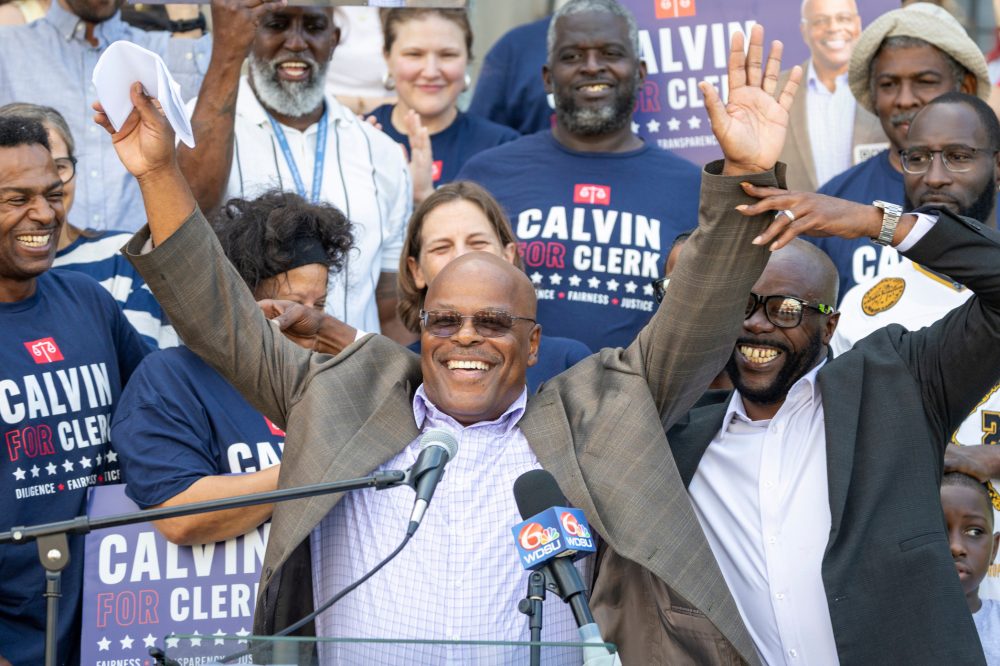
Calvin Duncan, who endured almost three decades of imprisonment for a murder he never committed, secured a decisive victory for the criminal court clerk role last November. He defeated the sitting officeholder with more than two-thirds of voter support and was scheduled to begin his duties this coming Monday. Duncan has petitioned a federal court to permit him to assume office as originally planned.
“It’s a sad thing to see the state government repeating what happened to Black public officials during Reconstruction,” Duncan said. “They will do what they do, and I will do whatever I have to do to vindicate the voters of New Orleans and make sure that what happened to me never happens to anybody else.”
Governor Landry has not responded to media inquiries seeking comment.
The 63-year-old Democrat, whose murder conviction was thrown out in 2021 when evidence surfaced showing police officers had provided false testimony, has pledged to reform the judicial system that wronged him. Duncan’s name appears on the National Registry of Exonerations.
Duncan and his allies believe he’s being singled out by Louisiana’s most influential Republican politicians, including some who continue to question his innocence despite his official exoneration.
“We’re doing something because powerful people don’t like him,” Rep. Mandie Landry, a New Orleans Democrat, told fellow legislators during an April committee session. The representative, who shares no family connection with the governor, called the Republican initiative “atrocious” and expressed concern about potential impacts on other elected offices statewide.
Republican supporters argue the new law merges Orleans Parish’s separate civil and criminal court clerk operations, bringing the parish in line with every other Louisiana parish that operates a single clerk’s office. The civil clerk position will continue and take on the criminal clerk’s responsibilities.
Dissolving the clerk role will save the state approximately $27,000 and the city $233,000, according to legislative auditor estimates, though the analysis notes that future consolidation costs remain “unknown.” The legislation also transfers roughly $1.17 million in state spending to parish responsibility. The civil and criminal clerk offices currently operate from different locations with separate case management systems.
In a statement to The Associated Press, the governor said eliminating Duncan’s elected position focused on enhancing governmental efficiency and “cleaning up a system in Orleans Parish that has been plagued by dysfunction and corruption for years.”
This consolidation represents part of a wider Republican initiative during the current legislative session to restructure New Orleans’ judicial system, including proposals to eliminate several other elected judicial positions within the parish. Those additional positions, however, would be phased out later, allowing current officials to complete their terms.
The legislation’s Republican sponsor, Sen. Jay Morris, whose district lies several hours away from New Orleans, stated his objective was implementing the clerk merger before Duncan assumes office, preventing him from beginning a four-year term. Morris has acknowledged anticipating legal challenges to the new law but believes it passes constitutional scrutiny.
“It’s unfortunate for Mr. Duncan, I concede that,” Morris told lawmakers in April. “He seems very nice, but we don’t make policy around here for just one person.”
While discussions have centered on Duncan, many observers express concerns about how this change might effectively nullify voter choices — a particularly sensitive issue in a heavily Republican state that has championed efforts to weaken the Voting Rights Act. Orleans Parish serves as a Democratic stronghold with a majority Black voting population.
“Mr. Duncan was elected by 68% of the vote in a city that’s majority African American. This is the will of the people, and what your bill attempts to do is usurp the will of the people,” Rep. Edmond Jordan, a Democrat, told Morris.
Even before the legislation reached the governor for signature, Duncan anticipated the outcome. Prior to the final decision, Duncan’s supporters organized a symbolic inauguration ceremony. Hundreds of people assembled on the Orleans Parish criminal courthouse steps to demonstrate support for the exoneree.
Duncan informed legislators that during his campaign last year, he encountered many individuals who typically avoid participating in elections: “Now, this bill tells people exactly what they had believed — that their vote doesn’t count.”