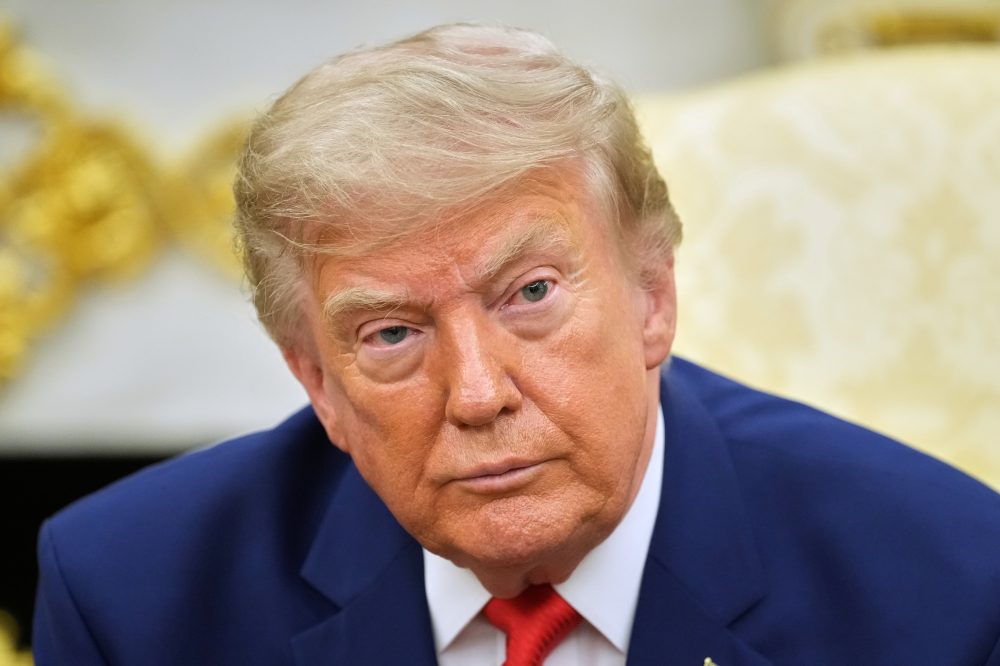

WASHINGTON – After more than two months of military action against Iran, President Donald Trump confronts the possibility that an extended stalemate could create an even larger crisis than what existed before hostilities began.
Despite both nations expressing confidence in their positions, the gap between them remains vast, offering no clear path toward resolution. Iran recently submitted a new negotiation proposal, which Trump swiftly rejected on Friday.
The continuing deadlock presents serious political challenges for Trump and the Republican Party.
A prolonged conflict threatens to maintain global economic disruption, including elevated gasoline costs for Americans, adding pressure on Trump as his approval numbers decline and potentially damaging Republican chances in November’s congressional midterm elections.
OBJECTIVES REMAIN UNACHIEVED
The ongoing situation underscores a fundamental issue: the military campaign has not accomplished many of Trump’s declared objectives.
Although successive American and Israeli military strikes significantly damaged Iran’s armed forces, Trump’s frequently changing war aims – ranging from government overthrow to eliminating Iran’s nuclear weapons capability – have not been realized.
Concerns about an extended stalemate intensified after Trump canceled his negotiators’ planned visit to Islamabad last weekend and rejected Iran’s ceasefire offer, which has been in effect since April 8.
Iran’s proposal involved postponing nuclear program discussions until the conflict officially ends and an agreement is reached regarding the Strait of Hormuz reopening. Trump rejected this approach, insisting nuclear issues must be addressed immediately.
Hope briefly emerged Friday when Iran’s state news agency IRNA announced Tehran had submitted a revised proposal through Pakistani intermediaries, causing global oil prices to drop after sharp increases following Iran’s effective closure of the strait. Trump expressed dissatisfaction with the offer to reporters, though he acknowledged ongoing telephone communications.
Failing to regain control of the crucial oil shipping corridor would significantly damage Trump’s presidential legacy.
“He’d be remembered as the U.S. president who made the world less safe,” said Laura Blumenfeld, a Middle East expert at Johns Hopkins University in Washington.
White House spokeswoman Olivia Wales stated that Iran’s “desperation” is growing due to military and economic pressure, and Trump “holds all the cards and has all the time he needs to make the best deal.”
POTENTIAL FOR RENEWED FIGHTING
With unclear next steps and no apparent conclusion, Trump has privately discussed implementing an extended naval blockade against Iran, potentially lasting months, designed to further restrict oil exports and compel a nuclear disarmament agreement, according to a White House official speaking anonymously.
Simultaneously, he has kept military options available. U.S. Central Command has developed plans for a “short and powerful” strike series and for securing portions of the strait to restore shipping access, Axios reported Thursday.
European diplomats indicated their governments, whose relationships with Trump have been strained by the conflict, anticipate the current Iranian situation will continue.
“It’s hard to see how this will end soon,” said one diplomat, requesting anonymity.
Iran maintains its defiant stance.
The country has wielded significant influence against America and its allies, creating an unprecedented energy crisis by restricting shipping through the strait, which previously carried one-fifth of global oil supplies.
Experts believe Iran will gain confidence knowing this capability will remain available even after the conflict ends.
“Iran has realized that, even in a weakened state, it can shut off the Strait at will,” said Jon Alterman of the Center for Strategic and International Studies in Washington. “That knowledge leaves Iran stronger than it was before the war.”
NUCLEAR MATERIALS PERSIST
Trump – who campaigned on avoiding foreign military entanglements – has also failed to accomplish his primary stated objective when attacking Iran on February 28: eliminating its nuclear weapons potential.
Intelligence suggests highly enriched uranium stockpiles remain buried following American and Israeli airstrikes last June and could be retrieved and processed into weapons-grade material. Iran maintains it wants American recognition of its uranium enrichment rights for claimed peaceful purposes.
Wales, the White House spokeswoman, claimed Trump had “met or surpassed” all military goals, including action “to ensure that Iran can never have a nuclear weapon.”
Another declared war objective – stopping Iranian support for proxy organizations including Lebanon’s Hezbollah, Yemen’s Houthis and Palestinian Hamas – also remains unaccomplished.
Defense Secretary Pete Hegseth denied in congressional testimony that the conflict had become a “quagmire,” despite Trump’s initial prediction of a four-to-six week duration.
Future peace negotiations appear unlikely to produce rapid results given the substantial disagreements.
While Trump has insisted on accepting only comprehensive solutions to Iran’s threat, he has occasionally indicated interest in finding an exit strategy from the unpopular conflict.
At Trump aides’ request, intelligence agencies are examining how Iran might respond if he declared victory unilaterally and withdrew forces, according to U.S. officials speaking to Reuters.
Independent analysts suggest Tehran would view such action as its own strategic victory for surviving the military campaign.
Meanwhile, European and Gulf Arab diplomats worry Trump might eventually accept an inadequate agreement allowing a weakened Iran to remain threatening.
FROZEN CONFLICT POSSIBILITY
With negotiations stalled, some experts suggest the conflict could become a frozen dispute resisting permanent resolution. This scenario could prevent Trump from significantly reducing Middle Eastern military presence.
America is already experiencing new strategic consequences.
These include damaged relationships with traditional European allies, who were not consulted before Trump initiated hostilities.
He has severely criticized NATO partners for not deploying naval forces to help reopen the strait, and recently discussed potentially reducing troop levels in Germany, Spain and Italy.
Trump must also manage a more hardline Iranian leadership, controlled by the Islamic Revolutionary Guard Corps, which assumed power after American-Israeli strikes eliminated several officials, including Supreme Leader Ayatollah Ali Khamenei.
The president’s early conflict appeal for Iranians to overthrow their government has been ignored.
Domestically, Trump faces pressure to end a war that has driven his approval rating to his term’s lowest point – 34%, according to Reuters/Ipsos polling – and pushed gasoline prices above $4 per gallon before midterm elections where Republicans risk losing congressional control.
A second White House spokeswoman, Taylor Rogers, said Trump remained committed to maintaining his party’s congressional majority and that elevated gasoline prices represented only “short-term disruptions” that would improve as the conflict diminishes.
However, Iranians are aware of Trump’s domestic challenges and may be willing to wait, though questions remain about how long they can prevent economic collapse.
“Iran isn’t fractured or folding, it’s playing for time,” Sina Toossi, a senior fellow at the Center for International Policy think tank in Washington, wrote on X.