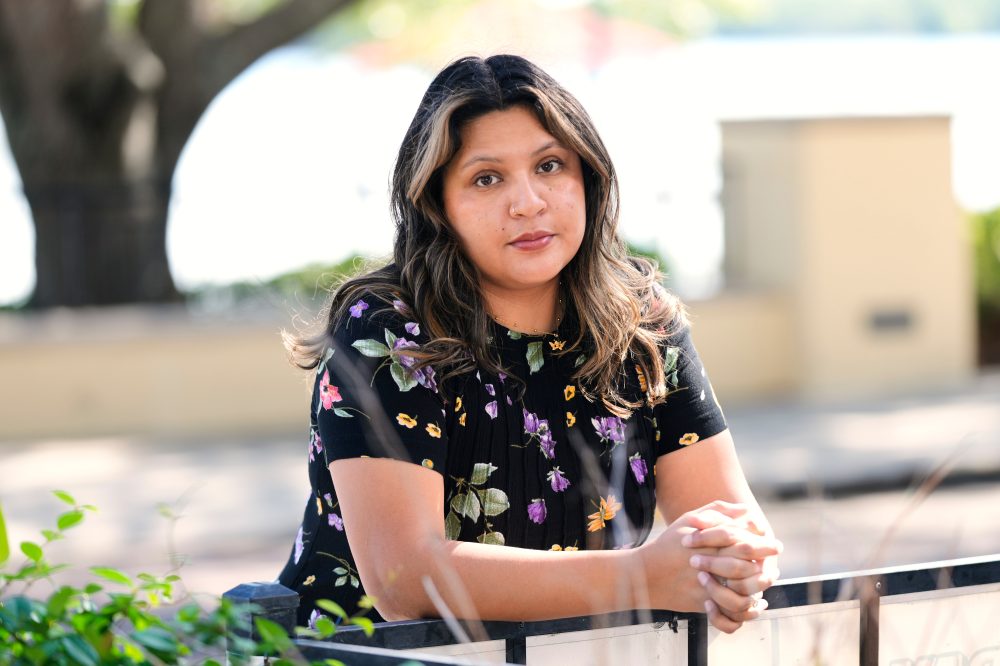

For over ten years, Melani Candia has successfully renewed her immigration status every two years, allowing her to remain in the United States with her spouse and pets while working as a special education teacher in Florida.
However, this cycle brought unprecedented delays in processing Deferred Action for Childhood Arrivals applications, causing Candia to lose her employment and live in constant worry about detention in the nation she has considered home since age 6.
“Fear has become my new baseline” as an immigrant in America, Candia explained. “But now, having a new level of vulnerability, it was a very quick increase in the fear.”
Processing delays for the Obama administration program, which provides temporary protection and work permits for individuals brought to America as children, have reached levels not witnessed since 2016’s major technical problems.
Hundreds of thousands of program participants, commonly called “Dreamers,” have experienced months-long waits only to watch their deadlines expire without decisions. This creates a precarious situation where employment authorization vanishes, driver’s licenses often become invalid, and their ability to remain in the country faces jeopardy.
“It’s not just anecdotal; it’s happening at a larger scale than we’ve ever seen before,” stated Greisa Martinez Rosas, executive director of United We Dream, an immigrant youth-led network.
Officials have not released statistics showing how many individuals recently missed renewal deadlines despite submitting applications 120 to 150 days early, as U.S. Citizenship and Immigration Services suggests.
“Under the leadership of President Trump, USCIS is safeguarding the American people by more thoroughly screening and vetting all aliens, which can lengthen processing times,” agency spokesperson Zach Kahler explained in a statement.
The DACA program provides qualified individuals with two-year renewable permits for living and working in America. While it doesn’t grant legal status, it offers deportation protection.
Between October 2025 and February 2026’s end, median renewal waiting periods reached approximately 70 days, compared to roughly 15 days in fiscal year 2025, according to USCIS data. This represents the longest median processing time since 2016’s 79-day average, with 2020 data excluded due to pandemic disruptions.
The Department of Homeland Security blamed 2016’s delays on technical problems during the transition to fully electronic DACA renewal processing.
By late April 2026, USCIS reported most renewal applications were completed within approximately 122 days, marking a two-week increase from earlier monthly estimates.
Congressional representatives and advocacy organizations report some applicants recently waiting six months or longer—about 183 days or more.
“The delays that people are concerned about used to be sort of a matter of weeks at a time,” U.S. Sen. Alex Padilla, D-Calif., said during an interview. “Now it’s from a few months to many, many months.”
Padilla joins dozens of legislators who have written to federal agencies questioning extended wait times and whether individuals missing renewal deadlines face arrest or deportation targeting.
More than five months after submitting her DACA renewal application, Elsa Sanchez continues awaiting a response. When her deadline passed in early April, her healthcare IT company placed her on leave, leaving the single mother of a college freshman without income.
This uncertainty affects everything from travel plans to household spending decisions on items like shampoo and cleaning supplies.
“I’m like, ‘I don’t know, maybe I can cut down on that. Maybe I don’t need this,’” she explained. “Because I’m saving every penny.”
Sanchez experienced similar delays about ten years ago, but current fears intensify amid President Donald Trump’s mass deportation initiatives.
Since DACA’s 2012 launch, the program has endured numerous legal challenges, including two Supreme Court cases. While the government continues approving renewals, a 2025 federal court ruling halted first-time application processing and potentially opens another Supreme Court review.
During 2025’s first eleven months, over 250 DACA recipients faced arrest and 86 experienced deportation, according to then-Homeland Security Secretary Kristi Noem. She indicated most arrestees had “criminal histories” without specifying crime types or distinguishing between arrests, charges, or convictions. Separate DHS responses to Democratic congressional inquiries reported conflicting figures of 270 arrests and 174 removals in 2025’s first nine months.
DACA eligibility partly depends on lacking felony convictions, significant misdemeanors, or three misdemeanor offenses. Previously, individuals facing status issues received warnings and opportunities to contest decisions before immigration officers initiated detention and deportation proceedings.
USCIS spokesperson Kahler emphasized that DACA recipients don’t receive automatic deportation protection.
“Any illegal alien who is a DACA recipient may be subject to arrest and deportation for a number of reasons —including if they committed a crime,” he stated.
U.S. Immigration and Customs Enforcement didn’t respond to questions about targeting DACA beneficiaries after missed renewal deadlines.
Federal lawmakers have recently documented cases of ICE arrests following DACA lapses.
Protection may have weakened further following last week’s Board of Immigration Appeals precedent decision determining DACA status alone cannot prevent deportation.
Experts suggest extended wait times might relate to restarting biometric appointments paused during the pandemic. Some applicants may miss deadlines by not submitting applications within recommended timeframes.
Immigration attorney and DACA recipient Maria Fernanda Madrigal submitted her renewal application approximately six weeks before her deadline, previously sufficient processing time. She also waited for her employer’s DACA workshop to waive the $550-plus renewal fee.
Earlier this month, Madrigal’s DACA expired and the mother of three lost her position.
“My first concern was my cases, to be honest, because I knew I was going to have to hand off everything, and my team is already overworked,” Madrigal said.
Immigration lawyers report USCIS has suspended renewal processing for individuals from dozens of countries the agency labeled “high-risk” in recent policy memorandums following presidential proclamations. The National Immigration Law Center estimates 3,000 to 4,000 people could be affected.
“This process that has no timeline is leading to people from certain countries experiencing a pause. And we don’t know how long that pause will be in place,” explained Ignacia Rodriguez Kmec, National Immigration Law Center attorney.
Candia checks her renewal status daily, most fearing detention in poor ICE facility conditions while also considering what returning to Bolivia after 25-plus years would mean.
“If God forbid that happened, it would break my heart because I’ve been in this country since I was 6,” she said. “My entire life is here.”