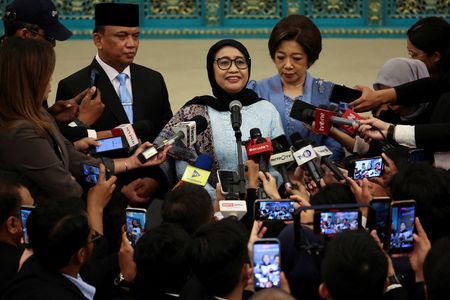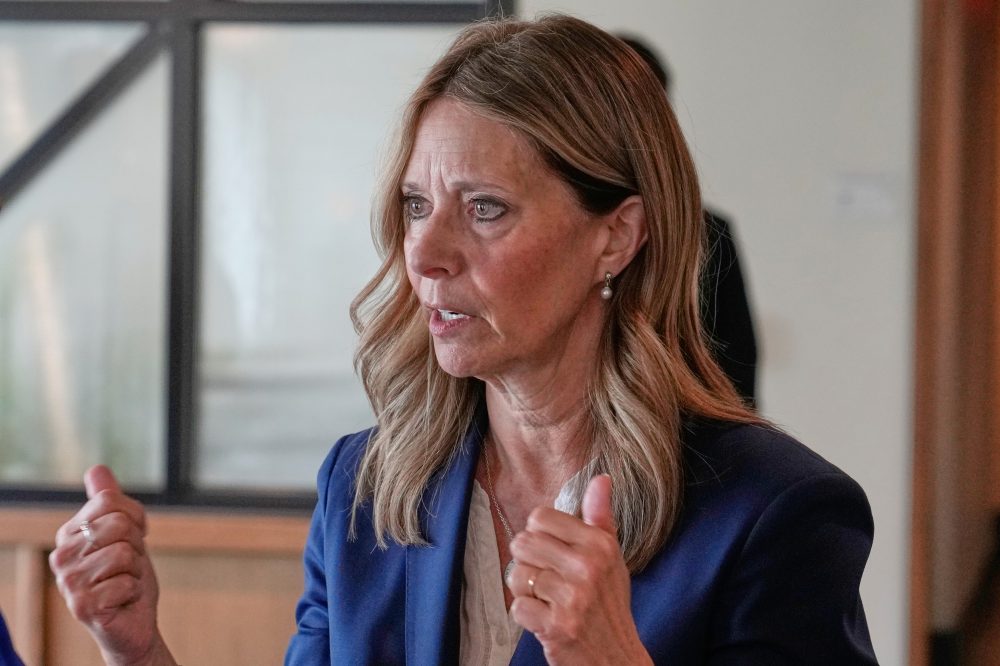

COLUMBUS, Ohio — Dr. Amy Acton, the Democratic candidate running without primary opposition for Ohio governor, confronts significant hurdles as she heads into the general election campaign.
The physician hopes to become the first Democrat to capture the governor’s mansion in two decades in a state where Republicans have gained political dominance. Her likely Republican challenger, Vivek Ramaswamy, brings national recognition and substantial personal wealth to fund his campaign efforts.
However, Acton’s greatest challenge may stem from her role during the COVID-19 health crisis.
As Ohio’s health department director when the coronavirus reached America in early 2020, Acton witnessed firsthand the devastating impact of deaths, public fear, and widespread disruption. Her aggressive governmental response to combat the virus made her a recognizable figure across Ohio.
Now, six years after those events, the emergency measures Acton implemented under Republican Governor Mike DeWine’s direction — including school shutdowns, business closures, sports event cancellations, and the postponement of the 2020 primary election — have resurfaced as major talking points for Republican critics targeting her gubernatorial bid.
At political gatherings, Ramaswamy has criticized Acton for promoting what he calls harmful “COVID ideology.” Acton’s team believes voters will reject such attacks.
Campaign spokesperson Addie Bullock stated: “Dr. Acton is proud of the work she did alongside Governor DeWine to put public health over politics, save lives and keep Ohioans safe. It is unfortunate that Vivek Ramaswamy wants to play politics on this issue.”
Dressed in her signature white physician’s coat, Acton became a familiar presence during the daily coronavirus updates with DeWine that captivated audiences statewide. She consistently delivered measured explanations about infection patterns, rising hospital admissions and fatalities, while offering practical guidance for residents.
“Ohio, don the mask, don your cape,” Acton urged at the time, encouraging citizens to embrace heroic actions.
The psychological wounds from the pandemic period remain unhealed throughout Ohio and beyond. The crisis fundamentally altered American perspectives on vaccination, government intervention in personal affairs, and confidence in public health authorities.
This underlying distrust, persisting despite reduced virus concerns, has become an unexpected element in the gubernatorial contest.
Ramaswamy, leading the Republican field, has launched advertisements exploiting continued resentment over Acton’s election directive issued for DeWine. Republican gatherings across Ohio now respond to Acton’s name with vocal disapproval.
“Are we choosing freedom or are we choosing Fauci?” questioned Zac Haines, a Republican state Senate candidate referencing former infectious disease specialist Anthony Fauci while energizing a recent Ramaswamy fundraiser audience. “Are we choosing liberty or are we choosing lockdowns?”
Among Democratic supporters, Acton maintains her status as a beloved figure who sparked the 2020 Dr. Amy Acton Fan Club, complete with lawn signs, collectible bobbleheads, and proposals for a commemorative state holiday.
During current campaign appearances, she appears cautious when referencing her tenure as Ohio’s top health official, occasionally avoiding direct mention of COVID-19 or coronavirus terminology.
“I had the honor and the privilege, the privilege, of serving in a very tough moment,” she addressed Democratic supporters in southwestern Ohio during March. “I’m proud of Ohioans, because together we flattened that curve, we saved a lot of lives.”
Federal Centers for Disease Control and Prevention statistics show Ohio achieved the 22nd-lowest per capita coronavirus death rate among all states during the pandemic’s initial year.
Acton, who departed her position in mid-2020, rarely discusses the aftermath of the restrictions: DeWine’s political backlash over business shutdowns and health requirements, Republican legislative efforts to curtail gubernatorial authority, and armed demonstrators who gathered outside her residence.
Speaking at a recent Columbus States Forum symposium designed to bridge political divides within the “Make America Healthy Again” movement, Acton highlighted her experience serving or advising five different governors.
“So I’ll work with anyone who wants to solve a problem rather than make one,” she declared, “which is what Ohioans are longing for.”
Despite endorsing Ramaswamy, DeWine criticized his campaign’s advertisement attacking Acton for postponing the 2020 primary.
“I told her to issue the health order,” he clarified. “The decision was mine.”
Both Ramaswamy and other prominent Republicans in this year’s elections maintain connections to Ohio’s pandemic management.
Leading Roivant Sciences, the biotech research firm he established in 2014, Ramaswamy “worked with the lieutenant governor as an adviser on COVID-19” throughout 2020, according to his 2021 editorial. The lieutenant governor then, Republican Jon Husted, currently serves as a U.S. senator seeking reelection and regularly joined Acton and DeWine during Ohio’s daily virus briefings.
A Roivant affiliate, Genevant Sciences, played a “fundamental role” according to a March announcement detailing a $2.2 billion settlement with Moderna regarding unauthorized use of Genevant’s and Arbutus Biopharma’s vaccine patents.
Throughout the pandemic, Ramaswamy, whose spouse practices medicine, endorsed vaccinations. He received immunization himself and promoted mask usage, though he maintained he never supported government mandates for either.
Ramaswamy’s company Datavant even advocated for a national COVID database enabling the small population segment developing natural coronavirus immunity to “get back to normal life” while others remained “segregated.”
Since launching his 2024 presidential campaign, Ramaswamy has worked to separate himself from that period. In early 2023, he left the Roivant board and removed references to his “COVID-19 Response Team” service from his Wikipedia profile, calling it a factual correction since the group never convened.
His campaign directed Roivant-related questions to the company, which failed to respond to email inquiries.
In discussions, Ramaswamy explained that both his COVID registry support and conversations with Husted focused on “getting the economy going again.” While describing his virus stance as “nuanced,” he pledged to challenge Acton regarding decisions to close Ohio businesses and schools and postpone the 2020 primary, ultimately conducted through mail voting.
“As a decision maker, you have to weigh the costs and benefits of your actions,” he stated. “You can’t be unmoored from the data.”