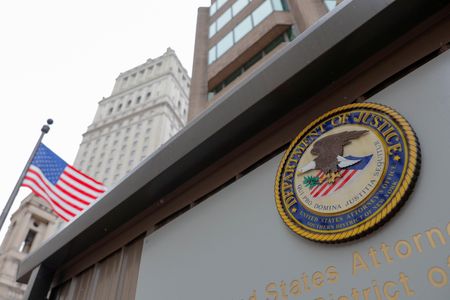

A federal magistrate judge in Minnesota has determined that military attorneys can legally prosecute civilian defendants in criminal cases that have no connection to military matters.
U.S. Magistrate Judge Shannon Elkins delivered the ruling Friday in Minneapolis during a high-profile case that drew national scrutiny. The decision involved Paul Johnson, a Minnesota man facing charges for allegedly attacking a Customs and Border Protection officer this past January.
The incident occurred during an intensified immigration enforcement operation under the Trump administration in Minnesota. To support these efforts, the Defense Department deployed Judge Advocate General’s Corps attorneys to work alongside the local U.S. Attorney’s Office, similar to deployments that had already taken place in Washington, D.C., and Tennessee.
Johnson’s defense team contended that using JAG attorneys to handle civilian prosecutions without military connections violated the Posse Comitatus Act, an 1878 federal statute that typically prohibits military involvement in civilian law enforcement activities. They also cited Defense Department regulations in their challenge.
The defense motion to remove the military prosecutor from the case attracted significant attention, including support from eleven former JAG officers who filed a legal brief stating the “government has crossed a perilous line.”
However, Judge Elkins ruled in favor of the government, determining that Congress had established exceptions to the Posse Comitatus Act through separate legislation. These exceptions grant the attorney general authority to designate JAG lawyers as special assistant U.S. attorneys for civilian prosecutions.
“If Congress passes statutes giving the Department of Justice the authority to appoint active military personnel as SAUSAs to prosecute civilians, that is the law,” Elkins stated in her written decision.
The judge acknowledged that Defense Department guidelines consider it “ill-advised” for JAG attorneys to handle civilian cases without military connections, but noted these internal regulations do not provide legal grounds to remove the military lawyer from Johnson’s prosecution.
Johnson’s attorney Kevin Riach announced plans to challenge the ruling through an appeal. The U.S. Attorney’s Office in Minnesota has not provided comment on the decision.