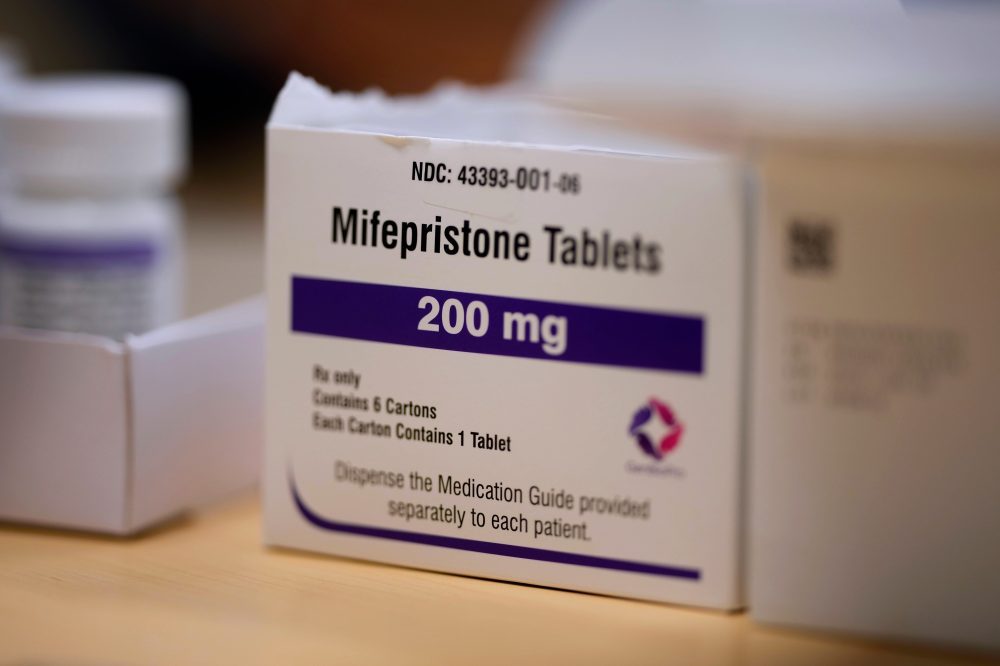

A federal appeals court has delivered the most significant blow to abortion access since Roe v. Wade was overturned, prohibiting the distribution of mifepristone abortion pills through mail services nationwide.
The 5th U.S. Circuit Court of Appeals in New Orleans issued the unanimous decision Friday, representing a major win for anti-abortion advocates who have worked to limit access to abortion medications prescribed through online consultations, which they believe circumvent state-level abortion prohibitions.
The decision, anticipated to reach the U.S. Supreme Court on appeal, mandates that mifepristone must be dispensed only through face-to-face visits at medical facilities, effectively overturning Food and Drug Administration guidelines.
Louisiana’s Attorney General Liz Murrill initiated legal action against the FDA last month, frustrated by insufficient federal measures against medication-based abortions. She argued that current FDA guidelines weakened Louisiana’s complete abortion prohibition.
Judge Kyle Duncan, a Trump appointee, stated in the decision: “The regulation creates an effective way for an out-of-state prescriber to place the drug in the hands of Louisianans in defiance of Louisiana law.”
While FDA representatives indicated the agency is reassessing mifepristone’s safety protocols, the appeals court observed no established deadline for completing this evaluation.
The Friday decision takes immediate effect during ongoing litigation and impacts every state, including those without abortion limitations.
Federal courts rarely overturn FDA scientific determinations, making the long-term implications for medication distribution uncertain.
Republican Murrill hailed the decision as a “victory for life,” while other abortion opponents praised the reversal of Biden administration policies that eliminated previous requirements for in-person physician consultations.
Neither FDA officials nor Justice Department representatives provided immediate responses to comment requests.
Danco Laboratories, which manufactures mifepristone and faces the lawsuit, requested the appeals court delay implementation for one week to allow time for Supreme Court intervention.
Approved in 2000, mifepristone provides a safe and effective method for ending early pregnancies. Healthcare providers typically combine it with misoprostol, a second medication unaffected by this ruling but less effective when used alone.
Research indicates that medication accounts for most U.S. abortions, with approximately 25% of procedures prescribed through telehealth services. Healthcare professionals suggest telehealth availability explains why abortion numbers haven’t decreased since the 2022 Roe reversal.
Consequently, abortion medications and out-of-state prescribing physicians have become primary targets for abortion opponents.
Several Democratic-controlled states have enacted protective legislation for providers who prescribe through telehealth and ship medications to states with prohibitions. These “shield laws” face testing through Louisiana and Texas court cases.
Dr. Angel Foster, who operates a telehealth service in a state with protective laws, consulted legal experts about the ruling’s impact on The Massachusetts Medication Abortion Project.
“We will do everything in our power to continue providing care to people in all 50 states,” she stated.
This case may elevate abortion as a central midterm election issue as Democrats seek House control while Republicans defend their slim majority.
Recent voting patterns suggest abortion-access supporters maintain political advantage. Following Roe’s overturn, abortion appeared on ballots in 17 states, with voters supporting abortion rights in 14 instances.
Fatima Goss Graves, who leads the National Women’s Law Center and supports abortion rights, criticized the ruling as “deeply out of step with both the public and fact-based science.”
Anti-abortion advocates criticized Trump following the ruling, expressing disappointment that he hadn’t personally blocked pill distribution.
Under Trump’s administration, the FDA approved an additional generic mifepristone version last year, disappointing some Republican allies.
Marjorie Dannenfelser, president of Susan B. Anthony Pro-Life America, said: “It’s shameful that the Trump administration’s inaction has forced pro-life states to take their battle to the federal courts,” while also praising the decision.