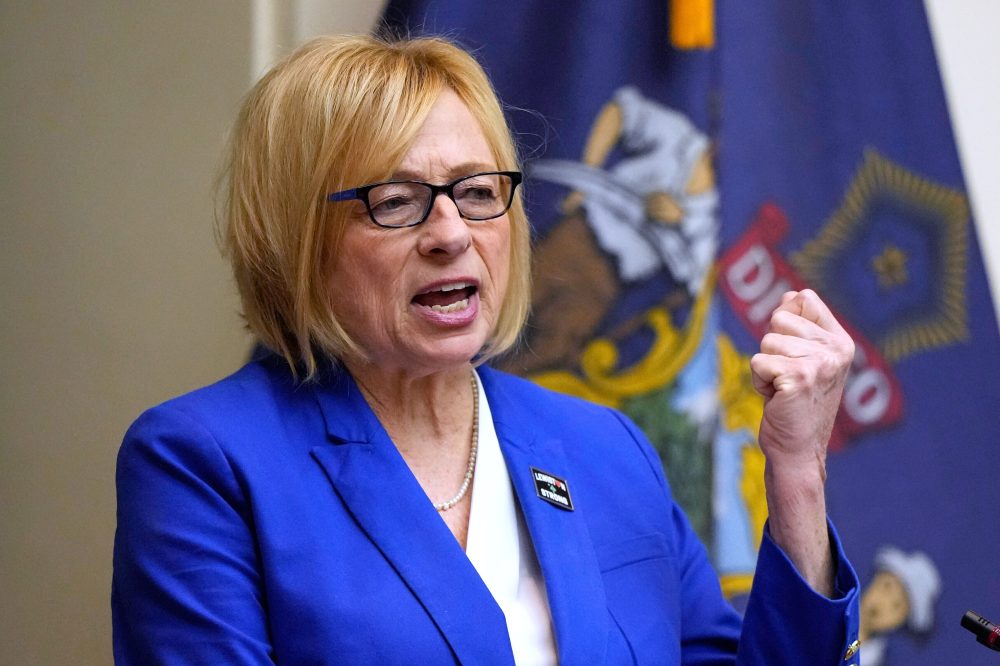

PORTLAND, Maine — Maine Governor Janet Mills announced Thursday she is ending her campaign for the United States Senate, withdrawing from the race just weeks ahead of the June 9 Democratic primary in what had become a contentious battle highlighting divisions within the party about electoral strategy.
“While I have the drive and passion, commitment and experience, and above all else – the fight – to continue on, I very simply do not have the one thing that political campaigns unfortunately require today: the financial resources,” Mills stated in her announcement. “That is why today I have made the incredibly difficult decision to suspend my campaign for the United States Senate.”
The two-term governor and veteran Maine political figure had been considered among the Democratic Party’s strongest potential candidates for 2026 when she launched her campaign last year. Mills enjoyed endorsements from Senate Minority Leader Chuck Schumer and several progressive organizations eager to challenge Republican Senator Susan Collins and potentially shift control of the narrowly divided Senate.
However, Mills found herself unable to match the campaign energy generated by political newcomer Graham Platner, her rival in the upcoming Democratic primary. Platner has sustained significant support from voters despite facing scrutiny over previous online statements and a tattoo that has been identified as a Nazi symbol.
In her withdrawal statement, Mills chose not to back Platner’s candidacy, instead pledging to continue protecting constitutional principles and democratic values during her remaining time as governor.
Senate leadership quickly pivoted to support the remaining candidate, with Schumer and Democratic Senatorial Campaign Committee Chair Senator Kirsten Gillibrand of New York announcing their commitment to working with Platner against Collins.
“Our North Star is winning a Democratic Senate majority, and over the past year, Senate Democrats have carved out multiple paths to do that,” they said in a joint statement.
The Mills-Platner primary battle exemplified larger Democratic Party discussions about the most effective approaches to challenging Republican incumbents and regaining influence in Washington under President Donald Trump’s administration, where Republicans control both the executive branch and Congress.
Platner has secured backing from Vermont Senator Bernie Sanders, who caucuses with Democrats, along with Democratic Senators Elizabeth Warren of Massachusetts, Ruben Gallego of Arizona, and Martin Heinrich of New Mexico.
Throughout her campaign, Mills emphasized her readiness to confront Trump, frequently referencing her past declaration that she would “see him in court” — alluding to Maine’s legal challenges against the Trump administration regarding federal funding disputes and transgender athlete participation policies.
Despite these efforts, Mills’ messaging often seemed overshadowed by Platner’s growing campaign momentum. His rallies have drawn thousands of attendees as he promoted his populist platform and maintained a heavy advertising presence across media outlets.
Generational differences also emerged as a campaign factor, with some Democrats advocating for younger leadership within the party. Mills is 78 years old, compared to Platner’s 41 years, while incumbent Senator Collins is 73.
Political analysts had initially expected Platner, rather than Mills, might be the candidate forced to exit the race.
Platner has faced persistent questions about a skull-and-crossbones tattoo identified as Nazi imagery, which he says he received on his chest during a drinking episode while on military leave in Croatia. He has stated the tattoo has been modified to eliminate that symbolism. He has also addressed criticism over provocative statements in previous online posts, which he has since renounced.
However, Platner’s openness in discussing these past errors appears to have contributed to his positive public reception.