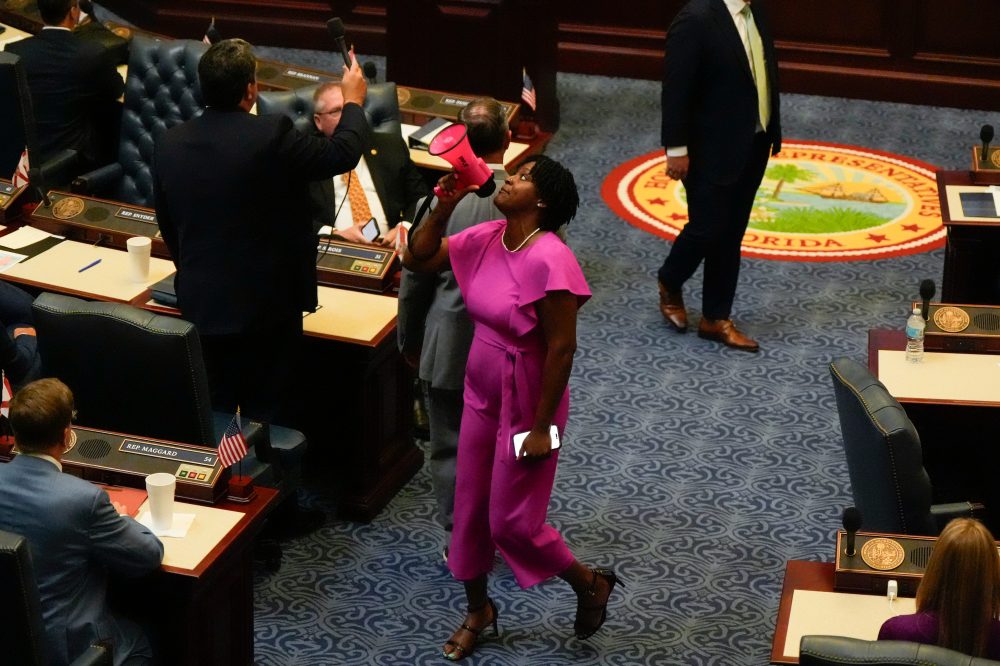

Standing near the Memphis museum that commemorates Dr. Martin Luther King Jr.’s assassination, Willie Simon expressed deep concerns about America’s political future following a major Supreme Court decision.
The ruling significantly weakened key protections in the Voting Rights Act, leaving Simon, who chairs the Shelby County Democratic Party in Tennessee, worried about the implications for minority voters and the nation’s democratic foundations.
“Not in the in-crowd group, they can just erase us,” Simon stated, describing what he sees as a dangerous precedent set by the court’s conservative justices.
The Supreme Court’s decision has removed important safeguards that previously required states to create congressional districts giving minority communities meaningful electoral influence. This change has intensified an already heated national battle over political map-drawing, with both major parties abandoning longstanding practices to gain competitive advantages.
Republican-controlled legislatures in multiple states are preparing new redistricting sessions this week aimed at eliminating House districts currently held by Democrats, with additional efforts planned in the coming months.
This development represents another escalation in the deterioration of American democratic norms that has accelerated over the past decade. Political discourse has grown increasingly hostile, incidents of political violence have risen, and efforts to undermine election integrity have persisted since the January 6th Capitol attack five years ago.
The traditional rules and customs that once helped manage the country’s deep divisions have been replaced by an all-out pursuit of political dominance.
“I’ve never subscribed to the idea we’re in a civil war, but the gerrymandering wars and the recent decision from the Supreme Court do not make the United States more united,” explained Matt Dallek, who studies politics at George Washington University. “It speeds up the hyperpartisan force and atmosphere that people feel on both sides.”
Former President Trump initiated the current redistricting battle last year by encouraging Republicans to redraw congressional boundaries to protect their House majority in upcoming midterm elections.
This represented an unusual departure from normal practice, as redistricting typically occurs only after the decennial census to reflect population changes. However, a 2019 Supreme Court ruling eliminated federal court oversight of partisan gerrymandering, creating an opportunity Trump chose to exploit.
When Republican states like Texas began altering their district boundaries, Democratic states such as California responded in kind. The conflict appeared headed toward a stalemate until the Supreme Court issued its anticipated decision in Louisiana v. Callais.
The ruling eliminated the final national barrier to extreme gerrymandering by weakening the Voting Rights Act provision requiring districts to be drawn so racial minorities can elect their preferred candidates in areas where voting patterns differ along racial lines.
This decision has unleashed new political possibilities.
Tennessee Republicans intend to eliminate their state’s sole Democratic congressional seat, which has a Black majority and centers on Memphis, by dividing it among more conservative suburban and rural white areas. Over a dozen other minority-majority districts, primarily in Southern states, face similar threats.
Louisiana has delayed its May 16th congressional primaries to allow time for redrawing two majority-Black Democratic seats that were previously protected. Alabama is seeking Supreme Court permission to redraw its two majority-Black districts.
“We should demand that State Legislatures do what the Supreme Court says must be done,” Trump posted on social media Sunday. “That is more important than administrative convenience.”
He predicted Republicans could gain 20 seats through redistricting efforts.
Democrats have responded with threats to target conservative strongholds in states like New York and Illinois, redistributing Republican voters into more liberal, urban districts.
With fewer legal or self-imposed restrictions, experts anticipate redistricting will become an ongoing competition to extract maximum political benefit from legislative maps.
“It’s hard to know where it ends,” said UCLA law professor Rick Hasen.
Political strategists have enthusiastically shared hypothetical maps showing California’s 54 House seats all drawn for Democrats, or Southern states with minimal Democratic representation. Most observers agree the eventual result will make it nearly impossible for Democrats to win House seats in Republican-controlled states, regardless of substantial Democratic voter populations, and vice versa.
This outcome contradicts American democratic principles, according to Jonathan Cervas, a Carnegie Mellon political scientist who has redrawn maps for courts reviewing redistricting cases. He noted the nation’s system “was founded on this idea that it’s majority rule with minority rights.”
“There is no more rule of law in redistricting,” Cervas observed. “There have to be some constraints, somewhere. Otherwise we don’t really have elections.”
Drawing legislative boundaries represents politicians’ most effective method for manipulating election outcomes. They can create virtually guaranteed victories by including enough of their supporters while limiting opposition voters’ ability to win that seat or adjacent districts.
This strategy has existed since the nation’s founding. Democratic gerrymandering helped maintain House control during the Reagan presidency. Following 2010 midterm victories, Republican state legislature majorities enabled the GOP to secure House control even during President Obama’s 2012 reelection.
However, this didn’t prevent the 2018 “blue wave” during Trump’s presidency, when Democrats reclaimed the House. This demonstrated that even aggressive partisan maps may suppress political shifts temporarily but eventually fail as public sentiment changes.
“When you try to get every last ounce of blood from the stone you can end up shooting yourself in the foot,” noted Michael Li from the liberal Brennan Center for Justice in New York.
Political alliances also evolve, and previously reliable voters can change allegiances. This has occurred during the Trump era, with Democrats gaining support among wealthy and suburban voters while Republicans have attracted more Black and Latino voters.
While Republicans cannot fully utilize the Supreme Court ruling’s impact until after November’s midterm elections, Democrats will struggle to identify enough seats to offset those losses.
Sean Trende, a political analyst who has created maps for Republicans, agreed the court decision will likely trigger unchecked partisan gerrymandering. He noted the difficulty of finding neutral parties to restrain politicians who draw boundaries for their own benefit.
The approaching conflict, Trende suggested, represents more of a polarization symptom than its underlying cause.
“All our institutions are broken. We don’t speak a common political language,” Trende explained. “This is what you get.”