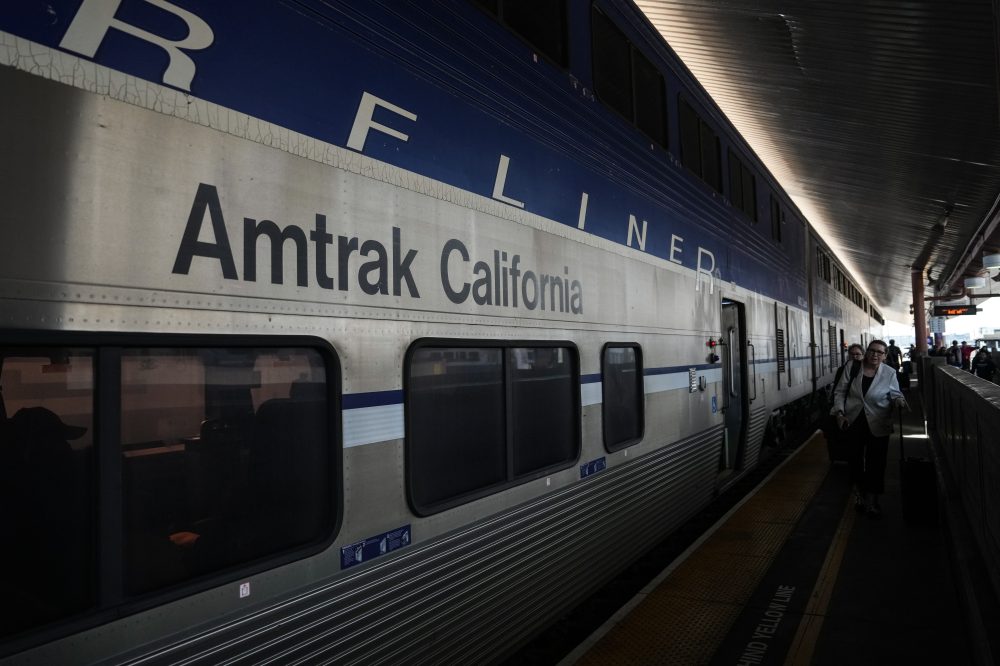

The national passenger railroad is exploring plans to install secure storage containers on trains across its network, a move that would significantly expand where firearms can be transported by rail passengers, according to sources familiar with the discussions.
This policy consideration has been under review since the beginning of the year, following pressure from Trump administration representatives to reduce current weapon transport limitations, two individuals with knowledge of the plan told The Associated Press. These sources requested anonymity as they lack authorization to discuss the matter publicly.
The railway company has not dropped the idea even after Saturday’s incident involving a suspect who allegedly used Amtrak service to travel from California to the nation’s capital while carrying weapons with the intention of harming President Donald Trump and other government officials during Saturday’s White House Correspondents’ Association dinner.
Cole Tomas Allen was taken into custody after law enforcement says he attempted to breach security barriers near the hotel venue hosting the event, leading to gunfire being exchanged with Secret Service personnel. A Secret Service agent wearing protective armor was struck in the vest but survived the encounter.
Law enforcement reports Allen carried a shotgun and semi-automatic handgun during his rail journey from Torrance, California to Washington. Amtrak has not disclosed whether he complied with current regulations, which require passengers to declare firearms and permit the company to secure them with checked luggage. Allen’s legal representative states he lacks a criminal history and maintains presumption of innocence.
The railway’s potential rule modification, which could enter testing phases shortly, involves installing secure containers throughout its fleet to permit passengers nationwide to transport weapons, rather than limiting such transport to trains equipped with locked baggage compartments, according to AP sources.
This modification would affect over 1,500 daily train services – including routes serving approximately 750,000 daily passengers along Amtrak’s Northeast Corridor – compared to current restrictions limiting firearms to several dozen primarily long-distance services with secured baggage areas.
John Feinblatt, who leads Everytown for Gun Safety, expressed concerns about reduced safety measures.
“Just days after a man took an Amtrak train to Washington with a shotgun and pistol and tried to assassinate the president and other federal officials, the Trump Administration is trying to open the floodgates for firearms on every Amtrak route, while also moving to hollow out the agency responsible for enforcing gun laws and preventing gun trafficking,” he said. “This will only make Americans less safe and Congress must step in before the next tragedy.”
Representatives from Amtrak and the Transportation Department have not provided immediate responses regarding the firearms policy discussions.
Present regulations require passengers to declare firearm possession and store them unloaded in rigid containers. Weapons must comply with specific size and weight standards and are restricted to checked baggage, mirroring airline firearm transport procedures.
The potential modification would maintain weapon security requirements aboard trains, with only conductors holding access keys, according to the two AP sources. The strategy involves equipping every train with secure storage containers.
Questions remain about how Amtrak would verify legal firearm possession and whether destination jurisdictions would permit such transport. Certain locations, including New York City, impose carrying restrictions and may require permits, while other areas maintain more permissive regulations.
Despite existing Amtrak firearm policies, some passengers may already carry weapons aboard trains. Unlike airports with passenger and luggage screening, train travelers face no security checks, and Amtrak does not conduct criminal background verification through passenger name searches. This applies to busy terminals like Washington’s Union Station and small unstaffed stations nationwide where trains collect passengers during overnight hours.
At remote unstaffed locations, passengers frequently board and trains depart before conductors make contact or scan tickets, creating several minutes before weapons could be secured under the proposed system.
Security researcher Sheldon Jacobson, whose work influenced TSA PreCheck development, suggests railways should enhance passenger screening by gathering more ticket purchase information and conducting background verification. However, he notes enforcement challenges when no screening mechanism exists.
“The initial condition is that there’s almost 400 million guns in this country,” he said. “Then work from there as opposed to trying to create a utopian environment where there’s not guns and we’re going to keep it that way.”
Rail transportation presents lower risks than air travel, making extensive passenger screening systems at every station economically unfeasible compared to TSA airport procedures, Jacobson explained. He acknowledged this assessment could shift following any major passenger train incident.
“You have to weigh the risks and rewards. And you have to say, where are we going to put our money to get the greatest risk reduction for the greatest benefit with the least inconvenience to people?” he said.
Labor organizations have advocated for enhanced passenger rail worker protections for nearly ten years, following incidents such as the 2017 conductor shooting by an angry passenger at Naperville, Illinois station.
Two Congressional proposals would provide rail employees protections similar to airline crew members by establishing federal crimes for interfering with or assaulting rail workers during duty performance. Unions have achieved some success with state-level legislation.
Following September 11th attacks, Amtrak and numerous ground transportation companies prohibited weapons on trains and buses, though none implemented comprehensive passenger firearm detection or screening systems. In 2010, Congressional legislation mandated that Amtrak and other companies permit firearm transport when properly checked.