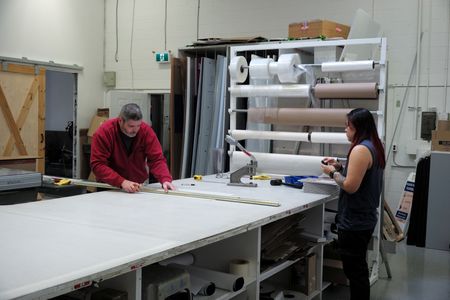

WINDSOR, Ontario – A Canadian sign company that serves automotive clients is experiencing the economic ripple effects of trade uncertainty between the United States and its northern neighbor.
FASTSIGNS, located in Windsor, Ontario, struggled through 2024 as automotive industry orders disappeared, marking the company’s most difficult period since COVID-19. While new projects have provided some recovery this year, the business reports that clients are requesting extended payment schedules, placing smaller orders, and negotiating more aggressively on pricing due to concerns about the United States-Mexico-Canada Agreement review.
President Donald Trump has indicated he may eliminate the three-nation trade pact he previously negotiated, stating it no longer serves American interests. U.S. Trade Representative Jamieson Greer has characterized discussions with Canada regarding the agreement – which allows most Canadian products to enter the U.S. without tariffs – as difficult.
Windsor represents one of the Canadian communities most vulnerable to these trade tensions, as its economy relies heavily on American business relationships. Canada’s economy shrank 0.6% during the final quarter of last year.
“CUSMA is very, very important,” said Jackie Raymond, co-owner of FASTSIGNS, using the Canadian name for the trade agreement. “It trickles down to every little business, right down to your barber shop and your nail shop, which will affect all of our customers.”
Mexico has begun official discussions with the United States about extending the agreement, with a July 1 completion target. Canada has only participated in preliminary conversations, though the deal remains valid even if negotiations aren’t finished by the deadline.
Windsor operates as a manufacturing center filled with thousands of small specialty parts producers, primarily serving automotive companies and equipment makers both locally and across the Detroit River in America’s car manufacturing hub.
The city ranks among Canada’s most vulnerable locations regarding Trump’s proposed tariffs on steel, aluminum, and vehicles. Windsor’s economy has experienced significant volatility over the past year as Trump has shifted positions on tariffs, although most Canadian products have maintained duty-free status under the current agreement.
Numerous small parts and equipment manufacturers in the city, which depend on close cooperation with Detroit’s auto industry, have faced declining demand as orders disappeared.
Manufacturing represents nearly 25% of jobs in the Windsor-Essex area, which includes Windsor and neighboring communities. Approximately 90% of the city’s exports cross the border, frequently multiple times during manufacturing processes. The United States purchases about 68% of all Canadian exports.
“When Donald Trump… does make a threat, we feel it first, and we feel it hardest,” said Ryan Donally, CEO of the Windsor-Essex Chamber of Commerce.
The chamber represents 750 area businesses with more than 40,000 workers. According to the organization, companies halted investments, postponed production, and eliminated positions during peak tariff uncertainty last year.
These conditions drove the region’s jobless rate above 11% in June, the highest among major Canadian metropolitan areas.
When Trump excluded USMCA-compliant Canadian exports from tariffs last March, Windsor began recovering somewhat.
This year, automaker Stellantis NV implemented a third production shift at its local facility, and LG Energy Solution announced plans for a battery manufacturing plant, improving employment opportunities. However, ongoing uncertainty continues affecting business confidence.
“So long as the CUSMA relationship exists, Windsor is going to be okay,” Donally said. “Should that erode somehow… that’s where the challenges come.”
Windsor’s unemployment rate, while improved from June’s peak, remains among Canada’s highest major cities at 8.6%.
Area retailers report decreased foot traffic, dining establishments describe smaller crowds, and construction companies say the housing market has nearly stopped – real estate typically shows early signs of stress from tariff-related economic impacts.
“When people are going to make the biggest investment of their life, they really want confidence in their job, in the longevity of their job, in the economy itself. And people lost that due to the tariffs,” said Brent Klundert of BK Cornerstone, a local real estate builder.
Klundert eliminated 13 of his 21 employees as sales and home values declined last year.
Beginning in January, he has brought back 10 workers, anticipating that homebuyers who waited on the sidelines for a year would return to the market. Only a few have returned so far.
Canadian Real Estate Association information showed Windsor’s residential property sales dropped 15% in February, nearly twice the national decrease of 8%. Regional home prices also fell more sharply than the national average.
“If we can get through our trade agreements with the U.S., I think that will add a lot of confidence,” Klundert said.
Professional training and apprenticeship programs have also suffered in Windsor, as young people consider trade uncertainty when planning their careers.
Lido Zuccato, chair of the School of Skilled Trades and Apprenticeships at St. Clair College, reported the institution canceled a post-secondary manufacturing program scheduled to begin this fall due to insufficient enrollment.
Donally emphasized that Windsor’s strong economic and cultural connections with Detroit highlight what’s at risk – residents support Detroit sports teams, tune into American radio stations, and travel across the border daily for employment and business activities.
“That deep relationship is pretty hard to divorce,” he said.