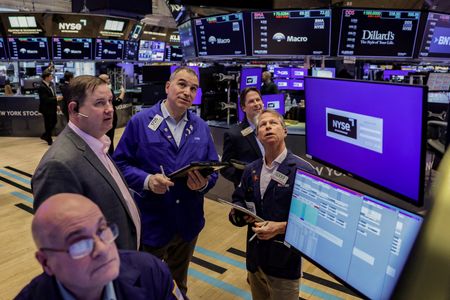

Major U.S. stock markets tumbled to seven-month lows on Monday as concerns about economic growth overshadowed inflation worries, with the Iran conflict now stretching into its fifth week and oil prices climbing further past the $100 mark.
The S&P 500 and Nasdaq both reached their lowest points since August, while government bond yields declined as investors grew increasingly worried about the economic impact of the ongoing Middle East crisis.
Market analyst Jamie McGeever noted that the surge in borrowing costs triggered by the Iran war has created particularly challenging conditions for major technology companies, which are heavily investing in artificial intelligence projects and increasingly relying on debt financing.
Asian markets took a beating, with Japan’s market falling 3%, though European markets showed resilience with the STOXX 600 gaining 1% and Britain’s FTSE 100 climbing 1.6%. Wall Street saw mixed results, but the technology-heavy Nasdaq and broader S&P 500 hit their lowest levels since late summer.
Within the S&P 500, only three of eleven sectors declined, but their significant market weight dragged down overall performance. Technology stocks fell 1.5%, industrial companies dropped 1.6%, and energy sector shares declined 0.9%. Notable individual losers included Sysco, which plummeted 15%, and Micron Technology, down 10%.
The dollar strengthened to its highest level since May of last year, while the euro weakened on growth concerns and the yen recovered following intervention warnings from Japanese officials.
In bond markets, U.S. Treasury yields fell 7-9 basis points, with the yield curve between 2-year and 10-year bonds steepening for the second consecutive day to 53 basis points, marking the steepest curve in two weeks.
Commodity markets showed energy strength, with Brent crude rising 1% and West Texas Intermediate jumping 4%. Gold gained 0.5%, and aluminum prices surged 4% on the London Metal Exchange.
As the first quarter nears its end, markets have experienced extreme volatility. Brent crude oil has soared 85%, marking its largest quarterly gain since 1990. Meanwhile, the so-called “Magnificent 7” mega-cap technology stocks have fallen 17%, bringing them close to bear market territory with nearly 20% losses from their October peaks.
The global energy infrastructure has sustained significant damage, with 17% of Qatar’s gas capacity offline and 20% of worldwide oil and gas flows disrupted by the Strait of Hormuz closure. Several Middle Eastern nations, including Saudi Arabia, have been forced to shut down energy production facilities and refineries.
Federal Reserve Chair Jerome Powell stated Monday that U.S. monetary policy is in a “good place,” allowing officials to “wait and see” how energy and supply disruptions affect both employment and inflation objectives. Powell was among the first central bank officials to use this phrase in January of last year.
Despite rising borrowing costs and increased market uncertainty from the Iran conflict, major corporate deals continue. Sysco announced plans to acquire catering supplier Jetro Restaurant Depot in a $29 billion transaction. Unilever is reportedly negotiating to sell its foods division to McCormick & Company for over $30 billion. Earlier this month, a consortium including BlackRock’s Global Infrastructure Partners and Sweden’s EQT AB purchased U.S. power company AES Corp for $33.4 billion.
Looking ahead, investors will monitor Middle East developments and energy market movements. Key economic data releases include Reserve Bank of Australia meeting minutes, Japanese retail sales and unemployment figures, Chinese manufacturing data, German retail sales, eurozone inflation estimates, UK GDP figures, and U.S. consumer confidence and job openings reports. Several Federal Reserve officials are scheduled to speak, including Chicago Fed President Austan Goolsbee and other regional bank presidents.