Elon Musk’s space exploration company SpaceX is reportedly preparing to submit documentation for a public stock offering with federal regulators in the coming days, according to a Tuesday report from The Information.
A source familiar with the company’s plans told the publication that SpaceX could submit its initial public offering paperwork as early as this week or by next week.
Financial advisors working on the preparation believe SpaceX could potentially secure more than $75 billion through the stock market debut, according to the report.
The portion of shares available to individual investors may surpass 20%, though that figure remains under discussion and has not been finalized, the source indicated.
Reuters was unable to independently confirm these details, and SpaceX has not yet provided a response to requests for comment on the reported IPO plans.
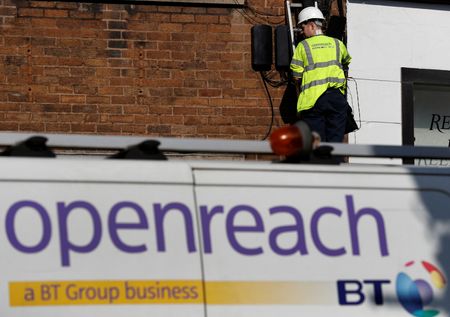
LONDON, March 25 – A major British telecommunications infrastructure company announced Wednesday that it has strengthened its collaboration with Google Cloud to harness artificial intelligence for faster fiber internet deployment and reduced environmental impact from its extensive vehicle operations.
Openreach, the network division owned by BT that operates Britain’s largest broadband infrastructure, revealed the enhanced partnership utilizes Google’s advanced data analytics to examine routing patterns, vehicle idle time, and maintenance issues across its massive fleet of 24,000 vans that travel nearly 200 million miles annually.
“By applying Google Cloud’s technologies to real operational challenges, we’re seeing practical, measurable benefits,” said James Tappenden, a managing director at Openreach.
According to the telecommunications company, the intelligent system has already begun eliminating unnecessary vehicle trips, decreasing fuel consumption, and accelerating the transition to electric vehicles – improvements that have eliminated approximately 10,000 tonnes of carbon dioxide equivalent each year.
The network infrastructure firm also disclosed it is employing Google’s artificial intelligence algorithms to create detailed maps of 35 million residential properties and major transportation routes throughout the country, enabling project managers to determine optimal locations for high-speed fiber cable installation.
Openreach has committed 15 billion pounds ($20.1 billion) toward expanding its fiber network infrastructure to reach 25 million properties by late 2026.
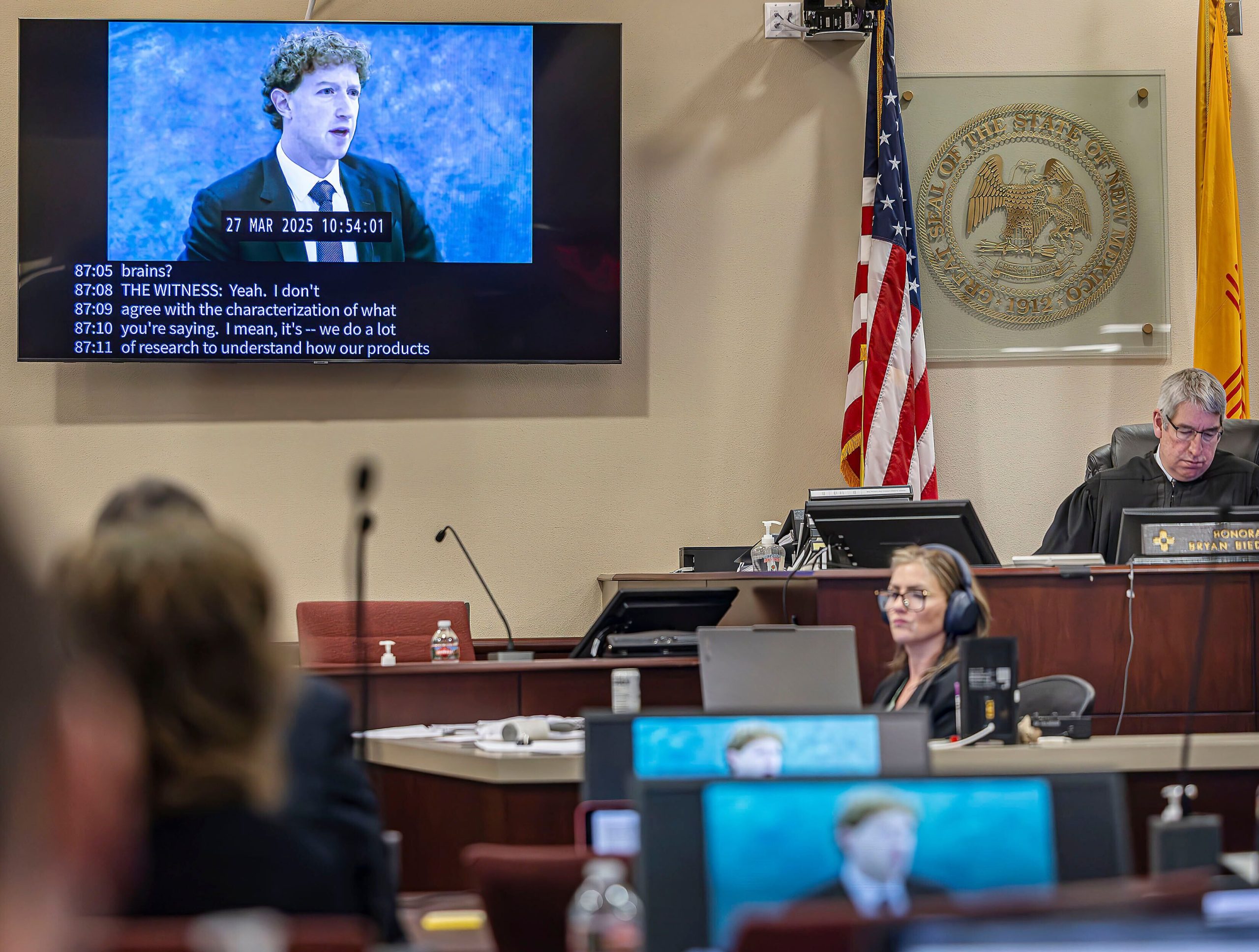
A jury in New Mexico has delivered a significant verdict against social media giant Meta, determining that the company’s practices have damaged children’s mental health and violated state consumer protection laws.
The jurors concluded that Meta participated in what they called “unconscionable” business practices, deliberately exploiting young users’ vulnerabilities and lack of experience. The ruling found that Meta committed thousands of separate infractions, with each violation contributing to a massive $375 million financial penalty against the company.
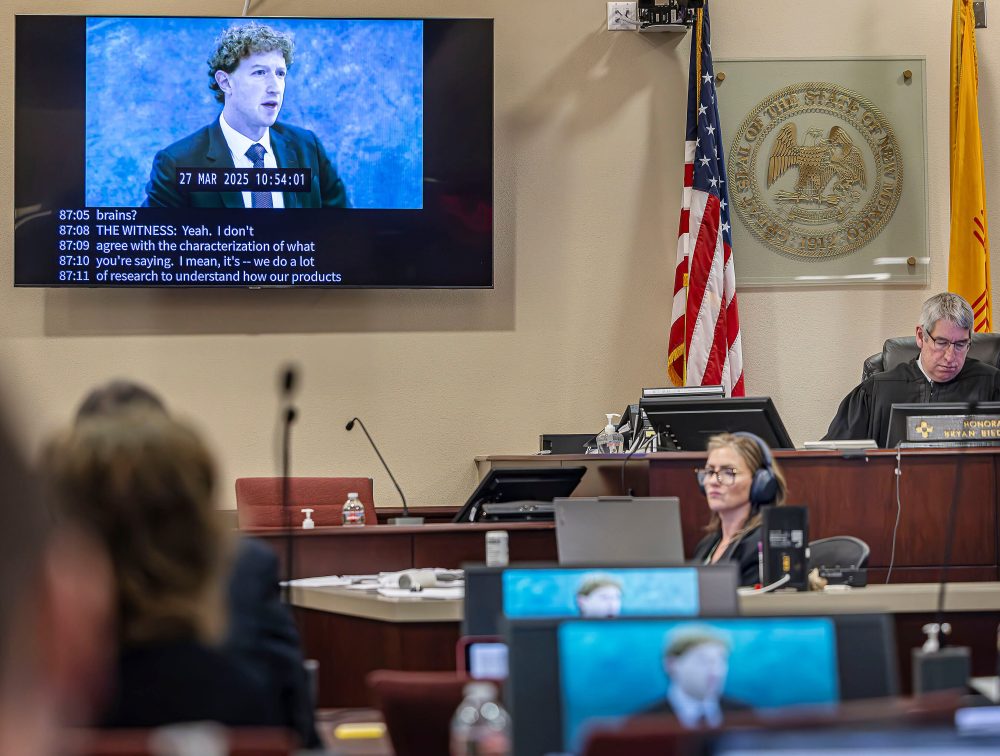
During the proceedings, jurors were shown a recorded deposition from Meta’s Founder and CEO Mark Zuckerberg on March 4 in Santa Fe, New Mexico, as part of the evidence presented in the case.
This landmark decision marks a significant legal victory for child safety advocates and represents one of the most substantial financial penalties imposed on a major social media platform for alleged harm to minors. The verdict specifically focused on how Meta’s business model and platform design may have negatively impacted the mental health and overall safety of children using their services.
Amazon has completed its purchase of Fauna Robotics, a startup that recently launched a social humanoid robot called Sprout just weeks ago. The acquisition comes as the tech giant continues expanding its robotics portfolio beyond warehouse automation.
While Amazon already operates more than one million robots in its fulfillment centers for heavy-duty tasks, the Sprout robot represents a shift toward consumer-friendly robotics focused on entertainment and social interaction rather than industrial work. The compact robot stands just 1.5 feet tall and features a distinctive rectangular head design.
Fauna Robotics CEO Rob Cochran announced the news on social media, stating he was “incredibly excited to share that Fauna Robotics has officially joined the Amazon family.” He confirmed the New York-based startup will continue operating under the name “Fauna Robotics, an Amazon company.”
Neither company revealed the purchase price or financial details of the transaction.
According to Amazon, Fauna’s founding team and staff will relocate to Amazon’s New York operations, where they’ll focus on “new ways to make our customers’ lives better and easier.”
Fauna launched its flagship product this past January, positioning it as a development platform for researchers rather than just a consumer robot. The company has been selling the technology to university labs and corporate research facilities studying home robotics applications, with Disney among its early clients.
Priced at $50,000, the Sprout robot lacks heavy lifting capabilities but excels at entertainment functions. It can perform popular dances like the Twist and the Floss, pick up small items such as toy blocks and stuffed animals, and even stand up from furniture to walk around.
This acquisition represents Amazon’s continued push into home robotics, building on its existing Alexa voice assistant technology already present in millions of households. However, the company has faced setbacks in this sector recently.
Amazon abandoned its planned acquisition of Roomba manufacturer iRobot last year after encountering regulatory opposition from both European and American authorities.
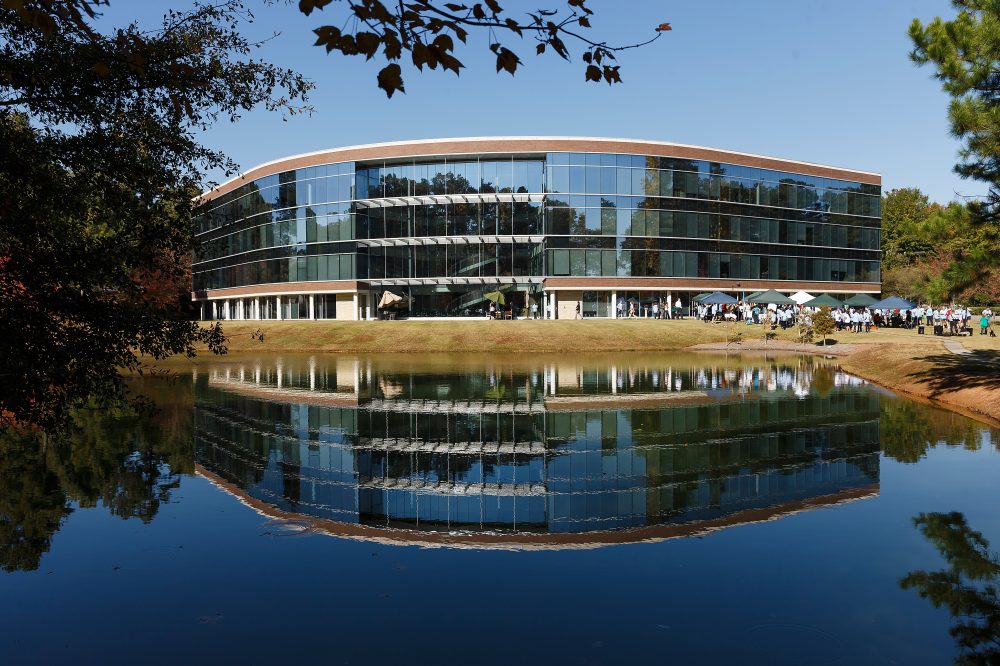
A major European pharmaceutical company revealed plans Tuesday to construct a massive drug manufacturing facility in the Atlanta metro area with a $2 billion investment.
UCB, the Belgium-based drugmaker experiencing rapid expansion, said the new facility will create approximately 330 positions when operational and serve as a cornerstone for expanding its American market presence.
“This decision reflects our confidence in UCB’s long-term growth and our deep-rooted commitment to the United States,” stated company CEO Jean-Christophe Tellier.
The pharmaceutical giant had previously announced in June its intentions to establish a new American manufacturing site while also expanding partnerships with U.S.-based contract manufacturers for drug production. UCB currently employs roughly 2,000 workers across the United States. The company has experienced impressive financial growth, with revenues climbing 26% to approach $9 billion (7.74 billion euros) in 2025. Company profits surged even more dramatically, jumping 46% to reach $1.81 billion (1.56 billion euros).
“The new biologics facility in Gwinnett County, Georgia, is designed to meet increasing demand and ensure patients receive reliable, timely access to vital treatments,” UCB executive Jacques Marbehant explained in a blog post.
The pharmaceutical company previously created well-known allergy medications Zyrtec and Xyzal. Today, UCB concentrates on developing treatments for neurological conditions and autoimmune disorders. The company’s current major success is Bimzelx, a medication used for treating autoimmune conditions such as psoriasis and inflammatory arthritis.
UCB plans to establish its manufacturing plant within a developing research park located on Gwinnett County’s eastern border, which local officials hope may eventually compete with North Carolina’s renowned Research Triangle Park. The company’s American headquarters operates from Smyrna, another Atlanta-area suburb.
The pharmaceutical manufacturer also highlighted the advantage of being near researchers at Georgia Tech in Atlanta and the University of Georgia in Athens. Officials from both institutions have been working to foster biomedical research and manufacturing development.
Construction and design phases are projected to span six to seven years. Gwinnett County representatives confirmed they have pledged $174 million in incentives, encompassing property tax reductions, waived fees, and infrastructure improvements to support positions expected to average more than $72,000 annually. The company may also receive millions in state income tax credits, equipment purchase sales tax exemptions, and state-funded job training programs.
SANTA FE, N.M. — A jury in New Mexico delivered a major blow to Meta on Tuesday, ruling that the social media giant damages children’s mental well-being and breaks state consumer protection regulations.
The groundbreaking verdict follows nearly seven weeks of courtroom proceedings. The jury supported state attorneys who contended that Meta — the parent company of Instagram, Facebook and WhatsApp — put financial gains ahead of user protection. The panel concluded Meta breached sections of New Mexico’s Unfair Practices Act by allegedly concealing its knowledge regarding child sexual exploitation risks on its services and the effects on young people’s mental wellness.
The jury endorsed claims that Meta issued deceptive or false statements and determined the company participated in “unconscionable” business practices that improperly exploited children’s weaknesses and lack of experience.
The panel identified thousands of separate violations, with each infraction contributing to the $375 million financial penalty.
Legal representatives for Meta argued the corporation reveals potential risks and works to eliminate dangerous content and situations, though they admitted some harmful material bypasses their protective measures.
This New Mexico lawsuit represents one of the initial cases to go to trial amid a surge of legal action targeting social media companies and their effects on young users.
Delaware’s tourism officials have launched a brand new travel guide, marking the first comprehensive update to the state’s promotional publication in four years.
The Delaware Tourism Office announced the release of the refreshed Visit Delaware Travel Guide, which replaces the previous version that had been in circulation since 2020. The updated publication showcases current photography throughout its pages and provides revised information about local attractions and businesses across the First State.
Officials say the new guide incorporates narrative-style content that spotlights the distinctive individuals and destinations that give Delaware its character. The publication aims to help visitors discover what sets the state apart from other travel destinations.
The comprehensive resource includes current contact information and details for tourism-related businesses and points of interest throughout Delaware.
Investigators have ruled out foul play in connection with a powerful blast that rocked a Valero Energy Corporation refinery in Port Arthur, Texas on Monday evening, according to Jefferson County Sheriff’s officials.
Chief Deputy Donta Miller confirmed Tuesday that authorities are not treating the incident as a criminal investigation. “No, we’re not investigating it as that,” Miller stated.
The blast originated in a diesel hydrotreater unit and was so intense that residents reported feeling it from as far as 11 miles away, according to sources with knowledge of the facility’s operations.
Company officials immediately implemented emergency protocols, shutting down the entire refinery to prevent hydrogen or hydrocarbon materials from feeding the resulting fire. These hydrotreater units utilize hydrogen gas to strip sulfur from fuel components, meeting federal environmental standards.
Valero reported Tuesday that the incident resulted in no casualties and that all workers at the facility have been accounted for.
The Port Arthur refinery sits approximately 86 miles east of Houston.
WASHINGTON — Escalating fuel costs tied to the Iran conflict have triggered another financial consequence that could hit American wallets: climbing interest rates.
Long-term borrowing costs have surged rapidly since fighting erupted on February 28, driving up expenses for home mortgages, car financing, and corporate loans. As inflation metrics are expected to climb in upcoming months, the possibility of Federal Reserve rate reductions in 2024 is diminishing. Market analysts now view potential rate increases as increasingly probable.
This shift toward considering rate hikes — though most economic experts still consider it unlikely — marks a dramatic reversal from earlier this year, when discussions centered on how frequently the Fed might lower its benchmark rate rather than whether cuts would occur.
“We think cuts are delayed, not derailed,” Krishna Guha, head of economics at Evercore ISI, an investment bank, wrote Tuesday. “The question is, delayed to September, delayed to December, or delayed more indefinitely” into 2027?
Chicago Federal Reserve Bank President Austan Goolsbee told The Associated Press on Monday that if price increases accelerate while joblessness stays steady, and consumers begin expecting sustained inflation, “then there is an obvious playbook, which is rate increases have to be on the table.” Though Goolsbee attends Fed policy meetings, he doesn’t hold voting privileges this year.
Market participants no longer anticipate any rate decreases in 2024, based on futures contracts monitored by CME Fedwatch. The likelihood of a rate increase by October has jumped to almost 25%, climbing from zero just seven days earlier.
San Francisco Fed President Mary Daly stated Monday evening that uncertainty from the Iran conflict means “there is no single most-likely path” for the Fed’s primary interest rate, indicating policymakers might raise, lower, or maintain current levels in coming months.
The military action presents a complex challenge for Federal Reserve officials. Economic analysts widely predict the crisis could intensify inflation through elevated fuel costs. However, when gasoline reaches very high levels — perhaps $5 per gallon for extended periods — consumers might reduce other purchases to compensate for increased fuel expenses, potentially slowing economic activity and raising joblessness.
“On net more inflation means probably higher rates,” said Jonathan Pingle, an economist at UBS. “On the other hand, that energy price shock is going to be a headwind to growth.”
The Federal Reserve traditionally increases rates — or maintains current levels — when fighting inflation, while frequently reducing rates to stimulate economic activity and decrease unemployment.
Central banks typically ignore temporary inflation spikes from fuel price jumps, since these effects often prove short-lived. Under such circumstances, the Fed might even lower rates if officials became concerned about rising joblessness.
However, Fed Chairman Jerome Powell noted at last week’s press briefing that assuming temporary effects is more difficult currently, given that inflation has exceeded the 2% goal for five years, damaging public confidence in economic conditions.
Currently, numerous Fed policymakers emphasize inflation risks, suggesting the central bank will maintain its key rate at present levels in upcoming months. UBS economists project inflation, using the Fed’s preferred measurement, will rise to 3.4% this month and reach 3% by year-end, surpassing the 2% target.
The jobless rate “is kind of low and stable,” Goolsbee said. “So that isn’t as far from the target as inflation is right now. And now to pile on a second inflation shock makes me a bit more concerned on the inflation side than on the unemployment side right now.”
When market participants expect the Fed to keep short-term rates elevated longer, longer-term rates climb. The 10-year Treasury yield has risen from just under 4% on February 27, one day before Iran fighting began, to nearly 4.4% Wednesday.
Home loan rates follow the 10-year Treasury closely, with 30-year fixed mortgages now averaging 6.22% according to Freddie Mac, climbing from below 6% before the conflict started.
The video game company responsible for creating Fortnite announced Tuesday that it will eliminate more than 1,000 positions as part of cost-cutting measures while facing both widespread industry difficulties and internal business challenges.
Epic Games, headquartered in Cary, North Carolina, informed staff members through an internal communication that these workforce reductions are unrelated to artificial intelligence developments. Instead, the company pointed to broader industry problems including reduced growth rates, decreased consumer spending, and more challenging financial conditions. Popular gaming titles like Fortnite now face increased competition from social media platforms and various other digital entertainment options vying for users’ time.
The gaming company also acknowledged facing unique internal obstacles, noting that it remains in the beginning phases of re-establishing its mobile presence following legal disputes with tech giants Apple and Google regarding app store payment systems.
Company CEO and founder Tim Sweeney addressed employees in the memo, stating: “This isn’t our first time being here. Epic survived upheavals in 1990s with the move from 2D to 3D with Unreal 1; in the 2000s building console games with Gears of War; and in 2012 moving to online gaming with Paragon and Fortnite.”
Sweeney continued: “Market conditions today are the most extreme we’ve seen since those early days, with massive upheaval in the industry accompanied by massive opportunity for the companies that come out as winners on the other side.”
Following Tuesday’s workforce reduction, Epic Games now employs approximately 4,000 people, with the layoffs representing roughly 20% of its total staff.
The gaming company previously conducted significant job cuts in 2023, when it eliminated 830 positions, which represented approximately 16% of its workforce during that period.
NEW YORK (AP) — While sequel-driven blockbusters have controlled Hollywood’s box office for years, original films are experiencing a notable resurgence that’s becoming impossible to ignore.
Following last week’s Academy Awards where ‘One Battle After Another,’ ‘Sinners,’ and ‘KPop Demon Hunters’ all claimed victories, directors Phil Lord and Chris Miller’s ‘Project Hail Mary’ achieved the strongest opening weekend for a non-franchise film since ‘Oppenheimer.’ During the initial quarter of 2026, both this movie and Pixar’s original production ‘Hoppers’ have emerged as the year’s top-performing theatrical releases.
These victories came with significant financial investments. Amazon MGM spent approximately $200 million producing ‘Project Hail Mary,’ adapted from Andy Weir’s popular novel, but the film’s $80.5 million opening weekend justified the studio’s substantial gamble and delivered their biggest box office success to date.
‘They made a tremendous investment and it’s going to pay off,’ Lord said in an interview alongside Miller last week. ‘How exciting to reward the people that took a shot.’
Despite its name, ‘Project Hail Mary’ wasn’t considered a risky venture. The film features Ryan Gosling, one of Hollywood’s most beloved performers, and draws from Weir’s acclaimed novel. The movie capitalizes on the same science-focused science fiction appeal that made 2015’s Oscar-nominated ‘The Martian,’ also based on a Weir book, so successful. Lord and Miller, creators behind the ‘Spider-Verse’ films and ‘The Lego Movie,’ have consistently delivered hits that resonate with both critics and moviegoers.
However, the current wave of original film success — both at award ceremonies and in theaters — indicates audiences may be craving fresh content beyond familiar franchises. The potentially significant rewards of original hits have become clearly visible, especially when expensive projects like Paul Thomas Anderson’s best picture winner ‘One Battle After Another,’ which cost Warner Bros. over $130 million, have generated massive returns.
‘People go to the movies to see a new experience,’ Miller said. ‘They don’t go to see a thing they’ve already seen. Originality has value, especially as AI gets into the picture. The value that we can bring as filmmakers is to bring something that can’t be AI because it hasn’t been thought of before.’
‘So it’s good business.’
Franchise films haven’t disappeared from dominance. They’ll undoubtedly control most of the remaining year’s box office, starting with Universal’s ‘The Super Mario Galaxy Movie’ next month, followed by highly anticipated releases including ‘Toy Story 5,’ ‘Avengers: Doomsday’ and ‘Dune: Part Three.’ Last week, Sony Pictures’ ‘Spider-Man: Brand New Day,’ the 11th Spider-Man film this century, established a new trailer viewing record with 718.6 million views within 24 hours.
Franchise films certainly maintain their dominance. However, the continuous stream of sequels, reboots and remakes has made the limited number of big-budget original productions even more distinctive.
‘If we don’t continue to do originals, we’re going to run out of stuff,’ Pete Docter, Pixar chief creative officer, earlier told The Los Angeles Times.
Throughout its history, Pixar has maintained that creating original films remains central to its purpose, though this mission has become increasingly challenging recently. During the pandemic, ‘Soul,’ ‘Luca’ and ‘Turning Red’ were redirected to Disney+. ‘Elemental’ initially appeared unsuccessful but gradually gained momentum, ultimately earning $496 million.
‘Hoppers,’ directed by Daniel Chong, aims to follow a similar path. After three weeks in theaters, it has earned $242.6 million globally for The Walt Disney Co. — certainly profitable, but far behind the pace of 2024’s sequel blockbuster ‘Inside Out 2,’ which generated $1.7 billion.
Such financial performance creates difficult competition for original films, and non-franchise movies require additional effort and expense for marketing. For a $200 million production, promotional costs can nearly match production budgets.
While some of Timothée Chalamet’s promotional activities, including a blimp and Sphere appearance, might have affected his Oscar chances, his marketing efforts were essential in helping ‘Marty Supreme,’ A24’s most expensive production at $70 million, reach $179.3 million in ticket sales.
An extensive marketing campaign also supported ‘Project Hail Mary.’ Gosling appeared everywhere from hosting ‘Saturday Night Live’ to performing the ‘La La Land’ dance with his alien co-star, Rocky. However, the film ultimately depended on the appeal of its filmmakers’ comedic approach, Weir’s source material, and Gosling’s star power.
‘We’re all united by the fact that we’ve spent the last two decades having people ask us: What genre is this?’ says Drew Goddard, who wrote screenplays for both ‘The Martian’ and ‘Project Hail Mary.’ ‘We’re constantly hard to classify because we love existing in those strange places. We like drama, we like comedy. We like heartbreak, we like terror. We like silliness.’
By combining broad-appeal source material with appropriate filmmakers and stars, ‘Project Hail Mary’ relied on traditional studio filmmaking and the sometimes forgotten lessons of ‘Barbenheimer.’ Both Christopher Nolan’s ‘Oppenheimer’ and Greta Gerwig’s ‘Barbie’ demonstrated what’s possible when talented directors receive creative freedom on major productions. However, risks exist. Warner Bros.’ ‘The Bride!’ by Maggie Gyllenhaal appeared to be an intriguing filmmaker-driven project but its financial losses may reach $100 million.
Beyond featuring Gosling, ‘Project Hail Mary’ also shared ‘Barbie’ producer Amy Pascal. Before Amazon’s studio acquisition, the project was approved by former MGM executives Mike De Luca and Pam Abdy, who later joined Warner Bros., where they produced both ‘One Battle After Another’ and Ryan Coogler’s acclaimed ‘Sinners’ ($370 million in ticket sales against a $90 million budget).
While Amazon’s $8.5 billion MGM acquisition was primarily motivated by securing valuable intellectual property like James Bond, studios can also establish themselves through homegrown successes. ‘Project Hail Mary’s’ opening represents Amazon MGM’s largest debut ever.
Actually, three of the past year’s biggest original hits have originated from streaming companies: Apple with ‘F1,’ Netflix with ‘KPop Demon Hunters’ and Amazon with ‘Project Hail Mary.’ For these studios, theatrical performance represents only part of their success; Netflix didn’t even publicly announce ‘KPop Demon Hunters” chart-topping opening weekend.
These companies often accept greater risks because theatrical break-even isn’t their ultimate objective. Generating attention for their streaming platforms holds equal importance. ‘KPop’ was created and produced by Sony Pictures, but recognizing the potentially difficult theatrical release, the company sold it to Netflix, where it became the streamer’s most-watched film ever.
‘It shouldn’t be lost on anyone that three of the biggest original hits over the past year have come from the biggest streamers: Netflix, Amazon and Apple,’ says Paul Dergarabedian, head of marketplace trends for Comscore. ‘What the streamers are finding is that they can parlay their small-screen successes into the big screen, and vice versa.’
While franchise films will soon reclaim multiplexes, several high-profile movies will attempt to extend the winning streak for original productions, including Steven Spielberg’s ‘Disclosure Day,’ Alejandro G. Iñárritu’s ‘Digger,’ J.J. Abrams’ ‘The Great Beyond’ and, if counting one of the world’s oldest tales, Nolan’s ‘The Odyssey.’
Even during celebrations for ‘Project Hail Mary,’ the influence franchises maintain over the film industry was evident. Amazon MGM, when announcing the movie’s performance, included a reference to their premier intellectual property, 007, in the numbers: $80,506,007 across 4,007 theaters.
SAN FRANCISCO — British semiconductor company Arm Holdings revealed its inaugural artificial intelligence processor on Tuesday, projecting the technology will generate billions in additional revenue while marking a dramatic strategic transformation for the firm.
The processor, dubbed the AGI CPU, is engineered to handle computational demands for advanced AI systems capable of performing tasks independently with limited human supervision, rather than simply answering questions like traditional chatbots.
This emerging category of autonomous AI technology has sparked increased demand for central processing units manufactured by companies including Intel and Advanced Micro Devices.
Historically, Arm — which is primarily controlled by Japan’s SoftBank Group — has generated income exclusively through intellectual property licensing, providing its designs to firms like Qualcomm and Nvidia while earning royalties based on unit sales.
The company indicated to investors last year that it was investing in developing its own processors, a venture requiring hundreds of millions of dollars in investment, and had recruited senior executives to lead the initiative. The AGI CPU represents the inaugural product under this new business approach.
“It’s a very pivotal moment for the company,” CEO Rene Haas told Reuters during an interview.
Mohamed Awad, who leads the company’s cloud AI division, will oversee the new processor, while Arm is developing additional designs scheduled for release every 12 to 18 months.
Meta Platforms serves as the primary partner for the AGI CPU development, with both companies collaborating on the design process. Other customers for the new processor include OpenAI (creator of ChatGPT), Cloudflare, SAP, and SK Telecom.
Taiwan Semiconductor Manufacturing Co is producing the device using its 3-nanometer manufacturing process, constructing it from two separate silicon components that function as one unified processor. While Arm intends to begin mass production in the latter half of this year, the company has already received test units that are performing as anticipated.
“It’s back, and it works, and it’s doing everything we thought it would,” Haas commented about the new processor.
Beyond the processor itself, Arm is collaborating with server manufacturers including Lenovo and Quanta Computer to provide complete system solutions.
Wall Street analysts project Arm will achieve $1.75 per share in net profit on $4.91 billion in revenue for the current fiscal year, according to LSEG data.
Tech giant Microsoft has stepped in to secure a massive data center facility in Texas after two other major companies backed out of the project, according to a Bloomberg News report released Tuesday.
Sources with knowledge of the deal say Microsoft reached an agreement with developer Crusoe to lease the Abilene facility, which boasts approximately 700 megawatts of power capacity. The location sits directly adjacent to the main Stargate campus operated by Oracle and OpenAI.
The tech company moved forward with the rental agreement after both Oracle and OpenAI withdrew from discussions about occupying the space, the report indicates.
However, a source briefed on the matter told Reuters that OpenAI’s current partnerships with Oracle remain unchanged despite the development.
When contacted for comment, a Microsoft representative declined to provide details about the arrangement. Oracle and Crusoe have not yet responded to media inquiries about the deal.
This development follows earlier reporting from Bloomberg News indicating that Oracle and OpenAI had scrapped expansion plans for an artificial intelligence data center in Texas. Those discussions reportedly stalled due to disagreements over funding and OpenAI’s evolving requirements.
Oracle subsequently disputed those reports, stating that claims about delays to planned capacity at the Abilene location were false.
The move comes as tech corporations continue investing massive amounts of capital in data center infrastructure needed to support artificial intelligence applications like ChatGPT and Copilot, which demand enormous computational resources to operate effectively.
The artificial intelligence company OpenAI has brought several new executives on board to oversee its charitable division and intends to invest $1 billion this year in AI-focused projects through that non-profit arm, according to a Bloomberg News report published Tuesday.
The tech company’s planned billion-dollar investment will support various artificial intelligence initiatives channeled through its non-profit operations, the report indicated.
Apple announced Tuesday its intention to launch paid advertisements within its Maps application across the United States and Canada during the upcoming summer months, entering a market space that Google’s Alphabet has controlled for years.
The Maps application, which comes pre-installed on hundreds of millions of iPhones and Apple devices annually, will feature paid promotional content above standard search results. Business owners will have the ability to verify their physical locations using a suite of business management tools that Apple also announced it will update next month.
The technology company did not reveal projected revenue figures for this new advertising venture, nor did it disclose how many of its 2.5 billion active device users regularly access the mapping service. However, this decision puts Apple in more direct competition with both Google and Meta Platforms for local advertising revenue, despite Apple’s historical emphasis on distinguishing itself from competitors who rely heavily on advertising income by highlighting its privacy protections.
According to Apple, the new mapping advertisements will preserve existing privacy safeguards, ensuring that user locations and advertisement interactions remain disconnected from individual Apple accounts. The company stated that what it defines as “personal data” remains stored on individual devices, is neither collected nor retained by Apple, and is not distributed to external parties.
This development occurs as some of Apple’s major revenue streams face challenges, including its commission structure on app developer subscriptions and the substantial annual payments Google makes to Apple for search traffic direction, both of which are experiencing regulatory pressure in Europe and potential disruption from emerging artificial intelligence technologies that may reduce conventional search activity.
The advertising expansion could also increase examination of Apple’s practices that prevent competitors like Meta from collecting Apple user data, which Meta and European media companies have challenged on antitrust grounds as Apple expands its own advertising operations.
Beyond mapping advertisements, Apple announced Tuesday it will redesign its business management tools, featuring enhanced capabilities for setting up and distributing Apple devices to staff members without requiring specialized technical knowledge. Additionally, Apple plans to eliminate charges for a device management tool that previously required payment.
WASHINGTON – American business activity declined to its weakest level in nearly a year during March, according to a new survey that links the downturn to escalating costs from the ongoing Middle East conflict.
The latest data from S&P Global reveals concerning trends for the national economy, as companies face mounting pressure from higher energy prices and supply chain disruptions stemming from the war between the U.S.-Israel alliance and Iran.
Chris Williamson, chief business economist at S&P Global Market Intelligence, described the findings as troubling. “The flash PMI survey data for March signal an unwelcome combination of slower growth and rising inflation following the outbreak of war in the Middle East,” Williamson explained. “Companies are reporting a hit to demand from the additional uncertainty and cost-of-living impact generated by the conflict.”
The research firm’s flash U.S. Composite PMI Output Index, which measures both manufacturing and services activity, dropped to 51.4 in March – marking the second consecutive monthly decline. This represents the weakest performance since April of last year, falling from February’s reading of 51.9.
While any reading above 50 still indicates private sector growth, the downward trend has economists concerned. The services sector drove much of the decline, with its PMI falling to 51.1 from the previous month’s 51.7. Industry experts had predicted a smaller drop to 51.5.
Manufacturing bucked the negative trend, however, with activity improving to 52.4 from February’s 51.6. This increase surprised analysts who had forecast a decline to 51.3, with some improvement attributed to what researchers called “some softening of the tariff impact on order books.”
The conflict’s impact on energy markets has been severe, with oil prices jumping more than 30% and national gasoline prices climbing nearly $1 per gallon. These increases have reignited inflation concerns that had been easing in recent months. Oil prices did retreat to one-week lows Monday after President Trump announced a five-day delay in potential military action against Iranian energy facilities.
Business owners are feeling the pinch directly, according to the survey data. The measure tracking input costs paid by companies surged to 63.2 this month, up from 60.0 in February. Both service providers and manufacturers reported higher expenses, which S&P Global said were “widely linked to the war-related spike in energy costs and tightening supply conditions.”
These increased costs aren’t staying with businesses – they’re being passed along to consumers. The survey’s output price gauge climbed to 58.9 from February’s 56.9, with researchers suggesting this could push consumer inflation back toward 4%.
The employment picture also darkened, with private-sector job creation turning negative for the first time in over a year. The employment index fell to 49.7 from 50.4, primarily due to service sector companies cutting positions to reduce “overheads in the uncertain economic climate.”
Federal Reserve officials are closely monitoring these developments after keeping interest rates steady last week while projecting higher inflation and only one rate cut this year. The central bank faces a challenging balancing act between controlling inflation and supporting economic growth.
“The Fed will therefore need to juggle these intensifying upside risks to inflation against the growing risk of the economy losing growth momentum, with much depending on the duration of the war and its impact on energy prices and global supply chains,” Williamson noted.
U.S. financial markets started Tuesday’s trading session on a downward trend as lingering concerns about Middle East conflicts dampened investor confidence following Monday’s market gains.
Despite President Donald Trump’s choice to postpone planned attacks on Iran’s electrical infrastructure, traders remained cautious about the volatile international situation.
At the opening bell, the Dow Jones Industrial Average declined by 108.6 points, representing a 0.24% decrease to reach 46,099.86. The S&P 500 index dropped 28.9 points or 0.44% to settle at 6,552.09, while the technology-heavy Nasdaq Composite fell 139.2 points, a 0.63% decline, landing at 21,807.597.
The market’s retreat came after Monday’s positive session, which had provided temporary relief to investors hoping for reduced geopolitical tensions in the region.
The New York Stock Exchange revealed Tuesday it has formed a partnership with digital asset firm Securitize to build a platform for trading blockchain-based versions of conventional financial securities.
Under the arrangement, Securitize will become the initial digital transfer agent authorized to produce blockchain-based securities for companies and exchange-traded funds on a forthcoming NYSE-connected Digital Trading Platform, according to the announcement.
The collaboration will see NYSE working alongside Securitize as a design partner to build a digital transfer agent program designed to establish a system for processing tokenized securities transactions on blockchain technology.
Major American exchanges including NYSE and competitor Nasdaq are increasing their initiatives to transform assets such as stocks, bonds and funds into blockchain-based digital tokens.
The tokenization process involves transforming physical assets into digital tokens that exist on a blockchain, which functions as a distributed, secure digital record of transactions.
Earlier in March, the Securities and Exchange Commission gave approval to a Nasdaq proposal permitting specific stocks to be traded and settled in tokenized format, based on regulatory documents.
“As we explore how tokenization can enhance capital markets, it is critical that new infrastructure is developed in a way that preserves the trust, transparency, and protections investors expect” NYSE President Lynn Martin said.
The two companies will additionally work together on establishing standards for digital transfer and tokenization agents, covering regulatory, operational and technology specifications for institutional-level infrastructure.
Amazon’s autonomous vehicle division Zoox announced Tuesday its most ambitious expansion yet, revealing plans to grow its driverless taxi operations in San Francisco and Las Vegas while launching new testing programs in Austin and Miami.
The move puts Zoox in direct competition with Alphabet’s Waymo, which currently dominates the autonomous ride-hailing sector. Tesla also poses a significant threat with its substantial financial backing and manufacturing capabilities, currently operating limited service in Austin with plans for rapid nationwide growth throughout 2024.
In San Francisco, Zoox intends to dramatically increase its presence by targeting busy, popular areas including the Marina district, Chinatown, and the Embarcadero waterfront. The Las Vegas expansion will focus on reaching additional hotels and entertainment venues throughout the famous Strip corridor.
The Austin and Miami markets will see Zoox deploy its specially designed autonomous vehicles on public streets for the first time, initially offering rides exclusively to company employees and their relatives and friends. The service will gradually open to general public access later in 2024.
According to company data, Zoox has accumulated nearly 2 million miles of autonomous driving experience and provided transportation to more than 350,000 passengers. The company continues developing new technologies designed to minimize passenger wait times and enhance the overall riding experience in an increasingly competitive and rapidly changing industry.
WASHINGTON – American worker productivity expanded at a much weaker pace during the final three months of last year than federal officials initially calculated, according to revised data released Tuesday.
The Bureau of Labor Statistics reported that nonfarm productivity – which tracks how much workers produce per hour – grew at an annual rate of 1.8% in the fourth quarter. This represents a significant downward adjustment from the original estimate of 2.8% growth. Market analysts surveyed by Reuters had anticipated the revision would bring the figure down to 2.0%.
When compared to the same period a year earlier, productivity climbed 2.5%. The third quarter had shown much stronger productivity gains of 5.2%, which remained unchanged in the latest revision. For all of 2025, productivity rose 2.1%. Officials noted the report’s release was postponed due to last year’s federal government shutdown.
The weaker productivity numbers align with recent major revisions to economic growth data, which showed the nation’s gross domestic product expanded at only 0.7% in the fourth quarter – roughly half the initially reported 1.4% rate.
Many economists anticipate that widespread implementation of artificial intelligence technology will eventually drive productivity gains higher while helping to control labor expenses.
Meanwhile, unit labor costs – representing what employers pay for each unit of production – jumped 4.4% during the quarter. This marked a substantial increase from the original estimate of 2.8% growth, and exceeded economists’ expectations of a 3.5% rise.
Compared to the previous year, unit labor costs increased 2.4%. The third quarter’s unit labor cost growth was revised downward to 1.0% from the previously reported 1.8%. For the full year 2025, these costs rose 2.3%.
FedEx announced Tuesday the debut of a new same-day delivery option as shipping companies nationwide compete to offer faster service to customers demanding quicker order fulfillment.
The new offering, dubbed FedEx SameDay Local, was developed in partnership with last-mile delivery technology firm OneRail. Customers can select specific delivery timeframes, including two-hour windows or end-of-day arrival. The shipping giant says the program connects customers to over 1,000 delivery providers nationwide through technology that pairs orders with the closest available vehicle and driver.
The announcement reflects broader industry efforts to build faster fulfillment capabilities and strengthen last-mile delivery networks as consumer expectations for rapid, flexible shipping continue to climb.
Amazon recently expanded its rapid delivery options earlier this month, introducing one-hour and three-hour shipping across multiple U.S. markets. This expansion comes amid growing competition from retail giants Walmart and Target, both of which are also enhancing their same-day and next-day delivery capabilities.
According to FedEx, the new service enhances the company’s capacity to serve customers throughout the entire delivery process, spanning long-distance transportation to neighborhood-level fulfillment.
Investment firms Trian and General Catalyst announced Tuesday they have increased their acquisition proposal for asset management company Janus Henderson to $52 per share.
The enhanced bid provides a 25% premium above Janus Henderson’s unaffected share price and exceeds their previous proposal by $3 per share. This move escalates the corporate takeover competition with Victory Capital, which continues its own pursuit of the asset management firm.
According to Janus Henderson, “Trian and General Catalyst have already made significant progress toward closing and have a clear path to satisfying all outstanding conditions.”
Trian holds the largest ownership position in Janus Henderson with a 20.7% stake and expressed reservations Friday regarding Victory Capital’s improved proposal.
NEW YORK — The cosmetics giant Estee Lauder has acknowledged ongoing discussions with Spanish beauty company Puig about a potential merger that could unite popular brands including MAC, Clinique, Charlotte Tilbury, and Jean Paul Gaultier within a single organization.
The New York-based Estee Lauder Cos. has verified these negotiations are taking place, though the company emphasized that no deal has been finalized with the Spanish firm, which has operated for over a century.
The beauty conglomerate has been working to reverse declining revenues, experiencing drops in sales for three consecutive years. Earlier in 2025, the company announced potential workforce reductions of up to 7,000 positions through fiscal 2026, representing more than 11% of its total employees. At that time, CEO Stéphane de La Faverie explained that Estee Lauder was restructuring its business approach to become “leaner, faster, and more agile.”
The Spanish company Puig manages various makeup, skincare, and fragrance labels including Nina Ricci, Jean Paul Gaultier, and Dr. Barbara Sturm. Puig became publicly traded on Madrid’s stock exchange in early 2024, and its shares surged over 15% during Tuesday’s market session.
According to Jeffries analyst Sydney Wagner, combining Estee Lauder and Puig would establish a corporation worth more than $40 billion and would strengthen the American company’s presence in the fragrance market, which represents the majority of Puig’s business portfolio.
Wagner noted that despite fragrances continuing to perform well as a product category, competition from independent brands is growing more intense, while L’Oreal has strengthened its market position.
Estee Lauder’s stock price rose modestly during pre-market trading on the New York Stock Exchange.
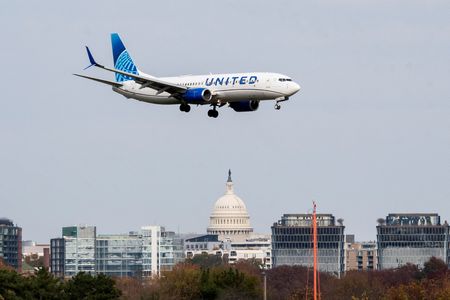
United Airlines announced Tuesday a major fleet expansion and cabin redesign strategy emphasizing luxury accommodations, moving forward with long-range growth objectives despite recent warnings about sustained high oil prices potentially lasting until 2027.
The Chicago-headquartered airline plans to add over 250 new planes to its fleet by April 2028, with 68 of those being Airbus A321neo Coastliner and A321XLR aircraft equipped with fully-reclining Polaris business class seating and expanded premium cabin configurations.
This announcement follows CEO Scott Kirby’s statement last week that United would reduce approximately five percent of its planned flight capacity this year while preparing for oil prices to remain above $100 per barrel through 2027, with potential spikes reaching $175.
According to Kirby, such elevated fuel costs would increase United’s yearly fuel expenses by roughly $11 billion, exceeding double the airline’s highest annual profit on record.
However, Kirby expressed confidence that United is better equipped than during previous economic downturns to handle market volatility, preserve profit margins by eliminating less lucrative routes, and maintain long-term investment strategies.
“We’ve positioned ourselves to get through these storms that are inevitable, stay focused on the long term and keep investing for the long term,” he said on a media call.
The centerpiece of United’s strategy involves two new Airbus variants featuring lie-flat Polaris seating and Premium Plus cabin sections.
The Coastliner model will operate solely on routes connecting Los Angeles and San Francisco with Newark/New York. Meanwhile, the A321XLR will substitute Boeing 757 aircraft on certain existing international routes beginning this summer and eventually serve new European and South American destinations.
United noted that the Boeing 757s currently serving many of these routes typically accommodate around 16 business-class passengers. The new A321XLR will offer 32 premium seats, while the Coastliner will feature 20 Polaris seats plus 12 Premium Plus seats.
Major American airlines have increasingly focused their operations around high-end passengers, business accounts, and frequent flyer program participants since the pandemic, wagering that these customer segments are less likely to reduce travel when ticket prices increase.
United’s chief commercial officer Andrew Nocella stated that the U.S. economy and air travel demand continue showing strength, enabling United to implement fare increases without significantly impacting reservation levels.
“I can tell you that the environment is strong,” Nocella said. “We’ve been able to pass through many of the price increases necessary to cover what is a significantly quick and rapid increase in the price of oil and jet fuel.”
Investment banking giant Barclays has boosted its forecast for the S&P 500 stock index through 2026, predicting the market will reach 7,650 by year’s end despite mounting concerns over Middle Eastern conflicts and inflation pressures.
The British financial firm increased its previous projection from 7,400 on Tuesday, suggesting potential gains of approximately 16.2% from Monday’s closing price of 6,581.00.
The stock market has experienced volatility recently, with the S&P 500 dropping roughly 4.3% since conflicts involving Iran began. Rising petroleum costs and geopolitical tensions have pushed investors toward safer investments and away from riskier stock holdings.
“We believe the U.S. continues to offer stronger nominal growth than other major economies and a secular growth engine in technology that shows few signs of stopping,” Barclays strategists said in a note.
“We are incrementally bullish on US equities, though the road likely stays bumpy until we turn a corner.”
The investment firm also revised its earnings expectations upward, projecting S&P 500 earnings per share will reach $321 by 2026, up from their earlier estimate of $305. Analysts said this adjustment reflects solid earnings fundamentals rather than inflated valuations.
Rising petroleum costs have reignited worries about inflation and created uncertainty for Federal Reserve policy. The central bank indicated last week it anticipates implementing just one interest rate reduction in 2026.
Barclays acknowledged potential downside risks, outlining a pessimistic scenario where the index could fall to 5,900. The firm warned that persistently high oil prices might fuel inflation and put the Federal Reserve in an “unenviable corner.”
The bank also identified growing pressure on private credit funds as another risk factor that could trigger a more severe market decline if investor confidence weakens.
In addition to its market outlook, Barclays adjusted its sector recommendations, elevating industrials from “neutral” to “positive” and upgrading both materials and energy from “negative” to “neutral.” The firm cited strengthening industrial activity, artificial intelligence-related infrastructure spending, and benefits from higher energy costs as reasons for these changes.
Wall Street futures dropped Tuesday morning as conflicting messages about potential diplomatic progress with Iran overshadowed the previous day’s market gains.
President Donald Trump had delayed planned military action against Iran’s electrical infrastructure on Monday, citing what he called “productive talks” with Iranian representatives he did not identify.
However, Iranian Parliament Speaker Mohammad Baqer Qalibaf, who sources indicate serves as a primary contact for Tehran, contradicted Trump’s claims, stating that no discussions with American officials had occurred.
Israeli leadership expressed skepticism Tuesday about the likelihood of successful negotiations, despite Trump’s apparent desire to reach an agreement with Iran.
Monday’s optimistic signals had initially boosted investor confidence, pushing major stock indices up more than 1% in their strongest single-day performance since February 6. However, that positive momentum faded as questions about the diplomatic situation persisted.
Deutsche Bank analysts, led by Jim Reid, noted the market reversal: “Iranian officials have repeatedly denied that talks with the U.S. were even happening, which contributed to markets reversing some of the initial risk-on reaction late yesterday and overnight.”
Reid added: “Much now depends on the progress of any talks, and whether the more optimistic rhetoric is followed up by concrete action.”
By 5:21 a.m. Eastern Time Tuesday, Dow futures had fallen 184 points (0.4%), S&P 500 futures dropped 25.25 points (0.38%), and Nasdaq 100 futures declined 83 points (0.34%).
The ongoing regional conflict has pushed oil prices significantly higher, raising concerns about inflation and complicating Federal Reserve interest rate decisions. The Fed adopted a cautious stance last week, forecasting just one rate reduction in 2026.
Financial markets have abandoned expectations for rate cuts this year, a stark change from predictions of two reductions before Middle Eastern tensions escalated. Rate hike expectations briefly increased during last week’s crisis but quickly reversed after Trump’s Monday announcement, according to CME’s FedWatch Tool.
All three major U.S. stock indices recorded their fourth consecutive weekly decline last week, with the Nasdaq posting its largest weekly loss since early February.
Tuesday’s economic calendar includes preliminary March business activity data from S&P Global and remarks from Federal Reserve Governor Michael Barr.
In individual stock movements, Jefferies shares surged 8.2% in premarket trading following Financial Times reports that Japan’s Sumitomo Mitsui Financial Group is considering a potential acquisition of the investment bank.
Battalion Oil shares fell approximately 5% year-over-year after the energy company reported decreased fourth-quarter revenue.
Smithfield Foods exceeded Wall Street forecasts for its fourth-quarter financial performance on Tuesday, as strong consumer appetite for packaged meat products and the company’s cost-reduction initiatives drove better-than-expected results. The pork processing giant’s stock price climbed almost 4% during pre-market trading sessions.
American households continue choosing home-prepared meals over restaurant dining as they manage tight budgets amid ongoing elevated living expenses, creating favorable conditions for companies like Smithfield.
Consumer purchasing patterns intensified throughout the holiday period, with families gravitating toward protein-heavy essentials including pork products and processed meats for seasonal celebrations. This trend boosted product volumes even as households face continued financial pressures.
In January, the meat processing company completed its acquisition of the Nathan’s Famous hot dog brand through a $450 million transaction.
Fourth-quarter revenue climbed 7% to reach $4.23 billion, surpassing Wall Street projections of $4.14 billion based on LSEG data compilation.
The packaged meat division, which represents a crucial profit center for Smithfield, recorded a 4.3% sales increase during the quarter ending December 28 compared to the previous year. Fresh pork product sales grew by 2.1%.
“Looking ahead to 2026, our objective is to again grow sales and profitability and we see a long runway ahead for future growth led by our flagship Packaged Meats segment and iconic brand portfolio,” CEO Shane Smith said.
Similarly, Tyson Foods announced in February that it had raised its yearly revenue projections and exceeded quarterly earnings and sales expectations due to robust chicken demand, which helped offset declines in its beef operations.
Smithfield anticipates total yearly sales will increase by low single-digit percentages, while industry analysts had predicted growth of 1.26%.
The company reported adjusted earnings from ongoing operations of 83 cents per share, outperforming analyst expectations of 68 cents per share.
A major oil refinery in Texas has been forced to cease all operations after a powerful explosion and subsequent fire broke out Monday evening, according to industry sources familiar with the situation.
Valero Energy Corporation made the decision to completely shut down its Port Arthur facility, which processes 380,000 barrels of oil daily, following the blast that occurred in a diesel processing unit around 7:30 p.m. Central Time.
The explosion originated in what’s known as a diesel hydrotreater unit, which has the capacity to handle 47,000 barrels per day. This equipment uses hydrogen gas to strip sulfur from motor fuels during manufacturing to meet federal environmental standards.
Sources close to the facility reported that the explosion was so intense it could be detected from distances of up to 11 miles. What triggered the blast remains unknown at this time.
In a statement provided to Reuters via email, Valero acknowledged the fire incident at their Port Arthur location and confirmed that “all personnel had been accounted for.”
Local emergency management authorities in Port Arthur immediately implemented a shelter-in-place directive “to ensure the safety of all residents in the vicinity in light of the recent explosion at the Valero refinery.”
The complete facility shutdown became necessary to help control the blaze, which was still burning intensely nearly five hours after the initial explosion, sources indicated. Fire suppression efforts were complicated when the refinery lost both its water supply and steam systems while firefighters worked to extinguish the flames.
Valero further stated that the company’s “emergency response team is responding and coordinating with local authorities … (and) as a precaution, Jefferson County officials have closed State Highways 82 and 87.”
The Port Arthur refinery serves as Valero’s largest processing facility and sits approximately 86 miles east of Houston.
China’s largest government-owned banking institutions are poised for a financial turnaround this year as approximately $8 trillion in costly time deposits reach maturity and face repricing, which should reduce their funding expenses significantly.
The nation’s top five state-controlled banks, ranking among the world’s largest financial institutions, are anticipated by industry experts to show declining profits or reduced income growth for 2025 when they announce their yearly financial results this week. This downturn stems from an intensifying real estate sector debt crisis and economic deceleration.
Although Middle Eastern conflicts might trigger inflationary pressures and create additional strain on businesses, employment, and salaries in the globe’s second-biggest economy already fighting deflationary forces, financial experts identify several positive factors for banking institutions this year.
The primary benefit comes from repricing expensive time deposits, as strictly regulated deposit interest rates have been gradually reduced by authorities over the past four years to safeguard lender profit margins. This adjustment is anticipated to enhance their earnings.
“Deposit repricing will be the main driver behind banks’ earnings performance bouncing back in 2026 and should help stabilise their net interest margins,” stated Zhang Yiwei, a financial analyst with China Galaxy Securities.
Zhang calculated that approximately 54 trillion yuan ($7.8 trillion) in time deposits at publicly traded banks will reach maturity in 2026, and renewing expiring three-year deposits at present rates will reduce costs by roughly 135 basis points compared to 2023 figures.
This change is projected to increase banks’ net interest margins (NIMs), a crucial profitability indicator, by about 12 basis points overall, Zhang noted.
Industrial and Commercial Bank of China is projected to experience a 2% drop in 2025 earnings, while China Construction Bank is anticipated to show a 0.4% decrease, based on LSEG information.
Agricultural Bank of China is predicted to achieve 2.3% net profit growth, though at a slower pace than the previous year. Bank of China (BOC) and Bank of Communications (BoCom) are expected to register growth under 1%, according to the data.
Looking ahead to 2026, three of the five major lenders are projected to achieve 2.3% to 3.3% annual net profit growth, with BoC at 0.9% and BoCom at 1.5% based on available data.
The repricing of maturing time deposits, which Huatai Securities estimates at a record 50 trillion yuan in 2026, arrives at a crucial moment for banking institutions. China has repeatedly reduced benchmark lending rates over recent years due to weak credit demand, compressing NIMs to historic lows and compelling lenders to pursue alternative income streams.
“We expect margin pressure to alleviate for Chinese banks and stabilise in 2027, driven primarily by deposit repricing,” explained Ming Tan, Director at S&P Global Ratings.
To manage funding expenses, several major Chinese banks have eliminated five-year certificates of deposit, which offer high yields, from their product lineup since late last year as NIM pressure persisted.
Interest rates on newly issued three-year time deposits from multiple banks have dropped to approximately 1.5% in early 2026, nearly half the rates observed in 2023.
The domestic banking sector also intends to direct more funding toward technology and innovation-focused companies, responding to Beijing’s commitment to aggressively implement artificial intelligence across the economy and lead emerging industries.
However, with Middle Eastern conflicts complicating interest rate and economic growth projections worldwide, investors will carefully monitor statements from leading Chinese banks regarding credit expansion, profit margins, and asset quality expectations for 2026.
The probability of rate reductions in China will likely increase further as the economy confronts challenges from persistently high oil prices resulting from the conflict, analysts at CITIC Futures noted in their assessment.
The stabilizing NIMs will provide greater flexibility for benchmark lending rate cuts this year, the analysts indicated.
China achieved its approximately 5% 2025 growth objective through an export surge, but structural imbalances, trade tensions, and increasing geopolitical uncertainty cast shadows over future prospects. A Reuters projection indicated economic growth will likely decelerate to 4.5% in 2026.
Stock prices for Spanish beauty company Puig experienced their strongest single-day performance ever on Tuesday, climbing approximately 16% after both companies confirmed ongoing discussions about a possible merger with Estee Lauder.
If finalized, this business combination would establish a $40 billion luxury cosmetics empire, uniting internationally recognized beauty and perfume labels including Tom Ford, Carolina Herrera, Rabanne and Clinique within a single organization.
This merger would position the new entity strategically within the worldwide fragrance market, which has seen declining consumer demand following multiple years of robust recovery after the pandemic. Puig generates over 70% of its income through fragrance sales.
“While valuation of beauty assets is under pressure in the broader space, we would think a deal would have to be at a substantial premium to the current share price,” J.P. Morgan said in a note to investors.
According to a source with knowledge of the negotiations who spoke with Reuters on Monday, one key motivation for combining Estee Lauder and Puig involves creating a company better equipped to rival L’Oreal in the competitive beauty market.
These merger conversations are occurring only months following Kering’s decision to transfer its beauty division to L’Oreal in a $4.7 billion transaction. Kering is the parent company of luxury brand Gucci.
Meanwhile, Estee Lauder’s stock performance on the New York exchange declined 7.7% when markets closed Monday.
A major Japanese banking corporation is reportedly developing strategies for a potential acquisition of Wall Street investment firm Jefferies, according to a Financial Times report released Tuesday.
Sumitomo Mitsui Financial Group has assembled a dedicated team to ensure readiness should Jefferies’ declining stock value create an acquisition opportunity, sources familiar with the situation told the Financial Times.
Following the report’s publication, Jefferies stock jumped 6% during Frankfurt trading sessions.
The investment bank’s share value has dropped more than 36% year-to-date, building on significant losses from the previous year when a subsidiary connected to Jefferies’ asset management division became entangled in the First Brands auto parts supplier bankruptcy.
Neither Reuters nor other outlets could immediately confirm the Financial Times report. Jefferies representatives did not respond to requests for comment, and SMFG officials were unavailable for immediate response.
According to the report, any potential move by the Japanese financial giant would not happen immediately, and uncertainty remains whether Jefferies leadership would agree to sell while share prices remain suppressed.
The independent investment bank, which rivals some of Wall Street’s largest institutions, currently holds a market value of $8.17 billion based on LSEG data. In comparison, SMFG maintains a market capitalization of approximately $124 billion.
Jefferies faces intense examination regarding its lending practices and risk management following the failures of British lending institution Market Financial Solutions and First Brands.
The investment firm currently faces investor lawsuits alleging fraudulent practices in connection with a fund tied to First Brands, which owed approximately $715 million in receivables to Jefferies’ Leucadia Asset Management division.
SEOUL, March 24 – Memory chip manufacturer SK Hynix from South Korea is exploring the possibility of securing between 10 trillion and 15 trillion won (approximately $10.03 billion) through a potential stock market debut in the United States, according to a report from the Korea Economic Daily. The funding would support expanded manufacturing capabilities for cutting-edge memory semiconductors.
The newspaper indicated that pursuing a US stock exchange listing would provide the Nvidia chip supplier with broader access to investment capital and could help close valuation differences when compared to international competitors like Micron.
According to the Korea Economic Daily’s reporting, which cited anonymous industry insiders, SK Hynix is planning to create new stock shares to facilitate American depositary receipt (ADR) trading, with the generated capital expected to fund artificial intelligence infrastructure development and memory product manufacturing expansion.
When contacted by Reuters, the semiconductor company confirmed it is “reviewing various measures to enhance shareholder value, including an ADR listing,” while emphasizing that no final decisions have been reached.
SK Group Chairman Chey Tae-won stated last week that SK Hynix is examining a possible US ADR listing strategy to expand its international investor participation beyond Korean markets and boost visibility among worldwide investment communities.
Earlier this year in January, SK Hynix announced plans to eliminate approximately 12.2 trillion won in treasury stock, representing 2.1% of outstanding shares, as part of efforts to increase shareholder returns.
Market research from Counterpoint shows SK Hynix leads the high-bandwidth memory semiconductor sector used in AI applications with a commanding 57% market position. The company also maintains a 32% portion of the worldwide DRAM market for AI processors and consumer electronics, positioning it as the second-largest competitor behind domestic rival Samsung Electronics.
Following the news, SK Hynix stock prices climbed 5.7% at market close, outperforming the benchmark KOSPI index which gained 2.7%.
British beverage company Fevertree Drinks announced Tuesday that its annual profits declined by 16%, attributed to a contentious 2.8-million-pound ($3.76 million) packaging fee and reduced margins during the initial phase of its American business partnership with Molson Coors.
The beverage manufacturer has initiated formal legal proceedings against the UK Environment Agency regarding the Extended Producer Responsibility levy, contending that this fee should not be applied to specific glass container formats distributed to bars and restaurants.
To address increasing tariff costs and expand its American market presence, Fevertree entered into a distribution and manufacturing partnership with Molson Coors in the previous year. This agreement aims to establish local production capabilities for products that were previously manufactured in Britain for the U.S. market.
The company’s adjusted core earnings totaled 42.4 million pounds, representing a decrease from the previous year’s 50.7 million pounds. This figure fell short of analyst projections, which averaged 44.4 million pounds according to a company survey.
Ford Motor Company announced Tuesday it will recall more than 254,640 sport utility vehicles across the United States after federal safety officials identified software malfunctions that could disable backup cameras and critical safety systems.
The National Highway Traffic Safety Administration reported that the recall encompasses several popular Ford and Lincoln models, including the Lincoln Navigator, Lincoln Nautilus, Lincoln Aviator, and Ford Explorer SUVs.
According to federal regulators, the problem stems from an unexpected malfunction in image processing software that can suddenly shut down multiple safety technologies. When the software fails, drivers may lose access to pre-collision assistance, lane-keeping assistance, and blind-spot monitoring systems – all designed to prevent accidents.
The safety administration indicated that Ford will address the software malfunction through dealership repairs or by sending wireless updates directly to affected vehicles. Vehicle owners can expect to receive notification about the recall and repair options in the coming weeks.
A prominent Indian healthcare company backed by Singapore investment firm Temasek has submitted paperwork for a stock market debut, seeking to capitalize on growing demand for specialized medical services across India.
Manipal Health Enterprises announced Tuesday it intends to generate 80 billion rupees (equivalent to $852.24 million) by issuing new shares to investors. The company’s current shareholders also plan to offload 43.2 million existing shares as part of the offering, according to preliminary documents filed with regulators.
The Bengaluru-headquartered healthcare provider is positioning itself to benefit from India’s expanding appetite for advanced medical treatments, which industry experts believe will drive future growth in the nation’s healthcare sector. The medical industry has attracted substantial investment from major global firms including Blackstone, Novo Nordisk, and KKR.
Company officials have not disclosed the complete size of their planned public offering.
Over recent years, Manipal Health has established itself as one of India’s most active healthcare companies in terms of acquisitions and expansion. The firm’s most recent major purchase was Sahyadri Hospitals, which it acquired for $700 million.
The timing of the IPO announcement comes as India’s stock markets face significant challenges, with declining values driven by global economic uncertainty, reduced market liquidity, and ongoing withdrawal of funds by international investors.
According to the regulatory filing, Manipal Health intends to allocate the IPO funds toward paying down existing debt obligations and completing the financing for its Sahyadri Hospitals acquisition.
Samsung Electronics and its labor union in South Korea have decided to return to negotiations regarding employee bonuses, according to a Tuesday announcement from the union.
The labor organization speaks for approximately 90,000 employees, which represents more than 70 percent of Samsung’s South Korean workforce. Just last week, these workers had given their union authorization to call a strike, creating potential concerns about work stoppages at the globe’s largest producer of memory chips.
A major semiconductor company is warning about manufacturing delays caused by overwhelming demand for artificial intelligence technology, creating ripple effects throughout the global tech industry.
Broadcom revealed Tuesday that it’s facing production limitations at Taiwan Semiconductor Manufacturing Company (TSMC), its primary manufacturing partner, as AI chip demand continues to surge beyond available capacity.
“We are seeing that TSMC is hitting (production capacity) limits,” said Natarajan Ramachandran, who serves as director of product marketing in Broadcom’s Physical Layer Products division. He noted that just a few years ago, he would have considered TSMC’s manufacturing capacity as “infinite.”
The manufacturing crunch is expected to worsen before it gets better. “They will be increasing the capacity to 2027, but that has become a bottleneck, or that has kind of choked the supply chain in 2026,” Ramachandran explained to reporters.
TSMC, which serves as the world’s primary producer of advanced AI processors, has not yet responded to requests for comment about the capacity constraints.
The Taiwanese manufacturer acknowledged the tight capacity situation in January, explaining that the artificial intelligence infrastructure boom has consumed much of its advanced production capabilities. The company, which also manufactures chips for tech giants Nvidia and Apple, stated it was working aggressively to balance supply with surging demand.
According to Ramachandran, the supply challenges extend far beyond semiconductor manufacturing into multiple technology sectors.
“Even though there are multiple suppliers in the industry today … there is definitely a supply constraint in the laser space,” he noted, while also identifying printed circuit boards as an “unexpected” production bottleneck.
Both Taiwanese and Chinese circuit board manufacturers are struggling with capacity limitations, resulting in extended delivery timeframes, though Ramachandran declined to identify specific suppliers.
The supply crunch is forcing companies to adopt new procurement strategies, with many clients now negotiating long-term supply agreements spanning three to four years to guarantee production capacity.
This shift toward extended contracts was recently highlighted by Samsung Electronics, which announced last week that it’s collaborating with major clients on three-to-five-year supply agreements.
Industry analysts say this trend demonstrates both customers’ need for supply chain stability and manufacturers’ efforts to protect against unpredictable demand fluctuations in the rapidly evolving AI market.
Technology corporation Oracle is transforming its cloud-based business software to integrate with artificial intelligence assistants, allowing companies to ask business questions and have AI locate the necessary information automatically.
The software updates, which Oracle revealed at a London event on Tuesday, represent part of an industry-wide shift where corporate software providers are modifying their platforms to support AI agents that can perform tasks for human users.
Oracle’s stock has declined approximately 40% this year amid investor worries that artificial intelligence tools may replace complex business software systems. Company leadership has maintained they are incorporating AI technology to keep their products competitive with these technological advances.
The tech firm is upgrading its Fusion software package, which handles essential business operations including factory production planning and customer payment collection.
Steve Miranda, Oracle’s executive vice president of applications development, explained the company wants to simplify focusing on business challenges, such as reducing costs and speeding up new product development while limiting supply chain risks.
Miranda noted that information required for these decisions is spread across Oracle’s various applications and connected third-party systems. Artificial intelligence will handle tasks like data entry, information gathering, and providing recommendations, while human workers will concentrate on skills such as supplier negotiations and determining acceptable risk levels for supply disruptions.
“Typing in an invoice isn’t a particularly high-value skill to your enterprise or to the person you know who does that part of their job,” Miranda stated.
“Decision making is still kind of up to that human and weighing the different pros and cons of that case. But certainly the execution, the typing of the invoices, the typing of the purchase order, that is what is going to be replaced in whole in AI,” he added.
WASHINGTON — American workers are expressing unprecedented pessimism about employment opportunities, according to new research that reveals a stark change in attitudes despite relatively low unemployment figures nationwide.
A recent Gallup poll found that merely 28% of employees believe the current moment represents a favorable time to secure quality employment, while 72% view job-hunting prospects negatively. This represents a dramatic turnaround from mid-2022, when 70% of workers expressed confidence about finding good jobs.
The decline in optimism has accelerated rapidly. As late as the end of 2024, nearly half of all workers maintained positive views about job searching. The latest research was completed during the fourth quarter of 2025, before the Iran conflict that has driven up fuel costs and threatens economic growth as consumers spend more on gasoline instead of other goods.
These findings shed light on broader surveys showing Americans hold predominantly negative economic views, despite indicators suggesting continued growth and minimal job losses across the country.
College-educated workers demonstrate particularly severe pessimism about employment prospects. This trend likely stems from exceptionally weak hiring patterns in white-collar industries over the past two years, including technology, customer relations, and marketing sectors.
Educational background creates a clear divide in worker sentiment, with only 19% of college degree holders viewing current conditions as favorable for finding quality positions, compared to 35% of workers without higher education degrees expressing optimism.
Additional Gallup research covering all U.S. adults shows college graduates’ job market confidence has reached its lowest point since 2013. The difference in employment outlook between Americans with and without college degrees has grown to its widest margin since polling began on this topic in 2001.
Age demographics reveal another significant gap, with approximately 2 in 10 workers between 18-34 years old considering now a good time for job hunting, while roughly 4 in 10 workers aged 65 and above share that positive assessment.
The survey results align with what labor economists describe as a “low-hire, low-fire” employment environment. Companies are retaining existing staff while layoff rates remain minimal, providing job security for established workers. However, recruitment has slowed considerably, creating barriers for younger professionals seeking to enter the workforce or find stable positions.
Younger employees show much greater interest in job mobility compared to their older counterparts. Most Generation Z and Millennial workers report actively seeking new opportunities or monitoring the market, while approximately three-quarters of baby boomers indicate no interest in changing jobs.
Government statistics support Gallup’s findings, showing overall hiring has reached its weakest level in more than ten years. The Labor Department’s “hiring rate” measurement, which tracks monthly new hires as a percentage of employed individuals, fell to 3.2% last November when Gallup conducted its survey. This matches the lowest rate since March 2013 and represents a decline from the pre-pandemic level of 3.9%.
The 3.2% hiring rate is particularly concerning because when it last occurred in March 2013, unemployment stood at 7.5% as millions of Americans continued struggling to find work following the 2008-2009 Great Recession. This suggests job searching has become significantly more difficult than unemployment statistics would suggest.
Federal data also indicates 7.4 million unemployed Americans now outnumber the 6.9 million available job openings. This reverses the pattern from the initial post-pandemic years when job vacancies exceeded the number of unemployed workers.
Gallup’s research further reveals that workers express more negative views about their current circumstances and future expectations than at any time since 2009, when the organization began tracking workforce life satisfaction.
Additional surveys confirm Americans’ generally pessimistic economic outlook. The Conference Board’s consumer confidence index registered just 91.2 in February, approaching pandemic-era lows and well below the nearly 130 reading recorded before the health crisis.
While more respondents to the Conference Board survey still consider jobs “easy to get” rather than “hard to find,” that margin has consistently narrowed in recent years.
The Gallup survey included 22,368 U.S. adults employed full-time and part-time by organizations nationwide. Research was conducted from October 30 through November 13, 2025, using participants selected from Gallup’s probability-based panel. The margin of error for all respondents is plus or minus 1.0 percentage points.
Citigroup announced Tuesday that it has named Eric Farina and Rob Cascarino to serve as joint leaders of its Infrastructure Financing & Capital Solutions Group (IFCS).
Farina will operate from New York in his new position, bringing more than 20 years of experience in infrastructure finance to the role. Prior to joining Citi, he led infrastructure finance operations within Morgan Stanley’s private capital markets division.
Cascarino, who currently oversees Debt Capital Markets operations for the UK, Europe, Middle East & Africa region, will expand his responsibilities to work alongside Farina on global IFCS initiatives. Having joined Citi within the past year, Cascarino contributes over two decades of debt capital markets expertise, with particular experience in digital infrastructure projects and sports stadium financing across the United States and EMEA markets.
Both newly appointed co-leaders will work under the supervision of Debt Capital Markets heads John McAuley and Chris Munro, while maintaining close working relationships with capital markets teams throughout the financial institution.
TOKYO (AP) — Stock markets throughout Asia posted gains Tuesday morning, reflecting the cautious optimism that swept Wall Street after President Donald Trump announced the United States has engaged in discussions with Iran regarding a potential resolution to their ongoing conflict.
The Nikkei 225 in Japan climbed 0.8% during morning sessions, reaching 51,908.00 as it recovered from Monday’s decline.
Toyota Motor Corp. saw its shares jump 1.3% in early trading following the company’s announcement of a $1 billion investment in manufacturing facilities located in Kentucky and Indiana. This investment represents part of Toyota’s broader commitment to spend up to $10 billion across the United States during the coming five years, a plan the automaker revealed in November. Japanese companies have been actively demonstrating their commitment to supporting American employment and economic development.
Other regional markets showed similar positive movement, with Australia’s S&P/ASX 200 climbing 0.4% to reach 8,402.60. South Korea’s Kospi increased 0.6% to 5,439.39, while Hong Kong’s Hang Seng surged 1.1% to 24,656.59. The Shanghai Composite posted a modest 0.2% gain, closing at 3,820.77.
International markets have experienced significant volatility due to concerns surrounding the Iranian conflict that started in late February, particularly affecting Asian nations that depend heavily on energy shipments passing through the strategically important Strait of Hormuz in the Middle East.
Energy markets saw substantial movement, with U.S. crude oil futures rising $3.55 to $91.68 per barrel. Brent crude, the global benchmark, increased $3.83 to $103.77 per barrel, reversing earlier declines that occurred after Trump stated the United States and Iran conducted productive discussions “regarding a complete and total resolution of our hostilities in the Middle East” during the past two days.
Iranian officials disputed Trump’s account of these alleged negotiations. Parliament speaker Mohammad Bagher Qalibaf posted on X that “fakenews is used to manipulate the financial and oil markets.”
During the weekend, Trump had issued threats to “obliterate” Iran’s energy infrastructure unless the country reopened the Strait of Hormuz within 48 hours. This narrow shipping channel along Iran’s coastline has become a major concern for both the administration and global economy, as reduced maritime traffic has blocked oil tankers from exiting the Persian Gulf to deliver supplies to international customers.
Monday’s trading on Wall Street showed strong performance, with the S&P 500 gaining 74.52 points to reach 6,581.00. The Dow Jones Industrial Average experienced dramatic swings, surging nearly 1,135 points during morning hours before moderating to a 540-point gain and ultimately finishing up 631 points, or 1.4%, at 46,208.47. The Nasdaq composite advanced 299.15 points, or 1.4%, to 21,946.76.
Smaller company stocks performed particularly well, with the Russell 2000 small-cap index leading markets with a 2.3% increase.
Bond market yields declined following Trump’s announcement, with the 10-year Treasury yield dropping to 4.35% on Monday from Friday’s close of 4.39%. Despite this decrease, yields remain significantly elevated compared to the 3.97% level recorded before the conflict began.
Currency markets showed the U.S. dollar strengthening slightly to 158.61 Japanese yen in early Tuesday trading, up from 158.35 yen. The euro weakened to $1.1585 from the previous $1.1610.
Japan’s core inflation rate declined to 1.6% in February, marking the first time in almost four years that price increases have fallen short of the Bank of Japan’s 2% goal, according to new government data released Tuesday.
The February figure represents a decrease from January’s 2.0% rate and dropped below the central bank’s benchmark for the first time since March 2022. Government fuel subsidies helped counteract rising import expenses caused by a weakening yen and climbing oil prices linked to Middle East conflicts.
Although this development is not expected to derail the Bank of Japan’s plans to tighten monetary policy, the downward pressure on prices from government programs will create communication challenges as officials work to increase borrowing costs that remain historically low.
The central bank announced last week that it plans to unveil a new inflation measurement tool by summer that will exclude the impact of temporary policy interventions, providing a clearer picture of underlying price trends. Some financial experts believe this move is designed to support arguments for additional interest rate increases.
“Inflationary pressures are more entrenched than the weak headline result for February would suggest,” stated Abhijit Surya, senior APAC economist at Capital Economics. “Indeed, we believe that the Bank of Japan’s preferred measure of core inflation will remain above its 2% target for the foreseeable future. Consequently, the case for further policy tightening remains intact.”
The core consumer price index, which excludes volatile fresh food prices, matched economists’ expectations with its 1.6% annual increase, slightly below the predicted 1.7% rise.
A different measurement that removes both fresh food and fuel costs – which the Bank of Japan considers a more reliable indicator of demand-driven inflation – increased 2.5% year-over-year in February, down from January’s 2.6% gain.
Overall inflation decelerated to 1.3% in February from 1.5% the previous month, primarily due to a 9.1% decline in energy expenses resulting from renewed electricity and gas subsidies.
Additional government measures also helped reduce inflationary pressure. A gasoline tax reduction lowered overall inflation by 0.94 percentage points in February, while tuition costs dropped 9.6% annually due to expanded educational subsidies.
Experts anticipate that the Bank of Japan will exclude the effects of such policy interventions from its upcoming inflation indicator.
Despite government subsidies, prices increased across various goods and services. Food costs, excluding volatile fresh items, rose 5.7% in February following a 6.2% increase in January. Service sector inflation remained steady at 1.4%.
The Bank of Japan concluded its decade-long massive stimulus program in 2024 and has implemented several rate increases, including one in December, based on evidence that Japan was making consistent progress toward sustainably achieving its 2% inflation objective.
Governor Kazuo Ueda has indicated the bank’s willingness to continue raising rates if officials become more confident that underlying inflation trends driven by domestic demand will stabilize around the 2% target.
Various government programs designed to help households cope with rising living expenses, including fuel subsidies, have influenced price movements and complicated the central bank’s efforts to assess fundamental inflation trends.
As Middle East conflicts have driven up crude oil prices, the government implemented new gasoline price controls this month that analysts predict could reduce core inflation by up to 0.5 percentage points.
The central bank confronts a challenging balancing act, as regional conflicts increase inflationary pressures while simultaneously damaging corporate profits and an economy that depends heavily on imported fuel.
“If the BOJ were to raise rates, that could hurt the economy already hit by worsening business sentiment from the conflict,” explained Takeshi Minami, chief economist at Norinchukin Research Institute. “We expect the BOJ to take a wait-and-see mode.”
Crude oil prices gained ground Tuesday morning as traders reacted to conflicting reports about potential diplomatic progress between the United States and Iran regarding ongoing Middle East tensions.
Brent crude futures climbed $1.06, reaching $101 per barrel, representing a 1.1% increase during early trading. Meanwhile, West Texas Intermediate futures jumped $1.58 to $89.71, marking a 1.8% gain.
The price recovery follows Monday’s dramatic sell-off, when oil futures plummeted more than 10% after President Trump announced he was postponing planned strikes against Iranian power facilities for five days. Trump had indicated that Washington held constructive discussions with Iranian representatives, claiming these conversations yielded “major points of agreement.”
However, Tehran quickly disputed these assertions, characterizing them as market manipulation tactics. Iran’s Revolutionary Guards announced fresh attacks on American targets and dismissed Trump’s statements as “worn-out psychological operations.”
Market analyst Tim Waterer from KCM Trade explained the price movements, saying: “By shelving the plan to strike Iranian power plants for five days, the U.S. effectively sucked much of the ‘war premium’ from the oil price.”
Waterer added: “Today’s moderate bounce is just the market finding its footing in the mud. Traders are aware that while the missiles are on hold, the Strait of Hormuz is still far from a clear waterway.”
The ongoing conflict has severely disrupted shipping through the Strait of Hormuz, effectively blocking approximately 20% of global oil and liquefied natural gas transportation. Despite the disruptions, two India-bound tankers successfully navigated the waterway Monday.
Investment firm Macquarie forecasts continued price volatility, stating in a research note: “Even with a possible decrease in tensions after (Monday’s) announcement from President Trump, we expect a price floor of $85–$90 and a natural drift back to the $110 range until the Strait of Hormuz is restored.”
The firm warned that if the strait remains essentially closed through April’s end, Brent crude could surge to $150 per barrel.
Combat operations continue to damage regional energy infrastructure. Recent attacks targeted a gas company facility and pressure-reduction station in Isfahan, Iran’s central city, according to the semi-official Fars news agency. A separate projectile struck a gas pipeline supplying a Khorramshahr power plant.
Washington has temporarily suspended sanctions on Russian and Iranian oil already in transit to address supply shortages. Industry insiders report that traders are now offering Iranian crude to Indian refineries at prices above ICE Brent following this policy shift.
International Energy Agency Executive Director Fatih Birol announced Monday that the organization is consulting with Asian and European officials about potentially releasing additional strategic petroleum reserves “if necessary.”
Energy industry leaders and government ministers gathered at a Houston conference expressed concerns about the broader economic implications of the U.S.-Israel conflict with Iran, though U.S. Energy Secretary Chris Wright minimized the crisis’s severity.
Pharmaceutical company Gilead Sciences announced Monday its intention to acquire Ouro Medicines, a privately-owned biotechnology company, in a transaction that could reach $2.18 billion in total value.
The acquisition represents a major investment by Gilead in expanding its biotechnology portfolio through the purchase of the private firm.
Jurors deliberating a groundbreaking social media addiction lawsuit in Los Angeles informed the presiding judge Monday that they are struggling to reach a unanimous decision regarding one of the defendants in the case.
The lawsuit targets tech giants Google and Meta, though the jury did not indicate which company is the subject of their disagreement.
Presiding Judge Carolyn B. Kuhl instructed jurors to continue working toward a verdict if possible, warning that failure to reach consensus would result in a mistrial requiring the case to start over with a completely new jury panel.
Deliberations have stretched beyond one week in this closely-watched trial featuring a young woman who alleges she developed an addiction to Google’s YouTube platform and Meta’s Instagram during her childhood years. The verdict in this case has the potential to shape the outcome of thousands of additional lawsuits filed against these technology companies by parents, state attorneys general, and school systems across the nation.
Apollo Global’s investment arm announced Monday it will restrict how much money investors can withdraw from one of its major funds after facing an unprecedented wave of exit requests.
The company’s Apollo Debt Solutions fund received redemption requests totaling roughly 11.2% of all outstanding shares, prompting managers to implement withdrawal limits. This type of restriction has become increasingly common among non-traded business development companies that typically allow quarterly redemptions.
According to regulatory documents, Apollo will process withdrawal requests worth only 5% of outstanding shares – approximately $730 million in outflows. The firm, which oversees more than $930 billion in assets, stated this limit aligns with maintaining proper liquidity without harming asset values. Each investor requesting withdrawals will receive about 45% of their requested funds back.
The company noted that incoming and outgoing investments would roughly balance during the first quarter. Business development companies like Apollo Debt Solutions commonly offer to repurchase 5% of fund shares each quarter as standard practice.
This development reflects broader challenges facing the private credit industry, where major players including KKR and Blue Owl have watched their share values decline in recent weeks. Investor worries about loan quality and lending practices have intensified scrutiny of these investment vehicles.
Nearly all of the 20 largest business development companies in the United States now trade below their asset values, with most experiencing stock price drops over the past year. Growing skepticism surrounds private credit – the practice of lending directly to companies outside traditional banking channels – as investors raise concerns about limited oversight and relaxed lending standards.
NEW YORK (AP) — The nation’s two largest prediction market platforms implemented new trading restrictions Monday following proposed congressional legislation that could dramatically limit their operations.
Kalshi announced it will prohibit political candidates from placing bets on their own campaigns and will prevent college and professional athletes from trading contracts related to sports in which they participate or work.
Polymarket established more comprehensive restrictions, clearly stating that users cannot trade on contracts where they might have inside information or could influence an event’s outcome. These rules would apply to athletes, corporate executives, government officials, and anyone with enough influence to affect results or advance knowledge of outcomes.
Polymarket has faced significant scrutiny after users placed large bets before military actions in Iran and Venezuela earlier this year. These traders appeared to profit significantly from advance knowledge of President Donald Trump’s planned military operations in those areas.
Democratic Senator Adam Schiff of California and Republican Senator John Curtis of Utah introduced comprehensive legislation Monday that would prohibit prediction markets from offering sports-related contracts. The proposed ban would eliminate a major portion of Kalshi’s revenue model and significantly affect Polymarket’s operations. Although these platforms allow wagering on various topics from weather patterns to political outcomes, sports betting has driven much of their recent expansion.
Stock prices for FanDuel and DraftKings’ parent companies jumped significantly Monday following the senators’ announcement.
While Senators Schiff and Curtis aren’t the first lawmakers to propose extensive restrictions on prediction markets, bipartisan skepticism signals growing concern for the industry. Multiple states have already prohibited Kalshi and Polymarket operations, arguing these platforms are essentially sports betting services with technological enhancements. Kalshi’s legal challenges to enter markets like Nevada and Utah have largely failed.
Both platforms have received support from the Trump administration’s Commodity Futures Trading Commission, which regulates derivatives and prediction market activities. CFTC Chairman Michael Selig has indicated he would support Kalshi in state-level legal disputes, maintaining that federal regulations supersede state laws on these matters.
South Korean officials ordered the recall of 58,000 Hyundai Palisade hybrid SUVs on Tuesday after safety issues with automatic seats led to a tragic death in the United States this month.
The recall follows Hyundai’s decision to halt sales of premium Palisade models and recall 68,500 vehicles across the U.S. and Canada after a toddler in Ohio was killed on March 7. According to media accounts, the 2-year-old girl was fatally injured when an automatic seat in the third row suddenly collapsed. Hyundai officials say they are still examining the circumstances of the incident.
The automaker disclosed Monday that two South Korean passengers suffered injuries in October and December of last year, potentially caused by malfunctioning automatic seats. This revelation came after Hyundai informed U.S. safety officials last week about four additional injuries in America connected to the power seat malfunction.
Transportation officials in South Korea determined that the Palisade’s second and third-row seats cannot properly sense contact with people or objects because of flawed software programming in the seat control systems, creating dangerous conditions for passengers.
Beginning Friday, Hyundai began distributing software fixes as a temporary solution to address the safety issues, according to the transport ministry, which noted the company is exploring further safety improvements.
The Palisade ranked as Hyundai’s best-selling SUV model in South Korea during the previous year. Financial analysts at Meritz Securities estimated that if the recall requires replacing physical components, Hyundai could face costs reaching 100 billion won (approximately $66.08 million), while also confronting possible group lawsuits and penalty payments.
The software modification will simplify the process for drivers to disable the automatic-folding seat feature using just one switch. The previous system required drivers to shut off the vehicle and restart it before they could turn off the power seat function.
The updated software will also limit when the power seat system can operate, restricting its use to times when the rear tailgate is opened.
A Houston-based energy equipment company announced Monday its intention to go public, with plans to raise as much as $231.4 million through its initial stock market debut.
HMH Holding revealed it plans to offer 10.5 million shares to investors, with each share priced between $19 and $22.
The Texas-based firm specializes in providing drilling equipment, services and systems for both offshore and land-based oil and gas drilling operations.
Three major investment banks – J.P. Morgan, Piper Sandler and Evercore ISI – will serve as the primary underwriters managing the stock offering.
The nonprofit organization behind Ben & Jerry’s ice cream has secured a court victory allowing it to participate in a legal dispute with its parent company over independence and financial support.
On Monday, the Ben & Jerry’s Foundation announced it received judicial approval to enter an existing lawsuit against The Magnum Ice Cream Company, which became the ice cream maker’s ultimate owner following a corporate restructuring in December. Unilever maintains a minority ownership of 19.9% in Magnum after spinning off its frozen dessert division.
The legal battle centers on disagreements between Ben & Jerry’s independent board members and Magnum’s leadership regarding new director appointments and what the board considers excessive corporate control.
The dispute has been ongoing since 2024, with Vermont-headquartered Ben & Jerry’s and its autonomous board taking legal action in New York’s U.S. District Court. They allege that both Unilever and subsequently Magnum have attempted to weaken the brand’s commitment to social causes and reduce the board’s decision-making authority.
The foundation decided to enter the litigation after Magnum ceased providing financial support. Foundation officials described the court’s decision as a crucial victory for protecting their organizational independence.
“This is about more than a contract, it’s about whether a corporation can weaponise a governance structure and withhold funding when prior commitments and values become inconvenient,” stated Liz Bankowski, President of the Ben & Jerry’s Foundation Board of Trustees.
Magnum responded by reaffirming its dedication to the Ben & Jerry’s brand and pledged continued financial support for the foundation’s operations.
“The recent steps to update Ben & Jerry’s corporate governance are wholly aligned with the merger agreement and standard corporate governance across the organisation; nothing more than that,” Magnum declared. “Suggesting our actions are anything more is just not true; they are not and never have been.”
Established in 1985, the Ben & Jerry’s Foundation receives financial contributions from the ice cream company to support various charitable organizations working on causes including racial justice and environmental conservation.
Leo Radvinsky, the 43-year-old billionaire behind the adult content subscription service OnlyFans, has passed away following an extended fight with cancer, the company announced.
The entrepreneur revolutionized the adult entertainment business through OnlyFans’ direct-pay subscription model after he purchased Fenix International Limited, the parent company of the platform, in 2018.
“We are deeply saddened to announce the death of Leo Radvinsky. Leo passed away peacefully after a long battle with cancer,” a company spokesperson said in a statement on Monday, emphasizing that Radvinsky’s family has requested privacy. Radvinsky maintained a very private lifestyle and rarely made public appearances or statements.
The platform enables content creators to directly monetize their material through subscriber fees. Though some celebrities, athletes and public personalities use OnlyFans to connect with fans and generate income, the service is primarily recognized for adult entertainment content.
OnlyFans experienced explosive growth during the COVID-19 pandemic as many adult performers turned to the platform when traditional venues and face-to-face work became unavailable. The service has generated substantial wealth for many users, with some earning thousands monthly. The company reports billions in annual gross revenue and maintains hundreds of millions of active users.
Before OnlyFans, Radvinsky developed MyFreeCams, a groundbreaking website that pioneered online payments for adult content, according to Reuters.
A native of Ukraine who was raised in Chicago, Radvinsky earned his economics degree from Northwestern University, where he graduated as valedictorian of his class.
Beyond his role as OnlyFans director and majority owner, Radvinsky invested in numerous startups and contributed to charitable causes worldwide. His personal website listed donations to organizations including Memorial Sloan Kettering Cancer Center, The West Suburban Humane Society, and The University of Chicago Medicine.
Tech giant Apple announced Monday it will conduct its yearly Worldwide Developers Conference virtually from June 8 through 12, featuring platform updates that include artificial intelligence improvements and fresh software development tools.
The company stated that developers and students will receive invitations to attend the opening day festivities in person at Apple Park headquarters.
Last year’s developer conference emphasized gradual improvements rather than revolutionary changes, highlighting features like real-time phone call translations that enhance daily user experiences instead of the bold AI promises competitors have been promoting.
In related news, Bloomberg reported Monday that Apple is getting ready to launch advertising within its Maps application as part of an expanded effort to increase services income.
According to Bloomberg’s sources familiar with the plans, the announcement could arrive as soon as this month. The advertising model would allow retailers and brands to compete for ad placement based on search terms, functioning similarly to Google Maps’ current advertising system.
The report indicates Apple plans to roll out Maps advertising as early as this summer across iPhone devices, additional Apple products, and web-based platforms.
Apple has not yet responded to requests for comment regarding the advertising plans.
The company’s services division, encompassing Apple Music, iCloud storage, and other software offerings, generated a record $30.01 billion in revenue during the first quarter, meeting analyst projections.
The European Central Bank’s top economist delivered an optimistic forecast Monday about artificial intelligence’s potential to transform the eurozone economy, predicting productivity could surge by more than 4 percentage points during the coming decade.
Philip Lane, the ECB’s chief economist, addressed these long-term economic prospects during a bank conference in Frankfurt on Monday, even as the institution remains focused on immediate concerns about Middle Eastern conflicts and their impact on inflation rates.
Lane explained that the economic benefits from artificial intelligence will depend heavily on how quickly businesses and industries embrace the new technology across the region.
If AI adoption follows patterns similar to previous technological breakthroughs like the internet, Lane projected at least 1.5 percentage points of additional productivity growth within a decade. However, if current adoption trends accelerate and reach half of the economy, benefits could surpass 4 percentage points.
“The greatest impact will be achieved if AI materially boosts the pace of innovation, as rather than just boosting the level of productivity, this could increase the long-run potential growth rate,” Lane stated during his presentation.
The economist cautioned that sustained high energy prices pose a significant threat to this progress, noting that AI technology requires substantial power consumption, which could limit both development of new AI systems and their widespread implementation.
Lane acknowledged that Europe faces a considerable disadvantage in the global AI race, with only approximately 3% of patents filed in the eurozone relating to artificial intelligence technology, while the United States accounts for 9% of such patents.
The economic gap extends beyond patents, as eurozone countries currently pay nearly 250 billion euros annually (equivalent to $290 billion) in royalties to foreign patent holders, predominantly American companies, highlighting the region’s heavy reliance on imported technological innovations.
Lane attributed part of Europe’s technological lag to less developed capital markets, which he said limits the investment capital necessary for scaling innovative technologies.
“Ensuring broad access to finance, supporting diffusion among smaller firms and investing in skills and complementary intangible assets will be central to realising AI’s potential while limiting adjustment costs,” he concluded.
BATH, Maine — More than 600 workers at a major U.S. Navy shipbuilding facility in Maine launched a strike Monday following failed contract negotiations over compensation and benefits.
Members of the Bath Marine Draftsmen’s Association walked off the job at General Dynamics Bath Iron Works after voting down the company’s latest wage proposal during weekend deliberations. The union represents 627 employees at the century-old shipyard that has manufactured naval vessels in Bath for over 100 years.
The labor action comes just weeks following Defense Secretary Pete Hegseth’s visit to the facility, where he emphasized the importance of expanding defense manufacturing capabilities. The strike also coincides with escalating U.S. military operations involving Iran.
According to union officials, the shipyard’s proposal fails to adequately address worker concerns regarding pay scales, health insurance benefits, and pension security.
“We had hoped the company took to heart the statements made by Secretary Hegseth here at GD BIW on February 9th because, our membership certainly did,” stated union President Trent Vellella in an email, adding that General Dynamics “continues to make record profits off our labor.”
Bath Iron Works spokesperson David Hench said the company engaged in three weeks of negotiations but could not reach agreement on a new labor contract. Hench described the company’s offer as including “historic annual wage increases” of 10.1% in year one, followed by 4% raises in each subsequent year through the four-year deal.
The shipyard announced plans to maintain operations during the strike using management staff, contractors, and other workers who choose to report for duty. Hench noted the facility employs approximately 6,800 people total.
“The company is continuing to negotiate in good faith with the BMDA to explore opportunities to better align company and union objectives,” Hench said in his statement.
The striking union is part of the United Automobile, Aerospace and Agricultural Implement Workers of America, commonly called the UAW, which ranks among the nation’s largest labor organizations. BMDA members work in roles including design, nondestructive testing, technical administration, laboratory work, and associate engineering positions.
Workers established picket lines outside the shipyard Monday despite cold, wet weather conditions. Union members indicated they plan continuous picketing operations until a new contract is approved.
Bath Iron Works serves as a primary Navy shipbuilder and received a multi-year agreement in 2023 to construct multiple Arleigh Burke-class destroyers. Navy leadership has characterized the Arleigh Burke guided missile destroyer as the “backbone of the Navy’s surface fleet.” The service added another destroyer to the contract through an option exercised last year.
Company representatives have not yet addressed whether the strike will impact production schedules.
Pharmaceutical company Gilead Sciences is close to finalizing the purchase of biotech firm Ouro Medicines in a transaction valued at as much as $2 billion, according to a Financial Times report published Monday.
The acquisition agreement would involve Gilead providing approximately $1.5 billion in immediate cash payments to Ouro’s private investors, with an additional $500 million or more contingent upon achieving specific clinical trial objectives, according to sources familiar with the negotiations cited in the report.
Ouro Medicines specializes in developing treatments for immune system disorders. The company announcement could come within days, though the Financial Times noted that both the timeline and financial terms remain subject to potential changes.
Neither Gilead Sciences nor the California-headquartered Ouro Medicines provided immediate responses when contacted by Reuters for comment on the reported acquisition.
DOVER — Lieutenant Governor Kyle Evans Gay completed a series of meetings with almost 100 small business owners from New Castle, Kent, and Sussex counties during a one-week period, focusing on discovering fresh opportunities for businesses from different sectors to work together in strengthening Delaware’s economic landscape and local communities.
The lieutenant governor’s office announced the completion of these statewide business discussions, which aimed at fostering collaboration between various industries to benefit both Delaware’s overall economy and individual communities throughout the First State.
During these conversations with business leaders from all corners of Delaware, Gay explored ways to encourage partnerships across different business sectors that could lead to stronger economic growth and enhanced community development initiatives.
A franchisee operating Taco Bell and Dunkin’ restaurants in New York City has reached a settlement exceeding $1.5 million to resolve allegations of breaking local worker scheduling regulations, according to an announcement Monday from Mayor Zohran Mamdani’s administration.
The new mayor, who began his term in January, made enhanced enforcement of worker protection regulations a cornerstone of his campaign platform.
City officials from the Department of Consumer and Worker Protection accused Salz Management LLC of consistently breaking multiple workplace rules. The violations included failing to provide adequate advance scheduling notice to employees, not compensating workers for demanding “clopening” shifts where staff must close one evening and return to open the following morning, and neglecting to offer available hours to current employees before bringing on new hires.
City officials simultaneously announced legal action against QSR Management LLC and its corporate managing officer Ronny Nader, another Dunkin’ operator. The lawsuit alleges this franchisee broke New York City’s scheduling regulations affecting approximately 1,000 employees across 21 Staten Island Dunkin’ locations. This same operator previously faced city action in 2022, resulting in required compensation for over 100 workers.
Both franchisee companies did not provide responses to requests for comment before publication.
Last December, New York City secured a $38.9 million settlement from Starbucks over similar scheduling law violations. Officials under then-mayor Eric Adams called it the city’s largest worker protection settlement on record.
When the Starbucks agreement was revealed, Mamdani endorsed the settlement during a news conference held with Senator Bernie Sanders at a striking Starbucks workers’ demonstration.
Yum Brands and Inspire Brands, the corporate parents of Taco Bell and Dunkin’ respectively, also failed to respond to comment requests.
New York City pioneered restrictions on “on-call scheduling” practices in the United States, where retail, fast food, and service industry employers would summon workers or cancel their shifts without adequate warning. Oregon implemented comparable legislation, as did Los Angeles, Chicago, San Francisco, and multiple other American cities.
According to publicly available data, the city launched 57 investigations into potential scheduling law violations by fast food employers during 2025.
Industry associations have opposed these regulations, arguing they create operational difficulties and may force businesses to eliminate positions.
A senior Google executive warned Monday that America’s electricity infrastructure development may be lagging behind the enormous power demands required for artificial intelligence expansion.
Ruth Porat, who serves as Google’s President and Chief Investment Officer, raised concerns about the nation’s energy capacity during remarks at the CERAWeek conference in Houston, Texas on March 23rd. Her comments highlighted the massive electricity requirements needed to operate AI data centers at scale.
“We are concerned that we are not full throttle on energy,” Porat stated during the industry gathering.
The warning underscores growing challenges facing tech companies as they race to expand AI capabilities while grappling with the substantial power infrastructure needed to support these advanced computing systems.
A major French energy company has struck a deal with the United States to abandon offshore wind development and pour nearly $1 billion into oil and natural gas projects instead.
TotalEnergies announced Monday it will walk away from offshore wind leases and commit those funds to fossil fuel production, marking another setback for America’s struggling offshore wind sector under President Donald Trump’s administration.
The Trump administration, which has criticized wind turbines as unsightly, expensive and ineffective, continues pushing policies that favor increased domestic fossil fuel extraction.
Under the agreement, the U.S. Department of the Interior will refund approximately $1 billion that TotalEnergies previously spent on offshore wind lease purchases, according to a federal statement. In exchange, the French company has committed to avoiding any future offshore wind development projects in American waters.
TotalEnergies plans to put $928 million toward expanding the Rio Grande LNG facility in Texas in 2026, while also funding conventional oil drilling in the Gulf of Mexico and shale gas extraction operations, the Interior Department announced.
Once these fossil fuel investments are completed, federal officials will cancel TotalEnergies’ wind leases in the Carolina Long Bay region and New York Bight area, both of which were secured in 2022, and provide the promised reimbursement.
TotalEnergies CEO Patrick Pouyanne stated that offshore wind development does not represent the most cost-effective method for generating electricity in the United States.
The announcement came during the CERAWeek energy conference in Houston, where Pouyanne joined U.S. Interior Secretary Doug Burgum to reveal the arrangement.
WASHINGTON – National construction activity took an unexpected downturn in January, with spending declining across private sector projects, according to new federal data released Monday.
The Census Bureau within the Commerce Department reported construction spending slipped 0.3% during the month, following a revised 0.8% surge in December that marked the strongest growth since April 2024.
The January decline caught analysts off guard, as economists surveyed by Reuters had predicted a modest 0.1% increase. Despite the monthly drop, construction spending still managed a 1.0% gain compared to January of the previous year.
Data releases from the Census Bureau continue to face delays stemming from last year’s federal government shutdown, officials noted.
Private sector construction activity bore the brunt of January’s decline, falling 0.6% after posting a 1.0% gain in December. Home construction investment dropped 0.8% following a robust 2.5% December increase that was partially driven by renovation activity. New single-family home projects saw spending decrease 0.2% as elevated mortgage rates continue hampering the market.
While mortgage rates had softened early in the year, they’ve climbed since the U.S.-Israeli conflict with Iran began in late February. The Middle Eastern tensions have pushed up oil prices and Treasury yields as inflation concerns mount.
Freddie Mac data reveals the benchmark 30-year fixed mortgage rate has risen to 6.22% from 5.98% just before the war began. These mortgage rates move in tandem with 10-year Treasury yields. The rate increases compound existing challenges from higher material and labor costs, which have climbed due to import tariffs and tighter immigration policies.
Home construction investment has now fallen for four consecutive quarters. Multi-family housing projects, representing a smaller portion of the overall market, declined 0.7% in January.
Commercial construction spending, including office buildings and manufacturing facilities, dropped 0.4% during the month. This sector has now contracted for eight straight quarters, even as data center construction has surged to meet artificial intelligence demands.
Public construction projects provided the month’s bright spot, with spending rising 0.6% after a slight 0.1% December decline. State and local government construction expenditures increased 0.6% in January, while federal construction projects grew 1.0%.
Speaking at Houston’s CERAWeek energy conference on Monday, U.S. Energy Secretary Chris Wright stated that current global oil prices haven’t reached levels high enough to trigger demand destruction, despite ongoing market volatility and crude oil trading above $100 per barrel amid the U.S.-Israel conflict with Iran.
Wright’s comments come during what many consider one of the most severe energy crises in recent decades, sparked by the shutdown of a critical shipping route and attacks targeting Middle Eastern energy facilities that have caused lasting infrastructure damage. The surge in oil prices to multi-year peaks and rising fuel costs across America could pose political challenges for President Trump’s Republican party as mid-term elections approach.
To help calm volatile markets, the Trump administration has begun coordinating with International Energy Agency partners to tap the U.S. Strategic Petroleum Reserve. Wright announced Monday that America plans to release between one million and 1.5 million barrels daily, with the goal of eventually reaching 3 million barrels per day.
The Energy Secretary identified Asia as the region most severely impacted by current market disruptions, making fuel supply to Asian refineries a key administration priority.
“We want to get oil into Asian refineries and have as little refining downturn as possible,” Wright explained.
Regarding Venezuela, Wright described the situation as “meaningfully better” compared to previous months, following the capture of President Nicolas Maduro and America’s takeover of the OPEC nation’s oil exports. He reported that approximately 200,000 barrels per day of crude production have been restored.
After traveling to Caracas last month to meet with interim President Delcy Rodriguez and tour oil production facilities, Wright indicated that Venezuelan elections would occur “eventually,” though he offered no additional timeline details.
The popular food delivery service DoorDash has launched a temporary assistance initiative to help its drivers manage the burden of escalating fuel costs across the United States and Canada.
The California-based company revealed the relief program on Monday, coinciding with the national gas price average reaching $3.96 per gallon in America, as reported by AAA. This represents a dramatic 35% increase from prices just four weeks earlier.
Under the new program, American drivers who possess a DoorDash debit card will receive enhanced cash back rewards of 10% on all fuel purchases, a significant jump from the standard 2% rate. The company reports that more than half of its driver workforce currently uses these cards.
Additionally, drivers who log 125 miles or more during their delivery shifts will qualify for weekly fuel assistance payments ranging from $5 to a maximum of $15, according to the company’s announcement.
North of the border, Canadian DoorDash drivers will be eligible for weekly payments up to $36 Canadian dollars, calculated based on their delivery mileage.
Both relief programs will continue operating until April 26, DoorDash confirmed. The company recently implemented a comparable fuel assistance program in Australia.
Whether competing delivery services will introduce similar driver support measures remains uncertain. GrubHub indicated last week that it is monitoring fuel price trends closely. Uber has not yet responded to requests for comment regarding potential driver assistance programs.
A Federal Reserve official remains committed to lowering interest rates despite mounting concerns about climbing oil prices and their potential impact on the American economy.
Federal Reserve Governor Stephen Miran told Bloomberg Television on Monday that it’s too soon to determine how recent spikes in energy costs will influence economic conditions moving forward. He emphasized his continued support for additional rate reductions to help bolster employment.
“We should wait for all the information to come in before really changing our outlook,” Miran explained during the television interview. Regarding the significant increase in energy costs, “I think it’s just still premature to have a clear view about what this is going to look like as you look 12 months out,” which represents the timeframe monetary officials must consider.
The Fed governor indicated that “traditionally, you would look through an oil price shock like this, which means that my policy outlook from before is unchanged and my policy outlook from before would be gradual cuts of interest rates.”
During last week’s Federal Reserve meeting, Miran adjusted his projections, reducing his anticipated rate cuts from six to four for the current year while increasing his inflation predictions.
The Federal Open Market Committee maintained interest rates between 3.5% and 3.75% during their recent session, with officials collectively anticipating just one rate reduction this year. President Donald Trump’s conflict with Iran has created uncertainty in economic forecasting, as rising energy costs threaten to increase inflation beyond the Fed’s 2% goal while simultaneously reducing consumer demand.
Miran stood alone as the sole committee member supporting a rate cut during the meeting. The official, who recently served as a Fed governor while taking leave from his White House advisory position under Trump, has consistently pushed for significant rate reductions similar to those preferred by Trump but opposed by other Fed leadership.
“I think the labor market still can use additional support for monetary policy, and that’s why I dissented last meeting,” he stated.
During his interview, Miran observed that “inflation risks have got a little more concerning, but the unemployment risks have gotten more concerning too, because the negative supply shock that is the oil price is also a negative demand shock.”
The Fed official emphasized monitoring whether elevated oil prices start influencing inflation expectations and wage increases, neither of which he reports are currently occurring.
Several Fed officials are considering potential interest rate increases if oil price volatility significantly drives up inflation levels.
Chinese e-commerce giant Alibaba has entered the competitive artificial intelligence market with a new business-focused platform called Accio Work, designed to help small and medium-sized companies automate their operations.
The international commerce arm of Alibaba rolled out this “AI taskforce” system in Shanghai on March 23, positioning it as a ready-to-use solution that can independently handle complicated business processes without requiring users to write code or perform technical setup.
This development occurs during a surge of interest in China surrounding AI agents, sparked by OpenClaw technology, which has created a consumer craze nicknamed “lobster raising” that has attracted everyone from college students to senior citizens. This trend has prompted businesses to rapidly develop OpenClaw-based applications while raising cybersecurity worries.
Unlike the consumer-focused excitement, Accio Work targets business clients by providing specialized AI teams that operate across different company functions.
“We distinguish ourselves by being a specialized B2B tool rather than a generalist platform,” stated Kuo Zhang, Vice President of Alibaba International. “We draw a very clear line at high-stakes operations … any action involving financial transactions, payment execution, or access to private files requires explicit, granular permission from the user.”
This announcement follows closely after another Alibaba department unveiled Wukong just days earlier, an enterprise-oriented AI system capable of managing multiple artificial intelligence agents to handle various business functions like document preparation, data analysis, meeting notes, and research through one unified system.
Additionally, Alibaba announced plans last week to split its artificial intelligence operations from its cloud services division. The company established the new Alibaba Token Hub business unit under CEO Eddie Wu’s leadership, signaling a strategic pivot toward AI-powered digital assistants that consume significantly more data tokens compared to standard question-and-answer chatbots.
Zhang emphasized that the global competition to develop AI agents presents significant dangers that require careful management through specialized, controlled systems that maintain a balance between automation and protection.
“We believe the greatest risk lies in using horizontal, generalist models for vertical business tasks. By focusing on specialized B2B agents and implementing AI alongside human approval layers, we can deliver the benefits of an autonomous workforce without the traditional risks associated with unconstrained AI,” Zhang explained.
Leo Radvinsky, the Ukrainian-American businessman who controlled the adult content platform OnlyFans, passed away Monday at 43 years old after battling cancer, according to a company announcement.
“We are deeply saddened to announce the death of Leo Radvinsky. Leo passed away peacefully after a long battle with cancer,” a company representative stated. “His family have requested privacy at this difficult time.”
The entrepreneur purchased Fenix International Limited, which owns OnlyFans, back in 2018 and held the position of director while maintaining majority ownership of the business.
Beyond OnlyFans, Radvinsky operated Leo, his own venture capital firm established in 2009 that specializes in backing technology startups.
The subscription-based platform, originally launched in 2016 by British businessman Tim Stokely, experienced explosive growth during the coronavirus pandemic as stay-at-home orders pushed both content creators and users to digital platforms, transforming it into a widely recognized source of income and entertainment worldwide.
Earlier this year in January, reports emerged that OnlyFans was considering selling a controlling interest to Architect Capital, an investment company, in a transaction that would value the platform at approximately $5.5 billion when including debt.
A European artificial intelligence infrastructure company announced Monday it has successfully completed a massive $4.34 billion convertible debt funding round, positioning itself as a major player in the rapidly expanding AI market.
Nebius executives say the substantial financing gives the company sufficient resources to execute capital spending plans ranging from $16 billion to $20 billion through 2026. The funding milestone caps off a remarkable month for the Amsterdam-based firm, which also completed a $2 billion share warrant sale to Nvidia and finalized a contract potentially worth $27 billion to provide data center services to Meta, Facebook’s parent company.
The recent financial activities highlight strong investor confidence in AI infrastructure development as demand continues surging across multiple industries.
Tom Blackwell, the company’s Chief Communications Officer, indicated Nebius plans to pursue additional large-scale agreements similar to the Meta partnership, which came after securing a $17.3 billion supply contract with Microsoft last September.
“We’ll continue to consider these types of deals as we go, just because if they’re structured in the right way, they can be a very efficient source of capital,” Blackwell explained.
Beyond securing immediate funding, Blackwell emphasized that these major contract victories demonstrate the company’s technical capabilities while providing financial foundation for long-term business sustainability. The strategy focuses on developing AI cloud services for corporate clients, building upon the physical infrastructure foundation the company already provides.
Addressing concerns about rapid expansion potentially creating vulnerability during economic downturns, Blackwell dismissed such worries. “As long as enterprise AI adoption does continue to increase… the need for what we’re doing is going to make sense,” he stated.
The company’s growth financing strategy involves funding 60% of expansion through customer advance payments, primarily from Microsoft and Meta partnerships, while covering the remaining 40% through combined equity and debt financing, according to Blackwell.
Earlier this month, Nebius completed the sale of $2 billion in share warrants to Nvidia at $94.94 per share. Monday’s convertible bond offering exceeded initial expectations due to strong investor demand, Blackwell reported.
The bond package features a 2.63% interest rate for notes maturing in 2033, with conversion terms set at approximately 90% above the company’s Friday closing stock price of $117.62.
“We’ve managed to achieve a significant amount of funding while really minimizing the dilution,” Blackwell noted regarding the financing structure.
A biotechnology company specializing in next-generation treatments has struck a significant partnership deal with one of the world’s largest pharmaceutical manufacturers to advance a promising autoimmune therapy.
Kali Therapeutics announced Monday that it has formed a licensing partnership with Sanofi, the French pharmaceutical giant, to further develop the company’s experimental autoimmune disease treatment called KT501.
The financial terms of the agreement are substantial. Kali Therapeutics will collect $180 million in immediate and short-term payments, with the potential to earn an additional $1.05 billion through various development and sales milestones. Should the treatment receive regulatory approval, the company will earn royalty payments ranging from high single-digit to double-digit percentages on product sales.
Through this partnership, Sanofi gains worldwide rights to KT501, which represents a tri-specific antibody created using Kali Therapeutics’ proprietary research platform. The experimental drug is currently undergoing early-phase clinical testing in rheumatoid arthritis patients to evaluate safety and patient tolerance levels.
According to Kali Therapeutics, the treatment is engineered to target and regulate immune cells responsible for triggering autoimmune conditions, including diseases like lupus and rheumatoid arthritis. Laboratory studies conducted on non-human primates demonstrated that KT501 significantly decreased B cell populations—a type of white blood cell—while minimizing the dangerous immune responses sometimes associated with comparable therapies.
Sanofi brings existing expertise in autoimmune treatments to the partnership, currently selling Kevzara, an approved rheumatoid arthritis medication developed in collaboration with Regeneron Pharmaceuticals. The company is simultaneously working on additional anti-inflammatory drug candidates in its pipeline.
The head of investment powerhouse BlackRock delivered a message of patience to investors on March 23, encouraging them to maintain their positions despite recent market turbulence while pointing to artificial intelligence as a game-changing force in finance and beyond.
Recent weeks have brought significant challenges to worldwide financial markets through a combination of international tensions and economic pressures. The growing conflict involving the United States, Israel, and Iran has caused petroleum costs to surge and created disruptions in crucial transportation corridors, sparking concerns about rising prices and unsettling market confidence.
Meanwhile, worries that artificial intelligence technology might diminish the worth of traditional software companies have put pressure on certain technology stocks. These concerns are emerging as consumer expenditures show signs of weakening and fears grow about potential economic deceleration while borrowing costs remain high.
In his yearly message to company shareholders, CEO Larry Fink described the current environment: “We are living through a period where things that would’ve defined a decade have become routine: wars with global repercussions, trillion-dollar companies, a fundamental reordering of international trade, and the advent of the most significant technology since, at least, the computer.”
Fink emphasized the importance of maintaining investment positions rather than attempting to time market movements perfectly. “Over time, staying invested has mattered far more than getting the timing right. Over the past two decades, every dollar invested in the S&P 500 grew more than eightfold,” he stated.
Industry experts note that artificial intelligence is quickly transforming various sectors, changing employment patterns and corporate operations, with expectations of major market and economic shifts in coming years.
Regarding AI’s economic impact, Fink expressed confidence: “One thing is clear: AI will create significant economic value. Ensuring that participation in that growth expands alongside it is both the challenge and the opportunity.”
The BlackRock leader stressed that artificial intelligence technology is permanent and continues to be a focal point of strategic rivalry between America and China.
“History suggests that transformative technologies create enormous value – and much of that value accrues to the companies that build and deploy them, and to the investors who own them,” Fink concluded.
SANTA FE, N.M. — A historic courtroom battle in New Mexico is coming to a close as jurors prepare to decide whether social media giant Meta deceived users about the dangers its platforms pose to young people.
Final arguments are set for Monday following six weeks of witness testimony that featured educators, mental health professionals, state investigators, high-ranking Meta executives, and former company insiders who became whistleblowers.
This New Mexico state court proceeding represents one of the first cases to go to trial amid a surge of legal challenges targeting social media companies and their effects on minors.
State prosecutors contend that Meta — the parent company of Facebook, Instagram and WhatsApp — put financial gain ahead of user protection, violating New Mexico’s consumer protection statutes. Officials have highlighted concerns regarding sophisticated recommendation systems and various communication tools and privacy controls.
Meta’s legal team contests these allegations, arguing the corporation implements safeguards for young users and removes dangerous material, while conceding that some problematic content occasionally bypasses their security measures.
Following the jury’s decision, a second trial phase will commence where a judge will determine if Meta created a public health hazard and should provide financial support for programs addressing purported harm to children.
Attorney General Raúl Torrez launched the lawsuit in 2023, claiming Meta established a platform that serves as a “breeding ground” for individuals seeking to sexually exploit minors while concealing knowledge of these damaging consequences. State officials established fake social media profiles mimicking children to track online predatory behavior and Meta’s response.
Meta’s lawyers maintain the company provides transparent information about its comprehensive yet imperfect efforts to eliminate child sexual abuse content. They also claim prosecutors selected evidence selectively and performed inadequate research.
During testimony, Meta leadership stressed the company’s ongoing commitment to enhancing safety measures and combating addictive social media behavior while respecting free expression and avoiding excessive content removal.
A jury composed of Santa Fe County residents, including those from the liberal-leaning capital city, will determine whether Meta breached the state’s Unfair Practices Act on three charges, including “unconscionable” business conduct.
If jurors find intentional violations occurred, Meta could face penalties reaching $5,000 per infraction. State officials suggest this could total billions considering Meta’s user base in New Mexico, though the company would likely challenge such calculations.
Technology firms have historically enjoyed legal protection from user-generated content liability through Section 230, a three-decade-old component of federal communications law, along with First Amendment defenses.
However, New Mexico officials clarify they’re not holding Meta responsible for platform content itself, but rather the company’s role in distributing material through sophisticated algorithms that spread potentially addictive and harmful content to young users.
Meanwhile in California, another jury is currently deliberating whether Meta and YouTube bear responsibility for damages caused to children using their services. This key case could influence the outcome of thousands of similar legal actions against social media corporations.
Victory Capital launched a sharp counterattack Monday against activist investor Nelson Peltz and his firm Trian, defending its massive $8.6 billion bid for asset management company Janus Henderson.
The San Antonio-based investment firm accused Trian of conducting “efforts to blanket market with misinformation” regarding Victory’s enhanced offer for Janus Henderson.
Victory Capital claimed that recent media coverage suggesting Janus employees and clients oppose the Victory transaction represents an attempt to “manufacture uncertainty” about whether the deal can successfully close.
The heated exchange comes after Trian, which holds the largest ownership position in Janus with a 20.7% stake, expressed concerns Friday about Victory’s improved bid. Trian’s objections pose a challenge to Victory’s proposal, which is competing directly against Trian’s own plan to take the company private.
When contacted by Reuters for a response to Victory’s accusations, Trian did not provide immediate comment.
Global financial markets are in freefall as tensions with Iran reach a critical juncture, with President Trump’s 48-hour ultimatum for Tehran to completely reopen the Strait of Hormuz set to expire Monday.
The president has warned he will “obliterate” Iran’s key power facilities if the nation fails to meet his demands. Iranian officials have responded by threatening to target energy and water infrastructure throughout the Gulf region. The conflict has now entered its fourth week with no indication of reduced hostilities.
Oil markets are experiencing dramatic price spikes, with Brent crude surpassing $113 per barrel Monday morning and West Texas Intermediate briefly touching $100 before retreating slightly. American drivers are facing the prospect of gasoline prices exceeding $4 per gallon nationwide.
Asian stock markets suffered significant losses Monday, led by Japan’s Nikkei index which dropped 3.5% at closing, pushing March declines beyond 12%. South Korea’s KOSPI index plummeted nearly 6%, triggering trading restrictions for the fourth occurrence this month.
The MSCI global equity benchmark has tumbled to its weakest position since November 2025. European markets opened with substantial losses Monday, as the STOXX 600 declined more than 2% to reach a four-month low. U.S. stock futures indicated negative openings before trading begins.
Government bond markets worldwide are extending last week’s selloff, with 10-year U.S. Treasury yields climbing to nine-month highs. Federal Reserve futures markets have eliminated expectations for additional rate cuts this year, instead pricing in a 75% probability of rate increases by year-end.
Concerns about inflation driven by energy price shocks have led money markets to anticipate three interest rate hikes each from the European Central Bank and Bank of England through the remainder of the year.
Traditional safe-haven investments are failing to provide protection, with gold continuing its decline alongside bonds, leaving cash as the primary refuge for investors. The dollar strengthened against major global currencies.
Japan’s government has indicated readiness to intervene in currency markets as the yen approaches the critical $160 level. The struggling currency has been unable to recover despite recent hawkish statements from Bank of Japan Governor Kazuo Ueda.
Energy prices face additional upward pressure from escalating Middle Eastern conflicts, despite potential oil reserve releases being considered by the International Energy Agency. IEA Director Fatih Birol stated such releases would occur “if necessary,” while emphasizing that reopening the Hormuz strait represents the only genuine solution.
Gold experienced its worst performance Monday, falling over 8% to yearly lows following last week’s largest weekly decline in approximately 43 years. The precious metal’s struggles reflect speculation about higher global interest rates aimed at containing inflation from energy price increases.
Key developments to monitor include EU March consumer confidence data at 11:00 AM and EU Commission President Ursula von der Leyen’s three-day visit to Australia beginning today.
As America rapidly pursues bilateral trade deals around the world, the dairy industry is positioning itself strategically to capitalize on emerging opportunities, according to a top trade official speaking on a recent industry podcast.
Shawna Morris, who serves as executive vice president for both the National Milk Producers Federation and the U.S. Dairy Export Council, highlighted the industry’s forward-thinking strategy during an appearance on the Dairy Defined Podcast released today.
“On the whole, a lot of good stuff coming down the pipe,” Morris stated, pointing to potential agreements with Indonesia and Taiwan as particularly promising for major market growth. The optimism comes as dairy exports achieved their second-strongest performance on record in 2025.
Morris explained that her organizations are working at the same aggressive pace as federal negotiators, both in providing guidance on new trade agreements and protecting existing market access abroad.
“Our focus really is on, how do we make sure that we’re keeping the doors open, and also looking at some of the policy tools that can be leveraged in order to expand consumption or dairy access more broadly,” Morris said.
The executive emphasized that the dairy sector’s success stems from a proactive strategy that prioritizes understanding and addressing the core needs of the industry.
The artificial intelligence company behind ChatGPT is making more attractive financial offers to private investment firms than its main competitor as both companies battle for lucrative business partnerships, according to sources with knowledge of the negotiations.
OpenAI is promising private equity companies a guaranteed minimum return of 17.5%, a rate substantially above what these types of investments typically offer, two informed sources revealed. The company is also providing early access to its latest AI technology as it works to secure partnerships with major firms like TPG and Advent for a new joint venture, three additional sources confirmed.
The company has recently intensified its focus on business clients, a market where competitor Anthropic has traditionally held an advantage. In contrast, Anthropic’s business-focused partnership proposal to private equity firms included no such guaranteed returns, the sources noted.
Both OpenAI and Anthropic are pursuing partnerships with investment firms that would enable rapid deployment of their AI technology across hundreds of established companies in these firms’ portfolios. This strategy would significantly increase usage of their AI systems and create stronger customer loyalty on a large scale.
The two companies are competing intensely for more profitable business clients as they position themselves for possible public stock offerings potentially as soon as this year.
The joint venture approach could help cover the substantial upfront expenses of deploying engineers to tailor AI systems for individual clients, reducing financial pressure on both OpenAI and Anthropic before going public while providing clearer financial reporting that could support their IPO stories, two people familiar with the discussions explained.
Both AI companies are rushing to secure similar partnerships with private equity firms, representing a new strategic approach in the artificial intelligence industry.
“There’s a big race to lock in as much enterprise, as many desks as possible,” explained Matt Kropp from Boston Consulting Group’s AI division, noting that once a company integrates a customized AI system into its operations, switching to a competitor becomes much more difficult.
“I can see that there’s a huge amount of scalability there,” he added.
OpenAI, TPG and Advent all declined to provide comments. Anthropic did not respond to requests for comment.
However, not all private equity firms are embracing these opportunities. At least two investment companies chose not to join either joint venture, expressing concerns about the financial terms, operational flexibility and profit potential of the partnerships, two sources said.
Thoma Bravo, among the world’s largest software-focused investment firms, decided against participation after internal discussions led by managing partner Orlando Bravo, according to someone familiar with the decision. Bravo questioned the long-term profitability of joint ventures with OpenAI and Anthropic, noting that many companies in their portfolio are already using AI tools, this person said.
Thoma Bravo declined to comment on the matter.
Some private equity investors have questioned these partnerships, pointing out that large investment firms already have direct relationships with OpenAI and Anthropic without needing to commit additional capital.
These investors suggested the partnerships also reflect pressure on investment firms from their own backers to show a clear artificial intelligence strategy. They observed that with technology company valuations currently depressed, such joint ventures might not significantly improve access to AI tools or create additional revenue. Any substantial benefits, they argued, would likely require securing board positions, ownership stakes or other favorable economic arrangements—opportunities only available to lead partners.
Additional private equity firms remain in discussions with OpenAI and Anthropic about joining the joint ventures, though many are expected to take smaller ownership positions without board representation or leadership roles, four sources indicated.
The investment package also includes priority status over other joint venture participants and protection against losses, sources revealed, with more private equity firms in talks to invest smaller amounts in the venture.
Reuters had previously reported that OpenAI is in advanced negotiations with firms including TPG, Bain Capital, Advent International and Brookfield Asset Management to raise approximately $4 billion at a pre-investment valuation of roughly $10 billion.
Anthropic, which has built strong relationships among business customers, is following a similar approach and has been courting private equity firms including Blackstone, Hellman & Friedman and Permira for its own business-focused venture, Reuters previously reported.
Major television and streaming companies across Europe are pressing European Union officials to impose tougher regulations on smart TV platforms operated by tech giants Google, Amazon, Apple and Samsung, citing concerns about their expanding influence over content distribution.
The Association of Commercial Television and Video on Demand Services in Europe, representing media powerhouses including Canal+, RTL, Mediaset, ITV, Paramount+, NBCUniversal, Walt Disney, Warner Bros Discovery, Sky and TF1 Groupe, delivered their appeal to EU antitrust commissioner Teresa Ribera on Monday.
According to the broadcasters’ analysis of 2025 market data, Google’s Android TV platform expanded its market presence from 16% to 23% between 2019 and 2024, while Amazon’s Fire OS grew from 5% to 12% during the same timeframe. Samsung’s Tizen operating system currently holds a 24% market share, the group reported.
The media companies want these platforms classified as “gatekeepers” under the EU’s Digital Markets Act, legislation that took effect in 2023 designed to limit big tech companies’ market power while promoting competition and consumer options.
“A limited number of operators are therefore gaining growing ability to shape outcomes for millions of users and businesses by controlling access to audiences and content distribution,” the broadcasters stated in their correspondence to Ribera, which Reuters obtained.
“It is crucial that the Commission designate major TV operating systems as gatekeepers and ensure adequate oversight to guarantee fairness and contestability,” the media companies emphasized.
The broadcasting alliance expressed worry that their technology competitors might work to keep users locked within their own platforms and could impose contractual or technical barriers that prevent smooth transitions between different media applications.
Representatives from the European Commission, Google, Amazon, Apple and Samsung have not yet provided responses to requests for comment on the matter.
The broadcasters also raised alarms about voice-activated assistants, particularly Amazon’s Alexa and Apple’s Siri, while noting that OpenAI introduced its own entry into this space last year through a beta feature called Tasks integrated with its ChatGPT artificial intelligence system.
Currently, the European Commission has not designated any voice assistants as gatekeepers under the Digital Markets Act framework.
“The lack of designation of virtual assistants creates a regulatory void, allowing powerful AI assistants to become de facto gatekeepers for media content through mobile phones, smart speakers and in-car radio infotainment services, without being subject to DMA obligations,” the broadcasting groups warned.
The media companies are asking Ribera to apply Digital Markets Act rules to smart television platforms and voice assistants based on qualitative assessments, even if these services don’t reach the standard quantitative thresholds of more than 45 million monthly users and 75 billion euros in market value.
Additional organizations supporting this initiative include the Association of European Radios, the European Broadcasting Union, the European association of television and radio sales houses, Confindustria Radio Televisioni, Televisión Comercial en Abierto, and Verband Österreichischer Privatsender.
Major investment funds dramatically increased their negative bets on American stocks and Asian emerging markets last week, while simultaneously placing positive wagers on European equities, according to a Goldman Sachs client report obtained by Reuters on Monday.
The selling of global equities reached unprecedented levels during the week, marking the most significant net selling activity since April 2025. This represents the fifth consecutive week that speculators have taken short positions, betting that stock prices will decline.
Short positions generate profits when stock values drop.
International stock markets fell for the third straight week, while bond yields increased due to concerns that ongoing conflict in Iran could maintain upward pressure on oil costs and trigger inflation.
Goldman Sachs reported that both index-tracking products such as ETFs and individual stocks experienced net selling. The majority of global market sectors saw more selling than buying activity, with consumer discretionary, technology, and financial sectors leading the decline.
Only two sectors attracted positive investment from hedge funds: consumer staples, which include essential weekly purchases, and energy stocks. These were the sole areas where funds maintained long positions, anticipating price increases.
The investment bank noted that hedge funds abandoned their long positions and increased short bets in Asian emerging markets.
Between March 13 and March 19, hedge fund stock selectors achieved a 0.47% performance gain, with many earning profits from their long-term investments, Goldman reported.
Despite this weekly gain, stock selectors have declined 3.85% throughout March, though they maintain a 0.16% positive return for the year.
Systematic stock traders profited from their short positions and have gained just over 6% for the year.
The report indicated that gross leverage, which measures hedge fund trading activity levels, decreased to 309.8% during the week.
Financial markets across the globe are experiencing a sharp downturn as investors abandon expectations of a swift end to Middle East hostilities, instead preparing their portfolios for extended conflict and potential energy market disruptions.
Market participants are shifting strategies, moving funds into cash positions and energy stocks while reducing exposure to technology companies, mining firms, and bonds. This represents a fundamental change from earlier market behavior that attempted to weather what many initially viewed as temporary disruptions.
Friday saw the S&P 500 decline 1.5%, with technology giants leading the selloff. Asian futures markets extended losses by an additional 0.6% overnight.
Asian markets bore the brunt of Monday’s trading session, with Japan’s Nikkei index tumbling 3.5%. Chinese markets also felt the pressure, with blue-chip stocks experiencing their worst performance since trade tensions with the United States rattled markets last year.
Bond markets have seen even more aggressive selling as traders watch President Donald Trump’s deadline for Iran to reopen the Strait of Hormuz approach, while preparing for sustained economic impact regardless of potential diplomatic breakthroughs.
Aaron Costello, who leads Asian operations at Cambridge Associates investment advisory, noted the shift in market sentiment during a Milken Institute gathering in Hong Kong. “Markets have been, until recently, extremely resilient,” Costello observed, explaining that investors had grown accustomed to expecting policy reversals from the Trump administration.
“Then on Friday, markets kind of broke to new lows… because I think the reality is it is going to escalate before it de-escalates,” he continued. “Right now, companies and countries have reserves and stockpiles, but those will eventually be depleted unless this wraps up. So markets are starting to price that and they need to price that.”
Global stock measures tracked by MSCI reached four-month lows Monday after breaking through key technical support levels Friday.
Karen Jorritsma, who oversees Australian equities at RBC Capital Markets in Sydney, described the market retreat as swift and decisive. “There was a huge lack of conviction around valuation on this market rally. And so what we’re seeing now is a fairly quick exit to the door,” she explained.
“Cash balances are going up. We’re seeing de-grossing across markets, here, in Asia, the United States, across the board. And I think that makes a lot of sense,” Jorritsma added.
Infrastructure damage and the potential for additional destruction are convincing investors that neither policy changes from the Trump administration nor interest rate reductions will counteract the war’s economic consequences.
QatarEnergy’s leadership informed Reuters last week that Iranian strikes eliminated nearly 20% of Qatar’s liquefied natural gas export capabilities, with long-term supply agreements facing years of disruption. Meanwhile, oil shipments through the Strait of Hormuz have virtually ceased.
The conflict’s impact extends beyond energy markets, with airline ticket costs surging and gasoline prices climbing. Businesses are adapting their strategies accordingly – United Airlines announced preparations for $100 oil prices lasting through 2027 and plans to reduce capacity by five percentage points.
Asian markets face particular vulnerability due to their reliance on Middle Eastern oil supplies, prompting sector rotation and outright capital flight in some instances. Regional stock selling has reached $44.36 billion this month, potentially marking the largest monthly exodus since 2008.
Francis Tan, chief Asia strategist at Indosuez Wealth Management in Singapore, emphasized the growing realization among investors. “This (escalation) is causing investors to realise that we’re really not at the end of this whole thing. In fact it looks like it’s going to get worse,” Tan said.
“(Clients) are staying more defensive, taking some profits off the table, locking some of the profits that they have been seeing for the last one year-plus,” he added.
Traditional safe-haven investments are providing little refuge. Inflation concerns are pressuring bond prices downward, while gold – typically viewed as a protective asset – has declined as investors take profits from recent gains.
Australian gold mining companies suffered significant losses Monday as diesel transportation costs to remote mining locations began escalating rapidly.
However, institutional investors with longer investment timeframes are maintaining composure and avoiding dramatic portfolio changes.
Lori Heinel, global chief investment officer at State Street Investment Management, addressed the situation during a Hong Kong media briefing Friday. “We haven’t seen massive flows out of equities,” Heinel stated.
“But the longer the conflict goes on, the more vulnerability Asia will have, because of the dependence on energy and the potential for elevated levels of energy prices,” she cautioned.
Energy investments – encompassing oil, gas, and renewable sectors – have attracted significant interest, along with dollar-denominated assets, based on expectations that U.S. markets may weather the crisis more effectively.
Lombard Odier recently adjusted its U.S. equity outlook to neutral, citing America’s position as an energy exporter, though even domestic markets have begun showing instability.
Jason Chan, a strategist at Bank of East Asia, summarized the current environment succinctly: “Whether it’s stocks, bonds, or gold, they’re all falling.”
“No particular asset is immune… so in the short term, cash seems to be the only place to hide,” Chan concluded.
Finland’s national carrier Finnair announced Monday it will purchase 18 narrow-body aircraft from Brazil’s Embraer to modernize its European operations, marking a significant shift away from current supplier Airbus.
The deal represents Finnair’s most substantial investment in more than 20 years and delivers another setback to France-based Airbus, coming after Embraer’s E2 series aircraft outsold the competing Airbus A220 by a three-to-one margin in the previous year. The Finnish airline also intends to purchase as many as 12 used Airbus A320 or A321 aircraft from the secondary market.
“This is a highly versatile aircraft and one of the quietest on the market,” Chief Executive Turkka Kuusisto told Reuters, speaking about the E195-E2 model.
“It will reduce our CO2 emissions by 30% per passenger carried. In addition to enabling us to operate efficiently within Finland and widely across Europe, it also supports our climate objectives,” Kuusisto explained.
The Brazilian manufacturer’s contract includes provisions for 16 additional planes plus purchasing rights for another dozen aircraft, according to Finnair’s announcement. The airline has also secured agreements with RTX’s Pratt & Whitney division for backup engines and maintenance support.
Kuusisto revealed to Reuters that the company’s complete investment strategy extending through 2029’s conclusion will total approximately 2 billion euros ($2.31 billion), though he declined to provide additional financial specifics.
The state-majority-owned Finnish carrier has weathered significant challenges in recent years, beginning with COVID-19 pandemic disruptions and continuing since 2022 with reciprocal airspace restrictions between Russia and European Union nations following Moscow’s invasion of Ukraine.
Brazil’s Embraer, which specializes in medium-sized aircraft, has capitalized on worldwide increased demand for regional jets as airlines resume fleet upgrades delayed during the pandemic, according to the manufacturer’s CEO Arjan Meijer, who spoke with Reuters in January.
“We look forward to helping Finnair modernise its short-haul fleet to better match demand, reduce emissions, and unlock growth,” Meijer stated following the Finnish airline’s order announcement.
Last year, Finnair indicated it had an urgent requirement to replace 15 aging aircraft from its 29-plane narrow-body Airbus fleet, noting that additional new jets might be purchased to satisfy increasing passenger demand.
The airline’s current narrow-body operations utilize 29 Airbus aircraft across the A319, A320 and A321 models. Finnair’s complete fleet of roughly 80 planes includes 26 wide-body Airbus A330s and A350s for long-haul routes, plus regional operations with 12 ATR 72-500s and 12 Embraer 190s.
Italian competition regulators imposed a substantial 4 million euro ($4.6 million) penalty on Monday against Trustpilot, the popular online review platform, along with its subsidiary companies.
The Competition Authority determined that Trustpilot violated consumer protection rules by not properly confirming whether reviews posted on its website were legitimate. Officials also found the company provided misleading information to users regarding its business practices and service operations.
The monetary penalty reflects growing scrutiny from European regulators over how digital platforms manage user-generated content and transparency in their business models.
Warren Buffett’s investment conglomerate Berkshire Hathaway announced Monday it will enter into a strategic alliance with Japanese insurance giant Tokio Marine Holdings Inc., beginning with the acquisition of a 2.49% ownership position through treasury stock purchases.
This latest deal continues Berkshire’s expansion into Japanese markets, which began in 2019 when the company started investing in various Japanese trading firms and has steadily increased those holdings over recent years.
According to regulatory documents, the collaboration will allow Tokio Marine to leverage enhanced risk management capabilities for expansion opportunities, while Berkshire’s primary reinsurance division, National Indemnity, will gain access to Tokio Marine’s worldwide insurance business.
The partnership will also include collaborative investment opportunities across global markets, encompassing potential mergers and corporate acquisitions, Tokio Marine stated.
The Japanese insurer plans to utilize proceeds from the deal, worth up to 287.4 billion yen (approximately $1.80 billion), for share repurchases to protect current shareholders from ownership dilution.
After the initial stock transfer to National Indemnity, any future share purchases are anticipated to occur through public market transactions, according to company filings.
The agreement includes provisions limiting National Indemnity from acquiring more than 9.9% of Tokio Marine’s total outstanding shares without receiving prior board authorization, the companies disclosed.
TOKYO, March 23 – The Japanese automaker’s bid to acquire its supplier Toyota Industries concluded Monday, with outcomes from the massive transaction anticipated Tuesday afternoon at 3:30 p.m. local time (0630 GMT).
The car manufacturer increased its acquisition price to 20,600 yen per share this month, up from an earlier proposal of 18,800 yen, putting the transaction’s value at approximately $30 billion. This price adjustment resolved a prolonged dispute with activist investor Elliott Investment Management.
Monday at 3:30 p.m. Tokyo time marked the deadline for the acquisition proposal.
The automaker’s initial bid last year started at 16,300 yen per share before being increased on two occasions. The current offer represents a 26% increase over the original proposal.
Elliott Investment Management, which had previously turned down lower bids as inadequate, decided to sell its holdings after Toyota increased its offer to 20,600 yen. The firm described the final price as an “improved outcome” for minority shareholders.
Industry observers have monitored this transaction closely as it represents a significant evaluation of Japan’s corporate governance changes and examination of interconnected ownership structures among large corporate groups.
The acquisition requires acceptance from 42.01% of minority shareholders to proceed successfully. This calculation excludes Toyota Motor’s existing 24.66% ownership position.
European semiconductor manufacturer STMicroelectronics announced Monday that it has begun shipping STM32 microcontroller wafers to Chinese customers through a partnership with local producer Huahong.
The company revealed that its initial shipment of microcontrollers was manufactured entirely within China, marking a significant milestone in the collaboration. STMicroelectronics indicated that it intends to scale up local manufacturing of new STM32 product lines throughout the remainder of this year.
The move represents the semiconductor giant’s strategy to establish production capabilities closer to one of its key markets in Asia.
DETROIT – A 28-year-old Baltimore man’s quest for an environmentally-friendly electric vehicle has led him to covet cars he cannot purchase in America – affordable models manufactured by Chinese companies.
Sooren Moosavy seeks an electric vehicle for its environmental benefits and smooth driving experience, but his research has focused on three models from Chinese manufacturers BYD, Geely and Zeekr that remain out of reach for American consumers.
“I would love the opportunity to be able to get one in or even test-drive one,” Moosavy explained, drawn to their compact design, luxurious interiors, and most importantly, their affordable pricing.
This Baltimore resident’s situation reflects a broader trend as new vehicle prices in America near $50,000, making more consumers receptive to lower-priced Chinese alternatives despite opposition from the automotive industry and both major political parties. While Chinese vehicles operate throughout Europe, Latin America and Canada, the U.S. government has essentially prohibited these cars through tariffs surpassing 100%, citing data security concerns and American job protection.
European markets offer numerous Chinese electric vehicles priced below $30,000, featuring amenities such as sophisticated driver assistance technology, built-in refrigeration units, and karaoke entertainment systems for passengers.
“The technology they offer for those lower price tags was astounding,” commented Clint Simone, senior features editor at car-shopping platform Edmunds, who experienced several Chinese vehicles during this year’s CES technology exhibition.
China has overtaken Japan as the globe’s leading vehicle exporter in recent years. Canada recently welcomed these vehicles by reducing tariffs to 6.1% on an initial quota of 49,000 Chinese EVs per year. Chinese manufacturers are already shipping large quantities to Mexico while exploring potential factory locations there.
During a Detroit appearance in January, President Donald Trump indicated openness to Chinese automakers establishing U.S. operations, provided they hire American workers.
However, major automotive trade organizations recently sent correspondence to the U.S. government advocating against Chinese carmaker entry, expressing competitive concerns. Ohio Republican Senator Bernie Moreno declared at a Ford Motor facility event in January that “as long as I have air in my body, there will not be Chinese vehicles sold in the United States of America.”
China’s Washington embassy has dismissed the automakers’ objections, stating that Chinese-manufactured vehicles gain popularity through quality and technological advancement.
Consumer polling by The Harris Poll and Cox reveals mixed feelings about Chinese car imports, including concerns about data security and protecting domestic businesses.
Ohio car dealer Rhett Ricart, who represents multiple brands including Ford, Chevrolet and Hyundai, expressed confidence that customers would eagerly purchase Chinese models if available.
However, dealers remain hesitant about this prospect, according to recent Cox Automotive research showing only 15% of dealers supporting Chinese automotive brands entering the U.S. market, with just 26% trusting their compliance with American safety regulations.
Failure to meet U.S. safety requirements currently prevents permanent Chinese EV ownership in America.
Despite these barriers, interest continues growing. The Cox survey questioned 802 American consumers planning vehicle purchases within two years. Nearly half – 49% – considered Chinese cars to offer very good or excellent value, while 40% support introducing Chinese automotive brands to the U.S. market.
Car enthusiast Rich Benoit, whose YouTube reviews of Chinese models attract millions of viewers, identified pricing as the most attractive feature. “That’s what a lot of people are looking for: efficient, quiet and low cost,” he noted. “They want to get to work – not everyone is a car enthusiast.”
Benoit is contemplating purchasing a BYD model in Mexico and transporting it across the border.
“That’s the only way to get one,” Benoit explained. “They’ve been selling in Mexico for years… I want to own a Chinese EV in America.”
SLMG Beverages, the biggest Coca-Cola bottling operation in India, is warning that persistent Middle East conflicts could force the company to increase product prices due to rising costs for packaging materials.
The ongoing warfare has driven up expenses for essential packaging components including plastic containers, bottle caps, product labels, and cardboard packaging materials. Some bottled water companies have already implemented price hikes in response.
“If the war continues, the packaging material cost may continue to move up,” said Rahul Kumar, deputy CEO at SLMG, during an interview conducted earlier this month. Kumar noted that any pricing decisions would consider competitor actions and customer response to potential increases.
These cost pressures emerge as billionaire Mukesh Ambani’s Reliance Industries launched a revived version of historic Indian cola brand Campa in 2023, leveraging its extensive retail presence and appealing to nationalist feelings to spark aggressive pricing competition.
Kumar explained that the intensely competitive carbonated beverage sector, featuring numerous national and regional brands, offers minimal flexibility for price adjustments. The company has avoided broad-based price increases for approximately seven to eight years.
SLMG plans to conduct a pricing review during April, Kumar announced.
Despite competitive challenges, Kumar believes increased competition will expand India’s soft drink market by attracting new customers. Research firm Redseer Strategy Consultants projects the nation’s non-alcoholic ready-to-drink beverage sector could reach approximately $40 billion by 2030, representing a doubling in size.
To capitalize on this projected growth, SLMG—which handles over 22% of Coca-Cola’s Indian production volume—intends to invest 10-12 billion rupees ($106.58 million) in each of four new manufacturing facilities planned over the next five years.
The bottling company reported impressive financial results, with sales increasing 49% to 67.73 billion rupees in fiscal 2025, while net profits surged 76% to 2.06 billion rupees, according to business database Tofler.
SLMG has established a goal of achieving 100 billion rupees in net revenue by 2026-27, focusing expansion efforts on densely populated but lower-income Indian states including Bihar and Uttar Pradesh. The company expects low current consumption rates and improving household incomes in these regions to generate increased product demand.
Global financial markets experienced significant declines Monday as mounting tensions in the Middle East sparked widespread concern about energy supply disruptions and inflation pressures.
Major stock indices dropped sharply across Asia, with markets in Seoul, Shanghai, Tokyo and Sydney all posting losses that pushed a key global equity index to its weakest level since November. The selloff followed steep declines on Wall Street Friday.
The market turmoil intensified after Iran issued warnings that it would target energy and water facilities throughout the Gulf region should President Donald Trump carry out his threat to attack Iranian power infrastructure.
Investment professionals are expressing growing alarm about the escalating situation and its potential economic impact:
Francis Tan, Chief Asia Strategist at Indosuez Wealth Management in Singapore, noted the severity of the situation. “This (escalation) is causing investors to realise that we’re really not at the end of this whole thing. In fact it looks like it’s going to get worse, after Trump’s ultimatum plus the two ballistic missiles that Iran showed that it could be wider spread,” Tan explained.
He added that Middle Eastern economies might liquidate gold holdings to bolster their weakening economic outlook, and sovereign wealth funds could shift toward cash positions. “(Clients) are staying more defensive, taking some profits off the table, locking some of the profits that they have been seeing for the last one year-plus,” he said.
Karen Jorritsma from RBC Capital Markets in Sydney highlighted investor uncertainty about market valuations. “There was a huge lack of conviction around valuation on this market rally. And so what we’re seeing now is a fairly quick exit to the door,” she observed. “Cash balances are going up. We’re seeing de-grossing across markets, here, in Asia, the U.S. – across the board. And I think that makes a lot of sense.”
Aaron Costello of Cambridge Associates warned that the situation will likely worsen before improving. “On Friday, markets broke to new lows and this morning are selling off, because I think the reality is it is going to escalate before it de-escalates… the longer this goes on, the bigger the risk to the global economy,” he stated. “Right now, companies and countries have reserves and stockpiles, but those will eventually be depleted unless this wraps up. So markets are starting to price that.”
Lori Heinel from State Street Investment Management described a shift toward defensive positioning. “We haven’t seen massive flows out of equities. We’ve seen a bit of repositioning within equities to more defensive assets like large-cap U.S., where you’ve got tailwinds to growth,” she said. She noted that higher interest rates and safe-haven demand have boosted dollar-based assets, while Asian markets face particular vulnerability due to energy dependence.
Vasu Menon of OCBC in Singapore emphasized the potential for further escalation. “Any strike (on power plants) and a potential Iranian retaliation, such as shutting the Strait of Hormuz indefinitely or targeting U.S. and Israeli energy infrastructure, would escalate tensions sharply and further unsettle markets in the near term,” he warned. “Oil prices have already surged more than 80% this year and could climb further if the situation worsens.”
Charu Chanana from Saxo in Singapore described the broader economic implications. “The market is starting to see this as more than just a geopolitical flare-up,” she said, pointing to Friday’s bond selloff as evidence that investors are repricing inflation expectations and delaying anticipated rate cuts. “That is a difficult backdrop for both equities and bonds, because it challenges the usual diversification cushion just when investors need it most.”
Matt Simpson, a senior analyst at StoneX in Brisbane, characterized the market reaction as a reality check. “Trump’s latest deadline has awoken markets from their lull – and served as a timely reminder that things can escalate at the drop of a Truth Social post,” he said. “Oil is the purest barometer of just how bad things are around the Strait of Hormuz… what we’re seeing today on equities is complacency being punished.”
The widespread movement into cash positions suggests investors are preparing for continued volatility as the Middle East crisis unfolds, with energy markets serving as a key indicator of escalation risks.
Japanese government officials are reportedly exploring plans to decrease purchases of inflation-protected government securities as investor appetite for these bonds grows stronger, according to two anonymous sources with knowledge of the discussions.
Market indicators measuring inflation expectations reached above 1.9% in late January for the first time, making these specialized bonds more appealing to investors seeking protection against rising prices.
These inflation-protected securities are financial instruments created to shield investors from the effects of inflation by adjusting both the principal amount and interest payments based on consumer price increases.
Given this increased market interest, Japan’s finance ministry is reportedly examining a proposal to decrease its repurchase amounts, with plans calling for 15 billion yen ($94.11 million) in buybacks scheduled for both April and June, the sources revealed while requesting anonymity due to the confidential nature of the discussions.
Ministry officials are expected to seek input from market participants regarding this proposal in the coming days, according to the sources.
The contemplated buyback levels would represent a significant decrease from current amounts. Government repurchases totaled 20 billion yen monthly during January, February, and March, making the proposed April through June purchases approximately 25% smaller than the prior quarter’s levels.
However, the total amount of new bond issuances is expected to stay at 250 billion yen for May, with officials planning to finalize this decision before month’s end, the sources indicated.
Japan’s inflation expectations had been climbing even before the Middle East conflict began, which has since contributed additional upward pressure on global prices.
The country first launched inflation-linked bonds in 2004 but suspended the program in 2008 when deflationary conditions created potential losses on the principal amounts. The government restarted issuance in 2013 as former Prime Minister Shinzo Abe intensified campaigns to move the economy away from deflation.
Following the program’s restart, officials have worked to develop the market through principal guarantees and continued buyback operations.
Although recent economic data shows the supply-demand balance has moved into positive territory for the first time in six months, economists note that a complete demand recovery still appears distant.
TOKYO — Major stock markets across Asia experienced steep declines Monday morning as investors reacted to escalating tensions between the United States and Iran involving critical oil infrastructure.
South Korea’s main stock index, the Kospi, dropped 5% in trading, after initially falling as much as 6.3% before recovering slightly. Japan’s Nikkei 225 declined 4.3% to close at 51,088.30 points.
Other regional markets also posted significant losses, with Hong Kong’s Hang Seng index falling 2.8% to 24,580.11, and China’s Shanghai Composite dropping nearly 2% to 3,879.86.
The market volatility followed weekend statements from both nations regarding the Strait of Hormuz, a vital passage for global oil shipments. On Saturday, U.S. President Donald Trump issued an ultimatum stating America would “obliterate” Iran’s power plants if the strategic waterway was not completely reopened within 48 hours. Iranian officials responded Sunday by threatening to strike important energy facilities and infrastructure if the U.S. carried out its warning.
The ongoing conflict between the two nations has now extended into its fourth week, with both sides making threats targeting essential infrastructure systems.
The US dollar is positioned for gains as mounting tensions in the Middle East drive investors toward safe-haven currencies amid fears of prolonged conflict.
Following its first weekly drop since the Iranian war began, the greenback showed signs of recovery Monday as threats of retaliation between nations dampened investor confidence and sent them seeking refuge in stable assets.
Weekend developments dimmed prospects for de-escalation in the Gulf region, with President Donald Trump issuing threats against Iran’s power infrastructure while Tehran promised counter-strikes targeting energy and water facilities of neighboring nations.
Currency expert Rodrigo Catril from National Australia Bank explained the market dynamics during a recent podcast. “The market’s going with the idea that those countries and economies that enjoy a positive supply shock from energy are likely to perform better than those that are suffering from a negative supply shock,” Catril noted.
“So you’re seeing the euro and the yen struggling to perform. And again, if this conflict proves long-lasting, you would think that those are the currencies that are likely to suffer a bit more,” he added.
Market indicators reflected this uncertainty, with the dollar index climbing 0.03% to reach 99.53 against major currencies. European currencies faced pressure, as the euro dropped 0.06% to $1.1563, while the British pound fell 0.06% to $1.3331. The Japanese yen managed a slight 0.06% gain to 159.11 per dollar.
Trump’s Saturday evening ultimatum to Iran came just hours after suggesting the US might consider reducing its involvement in the conflict. Iranian officials responded by pledging infrastructure attacks on regional neighbors and maintaining the closure of the crucial Hormuz Strait oil shipping route.
The threat of mutual strikes on civilian infrastructure poses serious risks to millions who depend on desalination facilities for water access. Israeli air raid warnings echoed throughout Sunday’s early hours as Iranian missiles approached.
Investment expectations have shifted dramatically since the US-Israeli military action against Iran commenced in late February. Where investors previously anticipated two Federal Reserve rate reductions this year, they now view even a single cut as unlikely, with major central banks adopting more aggressive stances.
The Federal Reserve maintained current rates as anticipated last week, though Chair Jerome Powell acknowledged uncertainty about the war’s economic consequences and timeline.
Other central banks have taken similar cautious approaches. The European Central Bank held rates steady Thursday while cautioning about energy-driven inflation. Britain’s central bank also maintained rates, and Japan’s central bank suggested possible increases as early as April.
Asian markets prepared for significant declines, with Japanese equity futures indicating substantial drops for the Nikkei index. US Treasury yields climbed to near eight-month peaks at 4.4055% for 10-year bonds.
Pacific currencies weakened against the dollar, with Australia’s currency falling 0.17% to $0.7011 and New Zealand’s dollar declining 0.03% to $0.5832.
Cryptocurrency markets also reflected investor caution, as bitcoin dropped 0.41% to $67,900.41 and ethereum decreased 0.26% to $2,053.17.
Financial markets across Asia experienced significant declines Monday as mounting tensions between the United States and Iran continued to drive volatility in global oil markets, now entering the fourth week of conflict.
On Sunday, Iran warned it would target energy and water infrastructure of neighboring Gulf states if President Donald Trump carries out his threat to attack Iran’s electrical grid within 48 hours. This development has eliminated any expectations for a swift resolution to the regional crisis.
Trump issued an ultimatum Sunday giving Iran two days to reopen the crucial Strait of Hormuz shipping lane, which remains largely impassable for commercial vessels due to lack of naval security escorts.
Early trading showed steep losses across the region, with Australian markets falling 1.7% and New Zealand dropping 1.1%. Japanese Nikkei futures traded at 50,850, significantly below Friday’s closing level of 53,372.
U.S. market futures also pointed to a negative open, with S&P 500 contracts down 0.1% and Nasdaq futures declining 0.2% as traders assessed the conflict’s potential impact on energy costs.
Shane Oliver, who serves as head of investment strategy at AMP fund management, warned of extended market turbulence ahead. “The war could still go on for many weeks yet and see oil prices rise say to $150 a barrel,” Oliver stated. “And the steady destruction of energy infrastructure means it will take longer to get supply back to normal.”
Oliver also drew parallels to previous energy crises, noting “It’s also worth noting that past oil shocks unfolded over many months in terms of the rise in oil prices as the full impact became clearer – it was over about 4 months in 1973 and a year in 1979.”
Crude oil markets remained volatile during Asian trading hours, with initial gains quickly evaporating. Brent crude fell 0.3% to $111.82 per barrel, though it maintains a 55% increase for the month. U.S. crude oil decreased 0.2% to $98.01.
HSBC analysts highlighted the broader energy price surge, reporting that Singapore jet fuel has jumped 175% this year to multi-decade peaks, while Asian liquefied natural gas prices have surged 130%. Rising bunker fuel costs are increasing shipping expenses, and fertilizer price spikes threaten to make food more costly.
The inflationary pressures have forced markets to abandon expectations for additional monetary stimulus worldwide, instead anticipating interest rate increases across developed economies.
Financial futures markets have eliminated predictions for 50 basis points of Federal Reserve easing this year, with some traders now considering the possibility of rate hikes.
This shift toward tighter monetary policy has negatively impacted bond markets, driving yields higher and increasing borrowing costs for governments already facing budget challenges from deficits and debt.
The combination of higher operational costs and weakening consumer spending has created uncertainty around corporate earnings forecasts, while rising yields make current stock valuations appear increasingly expensive.
Last week saw double-digit increases in government bond yields globally as energy price shocks combined with expectations of increased defense spending pressures on national budgets.
Ten-year U.S. Treasury yields reached 4.3856%, representing a 42 basis point increase since the conflict began.
Market volatility has strengthened the U.S. dollar as investors seek stable assets. America’s position as a net energy exporter provides advantages over Europe and much of Asia, which depend on energy imports.
The dollar gained 0.2% against the yen, trading at 159.44, approaching a 20-month high of 159.88. Market participants remain cautious about a potential break above 160.00, which could prompt intervention from Japanese authorities.
The euro weakened slightly to $1.1545, threatening to break through key support levels at $1.1409 and $1.1392.
In commodity trading, gold prices rose 0.4% to $4,511 per ounce, recovering from last week’s losses as investors adjusted expectations for higher global interest rates.
Tesla and SpaceX CEO Elon Musk announced over the weekend that his companies will construct a massive semiconductor manufacturing complex in Austin, Texas, featuring two separate production facilities designed for different purposes.
The ambitious project, dubbed “Terafab,” will house one facility dedicated to producing processors for Tesla automobiles and Optimus humanoid robots, while a second plant will manufacture specialized chips intended for artificial intelligence satellites operating in space.
“Terafab will technically be two fabs, each making only one chip design,” Musk stated in a social media post on X.
The announcement came after Musk’s Saturday presentation at an Austin location, where he emphasized the critical need for his companies to develop their own chip production capabilities. While Tesla’s involvement in semiconductor manufacturing had been previously discussed, SpaceX’s participation in the project represents a new development.
“We either build the Terafab or we don’t have the chips,” Musk declared during his presentation, explaining that current worldwide semiconductor production would satisfy only a minimal portion of his companies’ projected requirements.
SpaceX, which is positioning itself for a potential public offering that could reach a valuation of approximately $1.75 trillion, recently completed a merger with Musk’s social media and AI company xAI.
While expressing appreciation for current semiconductor suppliers including Samsung, TSMC, and Micron, Musk projected that his companies’ future chip requirements will eventually surpass total global production capacity.
The planned facility aims to generate one terawatt of computing power annually, which Musk noted would double the current computing capacity produced throughout the entire United States, which stands at roughly half a terawatt.
Regarding the specialized space-bound processors, Musk explained the unique engineering challenges involved. “We need a high‑powered chip designed for space that takes into account the harsher environment,” he said, noting that these semiconductors must function effectively under elevated temperature conditions.
Musk did not provide a specific construction timeline for the Terafab project. The entrepreneur has a history of announcing ambitious ventures, though some have experienced significant delays or been abandoned entirely.
Electric vehicle startup Faraday Future announced Sunday that federal securities regulators have wrapped up their investigation into the company without pursuing any enforcement measures.
The Securities and Exchange Commission’s decision to close the four-year probe clears a significant hurdle for the California-based firm, which says the regulatory scrutiny had made it challenging to secure major financing deals and establish partnerships with large banks and investors.
The company had previously revealed that federal investigators were examining issues connected to its 2021 private investment in public equity financing and transactions related to its special purpose acquisition company merger.
Federal regulators issued subpoenas to several Faraday Future executives in March 2022 as part of their examination into misleading statements the company allegedly made to shareholders following its public debut in 2021.
The company conducted its own internal assessment in February 2022, which uncovered problematic statements made to investors. As a result, Faraday Future reduced the base compensation of then-Chief Executive Officer Carsten Breitfeld and company founder Jia Yueting, while requiring both executives to answer to Executive Chairperson Susan Swenson.
New Zealand’s largest dairy company has increased its annual profit forecast following stronger-than-expected half-year results, though executives are keeping a close eye on potential disruptions from Middle East conflicts.
Fonterra Co-operative Group announced Monday it was raising its full-year earnings projection for ongoing operations to 50-65 New Zealand cents per share, an improvement from the previous range of 45-65 cents.
The world’s largest dairy exporter reported after-tax profits of NZ$750 million (US$436 million) for the six-month period ending January 31, marking a 3% increase from NZ$729 million during the same period last year.
Company officials cited improved global commodity pricing, strong profit margins, and effective cost management as key factors behind the upgraded outlook.
However, Fonterra warned that ongoing conflicts in the Middle East could lead to higher inventory levels and increased expenses during the second half of the year, potentially adding volatility to worldwide commodity markets.
The company’s stock price dropped 0.2% to NZ$6.21 during early trading following the announcement.
Fonterra announced an interim dividend payment of 24 New Zealand cents per share, up from 22 cents the previous year. The company also confirmed a special Mainland dividend of 16 cents per share, representing the full fiscal 2026 earnings from that division while it remains under company control.
Performance gains were driven by growth in premium market segments, with the ingredients division achieving an 11% return on capital and the food service channel reaching 12.6%, bolstered by strong protein product sales and better pricing strategies.
“The company looks to be benefiting from solid demand conditions and good execution, while the Middle East remains an important watchpoint rather than something that has derailed the story,” said Jeremy Sullivan of advisory firm Hamilton Hindin Greene.
The dairy cooperative also increased its annual forecast for farmgate milk prices – what it pays farmers for their milk – to NZ$9.40-NZ$10.00 per kilogram of milk solids, up from earlier projections of NZ$9.20-NZ$9.80 per kilogram.
Chief Executive Miles Hurrell noted that robust milk production, including record output from New Zealand’s South Island, combined with challenging weather conditions, had created operational pressures, though the company successfully managed these impacts.
Fonterra has agreed to sell its global consumer and related business operations to French dairy company Lactalis, with the transaction expected to close by the end of March 2026.
A new podcast investigation has shed light on the criminal activities of a Massachusetts fishing industry magnate who became known by the nickname ‘Codfather.’
Ian Coss, the creator and host of GBH’s podcast series ‘Catching the Codfather,’ recently discussed his findings about Carlos Rafael, a once-powerful figure in New Bedford, Massachusetts’ commercial fishing industry.
The podcast series delves into Rafael’s operations and the illegal activities that ultimately brought down his fishing empire. Rafael had built a significant presence in the New Bedford fishing community before his criminal conduct was exposed.
Coss spoke with NPR’s Adrian Ma about the investigation and what the podcast uncovered regarding Rafael’s business practices and their impact on the local fishing industry.
WASHINGTON — What was anticipated to be a strong economic start to the year, boosted by significantly increased tax refunds from former President Donald Trump’s tax reform measures, is now being undermined by rising fuel costs that threaten to consume those additional dollars.
During a December evening address aimed at calming voter anxiety over economic conditions and persistent high costs, Trump declared, “Next spring is projected to be the largest tax refund season of all time.”
However, this prediction came before the Iran conflict erupted on February 28. Since then, petroleum and gasoline costs have skyrocketed, with Sunday’s national gas price average hitting $3.94 — more than a dollar higher than just four weeks prior.
Fuel prices are expected to stay high even after any conflict resolution, as supply chains and production facilities require time to restore normal operations. Economic forecasters now anticipate reduced growth this spring and throughout the year, since money allocated for gasoline won’t be available for dining, clothing purchases, or recreational activities.
Families with lower and moderate incomes face the greatest burden, receiving smaller refunds while dedicating larger portions of their income to fuel expenses.
Alex Jacquez, policy chief at the progressive Groundwork Collaborative and former Biden administration economist, explained, “The energy shock is to going to hit those who have the least cushion. And it doesn’t look like those tax refunds are going to be here to save them.”
Stanford Institute for Economic Policy Research director Neale Mahoney projects gas prices could reach $4.36 per gallon in May, based on Goldman Sachs oil forecasts, then gradually decrease through year’s end. This pattern of rapid increases followed by slow declines is known among economists as the “rocket and feathers” phenomenon.
Under this projection, typical households would spend an additional $740 on gasoline annually, nearly matching the $748 refund increase the Tax Foundation estimates average households will receive.
Current IRS data through March 6 shows more modest refund growth: averaging $3,676, representing a $352 increase from the previous year’s $3,324. However, refund amounts may grow as more complicated tax returns are processed.
Similar projections come from other sources. Oxford Economics consultants estimate that $3.70 average annual gas prices would cost consumers approximately $70 billion — exceeding the $60 billion in additional tax refunds.
This fuel price surge affects consumers already facing financial strain, unlike 2022 when gas prices also spiked due to Russia’s Ukraine invasion. During that period, many families maintained healthy savings from pandemic relief programs while companies actively recruited workers with substantial pay increases.
Currently, job growth has nearly stopped and Americans’ savings rates have consistently declined as households increasingly rely on borrowing to maintain spending levels.
Julie Margetta Morgan, president of The Century Foundation think tank, observed, “When you start looking across the perspective from a consumer side, you’re seeing people who have maxed out their credit cards, are using ‘buy now, pay later’ to purchase their groceries. They’re making it work for now, but that can fall apart quite quickly.”
Analysts suggest this situation will intensify the “K-shaped” economic pattern, where wealthy households outperform lower-income families. Pantheon Macroeconomics data shows the lowest 10% of earners spend nearly 4% of income on gasoline, while the highest 10% spend only 1.5%.
Most analysts still predict U.S. economic expansion this year, albeit at slower rates due to gas price impacts. While higher fuel costs will temporarily increase inflation, reduced consumer spending will eventually slow overall growth.
American consumers and businesses have consistently weathered various challenges since the pandemic — including high inflation, increased interest rates, and tariffs — while maintaining spending patterns that prevented recession. Many economists note that Americans now spend a smaller percentage of income on energy compared to ten years ago.
Bank of America Institute data released Friday revealed gas spending on the bank’s cards jumped 14.4% in the March 14 week compared to the previous year. Before the conflict, such spending was running 5% below year-earlier levels, benefiting consumers.
Discretionary purchases — including restaurant visits, electronics, and travel — continue growing, the institute reported, demonstrating consumer strength. However, there’s no indication of the acceleration many economists had anticipated.
Institute senior economist David Tinsley warned, “The longer these gasoline prices persist, the more that will gradually sap consumer discretionary spending.”
Other analysts expect war-related growth slowdowns. Oxford Economics economists Bernard Yaros and Michael Pearce now forecast 1.9% U.S. economic growth this year, down from their earlier 2.5% projection.
“We had anticipated a lift in spending from a bumper tax refund season,” they noted, “but the rise in gasoline prices, if sustained, would more than offset that boost.”
BEIJING – Chinese Commerce Minister Wang Wentao conducted high-level discussions Sunday with pharmaceutical industry leaders as part of the country’s effort to attract more foreign business investment.
The minister sat down with Stephen Ubl, who leads the Pharmaceutical Research and Manufacturers of America trade association, alongside top executives from five global drug manufacturers: Novartis, AstraZeneca, Roche Group, Boehringer Ingelberg, and Organon, the commerce ministry announced.
The meetings come as China works to turn around declining foreign investment levels. In December, officials broadened the range of business sectors that can receive government incentives including reduced taxes and favorable land agreements.
During the discussions, Wang highlighted how international pharmaceutical corporations have made China a key location for research and development operations globally. He pointed to China’s latest five-year economic blueprint, which identifies biotechnology and pharmaceuticals as a growing cornerstone industry.
The commerce minister promised that China would enhance protections for intellectual property rights and make government policies more transparent, creating fresh possibilities for global pharmaceutical firms to grow their Chinese operations.
Both sides discussed the current state of foreign pharmaceutical business development in China and addressed specific concerns raised by the companies, according to the ministry’s statement.
The head of Volkswagen believes German automotive manufacturers should study China’s methodical approach to industrial strategy, according to remarks published Sunday in a German newspaper.
Oliver Blume, Volkswagen’s chief executive, praised China’s systematic methodology during an interview with Bild am Sonntag, noting how the country operates with clear objectives and optimal organization.
“The Chinese proceed in a very planned way … and have clear priorities – it is structured in an optimal way,” Blume stated in the published interview.
The CEO emphasized China’s commitment to following through on plans, saying “What we experience very positively in China is a high level of discipline and willingness to execute.” He added that German companies should broaden their perspective, noting “It is worth looking beyond our own backyard … we can learn a great deal from how the country has developed.”
Blume also acknowledged the intense competitive landscape Volkswagen faces in China’s automotive market, describing an environment with “over 150 competitors and strong innovation dynamics.”
The executive confirmed the automaker’s previously announced workforce reduction plans, restating that Volkswagen intends to eliminate 50,000 positions in Germany by 2030 as part of its comprehensive restructuring initiative.
The artificial intelligence company OpenAI has informed advertising agencies that it plans to significantly broaden its advertising reach by showing ads to all users of ChatGPT’s free and budget-friendly subscription plans, according to a Saturday report from The Information.
Sources familiar with the discussions told the publication that the ad rollout will affect all users on ChatGPT’s no-cost and lower-priced subscription tiers in the upcoming weeks.
The report could not be independently confirmed by Reuters at the time of publication.
The artificial intelligence company behind ChatGPT is planning a significant expansion that would nearly double its employee count over the next two years, according to a weekend report from the Financial Times.
OpenAI currently employs approximately 4,500 people but intends to grow that number to 8,000 by late 2026, according to sources familiar with the company’s plans cited by the Financial Times. The company has not yet responded to requests for confirmation of these expansion plans.
The majority of these new positions will focus on product development, engineering, research, and sales functions, the report indicated. Additionally, OpenAI is actively seeking specialists in what they call “technical ambassadorship” – roles designed to assist businesses in maximizing their use of the company’s artificial intelligence tools.
This workforce expansion comes as the company has reached new financial heights, with its most recent funding round establishing a valuation of $840 billion. Major technology companies and Masayoshi Son’s Softbank participated in the company’s massive $110 billion investment round.
The hiring push follows what sources described as an internal “code red” directive from OpenAI CEO Sam Altman in early December. This emergency order reportedly led to the suspension of non-essential projects and the reallocation of teams to speed up development efforts in response to competition from Google’s Gemini 3 system.
MEXICO CITY – Mexican retail and beverage conglomerate Femsa announced Friday that it is reducing its workforce at Spin, the company’s financial technology subsidiary that operates a digital payment application introduced in 2021.
While Femsa declined to specify how many jobs are being eliminated, a company representative explained that the workforce reduction is part of a strategic restructuring designed to concentrate more resources on its Oxxo convenience store operations.
“This process has primarily focused on support functions, without impacting operations for our customers,” the company said in a statement.
Earlier Friday, Bloomberg had reported that several hundred jobs were cut at Spin as part of broader workforce reductions affecting multiple business units within the corporate group.
Mexico has seen significant growth in financial technology firms providing digital payment solutions in recent years. Femsa, widely recognized for its extensive network of Oxxo retail locations, has worked to integrate digital financial services with its traditional cash-heavy retail operations, where customers frequently handle bill payments and money transfers.
During its most recent quarterly earnings announcement, Femsa revealed plans to postpone pursuing a banking license until its consumer lending services show stronger performance. The company also indicated it would discontinue seeking external partnerships for its Premia customer rewards program, which operates through the Spin platform.
United Airlines announced Friday it will eliminate roughly 5% of its scheduled flights over the next few months as aviation fuel costs skyrocket amid ongoing Middle East tensions, according to CEO Scott Kirby.
In a message distributed to company staff and published on United’s corporate website, Kirby warned of significant financial impact from the fuel price increases. “If prices stayed at this level, it would mean an extra $11 billion in annual expense just for jet fuel,” Kirby stated. His projections are based on oil reaching $175 per barrel and remaining elevated until late 2027 before dropping back to $100 per barrel.
The airline plans to reinstate its complete flight schedule by autumn, according to Kirby’s announcement.
United’s capacity reductions will primarily target slower travel periods, with approximately three percentage points of flights being eliminated during the second and third quarters. The carrier has also suspended operations to Ben Gurion International Airport in Israel and Dubai International Airport in the UAE, representing roughly one percentage point of total capacity.
An additional one percentage point reduction will affect service to Chicago O’Hare International Airport, following the Federal Aviation Administration’s directive to reduce summer flight operations at that hub.
BURBANK, Calif. — Actor Noah Wyle appeared before California lawmakers Friday to advocate for entertainment industry tax incentives, citing his Emmy Award-winning HBO Max series “The Pitt” as evidence that domestic film and television production can flourish with proper support.
The 54-year-old star, who serves as executive producer and occasional director of the medical drama, addressed a hearing led by California Senator Adam Schiff at Burbank City Hall. Wyle emphasized that his show represents a successful example of keeping production in Hollywood during an era when many projects have relocated to regions offering better financial incentives.
“I was asked to participate in today’s hearing to tell a success story,” Wyle stated. “I’m happy to report we’ll commence shooting season three this summer, and that a rising tide has indeed lifted all boats.”
Wyle credited California’s production tax credit program with making it financially feasible to film “The Pitt” at Warner Bros. studios in Burbank. According to the actor, the show’s inaugural season generated approximately 600 production positions and contributed $125 million to California’s economy.
“That is proof of concept,” he declared. “That is replicable. And it is vital to the strength of our industry and to our city to support these incentives.”
The series, which depicts a fictional Pittsburgh hospital, earned Wyle an Emmy for outstanding lead actor in a drama series. His return to medical television comes after his memorable 15-year run on NBC’s “ER” from 1994 to 2009.
During his testimony, Wyle shared personal struggles from the intervening years when work opportunities required extensive travel away from home.
“I’ll speak from personal experience and say that I haven’t slept in my own bed in 15 years while I’ve been working as an actor. Since the end of ‘ER,’” Wyle revealed. “It’s hard on families, and I can speak to that. It is hard to fracture your industry that way.”
Congressional representatives at the hearing discussed efforts to establish federal production tax incentives similar to those implemented by individual states.
Representative Laura Friedman, whose congressional district encompasses Burbank and its major studios, defended the entertainment industry against criticism of receiving preferential treatment.
“We give tax credits to many industries. Hollywood is not asking for special treatment,” Friedman explained. “This is something that is standard across the United States for industries that we have determined that we care about.”
Matthew Loeb, who leads the International Alliance of Theatrical Stage Employees representing behind-the-scenes workers, expressed disappointment over Marvel’s recent decision to relocate its production operations from Georgia to England. However, he noted that the project-based nature of film production makes it easier for the industry to return compared to other sectors.
The proposed merger between Paramount and Warner Bros. emerged as a significant concern throughout the hearing, with speakers worried about potential job losses and reduced production activity.
“This merger could define whether Los Angeles remains the entertainment capital of the world or becomes an afterthought,” Friedman warned.
While Paramount executives have pledged to produce 15 major films annually for each studio, attendees expressed skepticism about where those productions would actually be filmed.
“The big missing piece is that there is no commitment about where they’re going to shoot 30 films,” Loeb observed.
Speakers highlighted the broader economic impact of entertainment production on supporting businesses, from hospitality workers to equipment suppliers to catering services.
“All those livelihoods are tied to a production shop setting up in their community,” Schiff noted.
Representative Sydney Kamlager-Dove shared an anecdote illustrating widespread community interest in entertainment industry recovery.
“After my acupuncturist took the needles out of my back, she said, ‘Can you do anything to help bring back entertainment jobs?’” Kamlager-Dove recounted.