
Financial markets across the globe are experiencing extreme turbulence as the ongoing Middle East conflict enters its fifth week, leaving traders and investment managers struggling with unprecedented volatility and sleepless nights.
Wang Yapei, a fund manager based in Shanghai, has drastically reduced his investment positions to cope with the market chaos. “I don’t like rollercoaster rides … the opening was ugly, so I cut portfolio positions to roughly 30%,” Wang from Zijie Private Fund explained, referring to Monday’s severe decline in Chinese equities. “Then I felt quite relieved.”
Even as markets showed some recovery later in the week, Wang remains cautious about increasing his holdings due to unpredictable swings across all investment categories worldwide. “Today, you seek bottom-fishing and the next day, you suffer from another selloff,” Wang noted. “When there’s uncertainty, you reduce your holdings so you can sleep well at night.”
Wang’s experience reflects a broader pattern affecting financial professionals from Shanghai to New York, who are dealing with restless nights, weekend work sessions, extended client consultations, rapid portfolio adjustments, and last-minute anxiety about executing transactions.
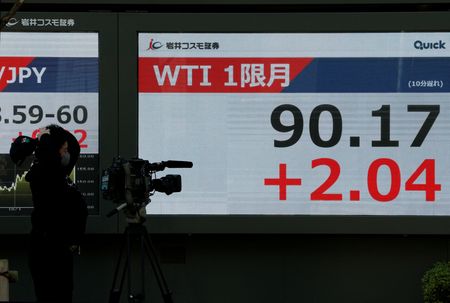
These difficulties primarily arise from questions about the duration of the U.S.-Israeli conflict with Iran and its potential impact on oil costs, which have already climbed above $100 per barrel, along with concerns about inflation, interest rates, and central bank policies.
The conflict, which began with joint U.S.-Israeli attacks on Iran in late February, has caused gold prices to drop approximately 16% this month, marking the precious metal’s largest monthly decline since 2008. Treasury yields have increased by 46 basis points during the same period, representing the steepest rise since October 2024.
Many market participants are finding that strategies that worked during previous crises, including Russia’s 2022 invasion of Ukraine and the COVID-19 pandemic, are no longer effective in current conditions.
“There are very few risk-off assets,” explained Rajeev De Mello, chief investment officer at GAMA Asset Management, who has been working weekends and conducting longer team meetings than usual. “Treasuries are not working, typical risk-off currencies like the yen and the Swiss franc are not working. Gold and silver also not helping.”
The month-long conflict has resulted in Iran effectively blocking the Strait of Hormuz, a critical route for one-fifth of global oil and liquefied natural gas shipments. This situation has raised concerns about stagflation and prompted investors to sell nearly all assets except the U.S. dollar.
“Since the war broke out, we’ve reduced equities because there’s no place to hide,” De Mello said from Singapore.
Asian stock markets have been particularly affected, with South Korean equities declining about 13% this month and Japan’s Nikkei falling approximately 9%. U.S. stocks have performed somewhat better with a 6% decrease.
Kenyon Tse, head of sales trading at UBS in Hong Kong, reported that his firm’s trading desk has recorded daily net selling in TSMC, Asia’s largest company by market value, throughout March.
London-based Matthias Scheiber at Allspring Global Investments has reduced emerging market positions while increasing U.S. exposure, though he cautioned that conditions could worsen if global central banks follow Australia’s example of raising interest rates.
For those caught on the wrong side of market movements, the situation has been especially challenging. An energy company trader, speaking anonymously, described how their firm’s positions betting against oil price increases led to extreme stress. “I literally couldn’t sleep that weekend when it began,” the trader said, adding that the following week involved high stress due to sharp price swings and numerous internal meetings.
Kenneth Goh, director of private wealth management at UOB Kay Hian, faces similar sleep deprivation while managing client portfolios through the crisis. “It’s been non-stop,” Goh said. “If I’m lucky, I sleep at midnight. If not, I sleep at 2, 3 or 4 a.m. But that’s the life I chose.”
The market uncertainty has also affected corporate credit markets and new deal activity. In New York, banks supporting approximately $18 billion in debt for Electronic Arts’ $55 billion acquisition closely monitored developments around President Trump’s Monday deadline for strikes on Iran’s electrical infrastructure.
This deadline coincided with the marketing phase of EA’s debt to investors and could have resulted in less favorable borrowing terms, according to two bankers familiar with the situation who requested anonymity.
Banking professionals working on the deal spent the weekend preparing for possible attacks on Iranian infrastructure and potentially higher pricing that would likely follow.
After Trump announced a five-day delay of the strikes on Monday, banks were able to lower borrowing costs on roughly $6.6 billion of the debt’s cross-currency, high-yield bond component. On Thursday, Trump extended the pause on threatened attacks against Iranian energy facilities for 10 days until April 6.
The constant market volatility requires continuous attention from investors and traders. “You continuously need to watch, monitor and be a participant in the market and this obviously takes a toll in terms of your mental ability,” said Mukesh Dave, chief investment officer at Aravali Asset Management.
Dave, based in Singapore, noted experiencing similar intensity during the 2008 financial crisis and the Asian financial crisis of the late 1990s, but stopped short of comparing this situation to those events. “If this lasts for another week or so, then we’ll see,” he said. “You can’t afford to make mistakes, there is zero tolerance for mistakes.”