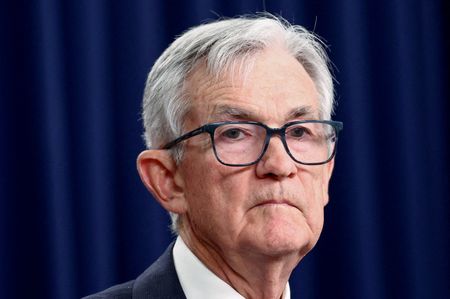

Federal Reserve Chairman Jerome Powell will address Harvard University students Monday in what economists are watching closely as the central bank grapples with a challenging economic puzzle.
Powell’s appearance before a basic economics class comes as the ongoing Iran conflict enters its fifth week, pushing U.S. gas prices to approximately $4 per gallon and creating a complex scenario for monetary policy makers.
The Federal Reserve maintained interest rates in their current 3.50%-3.75% range just ten days ago. During that decision, Powell indicated he wanted to see tariff-related price increases calm down before addressing whether the central bank should respond to inflation pressures from the Iran situation with tighter monetary controls.
Market reactions since then have shown growing inflation worries, with Treasury bond yields climbing and University of Michigan data revealing increased consumer price expectations for both short-term and long-term periods. However, other economic indicators, including key market-based measurements, have shown less concern.
The central bank now faces a classic economic challenge: raising interest rates to combat inflation could damage economic growth and employment, while keeping rates steady or lowering them to support jobs could allow prices to spiral upward.
“In a very typical Fed model, the Fed’s not really happy with that choice,” explained Pomona University economics professor Michael Steinberger. “The Fed is truly darned if they do, and darned if they don’t.”
Federal Reserve Vice Chair Philip Jefferson commented Thursday at a Dallas Fed gathering that he believes current policy positions are essentially neutral, neither boosting nor restraining economic activity.
This positioning allows the central bank flexibility to monitor incoming data and determine appropriate next steps, Jefferson noted.
Philadelphia Fed President Anna Paulson expressed concerns Friday to San Francisco Fed researchers about potential lasting inflation impacts from higher oil and fertilizer costs resulting from Hormuz Strait closures.
BMO Economics’ top U.S. economist Scott Anderson shared similar concerns from that conference.
“We are more concerned about the inflation side of the shock at the moment…prices keep going up and up and up, and that definitely starts to affect behavior and decisions, not just at the consumer level but for businesses as well,” Anderson stated.
With inflation exceeding the Fed’s 2% target for five consecutive years, Anderson argued that policymakers “have to be more concerned about the inflationary impact” of current oil market disruptions.
Financial markets have shifted dramatically since the Iran conflict began, moving from expectations of multiple rate cuts this year to now pricing roughly one-third odds of a rate increase by December.
“It’s going to come down to the classic trade-off of what are you more worried about – rising inflation or weaker employment,” said III Capital Management chief economist Karim Basta, suggesting Powell’s Monday remarks may reveal his priorities lean toward addressing inflation.
Basta noted this focus makes sense given current oil prices near $100 per barrel – not high enough to trigger severe recession fears like $150 or $200 levels would, but sufficient to noticeably impact consumer costs.
Regarding potential rate increases, Basta concluded: “They have to be ready to do whatever is needed, and one of the things that possibly could be needed is to raise rates. I think it’s fair that nothing can be ruled out.”