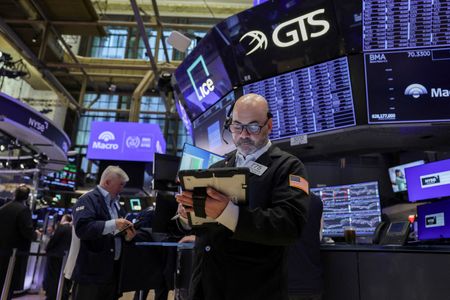

Investment giant Morgan Stanley has shifted its investment strategy recommendations, pulling back on global stock markets while favoring safer assets as Middle East tensions continue to shake financial markets.
The major Wall Street firm announced Friday it was reducing its global stock rating from “overweight” to “equal weight” while simultaneously boosting its recommendations for U.S. Treasury bonds and cash holdings from “equal weight” to “overweight.”
Morgan Stanley analysts explained their reasoning in a research note, stating that “uncertainty around magnitude and duration of oil supply disruption means outcomes for risk assets have become increasingly asymmetrical.”
Oil prices have experienced dramatic increases this month, with Brent crude jumping 59% – marking the sharpest monthly increase on record and surpassing gains witnessed during the 1990 Gulf War. Trading pushed above $116 per barrel on Monday.
The investment firm issued a stark warning about potential market impacts, suggesting that if crude oil reaches $150-$180 per barrel and remains at those levels, global stock market values could decline by nearly 25%.
As part of its strategy adjustment, Morgan Stanley reduced its recommendations for both U.S. and Japanese equities from “overweight” to “equal weight.”
Regarding Japanese markets specifically, the strategists noted: “We turn equal weight on Japanese stocks given negative tail risks as we expect it to come under pressure from supply chains and global recessionary impacts in a scenario where the Strait (of Hormuz) remains closed for longer.”
Despite the overall pullback, Morgan Stanley continues to favor American stocks over other international markets, citing stronger earnings-per-share growth expectations.
This strategic pivot represents a dramatic reversal from investment patterns seen throughout most of the previous year, when investors avoided U.S. markets due to trade policy uncertainties and instead moved money into European, Japanese, and emerging market investments.
Since Middle East conflicts intensified last month, investment flows into American stocks and bonds have surpassed other global markets, with investors “looking to U.S. assets as a more defensive market again,” according to Morgan Stanley’s analysis.
The firm’s strategists explained that U.S. Treasury bonds provide superior portfolio protection during oil supply disruptions because America relies less heavily on energy imports compared to European nations.