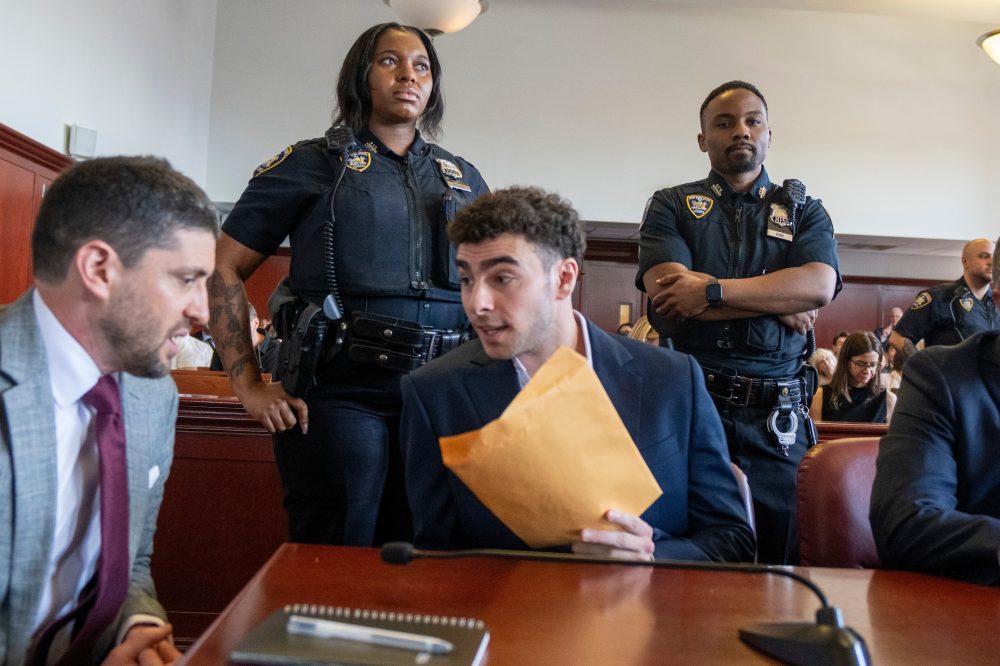

In a dramatic change of direction, the legal team representing Luigi Mangione notified a New York judge Thursday that they are dropping their plans to pursue a psychiatric defense at his state murder trial in connection with the killing of UnitedHealthcare CEO Brian Thompson.
The reversal came just one day after Mangione’s attorneys told Judge Gregory Carro they intended to argue that the 28-year-old Ivy League graduate was experiencing extreme emotional disturbance at the time of the December 4, 2024, shooting. A message requesting comment was left with a spokesperson for the defense team. The Manhattan district attorney’s office, which is handling the state prosecution, declined to respond.
Thursday was also the deadline for the defense to hand over supporting information to prosecutors backing the emotional disturbance claim. Additionally, a transcript from a closed-door hearing held June 3 on the matter was made public Thursday after Judge Carro ordered it unsealed.
Had Mangione followed through with the extreme emotional disturbance defense strategy, it would have amounted to an admission that he carried out the killing — while arguing that mitigating circumstances were at play. Such a defense would not have cleared him of responsibility but could have resulted in a reduced prison sentence.
Under New York law, if a jury accepts an extreme emotional disturbance defense, it must return a manslaughter conviction rather than a murder conviction. Manslaughter carries a maximum sentence of 25 years in prison, while a murder conviction can result in a life sentence.
In a letter sent to Judge Carro on Thursday, defense attorney Karen Friedman Agnifilo stated that the defense “respectfully withdraws” its notice filed under New York’s psychiatric defense statute.
Mangione, 28, has entered not guilty pleas to both state and federal charges. His state trial is set to begin September 8, while his federal trial — which involves stalking charges — is scheduled to get underway October 13.
At Wednesday’s court hearing, Friedman Agnifilo objected to Carro’s decision to unseal materials connected to the psychiatric defense, warning it would be “prejudicial to his defense to the exact same facts” in the federal case, where an extreme emotional disturbance defense is not a permitted legal strategy.
It is important to note that an extreme emotional disturbance defense differs from a not guilty by reason of insanity plea. An insanity defense, if successful, could result in a defendant being sent to a psychiatric facility rather than prison.
Thompson, 50, was fatally shot as he approached a Manhattan hotel where UnitedHealth Group was holding its annual investor conference. Surveillance footage captured a masked gunman shooting him from behind. Investigators say the words “delay,” “deny,” and “depose” were found on the ammunition — a phrase associated with tactics insurers use to avoid paying out claims.
Mangione, who comes from a wealthy Maryland family and attended an Ivy League university, was taken into custody five days after the shooting at a McDonald’s restaurant in Altoona, Pennsylvania, roughly 230 miles west of Manhattan.
At a hearing last month, Judge Carro ruled that a firearm and a notebook — both of which prosecutors say connect Mangione to the killing — will be admissible as evidence. The weapon, a 3D-printed pistol, is said by prosecutors to match the gun used in the shooting. The notebook reportedly contains references to wanting to “wack” a health insurance executive and describes a rebellion against “the deadly, greed fueled health insurance cartel.”