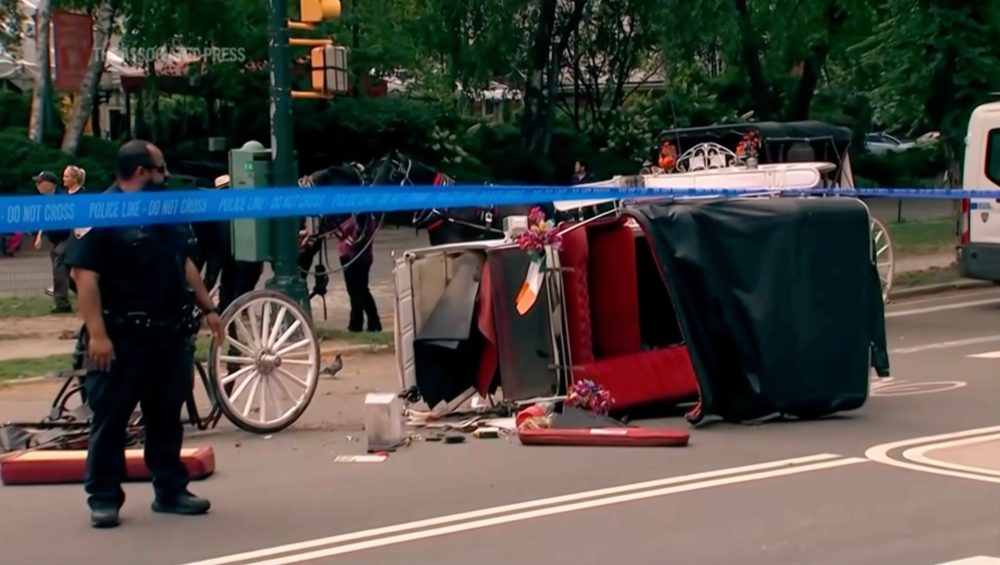

A family trip to New York City to celebrate a teenager’s high school graduation ended in tragedy when an 18-year-old from India was killed during a Central Park carriage ride after the horse bolted from its driver.
Romanch Mahajan jumped from the carriage after his mother fell out, striking his head on the ground. His father, Deepak Mahajan, recounted the harrowing moments to The New York Times, saying his son was calling out for his mother just before the fatal fall. Mahajan said he, his wife, and their younger son suffered only minor injuries, though the carriage struck another horse-drawn vehicle before tipping over.
The family had arrived in New York from India on Monday — the same day Romanch learned he had been accepted to a university in Jaipur. After spending the day touring the city’s well-known attractions, they boarded a carriage ride to relax. The driver stepped off the carriage to take photos of the family when the accident happened moments later.
“This incident should be taken very seriously,” the father said. “It took my son’s dream away.”
The company that owned the carriage involved has suspended the driver indefinitely, and the horse will be permanently removed from service, according to the union that represents the industry.
Alexander Kemp, a vice president with Transport Workers Union Local 100, which represents carriage drivers and owners, expressed shock at the outcome. “We’re absolutely gutted and stunned by this tragedy. We’ve never had a fatal accident like this before,” he said. “We have shuttered the stables and ceased operations today while we have extensive internal discussions of safety protocols and how they can be improved.”
The Central Park Conservancy, which oversees the 850-acre park, confirmed that Romanch’s death is believed to be the first human fatality tied to a horse carriage in the park’s more than 150-year history of offering such rides. The organization called for the industry to be suspended until stronger safety measures could be established, pointing out that eight horse-related incidents have occurred in Central Park over the past 13 months.
“If any other activity in the Park posed a comparable risk to visitors, it would be suspended immediately while steps were taken to address those dangers,” the conservancy said in a statement Thursday.
The conservancy had already entered the debate last year when it backed a long-standing bill that would ban horse carriages and help drivers transition to other employment. It argued the carriages pose a public safety risk in the increasingly crowded park, and noted that other major U.S. cities — including Chicago and San Antonio — have recently eliminated similar carriage operations.
New York City leaders responded swiftly to the teen’s death. City Council leaders announced they would hold a hearing next month on Ryder’s Law, the legislation backed by the conservancy.
“The time to act is now,” Council Speaker Julie Menin wrote on the social platform X.
Mayor Zohran Mamdani reaffirmed his commitment to ending the industry — a stance he took during his campaign last year — saying he would collaborate with the council, the industry, and animal welfare advocates to “deliver a just transition that protects workers while ending horse-drawn carriages in Central Park once and for all.”
Horse carriages, which run approximately $72 for the first 20 minutes, were not operating in the park Thursday. The Transport Workers Union, which has previously resisted efforts to phase out the industry, announced Thursday that it now supports newly introduced legislation that would create hitching posts throughout the park, allowing drivers to safely secure their horses — including at popular spots where tourists stop for photos.
The carriage industry has long been considered a charming piece of New York’s past, offering tourists a nostalgic experience while supporting hundreds of jobs for drivers and providing work opportunities for farm and racing horses. Critics, however, have argued the rides are both cruel to animals and hazardous to the public.