The Southern Baptist Convention has reached a significant achievement in its pro-life advocacy efforts, providing its 100th ultrasound machine to pregnancy centers across the country. The milestone was accomplished through the work of the denomination’s Ethics and Religious Liberty Commission.
According to Rachel Wiles, a spokesperson for the ERLC, the initiative strategically targets specific areas of the country. “By funding ultrasound machines in pro-choice states where few, if any, protections exist for the vulnerable preborn and where many travel to receive abortions, we strengthen pro-life centers engaged in life-saving work,” Wiles explained to the Christian Post.
The program represents the denomination’s ongoing commitment to supporting pregnancy resource centers that provide alternatives to abortion services.
Montgomery County officials in Ohio have reached a settlement in their legal dispute with Gracehaven, a Christian ministry focused on foster care services. The disagreement arose when county officials demanded that the organization hire individuals who did not share their Christian faith as a condition for maintaining their business relationship. Alliance Defending Freedom, which provided legal representation for the ministry, stated that “The government can’t deny public benefits to a ministry that is caring for young survivors of sex trafficking solely because of its religious character.” The organization specifically works with young people who have survived sex trafficking.
A prominent atheist organization is raising objections to a proposed national monument that would feature the phrase “In God We Trust.” The structure, designed to mirror Paris’s famous Arc de Triomphe, has drawn criticism from the Freedom From Religion Foundation, described as one of the nation’s largest atheist organizations. According to reports, the Foundation regularly works to remove Christian symbols and references from public spaces. The planned archway would commemorate the United States’ upcoming 250th anniversary and function as an entrance point to Washington DC.
A biotechnology company announced Thursday that its investigational treatment for a muscle-wasting condition successfully achieved its primary endpoint in advanced clinical testing.
The company reported that the experimental therapy designed to address muscle-wasting disorders reached its main objective during the late-stage trial, representing a key milestone in the treatment’s development process.
Pharmaceutical company Biogen announced Thursday that its experimental Alzheimer’s treatment failed to achieve its primary objective in a mid-stage clinical trial.
The company revealed on May 14 that the drug did not reach the main endpoint researchers had established for the study.
WASHINGTON, May 14 – The Trump administration will present arguments Thursday before a federal appeals court seeking to restore executive orders that target four prominent U.S. law firms, in a case that examines the boundaries of presidential authority after lower court judges decisively struck down the directives as illegal.
The proceeding at the Washington, D.C.-based U.S. Court of Appeals for the District of Columbia Circuit scheduled for 9:30 a.m. Eastern will feature a three-judge panel consisting of two Democratic-appointed and one Republican-appointed jurists, a makeup that may indicate challenging prospects for the government’s position.
The law firms in question — Perkins Coie, Jenner & Block, WilmerHale and Susman Godfrey — each secured comprehensive wins in lower federal court proceedings, where four judges appointed by both Democratic and Republican presidents ruled separately last year that the executive orders breached free-speech protections and additional constitutional safeguards.
The presidential directives referenced the firms’ previous legal representation, diversity practices and political connections. These orders formed part of a wider initiative spearheaded by the president following the beginning of his second term that focused on targeting those he views as adversaries.
The directives aimed to prevent attorneys from these four firms from entering federal facilities and to cancel government contracts maintained by their clients. The firms have rejected any allegations of misconduct.
The administration pursued an appeal following the firms’ success in obtaining permanent injunctions against the measures. Former Republican-appointed U.S. Solicitor General Paul Clement will present arguments on behalf of the law firms, going up against Justice Department attorney Abhishek Kambli.
In court documents, the Justice Department informed the D.C. Circuit that judges struck down the executive orders “without considering their plainly constitutional aspects and applications.”
The Justice Department stated the litigation concerns “not about the sanctity of the American law firm” but instead “about lower courts encroaching on the constitutional power of the president” regarding national security and other areas.
The four firms along with numerous legal organizations including the American Bar Association have pressed the D.C. Circuit to deny the administration’s appeals.
In legal filings, Jenner & Block stated, “Lawyers cannot be effective advocates for their clients if they face sweeping sanctions for their protected speech and associations.”
Nine additional firms, including Paul Weiss and Skadden Arps, reached settlements with the administration to prevent similar directives against them.
The same appeals court panel will also hear later that day the administration’s challenge to a decision that prevented it from removing prominent Washington attorney Mark Zaid’s special government security clearance.
The D.C. Circuit’s final decisions in both matters may be challenged before the U.S. Supreme Court.
RIGA, Latvia (AP) — Latvia’s center-right Prime Minister Evika Silina stepped down Thursday following the collapse of her governing coalition after the left-leaning Progressives Party withdrew their support, leaving her administration without a parliamentary majority.
Silina’s departure follows last week’s forced resignation of Defense Minister Andris Spruds from the Progressives Party over how the administration managed several incidents where wayward drones believed to originate from Ukraine strayed into Latvia’s airspace. Silina stated that Spruds had lost both her confidence and that of the citizens.
The drone episodes “clearly demonstrated that the political leadership of the defense sector has failed to fulfill its promise of safe skies over our country,” Silina said on Sunday, explaining Spruds’ resignation.
Two suspected Ukrainian drones crossed into Latvia on May 7, with one crashing at a fuel storage facility. Spruds indicated they were likely Ukrainian drones targeting Russia that mistakenly ended up in Latvia.
Since March, several Ukrainian drones bound for Russia have struck territories across the three Baltic nations. Opposition voices argue these episodes have exposed gaps in Latvia’s capacity to address military dangers.
The three-party Latvian coalition government, which included an agrarian party, had faced mounting tensions for months across various policy matters.
Silina’s departure occurs just months before scheduled general elections in October.
“My priority has always been, and remains, the well-being and security of Latvia’s people,” Silina wrote on X on Thursday. “Parties and coalitions change, but Latvia endures. And my responsibility to society comes above all else.”
Latvian President Edgars Rinkevics, who holds the authority to name a new government leader, plans to conduct meetings with delegates from all parliamentary parties on Friday.
On Sunday, Ukraine’s Foreign Minister Andrii Sybiha said the incidents in Latvia were “the result of Russian electronic warfare deliberately diverting Ukrainian drones from their targets in Russia.” He offered Ukraine’s help to the Baltic states and Finland to prevent such incidents in the future.
MANILA, Philippines — A Philippine lawmaker facing International Criminal Court charges for alleged crimes against humanity has escaped from the nation’s legislative building where he had been hiding to avoid arrest, government officials announced Thursday.
Sen. Ronald dela Rosa managed to leave the heavily secured Senate facility following an incident Wednesday evening when security guards discharged multiple gunshots during a confrontation with a government official, creating disorder that apparently allowed the senator to escape undetected.
President Ferdinand Marcos Jr. addressed the nation on television late Wednesday night, urging citizens to stay calm. Police have launched an investigation, including examining whether the incident was deliberately staged to create an opportunity for dela Rosa to flee.
“There is no obstruction of justice,” Senate President Alan Cayetano stated regarding dela Rosa’s departure while under the Senate’s protection.
During a press conference, he explained that he had not been shown any ICC arrest warrant for dela Rosa and that the senator was permitted to leave the building.
Opposition voices, however, argued that Cayetano and the Senate’s head of security should face accountability for allowing dela Rosa’s escape.
The 64-year-old dela Rosa previously headed the national police force under Rodrigo Duterte, who held the presidency from 2016 through 2022. Duterte was taken into custody in March of last year on an ICC warrant for alleged crimes against humanity related to violent anti-narcotics campaigns he initiated and is currently facing prosecution in The Hague.
An ICC warrant made public Monday accuses dela Rosa of the crime against humanity of murder involving “no less than 32 persons” from July 2016 through late April 2018, during his tenure as national police chief under Duterte while implementing his violent enforcement operations.
Both dela Rosa and Duterte have rejected claims they authorized extrajudicial executions, though the former president publicly threatened drug suspects with death during his time in office.
Dela Rosa’s legal troubles have emerged amid growing political tensions between the Duterte family and Marcos. Vice President Sara Duterte, the former president’s daughter, has accused Marcos of orchestrating what she called the “kidnapping” of her father and his transfer to an international tribunal.
These conflicts highlight the profound divisions that have historically troubled the dynamic Asian democracy.
On Monday, Sara Duterte faced impeachment by the House of Representatives, controlled by Marcos supporters, over accusations of unexplained wealth, misappropriation of government funds, and publicly threatening to assassinate Marcos, his spouse, and the House speaker if she were killed in their escalating feud.
While she has rejected any misconduct, she has declined to provide detailed responses to the specific accusations.
The Senate will transform into an impeachment tribunal as early as Monday to begin preparations for the vice president’s trial, Cayetano announced.
Cayetano, a close associate of Rodrigo Duterte, secured the Senate presidency Monday after gaining backing from 13 of 24 senators. He achieved this majority after dela Rosa, who had been absent for months due to arrest concerns, unexpectedly appeared at the Senate Monday in Cayetano’s vehicle.
National Bureau of Investigation officers attempted to deliver the ICC arrest warrant, but dela Rosa rushed toward a narrow staircase leading to the Senate chamber and requested assistance from supportive senators, who placed him under their protection.
Cancer treatment centers nationwide are working rapidly to provide patients access to a breakthrough experimental medication for pancreatic cancer through a special early access program while awaiting anticipated FDA approval.
Federal regulators approved the expanded access program on May 1, coming less than three weeks after Revolution Medicines announced that their once-daily medication, daraxonrasib, showed remarkable results by doubling patient survival times in clinical testing for advanced pancreatic cancer – one of the most fatal cancer types with extremely low five-year survival statistics.
Revolution Medicines had requested federal permission to distribute the treatment at no cost to patients with previously treated pancreatic cancer that had metastasized throughout the body.
“The public caught wind of the FDA announcement… which has triggered a deluge of patient requests,” said Dr. Daniel King, medical oncologist at the Zuckerberg Cancer Center of Northwell Health. “Cancer centers are all figuring out how to engage with our own institutions, opening up the protocols to provide access.”
Medical specialists indicate that obtaining approval and administering the expanded access program will be time-consuming and will demand cancer facilities to allocate significant resources beyond their standard procedures.
The medication became one of the initial treatments accepted by federal regulators last year under their new fast-track review system, and could receive approval within one to two months following submission of a complete application.
The Redwood City, California-based Revolution Medicines did not provide immediate response to requests for comment.
CEO Mark Goldsmith, during a conference call last week, refused to predict how many patients might pursue early access to the treatment and provided no timeline for complete FDA submission. “There’s a full-throttle effort to do it,” he stated.
Former Nebraska U.S. Senator Ben Sasse recently disclosed that he has Stage 4 pancreatic cancer and informed the CBS news program “60 Minutes” that he is taking the Revolution drug.
The medication targets a genetic alteration present in approximately 90% of pancreatic cancers and demonstrated in clinical testing the ability to extend median survival to 13.2 months versus 6.7 months for patients receiving chemotherapy.
“Doubling survival compared to best available chemotherapy is a big deal,” said Dr. Gulam Manji, co-director of the pancreas center at Columbia/New York-Presbyterian. “It is not a cure, but I think that this drug is a new breakthrough we can build on.”
During his decade-long career, Manji recalled requesting compassionate use of an experimental treatment for only one other patient. During a recent clinic day, the Columbia specialist reported that seven patients inquired about beginning treatment with daraxonrasib.
Providing them access involves much more complexity than prescribing an FDA-approved medication, according to him and other cancer experts.
“Patients are already aware of the press release and are already calling,” said Dr. Vincent Chung, pancreas cancer specialist at City of Hope. “The challenge now is how to proceed.”
The program demands that doctors submit individual patient requests to Revolution Medicines, Chung explained, and if the company determines they qualify as good candidates, all documentation must then be forwarded to the FDA. Hospital oversight committees will need to monitor the patients.
“Given the volume, I am not sure what will happen on the FDA side. I’m sure they don’t want to have 10,000 applications at once,” Chung said, noting that the agency might instead establish a broader enrollment system.
Manji indicated his understanding that cancer centers will not need to gather comprehensive patient data under the expanded access program, but must report severe side effects or other complications.
The FDA did not provide response to requests for comment. The expedited voucher program was promoted as a major accomplishment by Dr. Marty Makary, who stepped down as FDA Commissioner on Tuesday following weeks of disagreements with Trump administration officials.
Approximately 67,000 Americans will receive pancreatic cancer diagnoses this year, with 53,000 expected to die from the disease, according to the American Cancer Society.
“We are doing this as a service to our patients,” Chung said. “I’m hoping of course that the FDA is going to review the data and then there is an approval much sooner than is typical.”
Administration officials are working urgently to address the economic and political consequences of the ongoing Iran conflict, according to three sources familiar with internal White House conversations, as prospects for a swift end to hostilities continue to diminish.
U.S. President Donald Trump recently endorsed pausing the federal gas tax, a measure that would reduce motor fuel costs by 18 cents per gallon from current national averages exceeding $4.50. Previously considered unnecessary by some White House staff, this proposal is now gaining momentum as officials seek ways to demonstrate action against escalating expenses, the sources revealed while requesting anonymity due to the sensitive nature of internal discussions.
Among White House officials, agreement has formed that with fuel costs rising 50% since hostilities began, Trump requires “a visible consumer relief move now,” according to one source.
The $4-per-gallon threshold has historically prompted public anger and economic concern. This pattern has continued since the conflict commenced, with consumer confidence recently reaching record lows and U.S. consumer inflation jumping to 3.8% in April, marking the highest level in nearly three years.
Over 60% of Americans report their household finances have suffered from elevated gas prices, a May Reuters/Ipsos survey found, placing Trump’s economic approval at just 30%, dropping several points since the conflict’s start.
Trump now confronts increasing pressure from fellow Republicans concerned that war-related economic hardship could trigger voter anger and potentially cost the party House control and possibly Senate seats in November’s midterm elections.
Administration officials have been examining market information to assess whether national average prices might reach $5 per gallon, two sources familiar with these discussions revealed. Seven states have already crossed that threshold, according to AAA statistics.
“They feel like that’s their largest vulnerability right now: that specific cost, gas, not overall economic conditions,” a White House political adviser explained. “The toughest thing, too, is that we made gas prices the Achilles’ heel for (former President Joe) Biden and now it’s our own.”
White House spokeswoman Taylor Rogers stated that Trump and his energy team had anticipated the conflict’s disruptions to global energy markets and developed a mitigation plan.
“The ability to supply both the United States and our allies with reliable, affordable, and secure energy has long been a key strategic objective of President Trump, and his successful efforts to unleash American oil and gas has achieved this objective,” Rogers stated.
The administration’s worries have intensified as U.S. oil and fuel exports have reached record levels, driven by Asian and European buyers seeking alternative supplies. This has reduced U.S. stockpiles during a period when they typically increase, prompting warnings from Wall Street analysts about potential shortages that could drive gasoline, diesel and jet fuel prices even higher this summer.
Energy costs have surged since Iran blocked access to the Strait of Hormuz, a shipping route that typically handles one-fifth of global oil supplies. Businesses from airlines to McDonald’s are experiencing impacts, with the fast-food company’s CEO noting last week that lower-income customers were reducing spending.
U.S. airlines saw fuel costs jump 56% from February to March, Transportation Department figures show, pressuring carriers already working with narrow profit margins, including Spirit Airlines, the struggling budget airline that ceased operations in early May.
Trump has characterized the price increases as a “small price to pay” for efforts to remove Iran’s government and stop Tehran from developing nuclear weapons.
When asked Tuesday if Americans’ financial struggles were influencing his desire to reach an agreement, Trump responded: “Not even a little bit.”
“The only thing that matters when I’m talking about Iran — they can’t have a nuclear weapon,” Trump informed reporters. “I don’t think about Americans’ financial situation. I don’t think about anybody. I think about one thing — we cannot let Iran have a nuclear weapon. That’s all.”
The gas tax suspension proposal was viewed as a backup option as recently as late April, one source familiar with White House conversations said, but gained support over the past week as Iran ceasefire efforts stalled and officials determined they needed a policy change Americans would notice.
Trump’s proposed suspension would need congressional authorization. Some Republican legislators have shown support for the concept, though party leadership has remained uncommitted.
In April, the administration excluded certain Russian oil from sanctions and waived shipping rules to enable additional fuel transportation. On Monday, the Energy Department announced it would release another 53.3 million barrels from the national security stockpile to calm market concerns.
Only 25% of Americans consider the Iran conflict worth the costs, with 53% believing it has not been worthwhile and others uncertain, a Reuters/Ipsos poll from April 24-27 found. Twenty percent of Republicans said the conflict has not been worth it.
Amy Koch, a Republican strategist who counsels state and federal candidates, said the administration has limited time to conclude the conflict and reduce fuel price pressures before Memorial Day, which marks the beginning of summer driving season.
“I think people are willing to endure some short-term financial pain if it means we deal with Iran,” Koch said, “but the clock is ticking for the White House.”
A major Wall Street bank has climbed to the top of technology investment banking by placing early bets on startups that competitors might overlook.
JPMorgan’s approach became clear in 2017 when Pattern Group co-founders David Wright and Melanie Alder sought $10 million for their startup. Despite the relatively small amount for a bank managing $2.5 trillion in assets, JPMorgan dispatched a team to Lehi, Utah, for an in-person evaluation of the e-commerce business.
“We were literally in a warehouse with some desks next to it,” Pattern CFO Jason Beesley recalled. “They came and visited us and weren’t spooked by that.”
The investment in relationships proved profitable. Pattern’s annual revenue expanded from $100 million to $2.5 billion by last year, with JPMorgan serving as the exclusive banker for the company’s $225 million Series B funding in October 2021 and a $150 million revolving credit facility last year. The bank later co-managed Pattern’s September IPO alongside Goldman Sachs, raising $300 million and establishing a company valuation of approximately $2.5 billion. Pattern’s stock has climbed 27% since going public, with projected revenue of $3.3 billion this year.
“It’s very important for us to be able to say to our clients that ‘we’re going to be with you, no matter what your size is, and no matter what happens’,” explained Andrew Kresse, the bank’s co-head of innovation economy. “We’re not looking for only companies that want an IPO.”
This relationship-focused strategy has elevated JPMorgan to the number one position in technology investment banking during the first quarter, surpassing rival Goldman Sachs, according to Dealogic data covering equity and debt underwriting, lending and mergers and acquisitions.
Although Goldman maintained its leadership in tech M&A by total transaction value, JPMorgan excelled across other sectors, securing 16.7% of total tech investment banking fees in the first quarter, LSEG reported.
“JPMorgan has a best-in-class global investment bank that layers capital markets, lending and all the frills that go along with it. They deliver the whole firm to their clients,” noted Mike Mayo, head of U.S. large-cap bank research at Wells Fargo, placing JPMorgan among the industry’s top three investment banks alongside Goldman Sachs and Morgan Stanley.
The bank established its Innovation Economy banking division approximately ten years ago to focus on founder-led, high-growth, venture-backed startups in healthcare and technology sectors during earlier development stages. Following Silicon Valley Bank’s collapse in 2023 — which had previously dominated startup banking — JPMorgan quickly moved to acquire its clients and recruit personnel.
Since then, the bank has grown its technology investment banking team by hiring roughly a dozen senior bankers in 2025 and bringing in veteran dealmaker Kevin Brunner from Bank of America as global chairman of investment banking. JPMorgan is also recruiting Kaushik Banerjee and Homan Milani from Bank of America, who will join as managing directors in the technology investment banking group later this year.
The team faced significant challenges last year when it lost three global heads of technology banking in quick succession: Madhu Namburi departed for venture capital firm General Catalyst while Drago Rajkovic and Pankaj Goel both moved to Citigroup. The company announced Wednesday a leadership restructuring at the investment bank’s top level, promoting Dorothee Blessing, Kevin Foley and Jared Kaye to oversee global investment banking and former M&A head Anu Aiyengar to global chair of investment banking and M&A.
Not every IPO has matched Pattern’s success. As lead bank for Circle Internet Group’s public offering, JPMorgan faced criticism for potentially underpricing when the stablecoin issuer debuted at $31 per share and surged to $95 on its June 5 trading launch. This marked one of the first major IPOs following the Trump administration’s Liberation Day that had halted new listings for weeks, catching the industry off-guard with unexpected investor enthusiasm.
Currently, JPMorgan employs over 550 bankers serving innovation economy clients worldwide — 200 hired since 2023 — and collaborates with more than 11,000 startups and high-growth companies across 40 countries. Technology transactions alone represented 22% of the bank’s $3.2 billion in total investment banking fee revenue during the first quarter, making it the bank’s strongest performing sector, according to LSEG data.
By establishing early connections with startups and expanding relationships across lending, capital markets and advisory services, the bank aims to secure larger portions of major technology deals as these companies mature.
DoorDash exemplifies this approach. JPMorgan initiated work with the local commerce platform nearly ten years ago when its valuation remained under $1 billion. The bank supported its expansion, providing Chase cardholders with complimentary or discounted DashPass memberships in 2020 before managing the company’s public offering that same year. Recently, it advised on DoorDash’s $3.9 billion acquisition of London-based Deliveroo.
“We are uniquely positioned to support a company from its early days into becoming one of the most significant tech companies in the ecosystem,” stated John Simmons, co-head of global banking. DoorDash now maintains a market value of approximately $73 billion.
JPMorgan has also provided advisory services for several prominent technology transactions recently, including Palo Alto Networks’ roughly $25 billion acquisition of CyberArk, Salesforce’s $8 billion purchase of Informatica, and Global Payments’ $24.25 billion acquisition of Worldpay alongside the $13.5 billion sale of its Issuer Solutions business to FIS.
JPMorgan executives describe their methodology as distinct from traditional investment banking models that concentrate primarily on individual transactions.
Developing relationships early enables the bank to “build the trust necessary to help clients navigate complex transactions,” said Noah Wintroub, global chairman of investment banking.
Matt Kuta, a former F-15E fighter pilot and co-founder of Voyager Technologies, encountered JPMorgan CEO Jamie Dimon at the annual Army-Navy football game in December 2024. The Denver-based space technology company already maintained a commercial banking relationship, and Kuta mentioned their need for an investment bank.
Dimon connected him with Simmons, who played a key role in managing Voyager’s $383 million IPO last year, establishing a valuation of about $3.8 billion.
JPMorgan banker Kristina Nilsson facilitated one of Voyager’s recent partnerships by introducing CEO Dylan Taylor to Matthew Kinsella, CEO of quantum technology company Infleqtion. The companies revealed plans in November to incorporate Infleqtion’s Tiqker atomic clock into low-Earth orbit missions aboard the International Space Station and Starlab, the commercial space station Voyager is helping develop.
Taylor praised JPMorgan’s responsiveness and internal collaboration, mentioning that Dimon occasionally sends direct emails to check in.
“If I emailed Jamie right now … he probably wouldn’t respond within an hour, but he would respond later today,” Taylor said. “The fact that he even knows who I am is pretty unique.”
Major technology corporations have partnered with beloved children’s organizations including Sesame Street, Girl Scouts and Highlights magazine to deliver digital wellness education to young people – while simultaneously facing legal challenges over creating platforms that make it hard for kids to disconnect, according to public records and internal company communications.
These partnerships, funded with tens of millions of dollars from the technology firms, have reached hundreds of thousands of children and families through engaging content featuring beloved characters, vibrant publications and memorable music, company statements reveal.
The sponsorship arrangements between Alphabet’s Google and Meta of these educational initiatives have drawn sharp criticism from advocates who argue the companies are developing fresh approaches to foster social media dependency among children, especially by collaborating with organizations that target kids under 12 – an age medical professionals often consider too young for smartphone use.
These collaborations also undermine confidence in long-established organizations that families have trusted for child-rearing guidance, according to parent advocacy groups, as the technology companies battle numerous legal cases alleging they created habit-forming products that damaged young people’s mental health. One case that proceeded to trial resulted in a $6 million verdict against both companies.
“It’s like Sesame Street teaming up with Philip Morris to teach kids how to smoke cigarettes safely,” said Rose Bronstein, whose 15-year-old son died by suicide after he was bullied online. “How is it any different?”
The platforms operated by Meta and Google earn billions in advertising dollars from companies targeting minors. This financial motivation, according to critics, prevents the companies from providing impartial guidance about screen time.
“Their very business model relies on maximum time on device,” said Emily Boddy, co-lead of U.S. Smartphone Free Childhood, a parent group that advocates against phones in schools. “Their guidance or advice can’t be neutral, and we see that it’s not.”
Companies across industries, from beverage manufacturers to tobacco producers, have historically donated to “trusted institutions” to enhance their public image, according to Nora Kenworthy, a public health researcher at the University of Washington Bothell.
“It’s very much a reputation management strategy,” Kenworthy said.
An examination of thousands of pages of corporate documents released through litigation, along with company-funded educational materials and programs, shows that Meta’s approach of collaborating with external organizations to promote favorable technology messages began years ago as app criticism intensified.
A 2018 internal draft document shows user experience researchers discussing how to address claims that social media companies were “designing addictive products that can harm well‑being.” The researchers suggested consulting outside experts to identify Facebook features that might negatively impact users long-term.
Their brainstorming included: “Form an alliance where the third party can vouch for the thoroughness and relevance of our approach for targeting the ‘addiction’ claims.” Meta told Reuters it never implemented this concept.
Both companies did develop relationships with multiple organizations. Google provided funding to Sesame Street, Highlights and Girl Scouts. Meta also sponsored Girl Scouts.
Some materials promoted by Meta and Google do contain digital safety guidance, according to children’s media experts, including reminders about creating secure passwords and avoiding fraudulent schemes.
The companies refused to disclose their payment amounts to these organizations. However, Google announced in 2024 it would invest at least $20 million supporting groups promoting “digital well-being,” including Highlights Magazine and Sesame Workshop.
“We prioritize the well-being of our youngest users by building industry-leading safeguards and putting families in charge of their digital experiences – any suggestion otherwise is simply wrong,” a Google spokesperson told Reuters.
Sesame Workshop stated that Google had no authority over its digital wellness educational content, noting in a statement that Google executives provided input “prior to the start of content development.” Child development experts, parents and caregivers contributed to the actual materials, according to Sesame.
Meta stated it played a minimal role in creating the Girl Scout materials but expressed pride in its collaboration with online safety experts. A company spokesperson said the organization frequently partners with academics to research negative platform usage.
Highlights Magazine refused to answer detailed questions about its Google partnership. Spokesperson Melanie Bay said the publication creates products to help children “make thoughtful choices.”
The Girl Scouts digital safety program, funded by Meta’s Instagram, requires participants to complete age-appropriate lessons to earn a “digital leadership” badge.
One curriculum section targeting middle-school-aged scouts teaches girls to monitor their screen time. Participants are then encouraged to “create digital content to support a topic” they find meaningful.
Google began sponsoring its own Girl Scouts patch last year, called the “Be Internet Awesome Fun Patch,” connected to the company’s digital literacy program. Participants learn about online kindness, password security, and protecting personal information. The patch, displayed on the Girl Scouts website, shows both organizations’ logos.
“It’s almost priming them to desire to get on social media once they reach the minimum age,” said Brendesha Tynes, a children’s media researcher at the University of Southern California.
Girl Scouts did not respond to multiple requests for comment.
Google also provided Highlights magazine with at least $5 million. A 2024 special edition funded by Google contains instructions for creating a “sleeping bag” to store devices overnight. “Before you shut down for the night, put your device to bed,” the magazine advises.
This activity normalizes smartphone ownership for Highlights readers – aged six to 12 – at that young age, according to seven parents advocating for technology restrictions who reviewed the publication for Reuters.
Google distributed an additional 250,000 copies of the special Highlights edition to organizations including Save the Children and Reading is Fundamental.
A Google spokesperson described the company’s internet safety curriculum as “accredited and reputable,” stating that Google collaborated with safety organizations in its development. One partner is the Family Online Safety Institute, a non-profit receiving most of its funding from technology companies, including Google. Meta is not a member.
The institute confirmed in a statement that they reviewed the curriculum before its launch.
The educational programs funded by Google and Meta did address some negative effects of their applications, according to four children’s media researchers and pediatricians who spoke with Reuters.
Meta’s sponsored Girl Scouts curriculum for middle schoolers discusses how companies collect user information to market products or “influence you online.” A Scholastic activity sheet funded by Google teaches children how to respond to pop-up messages saying, “You’ve won a free smartphone! Click here to get it!”
This educational content benefits children and families, according to Tiffany Munzer, lead author of the American Academy of Pediatrics’ 2026 digital media guidelines, though she emphasized that companies must still eliminate features like algorithmic recommendations that make device disconnection difficult for kids.
“We can still call for better design of the actual product,” Munzer said, referring to digital apps.
Thousands of Israeli nationalists conducted their annual march Thursday through Jerusalem’s historic Muslim quarter, commemorating the capture of East Jerusalem in a conflict that occurred nearly six decades ago.
The demonstration, which serves as the primary observance of Jerusalem Day, has evolved into a display of strength for Jewish nationalists while Palestinians consider it a deliberate provocation designed to weaken their connection to the city.
“Jerusalem is our holy city. It is our holy city forever,” stated Shira Gefen, a 53-year-old Israeli who made the journey to Jerusalem from her residence near Haifa to participate in the event.
Israeli officials positioned thousands of law enforcement personnel throughout Jerusalem, including officers equipped with riot control gear stationed at Damascus Gate, the primary entrance to the Old City’s traditional Muslim district.
Authorities erected barriers in the Damascus Gate vicinity, blocking entry for Palestinians who don’t reside within the Old City. Business owners in the Palestinian community reported being compelled to shut down their shops before the demonstration began.
Israel took control of East Jerusalem during the 1967 Middle East conflict and subsequently incorporated it into their territory, an action that the United Nations and the majority of nations worldwide have refused to acknowledge.
The demonstration regularly heightens tensions as extreme nationalist Jewish organizations move through Palestinian neighborhoods within the Old City. Previously, groups of protesters, many of them young people, have shouted phrases including “Death to Arabs.”
The procession begins in West Jerusalem and concludes at the Western Wall, remains of an ancient support structure that Jews hold sacred as the Temple Mount, a remnant from their religion’s two historical temples. Muslims know this location as Al Haram Al Sharif, or the Noble Sanctuary, representing Islam’s third most sacred site.
Palestinians regard the Jerusalem Day march as one element of a wider effort to strengthen Jewish presence throughout the city at their expense.
They have consistently desired East Jerusalem to serve as the capital of a prospective Palestinian state.
The Secretary of Agriculture is requesting nominations to fill regional representative positions on the National Poultry Improvement Plan’s General Conference Committee.
Officials are seeking candidates for both primary member roles and alternate positions to serve on the committee that oversees the national poultry program.
The nomination process is now open for interested parties to submit candidates for these regional committee positions.
A federal agency is moving forward with plans to update and extend information collection requirements tied to rules governing the importation of live birds, poultry meat, and related products from certain international regions.
The Animal and Plant Health Inspection Service has announced its intention to seek revised approval for these information collection activities, which are connected to existing regulations that control how poultry and poultry products enter the United States from specific areas around the world.
This announcement follows procedures established under the Paperwork Reduction Act of 1995, which requires federal agencies to obtain approval for information collection activities and periodically review and update those requirements.
Good morning, Delmarva! We’re starting Thursday with a slight chance of light rain showers through 9 AM, but don’t let that dampen your spirits – brighter skies are on the way!
Once those early morning showers move out, we’ll see partly sunny conditions developing with a pleasant high near 68 degrees. Northwest winds will be gentle at 5 to 10 mph, making it feel quite comfortable. The rain chance is only 30%, and if we do see any precipitation, amounts will be minimal – less than a tenth of an inch.
Tonight looks nice with partly cloudy skies and temperatures dropping to a cool 50 degrees – perfect sleeping weather! Friday is shaping up beautifully with mostly sunny skies and temperatures climbing to a delightful 71 degrees. Friday night stays pleasant with mostly clear conditions and lows around 53.
This looks like a great stretch of weather for any outdoor plans you might have. Whether you’re hitting the beaches, working in the garden, or just enjoying some fresh air, Mother Nature is cooperating nicely!
Stay weather-aware, Delmarva, and have a wonderful day!
Motorists traveling on southbound Interstate 95 should expect delays due to ongoing construction work that has closed the right lane between the Joe Biden Welcome Center and Route 896.
According to state transportation officials, the lane restriction is part of construction activities in the area and will remain in effect until 5 PM today.
Drivers are advised to use caution when traveling through the work zone and allow extra time for their commute while crews complete the necessary work.
School districts nationwide are raising concerns about potential cost increases for meal preparation as new federal dietary guidelines are implemented.
The financial worries come at a time when school systems are also dealing with budget cuts to programs that previously assisted them in purchasing food from local sources.
According to reporting, districts are grappling with how to meet the updated nutritional requirements while managing their food service budgets effectively.
The situation highlights the ongoing challenges school nutrition programs face as they work to balance federal mandates with practical budget constraints in their cafeterias.
Nineteen-year-old Macklin Celebrini will make history as Canada’s youngest-ever captain when the world hockey championships begin Friday in Switzerland, with veteran Sidney Crosby joining the roster as the United States looks to defend its 2025 title.
The San Jose Sharks center becomes not only the youngest captain in Canadian world championship history but also the youngest player on this year’s roster for the tournament taking place in Zurich and Fribourg.
The young star has enjoyed a remarkable year during his second NHL campaign, posting incredible statistics with a franchise-record 115 points through 45 goals and 70 assists across 82 regular season contests.
His outstanding performance placed him fourth in league standings and earned him Ted Lindsay Award finalist recognition alongside established veterans Connor McDavid of the Edmonton Oilers and Nikita Kucherov of the Tampa Bay Lightning.
Celebrini joins an elite group, as just two teenagers in NHL history have reached 50 points faster in a season – legends Crosby and Wayne Gretzky.
These exceptional numbers secured his spot on Canada’s squad following their silver medal performance at this year’s Milan Cortina Olympics.
With 28 world championship titles, Canada leads all nations in tournament success and remains among the top contenders regardless of roster availability during NHL playoff season.
Celebrini will work alongside two veteran alternate captains, both 35 years old: John Tavares from the Toronto Maple Leafs and Ryan O’Reilly from the Nashville Predators.
Crosby’s late addition for his fourth tournament appearance strengthens Canada’s chances as they seek to improve from last year’s disappointing fifth-place showing.
The 2024 NHL draft’s first overall selection previously competed in the 2025 tournament alongside Crosby and Nathan MacKinnon, but Canada suffered a shocking 2-1 quarterfinal defeat to Denmark.
Canada’s most recent championship came in 2023.
The Americans captured their second world title and first since 1933 last year when Tage Thompson netted an overtime goal at 2:02 for a 1-0 final victory over Switzerland.
Thompson won’t return this year due to his Buffalo Sabres’ playoff series against Montreal Canadians. The U.S. roster retains only two players from last year’s championship team: forwards Mason Lohrei of the Boston Bruins and Isaac Howard of the Bakersfield Condors in the AHL.
American forward Matthew Tkachuk has the opportunity to join hockey’s exclusive Triple Gold Club. He captured consecutive Stanley Cup championships with the Florida Panthers and earned Olympic gold at the Milan Cortina Games with Team USA.
Currently, 30 players have achieved Stanley Cup, Olympic, and world championship victories, with 11 Canadians leading that group.
Tkachuk stands as the sole Milan Games Olympian selected for the U.S. squad. Justin Faulk of the Detroit Red Wings will serve as team captain in his fourth world championship appearance.
Host nation Switzerland, coming off consecutive runner-up finishes, aims for greater success with a roster featuring forwards Nico Hirschier and Timo Meier of the New Jersey Devils, Nino Niederreiter of the Winnipeg Jets, Pius Sutter of the St. Louis Blues, and Nashville defenseman Roman Josi.
Traditional medal favorites Sweden, featuring Red Wings forward Lucas Raymond, and Finland, with Florida center Aleksandar Barkov, will also compete for the title.
Tournament organizers have split the 16 participating nations into two preliminary round groups.
Group A in Zurich features the United States alongside Switzerland, Finland, Germany, Latvia, Austria, Hungary, and first-time participant Britain. Group B in Fribourg includes Canada, Sweden, Czechia, Denmark, Slovakia, Norway, Slovenia, and fellow newcomer Italy.
Each group’s top four teams will advance to quarterfinal play. Championship and third-place matches are set for May 31.
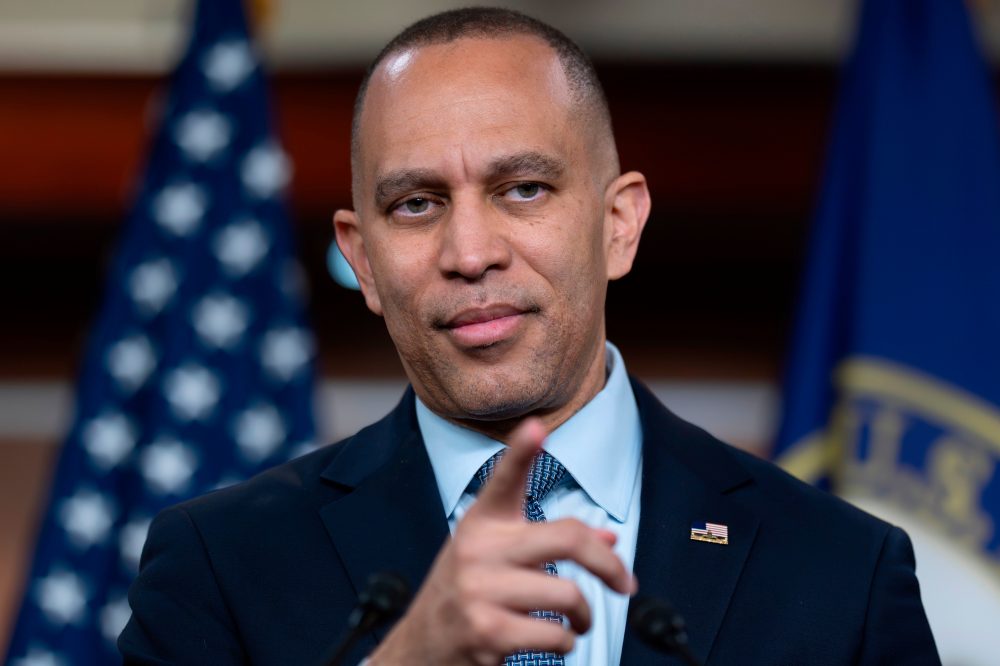
WASHINGTON — The battle for House control has become significantly more challenging for Democratic leader Hakeem Jeffries following a series of court decisions that have erased his party’s redistricting victories and potentially weakened Black political representation across the South.
Jeffries had previously cautioned Republicans about engaging in redistricting warfare, and when Democrats responded with a redrawn map in Virginia last month, the seat exchanges essentially balanced out.
“F— around and find out,” Jeffries declared following the electoral win.
However, within days, consecutive court decisions completely altered the landscape for House control and the speaker’s position by eliminating Democratic advantages in Virginia and potentially reducing Black representation by Democrats throughout the Deep South.
These changing dynamics have served as an alert for Democrats, who had been expected to reclaim the House this November while benefiting from President Donald Trump’s declining approval numbers, and represent a challenge for Jeffries as his party confronts an expanding field of Republican-leaning districts.
An outside organization supporting the leader has invested approximately $60 million, with a substantial portion directed toward Virginia alone, depleting Democratic resources as they face off against Trump’s Republicans.
“It sort of crystallizes the election is now a contest between one side that has the money and the maps, and the other that has the voters and the candidates,” explained Jesse Ferguson, a Democratic strategist and former deputy director of the House Democrats’ campaign arm.
Jeffries, who could become the nation’s first Black House speaker, recognized that Democrats might need to capture twice as many Republican districts — gaining six seats instead of three — to secure the majority following the redistricting battles.
However, he maintained confidence that Democrats would gain seats, similar to their 2018 performance during Trump’s initial presidency, arguing that Republicans depend on redistricting rather than policy solutions to secure victories.
Trump Republicans “don’t give a damn” about Americans’ economic hardships, Jeffries stated, echoing the president’s own language.
During a private Wednesday session with House Democrats, Jeffries framed the upcoming work in nearly existential language for the nation.
He characterized the court decisions against the Voting Rights Act and the Virginia legislation as “disgusting.” He also cautioned his colleagues that Republicans would campaign with “diabolical intensity” to regain House control, which Democrats must not only match but “we have to exceed it with righteous intensity at all times.”
“Failure is not an option,” he informed the Democrats, according to someone present who was granted anonymity to share the private comments. “We have to win, and we are going to win.”
The path to House majority control was never simple, but wasn’t anticipated to become this complex. Republicans maintain a narrow majority, among the smallest in contemporary House history, and midterm elections typically benefit the opposition party as a balance against the White House.
When Trump declared last summer that Republicans deserved five additional GOP seats from Texas, it initiated a redistricting campaign that prompted Jeffries to respond similarly.
Instead of maintaining what they describe as the moral high ground, Democrats chose to retaliate, believing they couldn’t rely entirely on national institutions — specifically the courts — to counter the GOP strategy.
Jeffries traveled to Austin to support Texas Democrats opposing their state’s redistricting proposal and stood with those legislators in Chicago after they departed to prevent statehouse Republicans from achieving a quorum. He participated in private California Democratic meetings as they launched their counteroffensive, a voter initiative that secured five additional Democratic seats. Democrats also gained a seat in Utah.
The pattern continued from there.
“We had to very quickly make a decision, set a course and take a risk,” recalled Rep. Jared Huffman, D-Calif., remembering the private discussions last summer. “There was no guarantee this was going to work out.”
The Virginia legislation became pivotal, representing Jeffries’ most significant move, essentially bringing Democrats to equal footing or potentially giving them an advantage in seat gains while securing Old Dominion more firmly for the party.
He energized approximately 1,000 church attendees in Richmond before Election Day as voters prepared to cast ballots.
House Speaker Mike Johnson on Wednesday described the Democratic Virginia strategy as a “crazy overreach” that was appropriately rejected by the state’s highest court.
“Fortunately, the plan failed spectacularly,” Johnson stated.
While Democrats anticipated the Supreme Court would weaken the Voting Rights Act, the Virginia Supreme Court’s decision to overturn last month’s election outcomes caught many off guard.
Jeffries participated in a weekend conference call with angry Virginia Democrats who expressed renewed determination to win Republican seats directly, despite their setback over map modifications.
The final count following nearly a year of redistricting conflicts continues to evolve as Republican state legislatures across the South hurry to redraw their maps after the Voting Rights Act ruling, with many preparing to eliminate districts represented by some of Congress’s most experienced Black legislators.
Rep. James Clyburn, the experienced Democratic representative from South Carolina whose own position faces risk, held the justices, not Jeffries, responsible for the Virginia outcome and similar situations.
“What the hell, he can’t control the courts,” Clyburn declared, promising to seek reelection regardless of how his district boundaries are redrawn. “Don’t put that on Jeffries. We won the vote.”
Jeffries accepted that this year’s maps are nearly finalized and shifted focus to 2028, when he said Democrats will intensify their efforts to address the GOP redistricting challenge before the next election.
“We know this unprecedented assault on Black political representation, the likes of which we have not seen since the Jim Crow era, the ghost of the Confederacy” will persist, he stated. “The challenge that is in front of us is ensuring that there is a decisive and overwhelming response in advance of 2028.”
Severe weather conditions claimed the lives of at least 96 people and left more than 50 others injured across northern India’s most populated state, authorities confirmed Thursday.
The deadly combination of powerful winds, torrential rainfall, and electrical storms tore through multiple areas of Uttar Pradesh late Wednesday evening, causing widespread destruction.
Authorities reported that victims died from various causes including falling trees, building collapses, and lightning strikes. Emergency crews equipped with chainsaws and heavy machinery worked to remove downed trees blocking roadways and train routes throughout the affected regions.
These types of severe weather events typically occur across northern India’s hot season, which spans from March through June, prior to the arrival of the yearly monsoon period.
Narendra N. Srivastava, an administrative official, confirmed that rescue teams had been sent to all impacted zones, noting that residential buildings, agricultural areas, and electrical systems sustained extensive damage, especially in countryside locations.
Residents in Prayagraj district recalled the terror as powerful winds ripped through their communities.
“The storm came suddenly and the sky turned completely dark within minutes,” Ram Kishore said. “Tin roofs were flying and people ran indoors. We could hear trees falling throughout the evening.”
In the adjacent Bhadohi district, Savitri Devi described how her family barely avoided tragedy when fierce winds destroyed their home.
“We rushed outside when the walls started shaking because of the wind. Our roof collapsed moments later. We spent the night at a relative’s house,” she said.
Uttar Pradesh’s Chief Minister Yogi Adityanath commanded officials to finish rescue efforts within one day and instructed local authorities to distribute financial assistance and emergency support to impacted households.
BUDAPEST — In a dramatic diplomatic move, Hungary has called in Russia’s ambassador following a large-scale drone assault that occurred close to Hungary’s Ukrainian border, representing a significant policy shift under new Prime Minister Péter Magyar compared to the previous administration’s warm ties with the Kremlin.
Russian Ambassador Evgeny Stanislavov is scheduled to meet with Hungarian Foreign Minister Anita Orbán at the foreign ministry around midday Thursday regarding Wednesday’s strikes in Ukraine’s Transcarpathia region, an area with a substantial Hungarian ethnic population.
During a Wednesday news conference in Ópusztaszer in southern Hungary where he revealed the diplomatic summons, Magyar declared: “The Hungarian government strongly condemns the Russian attack on Transcarpathia.”
“She will tell him the same and ask for information on when Russia and Vladimir Putin plan to finally end this bloody war that began more than four years ago,” the prime minister continued.
Moscow has yet to issue any public response regarding the diplomatic summons.
According to Ukrainian President Volodymyr Zelenskyy, Russia launched no fewer than 800 drones in Wednesday’s extensive daylight assault, striking approximately 20 Ukrainian regions including Transcarpathia. The attack resulted in at least six deaths and injured dozens, among them children. The multi-hour bombardment represented one of Moscow’s most prolonged offensives in the conflict now entering its fifth year.
Zelenskyy described the Budapest summons as an “important message” and expressed gratitude for Magyar’s statements.
“Moscow has once again shown itself to be a common threat not only to Ukraine, but also to neighbouring countries and Europe as a whole,” Zelenskyy posted on social media.
Following his historic electoral victory over Orbán last April, Magyar has pledged to reverse much of the previous leader’s 16-year legacy, with particular emphasis on addressing alleged corruption.
The diplomatic protest represents a remarkable transformation following years of Budapest’s close relationship with Moscow — despite Hungary’s membership in both the European Union and NATO — which persisted even after Russia’s 2022 full-scale invasion of Ukraine.
Last March, Ambassador Stanislavov published a Facebook letter addressed to Magyar, rejecting claims that Moscow had assisted longtime Kremlin ally Orbán.
“It’s really not worth scaring Hungarians with imaginary Russian threats,” he stated. “The embassy has clear objectives: to ensure the maintenance of normal bilateral relations, to develop mutually beneficial cooperation in the current situation where possible, and to protect the interests of citizens of Russia and Hungary.”
Housing market activity in Canada experienced a slight uptick during April, with sales climbing marginally from the previous month while home values decreased modestly, according to Thursday’s report from the Canadian Real Estate Association.
The data reveals several key trends in the Canadian housing market:
• Monthly sales grew by 0.7% from March to April
• Year-over-year sales dropped 4% when comparing unadjusted figures
• The association’s Home Price Index declined 0.1% monthly and fell 4.2% compared to the same period last year
• New property listings jumped 4.1% from the previous month
• The ratio of sales to new listings decreased to 45.6% from March’s 47.1%, dropping further below historical averages
Shaun Cathcart, the organization’s senior economist, explained the market dynamics in a prepared statement: “While home sales were up only modestly from March to April, the small increase reflected a slow start to the month with a stronger handoff into May, alongside falling days on market and stabilizing prices.”
Cathcart also addressed broader economic factors affecting the housing sector: “This latest bout of global economic uncertainty and higher mortgage rates means the previously expected rebound in housing markets this year will continue to be muted, but it does not mean there will be no upward momentum at all.”
The sluggish performance early this year prompted the association to reduce its sales projections for 2026 last month.
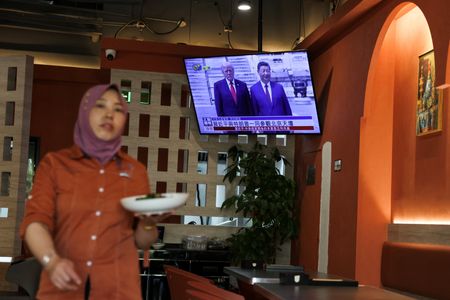
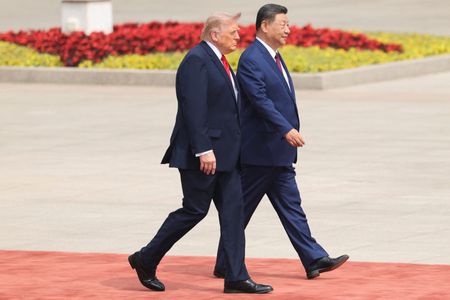
A high-ranking Taiwanese official stated Thursday that recent discussions between Chinese and American leaders in Beijing yielded no unexpected developments, while calling on China to cease military intimidation efforts against Taiwan.
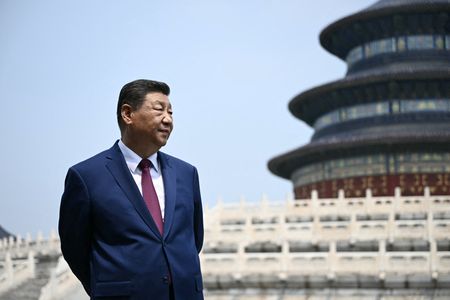
During earlier talks, China’s Xi Jinping cautioned U.S. President Donald Trump that disputes concerning Taiwan—which Beijing considers part of its territory—could push bilateral relations toward a perilous course and potentially spark military confrontation.
Mainland Affairs Council deputy head and spokesman Liang Wen-chieh told reporters in Taipei that Taiwan consistently ranks among the most significant subjects discussed whenever Chinese and American officials meet.
“So at this point, all we can say is that there has been no surprising information so far and we will continue to maintain close communication with the American side,” he stated, noting that warnings about potential conflict have been voiced previously.
According to Liang, China’s persistent military intimidation represents the genuine danger to regional stability that could spark a crisis, rather than Taiwan’s population seeking to preserve their current lifestyle.
“If maintaining peace and stability in the Taiwan Strait is truly the greatest common ground between China and the United States, then the Chinese Communist Party should restrain its own behaviour of military intimidation,” he continued.
Beijing has consistently refused to rule out using military force to bring Taiwan under its authority, with Chinese military aircraft and naval vessels conducting operations near the island on an almost daily basis.
Despite lacking official diplomatic relations, the United States serves as Taiwan’s primary international supporter and main arms supplier.
Taiwanese leadership dismisses Beijing’s territorial assertions, maintaining that only Taiwan’s citizens have the authority to determine the island’s destiny.
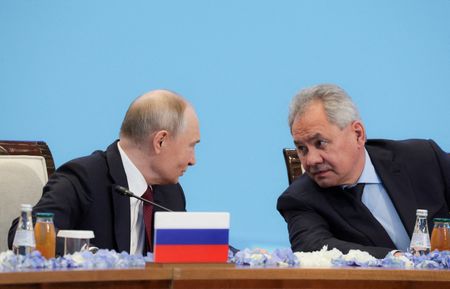
MOSCOW, May 14 – Moscow announced Thursday it is developing comprehensive ties with Afghanistan’s Taliban leadership while urging neighboring nations to strengthen their own relationships with Kabul, according to statements from a top Russian security official.
Moscow made history last year as the first nation to officially recognize the Taliban government that assumed control in August 2021 following the turbulent departure of U.S.-led military forces after two decades of conflict.
The Interfax news service reported that Russian official Sergei Shoigu emphasized that working with Kabul remains crucial for regional stability and growth.
Shoigu, who serves as secretary of Russia’s Security Council, explained that Moscow is developing practical discussions with the Taliban covering security matters, commerce, cultural exchanges and humanitarian assistance.
His remarks came during discussions with officials from the Shanghai Cooperation Organisation (SCO), a 10-nation alliance that encompasses China, India, Iran, Pakistan and several former Soviet republics.
Shoigu also called for the SCO to restart its Afghanistan contact group.
Russia had previously designated the Taliban as a terrorist organization in 2003, though this classification was removed in April 2025. Moscow views engagement with Kabul as necessary given significant security concerns from extremist groups operating across territories spanning from Afghanistan to the Middle East.
FIFA announced Thursday that pop icons Madonna and Shakira will join forces with Korean pop sensation BTS for an unprecedented halftime performance during the World Cup final at MetLife Stadium in New Jersey.
The historic entertainment spectacle, set for July 19, will be overseen by Chris Martin of Coldplay, according to the tournament’s organizing body.
“The FIFA World Cup 2026 Final halftime show will be a truly special moment, bringing together music, football and a shared commitment to improving the lives of children around the world,” FIFA president Gianni Infantino said on social media.
“Together, we will support the FIFA Global Citizen Education Fund and help create greater access to quality education and football for children worldwide.”
The expanded 48-nation tournament, jointly hosted across the United States, Canada, and Mexico, is scheduled to begin June 11 and conclude July 19. This edition will showcase 104 total games, a significant increase from the current 64-match format, and will include an extra elimination round.
The previous year’s Club World Cup held in North America provided a preview of this concept, featuring halftime entertainment with performances by American rapper Doja Cat, Colombian artist J Balvin, and Nigerian vocalist Tems.
Samsung Electronics has reached out to its South Korean workers’ union requesting renewed salary discussions following the breakdown of government-facilitated negotiations, according to a union official who referenced correspondence from the tech giant.
South Korea’s Labour Commission has also urged both parties to participate in another government-mediated negotiation session scheduled for Saturday, hoping to prevent the threatened extended work stoppage.
Union representative Choi Seung-ho responded to Samsung’s letter by stating: “There is no reason to continue the dialogue without institutionalisation and transparency.” His comment addressed the union’s push for changes to Samsung’s bonus payment system.
Choi subsequently shared a response he said was delivered to company leadership on Thursday, committing to participate in discussions if Samsung provides a comprehensive proposal addressing the union’s call for a clear and formalized profit-sharing arrangement.
The union declared that without a company response by 10 a.m. (0100 GMT) Friday, they would proceed with their planned work stoppage.
Frustrated by what they describe as a substantial disparity in bonus compensation compared to competitor SK Hynix, the union has warned of an 18-day strike beginning May 21 unless their requirements are satisfied.
Samsung Electronics released a statement acknowledging the conclusion of government-mediated proceedings while noting: “We will continue engaging in dialogue to ensure the 2026 wage negotiations are resolved smoothly.”
Finance Minister Koo Yun-cheol emphasized Thursday that preventing a strike was essential, warning it would pose considerable dangers to South Korea’s economic expansion, export performance, and financial markets.
The nation’s economy has grown increasingly reliant on thriving semiconductor exports. Computer chips represented 37% of the country’s exports in April, rising from 20% during the same period last year, based on official statistics.
JPMorgan analysts noted in their assessment that strike-related production disruptions might exceed earlier projections, given the union’s anticipation of widespread worker involvement.
The investment bank calculated potential damage to Samsung’s operating profit between 21 trillion won and 31 trillion won ($14.08 billion to $20.79 billion), with missed sales opportunities potentially reaching approximately 4.5 trillion won.
Industry sources told newspaper MoneyToday that Samsung began scaling back chip manufacturing Thursday in preparation for a potential strike.
Samsung confirmed in a statement: “Samsung is examining all possible options to ensure that production is not disrupted in the event of a strike.”
Federal officials are taking aim at diversity, equity, and inclusion programs at companies that prioritize recruiting diverse candidates during their employment processes. This has sparked speculation about whether professional sports organizations might become targets of similar scrutiny.
The current administration’s focus on these workplace diversity initiatives has raised concerns about the potential impact on established practices across various industries, including professional athletics.
LONDON (AP) — British Prime Minister Keir Starmer faces an imminent leadership challenge as political rivals prepare to make their moves following days of behind-the-scenes positioning.
Sources close to Health Secretary Wes Streeting indicate he plans to make a formal announcement Thursday after securing sufficient backing from Labour Party lawmakers to mount a challenge against Starmer for party leadership and control of the government.
Meanwhile, former Deputy Prime Minister Angela Rayner announced Thursday she has resolved tax-related issues with authorities, removing obstacles that led to her Cabinet departure last September. Speaking to the Guardian newspaper, Rayner suggested Starmer should “reflect on” his position and stated she stands ready to “play my part” in any leadership race should Streeting initiate a challenge.
Calls for Starmer to resign or face a leadership battle have grown louder following Labour’s devastating performance in recent local and regional elections, highlighting voter dissatisfaction with the government’s sluggish progress on key issues.
Despite the mounting pressure, Starmer has pledged to stay in his role, cautioning that a leadership fight would create “chaos” when the government should concentrate on pressing matters including the cost of living crisis and Middle East conflict.
According to Labour Party regulations, any leadership challenger must secure support from 81 of the party’s 403 House of Commons members. More than that threshold have publicly demanded Starmer’s resignation in recent days.
Both Streeting and Starmer represent the party’s moderate faction, while Rayner appeals to progressive voters who want higher minimum wages and increased taxes on wealthy individuals.
Additional candidates may emerge in any leadership race.
Greater Manchester Mayor Andy Burnham has been frequently mentioned as a possible contender, though he would need to secure a parliamentary seat before running. His supporters suggest a current House of Commons member could step down, allowing Burnham to compete in a by-election.
Burnham scrapped his scheduled Thursday appearance on a local BBC radio show to “prioritize discussions arising from last week’s elections.”
DUBAI, United Arab Emirates (AP) — British military authorities reported Thursday that unauthorized personnel have taken control of a vessel anchored off the United Arab Emirates’ eastern coastline, with the ship now moving toward Iranian territorial waters.
According to the United Kingdom Maritime Trade Operations center, the incident occurred while the vessel was positioned 38 nautical miles (70 kilometers, 44 miles) northeast of Fujairah, a UAE port located near the Strait of Hormuz.
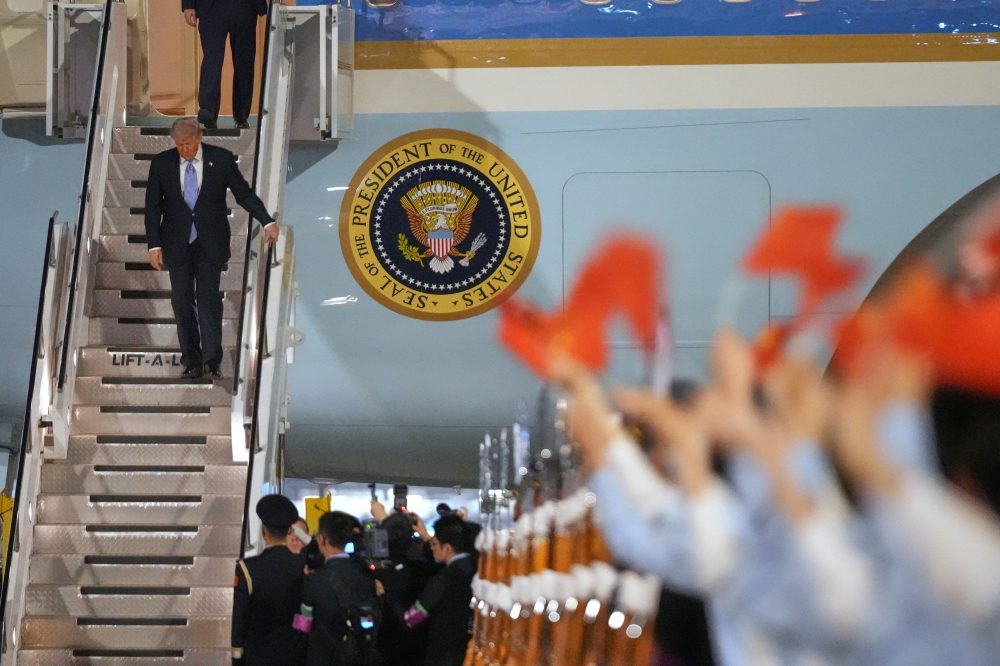
The vessel seizure takes place while U.S. President Donald Trump conducts a highly anticipated diplomatic meeting with Chinese leader Xi Jinping in Beijing. Their discussions are anticipated to address the ongoing Iranian conflict, which has significantly impacted global commerce in oil, gas and other commodities while causing economic instability worldwide.
The incident occurred just hours following Israel’s announcement that Prime Minister Benjamin Netanyahu had conducted an undisclosed trip to the United Arab Emirates during the Israeli-U.S. conflict with Iran, although UAE officials quickly refuted any such clandestine meeting took place.
The Gulf state established diplomatic ties with Israel in 2020. Iran has condemned this diplomatic arrangement and has consistently alleged through the years that Israel operates military and intelligence facilities within the Emirates.
Israeli officials have conducted periodic trips to the UAE following the establishment of diplomatic relations.
UKMTO has not identified the vessel and stated they are conducting an investigation. No groups have immediately taken responsibility for the seizure.
Fujairah serves as a crucial oil shipping facility and represents the UAE’s primary port located beyond the Persian Gulf boundaries. The facility has faced multiple attacks throughout the Iranian conflict.
Iran has captured multiple vessels following the conflict’s start.
Iranian naval forces captured an oil tanker called the Ocean Koi last week, claiming it was working to interfere with oil shipments and Iranian operations, the official IRNA news agency reported.
Officials stated the tanker was captured in the Gulf of Oman while transporting Iranian oil when personnel boarded it and directed it to Iran’s southern coastline.
U.S. authorities imposed sanctions on the Ocean Koi in February, describing it as part of a “shadow fleet” involved in moving Iranian oil.
CARACAS, Venezuela — President Donald Trump has floated the idea of making Venezuela America’s 51st state on two occasions this week. His most recent suggestion appeared Tuesday on Truth Social, featuring a map that depicted the South American nation covered with the American flag.
In years past, when U.S. officials questioned Venezuela’s sovereignty over the last quarter-century, top government leaders including the president would respond with immediate scorn. The ruling party even staged rallies in Caracas as recently as January 3, just hours after then-President Nicolás Maduro was taken into U.S. custody, featuring crowds shouting “Gringo go home.” This time, however, Venezuelan leadership has remained largely silent, except for brief remarks made to the press Monday by acting President Delcy Rodríguez.
This restrained response highlights the delicate balancing act Rodríguez faces in managing foreign relations and domestic concerns after the January U.S. military operation in Caracas. The Trump administration has rolled out a step-by-step strategy aimed at rehabilitating the crisis-stricken nation and has compelled Rodríguez’s political faction, Chavismo, to set aside the anti-American rhetoric that has traditionally defined its ideology.
“This is probably the most public and sharp manifestation of the government’s transactional, self-survival approach above everything else right now, above even that sort of basic tenet of Chavismo,” said Christopher Sabatini, senior fellow for Latin America at the London-based Chatham House think tank. “It’s better that they hold their tongue, not offend the U.S. right now. Why overreact to a ridiculous claim by Donald Trump?”
When speaking to reporters Monday, Rodríguez stated that Venezuela had no intention of becoming America’s 51st state, though her remarks were far more measured than previous presidential speeches that condemned such U.S. statements. Her comments followed Trump’s declaration that he was “seriously considering” the proposal. Trump has made comparable statements regarding Canada.
“We will continue to defend our integrity, our sovereignty, our independence, our history,” Rodríguez said. Venezuela, she emphasized, is “not a colony, but a free country.”
The Trump administration surprised Venezuelans by choosing to collaborate with Rodríguez rather than the nation’s political opposition after Maduro’s removal. She has since spearheaded cooperation with the administration’s gradual plan, promoting her petroleum-rich country to global investors and opening its energy industry to private investment and international arbitration. Rodríguez has also dismissed key officials, including Maduro’s loyal defense minister and attorney general.
Trump has commended her efforts, and his administration has removed economic sanctions targeting her personally while relaxing sanctions on the country, though some restrictions continue. The U.S. now acknowledges her as the “sole” leader of Venezuela.
The U.S. ceased recognizing Maduro as Venezuela’s rightful leader in 2019, one year after he declared electoral victory in a race widely deemed fraudulent as opposition parties and candidates were prohibited from participating.
Maduro and his wife, Cilia Flores, were transported to New York to face drug trafficking charges following their January 3 arrest. Both have entered not guilty pleas and remain detained at a Brooklyn facility.
In Caracas, some citizens on Wednesday interpreted the government’s response as yielding to Trump, though they also recognized that Rodríguez lacks the position to deploy Chavismo’s typical anti-American messaging.
“She knows that it’s wise not to engage in direct confrontation because she knows she’s bound to lose,” college student Adonai Osoria said. “Now, are there some who disagree, who don’t like it? Well, yes, of course. But I consider her reaction right now to be a common, understandable reaction.”
Government backers last displayed their hostile stance toward the U.S. in the period following Maduro’s capture, setting American flags ablaze and holding signs declaring “Gringo go home.”
Among the government’s most devoted supporters nationwide are the armed factions called colectivos. These groups are fixtures at pro-ruling party rallies. Local leader Jorge Navas described Trump’s remarks as “irresponsible acts of provocation” and commended Rodríguez for her diplomatic handling.
“We are bending, strategically, but we will not break,” Navas said of Chavismo’s current stance toward U.S. pressure. “We continue to resist, that is, realistically, given the country’s economic situation.”
Latvia’s centre-right Prime Minister Evika Silina announced Thursday that she will step down from her position, bringing down her coalition government just months ahead of the country’s scheduled October election.
The resignation was announced on May 14, with the timing creating political uncertainty as the Baltic nation approaches its upcoming electoral contest.
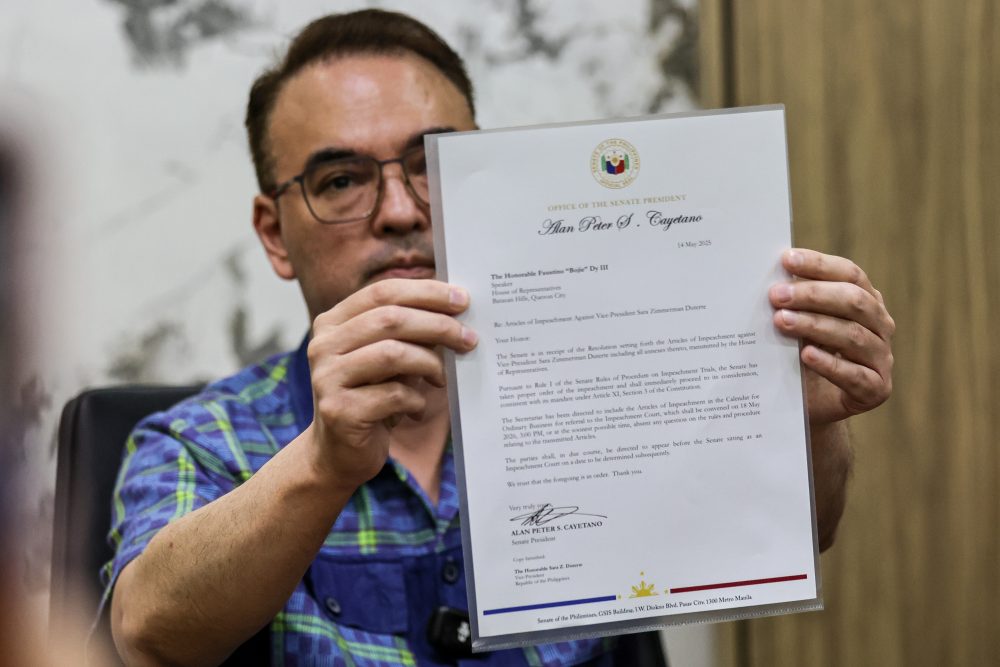
The Philippine Senate announced Thursday it will transform into an impeachment court on May 18 to begin proceedings against Vice President Sara Duterte, setting the stage for a high-stakes political showdown between the nation’s most influential families.
Senate President Alan Peter Cayetano confirmed the upper chamber’s 24 members will meet Monday to establish trial procedures and rules, though the actual trial date remains undecided. He delivered this announcement by reading a formal letter to his counterpart in the lower house.
The 47-year-old vice president, once considered the leading candidate to succeed President Ferdinand Marcos Jr in 2028, now faces potential removal from office and a prohibition from holding future positions if found guilty. Marcos is constitutionally restricted to serving only one term.
This impeachment represents a dramatic escalation in the ongoing political warfare between supporters of Duterte and those loyal to the 68-year-old Marcos, former allies who have become bitter adversaries.
The charges against Duterte include allegations of improperly spending government money, acquiring wealth through questionable means, and making death threats against Marcos, his spouse, and the previous House speaker. Duterte has rejected all accusations.
The Senate announcement followed Wednesday’s dramatic events when chaos erupted at the heavily secured legislative building. Gunfire broke out and tensions reached a boiling point after a senator supporting Duterte, who had sought sanctuary inside, informed his followers he faced imminent arrest and potential transfer to The Hague’s International Criminal Court.
Monday’s lower house vote overwhelmingly supported the impeachment complaint, which was filed by a coalition of activists, religious organizations, and legal professionals. Duterte’s legal representatives have dismissed the proceedings as a “fishing expedition.”
The vice president’s anger toward Marcos intensified after his congressional supporters subjected her to extensive investigations into suspected financial misconduct within her office over several months.
The former partners have engaged in repeated public confrontations, and their relationship deteriorated so severely that Marcos handed over Duterte’s father and his presidential predecessor, Rodrigo Duterte, to the ICC last year. The elder Duterte faces murder charges as crimes against humanity related to his violent anti-drug campaign.
Despite the political drama, Marcos has maintained distance from the impeachment effort, characterizing it as a legislative matter outside his purview.
Sara Duterte spent this week at The Hague supporting her father while her legal team worked on her defense strategy. She directed full responsibility for the country’s political instability toward Marcos, who is commonly called “Bongbong” in the Philippines, accusing him of squandering government resources to “demolish political opposition.”
“Our country is in turmoil, which should not be the case. We are only in turmoil because of Bongbong Marcos,” she stated in comments released through her office.
A Ukrainian anti-corruption court issued an arrest warrant Thursday for Andriy Yermak, who previously served as President Volodymyr Zelenskyy’s chief of staff, following money laundering accusations.
The judicial panel established bail at 140 million hryvnias, equivalent to $3.19 million, which would permit Yermak’s release while awaiting a final verdict. Yermak has consistently rejected the charges brought against him.
Speaking to media following the court’s ruling, Yermak stated: “I don’t have that kind of money, and my lawyer will now work with friends and acquaintances (to raise the money for bail).”
He added: “My legal team will file an appeal. We will use every legal avenue to seek justice and the truth.”
Earlier this week, Ukrainian officials identified Yermak as a suspect in a significant corruption investigation. This arrest represents the closest anti-corruption authorities have reached to the president’s immediate advisors.
According to Ukraine’s anti-graft agencies, Yermak allegedly took part in a criminal organization that processed approximately $10.5 million in illicit funds through a luxury residential project near the capital city of Kyiv.
Many considered Yermak the nation’s second most influential figure behind Zelenskyy, exercising considerable control over Ukrainian political affairs despite occupying an appointed rather than elected role.
The former entertainment industry producer and legal counsel regularly accompanied the president during public appearances and served as Kyiv’s primary representative in U.S.-supported peace negotiations with Russia.
Yermak stepped down from his position last year during a wider administrative reorganization designed to rebuild confidence in the presidential office, which has faced criticism over concentrated authority.
While the allegations against Yermak may not immediately threaten Zelenskyy’s position, political observers suggest they could damage his reputation should he seek reelection following the conflict.
When Presidents Donald Trump and Xi Jinping gather for an elaborate state dinner in Beijing this Thursday, the menu will likely showcase Huaiyang cuisine – a regional Chinese cooking style from the Shanghai area celebrated for its gentle flavors, precise preparation techniques, and focus on seasonal ingredients.
China has long leveraged food’s symbolic power during significant official occasions and visits from important foreign dignitaries. The country’s modern history of food shortages and political upheaval that led to years of widespread rationing transformed meals into powerful status symbols within Chinese society.
“One of the key strengths of Huaiyang cuisine is its broad appeal. Its flavours are widely acceptable and accessible to most people … including international guests,” said Shi Qiang, executive chef at Gui Hua Lou, an upscale Huaiyang cuisine restaurant in Shanghai.
“From the overall philosophy of Huaiyang cuisine, state banquets are not centered on luxury ingredients, they don’t rely on expensive items, extravagance is simply not the focus.”
As one of China’s eight primary regional cooking traditions, Huaiyang cuisine has consistently taken the spotlight at important diplomatic gatherings. The cuisine appeared at the 1949 “founding banquet” marking the establishment of the People’s Republic, China’s 50th anniversary celebration feast in 1999, and a 2002 dinner where then-President Jiang Zemin hosted visiting U.S. President George W. Bush.
Culinary moments have also created unexpected viral incidents during foreign officials’ Chinese visits in recent years. In 2023, former U.S. Treasury Secretary Janet Yellen made light of consuming “magic mushrooms” at a Yunnan-style restaurant in Beijing, while then-U.S. Vice President Joe Biden dined at a modest Beijing establishment known for its fried liver in 2011.
China even developed a chicken preparation named for U.S. top diplomat Henry Kissinger, presented to him during his confidential 1971 visit, and meals served to foreign leaders frequently become “set banquets” offered by local dining establishments.
Notable Huaiyang specialties include soft, bouncy “lion’s head” pork meatballs, Yangzhou fried rice, “squirrel fish” prepared with deep-frying and sweet-and-sour coating, and “wensi tofu” – tofu cut into thousands of thin strips.
The cooking style emphasizes ingredients from the Yangtze river region such as freshwater fish, eel and bamboo shoots, using light seasoning to showcase natural flavors.
“It’s great for banquets because it’s lighter than the food of Shandong in China’s north, not spicy like the foods of the southwest (like Sichuanese), and more approachable and less reliant on exotic ingredients than Cantonese, the big cuisine of the south,” said Christopher St. Cavish, a food writer based in Shanghai.
“In the most basic description, it’s ‘safe’. It’s the equivalent of serving chicken at a banquet in Washington, DC. No one is going to get offended or find it too hot to eat or too exotic to try.”
When Trump previously visited China in 2017, his hosts prepared Huaiyang-influenced dishes including braised vegetables in broth and stewed beef with tomato – acknowledging his preference for well-cooked steak.
AstraZeneca announced Thursday that their cancer treatment Imfinzi demonstrated meaningful survival benefits for bladder cancer patients when used alongside a targeted medication before surgical procedures, according to results from a late-stage clinical trial.
The pharmaceutical company reported that while Imfinzi alone showed promising results, a combination approach using both Imfinzi and Imjudo with the pre-surgical treatment did not reach statistical significance for overall survival outcomes.
Key findings from the study include:
• When Imfinzi was administered both before and following surgical procedures, combined with pre-operative enfortumab vedotin (EV), patients experienced statistically meaningful improvements in both event-free survival and overall survival rates.
• Enfortumab vedotin serves as a pre-surgical treatment designed to reduce tumor size before the operation takes place.
• The treatment combinations showed safety profiles that matched expectations based on previous studies of the individual medications, with no unexpected safety concerns emerging during the trial.
• The company noted that approximately 25% of bladder cancer patients develop muscle-invasive disease, a condition where cancer cells penetrate the bladder’s muscle wall but have not spread to distant parts of the body.
The Japanese automotive giant Honda announced Thursday it suffered a historic annual deficit of 423.9 billion yen ($2.7 billion), marking the company’s first full-year financial loss in its history due to substantial expenses tied to its electric vehicle initiatives influenced by President Donald Trump’s America-first policies.
The automaker revealed that expenses connected to its electric vehicle operations are projected to reach 2.5 trillion yen ($16 billion), with most of these costs occurring during the recently concluded fiscal year and the ongoing fiscal period.
Industry experts suggest Honda Motor Co. may have pursued overly aggressive expansion when consumer markets weren’t prepared for such rapid changes. Consequently, Honda scrapped numerous electric vehicle projects, including collaborative efforts with Sony Corp.
“EV demand has declined considerably, due to the rollback of environmental regulations in the U.S. and other factors,” Honda said in a statement.
The Trump administration has scaled back financial incentives for electric vehicles and restricted funding to states seeking to expand EV charging infrastructure, while gasoline costs have increased due to conflict in Iran.
Trump also prevented California’s strict electric vehicle requirements from taking effect last year, reversing momentum toward environmentally friendly automotive options.
Trump’s import duties on foreign automobiles and automotive components, though reduced to 15% from an original 25%, also contributed to Honda’s reduced earnings.
The Tokyo-headquartered company’s financial position received support from its robust motorcycle division, which helped Honda’s total revenue for the fiscal year ending in March increase 0.5% to 21.8 trillion yen ($138 billion).
Honda, manufacturer of the Accord sedan and Super Cub motorcycles, delivered 3.4 million automobiles globally during the fiscal year through March, a decrease from 3.7 million in the prior year.
The company sold 22.1 million motorcycles, an increase from 20 million the previous year. Honda maintains market leadership in motorcycles across several regions, including India.
Honda projects a return to profitability for the fiscal year concluding March 2027, estimating earnings of 260 billion yen ($1.7 billion).
Chief Executive Toshihiro Mibe presented a revised growth plan that maintains commitment to achieving carbon neutrality. However, he recognized the importance of developing hybrid and conventional gasoline-powered vehicles alongside electric options.
When a reporter questioned whether he might resign to accept accountability for the poor financial performance, a traditional practice in Japan, Mibe stated he preferred to implement the recovery strategy first.
“We will continue our research to develop future technologies including electric vehicle batteries,” he said. “We will get back on a growth track.”
India’s top diplomat stressed Thursday that keeping international shipping lanes open is essential for worldwide economic stability, particularly highlighting concerns about key maritime passages like the Strait of Hormuz.
Foreign Minister Subrahmanyam Jaishankar made these remarks while opening a two-day gathering of BRICS foreign ministers in New Delhi.
“The conflict in West Asia merits particular attention,” Jaishankar stated, referencing the ongoing U.S.-Israeli war in Iran.
“Safe and unimpeded maritime flows through international waterways, including the Strait of Hormuz and the Red Sea, remain vital for global economic well-being.”
The Iranian conflict’s effects, particularly the practical shutdown of the Strait of Hormuz, have been characterized as among the most severe disruptions to energy markets in recorded history.
These interruptions have severely limited oil tanker movement and caused energy costs to spike dramatically, raising concerns about accelerating inflation and potential worldwide economic decline.
The BRICS alliance originally consisted of Brazil, Russia, India and China, with South Africa joining in 2011. More recent additions include Egypt, Ethiopia, Indonesia, Iran and the United Arab Emirates. India currently serves as the BRICS chair for 2026.
Representatives from most member nations are participating in the New Delhi conference, including Iran’s Foreign Minister Abbas Araqchi and the UAE’s Deputy Foreign Minister Khalifa Shaheen Al Marar.
The ongoing war has complicated efforts for the group to agree on unified statements, highlighting tensions between Iran and the UAE, which support different sides in the conflict that began February 28.
Jaishankar additionally criticized what he called the “increasing resort to unilateral coercive measures and sanctions inconsistent with international law and the U.N. Charter.”
“Such measures disproportionately affect developing countries. These unjustifiable measures cannot substitute dialogue, nor can pressure replace diplomacy.”
The minister noted that developing nations look to BRICS to provide constructive leadership and stability in global affairs.
The leadership of South Africa’s ruling African National Congress has united in support of President Cyril Ramaphosa amid the ongoing “Farmgate” controversy, according to reports from the country’s public broadcasting service.
During a Wednesday session, the party’s National Executive Committee backed Ramaphosa’s choice to legally contest findings from an independent panel that concluded he engaged in misconduct, SABC politics reporter Samkele Maseko shared on X.
The president successfully resisted demands for his resignation this week regarding the controversy, which centers on criminals who took bundles of money hidden inside furniture at Ramaphosa’s ranch during 2020.
While the ANC previously prevented impeachment efforts against Ramaphosa concerning Farmgate in 2022, the nation’s highest court renewed the proceedings just last week.
The party’s National Executive Committee, which serves as a governing body that directs party members, convened Wednesday to determine their approach to managing the scandal.
Before the session began, a senior ANC leader expressed strong support for Ramaphosa, informing journalists that demands for the president’s departure were politically motivated and that the constitutional court’s ruling contained no requirement for Ramaphosa’s resignation.
Ramaphosa, who has served as the nation’s leader since 2018, has maintained his innocence regarding the Farmgate matter.
Party officials were scheduled to update the media on the National Executive Committee meeting results at 0800 GMT.
China’s President Xi Jinping praised what he called a “fresh framework” for US-China relations on Thursday, emphasizing cooperation alongside controlled competition following his summit meeting with President Donald Trump.
According to a statement from China’s foreign ministry, Xi indicated that both leaders reached agreement on establishing a constructive and strategically stable relationship to guide their nations’ interactions over the next three years and into the future.
The Chinese leader characterized this approach as fundamentally rooted in cooperation while incorporating controlled competition to achieve “a normal stability in which differences are controllable, and a lasting stability in which peace can be expected,” the ministry statement revealed.
Xi advocated for expanded exchanges and cooperation between the two nations across multiple sectors including trade, health, agriculture, tourism, people-to-people connections, and law enforcement activities.
While promoting cooperation, Xi emphasized the need for “utmost caution” from the United States regarding Taiwan, the democratically governed island that China claims as its territory, though Taiwan disputes this claim.
“If handled poorly, the two countries could collide or even enter into conflict, pushing the entire China-U.S. relationship into an extremely dangerous situation,” the Chinese leader warned.
Lionel Messi found the back of the net twice and recorded an assist as Inter Miami mounted a dramatic comeback to defeat Cincinnati 5-3 on Wednesday evening, with German Berterame netting the decisive goal in the 84th minute.
The match turned in Miami’s favor during the final stages when Mateo Silvetti evened the score at 3-3 in the 79th minute, sparking a late surge that propelled the Herons (7-2-4, 25 points) to their fifth consecutive away victory in MLS play.
Both Messi and Silvetti recorded assists during the comeback, while Rodrigo de Paul contributed two assists throughout the evening as Miami once again emerged triumphant in a repeat of their 4-0 victory over Cincinnati in the 2025 Eastern Conference semifinals.
Cincinnati (4-5-4, 16 points) received strong performances from Kevin Denkey, who notched his eighth goal along with two assists, and Evander, who added his seventh goal with a spectacular 64th-minute strike that gave the hosts a 3-2 advantage.
Pavel Bucha also found the scoresheet for the home team, but Cincinnati’s six-game unbeaten streak came to an end as they allowed three or more goals for the fifth occasion in nine matches.
The equalizing goal came after Messi delivered the pass to Silvetti following a Cincinnati mistake in their defensive zone, finding the 20-year-old positioned on the left side of the penalty area. Silvetti showcased his skill by cutting back inside and threading a low shot through defenders into the bottom right corner.
Five minutes later, Berterame secured his fourth goal of the campaign to put the Herons ahead.
Messi played a key role once again, delivering a diagonal free kick toward the top of the 6-yard box that appeared to be an easy save for Cincinnati goalkeeper Roman Celentano. However, center back Andrei Chirila collided with his own keeper, causing Celentano to drop the ball and leaving Berterame with a simple tap-in to an empty net.
In the 89th minute, Messi nearly secured his third MLS hat trick when he met Silvetti’s cross from the left wing and fired a sliding shot that struck the inside of the right post. The ball rebounded off Celentano and crossed the goal line, but the goal was ultimately credited as an own-goal.
Messi opened the scoring in the 24th minute after Cincinnati’s first major mistake, applying pressure to center back Matt Miazga and deflecting his poorly chosen pass into the open goal when Miazga should have simply cleared the ball for a Miami corner kick.
His second goal brought the match level at 2-2 in the 55th minute through a more traditional finish, connecting with de Paul’s cross at the penalty spot following combination play that also featured Luis Suarez.
The world’s largest contract electronics manufacturer posted stronger-than-expected earnings for the first quarter, with profits climbing 19% compared to the same three-month period last year, driven by robust worldwide appetite for artificial intelligence technology.
Foxconn, officially known as Hon Hai Precision Industry, announced Thursday that its January through March net earnings reached T$49.92 billion ($1.58 billion), surpassing analyst predictions of T$48.88 billion according to LSEG consensus estimates.
The Taiwan-based company, which serves as Nvidia’s primary server manufacturer and Apple’s leading iPhone assembler, maintained its earlier projection of “strong” revenue growth for the current year in its earnings statement. The firm also highlighted robust demand for AI servers, though it does not provide specific numerical forecasts.
The electronics giant had previously announced in April that its first-quarter revenue jumped 30% year-over-year.
While Foxconn assembles most Apple iPhones in China, the majority of devices sold in the United States are now manufactured in India. The company is currently constructing production facilities in Mexico and Texas dedicated to producing AI servers for Nvidia.
The manufacturer has been pursuing expansion into the electric vehicle sector, viewing it as a significant opportunity for future growth, though this venture has faced some challenges.
Last August, Foxconn announced the sale of a former automotive manufacturing facility in Lordstown, Ohio, for $375 million, including equipment. The company had acquired this plant in 2022 with plans to produce electric vehicles.
Company executives were scheduled to conduct an earnings conference call later Thursday in Taipei.
Foxconn’s stock has gained 6% year-to-date, though this performance trails the broader Taiwan market index, which has surged 44%.
Shares declined 2.6% Thursday prior to the earnings announcement.
French President Emmanuel Macron confronts a significant challenge next week as parliamentary committees prepare to vote on his selection of a former chief of staff to lead the nation’s central bank, with critics suggesting the move aims to shield important institutions from potential far-right control following the 2027 election.
Should lawmakers reject Emmanuel Moulin’s nomination, it would deliver a humiliating blow to the unpopular president, highlighting his weakened position with less than a year remaining in his second term.
However, if approved, the decision would likely strengthen opponents’ claims that Macron is positioning trusted allies in influential roles to preserve his legacy and guard against a potential National Rally victory in the upcoming presidential race.
“The president is right to propose (Moulin’s) appointment, as it is technically justified, but he is taking a political risk should the proposal be rejected by parliament, given that he no longer has a majority,” said political analyst William Thay of think tank Le Millenaire.
Parliamentary opponents serving on finance committees in both chambers could prevent Moulin’s confirmation on Wednesday if three-fifths vote in opposition. The tallies from both houses will be combined, and Moulin gains approval if opposition votes fall short of 60% of the total.
Committee membership, featuring 72 members in the lower house and 49 in the Senate, reflects the composition of both chambers. Macron and his supporters lack majorities in either house.
While resistance appears likely in the divided lower house committee, the Senate committee – controlled by the conservative Republicains – holds the deciding power. Several lawmakers caution the outcome could be close, with possible defections among Republicains whose backing Moulin requires.
Moulin’s qualifications as among France’s most seasoned economic policymakers face little challenge.
However, Macron’s advocacy has intensified examination of his independence, a crucial concern for a central bank position designed to remain separate from political influence.
“Have you seen an Elysee chief of staff named to head the Bank of France before? That’s never happened,” said Eric Coquerel, the hard-left head of the finance committee in the lower house.
Coquerel indicated most left-wing parties in the lower chamber would resist Moulin, though the Socialists remain undecided, while non-Macron centrists might divide.
A similar appointment has occurred previously. Macron’s predecessor Francois Hollande appointed his chief of staff Pierre-Rene Lemas in 2014 to run public lender Caisse des Depots, among France’s largest financial institutions.
Moulin will participate in question sessions in both houses on Wednesday before committee voting begins. The Senate meeting will exclude press coverage, while the lower house has not announced whether its session will be public.
Socialist lawmaker Philippe Brun reported that Moulin agreed to discuss priorities including bank oversight, inflation control, and his independence with colleagues.
In a questionnaire delivered Friday to Moulin, Brun inquired: “How can the independence of the Bank of France … be guaranteed, given your very recent political roles within the government?”
When contacted by Reuters, Moulin indicated he would save his responses for lawmakers. Brun did not immediately respond regarding his Wednesday meeting with Moulin.
As head of the 226-year-old Bank of France, Moulin would join the European Central Bank’s rate-setting governing council and oversee French bank regulation.
Even before proposing Moulin, Macron’s opponents criticized his placement of allies including Richard Ferrand to lead the constitutional court that reviews legislation and Amelie de Montchalin to direct the audit office that validates public accounts.
RN lawmakers claim these nominations seek to install anti-RN allies should they gain power in next year’s presidential contest.
“After Ferrand and Montchalin, we’re going to say enough is enough,” said RN lawmaker Philippe Ballard.
Polling data suggests next year’s presidential election second round will almost certainly include the anti-immigrant RN, which has promised to dismantle much of Macron’s social and economic policies.
Ferrand received approval by one vote last year in law committees of both houses, with RN lawmakers abstaining, while Montchalin’s selection required no parliamentary confirmation.
The Senate will prove crucial for Moulin, who has worked under both conservative and Macron administrations, with uncertainty over whether some Republicains will break away to oppose his nomination.
“It’s a safe bet that Republicains MPs will be split between those who believe it’s better to maintain a respectable profile on the right and those who want to punish the betrayal of one of their own who left them in 2017 to serve Macron’s camp,” Thay said.
Financial institutions throughout the Asia Pacific region may need to continue building up their loan loss reserves in the coming months as the Iran conflict creates economic uncertainty in an area heavily dependent on Middle Eastern oil, according to industry analysts.
Banking institutions in nations such as Australia, Singapore, and India have indicated potential credit impacts reaching hundreds of millions of dollars during their March quarter financial reports, citing indirect costs from the ongoing conflict.
These increasing credit loss reserves occur while financial institutions also confront prospects of sustained higher oil costs, disruptions to supply chains and trade, climbing interest rates, and deteriorating corporate financial health.
Although higher loss reserves wouldn’t create significant short-term damage given robust capital cushions, analysts caution that extended energy market disruptions could lead to real credit losses and force banks to strengthen their balance sheets.
“More Asian banks have increased provisions and forward-looking overlays to reflect the risks from the Iran war,” said Gary Ng, senior economist for Asia Pacific at Natixis CIB, though as yet there has not been a wave of credit defaults.
“The bottom line is that even if the war ends soon, energy prices may remain elevated due to supply destruction. Interest rates may not fall, which can hurt corporate repayment capacity and pressure credit demand,” he said.
Current credit loss provision amounts at Asia Pacific banks remain significantly smaller compared to the charges they absorbed during the COVID-induced economic disruptions five years ago.
Among Australia’s top four banking institutions, the combined A$957 million ($694.40 million) in reserves allocated for war-related risks represents 80% less than the buffer established in 2020. For eight major Asian banks, excluding China and Japan, the amount is 70% lower at $2.8 billion, based on calculations.
However, an increase in actual credit losses among Asian banks remains possible, Ng noted, though the scale will depend on how long the war continues, which has now entered its 11th week.
The conflict’s economic impact continues growing throughout the region. The Asian Development Bank reduced its growth projection for developing Asia and the Pacific to 4.7% this year and 4.8% in 2027, down from 5.1% for both years in previous forecasts.
The regional banking sector’s financial performance is expected to decline next quarter due to higher oil prices, weakening currencies, and rising bond yields, according to Interactive Brokers senior economist José Torres.
Commonwealth Bank of Australia, the country’s largest lender, lost nearly $22 billion in market value on Wednesday after allocating additional cash to prepare for risks connected to the Middle East conflict.
During the past two weeks, Australia’s three other major banks have increased provisioning by A$757 million ($549.13 million) to cover potential future bad debts resulting from the war.
Australian banks’ current provisions might prove insufficient if the turmoil creates credit market disruption, according to investment bank Jarden’s head of financial research Matthew Wilson.
“It’s all ahead of us. Banks are late cycle and we’ll see the real impact on the domestic economy via industrials and cyclicals in the next 6 months,” Wilson said, adding it was too early to tell if a credit market disruption was on the cards.
In Singapore, while all three major lenders maintain limited direct exposure to the Middle East with the region representing less than 3% of their total lending, No.2 lender OCBC allocated S$216 million ($170 million) in provisions.
United Overseas Bank CEO Wee Ee Cheong stated last week the bank’s direct exposure to the Middle East was “insignificant”, but warned that second-order effects could raise costs for small and medium-sized enterprise customers.
London-based HSBC and Standard Chartered, which generate most of their revenues in Asia, recorded $300 million and $190 million charges, respectively, during the March quarter citing caution.
“We think further provisions (at HSBC and StanChart) are not impossible, given the fluid nature of the ongoing conflicts,” said Kathy Chan, equity analyst at Morningstar, adding the two banks have been quite prudent in assessing risks.
In India, approximately half a dozen lenders, including HDFC Bank, Axis Bank, and Blackstone-backed Federal Bank, have established provision buffers, though they haven’t observed any decline in asset quality yet.
Australian bank stocks have experienced the largest decline in the Asian banking sector, with National Australia Bank falling 21.2% and Westpac dropping 12.4% since the U.S. and Israel’s war on Iran started on Feb. 28.
“The provisioning that has currently been made represents a conservative estimate of the effects to date,” said Angus Gluskie, managing director at Whitefield, which owns Australia’s big 4 bank stocks and manages A$1.5 billion in assets.
“If the issue can be quickly solved the provisions may be partly wound back. If the issue persists, the banks may need to provide more.”
Federal authorities have authorized roughly 10 Chinese companies to purchase Nvidia’s H200 artificial intelligence chips, but zero shipments have occurred thus far, according to three sources with knowledge of the situation. This leaves a significant technology transaction in uncertainty while the company’s chief executive seeks progress during a visit to China this week.
The CEO, who wasn’t originally part of a White House delegation traveling to Beijing, was added to the group following an invitation from President Donald Trump, one source revealed. Trump brought him aboard during a stop in Alaska while heading to meetings with Chinese President Xi Jinping, sparking optimism that the visit might resolve the stalled chip sales to China.
The situation underscores how tensions between the U.S. and China over technology are now disrupting even authorized commerce, placing the world’s most valuable company and leading chip manufacturer in a difficult position between competing national interests.
Prior to stricter U.S. export restrictions, Nvidia held approximately 95% of China’s advanced semiconductor market. China previously represented 13% of the company’s revenue, and the CEO has estimated that the country’s AI market alone could reach $50 billion in value this year.
The U.S. Commerce Department has given approval to around 10 Chinese corporations, including Alibaba, Tencent, ByteDance and JD.com, to buy Nvidia’s H200 semiconductors, the sources said, speaking anonymously due to the sensitive nature of the topic.
Several distributors including Lenovo and Foxconn have also received authorization, they indicated. Purchasers may buy either directly from Nvidia or through these intermediaries, with each approved customer allowed to acquire up to 75,000 chips according to U.S. licensing conditions, two sources noted.
The names of the authorized purchasers and details about their connections with Nvidia and approved distributors regarding the sought-after AI chip have not been disclosed before.
A Commerce Department representative, which manages export restrictions like those affecting H200 semiconductors, refused to provide comment.
China’s Ministry of Industry and Information Technology and the National Development and Reform Commission did not reply to comment requests.
Lenovo verified in a statement to Reuters that the company “is one of several companies approved to sell H200 in China as part of Nvidia’s export license.”
Nvidia, Alibaba, Tencent, ByteDance, JD.com and Foxconn did not reply to comment requests.
The CEO told state broadcaster CCTV on Thursday that he hoped Trump and Xi would build on their good relationship during talks in Beijing to improve two-way ties.
Even with U.S. authorization, transactions have stopped moving forward, as Chinese companies stepped back following direction from Beijing, one source indicated.
The change in China was partially caused by developments on the U.S. side, though what specifically changed is not clear, the person explained.
In Beijing, pressure is growing to block or carefully review the orders, a separate fourth source stated.
Commerce Secretary Howard Lutnick supported that assessment, telling a Senate hearing last month that “the Chinese central government has not let them, as of yet, buy the chips, because they’re trying to keep their investment focused on their own domestic industry.”
Beijing’s reluctance shows a strategic decision, as officials worry imports might undermine efforts to create domestic AI chips. Although China’s AI semiconductors still trail Nvidia, companies like DeepSeek increasingly promote their use of domestic chips including those made by Huawei.
Their shift to Huawei highlights Nvidia’s vulnerable position in China. The CEO has cautioned that U.S. export restrictions are weakening the company’s presence in the market, stating its share of AI accelerators in China has essentially dropped to zero.
The route to completing a sale has been blocked by complex requirements from both nations. U.S. regulations from January require Chinese purchasers to show they had established “sufficient security procedures” and would not use the chips for military applications.
Nvidia must also verify adequate inventory in the United States.
Trump negotiated an agreement where the U.S. would receive 25% of revenue from the chip sales — a framework requiring the chips to move through U.S. territory before shipping to China, since U.S. law doesn’t allow direct export fees.
The agreement has created concerns in Beijing about possible tampering or hidden security flaws, even though sources characterize it mainly as a way around legal limitations.
Review in China has also increased after the State Council released two recent supply chain security rules, leading to a government-wide push to find and remove potential foreign dependencies in critical technology infrastructure, the fourth source said.
The ongoing delay has pleased China hardliners in Washington, who reject Trump administration arguments that such sales would discourage Chinese competitors from narrowing the gap with U.S. chip designers.
“Any deal that allows Nvidia to sell more chips to China means fewer Nvidia chips for U.S. firms, and a smaller U.S. lead in AI over China,” said Chris McGuire, senior fellow for China and emerging technologies at the Council on Foreign Relations.
“It is remarkable that President Trump keeps getting convinced to put Nvidia’s interest ahead of America’s.”
ARLINGTON, Texas — Danny Jansen laughed while admitting he wasn’t eager to catch another inning in what had already been a busy game defensively.
Fortunately for Jansen, he didn’t need to after connecting on the game-winning hit that secured a 6-5 victory for the Texas Rangers over the Arizona Diamondbacks on Wednesday evening, following a wild ninth inning where both teams’ closers surrendered three runs each.
“I feel like the game had everything. Like passed balls, a couple of wild pitches, I mean, stolen bases, threw somebody out,” Jansen explained, noting he also had to block several pitches with baserunners. “A bit of everything, it was kind of a wild one. … Definitely a crazy finish.”
Texas had just evened the score and knocked out Paul Sewald (0-4), who had successfully converted his initial nine save opportunities, when the ninth-place hitter Jansen smacked an RBI single down the baseline into the left-field corner off the first pitch from Juan Morillo.
This followed a disappointing top half of the ninth for Texas, where Jacob Latz — their primary closer since midway through a run of 10 straight scoreless appearances — couldn’t record an out against four consecutive batters. His night ended after Nolan Arenado drove in a run with a double and Ildemaro Vargas connected on a two-run single to left field, putting Arizona ahead 5-3.
“Latz has been so good this year. He has given up next to no runs,” manager Skip Schumaker commented. “I pitched him two innings, day off, then back-to-back, and then running him out there, maybe not fair to him quite honestly.”
However, when the dust settled, Latz was grinning alongside his teammates after Texas secured consecutive series victories for the first time since their opening two series of the campaign.
“The boys picked him up in a big way,” Schumaker noted. “And that’s what good teams do, and good teammates do, is they pick each other up.”
The Rangers (21-22) have captured five of their past six contests heading into Thursday’s scheduled day off.
Arizona (20-22) erased a three-run deficit, eventually tying the contest before taking the lead in the ninth inning, giving their closer a two-run cushion despite stranding 13 baserunners.
Sewald retired two of the first three hitters in the ninth, beginning with a strikeout of slumping shortstop Corey Seager. Josh Jung managed a single between those outs and came home on Ezequiel Duran’s double before Alejandro Osuna drew a five-pitch walk and Jake Burger knotted the game with an RBI single that ended Sewald’s night.
“I felt like they were just on every pitch,” Sewald reflected. “It just felt like when I threw good pitchers, it didn’t matter.”
NEW DELHI (AP) — Top diplomats from BRICS member nations launched two days of discussions in New Delhi on Thursday as the growing economic alliance confronts internal disagreements regarding Middle East warfare, escalating fuel costs and mounting worldwide financial instability.
The gathering unites representatives from Brazil, Russia, India, China and South Africa alongside diplomats from recently admitted nations. The conference occurs while Iranian conflict has interrupted worldwide energy distribution and pushed up petroleum costs, happening simultaneously with U.S. President Donald Trump’s discussions with Chinese leader Xi Jinping in Beijing.
Iranian Foreign Minister Abbas Araqchi and Russia’s chief diplomat Sergey Lavrov are participating. China has sent Ambassador Xu Feihong as its representative while Foreign Minister Wang Yi stays in the Chinese capital during Trump’s diplomatic visit.
India Foreign Minister Subrahmanyam Jaishankar indicated the discussions would concentrate on worldwide and regional obstacles and methods to strengthen collaboration between member states.
During his opening statements, Jaishankar explained that BRICS could assist developing nations in better addressing health and financial difficulties they encounter along with elevated costs for energy, food and fertilizer.
“We meet at a time of considerable flux in international relations,” he said, adding that emerging and developing countries increasingly expect BRICS to play a “constructive and stabilizing role.”
Established by Brazil, Russia, India and China, BRICS developed as an alliance of significant emerging economies viewed as a balance to Western-controlled organizations like the G7. South Africa became a member in 2010 and the alliance grew additional in 2024 through the inclusion of Egypt, Ethiopia, Iran and the United Arab Emirates. Indonesia achieved full membership status in 2025.
The organization has attempted to broaden its reach by advocating for increased participation in a worldwide system historically controlled by the United States and its Western partners. It has received backing throughout portions of the Global South, where numerous nations have criticized Western-controlled financial organizations.
However, BRICS countries stay split on major matters.
India and China persist in competing for regional dominance, while member nations frequently vary in their connections with the West. Russia’s conflict in Ukraine has additionally revealed those disagreements.
The alliance’s growth has also created additional pressures. Conflicting regional priorities have heightened the challenge of displaying a coordinated stance.
Disagreements have intensified during the escalating Middle East crisis. Iran and the UAE hold BRICS membership while following conflicting regional objectives.
Iran’s deputy foreign minister stated Wednesday that internal BRICS disagreements regarding the conflict had blocked the alliance from achieving a coordinated position.
Kazem Gharibabadi informed news agency Press Trust of India that “one member country” had advocated for statements criticizing Iran, making consensus-building within the organization more difficult.
“We want India’s BRICS chairship to be successful. It is not a good approach to send a signal to the world that the BRICS is divided. One country is insisting on condemning Iran,” Gharibabadi said.
The billionaire behind Tesla has experienced a complex relationship with China, oscillating between admiration and criticism from officials and citizens alike.
The tech entrepreneur has earned praise as an innovative leader while simultaneously facing backlash from Chinese authorities and consumers over mishandled customer service issues. Meanwhile, his SpaceX company and its Starlink satellite network have drawn concern from the People’s Liberation Army, and Tesla’s competitive edge against Chinese electric vehicle manufacturers continues to shrink.
The business magnate currently joins over a dozen chief executives and senior leaders traveling with U.S. President Donald Trump to Beijing for discussions with Xi Jinping. The group includes Apple’s Tim Cook and Nvidia boss Jensen Huang, with most delegates working to address tensions with Beijing. The world’s wealthiest individual has extensive experience navigating the complexities of Chinese business relationships.
Speaking to media while departing the Great Hall of the People on Thursday, Musk expressed his desire to achieve “many good things” in China.
Despite increasing competition from domestic electric vehicle manufacturers on both technology and pricing fronts, Tesla and its founder maintain significant influence in China. This stems partly from the alignment between Musk’s business interests and Beijing’s strategic goals, according to Kyle Chan, a fellow in Chinese technology at the Brookings Institution.
“When you look at Beijing’s tech priorities, many of them line up almost perfectly with Elon Musk’s,” Chan explained, highlighting electric vehicles, autonomous driving, artificial intelligence, humanoid robotics, brain-computer interfaces, and satellite technology.
Tesla’s autonomous driving capabilities continue to set industry benchmarks in China, Chan noted.
Chinese automaker Chery takes cues from both Tesla and Toyota, according to its chairman, Yin Tongyue, who spoke with Reuters last month. The company, now expanding into European markets, seeks to combine Tesla’s innovation emphasis with Toyota’s quality focus, Yin explained.
Tesla made history in 2018 as the first international automotive company permitted to establish manufacturing operations in China without requiring a domestic partnership.
The company delivered approximately 626,000 vehicles in China last year, ranking as the nation’s fifth-largest automaker by electric and plug-in hybrid sales, based on China Passenger Car Association data. Chinese markets generated roughly one-fifth of Tesla’s total revenue last year, company records show.
Tesla’s approach to vehicle design centered on battery optimization and software integration has become “definitely one of the biggest inspirations for many Chinese carmakers,” according to Felipe Munoz, an experienced automotive analyst.
While traditional manufacturers struggled with pandemic lockdowns and chip shortages, Chinese companies concentrated on analyzing Tesla’s vehicles and developing their own comparable models, Munoz explained.
Beijing has expressed strong opposition to other aspects of Musk’s corporate holdings. SpaceX’s dominant position in low-Earth orbit satellite services, offering cost-effective and dependable communications, along with its role in the Russia-Ukraine conflict, has concerned Beijing and motivated the development of domestic alternatives.
“The excellent performance of ‘Starlink’ satellites in this Russian-Ukrainian conflict will certainly prompt the U.S. and Western countries to use ‘Starlink’ extensively” in potential Asian conflicts, stated a September 2022 publication co-authored by researchers from a People’s Liberation Army engineering university.
Although his X social media platform remains blocked in China, Musk has attracted 2.3 million Weibo followers and has been celebrated on Chinese social platforms as “a pioneer,” “Brother Ma,” and a “global idol” during previous visits. Even Musk’s mother has gained celebrity status in China.
His current visit occurs as he pursues $2.9 billion in solar panel manufacturing equipment from Chinese suppliers, Reuters reported in March. This initiative may face complications as China considers restricting exports of advanced technologies to the United States.
Tesla also seeks regulatory approval to expand its Full Self-Driving assistance technology.
Musk has navigated Chinese markets cautiously, recognizing that the world’s largest automotive market and its extensive supply networks remain crucial for supporting his diverse business ventures spanning electric vehicles, solar energy, and space exploration.
Tesla faced pressure to apologize to Chinese customers in 2021 for inadequate response to consumer complaints. This followed an incident where a dissatisfied customer protested atop a Tesla vehicle at the Shanghai auto show over brake malfunction complaints, creating viral social media content and drawing state media criticism.
Chinese military facilities banned Tesla vehicles in 2021 due to security concerns regarding onboard cameras. This restriction remained until Musk’s 2024 China visit and subsequent auto industry association endorsement of Tesla’s data compliance measures.
The most significant long-term challenge to Musk’s Chinese popularity may emerge from the continued advancement of domestic automotive manufacturers.
“As Chinese companies catch up or even overtake Elon Musk’s tech empire, his stature in China may start to dim,” said Chang Yan, founder of Supercharged, a prominent Weibo electric vehicle blog.
“But he will likely remain an icon among China’s tech industry for what he’s accomplished.”
A major alliance of international investment powerhouses announced Thursday their intention to pursue infrastructure projects worth $30 billion throughout the Gulf Cooperation Council nations and Central Asia.
The collaboration brings together BlackRock’s GIP division, Singapore’s Temasek, Abu Dhabi’s newest wealth fund L’IMAD, and the state oil company ADNOC, according to a joint announcement from the firms.
The new partnership plans to secure both equity and debt financing to invest in new and existing infrastructure projects spanning energy, transportation, and logistics sectors.
The group also indicated it may pursue selected investment opportunities throughout the broader Middle East and North Africa region.
Officials in the Philippines worked Thursday to verify whether a senator facing International Criminal Court charges had escaped following a violent incident at the nation’s Senate building the previous evening.
Senator Ronald “Bato” dela Rosa, who previously served as the country’s top police official and helped lead former President Rodrigo Duterte’s deadly anti-drug campaign, had been staying at the Senate to avoid arrest on charges of crimes against humanity – the same accusations facing Duterte.
“Several sources confirmed that the Senator, Senator Bato, is no longer in the Senate premises. But we are still getting confirmation,” Presidential Communications Undersecretary Claire Castro said during a news briefing.
Late Wednesday evening, gunfire erupted inside the Senate building, sending people diving for safety. This occurred hours after the 64-year-old dela Rosa had posted on social media asking his supporters to rally, claiming law enforcement was preparing to take him into custody.
The violent episode created pandemonium, with heavy police and armed security presence surrounding the Senate, demonstrations forming outside, and more than twelve shots fired shortly after marines arrived to strengthen security measures.
On Thursday, President Ferdinand Marcos Jr held discussions with security leaders, and police reported one individual had been taken into custody. Investigators are working to identify people who attempted to enter the Senate, recovering bullet shells and magazines from assault weapons.
“The person has provided names, but these still need confirmation,” police spokesperson Randulf Tuano said in a radio interview.
Questions remained about who discharged the weapons and whether dela Rosa remained in the Senate Thursday, with widespread speculation suggesting he may have left during the night.
The international court in The Hague made public an arrest warrant Monday that had been issued in November, while dela Rosa has submitted an urgent appeal to the Supreme Court, contending the ICC lacks authority in the Philippines following the country’s 2019 departure from the international body.
Thursday morning, as he entered the heavily secured Senate, dela Rosa’s attorney Jimmy Bondoc said he had spoken with his client overnight and believed he remained inside.
“I asked him if you have plans to leave, he said none,” Bondoc told media representatives.
The outspoken dela Rosa gained widespread recognition as Duterte’s chief aide, directing an aggressive enforcement effort that resulted in thousands of suspected drug dealers being killed, with human rights organizations accusing police of organized killings and concealment efforts.
Law enforcement officials dispute these claims, stating that the more than 6,000 deaths in Project Double Barrel involved armed individuals who fought against arrest.
Human rights advocates say the actual number of deaths may remain unknown, with drug users and sellers shot daily in unexplained neighborhood killings that police attributed to vigilante groups and territorial disputes.
Marcos has attempted to separate his administration from the Senate crisis and stated no directive was issued to capture dela Rosa, who had asked the president Tuesday not to arrest him.
National Bureau of Investigation chief Melvin Matibag acknowledged that intelligence personnel from his agency were present at a structure near the Senate Wednesday, but said they carried no weapons.
He added that investigators are also examining whether the incident might have been orchestrated.
In a radio interview broadcast early Thursday, dela Rosa stated he would “exhaust all available remedies” to prevent his transfer to the ICC, and after learning about Duterte’s detention circumstances, he no longer wanted to defend his case in The Hague.
The timing of that interview remained unclear. Dela Rosa has rejected claims of participation in unlawful killings.
The Senate crisis represents a significant test of Marcos’ leadership, as he had depended on the powerful Duterte family’s backing to secure victory in the 2022 election before a bitter split that resulted in him turning over his predecessor Rodrigo Duterte to the ICC.
The 81-year-old Duterte is expected to become the first former Asian leader to face trial at the ICC. He denies encouraging police to commit murder.
Political tensions have escalated recently regarding dela Rosa and Monday’s impeachment of the former president’s daughter, Vice President Sara Duterte, who was previously Marcos’ ally and campaign partner.
Sara Duterte, currently in The Hague visiting her father, is battling for her political future, confronting an impeachment trial in the Senate that could damage her potential presidential campaign in 2028.
“What we are seeing now is the administration using all government resources to demolish political opposition,” she said in statements released by her office.
She claimed dela Rosa would face extraordinary rendition, comparing it to what she described as her father’s unlawful kidnapping.
“That is how the world saw it then. And that is also what they are trying to do now,” she said.
A devastating storm swept through India’s most populous state on Wednesday, killing 89 people and leaving destruction in its wake, according to state disaster management officials who released the death toll on Thursday.
The severe weather struck Uttar Pradesh with powerful winds, heavy rainfall, and hailstones during what officials described as “adverse weather conditions” on Wednesday, the state’s relief commissioner announced in a social media post.
Beyond the tragic loss of life, the storm left 53 people with injuries, destroyed 87 homes, and killed 114 farm animals throughout the region, authorities reported.
News footage captured the storm’s destructive power as strong winds toppled large trees and advertising signs, with debris crashing into vehicles while dust clouds engulfed the area and scattered wooden furniture from street vendors.
A state relief official confirmed to news agencies that many of the deaths resulted from trees falling on victims and residential walls collapsing under the storm’s force.
These types of severe storms typically occur in the northern Indian state during the hot months spanning March through June, before monsoon season arrives to provide relief from the intense heat.
The state’s chief minister, whose administration operates under Prime Minister Narendra Modi’s Bharatiya Janata Party, has ordered government officials to provide immediate assistance to storm survivors and distribute emergency financial support within one day, according to state authorities.
Thousands of supporters gathered in Tehran’s Enqelab Square Wednesday evening for Iran’s national soccer team send-off celebration, even as uncertainty lingers over whether the squad will be able to enter the United States for World Cup competition.
The players received enthusiastic support from the crowd as they delivered patriotic remarks from the stage, and organizers revealed the uniforms the team will wear during the June 11 to July 19 tournament. The squad plans to continue training in Turkey next week.
“This is the best send-off in the last four World Cup campaigns,” Iranian FA (FFIRI) President Mehdi Taj told state TV.
“The players are with the people, and the crowd stands with the country’s dignity, honour, and strength. Whatever the result, may Iran’s flag be raised there and defended.”
Questions about Iran’s World Cup participation emerged after the U.S. and Israel initiated the regional conflict by conducting air strikes against the Islamic Republic in late February.
Entry concerns intensified when Taj was denied access to co-host nation Canada for the FIFA Congress two weeks earlier due to his ties to the Islamic Revolutionary Guard Corps (IRGC), raising worries that other Iranian delegation members might face similar obstacles entering the U.S.
Both Canada and the United States classify the IRGC as a “terrorist entity,” and Secretary of State Marco Rubio has declared that individuals with connections to the organization will not be permitted entry to the country.
Iranian officials have placed the responsibility for securing entry for players and staff squarely with FIFA, as Team Melli is set to play all three group stage matches on U.S. soil.
“Nothing has arrived yet regarding the visas. We hope it will definitely be handled within this timeframe,” Hedayat Mombeini, the FFIRI secretary-general, told state TV at the rally on Wednesday.
“FIFA has made promises, and hopefully those promises will lead to results and the players will receive their visas on time.”
Iranian anxieties were heightened by reports that some Iraq players had been denied U.S. visas, though both the White House and Iraq Football Association quickly disputed these claims on Wednesday.
“I just heard that news as well,” Mombeini added.
“I hope FIFA steps in … we have always believed sport should be separate from politics. So in my view FIFA has a duty to step in and make sure entry for all members of all World Cup teams is facilitated.”
Iran is scheduled to face Gambia in a World Cup preparation match in Antalya on May 29, and Mombeini indicated the FFIRI is working to arrange an additional friendly during their Turkey training camp.
HONG KONG (AP) — Stock markets across Asia showed varied results Thursday following another record-breaking session on Wall Street, with traders carefully analyzing developments from the meeting between U.S. President Donald Trump and Chinese leader Xi Jinping in Beijing.
The two leaders convened at the Great Hall of the People for discussions covering U.S.-China relations and Taiwan, though market analysts anticipated no significant policy breakthroughs would emerge.
U.S. futures showed modest gains.
Japan’s Nikkei 225 index advanced 0.3% to 63,448.87, momentarily touching a fresh all-time intraday peak above 63,700, buoyed in part by strong corporate earnings. South Korea’s Kospi climbed 0.5% to 7,884.71, with technology sector shares providing support.
Hong Kong’s Hang Seng rose 0.7% to 26,584.88. The Shanghai Composite index declined 0.9% to 4,204.41.
Australia’s S&P/ASX 200 slipped less than 0.1% to 8,627.80.
Taiwan’s Taiex advanced 0.6%, while India’s Sensex gained 0.5%.
Energy prices continued their upward trajectory, with the Iran conflict showing no clear resolution after more than two months. Some market participants expressed optimism that the Trump-Xi discussions might yield progress, following statements from U.S. officials suggesting Beijing could leverage its strong economic relationship with Tehran to pressure Iran into reopening the Strait of Hormuz.
Brent crude, the international benchmark, increased 0.4% to $106.04 per barrel. Prices had traded around $70 per barrel before the Iranian conflict began in late February. The International Energy Agency reported Wednesday that supply disruptions from the strait were “depleting global oil inventories at a record pace.”
Benchmark U.S. crude also gained 0.4% to $101.43 per barrel.
Market participants are also monitoring developments regarding China’s purchases of Nvidia’s advanced H200 chips, following confirmation that Nvidia CEO Jensen Huang joined Trump’s China visit along with other prominent executives including Tesla’s Elon Musk and Apple’s Tim Cook.
Wednesday saw technology shares drive Wall Street higher. The benchmark S&P 500 rose 0.6% to 7,444.25, achieving another record high. The Dow Jones Industrial Average dipped 0.1% to 49,693.20, while the tech-heavy Nasdaq composite surged 1.2% to 26,402.34, setting its own milestone.
In bond markets, the yield on the U.S. 10-year Treasury declined slightly to 4.46% from 4.47%, though remaining well above the approximately 3.97% level seen before the Iran conflict commenced.
Wednesday’s economic data revealed that U.S. wholesale prices jumped in April, driven by energy market disruptions stemming from the Iran war. The U.S. Senate also confirmed Kevin Warsh, Trump’s nominee, to head the Federal Reserve on Wednesday. He will replace Jerome Powell, whom Trump had frequently criticized for insufficient rate reductions.
The U.S. dollar weakened to 157.85 Japanese yen from 157.86 yen. The euro traded at $1.1715, up from $1.1711.
A traffic accident has resulted in the closure of the right lane on southbound DE-1 in the area of Drawyer’s Creek, according to transportation officials.
The lane restriction is currently in effect as emergency responders and cleanup crews work at the crash site. Drivers traveling through the area should anticipate potential delays and may want to seek alternative routes if possible.
No additional details about the nature of the collision or any possible injuries have been released at this time.
The international players’ union for soccer expressed fresh worries Thursday following a new scientific study that shows dramatically increased chances of hazardous heat conditions during the 2026 World Cup tournament.
Research conducted by the World Weather Attribution climate group revealed that approximately 25% of the 104 scheduled games in the expanded championship spanning the United States, Mexico and Canada will likely occur under temperatures that surpass safety guidelines established by FIFPRO. This represents nearly double the heat danger present during the 1994 World Cup held in the United States.
The study indicates that roughly five contests may happen under conditions deemed too risky for play, where delays would be recommended, according to the research team.
The risk assessment utilized scheduled start times along with the Wet Bulb Globe Temperature measurement system, which evaluates the human body’s ability to regulate its internal temperature through cooling mechanisms.
Vincent Gouttebarge, who serves as FIFPRO’s medical director, stated: “The calculations to estimate the likelihood of 2026 FIFA World Cup games being played in high WBGT conditions are in line with FIFPRO’s calculations published in 2023.”
He continued: “These estimations justify the need for – and implementation of – a series of mitigation strategies with a view to better protecting players’ health and performance when they are exposed to hot conditions.”
FIFPRO’s guidelines call for cooling interventions when WBGT measurements climb beyond 26 degrees Celsius and recommend match postponements if temperatures reach 28C, which corresponds to approximately 38C under dry conditions or 30C when humidity levels are elevated.
FIFA responded to inquiries by stating it has developed comprehensive heat-management protocols, featuring three-minute water breaks during both halves of matches, cooling systems for spectators and athletes, modified work-rest schedules, and heightened medical preparedness that adjusts based on live temperature readings.
The international soccer federation declared: “FIFA is committed to protecting the health and safety of players, referees, fans, volunteers and staff.”
Chris Mullington, a consultant anaesthetist at Imperial College London NHS Trust and clinical senior lecturer at Imperial College London, suggested that extreme temperatures will more likely affect game quality rather than create widespread health crises among athletes.
“It will be more of a performance issue than a health issue,” Mullington explained. “These players are elite athletes and acclimatised. You’ll see players self-pacing. That behavioural thermoregulation is very difficult to override.”
“So you may end up with more conservative football,” he added.
Air conditioning systems are anticipated to lower some dangers at three of the 16 tournament locations, the research indicates.
Nevertheless, more than one-third of matches with at least a 10% probability of surpassing 26 C WBGT are planned for venues lacking climate control, including facilities in Miami, Kansas City, New York and Philadelphia.
This encompasses the championship game at MetLife Stadium in East Rutherford, New Jersey, which currently has a one-in-eight probability of exceeding the 26 C benchmark and roughly a 3% chance of reaching the more hazardous threshold – approximately twice the danger level it would have faced in 1994, the study concluded.
Friederike Otto, a professor of climate science at Imperial College London, said the research underscores the importance of FIFA reconsidering scheduling for future World Cup tournaments, especially in areas prone to severe summer heat.
“From a health point of view, it would be advisable to have these (World Cups) either earlier or later in the year, so you can have a football party rather than something that is a massive health risk for the whole city,” Otto stated.
FIFPRO additionally cautioned that while climate-controlled venues in locations such as Dallas and Houston might safeguard players, supporters attending games and outdoor viewing events could still face extended exposure to hazardous temperatures.
Samsung Electronics has reached out to its South Korean workers’ union requesting renewed salary negotiations following the breakdown of government-facilitated discussions, according to a union official who referenced correspondence from the tech giant.
South Korea’s Labour Commission has encouraged both parties to participate in another government-mediated discussion session scheduled for Saturday, hoping to prevent a prolonged work stoppage.
Union representative Choi Seung-ho responded to the company’s letter by stating, “There is no reason to continue the dialogue without institutionalisation and transparency,” highlighting the union’s push for changes to Samsung’s bonus compensation system.
Samsung Electronics has not yet provided a response to requests for comment.
Frustrated by what they describe as a substantial difference in bonus compensation compared to rival chipmaker SK Hynix, the union has scheduled an 18-day work stoppage beginning May 21 unless their requests are fulfilled.
Finance Minister Koo Yun-cheol emphasized Thursday that preventing a strike is essential, warning it would pose serious threats to South Korea’s economic expansion, export performance and financial markets.
The nation’s economy has grown more reliant on thriving semiconductor exports. Computer chips represented 37% of the country’s export revenue in April, rising from 20% during the same period last year, based on official statistics.
PUNTLAND, Somalia — Abdi Ahmed Farah has watched most of his hundreds of goats perish. The 70-year-old herder never imagined his region of Somalia could go three years without consistent rainfall.
Water purchases have left him drowning in debt. The water reservoir beside his tent sits nearly dry. His family survives on just one daily meal of rice mixed with sugar and oil. His newborn, the youngest of 22 children born just three weeks ago, receives only sporadic drops of breast milk from his wife.
“I have considered abandoning my family because I cannot provide for them,” Farah stated, positioned protectively near his dwindling food reserves.
Another devastating drought has struck millions across Somalia, a nation ranked among the globe’s most susceptible to climate disasters. Rivers have run dry while harvests have failed. Climate experts believe this drought may rank as the most severe in the country’s recorded history.
The emergency has worsened due to reduced aid contributions, particularly steep cuts from the Trump administration, alongside escalating costs from the Iran war. Somalia imports the majority of its fuel from Middle Eastern nations and relies on foreign sources for 70% of its food supply.
Maize and sorghum production during the October-December rainy period hit record lows in Somalia, the U.N. Food and Agriculture Organization reported.
Nutrition specialists caution that close to half a million children could experience severe acute malnutrition, the most dangerous form. This figure would exceed the number of children needing treatment during the 2011 and 2022 droughts, UNICEF data shows.
“2026 is the worst year on record for Somalia in terms of drought,” stated Hameed Nuru, the U.N. World Food Program director for Somalia. “Children have started dying.”
Government officials and United Nations representatives calculate that 6.5 million residents confront emergency hunger levels, accounting for one-third of the nation’s population and marking a 25% jump since January.
Relief organizations work to stretch available resources while the Somali diaspora sends financial assistance home, though humanitarian officials caution these efforts fall short of meeting needs.
“This drought is not just another cycle of dry season. It’s a repeated climate shock with shrinking humanitarian support,” explained Mohamed Assair, a manager with Save the Children in Puntland, a semi-autonomous region.
Farah’s herd once numbered 680 goats, but inadequate food and water combined with drought-related diseases have killed all except 110 animals, which barely survive.
“There is no market for my goats because they are so thin. Previously we would trade them for rice, but now we can’t,” he explained. Farah’s family established camp near Usgure village ten days earlier. Nearly a dozen goat carcasses scatter the surrounding area.
In Usgure, housing 700 families, community leader Abshir Hirsi Ali described the local economy’s collapse due to dependence on herders like Farah. Businesses have shuttered while food supplies have diminished.
A brief recent rainfall created puddles of contaminated water. “Some families were so desperate they drank it … now there is a high number of people with fever,” Ali reported.
Save the Children occasionally delivers free water to Usgure, though commercial water delivery services have increased prices fourfold and a 50-kilogram bag of flour now costs $40, representing a one-third price increase.
“I’m not only afraid for my family but the future of the whole village,” said Muhubo Tahir Omar, a 47-year-old mother of 11 children.
Omar, like other parents, sold her livestock to cover educational expenses, “but when we didn’t pay, the teachers left.” Her remaining goat has fallen ill.
Decades of warfare in Somalia have forced millions from their homes. The current drought has displaced an additional 200,000 people this year, U.N. estimates indicate.
“People are on the move … and when people move, people die,” noted Kevin Mackey, the Somalia director for humanitarian group World Vision. He recently encountered people who traveled nine days on foot to reach assistance in southern Dollow.
Approximately 80 families reside in a displacement camp near Shahda village in Puntland.
Shukri, a 20-year-old mother of four, typically manages one daily meal from charitable donations. Currently no food remains available and clean water access is restricted.
“The children got diarrhea (from dirty water) and malnourishment worsened,” said Shukri, who provided only her first name. “I know a few people who have died.”
Many migrate to Mogadishu, the capital, where food remains scarce.
Fadumo, a 45-year-old mother of seven, relocated there from Lower Shabelle, where al-Qaida-linked al-Shabab militants already threatened livelihoods.
“The water sources we depended on for farming, including the river, dried up,” Fadumo said. “Conflict made our situation even worse, forcing us to flee.”
Drought devastated Somalia in 2022 with an estimated 36,000 deaths, the U.N. reported. Now the emergency assistance previously mobilized for such crises has diminished.
“Unless there is a sudden and substantial response from donors, the outlook is deeply concerning. A drought of similar severity in 2022 received a response five times greater than what we are seeing,” said Antoine Grand, head of the International Committee of the Red Cross in Somalia.
Aid funding to Somalia declined to $531 million in 2025 primarily due to reduced contributions from the United States, which previously served as Somalia’s largest donor. In 2022, aid funding totaled nearly five times more at $2.38 billion.
WFP planned to assist 2 million people with food aid this year but has reached only 300,000 due to funding shortfalls.
A treatment center at the hospital in Qardho, Puntland, cares for children with severe acute malnutrition. However, therapeutic milk supplies have become scarce, forcing nurses to use homemade substitutes like cow’s milk, director Shamis Abdirahman explained.
The facility receives approximately 15 children monthly, though staff anticipate increases as displaced populations arrive.
Four-year-old Farhia weighs only 7.5 kilograms. Her eyes appear sunken while her bones show prominently beneath her skin.
Her family fled to Qardho after all their goats died, her mother Najma explained.
“I don’t know what to hope for, or see how we can get back to what we had,” she said.
GAZA CITY, Gaza Strip — While Israeli drones fly overhead and emergency vehicle sirens echo in the distance, Tarik Zaeem remains focused on his computer, developing code for a valet parking application based in Saudi Arabia and fixing issues with its barcode scanning feature.
During the week, the programmer navigates through Gaza City’s bomb-damaged streets to reach a shared workspace where independent contractors can power their equipment and connect to reliable internet service. This remote employment offers crucial financial support and mental relief from life in the impoverished and heavily damaged Gaza Strip.
“When I work, I forget everything and focus on the coding. I stop thinking about my family’s basic needs,” said the 44-year-old developer, referring to his spouse and three children who escaped to Egypt when the conflict began. “I stop thinking about airstrikes or searching for drinking water. When I’m on my laptop, I shut everything else out.”
Zaeem belongs to a network of independent contractors who create code, develop designs, and build programs for overseas customers. Online platforms that link them with clients — such as Freelancer.com, Upwork and Mostaql — have registered thousands of Palestinian workers from Gaza.
Similar to other Gaza residents, these workers have sometimes faced difficulties obtaining food, water and housing, lost friends and family members, and watched their homes and communities destroyed by Israeli bombing campaigns. While many ceased working, others continued their projects, creating brand logos for Canadian pizza restaurants, developing reservation systems for Palestinian barbershops, and building websites for companies in Kuwait and Turkey.
Following two challenging years of intense warfare, their employment situation is becoming more stable, though broader recovery and rebuilding initiatives remain stalled seven months after an unstable ceasefire began in October.
Online freelance work gained popularity over ten years ago in Gaza. Conventional industries declined after Hamas took control of the territory in 2007, as Israel’s strengthened blockade severely damaged farming, manufacturing and other economic sectors.
Widespread joblessness and improved internet access — over 90% of Gaza households had online connectivity before the war — drove thousands of tech-savvy university graduates to pursue work opportunities overseas.
International donors and non-governmental organizations recognized this trend, funding coding competitions, business incubators and programming schools. The United Nations Development Program stated in 2018 that “freelancing and online jobs are considered to be among the best temporary solutions to the unemployment problem.”
Prior to the conflict, the U.S.-based organization Mercy Corps operated Gaza Sky Geeks, which managed active coworking facilities featuring glass walls and graffiti artwork displaying the word “entrepreneur” in Arabic. According to senior program manager Rand Safi, enthusiasm grew dramatically when it became evident that remote workers from Gaza could successfully compete in international markets.
Most of this progress disappeared during the war that began with Hamas’ Oct. 7, 2023, attack, when Hamas-led fighters killed approximately 1,200 people and took 251 hostages. Israel’s counterattack resulted in more than 72,700 deaths, according to local authorities, and forced most of Gaza’s 2 million residents to relocate — frequently several times. Hundreds of thousands found refuge in overcrowded tent settlements, while electrical and internet service interruptions became common.
Gaza Sky Geeks reported that two of its three facilities were destroyed in bombing raids. Business owners, program participants and teachers have been killed or lost touch. Currently, the organization is among those working to revive the industry, supporting operations at five independent shared workspaces where digital freelancers can resume their activities.
“They want the vibes, and I think they want a piece of their past,” Safi explained. “There is a sense among people of not wanting to be dependent on humanitarian aid. They want an income.”
More than three-quarters of Gaza’s communication infrastructure sustained damage during the war, and electrical outages frequently made completing contracts difficult.
“When we first started, the main problem was electricity and internet access. Now that’s less of an issue because workspaces have opened across Gaza,” said software engineer Sharif Naim.
During the conflict, Naim established Taqat Gaza, a shared workspace running on solar power systems, providing remote workers the chance to work in three-hour time slots. Currently, it serves over 500 freelancers, providing full-day internet connectivity and professional networking opportunities that Naim described as equally valuable.
“The focus (today) is creating a proper work environment, training and helping freelancers rebuild skills lost during the war so they can compete in the global market again,” he explained.
Some of these efforts have targeted women, many of whom became primary earners or needed additional income during the war.
Reem Alkhateeb, a mother and graphic designer, explained that she attempts to find time for online work while handling daily survival challenges, including standing in lines for food and water. Costs have increased dramatically and her husband lost his employment, transforming her freelance work from extra income into the family’s primary financial support.
“Our dreams are no longer about luxury or big ambitions. We dream about the simplest things that should already be basic human rights: having electricity, having internet access, being able to live and work normally,” she stated.
With banking services frequently unavailable in Gaza and payment systems like PayPal blocked for users with Palestinian addresses, freelancers have needed to discover alternative payment methods. Some direct payments through family members living abroad who can receive transfers for them, while others use cash intermediaries who accept electronic payments for high fees.
Several programs have emerged to assist freelancers in managing complex payment obstacles. Following the deaths of her husband and daughter in 2024, Salsabil Bardawi created “Gaza Talents” as a service to connect Gaza freelancers with international customers and support their career development. The platform has generated over $600,000 in earnings for workers, collaborating with the Bank of Palestine and the digital payment system “PalPay.”
“A lot of people can work, all they need is a laptop, internet, electricity and clients,” she said.
A group of Miami area residents filed a federal lawsuit Wednesday challenging President Donald Trump, Miami Dade College, and Florida state officials over the transfer of prime downtown Miami real estate for Trump’s planned presidential library complex that could include commercial hotel space.
The legal challenge claims the president, his library foundation, and state officials including Florida Gov. Ron DeSantis broke the Domestic Emoluments Clause in the U.S. Constitution, which bars states from providing financial advantages to current presidents.
The White House did not provide a response to requests for comment Wednesday evening.
Last September, DeSantis authorized the transfer of a 2.63-acre property to Trump’s library foundation. Following the transfer, the president and his son Eric Trump revealed elaborate plans for a tower to hold the library. A computer-generated video released in March shows sweeping views of the proposed building’s exterior and interior spaces, featuring a presidential aircraft displayed in the entrance area next to a golden escalator similar to the one Trump used during his 2015 campaign launch. Additional footage depicts a massive ballroom comparable to one he’s designing for the White House, a recreated Oval Office, rooftop garden areas, and a large golden Trump statue.
The president has also indicated the structure might contain commercial businesses.
“This concept could be an office, but it’s most likely going to be a hotel with a beautiful building underneath,” Trump told reporters in March.
The legal filing contends this means the property “is no longer available to serve MDC’s student community and Downtown Miami. Instead, the land will house a Trump hotel that brings riches to the President.”
The transferred property belongs to Miami Dade College and sits adjacent to the Freedom Tower, a landmark structure that stands among the upscale condominiums overlooking palm-lined Biscayne Bay. The Spanish Revival tower previously housed one of the city’s earliest newspapers before becoming a service center for hundreds of thousands of Cubans seeking refuge in the United States, according to Miami Dade College, which currently runs the location as a museum.
The property carries an estimated value of approximately $67 million based on a 2025 evaluation by the Miami-Dade County property appraiser. Additional real estate professionals, including appraisers referenced in the lawsuit, have estimated the land could command hundreds of millions of dollars more on the open market.
Legal representatives from the Constitutional Accountability Center in Washington, D.C., and the Miami law firm Gelber Schachter & Greenberg brought the case on behalf of a Miami Dade College student, two residents living near the transferred property, and a local nonprofit group that had wanted to develop an urban farm on the site.
VIENNA (AP) — The renowned coffee shops of Vienna have welcomed the Eurovision Song Contest with open arms. However, they’ve also felt the impact of controversy surrounding Israel’s participation in the glittering pop music event.
Officials initially excluded Israel when they announced their list of “Eurofan Cafes” — Vienna establishments serving dishes and music from participating nations.
MQ Kantine, a contemporary café located in the city’s artistic museum district, volunteered to fill the gap. The establishment now features falafel, bagels with lox and kosher wine on its menu, small Israeli flags strung across the ceiling — and a police officer stationed at the entrance.
Heavy security measures are in place throughout Vienna during the international music competition, whose “United by Music” theme feels somewhat empty this year. Five nations are refusing to participate due to Israel’s involvement. Pro-Palestinian activists have organized a protest concert — among multiple Eurovision alternative events happening across Europe — and plan an anti-Israel demonstration before Saturday’s grand finale.
At MQ Kantine, volunteers rotate shifts watching for possible problems. However, the atmosphere has remained welcoming so far, according to Daniel Kapp, a PR consultant and pro-Israel advocate.
“It’s beautiful,” he said, watching patrons enjoy coffee and beer on the café’s outdoor seating area in the warm spring weather, though he acknowledged that the police presence indicates things are “not entirely normal.”
“My feeling is that Austria to a certain degree has learned from its history,” Kapp said, referencing the lethal antisemitism during Nazi rule before and throughout World War II. “Which is why the support for Israel is a lot more normal than it is in other countries.”
Israel has participated in Eurovision for over five decades, claiming victory four times. However, its involvement has faced opposition since launching military action in Gaza following the Hamas-led cross-border assault on Oct. 7, 2023, which killed 1,200 people. Over 73,000 Palestinians have died since the conflict started, according to the territory’s Health Ministry, which functions under Hamas control and maintains detailed records generally considered reliable by the international community.
Israel’s government has consistently justified its military campaign as retaliation for the Oct. 7 assault. However, several experts, including those appointed by a United Nations organization, have characterized Israel’s Gaza offensive as genocide. Israel, which is home to numerous Holocaust survivors and their families, has strongly rejected this accusation.
Recent Israel-Hezbollah conflicts in Lebanon and the U.S.-Israeli confrontation with Iran have escalated tensions further.
The 2024 Eurovision event in Malmo, Sweden, and the previous year’s competition in Basel, Switzerland, witnessed pro-Palestinian demonstrations demanding Israel’s exclusion. Five nations — Iceland, Ireland, the Netherlands, Slovenia and Spain — withdrew from the 2026 contest after organizers permitted Israel to participate.
These conflicts have created a divided Eurovision experience. A celebratory party environment exists within the Wiener Stadthalle arena and the separate Eurovision Village fan area. However, entry requires navigating extensive security, including searches, scanners and a complete bag prohibition inside the venue. Armed officers maintain a highly visible street presence.
Concern about potential terrorist threats remains elevated in the city following a 21-year-old Austrian man’s guilty plea for planning to attack a Taylor Swift concert in Vienna in 2024, after allegedly swearing loyalty to the Islamic State group.
Israeli performer Noam Bettan informed Israeli media that, similar to last year’s Israeli representative Yuval Raphael, he rehearsed performing while facing hostile crowds. Occasional shouts mixed with applause when he performed during Tuesday’s first Eurovision semifinal. He earned a place in Saturday’s finale by ranking among the top 10 in combined viewer and national jury voting.
Contest organizers reported removing four individuals from the 10,000-person audience for disruptive conduct.
Austrian Eurovision enthusiast Ivo Herzl, who attended the semifinal, described “the vibe was incredibly positive.” He demonstrates Israel support by creating and selling Mazel Lov T-shirts — a wordplay on “mazel tov,” a Hebrew and Yiddish congratulatory expression.
“Vienna has always been a city of tolerance,” Herzl said. “It’s the city of music and we’ll always do everything possible for everyone to enjoy a musical event.”
Some Israeli supporters expressed comfort with the extensive security measures. Oz Yona, experiencing his first Eurovision, reported encountering “no hate” and felt Austria addresses antisemitism seriously.
He attended with friends to support Israel, though he remained pessimistic about Bettan’s prospects — for artistic rather than political considerations.
“I don’t think he will win,” Yona said. “Finland is better this year. Greece is better this year. We have a good song, but not a winning song.”
Birgitta Peterson and Kristina Nilsson, wearing coordinated pink bomber jackets and calling themselves The Swedish Ladies, enjoy discovering new cities and reuniting annually with their “Eurovision family” of fellow supporters. They intend to display Israeli flags during Saturday’s finale, after Swedish participant Felicia stated earlier this year that she questioned Israel’s contest participation.
They describe how Israel-related tensions have split a fan community historically recognized for its welcoming nature and celebration of diversity.
“The wounds are very deep at the moment,” Nilsson said.
“This event should really be about ‘united by music’ and happiness,” she added. “That’s what Eurovision is all about.”
A tragic security breach at a major Colorado airport has highlighted potential vulnerabilities in aviation safety systems across the country after an intruder managed to reach an active runway in under three minutes.
The incident unfolded late Friday night when a 41-year-old individual bypassed motion detection systems at Denver International Airport’s remote perimeter and climbed over an 8-foot fence equipped with barbed wire. The massive airport facility spans an area double the size of Manhattan across Colorado’s open plains.
Once inside the secure area, the man walked directly onto an active runway where he was struck and killed by a departing Frontier Airlines aircraft carrying 224 passengers and seven crew members. The pilot was forced to halt takeoff procedures and evacuate all 231 people on board, with twelve individuals sustaining minor injuries during the emergency evacuation.
Video footage captured the moment the individual was drawn into the aircraft’s engine, which immediately ignited, prompting the pilot to abort takeoff while traveling at 150 miles per hour.
Security and aviation specialists have characterized the Colorado incident as a significant safety breakdown that could have resulted in catastrophic consequences had the pilot failed to stop the high-speed aircraft safely.
“People ought to be concerned. This was really an unprecedented risk. But now there is precedent,” stated Eric Chafee, a law professor at Case Western Reserve University who specializes in aviation industry risk assessment.
“The individual ended up with a bad result. But having somebody basically damage a plane is really quite concerning because of all those lives aboard any given aircraft,” Chafee continued. “There ought to be new measures put into place to prevent this type of tragedy.”
However, other industry professionals questioned whether additional regulations are necessary, arguing that comprehensive surveillance systems or impenetrable airport barriers would be financially unfeasible given how infrequently such dangerous incidents occur.
Local medical authorities have classified the intruder’s death as suicide. Airport administrators from the city-operated facility have pledged to conduct a thorough review of existing procedures while maintaining that their perimeter security systems have earned “perfect scores” in federal evaluations.
The Associated Press has requested information from the Transportation Security Administration regarding Denver’s inspection records and detailed security protocols.
“Safety is something we take very, very seriously,” airport CEO Phillip Washington stated during a Tuesday press conference.
Washington noted that increasing fence height or adding razor wire might not prevent determined individuals from finding alternative entry methods.
The security breach began when ground sensors detected movement along the airport’s eastern perimeter, located approximately 2 miles from the main terminal building. A surveillance operator monitoring camera feeds mistakenly attributed the alarm activation to wildlife in the area, failing to identify the human intruder.
According to Washington, the individual required roughly 15 seconds to clear the perimeter fence and an additional two minutes to reach the runway area. Airport personnel remained unaware of the trespasser’s presence until the aircraft pilot contacted the control tower to report the collision.
Security specialist Jeff Price, who previously oversaw safety operations at the Denver facility during the 1990s, explained that perimeter violations occur regularly at airports nationwide, potentially numbering in the dozens annually. The Colorado airport maintains approximately 36 miles of fencing that officials say undergoes constant inspection and regular security patrols.
Price emphasized that most airport trespassers do not present genuine threats to public safety. A similar fatal incident occurred at an Austin airport in 2020 when a Southwest Airlines aircraft struck an individual on the runway, which authorities also determined was suicide.
Two legal firms informed Denver officials Tuesday of their intention to file lawsuits representing Frontier passengers, seeking damages exceeding $10 million. The firms have alleged “multiple failures” in airport security systems without providing specific details.
Steven Wallace, who formerly directed accident investigations for the Federal Aviation Administration, characterized the Denver fatality as a “one-off event” that would not warrant expensive nationwide improvements to airport perimeter security programs.
Wallace acknowledged that many perimeter barriers can be easily compromised, noting that no standardized construction requirements exist and that their main function involves keeping wildlife away from flight operations.
“I just don’t see how you’re going to think of and deal with every possible way a human could get into an airport,” he explained.
Jim Hall, former chairman of the National Transportation Safety Board, warned that Friday’s incident could increase the likelihood of similar events due to potential copycat behavior. Hall recommended that Denver consider deploying additional personnel and enhanced surveillance systems to properly monitor its perimeter.
“With the amount of cameras and technology that is available, they need to address the problem,” he stated. “They’ve had a failure and they don’t need to have another one.”
ARDMORE, Pa. — High school senior Aliyah Pack struggles to stay focused during classes in her Pennsylvania school district, where students receive iPads in kindergarten, transition to Chromebooks by second grade, and receive MacBooks in eighth grade.
With ADHD making it challenging to concentrate on screen-based learning, Aliyah often finds herself streaming Netflix during class on her school-issued laptop, concealing her earbuds beneath her curly hair.
“It’s very hard to get into the mindset of being in school,” Aliyah said.
When Aliyah’s mother noticed declining grades and requested the school remove her daughter’s laptop access, administrators told her such accommodations were impossible.
Throughout the nation, families are expressing alarm about excessive classroom screen exposure and urging schools to return to traditional paper-and-pencil methods. In Lower Merion Township, where Aliyah attends school, more than 600 residents of the wealthy Philadelphia-area community have endorsed a petition demanding preservation of parental rights to remove their children from mandatory digital device usage during school hours. District officials have rejected this request, arguing that removing hundreds of students from technology-integrated curriculum would be impractical.
During Monday evening’s school board session, officials indicated they were exploring various responses to parent technology concerns, but exemptions would not be considered.
“There is not an option for us to not have technology in schools,” said Lower Merion School Board member Anna Shurak.
The board convened to review technology policy updates, including eliminating the current opt-out provision. More than 100 attendees gathered in opposition, many displaying “Screens Down, Pencils Up” buttons.
Numerous speakers clarified they don’t oppose technology entirely — most acknowledge that computer literacy represents a crucial life skill. Their objection centers on technology’s classroom dominance.
“Teaching how to use technology is not the same thing as using technology to teach everything else,” said Sara Sullivan, a parent.
Lower Merion’s controversy highlights whether educational technology has become so embedded in instruction that opting out is no longer viable. Students rely on devices for educational gaming, assignment submission, online resource access, and essay composition — yet parents question the educational value of game-like software.
Subashini Subramanian described how DreamBox, the math software used by her second-grade daughter, encourages rapid completion to earn points. When she advised her daughter to work through problems carefully, the 8-year-old responded, “If I go through all the steps, it’s slowing me down. I have to click, click, click.”
Many parents at the board meeting expressed frustration over constant screen time battles with their children. Adam Washington explained that his son’s screen addiction leads him to confiscate phones and televisions, only to discover the child watching YouTube on his school laptop.
“The screen is killing him. It is killing me, and him, together with our relationship,” Washington said.
One meeting attendee questioned what alternatives students would have without computers.
“Opting out is not a solution. It’s avoiding the hard work of finding a solution,” Seth Ruderman said.
Nationwide resistance to classroom technology has intensified. Ballotpedia reports that at least 14 states have introduced legislation limiting school screen time, with Alabama, Tennessee, Utah and Iowa enacting such measures.
Los Angeles, the country’s second-largest school system, announced plans to prohibit screens through second grade, establish daily screen time limits by grade level, ban YouTube access, and audit all educational technology contracts.
In Vermont, proposed legislation would permit both parents and teachers to refuse classroom technology use. Democratic State Rep. Angela Arsenault, a bill co-sponsor, said she’s addressing parental concerns about educational technology.
“Parents in many districts and states just aren’t being listened to or not being heard when they ask that their students not be forced to use these products,” Arsenault said.
Lower Merion officials say they’re addressing community feedback and have implemented changes, including blocking problematic websites identified by parents.
“We have wonderful teachers who have continuously prioritized human interaction and relationships,” Superintendent Frank Ranelli wrote in a parent letter. He declined to provide additional comments to the AP.
District officials are exploring potential modifications, including enhanced cellphone restrictions, preventing youngest students from taking devices home, and installing classroom monitoring software.
However, surveillance technology creates privacy concerns and additional complications. In 2010, Lower Merion School District paid $610,000 to resolve lawsuits from two students who claimed the district conducted surveillance through webcams on school-issued laptops.
Sixteen-year-old student Mia Tatar voiced concerns at the board meeting about unintended consequences from the anti-technology movement. She reported that current internet filtering is so restrictive that she’s been blocked while researching legitimate school topics, including breast cancer.
Mia argued that students must develop responsible technology habits, and that filtering or laptop removal won’t accomplish this goal.
“It doesn’t teach kids how to hold themselves accountable and how to be responsible for regulating their own screen time once they’re in the world,” Mia said in an interview.
Her friend Elliot Campbell, 15, suggested implementing strict screen limitations for younger students while providing older students greater autonomy.
“If we lose our laptops or if we lose the partial freedom we have on them, it’s not going to prepare us for college,” Elliot told board members at the hearing.
High school student Joaquin Imaizumi offered a contrasting perspective. He called it “completely unfair” to expect children to control devices that prove addictive even for adults.
“This isn’t about learning to constrain yourself,” he said in an interview. “We don’t give someone drugs and say, ‘OK, now learn how to deal with this.’”
His primary concern involves devices providing easy access to AI tools like ChatGPT, which he believes undermines his classmates’ independent thinking abilities.
“I’ve seen the atrophy of my peers’ thinking, which is existentially concerning,” Joaquin said.
AI influence begins early. Second-grader Lillian Keshet, who addressed the board meeting, explained that Google Docs offers writing “suggestions” during class.
“I’m a pretty good writer by myself,” Lillian said. “I don’t need your suggestions, Google!”
McALESTER, Okla. — A 52-year-old Oklahoma inmate was scheduled to face lethal injection Thursday for the brutal murders of his former girlfriend and her infant daughter in a case dating back nearly two decades.
Raymond Johnson was set to be executed at the Oklahoma State Penitentiary for the June 2007 killings of 24-year-old Brooke Whitaker and her 7-month-old daughter, Kya.
According to prosecutors, Johnson attacked Whitaker during an early morning dispute at her Tulsa residence, striking her head multiple times with a metal claw hammer.
The assault left Whitaker with a fractured skull and more than 20 wounds to her face and head. Despite her severe injuries, she remained alert and pleaded with Johnson to spare both herself and Kya, who was asleep in another room, according to prosecution documents from Johnson’s April clemency proceedings.
“She begged him to call 911. She begged him to let her mom come get baby Kya. She begged him to think of her children,” stated the Oklahoma Attorney General’s Office. Whitaker was the mother of three other children.
Authorities said Johnson then went to a backyard tool shed to get a gasoline container, poured fuel on Whitaker and throughout the house, ignited a dishtowel, hurled it at Whitaker, and fled the scene. Whitaker succumbed to head trauma and smoke inhalation, while her daughter died from severe burn injuries.
“Raymond Johnson is a cruel murderer who inflicted unimaginable pain and suffering on his victims,” stated Oklahoma Attorney General Gentner Drummond.
Johnson’s legal team had not submitted any final appeals to the U.S. Supreme Court to halt the execution. His lawyer did not respond to requests for comment.
Previous appeals by his defense team challenged the legality of Johnson’s arrest, claimed police forced his confession, and argued his trial attorney admitted guilt in Whitaker’s death without Johnson’s consent.
Oklahoma’s five-member Pardon and Parole Board unanimously rejected Johnson’s clemency request in April.
During the clemency proceedings, Johnson expressed remorse to the victims’ relatives and requested forgiveness, claiming he had transformed as a person.
“I apologize. No excuses, no justifications, a sincere apology. And to know that it’s sincere, look at my actions. Look at my life. Look how I’ve changed. I’m living a remorseful life. I’m living it,” Johnson stated in an interview with Death Penalty Action, a national anti-death penalty group.
Family members of Whitaker urged the board to proceed with the execution during Johnson’s clemency hearing.
“Executing him will not give me my mom or sister back, it will not take away almost 20 years of pain. What it will do is finally stop him from continuing to hurt us,” wrote Logan Kleck, Whitaker’s eldest daughter, in her letter to the board.
Beyond his first-degree murder conviction, Johnson was previously convicted of manslaughter in 1996 and completed nine years of a 20-year sentence for that offense.
Should the execution proceed as planned, Johnson would become Oklahoma’s second execution this year and the nation’s eleventh.
The United States Postal Service has introduced commemorative stamps depicting the nation’s most recognizable symbol in honor of America’s upcoming 250th anniversary celebration.
Officials revealed the special collection Thursday at the National Eagle Center in Wabasha, Minnesota. The stamps display bald eagles throughout five distinct phases of development, beginning with young hatchlings and progressing to the mature, white-headed birds featured on America’s official seal. The stamps became available for purchase nationwide immediately following the announcement.
“The fact that we’re seeing the eagles in all different stages of its life, it’s sort of making us look back at the stages of the life of our country,” said Steve Kochersperger, a historian at the Postal Service. “At one time, we were just fuzzy little hatchlings, too.”
Congress established the bald eagle as a national emblem when it approved the Great Seal in 1782, although the bird didn’t receive official national bird status until 2024.
According to Kochersperger, the species has traditionally represented American principles including strength, freedom and independence. The bird’s position as an apex predator, combined with its remarkable wingspan and powerful talons, makes it a dominant force in its aerial habitat.
While some people think Benjamin Franklin preferred the wild turkey as the national bird due to the eagle’s habit of taking food from other species, Kochersperger explained this belief is incorrect.
The bald eagle also represents a remarkable environmental recovery story, providing another connection to American identity. During the 1960s, these birds nearly disappeared from American skies due to DDT pesticide contamination.
However, officials reversed this population decline through a DDT prohibition implemented in 1972 and the species’ inclusion on the endangered species list in 1978.
“The public relations campaign brought greater awareness that, ‘Hey, this is our national symbol, but they may all be gone if we don’t change our ways,’” Kochersperger said. “And that turned out to be very effective.”
The bald eagle regained stable population status in 2007 when it was removed from endangered species protection, and current estimates show over 300,000 eagles living throughout the continental United States, according to the U.S. Fish and Wildlife Service.
David Sibley, the Massachusetts-based artist and bird watcher behind the stamp collection, said the conservation story is part of what makes him think of the bald eagle as a symbol.
“Maybe seeing a bald eagle on the stamp as a bird, living its life from nestling to adult, will hopefully make people think about the natural world and how important things like eagles are, not as a symbol but as part of the ecosystem around us,” he said.
Sibley dedicated almost twelve months to creating the digital artwork for the collection. Working within the small stamp dimensions presented the greatest difficulty for someone accustomed to drawing life-sized birds, leading him to emphasize the bald eagle’s head to capture maximum detail.
While postage stamps traditionally commemorate holidays and showcase American culture, they also provide educational opportunities for those who examine them carefully.
“A stamp does not demand your attention, but it rewards it,” Kochersperger said. “A tremendous amount of planning and effort went into producing that tiny little piece of paper.”
HALIFAX, N.C. — A .75-caliber Brown Bess flintlock musket, identical to those wielded by British soldiers during the Revolutionary War, can propel a lead ball at roughly 1,000 feet per second when loaded with 165 grains of black powder.
The destructive potential is significant, yet these historic weapons face virtually no regulatory oversight under current gun laws.
The reason lies in how federal and state legislation defines firearms. Many historical and reproduction weapons fall outside the technical classification of regulated firearms, allowing even individuals with felony convictions to legally possess them in most jurisdictions.
“I suspect the average judge would be surprised to find that out,” notes Second Amendment scholar and gun-rights attorney Dave Hardy, who owns two Civil War-era long guns himself.
The regulatory gap traces back to a memorable 2000 National Rifle Association gathering where late actor Charlton Heston raised a flintlock rifle — the single-shot weapon that secured American independence and remained common decades after the Second Amendment’s creation — declaring Democrats would have to pry it “from my cold, dead hands.”
His concerns proved unnecessary.
When lawmakers crafted the Gun Control Act of 1968, Sen. John Goodwin Tower pushed for exemptions covering flintlocks and similar historical weapons.
The Texas Republican justified the provision as necessary “to relieve an unnecessarily burdensome problem for serious collectors of antique firearms and for historians and museums.” He contended that uniform regulation would unfairly impact collectible items “which have little, if any, practical use as a firearm in the modern connotation.”
Current federal law categorizes weapons as antique if they feature “a matchlock, flintlock, percussion cap, or similar type of ignition system” and were produced “in or before 1898” — provided they haven’t been altered to accommodate contemporary ammunition. This typically covers muzzle-loading weapons using black powder or substitutes, plus some early cartridge firearms.
The exemption even extends to cannon ownership and operation.
While most states mirror this federal language either exactly or through reference, military historian Patrick Luther describes the regulatory landscape as “a patchwork.”
“I live in NY (New York) and bought a civil war musket,” Luther, a Marine veteran with the website milsurpia.com, explained via email. “It was very similar to buying a regular firearm. Buying the blackpowder for the rifle felt not much different than buying a T-shirt.”
Three states — Hawaii, Ohio and North Dakota — regulate smoothbore muskets identically to AK-47 or AR-15 rifles. Reenactor Jason Monhollen, a U.S. Army officer, calls this “comparing apples and oranges.”
“It seems silly to put restriction on something that would be such a terrible weapon if you wanted to, you know, kill people,” explains Monhollen, who portrays a private carrying a French Charleville musket with the 2nd North Carolina Regiment. “There’s just much better things. You can kill more people quickly with a car than you can with a musket.”
However, these weapons retain lethal capability.
Maryland revised its laws following an incident where a convicted sex offender used a six-shot, .44-caliber cap and ball revolver purchased online to kill his former girlfriend.
“It may have loaded like an 1851 weapon, but it fired like a 2017 manufactured modern handgun that was capable of lethal force,” Montgomery County State’s Attorney John McCarthy explained to media.
Shadé’s Law, enacted in 2019, now prevents individuals convicted of specific violent offenses from purchasing or possessing such weapons. Yet many states continue allowing convicted felons access to these firearms; West Virginia only restricts those subject to active protective orders.
Certain states maintain unclear or ambiguous regulations.
Montana’s statutes reference “antique or replica arms” within codes governing state-manufactured firearms and ammunition, but provide no definition for these weapons.
Wisconsin adopts federal definitions but only references them in legislation addressing “look-alike” firearms.
Meanwhile, numerous local rules, including Wake County, North Carolina’s ordinance, ban discharging any “barreled weapon capable of discharging projectiles.” Many communities also prohibit brandishing even toy weapons.
“Federal law does not exclude antique firearms from location-based restrictions,” Austin Gunderson, counsel for the North Dakota Legislative Council, clarified in an email.
Efforts to strengthen firearms legislation sometimes create unexpected complications.
New Jersey’s attorney general recently issued clarification when new ghost gun legislation appeared to mandate serial numbers for all firearms — including antiques and air guns.
New York’s 2022 gun law strengthening required background checks for antique firearm transfers and purchases, while banning all firearms from designated “sensitive places” including parks and museum sites — precisely where reenactors typically perform.
Lawmakers later created an exception for individuals “lawfully engaged in historical reenactments, educational programming involving historical weapons of warfare, or motion picture or theatrical productions.” Despite this, out-of-state reenactors remain concerned about potential confiscation at the George Washington Bridge, according to Justin Costantino, adjutant of the Long Island Companies of the 3rd New York Regiment.
“If the New York State Police department wants to charge me with weapons possession while I’m wearing a cocked hat and carrying around a Charleville ’66,” says Costantino, a history graduate student, “then please, don’t call my lawyer. Call the New York Post!”
Still, Costantino dislikes hearing mothers at reenactments reassure children by saying, “Oh, no. Don’t worry, sweetie. It’s not real.”
“It’s not really loaded, but it is really a weapon,” he emphasizes. “It’s really gunpowder. And if you stand close to it, you’ll feel the kind of breath of hot air … They’re still things that we have to take very seriously, and you have to be safe with.”
RIO RANCHO, N.M. (AP) — Rising oil prices caused by global supply disruptions in the Strait of Hormuz have created a morally complex financial boom for New Mexico, a Democratic-leaning state that depends on fossil fuel revenues to support its progressive social programs.
As the nation’s second-largest oil producer after Texas, New Mexico uses income from petroleum taxes, royalties and lease agreements to fund college tuition assistance, universal school meals, health coverage and a newly launched free child care program.
With oil prices climbing due to the Iranian conflict, state coffers are swelling, putting Democratic leaders in an awkward position as they oppose military action while benefiting from the economic consequences.
“It’s hard for people to think about, ‘Oh great, we have this windfall,’ and children are getting killed on the other side of the world,” said Deb Haaland, the former U.S. Interior Department secretary running for governor.
Haaland represents one of two Democrats seeking to replace Gov. Michelle Lujan Grisham, who is completing her second term. The former congresswoman and state party chair previously worked to restrict oil and gas development during her tenure in President Joe Biden’s Cabinet.
She proposes channeling money from the current energy surge into expanding New Mexico’s child tax credit and enhancing the refundable working families tax credit, measures that would primarily help lower-income residents.
“We have obligations to try to have a better world overall,” said Haaland, a tribal member of Laguna Pueblo who could become the first female Native American governor in the U.S. “I think we can do that.”
Her Democratic primary opponent, Albuquerque-based District Attorney Sam Bregman, proposes addressing inflation through one-time $500 payments to residents earning under $200,000 annually. He also supports eliminating personal income taxes for residents 65 and older.
“It is the resources of the people that’s generating that revenue,” he said. “We ought to give it back to the people.”
Each $1 change in oil’s average annual price translates to approximately $59 million in state revenue fluctuation.
This means New Mexico anticipates roughly $850 million in additional annual government revenue for the budget year concluding in June, based solely on wartime price increases — representing 12% of annual general fund expenditures, according to the state Legislature’s budget and accountability office.
New Mexico ships much of its heavier crude from the Permian Basin to Texas distribution centers and Gulf Coast refineries. Prices may stay elevated with no clear end to the conflict despite a tentative ceasefire.
In New Mexico, petroleum revenue increases automatically feed into various trust funds created to slowly wean the state off fossil fuel dependence, helping generate investment returns that support Medicaid, early childhood programs, infrastructure development and mental health services expansion.
This approach has eased concerns among many Democrats about oil income dependency, particularly in a state with persistent poverty and the nation’s highest Medicaid participation rate.
“For New Mexico and New Mexicans and especially the progressive left — which sort of controls the state — it’s always something they really don’t want to admit or talk about or get angry about,” said Lonna Atkeson, a political science professor who has analyzed voting behavior in New Mexico and directs the LeRoy Collins Institute at Florida State University. “Like, ‘We should not be funding our stuff with that money.’ I’ve heard those arguments.”
This year’s gubernatorial winner will oversee a state investment council managing approximately $68 billion in state reserves, including funds that help cover K-12 public education expenses.
New Mexico isn’t the only state benefiting financially from the war. In Alaska, officials project an extra $1.05 billion for the current and upcoming fiscal years.
“It really is this small group of energy-reliant states like North Dakota, Alaska, New Mexico and Wyoming that are going be affected most directly,” said Justin Theal, who researches state fiscal trends as a senior officer for The Pew Charitable Trusts. He described the situation as “a double-edged sword.”
“It raises costs for households and businesses which can potentially dampen consumer spending and reduce sales taxes that almost every state relies on as well,” Theal said.
Three Republican gubernatorial candidates are pushing for more aggressive tax cuts while oil revenues remain high.
“Republicans are using the ‘e-word’ — eliminate income taxes,” said Albuquerque-based pollster Brian Sanderoff, president of Research and Polling Inc. A Republican last won election to statewide office in 2016.
Simultaneously, they’re challenging the financial viability of universal childcare.
The initiative faces legal challenge in a lawsuit from cannabis entrepreneur and Republican gubernatorial candidate Duke Rodriguez. He previously served as human service secretary under former Gov. Gary Johnson, a crusader for limited government who unsuccessfully ran for president as a Libertarian.
The lawsuit claims the childcare program was launched in November by Lujan Grisham without proper legislative approval — though supporting legislation was enacted this year. A court has given the administration 30 days to respond.
Discussing the state’s petroleum income, Rodriguez says, “We don’t have a resource problem, what we have is a real results problem. We just spend and spend and spend with no accountability.”
Republican businessman Doug Turner views wartime oil prices as a chance to restructure the state tax system and supports income requirements for childcare benefits. He lost the 2010 Republican primary to then-district attorney Susana Martinez, who went on to serve two terms as governor.
Gregg Hull, a former three-term mayor of Rio Rancho on the outskirts of Albuquerque, wants New Mexico to join states without personal income taxes like Texas and Wyoming. Personal income taxes generate about $2.2 billion annually, covering roughly one-fifth of general fund responsibilities.
Hull said he wants to expand the oil economy by directing budget surpluses toward infrastructure projects in the state’s primary oil-production region.
“This morning, when I was looking at a price of a barrel of oil, I said, ‘Well, that’s not great for consumers, but it’s awesome for New Mexico,’” Hull said.
A prominent human rights organization has released findings detailing severe violations committed during the occupation of a city in eastern Democratic Republic of Congo, according to a Thursday report.
Human Rights Watch documented serious crimes during M23 rebels and Rwandan military forces’ control of Uvira, which lasted approximately one month spanning late 2025 into early 2026.
The organization’s investigation recorded 53 summary executions, eight sexual assaults, and 12 enforced disappearances that occurred while the armed groups controlled the city.
According to the findings, combatants opened fire on civilians attempting to flee and conducted house-to-house searches specifically targeting males they suspected of connections to government-supported local armed groups.
The rebel forces initially seized control of Uvira in December but later retreated following diplomatic pressure from the United States.
Neither the government of Rwanda nor representatives for the rebel organization provided immediate responses to requests for comment. Both parties have previously rejected similar accusations of rights violations and have instead pointed to alleged attacks against Tutsi community members by Congolese military forces and their militia allies.
Despite ongoing international mediation attempts, including efforts by the United States, violence has persisted throughout eastern Congo.
In March, Washington implemented sanctions targeting the Rwandan Defence Force and high-ranking military leaders due to their purported backing of M23, allegations that Rwanda continues to reject.
Most recently, the rebel forces pulled back from multiple positions in South Kivu province, where Uvira is situated, moving approximately 30 kilometers northward.
President Trump arrived in Beijing Thursday seeking Chinese assistance to resolve the ongoing conflict with Iran, as diplomatic efforts to end the war remain at a standstill and global economic impacts continue mounting.
The Iran conflict is dominating Trump’s discussions with Chinese President Xi Jinping during his first presidential visit to China since 2017, though experts doubt he will receive the backing he’s seeking from Beijing.
More than a month has passed since a fragile ceasefire was implemented, yet diplomatic initiatives have failed to advance toward ending a conflict that has claimed thousands of lives, altered Middle Eastern partnerships, and increased prices for oil and other essential commodities worldwide.
The United States is demanding that Tehran abandon its nuclear program and release its grip on the Strait of Hormuz, a critical shipping route that handled approximately 20% of global oil and liquefied natural gas transport before hostilities commenced on February 28.
Tehran is seeking war damage payments, an end to the American blockade of Iranian ports, and cessation of combat on all battlefronts, including Lebanon where Israel is fighting Iran-supported Hezbollah. Trump has called Tehran’s demands “garbage.”
Trump’s China trip, taking place while Beijing maintains strong relations with Tehran and purchases significant amounts of Iranian oil, occurs as the war drives up domestic inflation and creates political risks for Trump’s Republican Party ahead of November’s midterm elections.
America hopes to persuade China “to play a more active role in getting Iran to walk away from what they’re doing now and trying to do now in the Persian Gulf,” Secretary of State Marco Rubio stated on Fox News’ “Hannity” program in footage released Wednesday.
“We’ve made clear to them that any support for Iran would obviously be detrimental for our relationship. That obviously is going to come up in this conversation on trade,” Rubio added during the Air Force One interview while traveling to China.
The administration announced Tuesday that senior American and Chinese officials agreed last month that no nation should impose fees on regional traffic, as Iran has threatened. China has not challenged this statement.
Ship-tracking information revealed Wednesday that a Chinese supertanker loaded with 2 million barrels of Iraqi crude passed through the Strait of Hormuz, representing the third confirmed Chinese oil tanker transit since the war started.
Additional nations are considering shipping agreements similar to Tehran’s arrangements with Iraq and Pakistan, sources indicated, potentially solidifying Tehran’s dominance over the waterway that typically carries fertilizers, petrochemicals, and other bulk materials essential to global supply networks.
Tracking data from LSEG showed Thursday that a Panama-flagged crude oil tanker operated by Japanese refining company Eneos has navigated the Strait of Hormuz, marking the second known Japan-connected vessel to cross the strait.
Japan depended on the Gulf region for roughly 95% of its oil imports before the conflict began.
Wednesday reports demonstrated how the Iran war has accelerated political realignment throughout the region.
Israel announced that Prime Minister Benjamin Netanyahu made a secret March journey to the UAE for discussions with Sheikh Mohammed bin Zayed, which Israel described as producing a “historic breakthrough” in bilateral relations.
The nations restored diplomatic ties in 2020 through the Trump-supported Abraham Accords, and their partnership has grown stronger since the UAE faced Iranian attacks.
However, the UAE’s foreign ministry rejected claims about the visit, stating “any claims regarding unannounced visits or undisclosed arrangements are entirely unfounded.”
Iran, which has targeted the UAE more heavily than other Gulf states in response to American-Israeli strikes, cautioned the Emiratis against becoming adversaries.
“Enmity with the Great People of Iran is a foolish gamble. Collusion with Israel in doing so: unforgivable. Those colluding with Israel to sow division will be held to account,” Foreign Minister Abbas Araqchi posted on X.
Reuters also reported that Saudi military aircraft attacked Iran-backed militias in Iraq, part of a wider pattern of Gulf nation military responses during the war that have stayed concealed. Sources said retaliatory attacks were also conducted from Kuwait into Iraq.
Vice President JD Vance said Wednesday he believes advancement is occurring in talks to conclude the war.
“The fundamental question is, do we make enough progress that we satisfy the president’s red line?” Vance told White House reporters. “And the red line is very simple. He needs to feel confident that we put a number of protections in place such that Iran will never have a nuclear weapon.”
A South Korean government official says Iran was most likely responsible for an attack on one of their country’s cargo ships near the Strait of Hormuz, according to reports from Yonhap news agency on Thursday.
The senior foreign ministry official told reporters that Seoul is reviewing intelligence information provided by the United States regarding the May 4 incident involving HMM’s Namu vessel. The attack sparked a fire and caused damage to the ship’s lower stern hull.
“Once we go through the investigation and present the evidence, I trust that the Iranian side will respond in an appropriate way,” the official said.
The foreign ministry has not yet verified the official’s statements made to reporters.
Investigation teams from South Korea have traveled to Dubai, where the damaged Namu is currently docked for inspection before repairs begin. The experts are conducting detailed forensic analysis of the vessel’s damage.
Iranian officials have previously rejected claims they were involved in the attack, which involved a powerful strike to the ship’s side. Iran has not issued further statements while Seoul continues its investigation.
Shortly after the incident occurred, the U.S. President said Iran had attacked the South Korean ship and called on Seoul to participate in American-led initiatives to protect maritime traffic in the strait.
Demonstrations erupted across several areas of Cuba’s capital city on Wednesday night as residents expressed their anger over recurring electrical blackouts by banging pots and pans in the streets, a Reuters witness reported.
The protests took place in various neighborhoods throughout Havana despite a heavy police presence in the area. Hundreds of people participated in the demonstrations, voicing their frustration with the ongoing power outages that have been affecting the city.
Milwaukee Brewers pitcher Jacob Misiorowski was forced to exit Wednesday night’s contest against the San Diego Padres due to leg cramping, marking his second early departure in just three outings.
The 24-year-old right-handed pitcher had dominated through seven innings without allowing a run, giving up just four hits to the visiting Padres. When he stepped onto the mound to prepare for the eighth inning, Misiorowski called for medical staff, who examined his right leg before the team decided to remove him from the game.
Milwaukee’s coaching staff pulled Misiorowski before he could deliver a single pitch in the eighth frame.
Following the contest, Misiorowski explained that cramping in his right quadriceps forced his exit. This marks a repeat of issues that plagued him during his May 1 outing against Washington, when he departed after 5 1/3 no-hit innings due to right hamstring cramping.
“Probably the exact same (issue) as last time, but it was the quad this time instead of the hamstring,” he said. “Nothing we haven’t seen before. It’ll be fine. I’ll be ready to go.”
Milwaukee held a 1-0 advantage when Misiorowski departed and maintained that edge until the ninth inning with two outs and no runners on base. However, reliever Abner Uribe allowed a single and issued a walk before Padres left fielder Gavin Sheets connected on a three-run home run, securing a 3-1 win for San Diego.
Before his departure, Misiorowski recorded 10 strikeouts, bringing his major-league-best total to 80 for the season. He allowed four hits while issuing no walks during his seven-inning stint.
The Atlanta Braves continue to discover fresh methods for securing victories on the baseball diamond.
Their consistent success has made them the initial Major League Baseball franchise to achieve 30 wins this season.
Atlanta enhanced their league-leading record to 30-13 following another exciting victory on Wednesday evening, mounting a three-run rally in the eighth inning to defeat the Chicago Cubs 4-1.
Mike Yastrzemski entered the game as a substitute and delivered a crucial pinch-hit double that brought home the go-ahead run, while versatile player Mauricio Dubón followed up with a two-run home run into the Chicago bullpen area to seal the Cubs’ fate.
Combined with another solid outing from their relief pitchers, who each contributed one scoreless inning from four different relievers, this squad appears poised to dominate the NL East division well before summer arrives.
Atlanta currently holds a nine-game advantage over second-place Washington and maintains a double-digit lead over all other teams in their division.
“There’s no egos here,” said Yastrzemski, who delivered his first home run of the season during the previous evening’s 5-2 triumph over the Cubs. “Nobody feels like they own any piece of this team. We’re all pulling on the same rope together, the same direction. Whatever opportunities come for you that day, that’s good enough.”
Although standout performers like Matt Olson, Drake Baldwin, Chris Sale and Ozzie Albies are enjoying exceptional seasons, several lesser-recognized players are also making substantial contributions.
This group includes Dubón, who joined the team from Houston during the offseason in exchange for journeyman Nick Allen and has stepped up whenever called upon.
Dubón began the campaign playing shortstop while Ha-Seong Kim rehabilitated from an injury but currently finds himself primarily in the outfield, even assuming the leadoff position in the batting order while former NL MVP Ronald Acuña Jr. remains sidelined with an injury.
The game-winning home run demonstrated the level of trust the Braves and their first-year skipper, Walt Weiss, place in their multi-position player.
“In years past for me, I would’ve gotten pinch-hit right there and they wouldn’t let me hit,” Dubón said. “But I ended up putting up a two-run homer. I think it’s that confidence he gives you when you’re playing.”
Dubón remains driven by his selection in the 26th round — the 773rd pick overall — during the 2013 draft.
“I’m trying to prove people wrong,” he said, breaking into a satisfied smile. “I’ve been doing that for a while now.”
Weiss, who assumed control after longtime skipper Brian Snitker stepped down following a disappointing 2025 season, has Atlanta firmly positioned for a postseason return.
While he avoids focusing on the broader picture, he cannot help but feel pleased with how his managerial career has begun.
“I’m so engrossed with the day to day,” Weiss said. “You want to attack each day the best you can, and these guys are doing that. They confront every challenge that comes our way.”
Yastrzemski, similar to every other player on the team, remains ready to contribute whenever the situation demands.
“Some days your role is going to be a cheerleader. Keep everyone in a good mood, pull for the guys, bring somebody a water when they’re thirsty,” he said. “Those things, it’s real. When you see that happening with other guys, you can’t help but do it yourself.”
KYIV, Ukraine — Ukrainian officials report that Russian forces unleashed a devastating aerial bombardment on the nation’s capital during the early hours of Thursday, wounding a minimum of four civilians.
The head of Kyiv’s Military Administration Tymur Tkachenko confirmed that destruction occurred throughout six separate districts of the city. Tkachenko stated that Russian forces were launching both ballistic missiles and unmanned aircraft against the capital, causing harm to homes and essential infrastructure.
The Darnytsia district experienced severe devastation when a multi-level apartment complex suffered a partial collapse, creating a split through the middle of the structure and trapping residents beneath debris. Ukraine’s Emergency Service reported successfully pulling at least 10 individuals from the wreckage.
Rescue teams worked at the location to locate additional survivors while smoke from the bombardment continued rising from the debris pile.
Tkachenko reported that in the Dnieper district, an unmanned aircraft struck the top of a five-floor apartment building. Additional structural damage occurred to another building located in the Dniprovskyi district.
Residents throughout the capital heard multiple explosions during the early morning hours of Thursday.
This assault occurred just hours following an unusual midday strike on Kyiv that resulted in the deaths of at least six individuals, as reported by Ukrainian President Volodymyr Zelenskyy.
Zelenskyy stated that the previous attack utilized no fewer than 800 drones. He described the multi-hour bombardment as designed to inflict maximum “pain and grief” on the population.
SEOUL, May 14 – South Korean memory chip manufacturer SK Hynix is approaching a historic $1 trillion market valuation, following Samsung Electronics’ recent achievement of the same milestone, as artificial intelligence demand positions South Korea as a central player in Asia’s AI surge.
The company’s stock price has surged over 200% this year, building on an impressive 274% gain in 2025, fueled by AI-driven demand for standard memory chips and specialized high-bandwidth memory (HBM) chips that power AI servers.
Should SK Hynix reach the trillion-dollar mark alongside Samsung, South Korea would achieve the distinction of being the first nation beyond the United States to host multiple trillion-dollar corporations.
“The market is running on FOMO sentiments, especially on AI-related names in Japan and Korea,” said Fabien Yip, market analyst at IG in Sydney.
Samsung achieved Korea’s inaugural trillion-dollar company status earlier this month, though Taiwan’s TSMC maintains its position as Asia’s most valuable company with a market cap exceeding $1.83 trillion.
These three semiconductor manufacturers and their unprecedented earnings have highlighted their essential function in the worldwide AI infrastructure network.
South Korea’s primary KOSPI stock index has experienced dramatic growth, reaching all-time highs as international investors of all sizes have invested heavily in chip companies.
The index has gained more than 86% this year, following a 75% surge in 2025 that marked its best yearly showing since 1999. From the beginning of 2025, the KOSPI has led global major stock markets in performance.
SK Hynix, valued at under $100 billion just 16 months ago, now approaches the market capitalizations of retail behemoth Walmart and Berkshire Hathaway, the investment company of renowned investor Warren Buffett.
During Thursday’s trading, SK Hynix shares declined 0.48% while Samsung climbed over 3% to reach a new record, within a broader market that gained 0.9% and remained close to this week’s record peak. SK Hynix’s market capitalization stood at approximately $948 billion, calculated using Wednesday’s closing price and currency exchange rate.
Officials from three major U.S. public pension funds are raising alarm bells about SpaceX’s planned corporate governance structure, calling it “extreme” and urging changes before the company’s anticipated public stock offering.
In a letter sent Wednesday to SpaceX leadership, New York State Comptroller Thomas DiNapoli, New York City Comptroller Mark Levine, and California Public Employees’ Retirement System CEO Marcie Frost expressed strong objections to the company’s proposed setup.
“We are writing to express our serious concerns with the reported novel and extreme governance structure and provisions SpaceX is planning to disclose in its registration statement,” the officials wrote in their correspondence to Musk, which Reuters obtained.
The three pension leaders – who manage retirement funds representing some of the nation’s largest public pension systems – took issue with the extensive authority granted to Musk within the company’s structure. Their concerns include his voting control over company stock, his ability to veto his own removal as CEO, and various litigation protections, including required arbitration for shareholder disputes.
SpaceX’s public debut is projected to become the largest initial public offering on record, with the company seeking to raise $75 billion and achieve a $1.75 trillion market value.
The pension officials described the proposed structure as potentially “the most management-favorable governance structure ever brought to the U.S. public markets at this scale.” Their letter referenced reporting from Reuters and other news outlets about SpaceX’s confidential filing with securities regulators.
The letter also highlighted concerns about Musk’s involvement across multiple companies. His leadership roles at Tesla, X, xAI, the Boring Company and Neuralink, along with substantial compensation arrangements at SpaceX and Tesla, create a situation where these companies are “in the unusual position of essentially competing against one another” for his attention and focus.
“Long-term shareholders, under the reported governance structure, will have no independent board majority, no functioning derivative remedy and no entitlement to true judicial review through which to address the conflicts that this concentration of roles will inevitably produce,” the pension leaders stated.
These same officials have previously raised similar concerns about insider influence at other publicly traded companies, including Meta Platforms and Tesla.
SpaceX has not responded to requests for comment on the matter.
According to Reuters reporting, SpaceX has requested early inclusion in the Nasdaq 100 index, which could set a precedent for other technology companies with concentrated insider control.
Should SpaceX gain admission to major stock indexes, the New York and California pension systems would automatically acquire shares through their passive investment allocations.
The letter outlined numerous governance concerns beyond the dual-class share structure. Under the reported arrangement, Musk could only be removed from his CEO or chairman positions through a vote by Class B shareholders – votes he controls through his super-voting shares.
SpaceX also intends to adopt controlled-company status, which would allow it to avoid requirements for a majority-independent board or independent compensation and nominating committees while Musk serves in his multiple executive roles.
Additionally, the company has moved its incorporation to Texas, where recent legislation permits companies to require shareholders to own up to 3% of outstanding stock before pursuing derivative lawsuits. Given SpaceX’s expected valuation, this threshold would require billions of dollars in holdings – an amount likely only achievable by Musk himself, according to the pension officials.
SpaceX would also break new ground as the first major U.S. company to mandate arbitration for shareholder claims under federal securities laws within its corporate documents, removing the class-action options typically available to investors.
The pension leaders referenced Musk’s regulatory track record as part of their evaluation, including his 2018 SEC settlement regarding “funding secured” social media posts and a proposed $1.5 million settlement reached in May addressing allegations he failed to properly disclose his Twitter investment in 2022. They also mentioned a March jury decision finding him liable for defrauding Twitter shareholders during the acquisition, which Musk is currently appealing.
The letter raised additional concerns about transactions between related parties, noting SpaceX’s reported all-stock purchase of xAI in February and Tesla’s reported $2 billion investment in SpaceX during the first quarter – deals completed before SpaceX had public shareholders or an independent review process.
Combined, DiNapoli, Frost and Levine oversee retirement systems managing more than $1 trillion in assets.
In their correspondence, the pension leaders recommended several changes: implementing one-share, one-vote policies or establishing sunset provisions for super-voting shares within seven years; creating a majority-independent board and separating CEO and chairman roles; removing provisions that protect Musk from termination without his consent; eliminating mandatory arbitration; and requiring independent approval for related-party transactions involving Musk’s other companies.
“Precisely because SpaceX is poised to occupy a position of systemic importance in the public markets, and to become, through index inclusion, an unavoidable holding in our portfolios, its governance must at least adhere to the baseline protections upon which long-term institutional capital depends, rather than seeking to diminish them,” they concluded.
The three officials have requested a meeting with Musk and his advisers to discuss their concerns.
The world’s leading contract semiconductor manufacturer has significantly increased its forecast for the global chip industry, now predicting the market will reach $1.5 trillion by 2030, according to presentation materials released ahead of a technology symposium on Thursday.
TSMC’s new projection surpasses its earlier estimate of $1 trillion for the same timeframe, with artificial intelligence serving as the primary catalyst for this dramatic growth.
The company’s breakdown shows artificial intelligence and high-performance computing will dominate the market, representing 55% of the $1.5 trillion total. Mobile devices are anticipated to capture 20% of the market share, while automotive applications will account for 10%.
To meet this surging demand, TSMC announced plans to accelerate its expansion timeline for 2025 and 2026, with nine phases of wafer manufacturing facilities and advanced packaging operations scheduled for completion by 2026.
The semiconductor giant expects to dramatically increase production capacity for its cutting-edge 2-nanometer and next-generation A16 processors, targeting a compound annual growth rate of 70% between 2026 and 2028.
TSMC’s advanced packaging technology, known as CoWoS (Chip on Wafer on Substrate), is projected to grow at a compound annual rate exceeding 80% from 2022 through 2027. This packaging method is essential for AI processors, including those created by Nvidia.
The company forecasts that demand for AI accelerator wafers will multiply eleven times from 2022 to 2026.
International Expansion Plans
In Arizona, TSMC’s first manufacturing facility is already operational. The company plans to begin equipment installation for its second facility in the latter half of 2026, while construction continues on a third plant. Work on a fourth facility and the location’s first advanced packaging operation is set to commence this year.
TSMC projects Arizona production will increase 1.8 times year-over-year by 2026, achieving quality levels matching those at its Taiwan operations. The company has also acquired additional land in Arizona for future development.
In Japan, the first facility is currently producing 22-nanometer and 28-nanometer products at full capacity. Plans for the second Japanese plant have been enhanced to include 3-nanometer technology due to strong market demand.
Construction of TSMC’s German facility remains on schedule, with plans to manufacture 28-nanometer and 22-nanometer technologies initially, followed by 16-nanometer and 12-nanometer capabilities.
Motorists traveling on I-495 will need to slow down as transportation authorities have implemented a temporary speed reduction due to current weather conditions.
The speed limit along the highway has been lowered to 55 miles per hour as rain creates potentially dangerous driving conditions for commuters and travelers.
Officials made the decision to reduce speeds as a precautionary safety measure while wet weather persists in the area. Drivers are advised to exercise additional caution and maintain appropriate following distances while the temporary speed restriction remains in effect.
The Miami Dolphins have locked up their star running back De’Von Achane with a lucrative four-year contract extension valued at $64 million, according to a source familiar with the negotiations who spoke to The Associated Press on Wednesday.
The source, who requested anonymity since the team hasn’t officially announced the agreement, confirmed that $32 million of the deal is guaranteed money.
NFL insider Jordan Schultz was the first to break news of the extension.
With an annual average of $16 million, Achane now ranks as the third-highest paid running back in the league, trailing only Saquon Barkley at $20.6 million and Christian McCaffrey at $19 million per year.
The talented back posted impressive numbers in 2025, accumulating a personal-best 1,350 rushing yards across 238 attempts while topping the league with an average of 5.7 yards per carry. His outstanding performance earned him his inaugural Pro Bowl honor. Achane found the end zone eight times on the ground and added four touchdown catches, while his 488 receiving yards placed him fourth among all running backs.
In just three NFL seasons, Achane has compiled 3,057 rushing yards, setting a franchise record for any Dolphins player in their opening three campaigns. His 1,277 career receiving yards represent the second-best total among Miami running backs during their first three seasons since the 1970 AFL-NFL merger.
“He’s dynamic,” new Dolphins coach Jeff Hafley said in March. “I mean there’s plays that you’re not even blocked right for and he gets 6 or 7 yards. His vision, his acceleration, the way he can catch the ball out of the backfield, he’s so hard to defend.”
While Miami has been conducting a major roster overhaul that involved releasing or trading numerous veteran players — including quarterback Tua Tagovailoa and receivers Tyreek Hill and Jaylen Waddle — general manager Jon-Eric Sullivan made it evident that Achane was not on the trading block.
Selected in the third round from Texas A&M, Achane joins an exclusive group of just seven running backs since 1970 who have recorded 20 or more rushing touchdowns and 10 receiving touchdowns within their first three professional seasons.
“He’s obviously very important to what we’re doing,” Sullivan said last month amid contract talks with Achane, “and it’s all part of it. It’s part of professional sports. We’ll get where we need to be one way or the other.”
A Colorado Rockies outfielder made baseball history Wednesday evening in Pittsburgh by executing an extremely rare defensive play that hadn’t been seen in over a decade.
Jake McCarthy accomplished the first unassisted double play by a left fielder in Major League Baseball since 2013 during the Rockies’ matchup with the Pittsburgh Pirates.
The unusual play unfolded when McCarthy sprinted toward home plate to field a dropping line drive hit by Bryan Reynolds, securing the catch while running at full speed for the inning’s second out.
With Pittsburgh’s Oneil Cruz positioned near third base after starting the play at second, the 28-year-old McCarthy kept running toward the infield and touched second base to complete the double play and end the inning.
According to statistics from the Elias Sports Bureau, no left fielder had turned an unassisted double play since Jonny Gomes achieved the feat on July 31, 2013.
Colorado went on to defeat Pittsburgh by a score of 10-4.
Visual documentation has surfaced showing diplomatic discussions between former President Trump and Chinese President Xi Jinping during a visit to China.
The images capture moments from high-level conversations between the two world leaders, providing a glimpse into international diplomatic proceedings.
The photographs document the meeting between the American and Chinese officials during the official visit.
Asian financial markets posted strong gains Thursday as artificial intelligence enthusiasm continued to drive investor sentiment, while attention turned to a critical diplomatic meeting between U.S. President Donald Trump and China’s Xi Jinping.
The American president is entering a series of discussions with China’s leader in Beijing, seeking to achieve economic victories, preserve a delicate trade agreement, and address challenging issues including the Iran conflict and weapons sales to Taiwan.
According to Michael Strobaek, global chief investment officer at Lombard Odier, maintaining current conditions might be the best outcome possible from a Trump-Xi encounter.
“I think that, amid the uncertainties around the Middle East ceasefire, that may be enough for now,” said Strobaek, noting expectations are low and groundwork for any major diplomatic breakthroughs appears thin.
ARTIFICIAL INTELLIGENCE DRIVES MARKET GAINS
Asian equity markets demonstrated strong performance, with MSCI’s comprehensive Asia-Pacific index excluding Japan climbing 1.2%, remaining close to last week’s record high.
Japan’s Nikkei reached a fresh all-time high as information revealed AI-related demand helped boost Japanese company profits. Seoul’s KOSPI advanced 1.7%, bringing its 2026 performance to a remarkable 88%.
SK Hynix, among Asia’s leading AI-focused companies, approaches the $1 trillion market capitalization milestone, positioning itself to become South Korea’s second company after Samsung to achieve trillion-dollar status. SK Hynix shares have surged more than 200% this year.
European market indicators suggested a positive opening while U.S. stock futures gained 0.23%.
However, market experts warn that rising oil costs and stalled Middle East peace negotiations could revive inflation concerns.
“Markets are trying to run two playbooks at once: AI and earnings says buy growth, but geopolitics and energy priced are quietly re-writing the inflation trajectory in the background,” said Charu Chanana, chief investment strategist at Saxo.
“While today’s session may still follow the AI momentum, a macro reality check remains likely from the Trump-Xi meeting.”
Brent crude futures showed minimal movement at $105.76 per barrel during early trading, while U.S. West Texas Intermediate futures traded at $101.14 per barrel. Energy prices continue significantly above pre-conflict levels, stoking global inflation fears.
INFLATION FIGURES STRENGTHEN DOLLAR
Currency markets saw the U.S. dollar gain strength as traders anticipated the Federal Reserve’s next interest rate action would be an increase following unexpectedly high inflation readings this week.
U.S. producer prices recorded their largest increase since early 2022, after Tuesday’s consumer price information demonstrated annual inflation accelerated at its quickest rate in three years.
Elevated inflation and robust employment figures have prompted some market participants to consider the possibility of a rate increase during the first half of next year, despite many economists and analysts still viewing a rate reduction as the central bank’s probable next step.
The euro traded at $1.1716, approaching its weekly low. Sterling stood at $1.35282, positioning the dollar index, which tracks the U.S. currency against six others, at 98.458 in early sessions.
The yen traded at 157.88 per U.S. dollar, maintaining trader vigilance for potential Tokyo intervention following recent dramatic movements that sources indicate resulted from official action to support the weakened currency. The two-year yield reached 3.9708%, declining 1.9 basis points but remaining near the 1-1/2-month peak from the previous session. The benchmark 10-year yield stood at 4.4629%, having approached nearly a one-year high on Wednesday.
International airlines are seizing opportunities in India’s booming aviation sector as Air India struggles with massive flight reductions caused by Middle East conflicts and Pakistan’s airspace restrictions.
The ongoing Iran conflict and Pakistan’s ban on Indian carriers using its airspace have forced Air India to slash thousands of flights, creating openings for competitors like Lufthansa Group and Cathay Pacific to expand their presence in one of the world’s most rapidly expanding aviation markets.
Data from OAG reveals that foreign carriers now control 58.4% of India-origin international scheduled flights during March through May, compared to 51.2% during the same period last year. Meanwhile, Air India’s international departures from India dropped 17.5% year-over-year to 6,404 flights in the March-May timeframe, with the airline announcing additional cuts for June through August on Wednesday, affecting European and North American routes.
These setbacks represent a significant challenge to Air India’s goals of establishing itself as a major global carrier through fleet expansion with new widebody aircraft, cabin improvements, and additional direct connections to Europe and North America.
“The war has attacked every leg of Air India’s transformation plan,” stated Linus Benjamin Bauer, global managing partner at aviation consultancy BAA & Partners.
The Tata Group and Singapore Airlines-owned Air India has yet to achieve profitability since its government sale in 2022, with sources indicating the group expects record losses exceeding $2.12 billion for fiscal 2025-26. International operations generate more than 60% of the group’s revenue, according to a second source. Both sources requested anonymity as the financial information remains confidential.
In a May 1 staff communication, departing Air India CEO Campbell Wilson described how the “massive rise” in jet fuel costs “together with airspace closures and longer flying routes, has caused many of our international flights to become unprofitable.”
Pakistan’s airspace ban on Indian airlines, implemented in April 2025 due to diplomatic disputes, has forced expensive route changes. Air India declined to respond to inquiries from Reuters.
International air travel demand has surged in India, and despite frequent customer complaints about its aging fleet, Air India has traditionally been preferred for direct connections to key markets.
Air India’s scheduled European departures declined 5.1% year-over-year during March-May, while U.S. routes experienced a dramatic 77.4% drop in scheduled flights, according to Cirium route data.
While Emirates maintained steady operations with 2,196 India-origin flights in March-May, European carriers showed notable growth. Swiss, a Lufthansa subsidiary, increased its India departures by 39% to 247 flights during March-May, while Amsterdam-based KLM grew 19.5% to 294 scheduled flights.
Swiss’s expansion centered primarily on the Delhi-Zurich route, where scheduled flights jumped 76% to 155 during the period. The carrier added a second daily Delhi-Zurich service and reported “seeing very strong demand from India to Europe, and especially to the U.S.”
KLM confirmed increased Indian passenger traffic on its flights amid the Middle East crisis.
Cathay Pacific scheduled 588 India-to-Hong Kong flights during March-May, representing a 19% increase from the previous year. Cathay CEO Ronald Lam told Reuters in late March that numerous Indian travelers previously connecting through Middle Eastern hubs were now routing to the U.S. via Hong Kong.
However, bilateral aviation agreements may limit further expansion by foreign carriers, similar to restrictions that have constrained Gulf airlines’ growth in India.
Airlines are launching extensive marketing efforts to attract Indian customers, with German carrier Lufthansa illuminating Mumbai’s famous Sea Link bridge with its branding in March.
Air India’s challenges intensified when Dubai imposed daily flight limits on foreign carriers at its airports in March.
The Indian carrier has also encountered difficulties on U.S. routes, where some flight times have extended by nearly five hours due to airspace limitations.
On Wednesday, the airline suspended Delhi-Chicago service and reduced other U.S. routes for June-August. It had previously discontinued Delhi-Washington flights and services from Bengaluru and Mumbai to San Francisco since last year, allowing American Airlines and United Airlines to strengthen their India-U.S. market positions.
“Air India can still attract bookings when it offers lower fares,” explained Ravi Gosain, president of the Indian Association of Tour Operators. “But when its fares are similar to foreign airlines and routings are longer, passengers tend to prefer foreign carriers.”
The American dollar strengthened Thursday, supported by rising U.S. Treasury yields as investors bet the Federal Reserve will increase interest rates this year, while ongoing Middle East tensions between the U.S. and Iran prompted investors to seek safe-haven assets.
Market attention centered on a crucial summit between Donald Trump and China’s Xi Jinping taking place Thursday in Beijing, where the U.S. President seeks to achieve economic victories, preserve a delicate trade agreement and address challenging matters including the U.S.-Israeli conflict with Iran.
Before the summit, China’s offshore yuan maintained its position near a three-year high, trading at 6.7860 against the dollar with minimal movement.
Barclays analysts predicted the onshore yuan would remain stable in the short term, which would “also help ease the path of discussions between the U.S. and China.”
“However, pushback by the authorities, via fixings and intervention, suggests limited patience with rapid appreciation,” they added.
Currency traders have driven the yuan higher in anticipation of the Trump-Xi summit, expecting agreements between the world’s two biggest economies.
Across broader markets Thursday, the dollar maintained stability, keeping the euro unchanged at $1.1716 and positioned for a 0.57% weekly decline, its steepest drop in two months.
The British pound traded at $1.3527, heading toward an approximately 0.8% weekly loss, partly due to domestic political instability.
Measured against a currency basket, the U.S. dollar reached 98.46, climbing 0.63% for the week. It declined 0.04% versus the yen to 157.83, as traders watched for potential Japanese government intervention to support their weakening currency.
The dollar has gained momentum from emerging domestic inflation pressures, with Wednesday’s data revealing U.S. producer prices recorded their largest jump in four years during April.
This followed Tuesday’s numbers showing another substantial rise in consumer prices last month, pushing the annual inflation rate to its fastest pace in three years.
“The inflation data we received this week certainly won’t be welcomed by FOMC officials, including incoming Fed Chair Kevin Warsh,” said Carol Kong, a currency strategist at Commonwealth Bank of Australia.
The U.S. Senate confirmed Warsh as Fed Chair on Wednesday, placing the 56-year-old lawyer and financier in charge of the U.S. central bank.
“We forecast that the FOMC will have to start a tightening cycle from December this year, and we forecast three hikes in the cycle for now,” said Kong.
Markets now assign a 31.8% probability to a Fed rate increase in December, rising from just over 16% a week earlier, according to the CME FedWatch tool.
Shifting rate expectations and inflation concerns have pushed U.S. Treasury yields upward, with longer-term yields reaching their highest points since mid-2025 overnight.
The two-year yield stood at 3.9750%, near Wednesday’s 1-1/2-month peak, while the benchmark 10-year yield reached 4.4669%, approaching a one-year high from the previous session.
Among other currencies, the Australian dollar approached a four-year high at $0.7255, supported by expectations of aggressive domestic rate policies.
SEOUL, May 14 – South Korea’s Finance Minister Koo Yun-cheol warned Thursday that a planned work stoppage by Samsung Electronics employees could seriously damage the nation’s economic performance, export activity and financial markets.
The technology company and its labor union were unable to come to terms on salary negotiations Wednesday, leading organized workers to announce plans for an 18-day work stoppage beginning May 21.
A federal jury in Brooklyn has found a 64-year-old man guilty of operating an unauthorized Chinese government facility from an unremarkable office building in Manhattan’s Chinatown district.
Lu Jianwang was found guilty Wednesday of serving as an unregistered foreign agent and destroying evidence by erasing text messages that federal prosecutors claimed contained directives from Beijing to target, harass and threaten pro-democracy activists. The jury cleared him of a conspiracy charge.
The week-long trial in Brooklyn federal court highlighted tensions between American concerns over China’s suppression of dissidents and defense arguments that prosecutors transformed a well-intentioned Chinese American community leader’s administrative oversight into a criminal case.
“A police station operating in New York City at the direction of the Chinese government has been exposed, its sinister purpose disrupted, and its founder held accountable for blatantly disregarding the law and our country’s sovereignty,” U.S. Attorney Joseph Nocella Jr. said.
Following the verdict, Lu addressed supporters in his native Fujianese dialect but refused to take questions from the media. His attorney, John Carman, announced plans to appeal.
Carman argued that federal prosecutors transformed a routine paperwork matter into an international espionage drama. The foreign agent conviction stems from Lu’s failure to notify the U.S. government about his activities on China’s behalf, which his legal team maintains was restricted to assisting Chinese diaspora members with renewing their Chinese driver’s licenses.
“This is not espionage. This is not spying. This is not intelligence gathering,” Carman said while standing with Lu outside the courthouse. “He wasn’t charged with any of that.” The underlying message of the prosecution’s case, Carman argued, was that Lu “associated with a lot of Chinese people.”
“Is that window dressing or dressing up a paperwork case? A hundred percent,” Carman said.
Lu, a decades-long U.S. citizen who also uses the name Harry Lu, remains on bail pending sentencing, which hasn’t been set.
He could receive up to 10 years in prison for the foreign agent charge and up to 20 years for evidence destruction.
Prosecutors alleged that Lu and co-defendant Chen Jinping created the Chinatown facility in 2022 following Lu’s attendance at a ceremony in his home province of Fujian, where China’s Ministry of Public Security announced plans to establish 30 covert police stations worldwide.
China’s communist leadership utilizes these facilities to surveil individuals it considers threats to its agenda, Assistant U.S. Attorney Antoinette Rangel argued during Tuesday’s closing statements.
Throughout the trial, jurors viewed a prominent sign from the Chinatown site reading: “Fuzhou Police Overseas Service Station, New York USA.” They also heard from Xu Jie, a Chinese dissident, activist and YouTuber residing in California whom prosecutors claimed was targeted by Lu’s operation.
“The police station wasn’t the defendant’s idea or initiative, this was the Chinese government,” Rangel told jurors during her closing argument. “This was the Chinese government’s plan and the defendant made it happen.”
Chen admitted guilt in December 2024 to conspiring to act as a foreign agent.
Lu’s defense team maintained the facility functioned as a community center where individuals could remotely renew their Chinese driver’s licenses without returning to China during COVID-19 travel limitations.
Carman noted that people also gathered there for ping-pong and mahjong games. However, prosecutors argued that even if Lu’s sole connection to China involved driver’s licenses, that would still constitute a legal violation.
The Manhattan facility, located between a hotel, spa and coffee shop, operated within offices shared with the America ChangLe Association, a community group that Lu and his brother, Jimmy, helped manage. The organization identified itself on tax documents as a “social gathering place for Fujianese people.” ChangLe translates to “eternal joy,” Carman explained.
“Harry’s motives were pure. Harry’s support in the community is enormous for a reason — not because he’s some underworld operative,” Carman said. “His support is there because he’s helped a lot of people in the 45 years that he’s been in the United States of America, becoming a citizen and reaching out to members of his community to help them.”
The FBI, prompted by a report from an organization tracking Chinese transnational repression, searched the Chinatown facility on Oct. 3, 2022. The following day, prosecutors said, Lu confessed to FBI agents that he created the outpost, maintained contact with his handler through WeChat and had erased those communications.
The messages, some recovered through phone screenshots, demonstrated he was “in lockstep with what the Chinese government tasked him to do,” Rangel said.
Cuba’s energy minister announced Wednesday that the Caribbean nation has completely depleted its diesel and fuel oil supplies, leaving the capital experiencing the most severe power outages in decades as U.S. sanctions continue to restrict fuel imports to the island.
“We have absolutely no fuel (oil), and absolutely no diesel,” Energy Minister Vicente de la O stated during a government media appearance, describing the national power system as being in a “critical” condition. “We have no reserves.”
The minister reported that power outages have intensified significantly over recent weeks throughout Havana, with numerous districts experiencing darkness for 20 to 22 hours each day. This development adds to the mounting difficulties facing residents who are already dealing with severe shortages of food, fuel and medical supplies.
According to de la O, the country’s electrical system is now running exclusively on domestic crude oil, natural gas and renewable energy sources.
While Cuba has added 1,300 megawatts of solar energy capacity during the previous two years, much of this power generation is being lost due to electrical grid instability caused by the fuel crisis, the minister explained, which diminishes both efficiency and total power output.
The nation’s leading energy official indicated that Cuba is continuing efforts to secure fuel imports despite the sanctions, though he noted that increasing worldwide oil costs and shipping expenses related to the U.S.-Israeli conflict with Iran are creating additional complications for these procurement efforts.
“Cuba is open to anyone that wants to sell us fuel,” the minister stated.
Both Mexico and Venezuela, which previously served as major oil suppliers to Cuba, have halted fuel shipments to the island following an executive order issued in January 2026 that threatens tariffs against any nation providing fuel to the communist-governed country.
Since December, only one major oil vessel, the Russian-flagged Anatoly Kolodkin, has successfully delivered crude oil to Cuba, offering brief assistance to the island during April.
These latest power disruptions in Havana and other areas occur as the U.S. fuel embargo against Cuba reaches its fourth month, severely impacting public services throughout the Caribbean island home to nearly 10 million residents.
The United Nations recently condemned the fuel blockade as illegal, stating it has hindered the “Cuban people’s right to development while undermining their rights to food, education, health, and water and sanitation.”
Italian tennis player Luciano Darderi secured his spot in the Italian Open semifinals after defeating Spanish teenager Rafael Jodar 7-6(5) 5-7 6-0 in an exhausting three-hour battle that concluded in the early morning hours of Thursday.
Coming off an impressive upset victory against second seed Alexander Zverev in his previous match, the Italian maintained his strong form during the late-evening quarter-final match on Campo Centrale, where enthusiastic spectators remained despite weather delays that pushed the schedule well into the night.
Play was temporarily halted during the first set when smoke from fireworks at the adjacent Stadio Olimpico drifted over the tennis venue. The nearby stadium was hosting the Coppa Italia final between Inter Milan and Lazio, and the smoke reduced court visibility while briefly affecting the tournament’s electronic line-calling technology.
After competition resumed, Darderi mounted a comeback from a 2-5 deficit in the tiebreak to capture the opening set before his supportive home crowd.
The 18th seed seemed poised for a quick victory after jumping ahead 3-0 in the second set, but Jodar mounted an impressive comeback to even the match. The Spanish player saved two match points, held serve to reach 5-5, then broke serve again before closing out the set to force a deciding third set.
The demanding second set appeared to exhaust 19-year-old Jodar in the final set, as he lost serve twice while Darderi regained command to secure the victory.
“I think it’s the best win of my career because of the crowd and everything here in Rome,” Darderi said in his on-court interview.
“First time in the semi-finals, it’s a dream to play here. It was difficult because we started around 11, the court was very slow … I just kept fighting and I’m very happy about that.”
Darderi’s semifinal opponent will be Casper Ruud, who defeated Russia’s Karen Khachanov 6-1 1-6 6-2 in Wednesday’s earlier action.
Ruud dominated early, cruising through the first set before rain halted the match for nearly two-and-a-half hours early in the second set.
The extended break allowed Khachanov to reset and shift momentum, with the Russian evening the match after recording 11 winners and just one unforced error in the second set.
Ruud regained his composure in the final set and thrilled spectators by executing a spectacular tweener shot while securing his victory and reaching the Rome semifinals for the first time since 2023.
Crude oil markets saw modest gains Thursday as traders looked ahead to a crucial diplomatic meeting between U.S. President Donald Trump and Chinese President Xi Jinping scheduled for later in the day, with ongoing tensions over the Iran conflict weighing on investor sentiment.
Brent crude futures climbed 13 cents, representing a 0.12% increase to reach $105.76 per barrel at 0015 GMT, while U.S. West Texas Intermediate futures gained 12 cents, also up 0.12%, to trade at $101.14.
The Thursday gains followed significant declines the previous day when both major oil benchmark contracts dropped amid investor concerns over potential U.S. interest rate increases. Brent crude futures tumbled more than $2 per barrel on Wednesday, while WTI futures decreased by over $1.
The U.S. president arrived in Beijing Wednesday evening and is scheduled for multiple discussions with Xi, seeking to achieve economic victories, preserve a delicate trade agreement, and address challenging topics including the Iran war and arms sales to Taiwan.
Although Trump has indicated he doesn’t believe Chinese assistance is necessary to conclude the Iran conflict, the president is still anticipated to request Xi’s help in ending the expensive and unpopular war. However, market experts believe he’s unlikely to receive the backing he seeks.
“Failure to make meaningful progress on reopening the strait could leave the US with few options other than renewed military action,” IG analyst Tony Sycamore said in a note.
Iran has apparently strengthened its grip on the Strait of Hormuz, establishing agreements with Iraq and Pakistan for shipping oil and liquefied natural gas from the area.
China remains Iran’s largest oil purchaser despite sanctions pressure from the Trump administration.
Over 80% of Iran’s exported oil headed to China in 2025, with Chinese independent refiners capitalizing on discounted U.S.-sanctioned crude.
Political organizer Denise Powell has secured a victory against State Sen. John Cavanaugh in the Democratic primary for Nebraska’s second congressional district, a race that drew significant attention from political observers.
Powell’s win positions her as the Democratic candidate for the congressional seat in what has been characterized as a closely monitored political contest in the district.
The leaders of the United States and China began their highly anticipated summit Thursday in Beijing, with observers predicting limited progress on major disputes involving Iran conflict, commercial relations, technology issues and Taiwan.
Trump hopes to focus talks on trade and deals for China to buy more agricultural products and passenger planes, setting up a board to address their differences and avoid a repeat of the trade war ignited last year after Trump’s tariff hikes.
Xi will likely bring up America’s decision to sell weapons to Taiwan, a self-governed island that Beijing claims as its own territory. Trump in December authorized an $11 billion arms package for Taiwan, but has not yet moved forward with delivery.
The primary objective for the two-day diplomatic gathering centers on maintaining stability between the nations. Trump plans to depart Friday afternoon following a final private session with Xi.
The ongoing Iran conflict will probably feature prominently in discussions. Before the meetings began, Trump had hoped China would leverage its significant influence to pressure Iran into accepting American conditions to end the two-month conflict or reopen the vital Strait of Hormuz, though he has moderated those expectations before the summit.
Trump touched down in Beijing Wednesday evening, with formal summit activities commencing Thursday.
China’s leader will formally receive Trump in a ceremony at the Great Hall of the People, followed by official discussions between the two nations.
Cultural activities are also planned, including a stop at the Temple of Heaven, before concluding the day with a formal state dinner.
While the visit promises elaborate ceremony and symbolic gestures, neither country has revealed specific outcomes Trump might achieve from the meetings.
Military officials have recovered the body of the second American soldier who disappeared in Morocco after falling from a cliff while on a recreational hiking trip.
The recovered remains belong to Spc. Mariyah Symone Collington, age 19, from Taveres, Florida. She was the second U.S. service member who plunged off a cliff during the hiking excursion in Morocco.
Last week, authorities had already found and recovered the remains of 1st Lt. Kendrick Lamont Key Jr., who died in the same tragic incident.
Both soldiers were participating in recreational activities when the fatal accident occurred during their time in the North African nation.
BEIJING (AP) — President Donald Trump began Thursday’s activities marking the most intensive phase of his China visit, engaging in a summit anticipated to showcase elaborate ceremonies and symbolic gestures while offering limited prospects for significant advances on critical matters including trade disputes, U.S.-Taiwan relations, or the conflict in Iran.
Trump’s arrival Wednesday evening featured an ornate welcoming ceremony, with his convoy passing beneath numerous American and Chinese flags while skyscrapers displayed illuminated Chinese text proclaiming “Beijing Welcome.” Following the reception, the Republican leader proceeded to his accommodations without scheduled public appearances.
Chinese leader Xi Jinping was scheduled to conduct meetings with Trump Thursday at the Great Hall of the People, which serves as a legislative headquarters for the communist administration and hosts significant cultural and social gatherings on Tiananmen Square’s western edge.
Their bilateral discussions will precede Trump’s visit to the Temple of Heaven — a 15th-century religious site representing the connection between celestial and earthly realms. Both leaders will participate in a formal state dinner.
Friday’s agenda includes planned working sessions over tea and lunch between Trump and Xi.
White House representatives have maintained that Trump’s journey aims to achieve tangible outcomes, indicating potential announcements regarding trade matters, possibly including Chinese agreements to purchase American soybeans, beef, and aircraft. Administration officials also seek to establish a Board of Trade with China for addressing commercial disputes between the nations.
However, both governments have not provided specific details about potential outcomes from the three-day diplomatic mission, particularly as Beijing’s strong economic connections to Iran may create complications.
The president’s Beijing visit occurs while Iran continues influencing his domestic priorities and raising concerns about potential U.S. economic weakness during the election period preceding November’s midterm elections — where Republicans aim to retain Congressional control.
The U.S. and Israel’s conflict with Iran has resulted in the practical shutdown of the Strait of Hormuz, leaving oil and natural gas vessels stranded and causing energy costs to surge, threatening worldwide economic stability.
Extended time with Xi — particularly amid spectacular settings — will provide substantial opportunity for Trump to address multiple challenging subjects. These encompass Iran and trade issues, along with Taiwan and potential three-nation nuclear weapons agreements involving Washington, Beijing, and Russia.
Nevertheless, advancement beyond diplomatic courtesies — and extensive mutual praise between Trump and Xi, who have publicly exchanged effusive compliments for years — may prove difficult to achieve.
“Neither side will make much progress on the two major foreign policy issues,” predicted Jim Lewis, a tech policy fellow at the Center for European Policy Analysis. “Trump will press the Chinese to help him on Iran. They’ll be unwilling. The Chinese will press Trump to make concessions on Taiwan. We’ll see what we get out of that.”
In Washington, war politics became more complex Wednesday when Senate Republicans again prevented Democratic legislation aimed at ending Iranian hostilities — though Alaska Republican Sen. Lisa Murkowski opposed her party, becoming the third Republican senator voting against continuing the conflict.
China purchases the most Iranian oil globally, yet Trump has minimized suggestions that he will pressure Xi to increase efforts against Iran regarding strait reopening — despite White House officials indicating he will privately advocate this position to China’s leader.
The president also states that U.S. economic pressures will not weaken American negotiating positions with Iran during the current fragile ceasefire. When asked while departing the White House whether ordinary Americans’ financial stability influences Iranian negotiations, Trump replied, “Not even a little bit.”
“I don’t think about Americans’ financial situation. I think about one thing: We cannot let Iran have a nuclear weapon,” Trump stated, suggesting that “every American understands” this stance.
The administration has struggled maintaining consistent messaging regarding inflation and warfare.
Vice President JD Vance emphasized at Wednesday’s news conference that Trump remained “laser focused” on inflation while disputing Trump’s statements that U.S. economic concerns were irrelevant to war resolution.
“Well, I don’t think the president said that,” Vance responded when questioned about the remarks. “I think that’s a misrepresentation of what the president said.”
Taiwan’s situation remains prominent, given China’s displeasure with U.S. weapons sales to the self-governing island that Chinese authorities consider part of their territory.
The Trump administration approved an $11 billion weapons package for Taiwan while delaying delivery. Trump has also shown increased uncertainty regarding Taiwan — raising questions about potential reduced support for the island democracy.
Taiwan leads global chip manufacturing, creating components vital for artificial intelligence development. Trump has pursued trade agreements with Taiwan to encourage domestic chip production.
Trump personally contacted Nvidia’s Jensen Huang, inviting him aboard Air Force One during an Alaska refueling stop en route to Beijing — joining numerous CEOs from technology, defense, finance, and agriculture sectors in the delegation. Additional officials include Secretary of State Marco Rubio, Treasury Secretary Scott Bessent, Defense Secretary Pete Hegseth, along with Trump’s son Eric and daughter-in-law Lara Trump.
Elon Musk, the SpaceX leader who previously directed Trump’s federal workforce reduction efforts, also traveled to China.
The U.S. and China established a trade agreement last year that reduced mutual tariff threats. White House sources report ongoing discussions and shared interest in extending this arrangement, though announcement timing during Trump’s visit remains uncertain.
Trump indicated he will request Xi provide American companies increased Chinese market access, encouraging his counterpart to “‘open up’ China so that these brilliant people can work their magic.” He also seeks extending agreements allowing continued Chinese rare earth mineral exports to the U.S., encouraging China to avoid limiting global supplies in response to Trump’s threatened tariffs.
Senior American officials have stated Trump will propose U.S., China, and Russia signing agreements limiting each nation’s nuclear weapon stockpiles — a concept Beijing has previously questioned.
Political activist Denise Powell has secured the Democratic nomination for Nebraska’s 2nd Congressional District following a competitive primary election that concluded Wednesday. The race centered around the district’s unique electoral significance in presidential contests.
The district, located in the Omaha area, represents a major Democratic target this election cycle, particularly with Republican U.S. Rep. Don Bacon stepping down from his position. The area draws national attention during presidential campaigns because Nebraska stands as one of only two states that divides its electoral votes. Since 2008, the 2nd District has supported Democratic presidential candidates on three occasions, creating what’s known as a “blue dot” within a predominantly Republican state.
Powell emerged victorious over state Sen. John Cavanaugh and multiple other Democratic candidates in a tight contest that remained undecided until Wednesday. Her general election opponent will be Brinker Harding, an Omaha City Council member who received President Donald Trump’s endorsement and faced no primary opposition.
Following her victory, Powell released a statement saying, “This country and Nebraska are worth fighting for — and I’m ready to spend the next six months working for every vote and sharing my vision for Nebraska so we can finally have a representative in Congress who will serve us. It’s time to be brave.”
Within Democratic circles, some voiced concerns that a Cavanaugh victory could have threatened the district’s “blue dot” designation, as his departure from the state legislature might have enabled Republicans to modify Nebraska’s electoral vote distribution system.
The 81-year-old former New York City mayor made his first appearance back on his conservative talk show Wednesday night following a serious bout with viral pneumonia that landed him in the hospital earlier this month.
Opening “The Rudy Giuliani Show,” the host told viewers he was recovering but acknowledged he wasn’t completely back to full health yet. His illness in early May was severe enough to require critical care and ventilator support at a Palm Beach, Florida medical facility.
News of his hospitalization prompted widespread support and positive messages from prominent political figures from both sides of the aisle.
“I have to thank everyone who sent me prayers and good will,” he said during the broadcast. He expressed particular appreciation for his family members, the hospital staff who cared for him, and U.S. President Donald Trump, who he said reached out by phone during his illness.
“It feels good to be back,” he told his audience before taking the show’s first commercial break.
This wasn’t his first recent health scare – he was hospitalized last September following a vehicle accident in New Hampshire that left him with a broken vertebra and additional injuries.
Following his eight years leading New York City, a period marked notably by the September 11, 2001 World Trade Center attacks, the longtime Republican made an unsuccessful White House bid in 2008 and later served as Trump’s personal lawyer and advisor.
He became a prominent voice supporting the president’s claims of irregularities in the 2020 election, which Democrat Joe Biden won. Trump and his supporters were unsuccessful in dozens of court cases alleging misconduct, and multiple recounts, examinations and verification processes found no evidence of substantial irregularities or mistakes.
Two former Georgia election workers successfully sued him for defamation, receiving a $148 million court award. During efforts to collect that judgment, the former federal prosecutor was held in contempt and faced proceedings this winter regarding his asset ownership.
He eventually reached an agreement allowing him to retain his residences and personal items, including treasured World Series rings, in return for undisclosed payments and agreeing to cease making negative statements about the former election workers.
Trump announced last year that he was presenting him with the Presidential Medal of Freedom.
Allegiant Air announced Wednesday that it has finalized its acquisition of Sun Country Airlines, completing a major consolidation between two budget carriers during a challenging period for low-cost aviation companies after Spirit Airlines recently ceased operations.
The Las Vegas-headquartered airline confirmed the transaction was completed following necessary regulatory clearances and shareholder approval. The acquisition, first revealed in January, carries a total value of approximately $1.5 billion when including debt obligations.
“Today marks a defining moment in Allegiant’s history as we officially join forces with Sun Country,” stated Allegiant CEO Gregory Anderson, noting that the merged carrier will be better positioned to provide expanded access to budget-friendly air travel.
The consolidation occurs while airlines and passengers face significant challenges from escalating jet fuel prices linked to Middle Eastern conflicts, resulting in increased ticket prices and additional fees industrywide. These cost pressures particularly impact budget carriers, which have limited capacity to offset rising operational expenses.
Spirit Airlines felt these pressures most severely. The ultra-low-cost airline ceased operations on May 2 after operating for 34 years, with its closure hastened by surging fuel costs following years of financial difficulties, substantial debt burdens, multiple reorganization attempts and persistent cash flow challenges.
In this challenging environment, Allegiant and Sun Country believe their combination provides additional revenue opportunities. Beyond passenger service, Sun Country contributes cargo operations for Amazon, along with charter services for athletic teams, gaming establishments and the U.S. Department of Defense.
The expanded airline network should provide passengers with increased travel options, particularly in smaller and medium-sized markets, utilizing approximately 195 aircraft to serve nearly 175 cities across more than 650 routes.
Travelers should not anticipate immediate operational changes. Both carriers will maintain separate operations for now, with customers continuing to book flights, check in and handle travel arrangements using existing systems.
The integration process will require significant time, according to Allegiant. Eventually, the unified company will operate under the Allegiant brand and maintain Las Vegas as its headquarters, while expanding service options and connections throughout the enlarged route network.
Minneapolis-St. Paul, currently Sun Country’s home base, will continue serving as a key operational hub for the airline.
A New Jersey man admitted in federal court Wednesday that he deliberately crashed his vehicle into a major Jewish religious headquarters in Brooklyn, acknowledging to the judge that his intention was to harm the sacred site.
Dan Sohail, 36, drove his car into an entryway of the crowded Brooklyn synagogue five times in a row this past January, first removing barriers and warning bystanders to get out of his path, according to federal authorities. The attack resulted in approximately $19,000 in property damage that he is required to reimburse.
The Carteret, New Jersey resident settled his case without facing hate crime charges, instead entering a guilty plea to deliberately destroying religious property. While the maximum penalty could reach three years imprisonment, federal guidelines suggest a sentence of up to six months, according to both prosecutors and Sohail’s attorney, Mia Eisner-Grynberg.
Judge Eric N. Vitaliano has not scheduled sentencing yet. Sohail has remained in custody since his arrest and has already spent more than three months incarcerated.
Present in the courtroom during the guilty plea, Chabad Rabbi Yaacov Behrman expressed frustration about the potential for what he viewed as insufficient punishment.
“The message needs to be sent loud and clear that attacking a synagogue will be met with serious consequences,” Behrman, a Chabad spokesperson, told reporters afterward. “That message was not heard in court today.”
Initially, Sohail told law enforcement that he had lost control of his car and accidentally pressed the accelerator with his heavy footwear. However, during Wednesday’s federal court proceeding in Brooklyn, he admitted he traveled from New Jersey “and intentionally damaged the building” because it serves as the Chabad headquarters.
Dressed in a tan jail uniform, the bearded defendant with unkempt hair calmly informed Judge Eric N. Vitaliano that he executed his attack “by driving into the door.”
The facility located at 770 Eastern Parkway in Brooklyn houses both a synagogue and administrative offices, and contained roughly 2,000 people during the incident, Behrman reported. Nobody sustained injuries, and authorities found no weapons in Sohail’s vehicle.
Sohail’s “dangerous conduct was a targeted attack on the religious liberty and peace of worship to which every American is entitled,” the Justice Department’s civil rights division chief, Harmeet Dhillon, said in a statement.
Dhillon added that Sohail’s guilty plea sends a clear message that the Justice Department “will not tolerate acts of hatred and violence against religious institutions.”
Deliberately damaging religious property does not qualify as a hate crime under federal statutes. Sohail had been facing state-level hate crime accusations, but those charges were dismissed earlier as the federal case moved forward.
During a previous court appearance in March, Eisner-Grynberg revealed that Sohail was undergoing conversion to Judaism and had previously visited the Chabad Lubavitch location. Several weeks prior to the attack, authorities said, he had participated in a social event at the Chabad headquarters, where surveillance footage captured him dancing alongside Orthodox men.
Individuals familiar with Sohail, including relatives and Chabad rabbis, have indicated he showed no signs of antisemitic sentiment but struggled with psychological problems. At the March proceeding, prosecutor Eric Silverberg recognized “very significant mental health concerns” regarding Sohail.
The incident happened on the 75th anniversary of Rabbi Menachem Mendel Schneerson assuming leadership of the Lubavitch movement and sparked immediate alarm throughout the city. Schneerson passed away in 1994 but continues to be honored worldwide. Law enforcement has maintained an almost continuous presence around the Chabad Lubavitch world headquarters for many years.
The location was central to the Crown Heights riots in 1991, when Black neighborhood residents attacked Jews following a child’s death caused by a vehicle in Schneerson’s convoy. In 2014, a mentally unstable individual entered the synagogue and stabbed a rabbinical student, injuring him, before being fatally shot by police.
Eleven passengers aboard a private aircraft that plummeted into Atlantic waters off Florida’s coast were successfully pulled to safety following a dramatic rescue operation, according to U.S. Coast Guard and Air Force officials who spoke Wednesday.
“For all those people to survive is pretty miraculous,” said Air Force Major Elizabeth Piowaty, who commanded one of the rescue aircraft, during a media briefing held the day following Tuesday’s ocean crash.
The twin-engine turboprop aircraft was traveling from the Bahamas carrying 11 adults when it plunged into the ocean approximately 80 miles from Melbourne, Florida. An emergency beacon activated during the crash alerted Coast Guard officials to the incident.
Major Piowaty’s HC-130J Combat King II aircraft, designed for combat search and rescue operations, was conducting training exercises when the emergency call came in, prompting her crew to immediately respond to the rescue mission.
The major reported that her team located the life raft just as storm clouds were moving in, and they dropped supplies including food, water and extra flotation devices to help the crash victims until water rescue teams could arrive.
“The survivors had already been in the raft for about five hours, and we could tell just by looking at them they were in distress, physically, mentally, emotionally,” said Air Force Captain Rory Whipple, one of the pararescuers who participated in the briefing.
A rescue helicopter crew from the Air Force Reserve’s 920th Rescue Wing, operating from a base near Melbourne, ultimately lifted the survivors to safety using a hovering aircraft. The rescued passengers were then transported to Melbourne Orlando International Airport to receive medical care.
Captain Whipple noted that rescue crews managed to extract all 11 crash survivors using nine separate hoist operations, finishing the mission with only five minutes of fuel remaining before they would have needed to either refuel in mid-air or make an emergency landing.
Neither Air Force nor Coast Guard representatives had immediate details regarding the severity of injuries or medical status of those rescued.
Officials from the Bahamas are conducting an investigation into what caused the crash, though the aircraft reportedly suffered engine problems, according to Coast Guard information. The agency stated that the plane had departed from Marsh Harbour in the Bahamas and was traveling toward Freeport on Grand Bahama Island, a flight path covering roughly 100 miles.
Professional golfer Nelly Korda believes she has developed a new tool in her competitive arsenal as she works to extend her current winning streak throughout the busy LPGA Tour season — her mental approach.
The 27-year-old has captured victory in three of her initial six tournaments in 2026 while placing second in the remaining three competitions. This impressive performance has propelled her back to the top position in the Rolex Women’s World Golf Rankings as the tour arrives in Cincinnati for the Queen City Championship this week.
This resurgence follows a disappointing 2025 campaign that concluded without earning a single tournament win.
Following her triumph in the season’s first major at the Chevron Championship, Korda honored her pledge to compete in Mexico. She claimed victory in that tournament as well before taking the previous week off from competition.
“You need to give your body a break because you played two weeks in a row with all the travel, too,” Korda explained on Wednesday. “You’re getting ready for a big summer ahead, so it’s like you can’t rest too much or the body doesn’t feel 100%.”
“I think everyone gets into that middle of the season when you travel a lot, play a lot. You don’t have too many weeks where you can rest, especially going into kind of the part of the season right now where we have kind of all the majors stacked up.”
Korda achieved six victories during a seven-tournament span in early 2024. She subsequently failed to make the cut in three straight events, including two major championships. After another underwhelming performance, Korda eventually regained her competitive edge with a second-place showing at the 2024 AIG Women’s Open.
The situation appears remarkably similar two years later, with a dominant Korda preparing for the year’s second major at the U.S. Women’s Open beginning in June. The KPMG Women’s PGA Championship concludes the month three weeks afterward before the tour travels to Europe for the Evian Championship prior to the Women’s Open.
The golfer believes she is more equipped to sustain her excellent performance this time.
“My patience, for sure,” Korda responded when questioned about the strongest aspect of her current game. “Mentally being on the golf course, just really enjoying it, knowing that I am going to make mistakes and that it’s OK. It’s not going to ruin my round. That it’s OK to bounce back.”
“In the past I’ve been very scared to make mistakes, and that’s locked me up a little bit. So just kind of trying to stay free on the golf course, knowing my swing is not going to be perfect every week. Maybe to the outside they don’t see as precise of what I see, the detailing of my golf swing.”
“For me, as long as I stay mentally fresh, that’s the most important.”
Korda leads a 144-competitor field at Maketewah Country Club this week. The course layout features par-3 holes that conclude both the front and back nine.
“It’s definitely a very unique golf course,” Korda noted. “But it’s also fun to sometimes switch it up and play something you normally don’t.”
NEW YORK, May 13 – The chief executive of GameStop, Ryan Cohen, delivered a message to eBay’s leadership on Wednesday, arguing the online marketplace shouldn’t turn down his massive $56 billion acquisition offer without proper consideration and that investors should have the opportunity to review it.
In correspondence addressed to eBay’s board chairman, Cohen indicated he had sought a meeting with the company’s directors, but his request was turned down, according to the letter obtained by Reuters.
Cohen’s communication came just one day following eBay’s Tuesday decision to turn down his combined stock and cash acquisition bid.
Motorists traveling on S. DuPont Highway should expect delays as construction crews have temporarily shut down left turn lanes at the Willow Grove Road intersection.
The lane closures on US 13 are part of ongoing construction work in the area and will remain in place until 6AM, according to traffic officials.
Drivers are advised to plan alternate routes or allow extra travel time when passing through this section of the highway during the closure period.