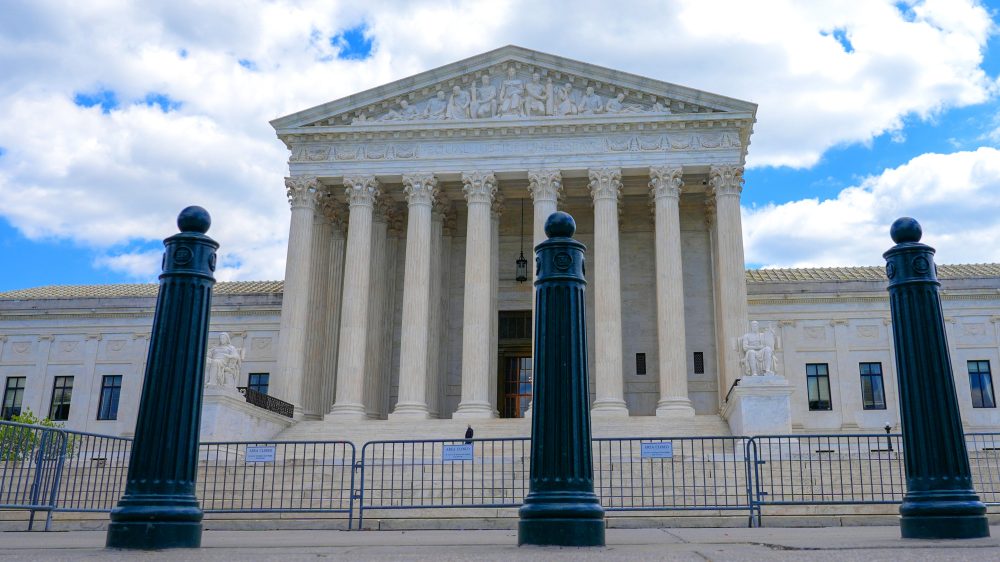
A former death row inmate who came within moments of execution on three separate occasions has been granted bond by an Oklahoma judge while he awaits a new trial for a 1997 murder case.
Richard Glossip, 63, will have the opportunity to walk free for the first time in nearly three decades following his arrest. The U.S. Supreme Court overturned his conviction last year, and his persistent declarations of innocence have garnered backing from celebrities including Kim Kardashian.
Judge Natalie Mai set the bond amount at $500,000. Glossip will be required to wear electronic monitoring equipment and cannot leave Oklahoma. Additional conditions prohibit him from contacting case witnesses or using drugs or alcohol.
The 63-year-old had received a death sentence for the 1997 murder of Barry Van Treese, his former employer who owned a motel in Oklahoma City. Prosecutors claimed the killing was part of a murder-for-hire plot.
Last year, the Supreme Court determined that prosecutors violated Glossip’s constitutional rights to fair proceedings by permitting a crucial witness to provide testimony they were aware was dishonest.
Glossip has stayed incarcerated since Oklahoma Attorney General Gentner Drummond declared the state’s intention to pursue a new murder trial without seeking capital punishment.
“The court fully expects that the state will rigorously prosecute its case going forward and the defense will provide robust representation for Glossip,” the judge wrote in the order. “The court hopes that a new trial, free of error, will provided all interested parties and the citizens of Oklahoma, the closure they deserve.”
Throughout his death row tenure, Oklahoma courts scheduled nine separate execution dates for Glossip, bringing him so close to death that he consumed three final meals. In 2015, prison officials placed him in a holding cell adjacent to the execution chamber, preparing for lethal injection.
However, his scheduled execution was postponed when officials discovered the lethal drugs they had obtained did not comply with established execution procedures. This pharmaceutical error resulted in Oklahoma suspending executions for nearly seven years.
“Mr. Glossip now has the chance to taste freedom while his defense team continues to pursue justice on his behalf against a system that the United States Supreme Court has found to be guilty of serious misconduct by state prosecutors,” his attorney, Donald Knight, said.
The case gained worldwide recognition when actress Susan Sarandon, who earned an Academy Award for playing death penalty activist Sister Helen Prejean in the 1995 film “Dead Man Walking,” championed his cause. Glossip’s situation was also highlighted in the 2017 documentary “Killing Richard Glossip.”
The International Monetary Fund expressed approval Thursday for recent diplomatic engagement between the United States and China, stating that decreased friction between the world’s two economic powerhouses benefits global markets.
During a Washington news briefing, IMF spokesperson Julie Kozack emphasized the significance of high-level communication between the economic superpowers when discussing outcomes from the Trump-Xi summit held in Beijing.
“It’s very important, of course, that the world’s two largest economies are engaging at the highest level,” Kozack stated during the briefing.
“We certainly welcome the fact that there’s a constructive dialogue between the two countries. Anything that is going to help reduce trade tensions and reduce uncertainty is good for both of those large economies, and, of course, good for the global economy as well,” she continued.
The spokesperson noted that ongoing Middle East warfare and Iran’s blockade of the Strait of Hormuz have driven oil prices beyond $100 per barrel, pushing the world economy toward the IMF’s middle-range projection from its April World Economic Outlook report.
Under this “adverse scenario,” worldwide real GDP growth would drop to 2.5% this year, down from the 3.1% predicted in the organization’s more optimistic “reference forecast” that anticipates swift conflict resolution, and below the 3.4% growth projected for 2025.
This unfavorable projection assumes oil remains at $100 per barrel throughout the year while also factoring in tighter financial conditions and increased inflation expectations.
Despite elevated energy costs driving up short-term price increase expectations, Kozack said the IMF considers medium-term inflation expectations to be stable. She added that global financial conditions remain “accommodative.”
The monetary organization continues exploring potential financial support for member nations struggling with increased energy and commodity expenses resulting from Middle East hostilities. However, Kozack provided no specifics about particular countries or responded to reports that Iraq has requested financial aid.
During spring meetings in April, International Monetary Fund Managing Director Kristalina Georgieva indicated that approximately 12 countries would likely require assistance totaling $20 billion to $50 billion from the IMF and World Bank, with both institutions coordinating on optimal support strategies.
Kozack declined to update those estimates.
“Right now, what we’re seeing is that many countries are actually asking us for support in the policy area,” she explained. “They’re asking us for policy advice. How can they best respond to the shock given the individual country circumstances?”
In April, the Fund advised member nations against implementing widespread fuel subsidies that would deplete limited government resources and increase oil demand during supply shortages, further driving up prices.
Cerebras Systems made an impressive entrance into public trading Thursday, with stock prices surging 89% beyond their initial public offering value during the company’s first day on U.S. exchanges.
The semiconductor company’s strong market performance resulted in a total valuation reaching $106.75 billion when calculated on a fully diluted basis, reflecting investor enthusiasm for the chip designer’s market prospects.
ROME – Technology company EdgeConneX has announced plans for a massive investment to construct data centers in northern Italy, according to an announcement from Prime Minister Giorgia Meloni’s office on Thursday.
The company intends to spend approximately 3 billion euros, equivalent to $3.5 billion, on the ambitious project, officials confirmed.
The facilities will be constructed in the Lombardy region of northern Italy, according to the statement released by the prime minister’s office.
There was some initial confusion about the investment amount when Industry Minister Adolfo Urso mentioned a figure of 6 billion euros earlier in the day.
However, Meloni’s office clarified the actual investment total. “The total investment amounts to around 3 billion euros,” the office stated.
The comprehensive development plan includes significant specifications and timeline details. “The project involves the construction, by 2031, of three state-of-the-art data centre campuses in the Lombardy Region, with over 300 megawatt of capacity and an expected 5 billion euros in additional indirect investments,” the official statement explained.
The project represents a major technology infrastructure investment for the region and could have substantial economic impact beyond the initial construction phase.
Virginia’s Department of Wildlife Resources has released its latest fishing report, focusing on springtime striped bass opportunities throughout the state’s tidal waterways.
Striped bass, commonly called rockfish, are currently gathering in schools near channel edges, sandy bottom areas, and grass beds. In saltwater environments, these fish typically stay near rocky coastlines and other hard bottom features that gave them their popular nickname.
The report provides field observations from state fisheries biologists working this spring season, along with fishing strategies for anglers using shore-based techniques, kayaks, boats, fly fishing equipment, or light tackle setups.
Salisbury, MD – Municipal officials in Salisbury are addressing a burst water main located in the vicinity of Riverside Dr., spanning the area between Ridge Rd. and N. Pinehurst Ave. Repair teams have arrived at the location to evaluate the damage and start fixing the broken pipe.
People living and working in nearby areas should expect reduced water pressure or brief interruptions to their water service during the repair process. Drivers should consider alternate routes when possible, as road lane restrictions and traffic backups are anticipated.
Municipal repair teams along with contracted workers are making every effort to return water service to normal levels in a timely and safe manner.
Salisbury officials expressed gratitude for residents’ patience as the repairs continue.
Motorists traveling on Interstate 95 southbound are encountering periodic lane restrictions between Route 141 and Churchmans Road, according to traffic authorities.
The lane closures began at 2:30 PM and are causing intermittent disruptions to traffic flow in the affected area.
Drivers are advised to expect delays and consider alternate routes when possible while the lane restrictions remain in place.
Newark police have arrested three individuals following a drug investigation at a townhouse community that began earlier this month.
Law enforcement officers were called to the 800 block of Cobble Creek Curve in the Stones Throw Townhouses community on January 6, 2026, to respond to a reported incident. Before police arrived at the scene, 53-year-old Robert Waddell had already left the residence.
During their investigation at the property, officers discovered ammunition inside the home and learned that Waddell was legally barred from having firearms in his possession.
The incident resulted in drug seizure charges being filed against three suspects, though additional details about the specific charges and the other two individuals involved have not been released by authorities.
DENVER — Colorado Avalanche head coach Jared Bednar summed up his team’s remarkable comeback victory with one word after they overcame a three-goal deficit to win their playoff series on an overtime goal from a defenseman who hadn’t found the net since January while playing for a different organization.
“That one was,” the coach said, “something.”
Something, indeed.
The Avalanche punched their ticket to the Western Conference final for the eighth time since moving to Denver after Brett Kulak’s goal delivered a 4-3 victory over the Minnesota Wild in Game 5. This marks only the second time in their last nine playoff runs that the Avalanche have progressed beyond the second round.
During their previous conference final appearance in 2022, the franchise claimed the Stanley Cup championship.
With Nathan MacKinnon and Cale Makar leading the charge, expectations remain Cup-or-bust for this organization. This season’s squad appears particularly equipped for a championship run, featuring captain Gabriel Landeskog back in action for a full regular season, impressive roster depth — 16 different players found the scoresheet during the Wild series — and exceptional performances from their star players.
Entering the season among championship contenders, they topped the NHL standings for most of the regular season while claiming their fourth Presidents’ Trophy, awarded to the team with the league’s best record.
Similar to Carolina, the Avalanche are gaining momentum heading into the conference finals. The Hurricanes reached this stage with back-to-back sweeps, while the Avalanche needed nine games, including a first-round sweep of the Los Angeles Kings. As of Thursday, Colorado holds slight favoritism over the Hurricanes for the Cup according to oddsmakers.
Colorado’s next opponent will be either Vegas or Anaheim. During the regular season, the Avalanche posted a 2-0-1 record against both the Golden Knights and the Ducks.
Bednar recognizes the elevated expectations that accompany his talented roster each season. He accepts that criticism comes with the territory.
“It’s hard to win,” Bednar said. “But I wouldn’t want it any other way. I don’t think our players would want it any other way.
“People are going to get on you because you didn’t win the Cup. I’d still rather be fighting for that, having earned that type of reputation because of the way you play through the regular season and the group that you put together as an organization and the high expectations, rather than, ‘Let’s just try and make the playoffs.’”
Little seems to shake the Avalanche’s composure these days. Even facing a three-goal deficit couldn’t rattle them, setting the stage for a dramatic finish and Kulak’s overtime heroics, as he converted a precise pass from Martin Necas into the net, sending the packed arena into celebration.
The goal marked Kulak’s first since Jan. 19 during his time with Pittsburgh, before his trade to Colorado the following month. The victory also represented the first time the Avalanche clinched a series at home since 2008, when they defeated the Wild in Game 6 of the conference quarterfinals.
“In an environment like this, where the building felt like it was going to start shaking at any moment, it was exciting,” said Landeskog, who played his first complete regular season since 2022 following recovery from a knee injury. “Now, it’s kind of a sigh of relief.”
The Avalanche have several days to recover. They played without forward Artturi Lehkonen and defenseman Sam Malinski during the final two games against the Wild due to upper-body injuries. Makar briefly exited Wednesday’s contest following a collision but returned to action.
“The playoffs are a long grind and you want to keep your focus narrow,” said Kulak, who reached the Stanley Cup Final with Edmonton last season. “We can get some rest.”
Colorado carries a 3-4 record in conference finals since relocating to the city before the 1995-96 season. However, each of their three previous advances resulted in championship banners — 1996, 2001 and 2022.
“They’re a really good team,” Wild defenseman Quinn Hughes said.
Colorado’s roster depth has proven to be a major asset. The 16 different goal scorers in the second round ties an NHL record for most in a single series, according to NHL Stats.
“The depth is what’s going to win, coming down the stretch here in the playoffs,” Landeskog said. “Guys are stepping up all over the place.”
That depth extends to goaltending, though a potential storyline may emerge regarding the position.
Scott Wedgewood entered during the second period after Mackenzie Blackwood allowed three first-period goals. Wedgewood turned away all seven shots he faced during the second and third periods (he faced none in overtime).
“Just proud,” Wedgewood said of reaching the conference final. “Proud of our group ending it and finding a way to do that because we knew going into the series, it wasn’t going to be an easy out. There’s a long road ahead, a lot of stories to write and just preparing for that.”
Football fans will get their complete look at the 2026 NFL regular season Thursday evening when the league unveils its full schedule featuring 272 games spanning 18 weeks.
Seattle will host the season opener on September 9 as the Seahawks celebrate their Super Bowl championship with a banner ceremony. This marks only the second occasion the NFL has begun its season on a Wednesday, with the previous instance occurring when the Giants welcomed the Cowboys on September 5, 2012.
While many matchups have already been revealed, the complete schedule will finalize details for what includes a historic nine international contests spanning four continents. The season’s first overseas game features San Francisco taking on the Los Angeles Rams in Melbourne on September 10.
France will host its inaugural NFL regular season contest when Pittsburgh meets New Orleans in Paris on October 25.
Half of the league’s 32 franchises will compete in at least one of their 17 regular season contests outside American borders. Both San Francisco and Jacksonville are scheduled for two international appearances each. The 49ers will also battle Minnesota in Mexico City during Week 11, while the Jaguars play back-to-back London games in Weeks 5 and 6 against the Eagles and Texans respectively. The Colts and Commanders will also clash in London during Week 4.
Week 3 brings Dallas and Baltimore together in Rio de Janeiro. Madrid hosts the Bengals and Falcons in Week 8, while Munich welcomes the Patriots and Lions for a Week 9 showdown.
Previously announced prime-time matchups include Dallas visiting the Giants for the season’s first Sunday night contest and Denver traveling to face Kansas City in the opening Monday night game.
Holiday football features Green Bay against the Rams on Thanksgiving Eve, with the Lions hosting the Bears and the Eagles visiting Dallas among the traditional Thanksgiving Day games.
Nationwide home loan rates declined slightly this week, marking the first decrease following two consecutive weeks of upward movement.
The standard 30-year fixed mortgage rate decreased to 6.36% from the previous week’s 6.37%, according to Thursday’s report from mortgage buyer Freddie Mac. This represents a notable improvement from the 6.81% average recorded one year ago.
Rates for 15-year fixed mortgages, which are favored by homeowners looking to refinance existing loans, also declined this week. These rates dropped to 5.71% from 5.72% the previous week. Freddie Mac reported this rate stood at 5.92% twelve months ago.
Several factors impact mortgage rates, including the Federal Reserve’s interest rate policy decisions and bond market investors’ expectations for the economy and inflation.
The 30-year mortgage average had dipped below 6% in late February for the first time since late 2022, but has not returned to that level since.
Though mortgage rates remain lower than they were at this point last year, they have generally moved upward since the war with Iran began. The Strait of Hormuz closure has disrupted energy markets, causing crude oil prices to surge sharply and becoming a major inflation factor.
Higher oil price expectations have increased the yield on the U.S. 10-year Treasury note, which lenders reference when setting home loan prices.
Thursday’s midday bond market trading showed the 10-year Treasury yield at 4.44%. This yield was only 3.97% in late February, prior to the outbreak of war.
AMMAN, Jordan — Two opposing factions in Yemen’s ongoing conflict have struck an agreement to exchange more than 1,600 prisoners, marking the most significant detainee swap since the civil war began 11 years ago.
The agreement was finalized in Jordan’s capital following 14 weeks of diplomatic discussions, with United Nations representatives and International Committee of the Red Cross officials serving as witnesses to the process.
According to Abdelkader al-Murtada, who leads the Houthis’ National Committee for Prisoners’ Affairs and participated in the discussions, approximately 1,100 of the nearly 1,700 prisoners are connected to the Houthi movement. The remaining 580 individuals set for release by the opposing faction include seven Saudi nationals and 20 Sudanese citizens.
Government delegation leader Yahya Kazman announced on social media platform X that “a number of politicians and media professionals” currently held by the Houthis would also gain their freedom, though he provided no additional specifics.
U.N. Special Envoy for Yemen Hans Grundberg described the arrangement as covering the most extensive release of “conflict-related detainees.” The International Committee of the Red Cross confirmed in an official statement that both warring parties have reached consensus on which prisoners will be freed and expressed readiness to assist with their return home.
Officials have not yet announced when the prisoner releases will commence.
Grundberg noted that this agreement stems from diplomatic talks conducted in Oman during December 2025, when both sides explored the possibility of releasing 2,900 detainees.
Yemen’s civil conflict erupted in 2014 after the Iran-backed Houthis captured Sanaa, the nation’s capital, along with large portions of northern territory, forcing the recognized government to flee the country. The following year, a coalition led by Saudi Arabia and including the United Arab Emirates launched military intervention aimed at restoring governmental authority.
The prolonged warfare has devastated Yemen’s economic system and created what the World Food Program describes as “severe” food shortages across northern regions.
LONDON (AP) — British Prime Minister Keir Starmer finds himself in political turmoil as his Labour Party faces mounting pressure following devastating losses in recent local elections.
Health Secretary Wes Streeting stepped down from his Cabinet position on Thursday, marking the first senior government official to resign, though he has not yet formally announced his anticipated campaign to challenge Starmer’s leadership.
The electoral losses appear to be the breaking point for a leader already facing criticism over his choice to name Peter Mandelson as Britain’s ambassador to Washington, given the seasoned politician’s connections to Jeffrey Epstein.
Over 90 Labour members of parliament are demanding Starmer resign to allow for a leadership competition to select a new leader who would assume the role of prime minister, with several junior government officials also stepping down.
Despite the pressure, Starmer maintains he will remain in position, and no official leadership challenge has been initiated.
Though no clear favorite has emerged to succeed Starmer, several prominent figures are being considered for the leadership role:
At 43, Wes Streeting is viewed as among the government’s most effective speakers and has spearheaded efforts to reform the struggling National Health Service.
His commitment to healthcare reform stems from personal experience, as the NHS treated him for kidney cancer, leading Streeting to pledge he would help save the health service in return.
First elected to parliament in 2015, Streeting has long been thought to harbor ambitions for the top position, though he previously denied any plans to challenge Starmer.
He documented his journey from London’s working-class East End, where he was raised in public housing, in his book “One Boy, Two Bills and a Fry Up: A Memoir of Growing Up and Getting On.” The title references his two grandfathers named Bill: his mother’s father had criminal associations and was imprisoned for armed robbery, while he credits his father’s father with guiding him toward Cambridge University.
Streeting entered politics early, heading the Cambridge student union and serving as president of the National Union of Students.
He subsequently worked for Stonewall, the LGBT organization, and has discussed his challenges with coming out as gay while maintaining his Anglican faith.
Former Deputy Prime Minister Angela Rayner has distinguished herself as an unconventional politician with a remarkable background story. Raised in social housing, she left school at 16 after becoming a teenage mother.
The 46-year-old Rayner was involved in trade unions before winning election to parliament in 2015 and represents the party’s left wing. She quickly advanced through Labour’s leadership ranks during their opposition years and won election as deputy leader in 2020.
While Rayner commands substantial party support, she was compelled to leave government last year after acknowledging she underpaid taxes on a property transaction. On Thursday, she announced she had resolved the matter with tax officials in what seems to signal preparation for a potential leadership bid.
Following controversy over the Epstein document revelations regarding Mandelson, Rayner spearheaded a parliamentary rebellion that forced the government to transfer authority to Parliament’s Intelligence and Security Committee for determining which documents should be made public.
Former Cabinet official Andy Burnham, the well-regarded, center-left Greater Manchester mayor, has long been viewed as a possible challenger to Starmer. However, his leadership chances suffered when Labour prevented him from running as the party’s parliamentary candidate in a special February election.
According to established tradition, the prime minister must hold a parliamentary seat. Burnham’s allies prefer postponing any leadership contest to allow him time to return to the House of Commons through a special election.
The 56-year-old Burnham held senior positions in previous Labour administrations, including culture secretary and health secretary.
Energy Secretary Ed Miliband previously led the Labour Party, but his five-year tenure as opposition leader concluded with the party’s 2015 electoral defeat. The 56-year-old Miliband has publicly downplayed interest in returning to the leadership role, though he ranks among the Cabinet’s most seasoned members.
Home Secretary Shabana Mahmood, 45, handles one of government’s most challenging portfolios, managing immigration and law enforcement. She has gained favor among Labour’s right wing through her efforts to strengthen border security and combat illegal immigration.
The former Royal Marine who served honorably in Afghanistan currently serves as armed forces minister in Starmer’s Labour administration and has gained prominence within the party since his initial election to Parliament during Labour’s 2024 electoral triumph.
At 46, Carns possesses a compelling personal narrative that might appeal to various Labour factions. Beyond his distinguished Afghan service, which earned him the Military Cross in 2011, Carns was born to a single mother in a working-class family in the Scottish oil community of Aberdeen.
“We do not need more slogans, strategies, press releases or commissions,” Carns wrote in a Thursday article for The New Statesman magazine, “We need action.”
His limited experience could prove problematic. Replacing a leader criticized for poor political judgment with a political newcomer, despite their compelling background, might pose risks.
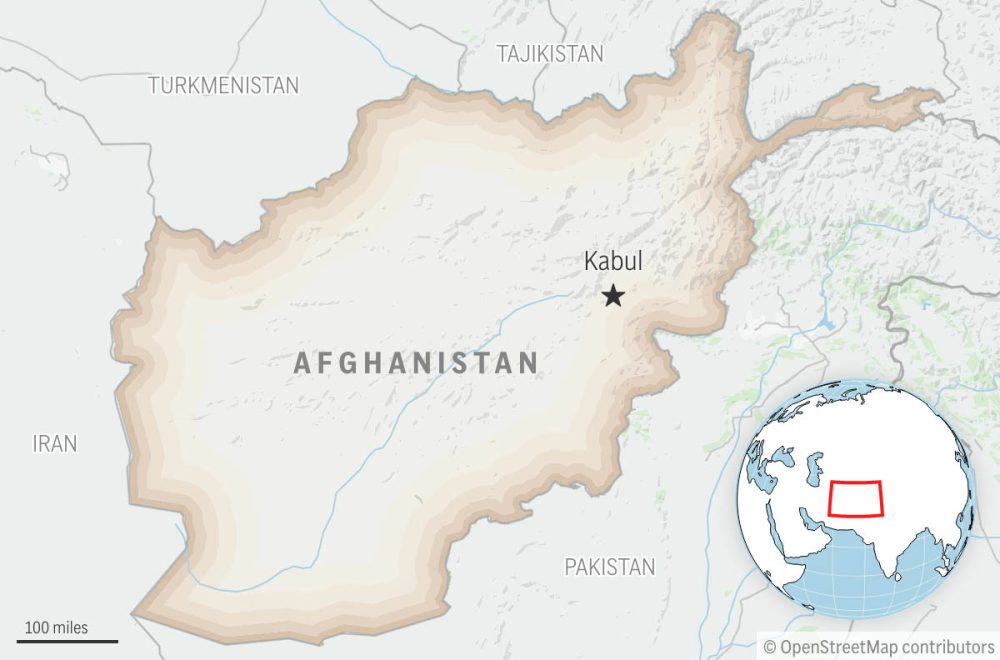
International organizations report that Afghanistan’s ruling Taliban have taken at least three journalists into custody in recent days without revealing specific charges against them.
On Thursday, the United Nations mission in Afghanistan voiced “serious concern” about these arrests and “reports of assaults against journalists and confiscation of property during search operations by the de facto authorities.”
Afghanistan has become one of the globe’s most restrictive nations for media freedom since the Taliban returned to power in 2021, with Reporters without Borders placing it at 175th position out of 180 countries in their 2026 rankings.
“A free, independent, and safe press is essential for transparency, accountability, and the well-being of Afghan society,” the U.N. mission stated, calling on authorities “to uphold their obligations under international human rights law and ensure that journalists can do their work without fear of intimidation, harassment, or reprisal.”
On Wednesday, Afghanistan’s Ministry of Information and Culture confirmed that two TOLONews journalists were taken into custody “a few days ago.” Officials provided no explanation for the arrests but noted their situation remains “under investigation. The court has not yet ruled on them.”
TOLONews confirmed through social media that the detained journalists are Imran Danish and Mansoor Niazi, both arrested in Kabul. “Security officials told TOLONews that details will be shared after the relevant legal procedures are completed,” the news outlet reported.
Danish serves as a political editor for the channel while Niazi works as an anchor.
The Committee to Protect Journalists demanded their immediate freedom and reported that authorities conducted “a sweeping raid” on the broadcaster and its parent company, Moby Group, following the arrests.
The arrests and subsequent raid “underscores the climate of fear facing journalists in Afghanistan,” stated Kunal Majumder, the CPJ Asia-Pacific Program Coordinator, in a Tuesday release. “Taliban authorities must immediately and unconditionally release the detained journalists and ensure the press can operate without interference.”
The Afghanistan Journalists Center, which advocates for media freedom, reported that a third journalist, Jawid Niazi, who operates the Paigard private news agency, has also been taken into custody. The organization indicated he was detained on May 6.
The organization demanded immediate and unconditional freedom for all detained journalists. “AFJC urges the Taliban to cease all efforts to suppress media freedom, including threats, arrests, and intimidation tactics that undermine the vital role of journalism in Afghan society,” their statement declared.
Previous journalist arrests by Afghan authorities have involved various accusations. In 2022, three TOLO journalists were detained over coverage reporting that the new government had prohibited all foreign drama series broadcasts. They were subsequently freed. In 2023, the Taliban released a French-Afghan journalist who had been held for more than 280 days after a court dismissed espionage and other allegations against him.
WASHINGTON — The U.S. Senate passed a resolution Thursday with unanimous support that would suspend senators’ salaries during government shutdowns, marking an effort to create financial consequences for lawmakers following a series of lengthy federal closures over the past year.
The measure received backing from both parties as federal shutdowns have grown more prolonged and common, leading to frustration among legislators who believe there should be consequences when Congress cannot fulfill its fundamental responsibility of funding the government.
According to the resolution, the secretary of the Senate would hold back senators’ salaries whenever a government shutdown impacts one or more federal agencies. The pay would be returned once government funding resumes.
“Shutting down government should not be our default solution to our refusal to work out our issues and our differences,” said Sen. John Kennedy, the bill’s sponsor, in a floor speech Wednesday.
“This is about putting our money where our mouth is,” said Kennedy, R-La.
A major artificial intelligence company and a prominent philanthropic organization announced Thursday they will combine resources for a $200 million initiative focused on advancing AI applications in healthcare and education sectors.
The collaboration between Anthropic and the Gates Foundation will unfold over four years, with each organization contributing $100 million worth of resources and expertise. Anthropic will provide technical support from its staff along with access credits for its Claude AI system, while the Gates Foundation will supply grant money, program development, and specialized knowledge, according to officials.
This announcement builds on a previous $50 million agreement the Gates Foundation made with OpenAI in January, which aimed to bring AI support to 1,000 African healthcare facilities and communities by 2028.
The new collaboration addresses concerns that artificial intelligence technology might eliminate jobs and increase social disparities by working to make AI benefits more widely available.
Language accessibility represents a key priority area. Current AI systems struggle significantly with writing and translating numerous African languages, prompting the partnership to focus on improving data gathering and labeling processes that will be made available to the public to enhance AI models industry-wide, according to Janet Zhou, a Gates Foundation director.
The partnership is also exploring the development of knowledge databases that could better serve educators in sub-Saharan Africa and India, Zhou explained.
The emphasis on public benefit stems from “the needs of different partners and governments, including some of the fears that they may have around proprietary lock-in and sovereignty,” Zhou stated.
One specific project will provide research facilities with Claude AI access to identify potential drug treatments for HPV and preeclampsia, conditions that have received less commercial research attention from pharmaceutical companies, according to Zhou and Anthropic’s Elizabeth Kelly.
Anthropic, a startup that has received backing from Google and Amazon.com and has seen its valuation rise due to strong demand for its AI and programming tools, views this work as central to its core purpose of benefiting society.
“This announcement is really core to who we are as a company,” Kelly said, who oversees Anthropic’s beneficial deployments team.
EDMONTON, Alberta — Edmonton Oilers management dismissed head coach Kris Knoblauch on Thursday following the team’s early playoff elimination that came after he had led the franchise to back-to-back Stanley Cup Final appearances.
Since replacing Jay Woodcroft as a mid-season hire when the previous coach was let go after a poor November 2023 start, Knoblauch guided Edmonton to three playoff berths. Under his leadership, the team posted 166 victories in 286 games, giving him a .623 regular-season points percentage that places him sixth among current NHL head coaches.
This marks the sixth coaching change for Edmonton since Connor McDavid joined the NHL in 2015 and established himself as the league’s top player, playing alongside fellow MVP Leon Draisaitl. The duo remains without a championship as they enter their 12th campaign together.
The coaching dismissal follows reports from earlier this week that Edmonton had requested and been refused permission by the Vegas Golden Knights to interview Bruce Cassidy, whom they had released as coach in late March while he remains under contract. Organizations typically wait for open positions before pursuing potential coaching candidates during the offseason.
General manager Stan Bowman’s authority to make this decision suggests he will retain his position, as will president of hockey operations Jeff Jackson, who came aboard in August 2023. Jackson assumed control of hockey operations after the team’s initial final appearance in 2024 and brought in Bowman as general manager that summer. Assistant coach Mark Stuart was also dismissed.
“Following a thorough review of this past season, we believe these changes are needed,” Bowman said. “We are grateful for the contributions both Kris and Mark have made to our organization and we wish them the best moving forward.”
The Oilers trailed 3-0 in their initial championship series against Florida before forcing the Panthers to a decisive Game 7 and falling by one goal. They returned the next year with home-ice advantage but appeared to take a step backward in a six-game series loss attributed to defensive struggles and poor goaltending.
These issues persisted throughout this season, both before and after Bowman executed a goaltender trade to acquire Tristan Jarry while sending Stuart Skinner to Pittsburgh. The move backfired, as Edmonton finished 29th among 32 league teams with an .883 save percentage.
McDavid offered significant praise for Tampa Bay coach Jon Cooper late in the season after the Lightning defeated the Oilers 5-2. While not necessarily intended as a critique of Knoblauch, the comments were notable from a player who typically focuses on accepting accountability for defeats.
Edmonton was ousted by the less-experienced Anaheim Ducks, as Knoblauch couldn’t solve the goaltending crisis between Jarry and backup-turned-starter Connor Ingram. Their combined .880 save percentage ranked worst in the playoffs, while the Oilers’ 4.33 goals allowed also finished last.
The three-year contract extension Edmonton gave Knoblauch in October begins next season and extends through 2028-29. The organization must continue paying him until another team employs him and would cover any salary difference during that period.
The Trump administration is halting offshore wind developments across America at a time when the sector was positioned for major expansion.
Wind turbines positioned off the nation’s shores have the capability to generate substantial amounts of renewable energy along coastal areas. Currently, six offshore wind installations are operational or beginning to supply electricity as they complete final construction phases in the United States.
More than 40 federal leases for offshore wind development have been issued. The current administration is purchasing back certain leases, providing compensation to energy companies to abandon their wind projects. Additional barriers have been implemented for the sector as the administration prioritizes fossil fuel development.
This approach contrasts with numerous nations that are adopting ocean-based wind turbines to satisfy increasing electricity demands through clean methods. The global frontrunner in offshore wind development is where the president is attending a summit this week. Wind turbines generate electricity without contributing to global warming, unlike fossil fuel combustion.
The following data illustrates the offshore wind sector’s scope both domestically and internationally:
Nineteen nations and regions utilize offshore wind power: The top three in terms of installation numbers and capacity are China, the United Kingdom, and Germany. Additional locations developing offshore wind include the Netherlands, Taiwan, Denmark, Belgium, France, Vietnam, South Korea, Japan, Sweden, United States, Norway, Finland, Italy, Portugal, Ireland and Spain, based on Global Wind Energy Council data.
In 2025, China installed 6.6 gigawatts of additional offshore wind capacity, according to GWEC. By year’s end 2025, China’s cumulative offshore wind capacity reached 48.4 gigawatts, the organization reported.
Worldwide installations in 2025 alone generated sufficient offshore wind power for 10.2 million households. The total reached nearly 9.3 gigawatts, representing a 16% yearly increase, GWEC reported. Current global offshore wind installations can generate power equivalent to serving 102 million homes, based on GWEC calculations.
From 2026 to 2030, China is projected to represent approximately 56% of new offshore wind capacity additions globally, GWEC stated. The European Union is expected to contribute about 29% during this timeframe, while the United States accounts for 5%, according to the organization.
America’s three operational offshore wind installations include: Block Island Wind Farm off Rhode Island, the nation’s inaugural project in state waters; Dominion Energy’s Coastal Virginia Offshore Wind pilot in federal waters; and South Fork Wind, the first major U.S. offshore wind installation providing power to New York.
Three additional projects are: Vineyard Wind in Massachusetts; Revolution Wind in Rhode Island; and the complete Coastal Virginia Offshore Wind development near the pilot turbines off Virginia Beach. Vineyard Wind, the most advanced of these three, is anticipated to achieve full operation within months.
Construction was ordered to cease on five East Coast offshore wind developments in December due to national security considerations cited by the Trump administration. The directive affected Vineyard Wind, Revolution Wind and Coastal Virginia Offshore Wind, plus Empire Wind and Sunrise Wind, two significant New York offshore wind projects.
Legal challenges were filed by developers and states. Federal courts permitted all five projects to restart construction, essentially determining that the government failed to demonstrate imminent national security threats requiring immediate work stoppage.
The world’s largest operational offshore wind installation, Hornsea 2, features 165 turbines. Positioned in the North Sea 55 miles from England’s Yorkshire coast alongside its companion project Hornsea 1, it produces sufficient energy for over 1.4 million U.K. households across 178 square miles. A larger U.K. project currently under development will exceed this capacity.
According to the American Clean Power Association, 18,000 U.S. jobs are sustained by the offshore wind sector.
Coastal Virginia Offshore Wind generates electricity for up to 660,000 households. Power delivery to the electrical grid commenced in March.
This 2.6-gigawatt development represents America’s largest wind installation to date. It operates off the coast of a state housing the world’s data center hub and vital U.S. military facilities, according to offshore wind advocacy organization Turn Forward.
Massachusetts customers will save an estimated $1.4 billion on electricity costs over two decades through Vineyard Wind, according to the governor’s office. During the previous winter, Vineyard Wind reduced electricity rates by participating in wholesale markets and consistently providing lower-cost power than alternative sources.
Vineyard Wind became the first offshore wind development completed during the current administration. Its 62 turbines will produce 800 megawatts total, sufficient clean electricity for approximately 400,000 households.
Offshore wind development has generated $25.5 billion in U.S. investments across ports, steel manufacturing, transmission improvements, shipbuilding, workforce development and research, according to the Oceantic Network, a nonprofit promoting offshore energy advancement. The domestic supply network encompasses over 1,000 U.S. companies in at least 40 states, the organization stated. Oceantic calculates that canceling a 1-gigawatt Northeast project would cost nearly $10 billion economically, primarily from lost employment and investments, while regional customers forfeit energy cost savings.
Motorists traveling on Walt Messick Road are facing lane restrictions today due to ongoing construction activities.
The right lane is currently blocked for eastbound traffic in the section running from Elizabeth Avenue to Farmington Road. Officials indicate the lane closure will remain in effect until 4 PM today.
Drivers are advised to plan for potential delays and consider alternate routes if possible during the affected timeframe.
During Mental Health Awareness Month this May, scientists worldwide continue studying how creating flourishing garden spaces can provide healing benefits.
Research demonstrates that working with plants helps rebuild hand coordination and muscle tone, enhances heart health, decreases stress and worry, reduces depressive symptoms, and creates a greater sense of purpose. The Old Farmer’s Almanac notes that even bacteria found in dirt naturally boost mood.
Those who tend plants can enhance their wellness practices by growing varieties that offer calming properties—such as soothing herbs that thrive inside homes.
Plants including lemon balm, catnip and holy basil fall into the category of “nervine herbs” because they influence the nervous system to create gentle relaxation—diminishing tension through pleasant tastes and scents while helping pollinating insects.
The Almanac provides guidance for raising and utilizing peaceful herbs that encourage daily wellness:
Lemon balm
Research indicates that lemon balm can enhance recall abilities and learning capacity. Furthermore, touching its foliage releases a calming mint-like scent, and rubbing crushed leaves on skin may repel bugs.
Create a soothing beverage using either fresh or dried tart leaves. Add 1 cup of hot water to 5-6 fresh leaves or 1 teaspoon of dried material. Allow to sit for 5-7 minutes. Filter out plant matter and include honey or mint as preferred. Consume multiple times daily.
For a cooling, citrus-flavored beverage, simply mix crushed leaves into chilled water.
This returning plant reaches 1-2 feet in height when grown in sunny to partially shaded areas, needs quality soil, and sprouts easily from seeds. Because it belongs to the mint plant group, contain it within a container without a bottom or bordered garden area to prevent spreading throughout your yard. Cut the upper portion before flowering begins and suspend for drying.
Chamomile
Chamomile can calm upset stomachs and reduce feelings of sadness and worry when incorporated into contemporary plant-based remedies. It’s recognized for helping with sleeplessness, loosening tight muscles, and calming irritated or swollen skin.
Prepare a peaceful beverage using fresh or dried flower heads. Add 1 cup of hot water to 1 teaspoon of plant material. Let sit for 5-7 minutes, or extended time for stronger calming properties.
Chamomile can also be added to bath water for a peaceful experience, and you can fill a small bag or clean fabric sock with chamomile to place in clothing storage areas.
This yearly plant can reach 2 feet in height, prefers bright sunlight, and grows easily from seeds. Collect and dry the flowers when they reach full bloom.
Lavender
Lavender creates mild calming, comforting and sleep-inducing effects when its fragrance is breathed in. Scent therapy using lavender may help decrease nervous system activity, enhance sleep quality and focus, encourage relaxation and lessen worry.
Prepare a peaceful beverage by heating 8 ounces of water. Put 4 teaspoons of fresh lavender flower buds into a tea strainer or small bag. Combine the strainer and heated water in a cup, and allow to sit for 10 minutes.
This returning plant originates from the Mediterranean region and can be difficult to cultivate in certain areas. It prefers dry, basic soil with low-to-moderate nutrients—avoiding overly rich or moist conditions. Collect stems before buds open and suspend for drying.
Catnip
Beyond feline entertainment, this aromatic, mint-family plant with white blooms can help settle nerves, comfort digestive issues, and create mild sleepiness.
Consume as a beverage 2-3 times daily to experience its effects. Add 1 cup of hot water to 2 teaspoons of dried catnip leaves or flowers. Allow to sit for 10-15 minutes. Include lemon juice and honey if wanted.
This returning plant grows easily from seeds, reaches approximately 3 feet tall, thrives in bright sun, and performs well in poor, dry earth. Preserve some for colder months by cutting the upper portion before blooming starts and hanging to dry. Allow some stems to flower for pollinating insects.
Holy basil
Tulsi or holy basil demonstrates mood-lifting and worry-reducing qualities. Unlike the sweet variety used on pizza, it offers a strong, spicy taste.
Utilize fresh or dried leaves for beverage preparation. Add boiling water to ½-1 teaspoon of plant material per cup of water. Let sit for 5-7 minutes, or longer for stronger taste and more beneficial elements.
As a warm-season yearly plant, it grows easily from seeds, thrives in bright sun to partial shade, and reaches 2 feet tall in fertile, damp soil. It can be grown in containers to move indoors during winter.
The Virginia Cooperative Extension publications page offers a useful resource on herb growing and usage.
A global hunger monitoring organization announced Thursday that more than four in ten people living in conflict-ravaged Sudan are experiencing severe levels of acute food insecurity, with conditions projected to persist through May as the nation’s war nears its fourth year.
According to the Integrated Food Security Phase Classification, or IPC, nearly 19.5 million individuals are confronting this critical level of food insecurity. Among these, 135,000 people have reached Phase 5 conditions, defined by “extreme food gaps, starvation, very high levels of malnutrition, and death due to disease or acute malnutrition.”
The monitoring group’s assessment warns that circumstances will likely worsen during the coming June through September lean season. “Conditions are expected to deteriorate further in the upcoming June–September lean season,” the IPC assessment statement read. The organization projects that approximately 825,000 children under age 5 will experience severe acute malnutrition in 2026 due to restricted access to medical care, representing a 7% rise from the previous year and a 25% jump from pre-conflict numbers.
Treatment data shows that more than 98,500 children received care for severe acute malnutrition during the January through March period, the IPC reported.
Sudan’s armed conflict began in April 2023 when escalating tensions between military forces and the paramilitary Rapid Support Forces exploded into comprehensive warfare. The violence has claimed at least 59,000 lives, forced 13 million people from their homes, and driven numerous regions into famine conditions. Humanitarian aid is needed by more than 30 million residents.
While Thursday’s IPC report found no current famine conditions, it cautioned that 14 locations across North Darfur, South Darfur, and South Kordofan provinces face famine risk should fighting escalate, food availability decrease, medical and sanitation services deteriorate, or population displacement expand.
Previous assessments confirmed famine conditions in el-Fasher, a significant city in western Darfur, and in Kadugli, located in South Kordofan.
Agricultural producers throughout Sudan are preparing for a costly planting period as expenses for fertilizers, gasoline for farming machinery, and diesel for irrigation equipment rise due to Middle Eastern conflicts.
The Gulf area, where numerous commercial vessels have remained stuck for weeks because of Iran’s control over the Strait of Hormuz, supplies more than half of Sudan’s sea-imported fertilizer. Energy costs have surged approximately 30%.
China intensified its aggressive position regarding Taiwan on Thursday, cautioning the United States that the two superpowers could face “clashes and even conflicts” if Taiwan matters aren’t managed appropriately.
During a summit meeting with U.S. President Donald Trump, China’s President Xi Jinping emphasized that the “Taiwan question” represents the most critical matter affecting relations between the two nations, based on an official statement from China’s foreign ministry.
“‘Taiwan independence’ and cross-Strait peace are as irreconcilable as fire and water,” Xi declared to Trump, the ministry’s statement revealed.
The Chinese leader’s harsh language demonstrates Beijing’s mounting pressure on America, which serves as Taiwan’s primary unofficial partner. While U.S. law mandates ensuring Taiwan maintains defensive capabilities, Washington officially follows what experts call strategic ambiguity — avoiding clear commitments about potential military intervention should China attempt forcible reunification.
“If it is handled properly, the bilateral relationship will enjoy overall stability. Otherwise, the two countries will have clashes and even conflicts, putting the entire relationship in great jeopardy,” Xi stated, the ministry reported.
China has already intensified efforts in recent years to persuade Taiwan’s diplomatic partners to switch allegiances while escalating military intimidation around the island.
Secretary of State Marco Rubio declared Thursday that America’s Taiwan policy remains “unchanged” while cautioning that Chinese military action against Taiwan would constitute “a terrible mistake.”
“U.S. policy on the issue of Taiwan is unchanged as of today,” he stated during an NBC News interview.
The mainland and Taiwan have operated under separate governments since 1949, following the Communist Party’s victory in Beijing after civil warfare. Defeated Nationalist forces retreated to Taiwan, which eventually evolved from military rule into a multi-party democratic system.
Beijing considers independently-governed Taiwan a rebellious territory that must be reclaimed through force if needed.
Tensions between the mainland and Taiwan have escalated since Taiwan initially elected Tsai Ing-wen as president in 2016. Her Democratic Progressive Party maintains Taiwan operates as an independent, sovereign nation. China suspended most official communications with Taiwan’s administration. Recently, Beijing has deployed naval vessels and military aircraft near the island almost continuously.
The Chinese president has previously declared China would “surely be reunified” with Taiwan, home to approximately 23 million residents.
Apart from political considerations, Taiwan serves as a crucial producer of AI servers, semiconductor chips and advanced manufacturing equipment. The artificial intelligence surge has driven Taiwan’s top tech firms to unprecedented earnings and sales.
Experts suggest Xi’s statements reveal China’s concerns about strengthening defense cooperation between Taiwan and America.
“If China had secured any meaningful concession on Taiwan from Trump, it would have been reflected” in Beijing’s official summary of the leaders’ discussion, explained William Yang, a senior analyst for Northeast Asia for International Crisis Group.
“The lack of such mention and the relatively stern tone suggest Trump may not have budged on Taiwan in principle,” he noted.
In December, Trump’s administration revealed an $11 billion arms deal for Taiwan, representing the largest such package ever. Trump has also pressed Taiwan to boost its defense expenditures.
Ma Chun-wei, a specialist in China-Taiwan affairs at Taiwan’s Tamkang University, suggested China might also be concerned the Trump administration has shifted from traditional diplomatic terminology regarding Taiwan. America’s stance has historically acknowledged China’s Taiwan position while maintaining unofficial island relationships.
The most recent national security strategy from the Trump administration, released last December, states simply: “We will also maintain our longstanding declaratory policy on Taiwan, meaning that the United States does not support any unilateral change to the status quo in the Taiwan Strait.”
America typically employs highly standardized phrasing regarding its Taiwan relationship.
“For Xi Jinping, he must show that the Taiwan issue is in China’s hands. He must demonstrate this image, or else he would be criticized,” Ma observed.
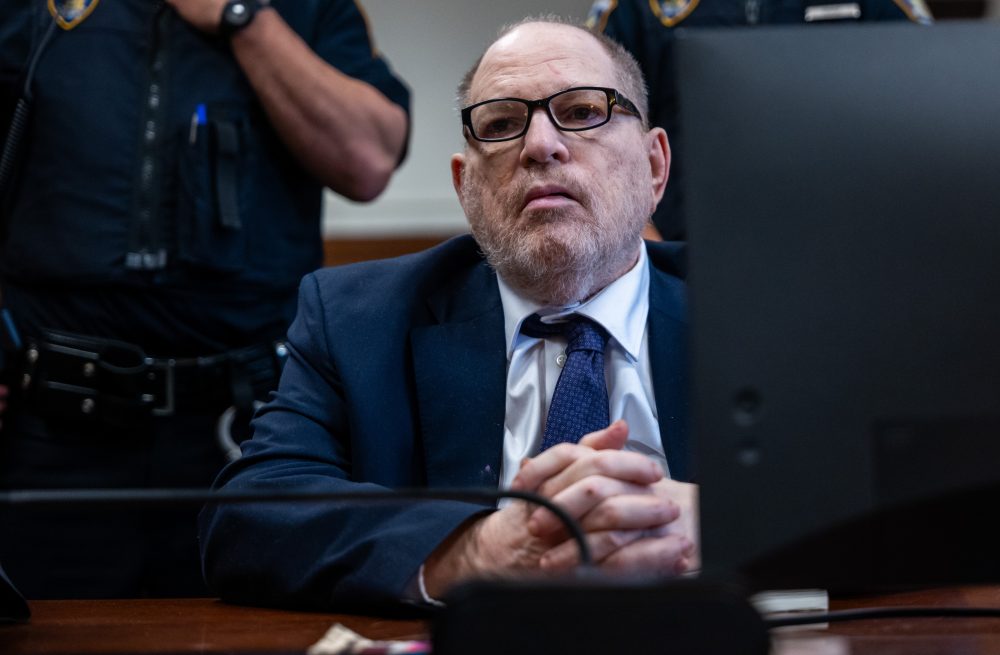
NEW YORK — Former movie mogul Harvey Weinstein appeared in a New York courtroom Thursday as jury deliberations continued in his rape retrial, one day after the disgraced producer complained of chest pain while at the courthouse.
The 74-year-old, who has dealt with cardiac issues and other medical problems, appeared wan but conscious as he entered the courtroom in his customary wheelchair. When asked about his condition, Weinstein responded that he felt “good, fine.”
The former film executive had been in a courthouse detention area Wednesday when jurors, following several hours of deliberations, requested to hear portions of accuser Jessica Mann’s testimony again and wanted to examine a detailed prosecution timeline containing emails and additional evidence.
While defense attorneys, prosecutors and Judge Curtis Farber met in court to determine their response, Weinstein’s lawyer Marc Agnifilo reported that court personnel had informed him his client was suffering from chest discomfort.
Weinstein remained absent from the courtroom at that time, and Farber decided to dismiss jurors early Wednesday, citing “unforeseen reasons” for the premature adjournment.
On Thursday, jurors received the materials they had requested before returning to their private deliberations, while Weinstein was escorted back to the detention area.
The testimony in question covered a moment that Agnifilo had emphasized during his closing statements: an instance when Mann described “spacing out” while a defense attorney questioned why she preferred that friends remain unaware of any sexual activity between herself and Weinstein. The defense team sought to imply she was concerned about her public image rather than addressing an alleged rape that Weinstein denies occurred.
Mann, age 40, testified that while she voluntarily engaged in some intimate encounters with the then-married film producer, he forced unwanted sexual contact on her in a Manhattan hotel room during March 2013 despite her repeated refusals.
Weinstein’s legal team argues the incident was consensual, pointing out that Mann continued meeting with Weinstein afterward and showed affection toward him. Mann explained she experienced conflicted emotions about him, herself, and the events that transpired.
Her perspective shifted in 2017 when multiple sexual misconduct claims against the Academy Award-winning Weinstein sparked the #MeToo movement demanding accountability for sexual impropriety, particularly from influential men. While Weinstein acknowledged he “acted wrongly,” he maintains he never attacked anyone.
Several of these allegations resulted in criminal convictions against Weinstein in both New York and California.
An appellate court reversed his 2020 New York conviction involving charges related to Mann and another complainant. During a retrial last year, jurors could not reach a decision regarding Mann’s case, necessitating this current retrial. Weinstein faces one charge of third-degree rape.
The present jury listened to almost three weeks of testimony, with Mann testifying for five days. Weinstein chose not to take the stand.
The Associated Press typically does not reveal the identities of individuals claiming sexual assault. However, Mann has consented to being identified publicly.
DOVER, DE – The Delaware Department of Correction has unveiled a comprehensive new publication designed to showcase the rehabilitative services available to inmates across the state system.
Officials announced the release of the Rehabilitative Programs & Activities Directory, a printed guide created specifically for families, community members, and policymakers who want to understand the scope of reentry preparation services.
According to the department, the correctional system operates numerous rehabilitation initiatives that incorporate proven methods for substance abuse treatment, academic education, job skills training, mental health services, and counseling support.
Virginia Farm Bureau members have access to valuable information through their complimentary quarterly publication subscriptions, which cover everything from seasonal cooking ideas and gardening advice to travel suggestions and lifestyle guidance.
Members can choose between two publications – Cultivate and Virginia Farm Bureau News – both of which explore Virginia’s agricultural landscape and daily life while providing updates on insurance matters, safety information, and membership perks. Annual membership dues cover the cost of either magazine subscription.
This month, associate members will find the spring edition of Cultivate in their mailboxes. The current issue features articles about Virginia’s growing flower industry, a natural compost mixture that improves soil quality and protects crops, scenic wedding venues that highlight farming heritage, advice for controlling invasive plant species, and strawberry cooking ideas for different tastes.
The publication also provides essential safety information, including important precautions for using utility terrain vehicles. Members can also discover how Farm Bureau’s around-the-clock roadside assistance program can provide crucial help during unexpected emergencies.
The next Cultivate issue will reach associate members in August, while producer members will receive their upcoming Virginia Farm Bureau News edition in September.
Both current and previous magazine editions are available for online viewing at issuu.com/virginiafarmbureau, and additional details about the publications can be found on the Farm Bureau’s website.
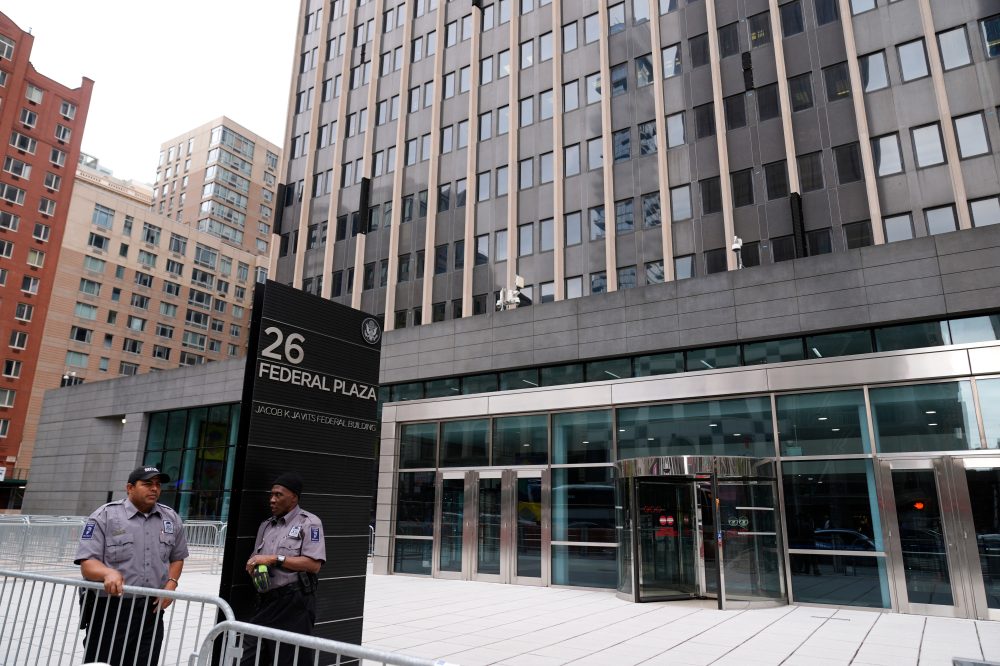
NEW YORK (AP) — A federal immigration courthouse in Lower Manhattan has become emblematic of the Trump administration’s deportation efforts in New York City, where federal agents have conducted disorderly and sometimes forceful detentions in corridors as immigrants exit their court proceedings.
The courthouse has now emerged as a central battleground in a completely different type of conflict: one of the city’s most intensely monitored congressional contests.
In the Democratic primary featuring sitting U.S. Rep. Dan Goldman against former city Comptroller Brad Lander — competing for a district so reliably Democratic that the June primary essentially determines the winner — both contenders have highlighted the Trump administration’s handling of immigrants at 26 Federal Plaza in their campaigns, though using markedly different strategies.
Goldman — who inherited wealth from the Levi Strauss denim empire and previously served as a prosecutor, acting as lead counsel during President Donald Trump’s initial impeachment — has tackled the issue with a legal-focused strategy that utilizes his congressional authority.
He filed lawsuits against the administration to force immigration detention facilities to allow congressional access, performs oversight inspections and transformed his office located across the street into what he describes as a triage center linking immigrants with advocacy organizations and legal assistance.
Following a recent inspection, Goldman attributed improvements in conditions at a detention facility within the building to his oversight efforts.
“What you see from our multipronged approach is the way that I push back, which is not performative, but it is substantive,” he told The Associated Press outside 26 Federal Plaza after touring the detention center that remains off-limits to the public.
In contrast, Lander — a progressive city government veteran who is campaigning with backing from Mayor Zohran Mamdani — has positioned himself as a demonstrator and court monitor, observing proceedings and trying to escort immigrants from the building past masked federal agents.
His activism has resulted in two arrests, with the most recent case scheduled for trial just days before the primary.
“I would characterize his oversight function as strongly worded letters,” Lander told AP regarding Goldman’s methods. “And my oversight function is: Show up with hundreds of your neighbors and bear witness and accompany people and demand access and stay until they give it to you or they arrest you.”
Lander’s initial arrest occurred last year when he locked arms with an individual that authorities were trying to apprehend in the corridor outside the courtroom. Lander was seeking the mayor’s office at that time, and the arrest energized his campaign during a period when Mamdani and former Gov. Andrew Cuomo were viewed as the leading candidates in the race.
Several months afterward, following his defeat in the mayoral primary but shortly before beginning his congressional bid, Lander faced arrest again during a major demonstration at the building and received a misdemeanor obstruction charge.
Rather than accepting a plea agreement that would have resolved the case within six months, Lander chose to proceed to trial. He argued the case would reveal information about the federal government’s immigration enforcement activities at the facility.
Goldman characterized Lander’s actions as performative.
“I don’t understand why someone would reject a dismissal of a case so that he can have a public trial, ostensibly to ask for information that I could provide him whenever he wanted because I have the answers from doing my oversight,” Goldman said.
This week, Lander visited 26 Federal Plaza again to observe hearings. However, just before entering the facility, his staff learned that federal agents were waiting outside an immigration hearing at a separate federal courtroom in a building across the street. He hurried over and eventually located the agents, who were wearing masks and standing around in the court’s waiting area.
“The challenge is trying to figure out who they’re going to arrest,” Lander said, stepping out of the hearing, where he had been seated in a back row taking notes. Eventually, the agents left the hearing room, walked down a corridor and departed the floor. Their reason for leaving remained unclear.
“Maybe we have different styles,” Lander said about his opponent after the agents left. He subsequently returned across the street and recorded a campaign video in front of 26 Federal Plaza.
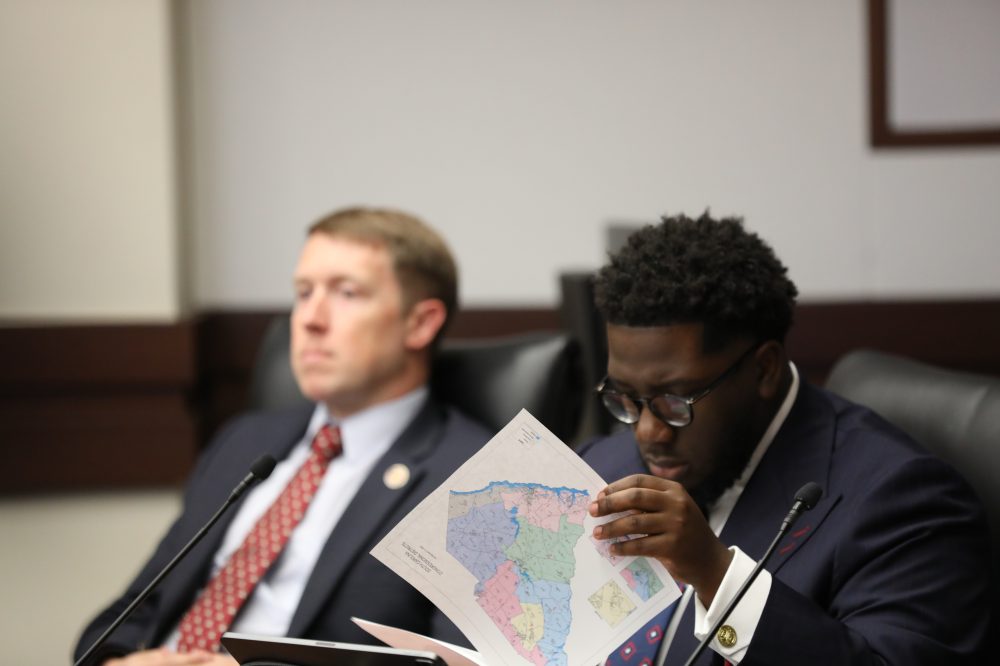
Louisiana state senators gathered Thursday to review a congressional redistricting proposal that would remove a majority-Black district, potentially giving Republicans an opportunity to secure another seat in November’s midterm elections. This comes just two weeks after the U.S. Supreme Court invalidated Louisiana’s current congressional map.
The Supreme Court decision has sparked widespread redistricting activities across Southern states as Republicans work to take advantage of a diminished federal Voting Rights Act. Unlike most voluntary redistricting efforts, Louisiana faces a mandatory requirement to redraw its U.S. House map following the court’s determination that it illegally used racial considerations to create a majority-Black district through gerrymandering.
As Louisiana debates new district boundaries, South Carolina’s governor is intensifying efforts to push lawmakers toward redistricting before the midterms. President Donald Trump has urged multiple Republican-controlled states to restructure House voting districts to benefit their party as they attempt to maintain control of the narrowly divided chamber this November.
Republican strategists believe they could secure up to 15 additional House seats across seven states that have already implemented new voting districts. Democratic leaders estimate they could gain as many as six seats from two different states due to new House district maps. However, these projected outcomes remain uncertain, with ongoing litigation in several states and voters ultimately determining election results.
The Louisiana legislation aims to resolve the Supreme Court ruling by eliminating a district that extends more than 200 miles (321 kilometers) northwest from Baton Rouge to Shreveport, forming a voting area with a Black majority. Democratic U.S. Rep. Cleo Fields currently serves the existing 6th District.
The proposed redistricting plan would reorganize that district to focus on predominantly white communities surrounding Baton Rouge and southern Louisiana.
The revised plan maintains a New Orleans-centered, majority-Black district represented by Democratic U.S. Rep. Troy Carter while incorporating part of Baton Rouge into that area.
Fields, who lives in Baton Rouge, indicated he will wait until maps are completed before deciding on reelection plans. However, he stated he would not run against Carter in a primary race.
The current House map proposal resembles one implemented in 2022 that led to five Republican victories and one Democratic win.
A federal judge invalidated the 2022 map for Voting Rights Act violations. Subsequently, in 2023, the U.S. Supreme Court mandated that Alabama establish a second congressional district with a largely Black population. Following the Alabama decision, Louisiana’s Legislature approved an updated map creating a second majority-Black district used in 2024 elections. That map faced legal challenges, resulting in an April 29 Supreme Court decision that Louisiana’s districts depended excessively on racial factors.
Republican Gov. Jeff Landry has delayed Louisiana’s U.S. House primaries from Saturday to either July 15 or a date the Legislature will determine, allowing time for new district implementation.
South Carolina House leadership expects to address legislation creating a new congressional map Friday after Republican Gov. Henry McMaster convenes a special session. The regular legislative session is set to conclude Thursday, but McMaster’s action would extend proceedings.
The House may need until next week to complete the redistricting legislation, which would also shift congressional primaries to August, according to Republican House Majority Leader Davey Hiott. Current primary elections are scheduled for June 9. Early voting starts May 26, likely establishing the redistricting completion deadline, he noted.
“The redistricting work will be long. It will be boring. It will be confrontational,” Hiott informed reporters.
Should the House approve the proposal, it moves to a more doubtful Senate, where Republican Judiciary Committee Chairman Luke Rankin stated he will “demand the process” without providing specifics. During the previous regular redistricting at the decade’s beginning, Rankin’s committee conducted month-long statewide meetings and invited public map submissions.
Currently, only one of South Carolina’s seven U.S. House seats belongs to a Democrat — longtime U.S. Rep. Jim Clyburn. Some Republicans question whether guaranteeing seven GOP districts is feasible in a state where Democratic presidential candidates have received over 40% of votes in every election this century. Additional concerns exist about conducting two statewide elections within slightly more than two months. South Carolina’s elections leader suggested it might require staff to work around the clock.
PROVIDENCE, R.I. — A federal court has halted the Trump administration’s broad request for private medical records of transgender youth from Rhode Island’s primary hospital offering gender-affirming treatment to minors.
U.S. District Judge Mary McElroy issued the Wednesday decision, marking another legal defeat for the Department of Justice after at least seven additional federal courts have moved to block or restrict the wide-ranging civil subpoenas issued to over 20 medical providers and hospitals last summer.
McElroy’s ruling reflected similar judicial concerns about the broad nature of the subpoenas, noting that while the Justice Department possesses “immense prosecutorial authority and discretion,” it can no longer be trusted to wield that power fairly and honestly.
“DOJ has proven unworthy of this trust at every point in this case,” McElroy wrote.
The Department of Justice was contacted for comment on Thursday via email.
The subpoenas required Rhode Island Hospital to surrender birth dates, Social Security numbers and home addresses of all patients who underwent transgender treatment during the previous five years. Additional demands included documentation of negative side effects in minor patients receiving gender-related treatment, evaluations used to justify prescribing puberty blockers or hormone therapy, plus patient intake paperwork and parental consent forms.
The Justice Department has consistently maintained that the requested information is necessary to probe potential fraud or improper off-label drug promotion. During recent Rhode Island court proceedings, the DOJ stated the investigation originates from the Northern District of Texas, where the chief judge had ordered Rhode Island Hospital’s compliance before McElroy’s ruling invalidated the subpoena.
Assistant U.S. Attorney Brantley Mayers informed McElroy during proceedings that the DOJ is examining possible “misbranding” of U.S. Food and Drug Administration-approved medications, including puberty blockers for youth. Though off-label prescribing remains legal, Mayers explained the DOJ suspects pharmaceutical companies may be offering “financial incentives” to Rhode Island physicians for prescribing these medications.
The subpoenas were essential for obtaining children’s and families’ identities to enable DOJ interviews.
McElroy dismissed this reasoning.
“The administration has publicly characterized gender-affirming care for minors as abuse, directed the DOJ to bring its practice to an end, and celebrated when hospitals curtailed such programs as a result of this subpoena campaign,” McElroy wrote.
The Rhode Island ruling represents the newest chapter in the battle over transgender youth medical records. This week, 11 families initiated a class-action lawsuit aimed at preventing the DOJ from accessing the documents. Filed in Maryland’s federal court, the lawsuit represents families with transgender children who received treatment from hospitals nationwide.
Additionally, a New York medical facility disclosed receiving a grand jury subpoena from federal prosecutors in Texas requesting data about children who underwent gender-affirming treatment and their medical providers.
NYU Langone became the first hospital system to publicly confirm receiving such a subpoena as part of a federal criminal probe. The institution revealed Tuesday it was among multiple facilities that received subpoenas from the Northern District of Texas on May 7, stating it was determining its response strategy.
Gender-affirming treatment encompasses various medical and mental health services supporting an individual’s gender identity, particularly when it differs from their birth-assigned sex. Services may include counseling, puberty-blocking medications, hormone therapy for physical changes, or surgical procedures to modify chest and genital areas, though surgeries are uncommon for minors.
Leading medical organizations emphasize the importance of treatment access for individuals with gender dysphoria and recognize gender as existing on a spectrum.
A minimum of 27 states have enacted legislation restricting or prohibiting such care for minors, while several others have implemented laws or policies safeguarding transgender healthcare access.
WASHINGTON — The nation’s highest court delivered a unanimous decision Thursday permitting a crash victim to proceed with his lawsuit against a leading logistics firm following a devastating highway accident that resulted in a partial leg amputation.
The justices sided with Shawn Montgomery, whose stationary car was struck by a speeding semi-truck on an Illinois roadway in 2017. Montgomery contends that C.H. Robinson, the nation’s top freight broker, bears responsibility for their part in allowing the driver to operate despite what he calls “serious red flags.”
While the logistics firm contests this claim, Thursday’s ruling from the high court does not ensure Montgomery will ultimately prevail in his case.
More than two dozen states supported Montgomery’s legal challenge, stating the matter would strengthen safety standards within an industry responsible for transporting billions of tons of cargo across countless miles annually. Opposition came from the Trump administration and corporations including Amazon, who warned against subjecting logistics firms to legal exposure under what they termed a “patchwork” of varying state regulations.
According to Montgomery’s legal team, the truck operator had previously received citations for reckless driving in an earlier collision just months before, while his employer had been connected to no fewer than three accidents within roughly five months. Montgomery’s legal action claims C.H. Robinson bears partial responsibility for contracting with the carrier despite these warning signs.
The logistics company maintained that Montgomery’s state-level lawsuit should be dismissed because freight brokers depend on federal oversight of carriers, with federal regulations taking precedence over state laws.
However, in a written decision by Justice Amy Coney Barrett, the Supreme Court rejected this argument. The court determined that Montgomery’s allegations qualify under a safety regulation exemption, allowing his case to proceed.
The ruling may lead to increased legal challenges and insurance expenses for freight brokers that could eventually “cascade through the economy” and cause higher consumer prices, Justice Brett Kavanaugh noted in a supporting opinion joined by Justice Samuel Alito.
Nevertheless, “truck safety is a matter of life and death,” Kavanaugh emphasized.
The decision reversed an earlier ruling by a Chicago-area appellate court that had favored C.H. Robinson, which operates from Eden Prairie, Minnesota.
A diverse group of talented competitors, from working professionals to skilled animals, will take center stage at The Meadow Event Park in Caroline County throughout this month.
Attendees can observe the impressive abilities of the country’s top electrical lineworkers during the 22nd Annual Gaff-n-Go Rodeo and Expo scheduled for May 15-16. These essential workers will demonstrate their professional expertise through demanding competitions that mirror their daily job responsibilities. Additional details are available on the Gaff-n-Go website.
The Virginia Quarter Horse Association will present the Virginia National Stock Horse Show from May 15-17. More information can be found on the VQHA website.
Canine competitors of various breeds and sizes will be featured during the B.O.B. Cluster AKC Dog Show May 22-24. This event will include participants from multiple organizations: the Mid-Atlantic Non-Sporting Club of Virginia, Mid-Atlantic Herding Group Club of Maryland, Mid-Atlantic Working Group Club of Maryland, Sporting Dog Club of Virginia, Virginia Toy Club and Old Dominion Pug Club.
Young competitors will take the spotlight during the energetic Virginia High School Rodeo Association State Finals on May 22-23. Additional information is available on the VHSRA website.
Arabian and half-Arabian horses will compete in multiple disciplines during the Virginia Arabian Horse Show May 29-31, including dressage, sport horse, pleasure and trail events. Those seeking more details can call 540-898-3522 or check the Virginia Arabian Horse Association website or Facebook page.
The month concludes with the Chesapeake Kennel Club of Maryland event on May 30-31.
Those interested in staying informed about upcoming activities at The Meadow Event Park can sign up for monthly email updates.
A highly-rated quarterback at Vanderbilt University has landed an unconventional NIL agreement that features an appearance in a Hollywood film, according to recent reports.
Jared Curtis, a five-star recruit, was given a part in the movie “The Breadwinner” by comedian and devoted Commodores fan Nate Bargatze, as reported by OutKick. The quarterback’s scene involves shopping for a vehicle while wearing Vanderbilt baseball headwear.
The comedian presented his unusual recruitment offer to Curtis during a live broadcast of ESPN’s “College GameDay” in the previous season.
Curtis changed his college commitment from Georgia to his local Commodores in December, making him the most highly-ranked recruit the program has ever secured.
According to 247 Sports composite rankings for the Class of 2026, Curtis held the No. 4 position among all prospects and ranked as the No. 2 quarterback. The 6-foot-4, 225-pound player competed at Nashville Christian, accumulating close to 10,000 passing yards and over 2,000 rushing yards during his four seasons as the starting quarterback.
New York Giants officials express confidence that wide receiver Malik Nabers will be ready for the team’s season opener despite undergoing a second procedure on his right knee, according to Thursday reports from ESPN.
Following his ACL injury in September, Nabers underwent an additional “cleanup” surgery during the offseason to address scar tissue buildup that was creating stiffness in the joint, the report indicated.
The Giants and new head coach John Harbaugh are scheduled to kick off their season at home on Sept. 13 when they face the Dallas Cowboys on “Sunday Night Football.”
The 22-year-old receiver, whose initial surgery took place on Oct. 28, revealed to ESPN in February that his original procedure also included a complete meniscus repair.
During last season’s abbreviated campaign, Nabers recorded 18 receptions for 271 yards and two touchdowns across four games. His rookie year in 2024 earned him Pro Bowl recognition after posting 109 catches for 1,204 yards and seven touchdowns in 15 contests as a first-round draft selection.
The Giants have significantly restructured their receiving corps during the offseason. The team saw Wan’Dale Robinson depart for the Tennessee Titans through free agency while bringing in Darnell Mooney and Calvin Austin III, and selecting Malachi Fields in the third round of the draft. Veteran Odell Beckham Jr. has participated in workouts with the organization in recent weeks.
A professional golfer from South Africa faced an early setback at the PGA Championship on Thursday morning when he was hit with a two-stroke penalty for failing to arrive on time for his opening round tee time in Newtown Square, Pennsylvania.
The 27-year-old Garrick Higgo was supposed to begin play at 7:18 a.m. at Aronimink Golf Club, where he was paired with Michael Brennan and Shaun Micheel for the round.
The penalty resulted in Higgo recording a double bogey on the first hole, which is a par-4. However, he managed to bounce back with birdies on the third and ninth holes, allowing him to reach the turn at even par for the round.
Currently ranked 85th in the world, Higgo has claimed victory twice on the PGA Tour during his professional career. This marks his fourth time competing in the PGA Championship, as he continues seeking his first top-40 result in any major tournament.
A federal court case that could determine OpenAI’s future reaches its conclusion Thursday as attorneys for Elon Musk prepare final arguments to persuade jurors that the artificial intelligence company’s executives violated their duty by converting the organization into a profit-making enterprise.
Final statements are set to begin in Oakland, California federal court for Musk’s legal action against OpenAI and CEO Sam Altman.
The billionaire entrepreneur has filed suit against OpenAI and Altman on grounds of charitable trust violations and unjust enrichment, claiming they engaged in “stealing a charity” by abandoning OpenAI’s original purpose of developing secure AI technology for humanity’s benefit.
The world’s wealthiest individual alleges that OpenAI’s leadership deceived him into contributing $38 million, then secretly established a commercial division alongside the original nonprofit structure while securing tens of billions in funding from Microsoft and other backers for expansion.
OpenAI maintains that operating as a for-profit company makes the organization more effective, with the nonprofit maintaining ownership shares in the corporation, and contends that Musk’s real desire was organizational control.
Musk demands approximately $150 billion in compensation from OpenAI and Microsoft, with funds directed to OpenAI’s nonprofit arm to advance charitable objectives. He additionally seeks removal of Altman and OpenAI President Greg Brockman from leadership positions. Microsoft has invested over $100 billion in its OpenAI partnership, according to company executive testimony.
OpenAI faces competition from AI firms including Anthropic and Musk’s smaller xAI venture, while considering a potential public stock offering that could reach $1 trillion in valuation.
Musk’s xAI operation now operates under his aerospace company SpaceX, which is also exploring a major public offering.
U.S. District Judge Yvonne Gonzalez Rogers presides over the proceedings.
The timing for the nine-member jury’s deliberation remains uncertain.
Should no decision emerge before Monday, the judge and legal teams will reconvene to address potential OpenAI restructuring and damage awards if Musk prevails.
Gonzalez Rogers will decide on remedies and will grant nothing if Musk’s case fails.
The proceedings occur during widespread public anxiety about AI integration into daily life.
Individuals employ AI for numerous applications including facial recognition, financial guidance, news reporting, medical assessment, and dangerous deepfake creation. Many express skepticism about the technology and fear potential job displacement.
The authenticity of both Altman’s and Musk’s stated positions regarding OpenAI and AI industry objectives has been a key trial focus, with both figures facing scrutiny.
Altman, Musk and others established OpenAI in 2015, though Musk departed the board in 2018.
OpenAI has attempted to demonstrate that Musk himself endorsed creating a for-profit division to secure funding for computational resources and compete with rivals like Google.
The company also claims Musk demanded exclusive control as a condition for continued backing. Musk’s 2023 attempt to acquire OpenAI through an xAI-led group has become another disputed issue, with OpenAI arguing it contradicts Musk’s lawsuit claims.
Musk’s legal team has worked to characterize Altman and Brockman as motivated by personal financial gain.
They presented evidence showing Altman held over $2 billion in stakes within companies conducting OpenAI business, while Brockman stated his OpenAI holdings were valued near $30 billion.
Musk’s attorneys have also depicted Altman as untrustworthy, referencing his 2023 removal by OpenAI’s board over candor concerns. Altman returned to his position within a week.
Former OpenAI Chief Scientist Ilya Sutskever provided testimony about collecting proof of Altman’s “consistent pattern of lying.”
Musk’s attorney also raised questions about potential conflicts of interest through Altman’s connections to OpenAI business partners.
Altman stated he holds no direct ownership in OpenAI, though he maintains investment in a fund with company stakes.
This May brings National Strawberry Month, offering numerous ways to enjoy the season’s delicious harvest.
The nationwide celebration holds regional importance, coinciding with Virginia’s prime strawberry season. The state hosts strawberry cultivation across 231 farming operations covering 277 acres, data from the U.S. Census of Agriculture shows.
Beyond their delicious flavor and economic importance, strawberries offer significant nutritional value. The fruit provides high levels of vitamin C, serves as an excellent fiber source, and includes carotenoids and flavonoids that may promote good health, Virginia Cooperative Extension reports.
Though tasty by themselves, strawberries enhance numerous springtime desserts—ranging from fizzy homemade beverages to colorful seasonal pastries.
Berry enthusiasts can back regional farmers while enjoying the plentiful, juicy harvest through pick-your-own locations, farmers markets and roadside stands throughout Virginia.
The Virginia Grown website helps locate fresh strawberries in your area.
Homemade Strawberry Soda
1½ cups water 2 tablespoons sugar 2 cups strawberries, cleaned and pureed 2 tablespoons lemon juice 5 cups sparkling water ice
Using a saucepan, heat water and sugar until boiling, stirring until sugar completely dissolves. Take off heat and let cool for 20 minutes. Using a mixing bowl, blend pureed strawberries with lemon juice.
Using a serving pitcher, mix the syrup with the strawberry blend. Add ice and stir.
For serving, divide the strawberry blend among four glasses and add equal amounts of sparkling water to each. Gently stir to blend.
—Recipe courtesy of Virginia Cooperative Extension.
Strawberry Pie
9″ unbaked pastry pie crust, or dough fitted to your own pie dish 1¼ cups white sugar, divided, or more as needed 1¼ cups all-purpose flour, divided 6 tablespoons unsalted butter, plus more for dotting on top 1 pinch ground nutmeg 4 cups fresh strawberries, hulled 1 tablespoon cornstarch
Preheat oven to 400°.
Position a drip pan on the bottom oven rack to collect pie drippings.
Fit pie crust into a 9″ pie pan. Using a medium bowl, blend ¾ cup sugar, ¾ cup flour, 6 tablespoons butter and nutmeg. Combine with a pastry blender or hands until mixture becomes crumbly. Reserve for later use.
Using a large bowl, toss strawberries with remaining ½ cup sugar, remaining ½ cup flour and cornstarch. Gently stir strawberries until evenly coated, taking care not to damage the berries.
Transfer strawberries to the prepared pie shell, creating a mound in the center since berries will settle during baking. Top strawberries with the crumb mixture; add approximately 15 small butter pieces. Shield pie crust edges with foil to avoid burning.
Bake for 20 minutes, then lower temperature to 375°, and continue baking 40 additional minutes. During the final 10 minutes of baking, add a light sprinkling of extra sugar over the crumb topping, then complete baking.
—Recipe prepared by Chef Tammy Brawley onReal Virginia, Virginia Farm Bureau’s weekly television program.
Dover Police have issued their most recent registry notifications under Megan’s Law for individuals required to register as sex offenders within the city limits.
The notifications include updated information and photographs of registered offenders currently living in Dover. These public notifications are part of the ongoing community safety requirements under Megan’s Law.
Residents who have questions or concerns about these notifications are encouraged to reach out to the Dover Police Sex Offender Enforcement Unit for assistance.
The department has made the notification documents available to the public as part of their commitment to keeping the community informed about registered sex offenders in their area.
Yemen’s internationally recognized government and the Iran-backed Houthi rebel group have agreed to swap more than 1,600 prisoners in what represents the war’s most extensive detainee exchange to date, according to the United Nations special envoy’s office announced Thursday.
The fighting began when Houthi forces took control of the capital city Sanaa in 2014, leading to a Saudi-led coalition military campaign backing the government in 2015.
According to Houthi official Abdulqader al-Mortada’s statement on X, the rebel group will free 580 detainees, including seven from Saudi Arabia and 20 from Sudan, while the government will release 1,100 Houthi captives.
Both parties have committed to conducting future discussions about releasing additional prisoners and permitting reciprocal visits to detention centers. They have also established an implementation framework with the International Committee of the Red Cross to execute the prisoner release.
“The agreement includes the release of a number of coalition forces personnel, members of the armed forces and security services, fighters from various military formations and the popular resistance, as well as politicians and journalists who spent years in Houthi detention,” said Yahya Kazman, who leads the government’s negotiating team, in a post on X.
This agreement comes after 14 weeks of talks conducted in Amman, stemming from a December accord reached by both sides following United Nations-mediated discussions in Muscat, the Omani capital.
“The issue of prisoners remains at the forefront of our priorities,” stated Mahdi al-Mashat, who heads the Houthis’ Supreme Political Council, calling the agreement “a historic accomplishment.”
In April 2023, both sides conducted a significant prisoner exchange involving nearly 900 individuals, which was facilitated by the International Committee of the Red Cross.
The ongoing conflict has resulted in tens of thousands of deaths and created one of the globe’s most severe humanitarian disasters.
Delaware’s students are demonstrating notable progress in their academic recovery following pandemic-related learning disruptions, according to a newly released national study.
The Education Scorecard report positions Delaware among the top performers nationally, with the state securing 4th place out of 38 states for mathematics improvement and claiming 14th position for reading advancement.
Despite these encouraging rankings, state education officials are highlighting the continued urgency surrounding literacy development and the long-term educational outcomes for students across Delaware.
The findings indicate that while meaningful progress is being made in helping students regain lost ground, achievement levels have not yet returned to pre-pandemic benchmarks, creating ongoing challenges for educators and policymakers throughout the state.
JERUSALEM (AP) — The ancient city of Jerusalem was preparing Thursday for the arrival of tens of thousands of ultranationalist Jewish participants in an annual procession through Palestinian neighborhoods in the Old City, an event that has historically featured racist chanting and violent incidents.
The demonstration marks Jerusalem Day, celebrating Israel’s seizure of east Jerusalem during the 1967 Middle East conflict, including the Old City and religious sites held sacred by Jewish, Christian and Muslim faiths. The same march triggered an 11-day conflict in Gaza four years earlier.
The event occurs as Israel’s far-right administration, which includes settler leaders in important roles, approaches upcoming elections and seeks to energize its political supporters.
Earlier Thursday, far-right National Security Minister Itamar Ben Gvir made a provocative appearance at Jerusalem’s most contentious religious location, home to the Al-Aqsa Mosque, Islam’s third most sacred site. The location is known to Jews as the Temple Mount, site of ancient biblical temples and Judaism’s most holy place. The appearance risked escalating tensions already high in the city following two and a half years of nearly continuous warfare and unstable truces.
During his Thursday appearance, Ben Gvir displayed an Israeli flag while singing and declaring “the Temple Mount is in our hands,” echoing the renowned words of an Israeli paratrooper commander from 1967 who announced Israeli control over sections of the Old City during intense combat.
Ben-Gvir has made repeated appearances at the disputed Jerusalem hilltop location during tense periods.
The parade frequently results in violent clashes between ultranationalists and Palestinian inhabitants of the Old City. Previous events have featured crowds shouting phrases such as “Death to Arabs” and “May your villages burn.”
The procession path goes straight through the Muslim Quarter of the Old City, beginning at Damascus Gate and continuing down a marketplace normally filled with Palestinian shoppers. Early Thursday morning found the street deserted, as Palestinian families stayed indoors while merchants secured their businesses with heavy locks, shutting down early for protection.
Fighting erupted when groups of young participants entered the Old City ahead of the official march, meeting Palestinians in the Christian quarter. Chairs were thrown between the groups. Members of Standing Together, an Israeli-Palestinian peace organization, intervened to halt the confrontation, according to video shared by the group.
“When we put our bodies on the line, it oftentimes reduces the violence because settlers are less willing to attack when there are Jews there or when we document what’s going on,” said Ori Shaham, the group’s international spokesperson.
Tag Meir, another organization opposing extremist Jewish violence, conducted their yearly “flower march” before the crowds arrived, distributing flowers to merchants before they closed early.
Jerusalem Police created a restricted area for media coverage of the event. During previous marches, crowds have attacked journalists.
Jerusalem remains central to the Israeli-Palestinian dispute. Both sides view the city as essential to their national and religious heritage. It represents one of the most difficult aspects of the conflict and frequently becomes a source of tension.
Israel views all of Jerusalem as its eternal, unified capital. The international community does not recognize its annexation of east Jerusalem. Palestinians seek an independent nation with east Jerusalem as their capital.
MARMARIS, Turkey — A fleet of more than 50 vessels carrying humanitarian aid and activists set sail Thursday from Turkey’s Mediterranean coastline, marking another effort to challenge Israel’s maritime blockade of Gaza following the recent interception of a similar convoy.
The departure from Marmaris port represents what organizers of the Global Sumud Flotilla called the concluding phase of their mission to reach Gaza’s coastline, with nearly 500 activists from 45 nations participating in the initiative.
The new attempt comes just weeks after Israeli military forces stopped more than 20 boats from an earlier flotilla near the southern Greek island of Crete on April 30, initially detaining approximately 175 activists. The confrontation sparked international criticism and diplomatic protests, while raising legal questions about blockade enforcement in international maritime zones. Israeli officials justified the early intervention by citing the substantial number of vessels involved.
Two activists from the April incident — Spanish-Swedish citizen of Palestinian origin Saif Abukeshek and Brazilian citizen Thiago Ávila — were taken to Israel for questioning and held for multiple days. The detained individuals alleged they suffered torture during their captivity. Both Brazil and Spain denounced Israel for what they termed the “kidnapping” of their nationals. The pair was expelled from Israel on Sunday.
According to organizers, the current mission includes vessels that regrouped following the earlier Israeli intervention, supplemented by additional boats that joined the effort.
The flotilla aims to spotlight the humanitarian situation facing Palestinians in Gaza, an area devastated by the ongoing Israel-Hamas conflict. Gaza’s Health Ministry reports that 72,744 Palestinians have died since the war erupted following the Hamas-led assault on southern Israel on Oct. 7, 2023, which resulted in approximately 1,200 deaths and 251 hostages taken. The ministry, operating under Hamas governance, keeps comprehensive casualty documentation that U.N. agencies and independent analysts consider generally credible, though it doesn’t distinguish between civilian and militant casualties.
A tenuous ceasefire that began six months ago has paused the most severe combat between Israeli troops and Hamas-led fighters. However, roughly 2 million Gaza inhabitants continue living amid destruction with inadequate food and medical supplies, receiving only restricted aid through one Israeli-monitored border crossing.
Both Israel and Egypt have maintained different levels of restrictions on Gaza since Hamas took control from opposing Palestinian factions in 2007. Israel justifies the blockade as necessary to stop Hamas from acquiring weapons, while opponents characterize it as collective punishment against Gaza’s civilian population.
Israeli authorities prevented a comparable effort last year involving approximately 50 boats and some 500 activists, including Swedish climate campaigner Greta Thunberg, Nelson Mandela’s grandson Mandla Mandela and multiple European lawmakers.
Israel detained and subsequently expelled those participants, who alleged mistreatment by Israeli authorities. Israeli officials rejected these claims.
Earlier attempts to breach the maritime restrictions have similarly been unsuccessful. In 2010, Israeli special forces boarded the Turkish vessel Mavi Marmara during an aid convoy’s Gaza mission, resulting in the deaths of nine Turkish nationals and one Turkish-American passenger. The most recent successful activist vessel to reach the territory occurred in 2008.
ATHENS, Greece — Greek authorities have activated a new biometric identification system for travelers from outside the European Union at the nation’s airports, dismissing claims that British visitors would receive a formal exemption during the summer months. However, airport officials indicate the scanners may be temporarily disabled during busy periods.
“We have not received any further update or clarification as to whether, for example, specific nationalities are temporarily exempt from the relevant procedure,” the Foreign Ministry said Thursday in response to a question from The Associated Press.
The European Union’s Entry-Exit System, known as EES, launched at Greek airports and border crossings on April 10 during a continent-wide implementation. The technology substitutes traditional passport stamps with biometric information gathered through facial photography and electronic fingerprinting.
Greek representatives visiting the United Kingdom had previously indicated the biometric requirements might be suspended this summer for British tourists, who represent a crucial segment of Greece’s travel sector.
Present travel advisories from the U.K. Foreign Office indicate: “Greek authorities have indicated that they will not collect biometric data (fingerprints and photos) for UK travelers as part of EES. Follow the advice of authorities on the ground.”
However, European and Greek officials subsequently explained that halting the system is only authorized during times of heavy passenger volume at particular border locations and does not exempt any specific nation or citizenship.
Despite official statements, numerous travelers will likely continue passing through airports without undergoing the new biometric procedures, since EU regulations permit temporary halts during the initial implementation phase.
Greek police recently characterized the electronic entry system as operating at “full operation,” while noting they would implement “all necessary measures to ensure the smooth flow of visitors … making full use of provisions in (European) Union legislation.”
Tourism industry operators worry that enhanced airport screening procedures might deter travel from the United Kingdom — particularly last-minute reservations — to European Union destinations and increase the advantage enjoyed by EU citizens, who can travel throughout the bloc without passport verification.
Greece welcomed almost 38 million tourists last year, who contributed 23 billion euros ($25 billion) to the nation’s 204 billion-euro economic output.
German visitors topped the list at nearly 6 million, with British travelers ranking second at 4.9 million.
Starting this Friday, May 15, motorists visiting the City of Rehoboth Beach will need to pay for parking as the seasonal fee period begins, continuing through September 15. Costs remain unchanged from previous years, with visitors able to choose between meter payments, the ParkMobile application, or purchasing permits.
Essential Parking Guidelines:
All angled parking spaces require head-in positioning, while parallel parking must follow traffic flow direction. When using meters or the ParkMobile system, drivers must enter complete license plate information, including all letters and numbers such as the PC designation found on Delaware plates.
Meter Payment Details:
Parking meters operate from 10 am through 10 pm every day, charging $4 per hour as in past seasons. Drivers can pay using cash or cards at the meter itself or through the ParkMobile application. The meter system operates by zones rather than individual spaces, with zone markings displayed on meters and within the mobile app. Even 30-minute parking areas require payment.
Mobile App Guidelines:
First-time visitors should download the ParkMobile app before arriving. Users need to store their vehicle and complete license plate details in the system, ensuring they select the correct vehicle if multiple are saved. The app allows time extensions without returning to the parked car.
Permit Information:
Parking permits are valid from 10 am to 5 pm daily and come in various options: daily, weekly, weekend, seasonal, and scooter permits. Permits are available at the Parking Building or kiosks located at 409 Rehoboth Ave and the 700 block of Bayard Ave. However, permits cannot be used in metered spaces, which still require meter payment.
Parking Facility Details:
The Convention Center parking lot serves as the city’s only municipal lot, where drivers use the central meter or ParkMobile app. Other lots operate independently from the city and don’t accept ParkMobile, meaning parking violations in those areas fall outside city jurisdiction.
New Bandstand Area Rules:
This season introduces changes to the Bandstand Horseshoe parking zone. Meters in this area will require payment from 10:00am to 6:00pm, with payment restrictions after 6:00pm. These modified hours apply on Fridays, Saturdays, and Sundays from Memorial Day through Labor Day, specifically when concerts are scheduled. The area maintains designated lanes for DART and Jolley Trolley services, plus one lane for handicap drop-off and ride-sharing services.
Finding Permit vs. Meter Zones:
The city’s parking map, accessible on their website, shows metered zones highlighted in orange. All remaining streets are designated for permit parking.
Additional Beach Rules:
Coinciding with the parking season start, dogs are prohibited on the beach and boardwalk beginning Friday. Bicycle access on the boardwalk is restricted to 5:00am through 10:00am only.
A specialized emergency services training session will take place at the Fire Training Center this Thursday afternoon.
The training event, identified as “Emergency Services – Katy,” is scheduled to run from 1:00 pm to 3:00 pm on May 14, 2026.
The two-hour session represents part of ongoing emergency preparedness efforts at the facility. Additional details about the specific training components or participants were not immediately available.
Emergency responders will participate in a training exercise scheduled for Wednesday, May 20, 2026, according to information posted by Worcester County.
The training session will run from 1:00 pm to 3:00 pm at the Fire Training Center. The event was posted on the county’s website on Thursday, May 14, 2026.
No additional details about the specific type of emergency services training or participating agencies were provided in the announcement.
The city of Warsaw documented its first same-sex marriage Thursday, following through on European court decisions that mandate Poland acknowledge same-sex unions performed in other European Union member states.
The EU’s top court ruled in November that Poland must recognize same-sex marriages conducted in other EU nations, despite Polish domestic law currently prohibiting such unions. Poland’s Supreme Administrative Court referenced that decision in March when directing officials to acknowledge a German marriage between two Polish men.
“This morning we issued the first transcription of a marriage certificate for a same-sex couple, in accordance with the court rulings,” Warsaw Mayor Rafał Trzaskowski announced.
The mayor additionally pledged that his city would actively acknowledge other Polish same-sex marriages performed elsewhere in the EU without requiring individual court orders.
Prime Minister Donald Tusk stated Tuesday that his administration would work to carry out the court decisions quickly, and spoke directly to same-sex couples, saying he was sorry “to all those who, for many years, felt rejected and humiliated.”
Tusk urged Polish officials, regardless of their personal views, “to respect the dignity of each individual and to remember that these people live around us, among us, near us, and that they deserve the same feelings of respect, dignity and love as any other person.”
LGBTQ+ advocates have spent decades pushing for equal treatment in Poland, where same-sex marriage and civil partnerships remain prohibited. The court decisions do not require Poland to make same-sex marriage legal domestically.
Tusk’s administration took office promising to authorize civil unions for same-sex couples. However, opposition from conservative members within his governing coalition and resistance from President Karol Nawrocki, a devout Catholic, have blocked those initiatives.
WASHINGTON (AP) — Federal prosecutors have filed a lawsuit accusing the District of Columbia Bar of politically motivated attacks on former Trump administration attorneys through its disciplinary proceedings.
Wednesday’s federal court filing directly confronts the authority of the organization responsible for regulating attorney conduct in Washington, where multiple high-profile cases involving Trump-connected lawyers are underway.
“The D.C. Bar will no longer be permitted to probe sensitive executive branch deliberations and target executive branch officials with whom they happen to politically disagree, and federal attorneys will once again be free to share their candid legal advice with their bosses and colleagues,” Associate Attorney General Stanley Woodward, a top Justice Department official, said in a statement.
The legal action was submitted in Washington’s federal courthouse. Representatives from the D.C. Bar’s Board on Professional Responsibility did not immediately respond to requests for comment.
The case primarily focuses on disciplinary proceedings involving Jeffrey Clark, a high-ranking attorney in the first Trump administration Justice Department who played a significant role in legal attempts to overturn the 2020 election results that President Donald Trump lost to Democrat Joe Biden.
Last year, a disciplinary board suggested Clark should lose his legal license, but the current lawsuit aims to halt those proceedings, describing them as “unlawful” and influenced by political considerations.
Clark, who has maintained his innocence, praised the lawsuit on X Wednesday night, stating, “This is an important step to vindicate the separation of powers.”
To support allegations of prejudice in the disciplinary system, the Justice Department claimed that bar officials showed greater leniency toward former FBI attorney Kevin Clinesmith, who admitted guilt for altering an email during the probe into connections between Russia and Trump’s 2016 campaign, compared to their treatment of Clark.
The legal filing also defends Ed Martin, a strong Trump supporter who currently holds the position of Justice Department pardon attorney. In March, the Office of Disciplinary Counsel charged Martin with professional misconduct over a threatening communication he sent to Georgetown Law School’s dean while serving as the top federal prosecutor for Washington last year.
During his tenure as interim U.S. Attorney for the District of Columbia, Martin cautioned the Georgetown dean that his office would cease hiring graduates from the private institution unless it eliminated diversity, equity and inclusion programs.
Last week, the Justice Department submitted what’s called a statement of interest supporting Martin, who had previously criticized “uneven behavior” in the disciplinary system.
As National Fresh Fruits and Vegetables Month arrives in June, highlighting the importance of fresh produce, seasonal farmers markets are reopening their doors to welcome back customers.
These outdoor markets, set up in town centers, parking areas, and roadside locations, attract buyers with locally cultivated fruits and vegetables, meat products, and artisan-crafted items, creating direct connections between producers and customers.
Page County has introduced a fresh open-air market in downtown Luray’s center, providing residents the opportunity to purchase seasonal produce while engaging with area farmers.
“The goal is to help support Page County agriculture,” said Susan Corbett, chair of the Page County Farm Bureau Women’s Leadership Committee. “We’re trying to help stimulate farming, encourage small farmers and have a place for their products to go.”
After identifying the region’s need for a reliable outdoor market, Corbett and her team of five volunteers initiated this project to give farmers a dependable venue for sales while promoting increased local farming. Throughout Virginia, multiple county Farm Bureaus sponsor and assist their community farmers markets, advancing regional agriculture and linking consumers with local growers.
During Saturday market hours, customers will find an array of items including fresh leafy vegetables, tomatoes, cucumbers, peppers, and squash, alongside regional meats, farm-fresh eggs, wine, bread, and pastries. Sellers will also provide enhanced products such as pickles, preserves, handcrafted soaps, and healing balms.
Farmers markets provide benefits beyond serving local residents by helping producers expand their customer base outside the immediate area.
“A lot of people come to Luray for the caverns and cabins,” Corbett said. “And many will come into town for breakfast or to shop. People love to take home local products.”
The Goochland County Farmers Market drew more than 600 visitors to its Tuesday evening opening. Supported by Goochland County Farm Bureau, this market features approximately 25 to 30 farmers, artisans, and craftspeople weekly.
“It was a huge turnout, and many of our vendors sold out of products,” said Angelia Miller, assistant director of Goochland County Parks & Recreation. She mentioned that the county recently surveyed residents about local parks and recreational preferences, with a farmers market ranking as the top request.
“It’s rewarding to see the community show up for something they explicitly asked for and value,” she commented.
Along with a broader “variety of local products,” live entertainment, and a “kids’ zone,” the market improves food accessibility by accepting Supplemental Nutrition Assistance Program benefits. Numerous farmers markets also join Virginia Fresh Match, an initiative that doubles the value of SNAP dollars used at participating farmers markets and stores, increasing recipients’ purchasing power for fresh fruits and vegetables.
To locate a farmers market in your area, visit vdacs.virginia.gov/vagrown or vafma.org/virginia-markets.
Media: Contact Corbett at 803-609-6343 or Miller at 804-556-5854.
Farm owners across the country have the opportunity to enter their hardworking canines in a national competition celebrating the valuable contributions dogs make to agricultural operations.
The American Farm Bureau Federation, working alongside Nestlé Purina PetCare, is accepting entries for their 2027 Farm Bureau Farm Dog of the Year competition. The contest recognizes the many ways dogs support farmers and ranchers in their daily operations.
“Farm dogs are often important partners in our daily work as well as wonderful companions for farm families,” said AFBF President Zippy Duvall. “As we saw with our 2026 winner, Max, these loyal companions go above and beyond to look after both the land and the farm families they work alongside.”
Agricultural dogs perform numerous duties including herding animals, protecting livestock from threats, retrieving equipment, and welcoming farm visitors. Beyond their work responsibilities, these animals provide crucial emotional comfort during the challenging aspects of farming life.
Studies conducted jointly by Mayo Clinic and Purina show that pet interaction offers significant health advantages. Researchers found that just 20 minutes spent with a dog boosts hormones that help manage stress levels, while also reducing heart rate and improving overall feelings of wellness.
“We are honored to continue supporting the hard-working, devoted farm dogs featured in the American Farm Bureau’s Farm Dog of the Year contest,” said Jack Scott, vice president of sustainable sourcing at Purina. “Purina proudly uses nutritious ingredients sourced from American farms to make our pet food, and we remain committed to supporting American farmers who have fed generations of people and pets.”
Contest judges will evaluate dogs based on their usefulness to farming families, their playful nature, and how well they follow commands.
The top prize includes $5,000 cash and enough Purina Pro Plan dog food to last one year. The champion will be honored during an awards presentation at the AFBF Annual Convention taking place in Charlotte, North Carolina, this coming January.
Additionally, the 2027 winner will be showcased in a professional video production.
The competition also features a People’s Choice Pup category, where the public can vote on social media for their favorite nominated dog starting in September. This popular vote winner receives $2,500 from Purina along with recognition.
Entry deadline for Farm Dog of the Year submissions is July 11, 2026. Only Farm Bureau members are eligible to nominate their dogs for the competition.
Media inquiries can be directed to Mike Tomko, AFBF director of communications, at 202-406-3642.
WASHINGTON—While shoppers face higher costs at supermarkets and dining establishments, agricultural producers are earning a diminishing portion of each dollar spent on food, new research from the American Farm Bureau Federation reveals.
The organization’s Market Intel study discovered that farmers and ranchers collected only 5.8 cents from every food dollar spent by consumers in 2024, dropping from 5.9 cents in the prior year. This calculation represents the producer’s portion after deducting operational costs.
Plant producers experienced a decrease from 2.9 to 2.5 cents, whereas animal agriculture operators witnessed a modest rise from 3 to 3.3 cents. The uptick for livestock operations stems from reduced herd sizes, which drives up cattle values. In contrast, plant farmers continue battling record-low commodity values while facing escalating costs for necessities such as fuel and fertilizer.
These results underscore the mounting economic challenges confronting numerous agricultural operations, despite persistent high food costs for shoppers.
“America’s farmers and ranchers are the backbone of our country’s food system, yet they only see a small share of the total food dollar,” said AFBF President Zippy Duvall. “While prices may be up at the grocery store, most farmers’ paychecks are shrinking. Even modest swings in commodity prices or increases in expenses can quickly strain farmers’ finances to the breaking point. This imbalance must be corrected to create a brighter future for U.S. agriculture. The only alternative is reliance on other countries to feed America’s families.”
The organization’s analysis draws from USDA Economic Research Service Food Dollar Series information, which monitors how consumer spending flows through the entire supply network. Although producers create raw materials, most food expenditures support activities beyond agricultural operations, including processing, shipping, packaging, wholesale distribution, retail sales, and restaurant services.
“The shrinking farmers’ share of the food dollar is a sobering reminder of how farmers must continually improve production efficiency or look at alternatives to remain financially viable,” said Tony Banks, senior assistant director of the Virginia Farm Bureau Federation Agriculture, Development & Innovation Department.
Banks detailed how Virginia agricultural operations dealing with tighter profit margins are investigating methods to secure larger portions of food spending. Many have started promoting value-enhanced products such as prepared meals and direct-to-consumer sales to generate supplementary revenue.
“While these alternatives can be helpful, they’re not without added costs and not every farmer is going to have the capacity or access to these options,” Banks noted.
The federal Food Dollar information also demonstrated that producers’ portions of consumer food expenditures differ based on product types. Items requiring minimal processing such as fresh eggs, beef, fresh milk, pork, poultry and fish provide larger returns to agricultural operations, while heavily processed items like baked goods and snack products yield significantly less.
EyePoint announced Thursday that an independent safety monitoring board discovered no fresh safety issues during their review of two advanced clinical trials testing an experimental vision treatment called Duravyu, giving the go-ahead for research to proceed as planned.
The medication under investigation targets wet age-related macular degeneration, commonly known as wet AMD, which represents a major source of sight deterioration among elderly individuals and can result in fuzzy vision or dark spots in central sight areas.
Safety monitors conducted their third planned assessment and determined the research should move forward without any modifications to study protocols.
According to EyePoint, preliminary results from the initial trial remain scheduled for mid-2026, while findings from the companion study are anticipated shortly thereafter.
The clinical trials have recruited more than 900 participants and are comparing Duravyu’s effectiveness against Regeneron’s established eye medication, Eylea.
EyePoint reported that preliminary safety information demonstrated a positive safety record, matching outcomes observed in over 190 participants from four previous studies.
Financial analysts from RBC Capital Markets stated the safety review met their predictions and boosted their confidence that repeated administration of EyePoint’s experimental treatment hasn’t created safety issues.
EyePoint explained the primary objective of these trials is to demonstrate that Duravyu performs comparably to Eylea in preserving patients’ eyesight at the 52 and 56-week marks.
The pharmaceutical company is also conducting advanced trials of the medication for diabetic macular edema, with results anticipated during the latter half of 2027.
In March, EyePoint initiated legal action against competitor Ocular Therapeutix, claiming the company made false statements regarding EyePoint and Duravyu.
NEWTOWN SQUARE, Pennsylvania, May 14 – Masters winner Rory McIlroy began his pursuit of back-to-back major championships on a sour note, carding a bogey on his opening hole of the PGA Championship’s first round. The world’s second-ranked golfer was part of several marquee groups that started their rounds well ahead of defending champion Scottie Scheffler, who is attempting to become the tournament’s first back-to-back winner since 2019.
The world number two player started his round on Aronimink Golf Club’s par-four 10th hole while battling a blister on his right pinky toe. His opening tee shot found a tree, followed by a second shot that barely escaped the heavy rough before landing 14 feet from the pin, leading to a two-putt bogey.
McIlroy was paired with Jordan Spieth and Jon Rahm, with Rahm being one of 11 LIV Golf competitors in this year’s second major championship. Spieth, who is attempting to join the exclusive group of just seven golfers to achieve the career grand slam by capturing all four major titles, started with a par. McIlroy became the most recent member of that elite club when he won the 2025 Masters.
One group in front of them featured another star-studded trio including 2024 PGA Championship winner Xander Schauffele, five-time major winner Brooks Koepka, and LIV Golf’s Tyrrell Hatton. Schauffele got off to an excellent start with consecutive birdies.
Playing ahead of that group was LIV Golf’s Bryson DeChambeau, who has finished second at the previous two PGA Championships, alongside Ludvig Aberg and Rickie Fowler. DeChambeau was one over par after completing two holes.
The world’s top-ranked golfer Scheffler, who increased his major championship count to four with victories at last year’s PGA Championship and British Open, was scheduled to begin his round at 2:05 p.m. ET from the par-four first hole. He will be grouped with Justin Rose and Matt Fitzpatrick in one of the day’s final threesomes.
Scheffler dominated last year’s PGA Championship with a commanding five-shot victory. The American has posted three consecutive runner-up finishes on the PGA Tour in his recent outings, including at the Masters where he narrowly missed achieving a historic comeback after trailing by 12 strokes at the halfway point.
Other notable golfers scheduled for afternoon tee times include Cameron Young, who is enjoying his strongest PGA Tour campaign with two victories already this season, along with Shane Lowry, Tommy Fleetwood, and past champions Collin Morikawa and Justin Thomas.
Stephan Jaeger held the early lead on the course after recording four birdies in his first six holes.
COPENHAGEN – The 86-year-old former Queen Margrethe of Denmark has been hospitalized Thursday after experiencing angina, according to an announcement from the royal court.
The court released a statement saying “Her Majesty is tired, but in good spirits.”
Medical staff will keep the former monarch under observation through the weekend while conducting additional medical tests, the court confirmed. Queen Margrethe stepped down from the throne in 2024, transferring royal duties to her eldest son Frederik.
Multiple media sources reported Thursday morning that the Edmonton Oilers have terminated head coach Kris Knoblauch following three seasons with the franchise.
The team had not issued an official statement regarding the coaching change early Thursday.
Under Knoblauch’s leadership, the Oilers made two Stanley Cup Final appearances with star captain Connor McDavid and fellow former Hart Trophy winner Leon Draisaitl leading the roster. Edmonton was defeated by the Florida Panthers in six games during 2024 and again in seven games in 2025.
During the most recent season, the team was eliminated by the Anaheim Ducks in a six-game first-round playoff series.
The reported dismissal occurs prior to the start of Knoblauch’s three-year contract extension that runs through the 2028-29 season. The 47-year-old coach signed that agreement on Oct. 3, 2025.
During his tenure, Knoblauch compiled a 135-77-21 regular season record along with a 31-22 playoff mark. He assumed control of the team following the Oilers’ dismissal of Jay Woodcroft on Nov. 13, 2023.
Italian tennis sensation Jannik Sinner made history Thursday in Rome, breaking a major professional tennis milestone by securing his 32nd consecutive Masters 1000 match victory. The world’s top-ranked player defeated Russia’s Andrey Rublev in straight sets, 6-2 6-4, advancing to the Italian Open semifinals while setting a new record.
The achievement puts Sinner ahead of a previous record held by Novak Djokovic. With his remarkable winning streak, Sinner now has an opportunity to achieve another milestone – matching Djokovic as the only player to capture victories at all nine Masters 1000 tournaments if he claims the championship on his home courts in Rome.
Despite the historic achievement, Sinner remained focused on his personal journey rather than the record books. “I don’t play for records. I play just for my own story,” Sinner said. “At the same time it means a lot to me, but tomorrow is another opponent. We’re going to play in different conditions – it’s going to be a night match.”
The Italian star emphasized his immediate priorities heading into the semifinals. “Now the highest priority for me is trying to recover as much as I can physically. We’ll see how it goes,” he explained.
Sinner also acknowledged the emotional challenge of competing in front of his home crowd. “Emotionally, it takes a lot playing here at home. At the same time, I’ll definitely try to do my best. It’s a win-win situation for me in any case. It was a good day today,” he said.
Sinner’s semifinal opponent will be determined by the outcome of Thursday’s match between former world number one Daniil Medvedev and Spanish rising star Martin Landaluce.
Motorists traveling on US Route 113 should expect delays due to ongoing construction work that has shut down the right shoulder of the highway.
The shoulder closure affects the stretch of US 113 between Bridgeville Road and North Street. The construction zone is scheduled to remain in place until 4:00 PM today.
Drivers are advised to use caution when traveling through the work zone and allow extra time for their commute.
Delaware State Police have taken two men into custody on felony drug charges following a narcotics investigation Monday evening at a Dover gas station.
Officers arrested 33-year-old Randall Harris of Dover and 63-year-old Gerald Brown, 63, from Harrington on May 11, 2026, after observing what appeared to be a drug transaction around 10:00 p.m.
Members of the Delaware State Police Special Investigations Unit were monitoring activity near a gas station located in the 1600 block of South Dupont Highway when they spotted Brown sitting in a Nissan Sentra parked at the location. Investigators watched as a rideshare vehicle dropped off Harris, who then climbed into the back seat of Brown’s car where the suspected drug deal occurred. Officers observed Harris walking into the convenience store afterward carrying what appeared to be a substantial amount of cash.
When troopers approached both men, a search of the vehicle revealed roughly 130 bags of suspected heroin bound together with rubber bands. The cash Harris had been seen carrying could not be found, and the store had already closed for the evening. Police learned the rideshare service had picked up Harris from a home in the unit block of Edgewood Road in Dover.
Both suspects were transported to Troop 3 and processed on multiple charges.
Brown faces charges including Possession with Intent to Deliver a Controlled Substance Tier 2 Quantity (Felony), Possession of a Controlled Substance Tier 2 Quantity (Felony), Conspiracy Second Degree (Felony), and Possession of Drug Paraphernalia. He was processed through Justice of the Peace Court 11 and released on a $14,100 unsecured bond.
Harris was hit with identical charges and also appeared before Justice of the Peace Court 11. He was sent to the Sussex Correctional Institution on a $14,100 secured bond and an unrelated capias.
The investigation continued the following day when officers returned to the gas station on May 12, 2026, and retraced Harris’ path through the store. During their search, investigators found the missing cash concealed inside a snack box.
That same day, troopers obtained and executed a search warrant at the Edgewood Road residence linked to the case. The search turned up approximately 13 more bags of suspected heroin discovered close to two children’s bedrooms, along with a digital scale.
While Harris remained in custody at the Sussex Correctional Institution, he was hit with additional charges including Possession with Intent to Deliver a Controlled Substance (Felony), Tampering with Physical Evidence (Felony), two counts of Endangering the Welfare of a Child, Possession of a Controlled Substance, and Possession of Drug Paraphernalia. He appeared before Justice of the Peace Court 2 and remained behind bars with a $7,200 unsecured bond.
TJ Dekmar, the men’s basketball coach at Goldey-Beacom College, recently appeared as a guest on a prominent radio show podcast.
Dekmar was interviewed on the 1-On-1 podcast, hosted by Matt Leon, a well-known personality from KYW Newsradio.
The coaching spotlight comes after Dekmar successfully led the Goldey-Beacom men’s basketball program to a historic milestone – their first-ever NCAA Tournament appearance.
ANNAPOLIS, MD – Officials have announced that the State Soil Conservation Committee has scheduled a public session for Thursday, May 21, 2026, running from 9:30 a.m. until noon.
The gathering will address soil conservation efforts and water quality initiatives, according to the announcement. Members of the public are invited to attend the session.
Officials indicate the session will be conducted in a hybrid format at MDA Headquarters, located at 50 Harry S Truman Parkway.
NEWARK, Del. – The University of Delaware women’s tennis program has added two new players to its 2026-27 squad, both coming from Division I programs, according to an announcement made Thursday by Women’s Tennis Head Coach and Director of Tennis Pablo Montana.
The coaching staff has successfully recruited the pair of transfer athletes to join the Blue Hens roster for the upcoming season. Both newcomers bring Division I experience to the Delaware program.
Montana revealed the signings as part of the team’s continued efforts to strengthen its competitive roster through the transfer portal and recruiting process.
WASHINGTON — Weekly unemployment benefit applications climbed last week but continue to stay at historically low levels, even as the ongoing war in Iran creates economic uncertainty across the nation.
New claims for unemployment assistance during the week that concluded May 9 increased by 12,000, reaching 211,000, according to Thursday’s Labor Department data. This figure exceeded the 207,000 new claims that analysts from FactSet had predicted.
These weekly unemployment benefit applications serve as an indicator for U.S. job cuts and provide nearly real-time insight into employment market conditions.
Even with relatively minimal layoffs occurring, economists describe the current labor market as being trapped in a “low-hire, low-fire” situation. This dynamic has maintained the unemployment rate at a low 4.3%, though many jobless individuals face difficulties securing new positions.
While U.S. companies created an unexpected 115,000 new positions in April, the Iran war has introduced significant uncertainty regarding the overall U.S. economy and employment landscape.
The Strait of Hormuz, through which one-fifth of global oil passes, continues to be closed. Oil prices have surged more than 50% since the conflict began in late February, pushing the national average gasoline price to $4.53 per gallon from under $3. These elevated costs impact consumer spending and may discourage companies from expanding their workforce.
Government data released this week showed consumer-level inflation increased 3.8% compared to April 2025, marking the largest increase in three years. Food costs have also risen, though analysts suggest they may not yet fully reflect the energy price increases resulting from the Iran war.
A separate report this week indicated wholesale prices jumped 6% year-over-year, reaching the highest level in more than three years. The Labor Department’s producer price index — which measures inflation before reaching consumers — surged 1.4% between March and April, representing the largest monthly increase in over four years.
These developments occur while U.S. inflation already exceeds the Federal Reserve’s 2% target. Two weeks ago, the Fed decided to maintain its benchmark rate unchanged, pointing to economic uncertainty from Middle East instability and persistently high inflation.
While lower interest rates can stimulate economic growth and job creation, they also tend to fuel inflation, prompting several Federal Reserve policymakers to indicate openness to raising interest rates this year.
Additionally, the current artificial intelligence surge and the investment needed for its development could transform or eliminate certain job categories.
Several major corporations have recently announced job reductions, including Verizon, UPS, Amazon, Disney and Walmart.
Weekly unemployment assistance applications have remained steady within a range of mostly 200,000 to 250,000 since the U.S. economy recovered from the pandemic recession. However, job creation began declining approximately two years ago and decreased further in 2025 due to President Donald Trump’s unpredictable tariff implementations, his federal workforce reductions and the ongoing impact of elevated interest rates designed to combat inflation.
Companies created fewer than 200,000 positions last year, down from approximately 1.5 million in 2024, according to FactSet data.
Thursday’s Labor Department report indicated that the four-week moving average of unemployment claims, which smooths out weekly fluctuations, rose by 750 to 203,750.
The total number of Americans receiving unemployment benefits for the week ending May 2 increased by 24,000 to 1.78 million, matching analyst expectations.
REGGIO EMILIA, Italy (AP) — A two-day visit by the Princess of Wales to Italy has brought international attention to an innovative early childhood education philosophy that has transformed how young children experience learning.
The educational method known as the Reggio Approach operates in public childcare facilities and early learning centers throughout the northern Italian city of Reggio Emilia. This philosophy celebrates children’s natural inquisitiveness and capabilities, positioning educators as guides rather than traditional teachers while encouraging active participation from families and the broader community. Princess Catherine, who has championed early childhood development as a key initiative, dedicated two days to observing this approach firsthand.
“I love that you put children and childhood at the heart of the community, and I’m really fascinated to learn more about it,” she commented upon arriving at one of the city’s preschools on Wednesday.
This Italian educational philosophy emerged from Montessori principles, and both methodologies have gained international recognition as alternatives to educational systems in countries like the United States and Britain that prioritize standardized assessments and testing for children who have not yet begun reading.
While the Reggio method attracts Italian families who experienced traditional rote learning themselves, their enthusiasm has limits, according to Kathryn Ramsay, an experienced early childhood educator who operates a Reggio-influenced program north of Rome.
“When the children are 3 or 4, they’re totally fine with it,” Ramsay explained. “And then when they hit 5, they (the parents) start getting a little twitchy because they’re thinking about Grade 1,” when children must remain seated for extended periods and master reading and writing skills.
The Reggio philosophy emerged during Italy’s post-World War II reconstruction period when a group of mothers in the war-torn city of Reggio Emilia, a stronghold of anti-Fascist resistance, joined forces to create something new.
“They sold the metal from a German tank for funds and they hand-carried stones from the river to reconstruct a place for the children to be cared for while the rest of the village went about the business of putting life back together,” explained Margie Cooper of the North America Reggio Emilia Alliance.
Educational innovator Loris Malaguzzi drew from Montessori and other progressive educational movements to develop Reggio’s child-focused methodology, which serves children from birth through age six.
His written work exploring how young children express themselves and understand their environment through art, movement, and music became a foundational document. Recognizing children’s abilities and experiences represented a revolutionary concept at that time.
“The child was only an adult in formation and didn’t have things to say or competencies already realized,” noted Roberta Cardarello, senior professor of didactical and special pedagogy at the University of Modena and Reggio Emilia.
The methodology expanded to additional communities, particularly in northern Italy’s progressive municipalities. However, Italy’s national government in Rome — controlled by conservative Christian Democrats through the 1990s — avoided widespread promotion of the approach, possibly due to its connection with Reggio Emilia’s communist background.
While those political concerns have faded, implementation today often depends on whether financially constrained local governments fund training programs or individual educators pursue independent preparation, according to Elisabetta Nigris, professor of didactic programs and evaluation at the University of Studies Milan-Bicocca.
The Reggio method incorporates elements found in quality early childhood programs, including emphasis on adult-child relationships that support social and emotional development, according to Sylvi Kuperman, senior researcher at the Center for the Economics of Human Development at the University of Chicago. Her 2017 research on Reggio programs in Italy showed improved high school completion rates and employment prospects compared to children who did not receive formal early care.
Students typically remain with the same educator for multiple years, she noted. They help prepare meals. Learning environments feature natural lighting and organic materials like wood. Outdoor spaces and artistic expression are fundamental components.
During Thursday’s visit, Catherine toured the “Salvatore Allende” daycare and preschool in Reggio Emilia, engaging with children in the outdoor learning area, examining grass and plants through a magnifying glass, and at one point allowing a slippery newt to crawl across her palm.
“In London, we have newts like this too,” she observed.
Catherine’s visit carries special significance for Britain, since the Reggio philosophy lacks recognition in national education policy, and most early childhood programs operate under private, profit-driven organizations, said Peter Moss, emeritus professor at the University College London’s Institute of Education.
However, he emphasized that Reggio developed under unique historical circumstances that are difficult to recreate elsewhere.
“Reggio Emilia is a reaction to 20 years of authoritarian rule under Mussolini and, after that fell, of course a lot of places in Italy were asking the question ‘How do we make sure that never happens again?’”
At Ramsay’s Reggio-influenced, bilingual program north of Rome, children learn in an expansive grassy area without traditional playground structures or colorful educational posters covering classroom walls. Instead, the small wooden building with its covered entrance features minimal, earth-toned design. Most educational activities occur outdoors: the “mud kitchen” where children experiment with dishes and utensils, a designated digging area, and a large stone for climbing and sliding. The program, named “Wild Gioia” (Wild Joy), currently serves five children between ages 3-6.
Ramsay references research indicating that play provides the most effective foundation for literacy skills because it develops children’s ability to focus.
“They don’t learn to concentrate by being told what to concentrate on,” she explained. “They’re learning to concentrate by having the freedom to be able to follow their own interests.”
ROME — During a groundbreaking visit to Rome’s La Sapienza University on Thursday, Pope Leo XIV delivered strong criticism against the growing use of artificial intelligence in warfare, warning that such technology is pushing humanity toward a “spiral of annihilation.”
The papal address marked a historic moment as it was the first time a pope had spoken at the campus since Pope Benedict XVI canceled a planned appearance in 2008 due to faculty and student opposition.
The American pontiff received an enthusiastic reception, particularly from a group of Palestinian students who had just arrived in Italy this week through a “humanitarian corridor” from Gaza to pursue their education. Since the Israeli war against Hamas in Gaza started in 2023, the Italian government has collaborated with Catholic organizations to bring hundreds of Palestinians to Italy for educational opportunities and medical treatment.
Pope Leo XIV had the opportunity to meet with some of these Gaza students both at the campus chapel during an initial greeting and following his main address in the university’s primary lecture hall. The institution itself dates back to 1303 when it was established by Pope Boniface VIII.
During his remarks, the pope criticized the sharp rise in military expenditures this year, particularly across Europe, arguing that such spending comes at the cost of educational and healthcare funding while “enriching elites who care nothing for the common good.”
He advocated for enhanced oversight of artificial intelligence development and implementation in both military and civilian applications “so that it does not absolve humans of responsibility for their choices and does not exacerbate the tragedy of conflicts.”
“What is happening in Ukraine, in Gaza and the Palestinian territories, in Lebanon, and in Iran illustrates the inhuman evolution of the relationship between war and new technologies in a spiral of annihilation,” he said.
The pontiff emphasized that educational institutions and research efforts should pursue the opposite path, one that prioritizes human life “the lives of peoples who cry out for peace and justice!”
Pope Leo XIV has made artificial intelligence a central focus of his papacy, particularly its role in warfare and daily life. These topics are anticipated to feature prominently in his upcoming first encyclical, scheduled for publication in the coming weeks.
Among the Gaza students who met the pope was Nada Rahim Jouda, 19, who had arrived in Italy just two days earlier. She expressed amazement at her new circumstances studying business science in Rome, describing the city as “like heaven for me.”
“Everything here is green and it’s not gray and troubles everywhere and miserable people in the streets,” she said.
However, Jouda continues to worry about her family members still in Gaza: her mother, who is recovering from leukemia, and her younger sisters, ages 17 and 13. Throughout the Gaza conflict, her family was displaced four times, and her mother was unable to access cancer treatment or medical monitoring.
“They all rely on me. I’m the only hope that they have,” she said.
Americans tightened their wallets in April as escalating gasoline costs linked to the Iran war reduced disposable income for discretionary purchases such as apparel and home goods.
Consumer retail spending increased by 0.5% in April, representing a decline from March’s adjusted growth rate of 1.6%, based on Commerce Department figures published Thursday. March had recorded the most significant monthly retail spending surge in over three years, primarily driven by rapidly climbing fuel costs.
When gasoline purchases are removed from the calculation, April retail spending climbed 0.3%. This represents a decrease from March’s 0.7% growth rate when fuel station transactions are excluded.
Consumer activity remained lackluster across several sectors.
Department store revenues dropped 3.2%, while furniture and home decoration retailers experienced a 2% decline. Building supplies and garden equipment businesses saw minimal growth of 0.1%. However, internet-based retailers experienced a 1.1% boost and electronics and appliance outlets recorded 1.4% sales growth.
This data provides only a limited view of consumer expenditure patterns and excludes categories such as tourism and lodging. Among service industries tracked, dining establishments showed a 0.6% uptick.
The Iran conflict that started in late February has resulted in the closure of the Strait of Hormuz, eliminating one-fifth of global daily petroleum supply. Regular gasoline prices climbed again Thursday night to $4.53 per gallon. This represents a $1.35 increase compared to the same period last year, based on motor club AAA data.
Economic analysts had anticipated that increased tax refunds would stimulate consumer activity early in the year. However, surging fuel costs have consumed larger portions of American household income since the conflict began, reducing funds available for restaurant meals, clothing purchases and other discretionary items.
Despite economic disruption from the Iran war, U.S. companies continued to hire workers last month, adding an unexpectedly robust 115,000 positions.
Nevertheless, troubling inflation indicators have emerged throughout this week.
The Labor Department announced Wednesday that the U.S. producer price index — measuring inflation before reaching consumers — surged 1.4% in April, marking the largest monthly increase in over four years. One day earlier, the closely monitored consumer price index rose 3.8% compared to April 2025 — representing the most significant annual increase in more than three years. These cost increases, primarily attributed to climbing energy expenses, have affected everything from airline tickets and luggage charges to personal care products.
A more comprehensive understanding of inflation’s impact on Americans may emerge next week when major U.S. retailers including Walmart and Target publish quarterly earnings reports.
President Donald Trump and key administration officials will take part in a prayer event this Sunday at the National Mall in Washington, marking what organizers call a “rededication of our country as One Nation Under God” as America celebrates its 250th birthday.
However, opponents are calling the Rededicate 250 gathering an attempt to “hijack” American history with a misleading Christian nationalist message — one they argue merges American and Christian identities while undermining the constitutional separation of church and state.
The all-day event is being coordinated by a nonprofit organization called Freedom 250. According to its website, the group operates as a public-private partnership “leading the presidential programming for America’s 250th anniversary,” which reaches its peak with the Declaration of Independence anniversary on July 4.
Democratic lawmakers in Congress have raised concerns about the organization’s structure and funding, viewing it as a Trump-controlled workaround to bypass a separate commission established by Congress ten years ago to organize semiquincentennial celebrations.
Event organizers anticipate thousands will attend Rededicate 250, featuring worship music, prayers and addresses from Cabinet members and other Republican officials, alongside religious leaders and additional speakers. Trump and several other participants will address attendees via video, while others will appear in person. Confirmed speakers include Secretary of State Marco Rubio, Secretary of Defense Pete Hegseth and House Speaker Mike Johnson of Louisiana.
“Our founders knew two simple truths,” Hegseth stated in a promotional video for the event that featured a series of Cabinet secretaries.
“Our rights don’t come from government, they come from God. And a nation is only as strong as its faith,” Hegseth continued, whose application of Christian language to justify U.S. and Israel’s conflict against Iran and in other official contexts has attracted criticism.
A second promotional video for Rededicate 250 combines various Christian and American imagery — footage of a cross placed on an American flag, a robed choir, people lifting their hands in worship — alongside a brief shot of a man praying while wearing a Jewish skullcap. Voices of well-known preachers can be heard, with one declaring, “Faith in God is the value that most shaped America.”
Religious figures participating in the Rededicate 250 program include several longtime Christian allies of Trump, such as evangelist Franklin Graham and pastors Paula White-Cain, who leads the White House Faith Office; Robert Jeffress; and Samuel Rodriguez. Also planned are Catholic Cardinal Timothy Dolan and Bishop Robert Barron and Orthodox Jewish Rabbi Meir Soloveichik, the sole faith leader on the program representing a non-Christian religion.
Performers for the program include Grammy-winning contemporary Christian artist Chris Tomlin.
Several key participants describe Rededicate 250 as a Christian event.
“I believe it’s a moment when the Body of Christ, the church, comes together and will boldly declare that America still needs God,” Georgia pastor Jentezen Franklin said in a social media video posted on X. “This is an opportunity for believers to stand together as one nation under God. … I’m honored that they’ve asked me to speak and share the Gospel.”
Johnson highlighted that the event occurs 250 years after Congress designated May 17, 1776, a “day of Humiliation, Fasting and Prayer” supporting the Revolutionary cause.
Opponents argue Rededicate 250 is designed to advance Christian nationalism — whose supporters typically maintain that the United States was established as and should remain a Christian nation.
“What should be a broadly unifying celebration has been politically hijacked and wrapped up in this MAGA narrative that tries to rewrite our history and promote the president’s agenda,” said U.S. Rep. Jared Huffman, referring to Trump’s “Make America Great Again” movement.
Huffman argued the movement ignores the diversity of America’s religious and nonreligious communities throughout its history and endangers constitutional protections against government-established religion.
The gathering “would have the founders rolling in their graves,” said Huffman, a California Democrat. He co-chairs the Congressional Freethought Caucus, which emphasizes separation of church and state.
“They have narrowly defined what it means both to be American and to be Christian, and they are wrapping that in the official sanction of the U.S. government,” Huffman stated.
He noted it’s a movement that doesn’t represent all Christians, pointing to Trump’s recent conflicts with Pope Leo XIV.
The Rededicate 250 gathering is happening alongside other White House initiatives targeting Trump’s devoted base of conservative Christians, particularly white evangelical Protestants.
Multiple participants — including Graham, White-Cain, Dolan, Barron and Soloveichik — also serve on the Religious Liberty Commission. That Trump-appointed group is developing a report on its conclusions following a year of hearings, many focused on conservative Christian and right-leaning political complaints. Its chair, Texas Lt. Gov. Dan Patrick, a Republican, consistently rejects that the Constitution establishes a separation of church and state.
Multiple Rededicate 250 participants also joined Trump in a Bible-reading marathon.
Additionally, a separate Trump administration task force recently claimed discrimination against Christians under Democratic President Joe Biden — a report that progressive groups criticized as “advocacy dressed up as investigation.”
That report claimed such bias led to substantial fines against two Christian colleges — Grand Canyon University for allegedly misleading thousands of students about program costs, a decision later overturned, and Liberty University for its management of crime statistics and sexual assault cases. Choirs from both institutions are performing at Rededicate 250.
Six in 10 U.S. adults, and eight in 10 white evangelical Christians, indicated they believed the founders initially intended America to be a Christian nation, according to a 2022 Pew Research Center report.
Historians broadly concur that the founders’ religious views differed, that the U.S. Constitution doesn’t establish an official religion and that it was substantially influenced by Enlightenment philosophers.
The Freedom From Religion Foundation, which promotes strict separation of church and state, plans to organize a demonstration elsewhere in Washington on the day of the rally.
“This is the government putting on a Christian nationalist event,” said Annie Laurie Gaylor, the foundation’s co-president. “Even if it is accepting private money for it, it’s still putting it on. It’s outrageous.”
Brian Kaylor, a Baptist pastor and president and editor-in-chief of Word&Way, a progressive site covering faith and politics, noted that while the Continental Congress did call for a day of prayer, the founders created the Constitution to prevent the establishment of religion. Two early presidents, Thomas Jefferson and James Madison, believed such official events were damaging to religion, he wrote.
The gathering “simply doesn’t represent what type of nation the founders later decided to create,” Kaylor wrote.
SRN News has unveiled a new daily audio program called ‘Global Landscape,’ which focuses on religion-related news stories from across the globe.
The brief two-minute broadcast offers audiences a daily roundup of the most important faith-based news, covering significant developments, cultural changes, and major events that highlight how religion intersects with world affairs.
The program aims to keep listeners informed about timely religious developments happening internationally, providing a quick but comprehensive overview of how faith communities and religious issues are making headlines around the world.
WASHINGTON – Representatives from Iraq have reached out to the International Monetary Fund requesting emergency financial support due to economic devastation caused by the current Middle East conflict, according to a source with knowledge of IMF operations who spoke Thursday.
Preliminary discussions occurred in April during the annual spring gatherings of the IMF and World Bank held in Washington, with ongoing talks focusing on determining the amount of funding Iraq requires and how any potential loan package would be organized, the source revealed.
The conflict, which started February 28 with an extensive bombing operation by U.S. and Israeli forces targeting Iran and leading to Tehran’s decision to block the Strait of Hormuz, has destabilized the broader Middle East region, causing widespread infrastructure destruction and economic turmoil.
The war has severely impacted Iraq’s economy, with the majority of its petroleum exports – which constitute almost the entirety of government revenue – eliminated due to the blockade of the vital shipping route that previously transported approximately 20 percent of global crude oil supplies.
WASHINGTON – Weekly unemployment benefit applications saw a modest uptick last week, though the job market continues to demonstrate resilience amid growing inflation pressures caused by escalating energy costs from international conflicts.
Applications for initial state unemployment assistance climbed by 12,000 to reach a seasonally adjusted 211,000 during the week ending May 9, according to Thursday’s report from the Labor Department. Economic forecasters surveyed by Reuters had anticipated 205,000 applications for that period.
The ongoing U.S.-Israel conflict with Iran has created disruptions to shipping routes through the Strait of Hormuz, driving up costs for various commodities beyond energy, including fertilizers, petrochemicals and aluminum.
Government data released Wednesday showed producer prices experienced their largest jump in four years during April. Industry experts worry that supply shortages and climbing inflation rates might trigger job cuts across certain sectors.
The count of individuals collecting unemployment assistance beyond their first week of benefits – which serves as an indicator of hiring activity – grew by 24,000 to reach a seasonally adjusted 1.782 million for the week concluding May 2, according to the claims data.
Last week’s government employment report revealed that nonfarm payrolls expanded by 115,000 positions in April, marking the second consecutive month of robust job growth. The overall unemployment rate remained steady at 4.3%.
WASHINGTON, May 14 – American consumers continued spending more at retail stores during April, though much of the increase stemmed from elevated prices rather than increased purchasing power, according to new federal data.
The Commerce Department’s Census Bureau reported Thursday that retail sales climbed 0.5% last month, following a revised 1.6% surge in March. The April figure matched predictions from economists surveyed by Reuters, who had anticipated a 0.5% gain after the previously announced 1.7% March increase.
The ongoing U.S.-Israeli conflict with Iran continues to fuel price increases across the economy. Federal officials announced earlier this week that consumer prices posted strong gains for the second consecutive month in April, with yearly inflation reaching its highest level in three years.
Energy costs particularly affected consumers, with gasoline prices jumping 12.3% during April, according to U.S. Energy Information Administration figures.
Despite surging fuel costs, Americans haven’t yet reduced spending in other categories, helped by more generous tax refunds this season. Internal Revenue Service records show the average refund increased by $323 through April 25 when compared to the same timeframe in 2025.
However, that financial buffer appears to be shrinking.
PNC Financial economists analyzed their internal records and found that “consumers are drawing down tax refunds more rapidly than last year, particularly among lower-income households,” while noting they observed “less of those refunds being used towards paying down credit card and other debt.”
Families with lower incomes typically allocate a larger portion of their budgets to gasoline compared to wealthier households. With consumer confidence hitting record lows in early May and inflation exceeding wage increases for the first time in three years, analysts worry spending could decline significantly this year.
When excluding automobiles, gasoline, building materials and food services, retail sales gained 0.5% in April after a revised 0.8% March increase. These core retail sales figures most closely mirror the consumer spending portion of gross domestic product calculations, and March had previously been reported as a 0.7% advance.
Consumer spending represents more than two-thirds of economic activity and grew at a 1.6% annualized pace during the first quarter, slower than the 1.9% rate recorded in the October-December period. This marks a continued deceleration from the 3.5% growth achieved in the third quarter of 2025.
Nearly 19.5 million people in Sudan are experiencing severe food shortages, representing more than 40% of the nation’s population, according to new findings from an international hunger monitoring organization, as a devastating three-year conflict continues to reshape the crisis.
The prolonged war in Sudan has made widespread hunger and starvation its defining characteristic, with estimates suggesting hundreds of thousands have died while the conflict has destroyed the nation’s economy and farming systems, forcing 14 million people from their homes.
The new figures from the U.N.-backed Integrated Food Security Phase Classification (IPC) show a modest decrease from autumn projections of 21.2 million affected people, though 14 regions across North Darfur, South Darfur, and South Kordofan states continue facing famine conditions, with 135,000 residents enduring what officials describe as “catastrophic” hunger levels.
These threatened regions include the urban centers of al-Fashir and Kadugli, which experienced famine conditions last year primarily due to blockades imposed by the Rapid Support Forces. However, the RSF successfully captured al-Fashir in October, essentially evacuating the city, while government forces lifted the Kadugli blockade earlier this year.
Unmanned aircraft attacks have emerged as the dominant military strategy in Sudan, replacing traditional ground operations. Combat continues across the Kordofan region and Blue Nile state, with drone strikes claiming at least 880 civilian lives since January, according to the U.N.’s human rights office. These aerial attacks have specifically targeted civilian facilities including marketplaces, medical centers, and electrical infrastructure.
“Ongoing hostilities – especially around major supply routes, such as El Obeid in North Kordofan – and the possibility of renewed siege‑like conditions continue to heighten risks,” the IPC said in a statement.
Approximately 825,000 children are projected to experience severe acute malnutrition as violence, restricted access, and funding reductions have complicated relief operations across much of the nation, the IPC reported. Sudan’s upcoming rainy season, typically starting around July and overlapping with the challenging planting period, is anticipated to further deteriorate conditions.
Additional regions facing potential famine include areas in North Darfur sheltering refugees from al-Fashir, such as Tina, Um Baru, and Kernoi, which have experienced both drone bombardments and ground fighting as the RSF strengthens its territorial control.
The broader regional Iran crisis also poses additional threats to the situation, driving up costs for food, fuel and fertilizer while reducing prospects for a productive harvest season this year.
A group of six transgender individuals from Idaho have filed a federal lawsuit challenging a controversial new state law targeting bathroom usage. The legislation, set to take effect this July, establishes criminal penalties for men who enter women’s restrooms, changing rooms, or locker facilities in both government and private properties. First-time violations would result in misdemeanor charges carrying up to one year of imprisonment, while repeat offenses escalate to felony charges with potential five-year prison sentences. Legal representation for the challengers comes from the American Civil Liberties Union and Lambda Legal. Advocates for the Idaho legislation argue it serves to safeguard women.
Well-known evangelist Greg Laurie has announced plans for another Harvest Crusade event at Angel Stadium in Anaheim, California this July. The single-evening gathering will feature performances from notable Contemporary Christian artists including Phil Wickham, Michael W. Smith and Cody Carnes. Laurie commented, “We’ve been doing Harvest Crusades for 37 years now, but there’s nothing like the spiritual hunger we’ve seen recently in our nation, especially among young people. The heart of the event remains the same — to proclaim the gospel and invite people to experience the hope only Jesus can give.” The event will be available for viewing through multiple streaming services.
Dr. Marty Makary, who leads the Food and Drug Administration, has announced his departure following a turbulent period marked by sustained criticism from pro-life organizations. These advocacy groups have criticized Makary for allegedly delaying an internal assessment of the abortion medication mifepristone. Their goal involves reversing current FDA policies that permit mail delivery of the drug. Marjorie Dannenfelser, president of Susan B. Anthony Pro-Life America, stated “We look forward to a new FDA commissioner who will put an end to the mail-order abortion drug regime.” Kyle Diamantas, who currently oversees the agency’s food division, is anticipated to serve as interim commissioner.
A major New York healthcare network has disclosed receiving a federal grand jury subpoena from Texas authorities requesting information about minors who received gender transition surgeries and their medical providers. NYU Langone Health represents the first hospital system to publicly confirm receipt of such a subpoena as part of an ongoing federal criminal probe. The legal document requests patient information for individuals under 18 who underwent these procedures between 2020 and 2026, along with provider identification. The Justice Department has previously issued over 20 civil requests to medical professionals and facilities nationwide.
A prominent expert who studies the intersection of faith and politics reports that backing abortion rights has become such a fundamental Democratic Party requirement that Americans with pro-life beliefs can barely participate in the party or seek elected office as Democrats. Dr. Ryan Burge, recognized as a top authority on religious and political trends nationwide, released findings showing this represents a major transformation from half a century earlier, when Americans opposing abortion were distributed roughly equally between Democratic and Republican parties.
Drivers traveling on Indiantown Road should plan for potential delays today as construction crews continue work in the area.
The southbound lanes of Indiantown Road between Hickory Hill and Revel Road are currently operating under flagging operations due to active construction in the work zone. Traffic control personnel are directing vehicles through the area.
The flagging operation is scheduled to remain in place until 6 PM today. Motorists are advised to allow extra travel time and exercise caution when driving through the construction zone.
Salisbury University’s baseball program is making final preparations as they head into the 2026 NCAA Regional tournament competition.
The Sea Gulls have earned their spot in the postseason tournament, marking another successful campaign for the university’s athletic program.
The team’s advancement to the regional level represents a significant achievement for Salisbury University athletics as they prepare to compete against other top collegiate baseball programs.
Tournament details and matchup information are expected to be announced as the regional competition approaches.
A major political shift unfolded in Israel Tuesday evening as former Prime Ministers Naftali Bennett and Yair Lapid officially unveiled their new political partnership called “Beyachad” or “Together” before more than 2,000 supporters in Tel Aviv.
The timing proved significant, as the campaign launch occurred just hours after Rabbi Dov Lando, a senior spiritual leader of the Degel HaTorah party, issued a handwritten letter instructing party lawmakers to work toward dissolving the Knesset over stalled military draft exemption legislation.
“We no longer have trust in Netanyahu,” Rabbi Lando wrote in his message, which was widely reported across Israeli media. He also stated that talk of a political “bloc” no longer existed.
The evening’s events transformed what was originally planned as a campaign kickoff into what felt more like the opening night of an election season, as opposition groups moved to bring dissolution bills to a vote while Prime Minister Benjamin Netanyahu’s governing coalition appeared to fracture from within.
The Tel Aviv gathering made clear the leadership structure of the new alliance. While Yesh Atid contributes the current lawmakers, parliamentary infrastructure, and nationwide volunteer network, Bennett brings leadership experience and the potential to attract voters beyond the traditional center-left base.
This dynamic was evident in the speaking arrangements: Lapid addressed the crowd for approximately 10 minutes, while Bennett spoke for nearly an hour, with Lapid effectively ceding center stage to his partner.
“Before we made this union, I had to ask myself only one question,” Lapid told the audience. “Am I ready to tell you that Naftali Bennett can lead the country in the coming years? The answer is ‘yes.’”
Shortly after, Lapid introduced Bennett as “the former prime minister and the prime minister in the near future of the State of Israel.” The crowd responded with standing applause and chanting.
Lapid characterized the arrangement as an act of responsibility rather than personal sacrifice following years of political fragmentation. “I did not put my ego aside,” he explained. “I put my heart in the right place.”
He described Together as uniting “the Israeli center with the liberal right,” aiming not just to merge parties but to reconnect Israeli society after years of division. Bennett, he noted, was “a right-wing man” while he was “a man of the center,” but their disagreement was intentional.
“We do not pretend that we agree on everything,” Lapid said. “There are disagreements between us, and that is good. We are saying to Israeli society: look, people who do not agree on everything know how to work together.”
This message captures Together’s political proposition: presenting their alliance as a return to functional governance after the failures following October 7 and years of coalition politics built around vetoes and personal loyalty to Netanyahu.
However, the alliance remains structurally unbalanced. Bennett’s emerging political framework currently lacks the party apparatus that Yesh Atid has developed over 14 years. Bennett has publicly presented only three figures for his future list: Jonathan Shalev of Katef el Katef, former Transportation Ministry director-general Keren Turner, and former Communications Ministry director-general Liran Avisar Ben Horin.
In contrast, Yesh Atid maintains sitting lawmakers, municipal networks, activist groups, and local branches nationwide, including language-specific communities for Spanish, English, Russian, and French speakers, as well as Arab and Druze citizens, LGBTQ Israelis, people with disabilities, senior citizens, self-employed workers, young adults, and teenagers.
This established network now provides Bennett with what his new list couldn’t have built in time: a campaign infrastructure.
Jonathan Shalev made the leadership arrangement explicit from the stage: “The most suitable person to lead this historic move, to rehabilitate, unite and rebuild the state, is none other than Naftali Bennett.” He praised Lapid for “putting ego aside” and said there were leaders who saw “only the good of the people and the good of the State of Israel.”
When Bennett took the stage, he emphasized the contrast between the new alliance and Netanyahu’s coalition. “Yair Lapid and I came here tonight together precisely because we are different,” Bennett said. “Lapid has his beliefs, which he absorbed in his parents’ home, in secular Tel Aviv. I have my beliefs, which I absorbed in my parents’ home, on the Carmel, in Haifa, in a religious-Zionist community. We are not hiding the differences between us. We are proud of them.”
He added, “We are proud of them because we are proving that what we have in common is infinitely greater than what separates us.”
Bennett’s speech combined discussion of national trauma, political criticism, and policy goals. He argued that Israel’s darkest hour after October 7 had also revealed its social strength. “The government did not save the country,” he said. “The people of Israel saved the country.”
He praised civilians who rushed south on the morning of October 7, reservists, volunteers, bereaved families, hostage families, and soldiers still fighting in Lebanon. But he accused the current government of acting as though the massacre had not occurred.
“They are trying to deny the past, and they are abandoning the future,” Bennett said. He then connected the Together launch to the immediate coalition crisis.
“They are talking now about dissolving the Knesset,” he said, referring to efforts to advance elections. “Now they are trying to set it in September, before the memorial day for the massacre, because then what? The people of Israel will forget?”
He then delivered one of the evening’s sharpest political attacks. “This alliance of draft dodgers is collapsing before our eyes,” Bennett said.
The comment resonated in a hall already aware of the day’s developments. Rabbi Lando’s letter had transformed the Haredi draft crisis from a long-running legislative dispute into a potential election trigger. Reports indicated that Prime Minister Benjamin Netanyahu wanted more time, while Haredi parties were considering an earlier date.
For the Together party, the military service issue represents more than a campaign tool. It sits at the center of the alliance’s attempt to redefine responsibility after October 7. Bennett, who admitted that before the massacre he didn’t feel the same urgency around Haredi military service, told the audience that the war changed everything.
“October 7 changed everything,” he said during a question-and-answer session with a young man preparing for combat service. Bennett argued that the Israel Defense Forces now lacks tens of thousands of combat soldiers and said the burden falls too heavily on soldiers and reservists already serving.
“Draft evasion is killing our soldiers,” he said, adding that he wasn’t accusing individual Haredi young men, but the political system that had trapped them outside the service framework.
His proposed solution combined pressure and integration. Those who don’t serve, he said, shouldn’t receive economic benefits from the state. Simultaneously, he spoke of creating frameworks that would allow ultra-Orthodox men to serve in ways adapted to their community, including border-defense models that combine Torah study and military duty.
Bennett also used the platform to make a direct promise to October 7 victims’ families: the first act of a government he leads would be to establish a state commission of inquiry.
He told the story of Menashe and Sigal, whose daughters were murdered at the Nova festival, and said they had asked only for answers.
“I promise you that the first action we take in the new government we form will be to establish a state commission of inquiry,” Bennett said. He then added, “I apologize in the name of the state that this has not happened until now.”
Lapid, in his remarks, struck a similar theme. He said Israelis wanted a government that sees them and cares about them, not one that describes the October 7 massacre as merely a tactical failure. “They want a normal government of people who work for them,” Lapid said. “And we will give them exactly that.”
The event’s emotional language extended beyond the stage. Several Yesh Atid lawmakers and activists repeatedly used the same words in interviews: hope, responsibility, healing, and elections.
Yesh Atid lawmaker Vladimir Beliak described the atmosphere as unusually energized. “There is a very, very special atmosphere here,” Beliak said. “This is the first conference of Together, Bennett, and Lapid tonight in the same place, on the same stage. I think there are at least 2,000 people here. I have to say, I have not felt an atmosphere like this for a long time, an atmosphere of change, of hope, especially hope, in light of the news of the last few hours. I think we are going to do something big here.”
Member of the Knesset Naor Shiri also connected the event directly to Rabbi Lando’s intervention. “This event is, first of all, super moving,” Shiri said. “I think we are on a day when maybe we will receive the news that we are going to elections. More than anything, this event symbolizes the maturity, the leadership, and the responsibility of Bennett and certainly of Lapid. They knew how to put ego and disagreement aside, and now we are in an event that has to win.”
The evening revealed the practical logic behind the alliance. Bennett serves as the declared leader, while Yesh Atid provides much of the existing field operation. Bennett gives Together its candidate for prime minister and its ability to speak to voters beyond Lapid’s traditional base; Lapid’s party provides the sitting Israeli lawmakers, the activists, and the organizational memory of a movement built over 14 years.
The crowd didn’t appear to view that arrangement as a weakness. By the end of the event, both the stage and the hall had clearly answered whether Yesh Atid would fully embrace Bennett as the candidate to replace Netanyahu.
The Netanyahu bloc was being challenged from two directions simultaneously. From inside the coalition, Rabbi Lando’s letter signaled that the Haredi partnership with Netanyahu could no longer be assumed. From outside, Bennett and Lapid used Together’s first major rally to present a ready-made alternative.
Whether elections come in August, September, October, or later, the campaign now has its first defining image: Lapid standing before his own party’s national network and inviting Bennett to lead it. As Lapid put it, “What you are feeling now, and have not felt for a long time, is called hope.”
For Together, the question after Tuesday night is whether that feeling can be converted into votes quickly enough.
Drivers traveling eastbound on Route 16 should expect delays due to a lane restriction currently in effect. Construction crews have closed the left lane of Broadkill Road (Route 16) in the eastbound direction between Jefferson Road and Grants Drive.
The lane closure is scheduled to remain in place until 3 PM today. Motorists are advised to allow extra travel time and use caution when driving through the construction zone.
Motorists traveling on eastbound Route 16 should expect delays due to ongoing construction work that has closed the left lane between Jefferson Road and Grants Drive.
The lane restriction on Broadkill Road is expected to remain in place until 3 PM today, according to traffic officials.
Drivers are advised to use caution when traveling through the work zone and allow extra time for their commute.
Motorists traveling through downtown should plan for potential delays as construction activity has forced lane closures on Pennsylvania Avenue.
Both northbound and southbound right lanes are currently blocked between N Clayton Street and N Franklin Street due to ongoing construction work.
The lane restrictions are scheduled to remain in place until 7PM today. Drivers are advised to use alternate routes or allow extra travel time when passing through the affected area.
The Cleveland Cavaliers mounted a dramatic comeback to defeat the Detroit Pistons 117-113 in overtime, with James Harden leading the way with 30 points in his best playoff performance. Donovan Mitchell contributed 21 points as Cleveland overcame a nine-point deficit late in regulation to take a 3-2 series advantage in their Eastern Conference semifinal matchup. Detroit held commanding leads throughout the game, building a 15-point cushion in the opening half and maintaining a 103-94 advantage with just over two minutes remaining in regulation. The Cavaliers fought back to tie the contest at 103-103 on free throws by Evan Mobley with 45.2 seconds left on the clock. Cleveland then dominated with a 13-0 scoring run while keeping Detroit off the scoreboard for five consecutive minutes spanning from late in the fourth quarter into the middle of overtime.
In hockey action, Brett Kulak found the net 3:52 into overtime to send the Colorado Avalanche to the Western Conference final with a 4-3 triumph over the Minnesota Wild in their decisive fifth game. Nathan MacKinnon had forced the extra period with a late regulation goal, completing a remarkable turnaround for Colorado after falling behind 3-0 midway through the second period. This marks the eighth time the Avalanche have reached the conference final since moving to Denver in the 1995-96 season. Colorado will await the outcome of the Vegas-Anaheim series, where the Golden Knights currently hold a 3-2 advantage. Minnesota appeared in control with a 3-1 lead before Jack Drury scored with 3:33 remaining, setting up MacKinnon’s equalizer with 1:23 left. The overtime winner came when Martin Necas carried the puck behind the net before finding Kulak open in front for the decisive goal.
The PGA Championship commenced at Aronimink with some early drama and uncertainty surrounding the course. Braden Shattuck, one of 20 club professionals in the field who works approximately 10 miles from the venue, received the honor of hitting the opening shot. His initial drive veered left, prompting him to hit a backup shot fearing it might be out of bounds. Shattuck later discovered his original ball was barely in play, resulting in a double bogey to start his round. The Aronimink course presents a challenge for many competitors, as it hasn’t hosted a major championship since the 1962 PGA Championship.
Shohei Ohtani delivered a dominant pitching performance, throwing seven scoreless innings while allowing just four hits to lead the Los Angeles Dodgers past the San Francisco Giants 4-0. The victory ended a four-game losing streak for the Dodgers, with Ohtani taking the mound instead of serving as the designated hitter. Ohtani recorded eight strikeouts and issued two walks while lowering his earned run average to 0.82. Santiago Espinal and Mookie Betts connected for consecutive home runs in the third inning, staking Los Angeles to a 2-0 lead before adding two more runs in the fourth. The loss snapped a three-game winning streak for San Francisco, with starter Robbie Ray surrendering four runs and seven hits over 4 2/3 innings.
Florida Attorney General James Uthmeier has issued an investigative subpoena to the NFL concerning the Rooney Rule, following through on enforcement threats made in March. Uthmeier sent the subpoena along with a letter to NFL executive vice president and attorney Ted Ullyot on Wednesday, targeting the 23-year-old hiring policy. The Rooney Rule mandates that teams interview a minimum of two minority candidates for head coach, general manager and coordinator roles, with at least one minority candidate required for quarterbacks coach positions. In his initial correspondence to NFL Commissioner Roger Goodell in March, Uthmeier characterized the rule as “blatant race and sex discrimination.”
The Trump administration has suspended bond requirements for foreign visitors from World Cup qualifying nations who have purchased tournament tickets. Previously, travelers from 50 countries were required to pay bonds of up to $15,000 to enter the United States due to high visa overstay rates and security concerns. Five World Cup qualifying countries were affected by this policy. Citizens from Algeria, Cape Verde, Ivory Coast, Senegal and Tunisia who have bought tickets through FIFA are now exempt from the bond requirement.
FIFA has unveiled plans for a Super Bowl-style halftime show during the World Cup final, featuring performances by Madonna, Shakira and the boy band BTS. The July 19 final at MetLife Stadium in New Jersey will mark the first time such an entertainment spectacle has been included in a World Cup final. The show will benefit the FIFA Global Citizen Education Fund, which aims to raise $100 million to improve children’s access to education and soccer opportunities. Coldplay’s Chris Martin will serve as the show’s curator.
The Atlanta Braves became the first major league team to reach 30 victories, improving their league-best record to 30-13 with a thrilling 4-1 comeback win over the Chicago Cubs. Atlanta scored three runs in the eighth inning to secure another dramatic victory, with Mike Yastrzemski delivering a crucial pinch-hit double that drove in the tying run. Mauricio Dubón followed with a two-run homer into the Chicago bullpen to seal the victory. The Braves’ diverse offensive attack and ability to win in various ways has them positioned to potentially run away with the National League East division before summer arrives.
Danny Jansen provided the walk-off heroics for the Texas Rangers in a wild 6-5 victory over the Arizona Diamondbacks following a chaotic ninth inning. Both teams’ closers surrendered three runs in a frantic final frame before Jansen ended the contest with an RBI single on the only pitch thrown by Juan Morillo, who had just replaced Paul Sewald. Sewald had blown his first save opportunity in 10 attempts. Jansen remarked that the game seemed to have everything, including the dramatic conclusion, and joked afterward that he was relieved not to have to catch another inning.
Nineteen-year-old Macklin Celebrini will captain Canada at the world hockey championship in Switzerland, with Sidney Crosby joining the roster as the team aims to improve on last year’s fifth-place showing. Celebrini becomes the youngest player ever to captain Canada’s national team, coming off an outstanding NHL season where he set a San Jose Sharks record with 115 points. The United States enters as defending champions, looking to repeat their 2025 title – their first world championship in 92 years. The 16-team tournament begins Friday with teams split into two groups, culminating in the final on May 31. Canada, historically the most successful nation at the world championships, hopes to rebound from their disappointing finish last year.
A well-known Iranian human rights attorney was freed on bail Wednesday following several weeks of detention, according to Iranian media outlets and advocacy organizations. The case has brought fresh international focus to how Tehran handles dissidents, legal advocates, and those supporting women’s rights.
Nasrin Sotoudeh, among Iran’s most recognized defense lawyers, has defended activists, opposition members, political detainees, and women facing prosecution for opposing the nation’s required hijab regulations. Media accounts indicated her freedom came after bail was secured, though Iranian officials have not immediately specified whether charges remain pending or if any conditions apply to her release.
A news outlet connected to Iran’s primary security organization reported her release but provided no specifics about the legal proceedings against her. Advocacy groups stated the move does not address wider issues regarding Iran’s application of security-related charges and extended detention of attorneys and civil society members.
Sotoudeh has faced multiple arrests and imprisonments due to her legal advocacy and human rights activities. She was honored with the European Parliament’s Sakharov Prize for Freedom of Thought in 2012 and received the Right Livelihood Award in 2020. International rights organizations have frequently referenced her situations as demonstrations of pressure placed on independent attorneys in Iran.
Her spouse, Reza Khandan, an activist who has similarly opposed mandatory hijab requirements, continues to be held in prison, according to advocacy groups and Persian-language news sources. His imprisonment has maintained the family’s position at the heart of a broader suppression of Iranian civil society.
The release occurred while other notable Iranian prisoners remain under intense observation. Nobel Peace Prize winner Narges Mohammadi, currently incarcerated in Iran, was recently moved to a hospital in Tehran after receiving a sentence suspension upon posting substantial bail, according to an organization operated by her family.
Iran has increased pressure on political activists, journalists, attorneys, and women’s rights supporters during the ongoing conflict involving Iran, Israel, and the United States, with advocacy groups cautioning that wartime circumstances have decreased external oversight of detainee situations.
WASHINGTON – This Sunday, President Donald Trump and key administration officials will participate in a prayer event at the National Mall in Washington alongside predominantly conservative Christian religious leaders. The gathering, titled Rededicate 250, aims to serve as a “rededication of our country as One Nation Under God” in celebration of America’s 250th birthday.
The all-day event is coordinated by Freedom 250, a nonprofit organization. According to their website, the group operates as a public-private partnership “leading the presidential programming for America’s 250th anniversary,” building toward the Declaration of Independence anniversary on July 4.
Event planners anticipate thousands will attend Rededicate 250, which features worship music, prayers and addresses from Cabinet members and other Republican leaders, alongside religious figures and additional speakers. Mr. Trump and some participants will deliver remarks via video, while others will appear in person. Among the confirmed speakers are Secretary of State Marco Rubio, Secretary of Defense Pete Hegseth and House Speaker Mike Johnson of Louisiana.
“Our founders knew two simple truths,” Hegseth stated in a promotional video for the gathering that showcases various Cabinet secretaries.
“Our rights don’t come from government, they come from God. And a nation is only as strong as its faith,” Hegseth continued, whose incorporation of Christian language to support U.S. and Israeli military actions against Iran and in other official capacities has faced criticism.
A second promotional video for Rededicate 250 combines Christian and American symbols — images of a cross placed on an American flag, a choir in robes, worshippers with raised hands — alongside a brief shot of a man in prayer wearing a Jewish skullcap. The voices of well-known preachers can be heard, with one declaring, “Faith in God is the value that most shaped America.”
The religious speakers at Rededicate 250 include multiple longtime Christian allies of Trump, such as evangelist Franklin Graham and pastors Paula White-Cain, who leads the White House Faith Office; Robert Jeffress; and Samuel Rodriguez. The lineup also features Catholic Cardinal Timothy Dolan and Bishop Robert Barron and Orthodox Jewish Rabbi Meir Soloveichik, the sole faith leader representing a non-Christian religion.
The musical performers include Grammy-winning contemporary Christian artist Chris Tomlin.
Several key participants describe Rededicate 250 as a Christian event.
“I believe it’s a moment when the Body of Christ, the church, comes together and will boldly declare that America still needs God,” Georgia pastor Jentezen Franklin said in a social media video shared on X. “This is an opportunity for believers to stand together as one nation under God. … I’m honored that they’ve asked me to speak and share the Gospel.”
Johnson highlighted that the gathering coincides with the 250th anniversary of Congress designating May 17, 1776, as a “day of Humiliation, Fasting and Prayer” for the Revolutionary cause.
The Rededicate 250 gathering runs parallel to other White House efforts targeting President Trump’s devoted base of conservative Christians, especially white evangelical Protestants.
Multiple participants — including Graham, White-Cain, Dolan, Barron and Soloveichik — also sit on the Religious Liberty Commission. This group is developing a report based on its findings following a year of hearings.
Various Rededicate 250 participants also joined Mr. Trump in a Bible-reading marathon.
Additionally, a distinct Trump administration task force recently claimed discrimination against Christians during Democratic President Joe Biden’s tenure.
The report cited such bias in substantial penalties levied against two Christian institutions — Grand Canyon University for allegedly misleading thousands of students about program expenses, a ruling later overturned, and Liberty University regarding its management of crime data and sexual assault incidents. Choirs from both universities are performing at Rededicate 250.
According to a 2022 Pew Research Center study, six out of 10 U.S. adults, and eight out of 10 white evangelical Christians, believed the nation’s founders originally envisioned America as a Christian nation.
A robotic NASA probe pursuing an unusual metallic asteroid will make a close approach to Mars this Friday, using the planet’s gravitational pull to accelerate its journey while capturing thousands of photographs to prepare for its primary mission in 2029.
The spacecraft, which shares the name Psyche with its asteroid destination, will rocket past the red planet at speeds reaching 12,333 mph (19,848 kph) on Friday.
The flyby will bring Psyche remarkably close to Mars, passing just 2,800 miles (4,500 kilometers) away — roughly the same distance that spans from America’s Atlantic to Pacific shores. Following this maneuver, the probe will continue toward the asteroid belt situated between Mars and Jupiter, where its fascinating target awaits.
Every scientific instrument aboard the spacecraft will be active during the Martian encounter. Meanwhile, NASA’s pair of Mars rovers and several American and European orbital vehicles will simultaneously gather surface and atmospheric data for scientific comparison.
Psyche’s imaging systems have already begun photographing Mars, capturing it as a crescent shape while approaching and later as an almost complete sphere after passing by. These varied perspectives will serve dual purposes, helping mission controllers calibrate their equipment while producing “just plain beautiful photos,” according to Arizona State University’s Jim Bell, the imaging team leader.
Though the asteroid belt contains millions of celestial objects, the majority consist of rock or ice materials. Scientists believe only a small fraction are metal-heavy like Psyche, an irregularly shaped asteroid measuring approximately 173 miles long and 144 miles wide (278 kilometers by 232 kilometers).
Researchers theorize the asteroid could be the remaining nickel and iron center of an early planet that lost its outer layers through space collisions. Examining such a formation at close range may reveal insights about our solar system’s formation 4.6 billion years ago, including how and why Earth developed conditions for life.
The spacecraft, which departed Earth in 2023, has completed half of its six-year indirect voyage to Psyche, located in the asteroid belt’s outer regions — three times Earth’s distance from the sun. The probe is scheduled to reach its destination in 2029, where it will enter orbit around the asteroid for two years of detailed investigation. The van-sized vehicle operates using solar electric propulsion powered by xenon gas thrusters.
A federal court in Brooklyn sentenced the head of an international neo-Nazi organization to 15 years behind bars Wednesday for attempting to orchestrate violent hate crimes against Jewish people and racial minorities, including a disturbing scheme involving poisoned holiday candy.
Michail Chkhikvishvili, a 22-year-old Georgian national known by the alias “Commander Butcher,” received the sentence after entering a guilty plea in November to charges of soliciting hate crimes and sharing instructions for creating explosives and ricin.
“I acknowledge that my actions have brought harm by spreading hatred and violence and I’m truly sorry for that,” Chkhikvishvili wrote in a letter to the judge last month.
Defense attorney Zachary Taylor had requested a lighter five-year sentence, pointing to his client’s mental health issues that began in his teenage years when he “fell under the spell of the violent extremist content” on social media, while emphasizing that he has since changed. Taylor also highlighted the difficult conditions Chkhikvishvili endured during almost a year of detention in Moldova, where authorities arrested him in 2024 based on an international warrant, according to his correspondence with the judge.
Federal prosecutors identified Chkhikvishvili as the head of the Maniac Murder Cult, a global extremist organization following neo-Nazi beliefs that advocate for violence designed to spark racial and religious warfare.
According to prosecutors, the organization’s calls for violence — shared through Telegram messaging platforms and detailed in the “Hater’s Handbook” — seem to have motivated actual killings, including a school shooting in Nashville, Tennessee, last year that claimed the life of a 16-year-old student.
Chkhikvishvili “repeatedly called for the murder of innocent civilians, including children, and schemed to attack and terrorize Jewish communities and racial minorities in the United States,” Assistant Attorney General for National Security John Eisenberg said in a statement. “Chkhikvishvili, for example, tried to recruit a supposed associate to dress up as Santa Claus and pass out poisoned candy to minority children.”
Beginning in 2021, prosecutors stated that Chkhikvishvili shared the “Hater’s Handbook” with group members and other individuals.
“I’m very ashamed authoring Haters Handbook, hoping one day it will disappear, I wish I never wrote it,” Chkhikvishvili wrote to the judge.
Prosecutors revealed that Chkhikvishvili came to Brooklyn in 2022 and continuously urged others to carry out hate crimes and violent acts. In 2023, they said he attempted to convince an undercover FBI employee to conduct bombings and arson attacks “for the purpose of harming racial minorities, Jewish individuals and others.”
During 2024, the undercover agent received instructions “to target the Jewish community, Jewish schools, and Jewish children in Brooklyn with poison,” prosecutors stated.
“Chkhikvishvili sent detailed manuals about creating and mixing lethal poisons and gases, including ricin.”
Law enforcement officials in Turkey arrested 324 individuals Wednesday during a sweeping nationwide operation aimed at dismantling suspected Islamic State networks, according to the country’s Interior Ministry. The coordinated raids took place across 47 provinces as part of ongoing efforts to combat extremist organizations, their financial operations, and support systems operating within Turkish borders.
According to the ministry, the operation involved counterterrorism units from provincial police departments working alongside intelligence and counterterrorism divisions from the General Directorate of Security, the National Intelligence Organization, and local chief public prosecutors’ offices.
Officials stated that among those taken into custody were individuals subject to outstanding arrest warrants, persons suspected of providing financial support to the Islamic State group, and people previously identified as active participants in the organization. Law enforcement did not disclose the identities, nationalities, or specific alleged criminal activities of those detained.
“For the peace, unity, and solidarity of our nation, we continue our operations tirelessly, day and night, 365 days a year,” the ministry said.
The country classified the Islamic State group as a terrorist organization in 2013 and has experienced multiple attacks connected to the group throughout the last ten years. Among the most devastating incidents occurred during 2017 New Year festivities, when an armed assailant opened fire at an Istanbul nightclub, resulting in 39 fatalities.
These recent detentions come after other security operations connected to alleged Islamic State activities. Last December, a police operation in northwestern Turkey resulted in an armed confrontation that claimed the lives of three law enforcement officers and six Islamic State militants. Turkish officials have also examined potential extremist connections in other security matters, including a shooting incident in April near a structure housing the Israeli Consulate in Istanbul.
The administration has incorporated comprehensive anti-terrorism campaigns into its standard domestic security strategy, frequently focusing on suspected recruiters, financial supporters, logistical operatives, and former participants in militant organizations. Wednesday’s detentions follow this established approach, although officials have not yet announced whether any of those arrested will face formal criminal charges.
Motorists traveling through the area where Doncaster Road meets East Edinburgh Drive should plan for potential delays due to ongoing construction work.
The construction project is causing periodic lane restrictions at this intersection, with work expected to continue until 6 PM today.
Drivers are advised to use alternate routes when possible or allow extra travel time when passing through this area.
A former mayor from a Los Angeles-area community has agreed to enter a guilty plea on felony charges for operating as an unauthorized foreign agent representing China’s interests.
Eileen Wang, who previously served as mayor of the City of Arcadia, will plead guilty to one felony count related to her illegal work as a foreign representative for China without proper registration.
The criminal case highlights ongoing concerns about foreign influence operations targeting local officials in the United States. Wang’s guilty plea comes as federal authorities continue investigating Chinese government efforts to cultivate relationships with American political figures at various levels of government.
President Trump characterized his opening summit session with Chinese President Xi as “extremely positive and productive.” The Chinese leader emphasized the importance of cooperation between the United States and China, though Correspondent Will Weissert reported that Xi also cautioned about the possibility of future conflict.
Economic matters dominated much of the summit agenda. China is pushing for reduced trade restrictions, while the United States is seeking new trade agreements between the two nations.
After their two-hour discussion concluded, both presidents participated in a formal state dinner. President Trump extended an invitation to his Chinese counterpart to make an official visit to the White House in September.
Meanwhile, as the ongoing tensions with Iran continue, additional developments are expected to further strain relations in the region.
Law enforcement officials in Turkey conducted a massive security operation Wednesday, arresting 324 individuals across 47 provinces who are suspected of having connections to the Islamic State group, according to the Interior Ministry.
The coordinated raids involved provincial police counterterrorism units working alongside the General Directorate of Security’s intelligence and counterterrorism branches, the National Intelligence Organization, and local chief public prosecutors’ offices, the ministry reported.
Officials said the arrested individuals included those with outstanding warrants, people allegedly involved in financing the Islamic State group, and individuals previously identified as active within the organization. Law enforcement did not disclose the suspects’ identities, nationalities, or information about any specific alleged plots.
The ministry stated: “For the peace, unity, and solidarity of our nation, we continue our operations tirelessly, day and night, 365 days a year.”
Turkey classified the Islamic State group as a terrorist organization in 2013 and has experienced multiple attacks connected to the group throughout the last ten years. Among the most devastating was a 2017 New Year’s Eve assault when a gunman opened fire at an Istanbul nightclub, resulting in 39 deaths.
These recent detentions come after other security operations targeting alleged Islamic State networks. Last month, a police raid in northwestern Turkey resulted in a firefight that left three police officers and six Islamic State fighters dead. Turkish officials have also examined potential extremist connections in other security incidents, including a shooting in April near a building housing the Israeli Consulate in Istanbul.
The administration has incorporated nationwide counterterrorism operations into its regular domestic security strategy, frequently focusing on suspected recruiters, financial supporters, logistics personnel, and former members of armed organizations. Wednesday’s detentions follow this established approach, though officials have not yet announced whether any of those arrested will face formal criminal charges.
A group of Black divers recently completed an emotional journey to Key West, Florida, where they visited an underwater memorial commemorating victims of the slave trade from more than three centuries ago.
Ruthie Browning descended into the clear waters expecting to find “a big, old rock with stuff growing all over it.” Instead, she discovered something far more profound at the site where the British slave vessel Henrietta Marie met its fate 326 years ago.
The ship had transported 200 enslaved individuals from West Africa to Jamaica before beginning its return voyage to Britain in 1700, during the height of the trans-Atlantic slave trade. The vessel was lost in the turbulent waters of New Ground Reef, where the Atlantic Ocean and Gulf of Mexico converge.
A concrete memorial now marks the location of the tragedy.
When Browning and her fellow pilgrims prepared for their dive in early May, conditions were ideal. The memorial, positioned 20 feet beneath the surface, could be seen clearly through the still water. “I thought I’d look at it, pay my respects and that’ll be that,” she explained.
However, the experience proved far more moving than anticipated. Tears welled in her eyes as she quietly waited, hoping her ancestors might communicate with her.
While observing the memorial, which has transformed into a living reef adorned with corals and sponges, she sensed her ancestors speaking: “My daughter, we’re so glad you’re here.”
Deeply moved, Browning remained near the memorial, which bears the inscription: “Henrietta Marie. In memory and recognition of the courage, pain and suffering on enslaved African people. Speak her name and gently touch the souls of our ancestors.”
She experienced overwhelming thankfulness.
“Without their stamina, their spirit and survival, I wouldn’t be here today. None of us would be here today,” she reflected.
For these Key West visitors, the journey represented an act of reverence, a search for ancestral connections, and spiritual nourishment for future generations. They had attempted to reach the memorial the previous summer, but rough seas prevented the dive.
“The ancestors were not smiling down on us then,” explained Jay Haigler, master diving instructor with Underwater Adventure Seekers, the world’s oldest Black scuba diving club. “This year was different.”
Michael Cottman, who authored two books about the Henrietta Marie and participated with the National Association of Black Scuba Divers when they installed the memorial in 1992, noted that such journeys were never intended to be simple.
Cottman describes the location as containing “spiritual turbulence.”
“Even if it wasn’t carrying enslaved people, it embodies the oppression of our people,” he stated.
The organization conducted annual pilgrimages during the 1990s, though these eventually ceased. The recent expedition was initiated by an underwater interview project suggested by Stanford University anthropologist Ayana Omilade Flewellen, who sits on the board of Diving With a Purpose, a Black scuba diving organization focused on documenting slave shipwrecks.
The underwater interviews also provided Flewellen with a personal connection as a pilgrim. “I felt a kind of tenderness in my heart.”
The spiritual encounter helped her process traumatic history rooted in death and suffering.
“It’s hard to attach your life with this history,” she said. “The only way I could do that was turn toward what the divers were experiencing on this pilgrimage. That’s where it all bloomed and blossomed.”
The pilgrims also gathered on shore. At Higgs Beach on Key West’s southern side, they visited a memorial and burial site for 297 African refugees who perished in 1860 after the U.S. Navy rescued them from three slave vessels — Wildfire, William and Bogota. More than 1,400 refugees were housed by the government in a facility and given food and medical treatment, according to Corey Malcom, the Florida Keys History Center’s lead historian.
Though many were returned to Africa, hundreds died from the terrible conditions aboard the ships, he explained.
The burial site remained largely unknown for decades until historians and geologists located it using ground-penetrating radar. In 2010, a large pit containing 100 additional bodies was found at a community dog park across the street. The area is now enclosed, Malcom noted.
On Saturday, pilgrims gathered at the cemetery for an emotional libation ceremony, a sacred, ancient ritual from Afro-Caribbean spiritual traditions. Group members tearfully honored their ancestors one by one, pouring white rum onto the beach. The clear alcohol is thought to serve as a messenger, inviting ancestral spirits for their blessings.
“To honor your ancestors and the road they’ve traveled is very, very important because we’re all connected,” said Addeliar Guy, one of the group’s elders and an experienced diver.
Joel Johnson spent weeks preparing for his first open-water dive at the Henrietta Marie location. Johnson, who serves as president and CEO of the National Marine Sanctuary Foundation, said he was surprised by the vibrant life surrounding the monument as he approached. Fish swam among corals that moved with the currents, while shells lay scattered on the sandy floor.
Conservation efforts and habitat protection also preserve the history beneath the waves, Johnson observed.
“This was not a place of death, but a place of life,” he said. “I didn’t feel like I was grieving for my ancestors. I felt like I was in the stream of history, recognizing that I’m a part of that. It made me happy.”
While submerged, Michael Philip Davenport, president of Underwater Adventure Seekers, felt inspired to create artwork depicting ancestors rising from the monument.
“Their spirituality is still in that space,” he said. “I was feeling their lives and their tragedy.”
Dr. Melody Garrett, an anesthesiologist, began training with Diving With a Purpose in 2011 and has participated in missions to locate the Guerrero, a Spanish pirate vessel that sank in 1827 while carrying 561 enslaved Africans.
“A pilgrimage like this is so important now more than ever because there is an effort to cover up, rewrite and change history,” she said. She referenced the Trump administration’s actions to eliminate references to slavery and Black history at National Park Service locations and federal museums, calling it divisive “anti-American propaganda.”
For Garrett, witnessing these historical remnants provides her with a strong sense of American identity as the nation approaches its 250th anniversary.
“Black people have been here since before this country’s inception, longer than many other people have,” she said. “This is our country.”
Pieces of the Henrietta Marie’s wooden hull remain buried beneath sand layers at the site. The wreckage was found in 1972 by treasure hunter Mel Fisher, but hundreds of intact artifacts weren’t recovered until 1983. Only a handful of slave ships have been discovered among the 35,000 vessels used to transport over 12 million enslaved Africans; most ships were deliberately destroyed to conceal the illegal trade.
The recovered items, which fill an entire floor of the Mel Fisher Maritime Museum in Key West, include more than 80 sets of iron shackles, many sized for children.
When Kory Lamberts first walked across wooden planks in the exhibit, they creaked unexpectedly.
“It was visceral,” he said. “It took me to a place. It also tells me that these were young people — children. These are baby shackles. There’s no sugarcoating it. The truth really hits you.”
During his Key West visit, Lamberts — who operates a nonprofit promoting aquatic equity — said he brought back fish from the Henrietta Marie site, which he imagined had absorbed the ancestors’ DNA. The group consumed the fish for dinner the evening after their dives — like a religious sacrament.
“I don’t practice a faith, but isn’t this what people are doing every Sunday at church?” he asked. “I wasn’t just bonded with this site through the experience of being there, but at this molecular level with a full circle moment of connection with myself and my history.”
The Delaware Department of Natural Resources and Environmental Control has been recognized with several top awards from the Delaware Press Association for exceptional communications work.
The state environmental agency’s Office of Communications received multiple first-place honors, with the awards highlighting the team’s outstanding achievements in communication and storytelling efforts.
The recognition from the Delaware Press Association underscores the communications team’s dedication to effectively sharing information and engaging with the public through various media channels.
Motorists traveling on southbound Foulk Road near Silverside Road are encountering lane restrictions today due to ongoing construction work.
The right lane closure is expected to remain in effect until 3:30 PM, according to traffic officials. Drivers in the area should plan for potential delays and consider alternate routes if possible.
Israeli media outlets reported Wednesday that the nation’s ruling coalition is drafting legislation to dissolve parliament and advance the timeline for early elections, as Prime Minister Benjamin Netanyahu’s government confronts an intensifying rebellion from ultra-Orthodox political parties angered by the failure to enact laws maintaining military service exemptions for religious seminary students.
According to Ynet, coalition leaders plan to introduce a dissolution measure that may face an initial vote as soon as next Wednesday. This strategy would enable the coalition to control the timing and terms of the dissolution rather than allowing opposition parties, who have already introduced their own measures, to dictate the process.
The governmental crisis intensified when Rabbi Dov Lando, the top spiritual authority of Degel HaTorah, instructed the group’s legislators to move swiftly toward dissolving parliament. “We no longer have trust in [Prime Minister Benjamin] Netanyahu,” Lando stated, as reported by The Jerusalem Post. “From this point onward, we will do only what is good for Haredi Judaism and the yeshiva world.” He continued, “Steps must be taken to dissolve the Knesset as soon as possible. All kinds of talk about a ‘bloc’ no longer exist.”
United Torah Judaism announced Tuesday its intention to pursue early elections following the coalition’s inability to move forward with the draft exemption legislation, a persistent priority of the Haredi parties. Shas has similarly indicated growing separation from Netanyahu’s alliance, further undermining the coalition’s capacity to maintain a reliable majority.
Opposition Leader Yair Lapid called for swift action from legislators. “After three and a half years of pain and division and disasters and governmental decay, let’s not drag through another entire summer of corruption and hatred among brothers. Let’s dissolve the Knesset as early as next week,” Lapid stated.
Any parliamentary dissolution measure must complete the necessary legislative procedures, including final passage by no fewer than 61 members of the 120-member legislature. While elections are presently scheduled for late October, the current crisis may accelerate the voting timeline to September.
BORDEAUX (AP) — Health officials in France have permitted travelers who remained healthy during a gastrointestinal illness outbreak aboard a British cruise vessel to leave the ship in Bordeaux, after laboratory tests identified the culprit as norovirus, a contagious stomach illness.
Initially, French health officials required all passengers and crew members aboard The Ambition — numbering more than 1,700 people — to stay on the vessel, but reversed course Wednesday evening by allowing healthy individuals to disembark. A traveler was observed celebrating with raised arms as he exited the ship.
Officials have not disclosed the exact number of people who departed the vessel.
Health authorities in France emphasized that this incident bears no connection to a fatal hantavirus situation on a vessel from the Netherlands that has concerned European health officials in recent weeks.
The Ambition had completed half of its planned 14-day voyage departing from Belfast and Liverpool, with intended visits to ports in northern Spain and France’s Atlantic coastline when the illness struck. The ship arrived in Bordeaux Tuesday evening, according to its operator, Ambassador Cruise Line. Whether the voyage will continue remains uncertain.
Laboratory testing conducted at Bordeaux University Hospital verified the presence of norovirus. Regional officials stated that no severe medical cases have emerged and that ill travelers received treatment from the vessel’s onboard medical staff.
According to the U.S. Centers for Disease Control and Prevention, which monitors illness outbreaks on ships visiting American and international ports, 23 digestive illness outbreaks occurred on cruise vessels during the previous year. Norovirus, including a newer variant, caused the majority of these incidents.
Ambassador Cruise Line, a British company serving travelers aged 50 and older, began operations in 2021.
LONDON (AP) — British Prime Minister Keir Starmer confronted mounting uncertainty Thursday as influential Labour Party figures positioned themselves to contest his leadership amid growing calls from party lawmakers for his resignation.
Sources close to Health Secretary Wes Streeting indicated he was organizing a leadership bid, with plans to make a public statement later Thursday.
Meanwhile, former Deputy Prime Minister Angela Rayner revealed she had resolved a tax matter that led to her Cabinet resignation last year, positioning her to potentially enter a leadership race. Speaking to the Guardian newspaper, Rayner suggested Starmer should “reflect on” his position and stated she was prepared to “play my part” in a leadership contest should Streeting initiate one.
The struggling prime minister finds himself in a vulnerable position after Labour’s devastating performance in recent local and regional elections. Over 80 members of Parliament have subsequently called for him to establish a timeline for his exit, though none have directly confronted Starmer yet.
Despite the pressure, Starmer maintains he will not resign and retains backing from party allies. More than 100 legislators have endorsed a letter declaring it’s “no time” for a leadership battle.
Either Streeting or Rayner would require signatures from a minimum of 81 Labour MPs to formally launch a challenge.
Here’s the latest:
As leadership rumors intensify, better-than-expected UK economic data has received little attention.
Upon taking office in July 2024, Prime Minister Keir Starmer declared improving the nation’s sluggish growth performance over the past 15 years his top priority.
Government data released Thursday revealed growth was moving positively during the first quarter of 2026, despite negative effects from the beginning of the Iran conflict.
The Office for National Statistics reported a 0.6% growth increase in the first quarter compared to the prior three-month period, with most industries showing improvement. Enhanced growth translates to increased tax income for Labour’s agenda and potentially reduced government borrowing.
Treasury chief Rachel Reeves, who has faced widespread criticism for policy failures that damaged Labour’s standing, cautioned party members against endangering the economy by “plunging the country into chaos.”
A former Royal Marine with distinguished Afghanistan service is emerging as a possible successor to Starmer should a leadership contest develop.
Al Carns, currently serving as armed forces minister in Starmer’s Labour administration, has gained prominence within the party since winning his parliamentary seat in Labour’s 2024 electoral sweep.
The 46-year-old Carns possesses a compelling background that might appeal to various Labour factions. Beyond his decorated Afghanistan service, which earned him the Military Cross in 2011, Carns grew up in a working-class household in the Scottish oil city of Aberdeen, raised by a single mother.
“We do not need more slogans, strategies, press releases or commissions,” Carns wrote in a Thursday article for The New Statesman magazine, “We need action.”
His potential vulnerability lies in limited experience. Replacing a leader criticized for political inexperience with a parliamentary newcomer, despite their appealing background, presents risks.
Attempts to remove Starmer appeared poised to escalate into open revolt Thursday, with one potential challenger expected to declare candidacy and another preparing to enter any upcoming leadership race.
Associates of Health Secretary Wes Streeting indicated he would make an announcement Thursday after securing sufficient support from governing Labour Party lawmakers to challenge Starmer for party and government leadership.
Former Deputy Prime Minister Angela Rayner announced Thursday she had settled matters with tax officials regarding questions that prompted her Cabinet departure last September. Speaking to the Guardian newspaper, Rayner urged Starmer to “reflect on” his position and expressed readiness to “play my part” in a leadership election should Streeting trigger a contest.
Demands for Starmer to resign or face a leadership challenge have grown since Labour’s catastrophic performance in last week’s local and regional elections.
Malaysian Prime Minister Anwar Ibrahim sharply criticized Norway on Thursday for canceling an export license for naval missiles destined for Malaysia’s military, cautioning that such actions could undermine trust in European defense contractors.
During a telephone conversation with Norwegian Prime Minister Jonas Gahr Støre, Anwar expressed Malaysia’s strong disapproval after Norway prevented the shipment of Naval Strike Missile systems and related launcher parts planned for Malaysia’s coastal combat vessel program.
“Malaysia has honored every obligation under this contract since 2018: scrupulously, faithfully and without equivocation,” Anwar declared in a public statement. “Norway, it appears, has not felt compelled to extend us the same courtesy and demonstration of good faith.”
According to Malaysian news agency Bernama, the weapons manufacturer Kongsberg Defense & Aerospace AS stated that export licensing matters are exclusively managed by Norwegian government officials.
Norwegian officials have not issued any public statements regarding the missile contract cancellation or responded to Anwar’s criticisms.
Malaysian Defense Minister Mohamed Khaled Nordin informed local reporters that his government had already remitted close to 95% of the contract’s total cost when Norway halted the shipment in March.
The anti-ship missile technology was designated for Malaysia’s newest class of coastal combat vessels as part of military upgrade initiatives.
Anwar warned that Norway’s decision would compromise Malaysia’s military preparedness and “undoubtedly carry broader ramifications for the regional balance.”
The Malaysian leader challenged the dependability of European defense companies when existing contracts can be canceled without mutual agreement.
“Signed contracts are solemn instruments. They are not confetti to be scattered in so capricious a manner,” Anwar stated. “If European defense suppliers reserve the right to renege with impunity, their value as strategic partners flies out the window.”
Khaled announced that officials are now reviewing legal remedies and potential compensation demands regarding the canceled shipment.
NEW YORK (AP) — Years after officials declared the COVID-19 pandemic over, its lasting effects continue to shape our daily lives — remote work arrangements, people choosing to wear masks regularly, and hand sanitizer stations that have become permanent fixtures.
However, some consequences run deeper and are less visible. These include the emotional wounds we carry — mourning for family and friends we lost, ongoing health problems, and the feeling that our lives were derailed. Recently, another effect has emerged following a uncommon hantavirus outbreak on a cruise vessel: anxiety that we might face another pandemic, despite official statements saying otherwise.
When fear spreads widely, whether among individuals or throughout society, it can signal that something fundamental is broken. Perhaps no aspect of our post-pandemic world is more firmly established than the erosion of trust in institutions that many previously considered reliable — scientific establishments, governmental bodies, and information sources themselves.
“COVID undermined our trust in what most of us used to trust,” said Elisa Jayne Bienenstock, a research professor and sociologist at Arizona State University. “When general trust goes down, when there’s a lot of cynicism, who are people looking to, to explain what to do and how the world works?”
Prior to 2020, disease outbreaks in distant locations typically didn’t generate widespread alarm beyond the directly affected regions, even when some epidemics resulted in substantial death tolls.
Part of this was due to complacency in an era when international travel wasn’t as readily available to ordinary people as it has become, which played a crucial role in COVID-19’s global transmission.
Actually, outbreaks of the present hantavirus strain have occurred in various South American nations over the years, including a 1997 incident in Chile. Other nations have experienced epidemics of different diseases ranging from cholera to dengue to SARS, while the U.S. has encountered West Nile, Legionnaire’s disease and others.
However, in our post-COVID-19 era, it didn’t take much time for worries and questions to emerge about disease transmission in the days right after initial reports that three individuals had died from hantavirus on the vessel. Officials have identified nine confirmed and two suspected cases total, including the deaths.
Medical authorities have consistently stressed that while the virus can cause severe illness in infected individuals, the likelihood of transmission among the general population remains minimal. Nevertheless, when ship passengers were transported to the Spanish island of Tenerife for disembarkation, local residents like Samantha Aguero expressed worry.
“We feel a bit unsafe. We don’t feel as there are 100% security measures in place to welcome it,” she said. “This is a virus, after all, and we have lived this during the pandemic.”
Bienenstock identifies three institutions that have experienced declining public confidence: government, media and scientific establishments. However, government officials and reporters were already dealing with public distrust issues before the pandemic began.
Scientific skepticism gained momentum not because researchers were making errors in their methodology but because non-scientists lacked the same comprehension, she explained.
“Most people don’t think of science as a process. In their mind, science is an answer, it’s a fact. And so when those facts showed that they weren’t 100% reliable and assured, it started undermining trust in the science,” she said.
“One of the problems with COVID is it undermined that confidence in science for people who don’t understand how science works. It showed the process. And it showed that scientists don’t always have the answer,” Bienenstock said. “A lot of people in crisis, when they fear things, don’t care what the answer is, as long as there’s a definitive answer. And science doesn’t provide that when it doesn’t know.”
The impact extends beyond whatever issue currently dominates public attention. Secondary effects also occur.
“COVID … didn’t just heighten people’s sensitivity to health threats. It did so unevenly, in ways often disconnected from actual risk,” said Michele Gelfand, professor of organizational behavior at the Stanford Graduate School of Business. “As trust in institutions has weakened, people have lost a key way to navigate uncertainty together. Without trust, people rely more on rumor, fear, and emotion, which can lead them to overreact to small risks and underreact to serious ones.”
Karlynn Morgan, a 76-year-old retired nurse-anesthetist in Winston-Salem, North Carolina, has observed this increased focus, with more individuals lacking medical or scientific training discussing health matters than before the pandemic.
She has also been troubled by what appears to be growing distrust in scientific knowledge, evidenced by declining vaccination rates and increasing cases of diseases like measles.
“I think people are far less trusting because people used to take their children and just get the vaccine,” she said. “When I was a kid, there was no question you were going to go get your shot.”
For trust to be restored, Gelfand explained in an email, leadership involvement is essential.
“They set the threat signal. They determine whether people get accurate information about the level of danger or distorted information that serves a political agenda. When leaders send clear, honest signals, people can calibrate in the face of threat. When leaders manipulate threat for their own purposes, norms erode and and trust collapses,” Gelfand said.
“Strong, reliable institutions have historically been our superpower as a society. They’re what allow millions of people to coordinate under uncertainty without knowing each other personally,” she said. “Without that institutional backbone, we lose the very capacity for collective action that has helped human groups survive for millennia.”