A federal judge in San Francisco is requesting additional information before giving final approval to a massive $1.5 billion settlement between artificial intelligence company Anthropic and authors who claim the company improperly used their written works to develop its AI chatbot Claude.
During Thursday’s hearing, U.S. District Judge Araceli Martinez-Olguin withheld final approval while seeking more details about attorney compensation and payments to lead plaintiffs in what represents the largest known copyright settlement in U.S. history.
A now-retired judge had previously given preliminary approval to the agreement in September.
This lawsuit represents one of many filed by copyright holders, including writers and media companies, challenging how technology firms train their artificial intelligence systems, and marks the first significant U.S. case to reach a settlement.
During the proceedings, an attorney representing the authors revealed that copyright holders have filed claims covering more than 92% of the approximately 480,000 works covered by the settlement. However, the agreement has faced criticism from some authors who believe the settlement amount is insufficient, provides excessive compensation to attorneys, or improperly excludes certain copyright holders.
The authors initiated their lawsuit against Anthropic in 2024, claiming the company, which receives backing from Amazon and Alphabet, utilized unauthorized copies of their books to train Claude to interact with users.
In a previous ruling last June, Judge Alsup determined that Anthropic’s use of the authors’ works for training purposes constituted fair use, but concluded the company violated copyright by storing over 7 million unauthorized books in a “central library” that wasn’t exclusively designated for AI development. A trial had been set for December to establish damages for the alleged copyright infringement, with potential penalties reaching hundreds of billions of dollars.
Additional authors and publishers pursuing similar claims have initiated separate legal actions against Anthropic that remain active. On Wednesday, a coalition of more than 25 writers who chose not to participate in the settlement, including Dave Eggers and Vendela Vida, filed a fresh lawsuit against Anthropic in California.
The president of the Federal Reserve Bank of New York announced Thursday that he believes current interest rate policy should remain unchanged, even as Middle East conflicts create economic uncertainty.
Speaking at a New York event, the central bank official described monetary policy as being in a “good place” currently.
“I don’t see there’s any reason at all to raise rates right now or lower rates right now,” the Fed leader stated.
The remarks came during an address to the Conference of Business Economists, where the official largely repeated positions he has outlined in recent public statements.
The central banker emphasized the importance of maintaining stable inflation expectations, noting that while short-term forecasts have increased, longer-term projections remain steady, which he characterized as positive.
Regarding tariff impacts on inflation, the official said he believes most effects have already occurred, though he continues monitoring price pressure developments.
“We’re not seeing…unusual second-round effects or persistent effects. But we just have to keep watching,” he explained, citing stable inflation expectations and a job market that isn’t driving up price pressures.
The Fed official also addressed current stock market strength, saying it aligns with investor sentiment about economic prospects.
“There is optimism about higher productivity growth going forward, partly AI and other things,” he noted. “It’s not surprising that the stock market’s high” given how “bullish” people are about the future of the economy.
Market watchers currently anticipate the federal funds target rate will remain in its current 3.5% to 3.75% range in coming months.
While the Middle East conflict has triggered price pressure increases, the duration of these effects remains uncertain due to the ongoing nature of the situation.
Attorneys representing Democratic groups and civil rights organizations argued before a federal judge Thursday that the president overstepped constitutional boundaries with an executive order aimed at restricting mail-in voting access.
Federal Judge Carl Nichols did not issue an immediate ruling on the request to halt implementation of the March 31 executive order, which marks the second election-related directive since the president began his second term. Multiple legal challenges have been filed arguing that only state governments and Congress hold constitutional authority over election procedures, not the executive branch.
An earlier executive order from last year requiring documentary citizenship proof for voting was mostly blocked by federal courts on similar constitutional grounds. The latest directive was issued after a voting reform bill supported by the administration failed to advance in Congress. The legal battle unfolds as primary elections are underway and election administrators prepare for upcoming midterm contests.
“I understand the time pressure here,” Nichols stated, questioning attorneys from both sides without indicating his position.
Legal representatives for the challengers contended that the president cannot alter election procedures to benefit himself and the Republican Party. They maintained the order’s provisions violate the law and are intended to pressure states into restricting voter registration and ballot availability.
“It is harming our clients every day in the middle of an election season,” stated Orion Nevers, representing the NAACP.
Mail-in voting tends to favor Democratic voters. The president has consistently made unfounded allegations about widespread fraud in mail voting, continuing efforts to restrict the practice that began before his 2020 defeat. These unsubstantiated claims contributed to the January 6, 2021 Capitol attack and have been thoroughly discredited through numerous audits and investigations, including Republican-led reviews.
Since taking office again, the president has expressed intentions for Republicans to assume control of elections in Democratic strongholds and has initiated probes into the 2020 election results.
The current executive order directs the Department of Homeland Security to compile voter eligibility rolls for each state and aims to prevent the Postal Service from delivering absentee ballots to individuals not appearing on state-approved lists.
Government lawyers are seeking dismissal of the legal challenge. Justice Department attorney Stephen Pezzi argued Thursday that the lawsuit is premature, describing it as “shadowboxing” since the voter list referenced in the complaint does not yet exist.
“It’s a little hard to address these questions in the abstract,” Pezzi commented.
Nichols, who received his judicial appointment from the current president, questioned Pezzi about the legality of distributing the proposed list to states.
“I think it would be the plaintiffs’ burden to explain why it’s unlawful,” Pezzi responded. “I don’t mean to be cute with that answer.”
The executive order mandates federal agencies create a registry of adults the government claims to have “confirmed” as U.S. citizens and distribute it to states no later than 60 days prior to federal elections.
“There isn’t a way to lawfully compile it,” argued Lalitha Madduri, representing Democratic Party plaintiffs.
Danielle Lang, counsel for the League of United Latin American Citizens, characterized the executive order as designed to generate “the maximum amount of chaos and confusion” for local election administrators.
Motorists will need to find alternate routes to reach Coastal Highway (DE 1) as the entrance ramp from Broadkill Road (DE 16) remains blocked for construction activities.
The access ramp closure is scheduled to continue until 6AM, according to transportation officials.
Drivers should plan for additional travel time and consider alternative routes when heading to DE 1 from the DE 16 area.
Drivers traveling on Interstate 95 should prepare for delays at two Delaware exit ramps where road maintenance is underway tonight.
DelDOT crews are conducting mobile street sweeping operations at the DE 273 and DE 141 exit ramps, causing slower-moving traffic in those areas. The maintenance work is scheduled to continue until midnight.
Motorists are advised to allow extra travel time when using these exits or consider alternate routes if possible during the ongoing operations.
Federal authorities have taken into custody a Washington state visitor who was filmed throwing a large stone at a protected Hawaiian monk seal near a beach in Maui last week.
Igor Mykhaylovych Lytvynchuk, 38, voluntarily turned himself in to authorities in the Seattle region on Wednesday after special agents from the National Oceanic and Atmospheric Administration began pursuing his arrest, according to Assistant U.S. Attorney Aislinn Affinito based in Honolulu.
The Covington, Washington resident faces charges of harassing and attempting to harass a protected animal.
During his Thursday court appearance at U.S. District Court in Seattle, a judge allowed Lytvynchuk’s release while requiring him to appear at a future hearing in Honolulu scheduled for May 27.
Federal public defender Greg Geist, who represented Lytvynchuk during the proceeding, indicated his client has retained legal counsel in Hawaii, though the attorney’s identity was not immediately available in court records. Following the hearing, Geist refused to respond to inquiries from an Associated Press reporter or reveal the Hawaiian attorney’s name.
Two individuals who came to support Lytvynchuk at the hearing refused to provide statements.
The recorded incident sparked significant public outrage and calls for legal action throughout Hawaii, including from the mayor of Maui.
An officer from the state Department of Land and Natural Resources responded to reports of monk seal harassment in Lahaina last week, the area devastated by fatal wildfires in 2023. A bystander presented video evidence showing the marine mammal swimming in shallow waters while a man observed from the shoreline.
According to prosecutors’ criminal complaint, the cellphone footage shows the individual gripping a substantial rock in one hand, taking aim, and launching it straight toward the monk seal. The stone, which a witness compared to coconut-sized, barely missed striking the seal’s head but forced the animal to suddenly change its movements, the complaint stated.
After being confronted by a witness, the man responded that he was unconcerned and possessed sufficient wealth to cover any penalties, the complaint indicated.
Maui Mayor Richard Bissen stated the criminal charges demonstrate that mistreatment of protected species will face consequences. He named the seal as “Lani,” a recognized and cherished presence around Lahaina’s waterfront, whose reappearance following the fires provided comfort and optimism during challenging times.
However, the state natural resources department clarified through email that the seal was likely not Lani, due to missing distinctive markings.
“Humanity and the instinct to protect what is vulnerable are still values people can unite around,” Bissen wrote in his emailed statement.
The mayor revealed he contacted the U.S. attorney in Honolulu to push for criminal prosecution.
Lytvynchuk faces violations under both the Endangered Species Act and the Marine Mammal Protection Act.
Hawaiian monk seals represent a critically threatened species, with only 1,600 individuals surviving in natural habitats.
Upon conviction, Lytvynchuk could receive up to one year imprisonment for each charge. He additionally faces potential fines reaching $50,000 under the Endangered Species Act and up to $20,000 under the Marine Mammal Protection Act.
President Donald Trump is conducting high-stakes discussions in Beijing with Chinese leader Xi Jinping, though major breakthroughs on contentious topics like the Iran conflict, trade disputes, technology issues, and Taiwan remain unlikely.
During talks about Iran, Trump revealed that Xi expressed China’s willingness to help broker an end to the conflict and reopen the Strait of Hormuz. Given that China purchases the most Iranian oil globally, Trump has been hoping Xi would leverage this relationship to pressure Iran into accepting a deal on American terms. Trump also mentioned that Xi provided assurances that China would not supply military equipment to Iran.
During private discussions, Xi cautioned Trump that disagreements over Taiwan — a self-governing island that Beijing considers its territory — could lead to confrontations or military conflict between the United States and China. Trump approved an $11 billion weapons package for Taiwan in December but has not yet proceeded with the delivery. Secretary of State Marco Rubio subsequently cautioned that China attempting to seize Taiwan through military force would be “a terrible mistake.”
Trump is also emphasizing trade negotiations and agreements for China to purchase additional agricultural goods and commercial aircraft, establishing a framework to resolve disputes and prevent another trade conflict like the one sparked last year following Trump’s tariff increases.
In related developments, Adm. Brad Cooper, a senior U.S. military commander in the Middle East, is appearing before the Senate for his first testimony since the Iran conflict started.
Trump began his final day in Beijing by posting on social media, asserting that when Chinese leader Xi Jinping “very elegantly referred to the United States as perhaps being a declining nation,” he was not referring to Trump personally. The U.S. president, who did not clarify where these comments originated, claimed they were directed at former President Joe Biden. Trump stated that Xi has only praised his own accomplishments since returning to office last year. “In fact, President Xi congratulated me on so many tremendous successes in such a short period of time,” Trump posted.
Meanwhile, Interior Secretary Doug Burgum’s Thursday post on X, where he shared design blueprints for a historic Washington golf course, has prompted a court filing from lawyers in a civil lawsuit challenging those plans. Attorneys for the DC Preservation League submitted a notice to inform the court that Trump administration officials continue discussing design proposals for the popular and historic golf course while the legality of these plans remains under judicial review.
In other national developments, the Supreme Court on Thursday maintained access to mifepristone, a medication used in the most prevalent abortion method, rejecting lower court restrictions while litigation continues. The court’s decision allows women seeking abortions to keep obtaining mifepristone at pharmacies or by mail without requiring an in-person doctor visit.
The Cuban government announced that CIA Director John Ratcliffe held Thursday meetings with officials from the Caribbean nation’s Ministry of the Interior during a senior-level visit to the island. According to official reports, Cuba used the meeting to present evidence claiming the nation presents no danger to U.S. national security.
A Democratic initiative to pass legislation limiting Trump’s authority to launch additional attacks against Iran failed in the House with a tied vote. The war powers resolution was defeated 212-212, with three Republicans joining Democrats in support while one Democrat opposed it.
The Department of Justice is charging Yale University with illegally factoring race into medical school admissions decisions. Assistant Attorney General Harmeet Dhillon stated in a Thursday letter that data indicate Black and Hispanic students receive higher admission rates than white or Asian students despite having somewhat lower grades and test scores.
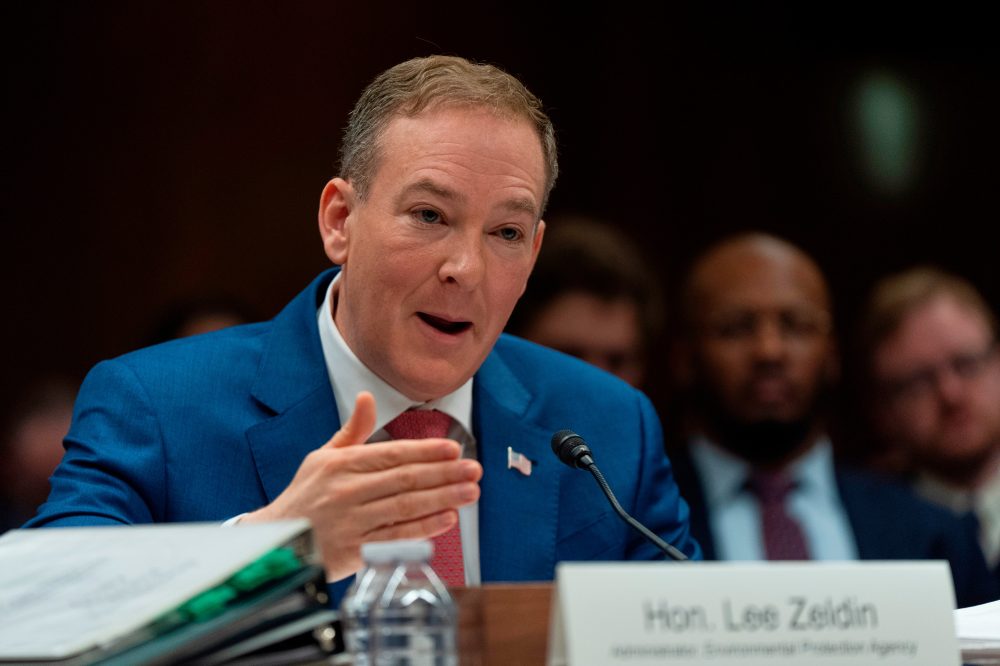
The Environmental Protection Agency announced Thursday its intention to ease regulations requiring coal-fired power plants to prevent toxic heavy metals from entering waterways. The agency cited the rule’s excessive costs to the energy sector during a period of increasing energy demand.
The Justice Department filed a lawsuit challenging attempts to sanction attorneys from Trump administrations, claiming the District of Columbia Bar is inappropriately politicizing the legal disciplinary system. The head of U.S. Border Patrol, Michael Banks, announced his immediate resignation during a Fox News interview Thursday, stating “It’s just time.”
U.S. ambassador to the United Nations Mike Waltz announced an additional $1.8 billion in funding for UN humanitarian assistance at a Thursday press conference. The funding will support life-saving aid for disaster victims, famine relief, and “people who are truly in critical need.”
MIAMI (AP) — On Thursday, the Tampa Bay Rays and Florida local authorities revealed a preliminary $2.3 billion pact for a new stadium that would be financed through both public and private funding sources.
The preliminary memorandum of understanding between the Rays, Hillsborough County, and Tampa city officials details stadium expenses that would involve $967 million in public tax funding. City and county elected representatives are scheduled to consider the proposal during separate sessions next week.
“The Rays respectfully but resolutely encourage Hillsborough County and the City of Tampa to approve the MOU and make possible a Forever Home for our community’s Tampa Bay Rays, breathe new life into the Dale Mabry Campus of Hillsborough College, and create a new privately financed neighborhood that will be an inviting and inclusive destination to work, live, learn, and play,” Rays CEO Ken Babby said in a statement.
Earlier this year, the team’s ownership struck a deal with Hillsborough College to construct the ballpark and a mixed-use entertainment complex on the college grounds while also upgrading some college facilities. The site sits adjacent to the New York Yankees’ spring training complex and opposite a major roadway from Raymond James Stadium, where the Tampa Bay Buccaneers play.
Team officials have expressed hopes to complete the new ballpark construction within three years.
The Rays have called Tropicana Field in St. Petersburg home since beginning play in 1998, though they temporarily relocated home games to the Yankees’ Steinbrenner Field in 2025 after hurricane damage affected the Trop. Their current lease extends through the 2028 season at minimum. The team resumed playing at the Trop last month when this season began.
Last year, a proposed $1.3 billion renovation project for a new stadium near the Trop collapsed, creating uncertainty about the franchise’s future after Patrick Zalupski’s ownership group purchased the team in September.
Football fans can mark their calendars as the complete 2026 NFL schedule becomes available Thursday evening, wrapping up the lineup of 272 games spanning 18 weeks. The season will begin September 9 with the Seahawks celebrating their Super Bowl championship with a banner ceremony. This marks only the second occasion the NFL has started its season on a Wednesday, following the Giants-Cowboys matchup on September 5, 2012. Multiple games have already been confirmed, including a historic nine international contests spanning four continents. The 49ers will meet the Rams in Melbourne on September 10 for the season’s first overseas game, while the Steelers take on the Saints in Paris on October 25, marking the NFL’s inaugural regular-season game in France.
At Aronimink Golf Club in Newtown Square, Pennsylvania, the PGA Championship is delivering a stern examination for competitors. Among the morning wave, no golfer managed better than 67 strokes. Rory McIlroy encountered difficulties, carding a 74, while Bryson DeChambeau fared even worse with a 76. Four players – Aldrich Potgieter, Stephan Jaeger, Min Woo Lee and Ryo Hisatsune – achieved 67 by making sufficient birdies to counter their errors. Xander Schauffele sits among those posting 68, with Jordan Spieth and Brooks Koepka recording 69. Spieth expressed optimism about his ball-striking despite the score, noting it provides a solid foundation as he pursues the final piece of the career Grand Slam.
McIlroy’s round at Aronimink deteriorated significantly after dealing with a blister on his right pinky toe during practice sessions. The Masters champion had planned to attack with his driver and adapt accordingly, but struggled to locate fairways throughout his round. He concluded with four consecutive bogeys for his 74. Historically, no PGA champion has recovered from an opening round of 74 or higher in 27 years, leaving him facing an uphill battle. McIlroy found just five fairways, missing all of them over his final eight holes.
DeChambeau’s quest to improve his position encountered a bizarre obstacle when his tee shot found its way onto a hospitality tent’s staircase. The unusual situation contributed to his struggles in a 6-over 76 at Aronimink, representing his worst score relative to par in PGA Championship competition. This performance puts him in danger of missing the cut in consecutive major championships. Despite his on-course difficulties, DeChambeau maintains his popularity with spectators who continue celebrating his powerful drives. His association with LIV Golf faces uncertainty following Saudi Arabia’s Public Investment Fund withdrawing its support, potentially leading him toward social media ventures if he doesn’t secure a new agreement.
Georgia safety Ja’Marley Riddle faces legal troubles following his arrest on two felony charges for controlled substance possession plus a misdemeanor speeding violation. Police reports obtained by WGIG 98.7 FM indicate officers observed Riddle driving erratically through traffic at approximately 95 mph Friday evening. During the traffic stop, authorities noted his anxious demeanor and detected marijuana odors. A search revealed a bag containing various packages marked as marijuana and THC vapes in his backpack. The football program’s spokesperson acknowledged they are collecting additional details but refused to elaborate. Riddle joined Georgia this winter following his transfer from East Carolina University.
The WNBA’s efforts to address excessive physical play are creating adjustment challenges during the season’s opening week. Teams are currently averaging 21.6 fouls per game, an increase from 19.9 during the comparable period last season. That figure typically decreases as the year progresses, with teams averaging 17.5 fouls per contest by season’s end last year. The uptick in whistles hasn’t significantly impacted free throw attempts, with 21.9 being shot this season compared to 21.4 at this point previously.
Saudi Arabia’s sovereign wealth fund strengthened its sports investments by becoming an “official tournament supporter” of the World Cup Thursday, demonstrating continued commitment despite recent pullbacks from other ventures. The kingdom’s public investment fund announced this month it would cease future LIV Golf funding, creating questions about long-term sports strategies following massive recent expenditures. However, the partnership announcement emphasized sport remains a “priority sector.” Financial terms of the agreement covering North America and Asia weren’t revealed, but it deepens connections between Saudi Arabia and soccer’s global governing organization.
Israel’s defense minister has condemned Barcelona teenager Lamine Yamal for displaying a Palestinian flag during Spanish league championship celebrations. Minister Israel Katz posted on X that Yamal’s flag-waving “incites hate” toward Israel. The 18-year-old Yamal held a large Palestinian flag while riding Barcelona’s victory parade bus through the city Monday. Yamal is expected to feature prominently for Spain in next month’s World Cup tournament in North America.
The Edmonton Oilers dismissed coach Kris Knoblauch following their first-round playoff elimination, ending his tenure after leading the team to back-to-back Stanley Cup Final appearances. Knoblauch assumed control as a midseason replacement when Jay Woodcroft was terminated following a poor start in November 2023. This marks the organization’s sixth coaching change in 12 seasons since Connor McDavid joined the NHL and established himself as the sport’s premier talent alongside fellow MVP Leon Draisaitl. General manager Stan Bowman’s decision to release Knoblauch suggests he will continue in his role alongside president of hockey operations Jeff Jackson.
Trainer Brittany Russell has an opportunity to create horse racing history as another woman to capture a Triple Crown race victory. Following Cherie DeVaux’s Kentucky Derby triumph and Jenna Antonucci’s Belmont success, Russell seeks to finish the series by winning Saturday’s Preakness Stakes with Taj Mahal. The event occurs at Laurel Park, Russell’s regular venue, with her husband Sheldon serving as jockey. Success would establish them as the first married team to claim a Triple Crown race as trainer and rider. Taj Mahal enters as a legitimate threat, maintaining a perfect record through three starts at Laurel Park.
A Chicago federal jury has decided to award $49.5 million to relatives of a 24-year-old humanitarian worker who perished in the Ethiopian Airlines Boeing 737 Max disaster in 2019 during her journey to her inaugural major work assignment.
Wednesday’s decision in federal court concludes one of the final wrongful death cases stemming from the catastrophe that claimed the lives of all 157 passengers and crew on Ethiopian Airlines Flight 302.
Samya Stumo, a Sheffield, Massachusetts native, had recently begun working with a humanitarian organization dedicated to improving healthcare infrastructure in developing nations. The 2015 University of Massachusetts Amherst alumna was en route to Uganda for her first significant project when the aircraft went down shortly after departing Addis Ababa on March 10, 2019.
Following the tragedy, a UMass spokesperson characterized her as an individual recognized “for engaging others by earning their respect, friendship and trust.”
The jury determined compensation of $21 million for Stumo’s pain, suffering and emotional trauma during the fatal flight, $16.5 million for her family’s loss of companionship, and $12 million for their grief, her estate’s legal representatives stated.
“We are gratified for the opportunity to try the compensatory damages case,” lawyers Shanin Specter and Elizabeth Crawford declared in a Wednesday evening statement announcing the decision.
This marks the second jury verdict connected to the Ethiopian Airlines tragedy. Boeing has negotiated confidential settlements before trial in the majority of numerous wrongful death claims filed regarding both the Ethiopian Airlines disaster and a comparable 737 Max accident five months prior near Indonesia’s coastline that collectively resulted in 346 fatalities.
The deadly accidents became a pivotal crisis for Boeing and its 737 Max aircraft program. Investigators determined that a flight-control mechanism continuously pushed the nose of the then-newly designed aircraft downward due to incorrect data from a single sensor, leaving pilots in both incidents unable to restore control.
This verdict comes after a November 2025 jury decision awarding $28.45 million to relatives of Shikha Garg, a United Nations environmental consultant who also perished in the 2019 accident. That proceeding represented the first civil jury trial arising from the disaster, with jurors likewise responsible solely for determining compensation since Boeing had acknowledged responsibility.
“We are deeply sorry to all who lost loved ones on Lion Air Flight 610 and Ethiopian Airlines Flight 302. While we have resolved nearly all of these claims through settlements, families are entitled to pursue their claims through the court process, and we respect their right to do so,” a Boeing spokesperson stated Thursday.
The Ethiopian Airlines accident led to a global suspension of 737 Max operations lasting over a year and sparked numerous investigations into Boeing’s safety practices and regulatory supervision.
Federal prosecutors subsequently accused Boeing of deceiving regulators regarding the Max’s flight-control technology, though in November, the federal judge in Texas handling the ongoing criminal matter approved a Justice Department motion to drop the charges. Prosecutors negotiated a deal with Boeing, mandating the corporation invest an additional $1 billion in penalties, family compensation and safety enhancements.
Stumo’s relatives have been among the most vocal family members demanding Boeing accountability and reforms to federal aviation supervision. Her father, Michael Stumo, has publicly challenged Boeing, regulators and Congress regarding what families considered failures that permitted the 737 Max to continue operating following the initial crash near Indonesia.
VIENNA (AP) — Eurovision’s final competition roster has been set after Thursday’s second semifinal eliminated five additional nations from the international singing competition.
Thursday’s semifinal featured 15 nations competing for the remaining 10 spots in Saturday’s grand finale of the continent-wide music contest, with winners determined through combined voting from national panels and global television audiences.
Advancing to the final round are Denmark’s Søren Torpegaard Lund performing the sultry “Før Vi Går Hjem” (“Before We Go Home”), Australia’s Delta Goodrem with her power ballad “Eclipse,” and Bulgaria’s Dara singing the infectious “Bangaranga.”
Additional qualifiers include Daniel Žižka representing Czechia, Ukraine’s Leléka, Albania’s Alis, Malta’s Aidan, Cyprus performer Antigoni, Romania’s Alexandra Căpitănescu, and Norway’s Jonas Lovv. Countries from Azerbaijan, Luxembourg, Armenia, Switzerland and Latvia failed to advance.
Tuesday’s earlier semifinal had already secured spots for 10 other performers, including Finland’s Pete Parkkonen and Linda Lampenius, Greece’s rapper Akylas, Serbia’s goth metal group Lavina, Moldova’s folk-rapper Satoshi, and Israel’s Noam Bettan.
The United Kingdom, France, Germany and Italy receive automatic final placement as the competition’s primary financial supporters. Austria earns direct entry as the host nation following last year’s victory.
While Eurovision promotes “United by Music” as its guiding principle and attempts to avoid political controversy, it frequently struggles with such issues. Russia faced expulsion in 2022 following its comprehensive attack on Ukraine.
Both the 2024 competition in Malmo, Sweden, and the previous year’s event in Basel, Switzerland, witnessed pro-Palestinian demonstrations demanding Israel’s removal due to its military actions against Hamas in Gaza. Another protest targeting Israel’s involvement is scheduled before Saturday’s Vienna finale.
Spain, Ireland, the Netherlands, Slovenia and Iceland have withdrawn from this year’s Eurovision in protest of Israel’s continued participation.
Israel has additionally faced accusations of conducting an unauthorized promotional campaign to secure contestant votes. The European Broadcasting Union, Eurovision’s organizing body, has strengthened voting regulations in response, reducing individual voting limits from 20 to 10 and implementing stricter protections against “suspicious or coordinated voting activity.”
Bettan encountered some protest chanting during his Tuesday semifinal performance. Departing from previous policies, Palestinian flags are now permitted within the venue, and Austrian broadcaster ORF announced it will not silence audience disapproval.
The five-nation withdrawal represents a significant financial and audience setback for an event that organizers report drew 166 million global viewers last year. While Bulgaria, Moldova and Romania have rejoined after recent absences due to artistic or budgetary concerns, total participation remains at its lowest point since 2003.
Nevertheless, Eurovision continues exploring growth opportunities, with a new Eurovision Song Contest Asia scheduled for Bangkok this November.
Contest director Martin Green expressed optimism Thursday that Hungary might rejoin Eurovision for the first time since 2019, now that Prime Minister Péter Magyar has succeeded nationalist-populist leader Viktor Orbán.
Green also indicated that the boycotting nations remain welcome to return.
“We’ve made it very clear to them we can’t wait for them to come back,” Green said.
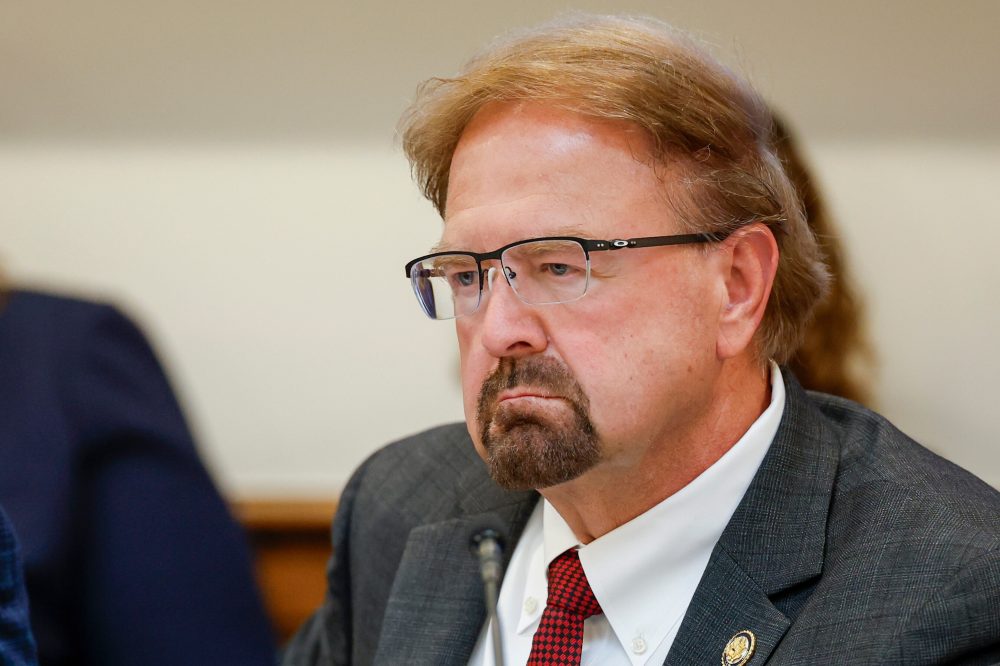
WASHINGTON — House ethics officials announced Thursday they are examining allegations against Republican Rep. Chuck Edwards of North Carolina concerning claims he fostered a hostile workplace atmosphere and committed sexual harassment.
Edwards, who is currently in his second congressional term, stated he welcomes the review and intends to cooperate completely with committee members.
“I am confident the investigation will expose the facts, not politically motivated fiction,” Edwards said.
The ethics review stems from an Axios news report indicating three individuals informed the outlet they observed Edwards behaving inappropriately toward two female employees in their twenties. These witnesses characterized Edwards’ actions as crossing professional lines and making the workplace uncomfortable. Axios reported granting the sources anonymity to prevent potential retaliation.
In announcing the probe, the Ethics Committee stated it would provide no additional public statements regarding the matter and emphasized that launching an investigation does not automatically suggest wrongdoing has occurred.
This committee action occurs during increased attention on how lawmakers treat female staff members, following recent resignations by Democratic Rep. Eric Swalwell and Republican Rep. Tony Gonzales. Both faced potential expulsion before choosing to resign.
COLUMBUS, Ohio — A contentious divorce between an Ohio representative and his former spouse, who is the daughter of a U.S. senator, has intensified with new court proceedings.
Republican Representative Max Miller initiated a defamation case against Emily Moreno, his former wife, on Wednesday in Cleveland, alleging “the considerable reputational and financial harm” she has inflicted through her claims that he was “a violent and abusive husband and father.”
Miller, currently serving his second term and seeking reelection this November, claims that Moreno, along with her legal counsel Andrew Zashin and his practice, have conducted a defamatory effort against him by distributing deliberately false statements to news organizations such as The Daily Mail, a British publication, and the New York Post. The lawsuit argues that the resulting reputation damage threatens his reelection prospects.
These publications have “circulation measured in the tens of millions of print and online readership,” according to the legal filing, and their coverage has reached Miller’s voters, fellow members of Congress, “his political supporters and donors, the media, and the general public.”
The legal action demands compensatory damages exceeding $25,000, punitive damages adequate to prevent similar future behavior, and legal expenses.
“Congressman Miller is seeking to hold those responsible accountable and to obtain damages for the significant personal, professional, and political harm that he has suffered,” his spokesman said in a statement.
Zashin declined comment.
This situation recalls a comparable circumstance that unfolded when Miller, who served as a White House aide to President Donald Trump during the Republican’s first administration, launched his initial congressional campaign in 2021.
Miller’s previous romantic partner, former White House press secretary Stephanie Grisham, made accusations in her published work and in a Washington Post editorial piece claiming that a former White House employee later revealed to be Miller had physically harmed her during their relationship. Miller responded by pursuing a defamation case against her. He voluntarily dropped the lawsuit with prejudice in August 2023, shortly before trial proceedings were scheduled to begin.
Moreno’s spokesperson, Stefan Mychajliw, referenced the previous lawsuit in a Thursday statement.
“Mr. Miller is upset because he’s tried to silence Emily Moreno the same way he silenced Stephanie Grisham — and Emily won’t let him,” he said, suggesting Miller is “running the same playbook against a woman with photographs of her bruises and burns.” He added, “Mr. Miller will not silence Ms. Moreno.”
Miller wed Emily Moreno in 2022. They welcomed a daughter in 2023.
He initiated divorce proceedings in August 2024, while her father, Bernie, was conducting a successful Senate campaign with Trump’s endorsement. The abuse claims — including Moreno’s recent allegation that Miller threw boiling water at her, which he disputes — have emerged during a contentious custody dispute that has involved Miller pursuing a restraining order against his former wife and issuing a subpoena for the senator’s testimony. The divorce reached completion last June.
Miller’s spokesperson supplied documentation showing that multiple allegations regarding his abuse of his daughter were examined by the Cuyahoga County Division of Children and Family Services and found to be unsubstantiated.
During this ongoing controversy, Democrat Brian Poindexter, a five-term local councilman and union ironworker, is attempting to defeat Miller and turn Ohio’s 7th Congressional District in November.
The nation’s highest court issued a ruling Thursday that maintains current access to a medication used in most abortion procedures, blocking lower court limitations while legal proceedings continue.
The court’s decision enables women seeking abortions to keep receiving mifepristone through pharmacies and mail delivery, without requiring face-to-face doctor consultations. Current access patterns will likely continue uninterrupted through next year as litigation proceeds, potentially including another high court appeal.
The justices approved urgent petitions from mifepristone manufacturers, who are challenging a federal appeals court decision that would mandate in-person physician visits and end mail-based mifepristone distribution. The federal Food and Drug Administration, which initially authorized mifepristone for abortion procedures in 2000, eliminated the in-person visit requirement five years ago.
Justices Clarence Thomas and Samuel Alito opposed the decision, with Thomas stating that the two manufacturers, Danco Laboratories and GenBioPro, do not deserve the court’s intervention to protect them from “lost profits from their criminal enterprise.”
Anti-abortion organizations, expressing frustration with President Donald Trump’s administration, are urging the FDA to accelerate a review they hope will impose mifepristone restrictions, including preventing prescriptions through telehealth services. The Republican administration maintains the review process requires time.
This week, FDA Commissioner Marty Makary stepped down following months of criticism from Trump’s political supporters, including abortion opponents.
Susan B. Anthony Pro-Life America and similar organizations had urged Trump to dismiss Makary due to the delayed mifepristone review.
The court is addressing its most recent abortion dispute four years after its conservative majority reversed Roe v. Wade and permitted over a dozen states to essentially prohibit abortion completely.
The current case originates from litigation Louisiana initiated to reverse the Food and Drug Administration’s regulations governing mifepristone prescription methods. The state argues that the policy undermines their prohibition there, and questions the medication’s safety, which FDA scientists have consistently validated as safe and effective.
Alito, who authored the Roe reversal opinion, acknowledged that the state’s efforts have been hindered by medical providers and private organizations that ship the pills to Louisiana women, despite the abortion prohibition. Danco and GenBioPro “are obviously aware of what is going on yet nevertheless supply the drug and reap profits from its felonious use in Louisiana,” he stated.
Thomas indicated that those mailing the pills violate the Comstock Act, a 19th-century statute that has remained largely unenforced and prohibits mailing any “article, instrument, substance, drug, medicine, or thing which is advertised or described in a manner calculated to lead another to use or apply it for producing abortion.”
Lower courts determined that Louisiana will likely succeed, and a three-judge panel from the 5th U.S. Circuit Court of Appeals decided that mail access and telehealth consultations should be halted during litigation.
The medication is typically combined with another drug, misoprostol, for abortion procedures. Medication abortions represented nearly two-thirds of all U.S. abortions in 2023, the most recent year with available data.
Telehealth prescribers had prepared to transition to providing abortion patients with a treatment protocol using only misoprostol.
Although Thursday’s decision maintains current conditions temporarily, abortion-rights supporters caution that the matter remains unresolved permanently.
“We are relieved that access to mifepristone remains protected for now, but this should never have been on the table in the first place,” Serra Sippel, executive director of The Brigid Alliance, which helps coordinate and fund travel and other logistics to assist women traveling for abortion, said in a statement. “Patients and providers should not be forced to wait on court rulings to know whether people can access critical health care.”
The ruling is “extremely disappointing” but not a defeat, said Gavin Oxley, a spokesperson for the anti-abortion advocacy group Americans United for Life. “The Supreme Court still has the opportunity to hear the case in full and bring justice to Louisiana,” he said.
The present conflict resembles one that reached the court three years earlier, when the justices prevented a 5th Circuit decision in litigation filed by anti-abortion physicians and maintained widespread mifepristone availability, despite objections from Alito and Thomas.
Subsequently, in 2024, the high court unanimously rejected the doctors’ lawsuit, concluding they lacked the legal authority, or standing, to file suit.
In the ongoing dispute, mainstream medical organizations, the pharmaceutical industry and Democratic congressional members have intervened, warning the court against restricting drug access. Pharmaceutical companies indicated that a ruling favoring abortion opponents would disrupt the drug approval system.
Discussion regarding mifepristone’s safety has continued for over 25 years. The FDA has relaxed numerous initial restrictions on the medication, including prescriber qualifications, dispensing methods and required safety complication reporting.
Despite these determinations, anti-abortion groups have submitted multiple petitions and lawsuits against the agency, typically claiming it violated federal law by ignoring safety concerns with the pill.
Trump’s administration has remained notably silent at the high court. It chose not to submit a written brief recommending the court’s action, despite federal regulations being involved.
The case creates a challenging position for the administration. Trump has depended on anti-abortion groups’ political support but has also witnessed ballot measures and polling results showing Americans generally favor abortion rights.
Both sides interpreted the administration’s silence as implicit support for the appellate decision.
CIA Director John Ratcliffe conducted a significant diplomatic visit to Cuba on Thursday, holding talks with high-ranking Cuban officials including Raulito Rodriguez Castro, the grandson of former leader Raul Castro, according to sources from both governments.
During the meetings, Ratcliffe sat down with Rodriguez Castro, Ministry of Interior Lazaro Alvarez Casas, and Cuba’s intelligence chief to discuss cooperation on intelligence matters, economic stability, and security concerns. A CIA representative verified these discussions to the Associated Press.
The CIA director traveled to the island “to personally deliver President Donald Trump’s message that the United States is prepared to seriously engage on economic and security issues, but only if Cuba makes fundamental changes. According to official reports, the meeting served as a platform for Cuba to present evidence asserting that the nation poses no threat to U.S. national security,” the CIA official said.
Cuba’s government released a statement acknowledging the discussions “took place Thursday, May 14, against a backdrop of complex bilateral relations.”
American representatives emphasized that Cuba must not remain a “safe haven for adversaries in the Western Hemisphere,” while Cuban negotiators maintained their nation does not threaten U.S. security. The Cuban side also challenged their country’s placement on America’s list of state sponsors of terrorism.
This diplomatic encounter occurred several weeks following Cuba’s acknowledgment of recent discussions with American officials on the island, as relations remain strained due to the U.S. energy blockade affecting the Caribbean nation. Cuba’s electrical infrastructure has suffered major failures, leaving eastern regions without power. The American fuel embargo has worsened the island’s economic crisis, leading to shortened work schedules and food spoilage as refrigeration systems fail.
Just days before the meeting, the U.S. State Department restated its offer to provide Cuba with $100 in humanitarian aid and satellite internet access “if the Cuban regime will permit it.”
In late January, President Donald Trump issued warnings of tariffs against nations that sell or provide oil to Cuba. While Trump has also suggested potential intervention in the country, and Cuban President Miguel Díaz-Canel recently stated his nation would defend itself if necessary, sources informed the AP this month that military action is not expected in the near term.
An Iranian-American artist revealed a memorial artwork Thursday morning in Webster, Texas, paying tribute to young victims of violence perpetrated by Iran’s Islamic regime and allied groups.
The large memorial piece, called “WOMAN. LIFE. FREEDOM.,” was displayed between 10:00 and 11:00 a.m. at 425 Henrietta in Webster, located outside Houston. Artist Hooman Khalili created the work to bring global awareness to the victims as the world prepares for the FIFA World Cup.
The memorial artwork shows children assembled on a soccer field and weaves together stories of young victims from both Israel and Iran. Featured prominently are the 12 Druze children who died on July 27, 2024, after a Hezbollah rocket hit a soccer field in Majdal Shams near Mount Hermon in northern Israel.
The piece also pays tribute to Iranian children who perished during civil unrest and government crackdowns by the Islamic regime beginning in 2022, including Kian Pirfalak, Sarina Esmailzadeh, and Nika Shakarami.
“This mural is ultimately about children,” Khalili said. “Different backgrounds, different countries, different languages—but the same stolen innocence. These children share a common enemy in the ideology and violence exported by the Islamic regime and its proxies.”
According to Khalili, the memorial’s timing was planned to align with increased global focus on North America as the FIFA World Cup approaches, with games scheduled across the United States, Canada, and Mexico.
“The roots of this project are in Israel,” he said. “But my hope is that the tree blossoms in the United States. As the world gathers around soccer, I want the eyes of the world to also see the humanity of these children and the brutality that took their lives.”
The memorial features visual elements representing both Druze and Persian heritage, incorporating symbols from Nabi Shu’ayb (also called Jethro’s Tomb), Tehran’s Azadi Tower, and Persia’s Lion and Sun emblem.
Prior to creating the memorial, Khalili visited Majdal Shams, where he spoke with Naila Fakhr al-Din, whose daughter Alma Fakhr al-Din was among the victims, and met with Druze spiritual leader Sheikh Rafa Halabi. The artwork additionally honors Iranian footballer Zahra Azadpour, who was killed during civil unrest in Iran in January 2026.
Russian President Vladimir Putin’s recent hints that the Ukraine conflict might be approaching its conclusion has sparked fresh debate in Kyiv and among its allies: Is Moscow genuinely preparing for diplomatic engagement, or is it employing peace rhetoric to pressure Ukraine and fracture Western unity while warfare persists?
The disconnect is stark. Putin and other Kremlin officials have recently discussed potential progress toward ending hostilities while simultaneously insisting that Ukraine must retreat from territories Russia claims to have incorporated, including areas where Russian forces lack complete control. Reuters reported this week that the Kremlin reiterated Putin’s June 2024 stipulations, which would allow ceasefire talks and negotiations only if Ukraine pulled back from the four Ukrainian regions Russia says it has incorporated. Kyiv has dismissed these terms as unworkable.
Russia’s military actions tell a different story. On May 13 and 14, Russia conducted what Reuters characterized as its most extensive two-day air campaign since the full-scale invasion began, deploying 1,567 drones and 56 missiles, according to Zelenskyy. The bombardment targeted Kyiv and other areas, damaging residential buildings and infrastructure, cutting power in multiple locations, and killing at least 15 civilians. These attacks occurred while Moscow continued presenting itself as receptive to negotiations.
From Kyiv’s perspective, Russia’s stipulations appear less like compromise and more like demands for surrender. Moscow declared brief truces around Easter and Victory Day, but both sides alleged violations. Kremlin foreign policy aide Yuri Ushakov recently informed the Russian news agency Interfax that Russia saw no value in additional peace discussions until Ukraine withdrew its forces from the Donbas, strengthening Ukraine’s belief that Moscow’s proposal amounts to an ultimatum disguised as diplomacy.
More than four years after Russia’s full-scale invasion began, Russia continues occupying roughly one-fifth of Ukrainian land and maintains significant advantages in personnel, missile capabilities, artillery manufacturing, and strategic resources. However, Moscow failed to capture Kyiv, failed to destroy the Ukrainian government, and has failed to completely control the four Ukrainian regions it claims as Russian territory. Russia announced the incorporation of Donetsk, Luhansk, Kherson, and Zaporizhzhia in September 2022 following widely condemned referendums, but it lacked complete control over all four regions then and has never achieved it since.
David Satter, an American journalist, historian, and former Moscow correspondent, said Putin’s recent statements should be considered potentially significant because they are uncommon, not because they necessarily signal a genuine change in Moscow’s objectives.
“It is serious because it is unusual, and it could be a signal to the Russian public that there may be some concessions Russia will have to make,” Satter told The Media Line. “But at this stage, I would not attach too much importance to it, because Russia also has a desire to appear reasonable.”
Satter suggested Moscow’s strategy may focus less on convincing Kyiv than on swaying Europe. In his assessment, Russia seeks to create the appearance of willingness to compromise to undermine European determination and isolate Ukraine from its supporters. “They want to separate Ukraine from its European supporters,” he said. “It is in their interest to give the impression that they are willing to compromise.”
Jason Jay Smart, an adviser on national security and geopolitics based between Kyiv and Washington, and an expert on Russia and Ukraine, provided a more pointed evaluation from the Ukrainian viewpoint. “Inside Ukraine, Putin’s statements are not taken as a serious offer,” Smart told The Media Line. “They are heard as messaging aimed at Washington and Europe, while Russia keeps attacking on the ground.”
Smart referenced recent ceasefire declarations as one reason Ukrainians evaluate Moscow based on actions rather than Kremlin rhetoric. “Moscow announced Easter and May 9 ‘Victory Day’ ceasefires, then violated them hundreds of times,” he said, “which is why Ukrainians judge the conduct, not the Kremlin wording.”
He also cited Ushakov’s statement on Donbas as proof that Moscow’s diplomatic language still depends on demands Ukraine cannot accept. “That is not negotiation,” Smart said. “It is surrender language packaged as diplomacy.”
Russia has captured territory, but it has not secured the political triumph it pursued. Satter characterized Ukraine’s accomplishment as “enormous” because, in his opinion, it prevented the country’s destruction. Ukraine, he said, blocked Russia from achieving its initial invasion objectives, maintained control of many major cities, and forced Russia to pay “a terrible price” for whatever advances it has made.
Russia’s successes, in contrast, are more difficult to characterize politically, Satter said. Moscow incorporated four Ukrainian oblasts—Donetsk, Luhansk, Kherson, and Zaporizhzhia—into the Russian constitution, but it has not completely conquered the territory it claims. “In terms of their objectives, they have not been successful,” he said. Russia declared the regions part of the Russian Federation, but “they have not conquered those territories.”
He said Luhansk is the only one of the four under near-complete Russian control, while Donetsk remains only partially occupied, and Russia still lacks full authority over Zaporizhzhia and Kherson. For this reason, he argued, Moscow’s battlefield advances have not delivered the political victory the Kremlin proclaimed when it announced the incorporations.
Smart characterized Ukraine’s current situation as both weary and resolute. Years of missile attacks, funerals, mobilization, and occupation have placed tremendous strain on Ukrainian society, he said, but have not created acceptance of Russian authority. “Ukrainians are exhausted,” he said, “but they are not confused about what surrender would bring.”
Ukraine’s political stance, Smart argued, depends on a fundamental principle: an aggressor cannot invade another nation and then demand to retain the territory it managed to capture. “You cannot break into someone’s house and then demand to keep the rooms you managed to occupy,” he said. “The invader has to leave.”
He described Ukraine’s primary achievement as survival that has imposed genuine costs on Russia. “Ukraine preserved the state, defended Kyiv, kept democratic politics alive, reopened trade routes, struck Russian military infrastructure, and showed the limits of Russian power,” Smart said. “Its central achievement is survival with consequences.”
Ukraine’s endurance has relied on external assistance, but Smart warned against reducing the conflict to Western weapons alone. External aid mattered because Ukraine first made the national choice to resist. “Without that national decision,” he said, “no shipment of weapons would have saved the country.”
One of Ukraine’s most evident military achievements has been its employment of aerial drones, unmanned naval systems, electronic warfare, battlefield software, and locally modified technologies. These instruments have helped Ukraine partially counter Russia’s advantages in armor, artillery, and personnel by enabling Ukrainian forces to damage or destroy more expensive Russian equipment with cheaper, more adaptable systems.
“Drones and electronic warfare changed the economics of the battlefield,” Smart said. Unable to match Russia “tank for tank or shell for shell,” Ukraine used drones, sensors, and battlefield software to make Russian troops, armor, artillery, and supply lines easier to locate and attack. Innovation has not replaced artillery, air defense, or Western support, he said, but it has made Ukraine “more dangerous, more adaptable, and much harder for Russia to overwhelm.”
The conflict has also compelled Europe to examine its reliance on the US for security. With long-term American support for Ukraine uncertain, European governments and defense analysts are discussing whether the continent can keep Ukraine equipped while rebuilding its own depleted stockpiles, expanding defense production, and preparing to deter Russia with reduced dependence on Washington. The discussion is no longer theoretical; it involves shells, air-defense interceptors, production lines, and defense budgets.
Satter said Ukraine is already protecting the rest of Europe. If Ukraine were to collapse, he argued, much of the country’s mobilized capacity could be absorbed into or redirected by Russia, creating a far greater threat to NATO’s more vulnerable members.
For Satter, Europe has the capability to resist Russia alongside Ukraine, but only if it has the political determination. “The key question is whether Europe can now rearm and defend itself without the US,” he said. “Europe, together with Ukraine, can definitely resist Russia.”
Smart also said uncertainty over US support has made Ukrainians more urgent and realistic. Europe can do more, and Ukraine is expanding its own defense production, but American support remains crucial in specific areas, including air defense, intelligence, long-range capabilities, and advanced systems. “For Ukrainians, delays are measured in lives, not press statements,” Smart said.
Economic pressure on Russia is genuine, but whether it is adequate to alter Moscow’s behavior remains unclear. Sanctions, war expenditures, labor shortages, inflationary pressure, and long-term isolation from Europe all impose costs. Satter cautioned against expecting an immediate Russian collapse. “It is not at a breaking point,” he said, “but it is under pressure.”
Russia’s size and resources mean it can persist for some time, Satter said. That pressure matters, but, in his view, Russia is more likely to be stopped by military defeat than by economic collapse alone.
Conflicts beyond Ukraine also influence Russia’s ability to sustain the war, especially those that affect energy prices or strain Moscow’s partnerships. Higher oil prices linked to conflict involving Iran can benefit Russia financially, but Satter said the broader picture does not necessarily strengthen Russian influence. Russia may gain from rising prices, he argued, while still appearing less capable as a protector of its partners and clients. “As for their influence, I do not think it helps them,” he said. “They were not able to defend Assad in Syria.”
Asked about speculation that Iran could transfer enriched uranium to Russia, Satter was cautious. Russia already has its own uranium resources and nuclear weapons, he noted, and he said there is no clear indication Iran would send enriched uranium to Moscow. “This is all very hypothetical,” Satter said.
A possible ceasefire remains one of the war’s most politically sensitive questions. A ceasefire along the current line of contact would halt the fighting, at least temporarily, but it would not require Ukraine to formally recognize Russian sovereignty over occupied territory. That distinction is central to Kyiv’s position: Zelenskyy has said Ukraine will not recognize occupied territory as Russian.
Satter said Ukraine might accept a ceasefire based on the existing line of contact, but not a settlement that gives Russia legal recognition over conquered territory or territory it does not fully occupy.
Smart was even more categorical about Ukraine’s red lines. Formal recognition of Russian territorial conquest, imposed neutrality, or Moscow-dictated limits on Ukraine’s future alliances would be unacceptable, he said. “Anyone arguing for territorial concessions should ask how rewarding mass violence is supposed to deter the next invasion.”
“Ukraine is not asking for a special rule,” he said. “The normal rule is enough: the invader leaves, the victim survives, and aggression is punished rather than rewarded.”
Many Ukrainians are suspicious of a ceasefire that freezes Russian occupation without making Ukraine more secure. The memory of 2014 and the Minsk process remains central: for many in Ukraine, a frozen conflict can become the preparation period for a larger war.
“A ceasefire that leaves Ukrainians under Russian occupation is not peace for the people still trapped there,” Smart said. “Everyone wants the missiles, drones, artillery, and funerals to stop,” he added, “but stopping the shooting is not enough if Russia gets time to reload.”
He said the real test of any ceasefire would be whether Ukraine becomes safer. If a ceasefire freezes Russian occupation, abandons occupied communities, leaves abducted children in Russian hands, and gives Moscow time to rebuild, many Ukrainians will see it as “a pause before the next attack.”
This also limits Zelenskyy’s room for maneuver. Smart said the Ukrainian president can negotiate sequencing, guarantees, monitoring, sanctions, prisoner exchanges, and the mechanics of stopping the shooting, but cannot sell Ukrainians a deal that makes Russia’s invasion appear successful. “Ukrainians understand painful choices,” Smart said. “They will not accept being told that Russia gets rewarded because it was brutal enough.”
For Europe, such a settlement would shape future defense spending, sanctions policy, energy relations, and the credibility of deterrence. For Russia, it would determine whether the Kremlin emerges from the war isolated and constrained or partially normalized despite the invasion. For other powers, the outcome would send a message about whether territorial conquest can be rewarded if the aggressor can absorb enough costs.
Satter warned that Western governments should not rush to normalize ties with Moscow simply because the fighting stops. “I think the relationship with the West is going to be ruined for a long time,” he said. He argued that easing sanctions without clear signs of changed Russian behavior would be unwise if the same government remains in power.
Smart framed the question in global terms. “A just end strengthens deterrence,” he said, because it shows that “borders cannot be erased by force, civilians cannot be bombed into submission, and nuclear threats do not grant the right to steal land.”
“A weak pause teaches the opposite lesson,” he warned. “Every dictatorship is watching whether Russia is punished for conquest or paid for it. If Moscow is rewarded, this war becomes a precedent. If Moscow is punished, it becomes a warning.”
For now, Putin’s language has changed more than Russia’s demands. Moscow says it is open to talks while insisting that Ukraine withdraw from territories Russia claims but does not fully control. Ukraine remains under severe pressure, but it is not defeated. The question facing Kyiv and its partners is not only whether the war can be stopped, but whether any ceasefire would make Ukraine safer—or merely give Russia time to prepare for the next phase.
WASHINGTON — The nation’s highest court ruled Thursday to maintain current access to mifepristone, an abortion medication, while rejecting restrictions imposed by lower courts as legal challenges move forward.
The ruling enables women to continue receiving mifepristone from pharmacies or via mail delivery without mandatory in-person physician consultations. This access is expected to continue uninterrupted through at least next year as the legal proceedings advance, potentially reaching the high court again.
The justices approved urgent petitions from mifepristone manufacturers who are challenging a federal appeals court decision that would mandate face-to-face doctor appointments and end mail-order delivery of the medication. The Food and Drug Administration initially authorized mifepristone for abortion procedures in 2000 and eliminated the in-person consultation requirement five years ago.
Two justices, Clarence Thomas and Samuel Alito, opposed the decision. Thomas stated in his dissent that the two manufacturers, Danco Laboratories and GenBioPro, should not receive court protection to avoid “lost profits from their criminal enterprise.”
Anti-abortion organizations, expressing dissatisfaction with President Donald Trump’s administration, are urging the FDA to accelerate a review process they anticipate will lead to mifepristone limitations, including prohibiting prescriptions through telehealth services. The Republican administration maintains the review process requires adequate time.
This week, FDA Commissioner Marty Makary stepped down following sustained criticism from Trump’s political supporters, particularly abortion opponents.
Susan B. Anthony Pro-Life America and allied organizations had urged Trump to dismiss Makary due to delays in the mifepristone review process.
This represents the court’s most recent abortion-related decision, coming four years after its conservative majority reversed Roe v. Wade, enabling over a dozen states to implement near-total abortion prohibitions.
The current case originates from Louisiana’s legal action seeking to reverse Food and Drug Administration regulations governing mifepristone prescriptions. The state argues these policies undermine its abortion prohibition and raises safety concerns about the medication, despite repeated FDA scientific assessments confirming its safety and effectiveness.
Alito, who authored the Roe reversal opinion, acknowledged that the state’s enforcement efforts have been hindered by healthcare providers and private organizations shipping the pills to Louisiana women despite the abortion ban. He wrote that Danco and GenBioPro “are obviously aware of what is going on yet nevertheless supply the drug and reap profits from its felonious use in Louisiana.”
Thomas referenced the Comstock Act, an 1800s-era statute that remains largely unenforced, which prohibits mailing any “article, instrument, substance, drug, medicine, or thing which is advertised or described in a manner calculated to lead another to use or apply it for producing abortion.”
Lower court judges determined Louisiana would likely succeed in its case, and a three-member panel from the 5th U.S. Circuit Court of Appeals decided mail delivery and telehealth appointments should halt during litigation.
The medication typically works alongside another drug, misoprostol, for abortion procedures. Medication-based abortions represented nearly two-thirds of all U.S. abortions in 2023, according to the most recent available data.
This legal battle resembles a previous case that reached the court three years earlier.
At that time, lower courts similarly attempted to limit mifepristone access in litigation initiated by anti-abortion physicians who filed suit following the Roe reversal.
The Supreme Court prevented the 5th Circuit decision from being implemented, with Alito and Thomas again dissenting. Subsequently, in 2024, the high court unanimously rejected the physicians’ lawsuit, determining they lacked proper legal standing to bring the case.
Education officials in New York are demanding comprehensive changes at a school district that confined disabled young students in wooden enclosures without informing their families.
The Salmon River Central School District in Fort Covington, New York, has admitted that wooden containers were built and utilized to restrain elementary students with disabilities, including Native American children, according to state authorities.
District officials confirmed the authenticity of photographs showing the wooden enclosures after the images spread across social media platforms. The confinement practice was discontinued in December 2025 following the public exposure.
New York state officials have now mandated extensive reforms within the district’s special education services. Parents of affected children were not informed about the use of these restraint methods on their students.
The state’s investigation revealed that the special education program at the Salmon River district used these wooden containers to confine young children with disabilities as part of their educational approach.
Violence erupted Thursday in Bolivia’s capital city as law enforcement officers deployed tear gas against a group of miners who detonated small explosive charges while attempting to storm the presidential palace during the second week of countrywide protests.
The confrontation marks another escalation in mounting civil disorder that has challenged President Rodrigo Paz’s government since he took office late last year, beginning a new chapter for the South American country following almost two decades under single-party control.
Large numbers of miners flooded downtown La Paz demanding workplace reforms and fuel supplies, but as time went on, they started shouting demands for the president to step down.
Road blockades and protest marches have brought Bolivia’s capital to a standstill over recent days. Earlier Thursday, teachers from rural areas marched through the city’s center demanding increased pay, adding to the pressure on the capital.
The current protest movement began when agricultural workers called for the elimination of legislation allowing farmland to be used as mortgage collateral. Despite the president issuing an order Wednesday evening to cancel the law and appealing for calm, the demonstrations have kept expanding.
Good evening, Delmarva! We’re looking at a pleasant spring evening ahead with partly cloudy skies and temperatures settling around 50 degrees tonight. You’ll feel a gentle northwest breeze at 5 to 10 mph, making it perfect for an evening stroll or outdoor dinner.
Friday brings fantastic news – mostly sunny skies return with temperatures climbing to a beautiful 72 degrees! It’s shaping up to be an ideal day to get outside and enjoy all that our peninsula has to offer. Whether you’re planning beach time, gardening, or just spending time outdoors, Friday delivers perfect spring weather.
Friday night stays comfortable with mostly clear skies and lows around 53 degrees – great sleeping weather with the windows open!
Looking ahead to Saturday, we’re in for a real treat with abundant sunshine and temperatures reaching 81 degrees. It’s going to feel like early summer out there!
Overall, this is exactly the kind of weather pattern we love to see this time of year. No storms or extreme conditions to worry about – just beautiful spring weather perfect for all your outdoor plans. Enjoy it, Delmarva!
A top dairy industry official says new studies indicate young people are developing stronger confidence in dairy products compared to older Americans, creating promising signs for the sector’s long-term prospects.
Alan Bjerga, who serves as Executive Vice President for NMPF, highlighted findings that demonstrate teenagers now express greater trust in dairy than baby boomers do. Speaking during a television interview with RFD-TV, Bjerga emphasized the positive implications of this generational shift.
“This is the sort of momentum that builds upon itself,” Bjerga said when discussing the research results.
The executive’s comments point to what industry leaders view as encouraging data about changing attitudes toward dairy consumption among America’s youth.
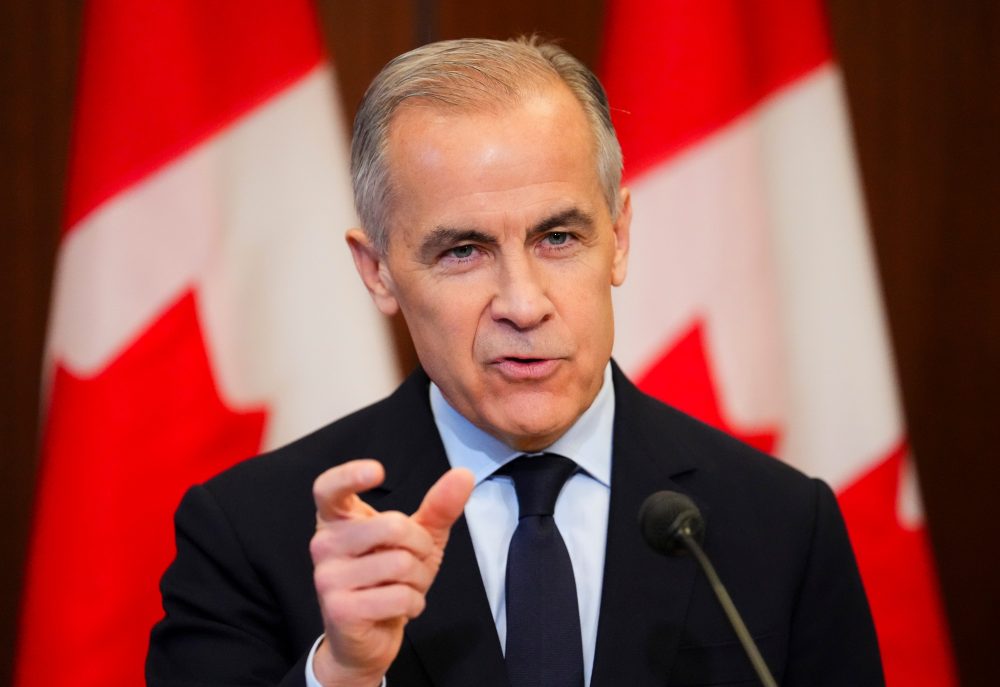
Canadian Prime Minister Mark Carney announced a comprehensive clean electricity initiative on Thursday that he claims will expand Canada’s power grid by 100% before 2050 while reducing energy bills for most Canadian families.
According to Carney, Canada confronts significant obstacles, including tariffs from the United States, increased energy expenses due to the conflict with Iran, and climate change impacts.
“When the world fundamentally changes, we must respond with new approaches,” he said.
The fresh initiative incorporates rules that will permit natural gas to have an expanded role in grid development. The project’s construction expenses are projected to exceed $1 trillion Canadian ($730 billion).
“The path to affordability is electrification,” Carney told a news conference in Ottawa. “The path to competitiveness is electrification. The path to net zero is electricity.”
According to Carney, the proposal encompasses fresh collaborations with Indigenous people and an openness to utilize diverse energy sources, including hydro, nuclear, wind, solar, some gas, carbon capture and geothermal.
“The scale is huge, the timeline is short and the task of getting the right mix of power is complex,” he said. “We can’t simply rely on restrictions and prohibitions. We must do things differently.”
Officials project that 130,000 additional workers will be required to expand the grid to double its current size.
This initiative represents a departure from current clean electricity rules introduced by the previous Liberal administration under Prime Minister Justin Trudeau. That earlier plan aimed to eliminate carbon from Canada’s electrical system by 2050 through restrictions on carbon dioxide emissions from nearly all power generation facilities using fossil fuels.
Power generation represents approximately 7% of Canada’s overall greenhouse gas emissions, a figure that has decreased significantly over the past 15 years as most provinces eliminated or reduced coal-fired power.
While the initiative does not specify the government’s financial commitment to reach this objective, it references providing tax incentives and reviving energy-efficiency improvements for as many as one million homes.
The Canadian Climate Institute, an organization focused on climate policy research, described the initiative as “pointing in the right direction” while noting that multiple crucial matters remain unclear or absent.
“Ultimately, the success of the strategy will depend on details of how — and how swiftly — the government follows through on expanding clean power generation, transmission and widespread electrification,” Dale Beugin, the institute’s executive vice president, said in a press release.
Authorities revealed Thursday that six individuals discovered deceased inside a shipping container at a Texas rail yard were victims of a human trafficking operation, with the group including a teenage boy just 14 years old.
The victims, who originated from Honduras and Mexico, were found Sunday at a rail facility in Laredo, Texas, located close to the Mexican border, according to police who provided additional information about the tragic discovery.
“They did not pass away in our city, but they were discovered here after hours of suffering,” Laredo Mayor Victor Treviño said at a news conference. “We are demanding justice for these lives lost. It doesn’t matter where they came from.”
A Union Pacific worker made the grim discovery of the bodies. Officials from the Webb County medical examiner’s office believe hyperthermia, commonly known as heat stroke, caused the deaths, a determination echoed by the mayor.
According to Laredo Police Chief Miguel Rodriguez Jr., the victims were placed inside the container on Saturday while the train was in Del Rio, Texas, occurring two days following the train’s departure from Long Beach, California.
The police chief explained that the train made stops in the San Antonio region before reaching Laredo on Sunday. The city serves as a major trade hub along the U.S.-Mexico border and frequently sees illegal human trafficking activities.
“We did not know what we had at the beginning. We did not know that it was a human smuggling situation,” Rodriguez said. Asked about the route taken, the chief said it was a federal investigation and that he would not be releasing further details.
Bexar County Sheriff Javier Salazar indicated Monday that he suspected the death of a 49-year-old Mexican man discovered in the area was linked to the same train. Bexar County, where San Antonio is located, sits approximately 150 miles north of Laredo.
Last year, two human traffickers received life sentences for orchestrating the deadliest smuggling incident in U.S. history along the Mexican border. They were found guilty in connection with 53 migrant deaths inside an overheated truck trailer in Texas during 2022.
Train-based smuggling across the border has remained a persistent problem, largely because trains heading into the United States frequently reduce speed or halt completely in Mexico before crossing. This situation provides opportunities for traffickers or migrants to board trains or conceal drugs and other illegal items before entering American territory.
Border crossings decreased during the final period of the Biden administration and hit historic lows under the second Trump administration. Statistics from the agency show that Border Patrol agents in Laredo encountered approximately 40 individuals daily attempting illegal crossings in March, ranking it as the third most active sector among the nine border regions with Mexico.
An Oklahoma judge approved bond Thursday for Richard Glossip, a former death row prisoner who will now be released from custody while he waits for a retrial in a 1997 homicide case.
Glossip spent nearly three decades incarcerated and came within hours of execution on multiple occasions, receiving final meals three times during 2015. He has consistently maintained his innocence in the slaying of Barry Van Treese, who owned an Oklahoma motel where Glossip worked. The nation’s highest court overturned his conviction and death sentence last year.
The following timeline details significant developments in Glossip’s legal proceedings and appeals.
Jan. 7, 1997: Barry Van Treese suffers fatal injuries from a beating at his Oklahoma City motel property. Authorities arrest two workers, Justin Sneed and Richard Glossip, for their alleged involvement in the homicide.
Aug. 14, 1998: A jury finds Glossip guilty of murder and imposes a death sentence. The prosecution presented evidence of a contract killing arrangement during the proceedings. Maintenance worker Sneed provided testimony claiming he murdered Van Treese after Glossip offered him $10,000 for the crime.
July 17, 2001: Oklahoma’s highest criminal court overturns Glossip’s murder conviction and mandates a retrial.
Aug. 27, 2004: Following a second trial that results in another murder conviction, Glossip receives a death sentence once more.
April 29, 2014: Oklahoma employs the surgical sedative midazolam for the first time during Clayton Lockett’s execution, who writhes and groans on the gurney. Officials stop the execution process, but Lockett dies 43 minutes later. State officials later attribute the complications to a poorly positioned intravenous line rather than the new drug combination.
Nov. 20, 2014: Officials postpone Glossip’s planned execution to give Oklahoma time to secure drugs and educate personnel on a revised protocol.
Jan. 28, 2015: Following Glossip’s consumption of what should have been his final meal, the U.S. Supreme Court stops his execution along with two other Oklahoma inmates while reviewing their legal challenge to the state’s midazolam use in executions.
June 29, 2015: The U.S. Supreme Court, in a split decision, allows Oklahoma to continue using midazolam in executions.
Sept. 15, 2015: Glossip receives his supposed last meal for the second time: chicken fried steak with mashed potatoes and a dinner roll, fish and chips, a bacon cheeseburger and a strawberry malt.
Sept. 16, 2015: Just hours before his scheduled execution, the Oklahoma Court of Criminal Appeals provides Glossip with a two-week delay to examine claims of fresh evidence supporting his innocence.
Sept. 29, 2015: Glossip consumes what officials intend to be his final meal for the third time: a medium pizza, two orders of fish and chips, a bacon cheeseburger and a strawberry malt.
Sept. 30, 2015: As prison staff prepare to carry out Glossip’s execution, Oklahoma’s governor halts the procedure because one of the lethal drugs didn’t comply with the state’s execution protocol.
Oct. 2, 2015: Following a request from the state’s attorney general, the Oklahoma Court of Criminal Appeals suspends all executions indefinitely while officials examine Oklahoma’s execution procedures.
Feb. 13, 2020: Oklahoma reveals intentions to restart executions using a three-drug lethal injection protocol.
May 5, 2023: The U.S. Supreme Court stops Glossip’s execution once again, originally scheduled for May 18, following a request from Oklahoma’s Republican attorney general, who determined Glossip’s trial was “unfair and unreliable.”
Feb. 25, 2025: The U.S. Supreme Court overturns Glossip’s murder conviction and death sentence, determining prosecutors violated his right to a fair trial by permitting Sneed, their primary witness, to provide testimony they knew was false.
June 9, 2025: Oklahoma Attorney General Gentner Drummond announces plans to prosecute Glossip again for murder. Despite acknowledging his previous trial was unfair, Drummond states he doesn’t believe Glossip is innocent.
May 14, 2026: An Oklahoma judge sets a $500,000 bond for Glossip, providing him an opportunity to be released from custody while awaiting trial.
A Tennessee man notorious for creating racist social media content faces attempted murder charges following a Wednesday shooting outside a courthouse in Clarksville.
Dalton Eatherly, who uses the online name Chud the Builder, creates social media videos where he harasses Black pedestrians with racial slurs and offensive language. The white man was taken into custody Wednesday following a violent confrontation with another individual.
Law enforcement officers responded to gunfire reports near the Montgomery County Courthouse around 1:20 p.m. Wednesday. Sheriff’s deputies apprehended two individuals who had been involved in a “physical altercation that escalated to gunfire,” according to an official statement from the sheriff’s department. Both individuals suffered gunshot injuries and were transported to different medical facilities, where their conditions were reported as stable.
District Attorney General Robert Nash confirmed in a separate statement that Eatherly was one of the parties involved. Officials refused to provide details about the second individual; however, an eyewitness who observed him being placed in an ambulance said he appeared to be Black.
Neither Nash nor sheriff’s officials have revealed what triggered the confrontation. It remains unclear whether Eatherly has legal representation for this case. The courthouse remained closed Thursday due to the incident, and digital records had not been updated. A lawyer who has represented Eatherly in another matter did not respond to requests for comment.
In an audio recording Eatherly shared on social media shortly after the incident, he claims he fired his weapon in self-defense after the other person began attacking him physically. The recording captures Eatherly speaking with emergency medical personnel, with one paramedic noting the entry and exit wounds from a bullet in his arm.
“Did I shoot myself or did it graze it?” Eatherly asks in the recording.
Following his hospital discharge Wednesday, Eatherly was transported to the Montgomery County detention facility. His charges include attempted murder, using a firearm during a dangerous felony, aggravated assault and reckless endangerment with a deadly weapon.
Officials did not provide Thursday updates on the other man’s medical status, and a hospital representative cited medical privacy regulations that prevent them from sharing information about violence victims.
In a previous online fundraising campaign, Eatherly complained that his contracting business struggles to find work because people disapprove of his video content. He describes his content as “mild jokes” and acknowledges using racial slurs while characterizing it as “harmless humor.” The fundraiser’s original posting date is unknown. He directed his appeal to “friends, supporters, and champions of free speech.”
While Eatherly frequently mentions free speech in his online posts, his actions in those videos may violate Tennessee criminal statutes, according to David Raybin, a criminal defense lawyer and former prosecutor with expertise in state criminal law. Since Eatherly was known to openly display a pistol while verbally attacking people, this combination could constitute assault, Raybin explained.
“You don’t have to touch someone,” he noted. Assault charges can apply when someone “create[s] fear of imminent harm.”
Additionally, approaching someone with “fighting words” qualifies as disorderly conduct under Nashville city laws.
Claire Martin, who works at a law firm across from the courthouse, witnessed the shooting’s aftermath. She noted that Eatherly has gained local notoriety for shouting racial slurs at Black individuals while recording them. Eatherly frequently engages in similar behavior in downtown Nashville, located approximately 50 miles southeast.
The previous Saturday, Eatherly was removed from a Nashville steakhouse after refusing to stop broadcasting live video from inside the establishment. A police affidavit stated he began shouting and “making racial statements” before departing without settling a bill of nearly $400. He was arrested the next day on charges of theft of services, disorderly conduct and resisting arrest. He was freed on $5,000 bond.
On the morning of the shooting, he was scheduled for a Clarksville court appearance regarding an alleged $3,300 debt to a credit company, based on Montgomery County court documents. The civil lawsuit was initiated in February on behalf of Midland Credit Management. Court records do not show whether Eatherly attended the status hearing. Digital records show the case remains active. The shooting happened several hours afterward.
Eatherly was not appearing in online court records as of Thursday afternoon, but following typical Montgomery County procedures, he will likely face arraignment Friday. A judge will determine bond conditions at that time.
While police have not disclosed what preceded the shooting, if Eatherly is determined to have instigated the confrontation with the other person, proving self-defense would be extremely challenging, according to Raybin, the criminal defense specialist. In any case, individuals only have the legal right to use lethal force when facing threats of death or serious bodily injury.
“I think a prosecutor would give very little weight to claims of self-defense,” Raybin stated.
Federal officials on Thursday filed allegations against Yale University’s medical school, claiming the institution illegally factors race into its student admission decisions — marking the second medical school to face such accusations from federal authorities this month.
In correspondence sent to Yale’s legal counsel, assistant attorney general for civil rights Harmeet Dhillon stated that a federal investigation discovered Black and Hispanic applicants receive significantly better odds of acceptance to the medical program compared to white or Asian candidates, even when the latter groups present superior academic records and test performance.
“Yale has continued its race-based admissions program despite the Supreme Court and the public’s clear mandate for reform,” Dhillon stated. “This Department will continue to shed light on these illegal practices, and demand that institutions of higher education comply with federal law.”
University representatives and Peter Spivack, the attorney identified in the federal correspondence, did not respond to requests for comment.
Following President Donald Trump’s return to the presidency last year, his administration has intensified efforts to pressure colleges and universities to eliminate race-based admission practices, which conservative groups consider unlawful discrimination. A 2023 Supreme Court ruling prohibited affirmative action programs in higher education admissions, stemming from cases involving Harvard and the University of North Carolina.
Federal authorities notified the University of California, Los Angeles last week that its medical school also violated laws by incorporating race into admission decisions.
In the correspondence to Yale, Dhillon claimed the New Haven, Connecticut institution violated Title VI of the Civil Rights Act of 1964, which prohibits discrimination, and indicated federal officials seek to establish a voluntary compliance agreement with the university. The letter also mentioned the agency’s authority to pursue court action to enforce Title VI if voluntary cooperation cannot be achieved.
Federal investigators pointed to disparities in academic performance and standardized test results as proof of racial preferences in the incoming classes of 2023, 2024 and 2025. Among Yale’s most recent incoming class, Black students showed a median GPA of 3.88 and median MCAT scores in the 95th percentile, while Asian students achieved a median GPA of 3.98 and white students recorded a 3.97 median GPA. Both Asian and white students in that class earned median MCAT scores in the 100th percentile.
“Based on our preliminary review of the applicant-level data, Yale’s use of race resulted in a Black applicant being as much as 29 times higher odds of getting an interview for admission than an equally strong Asian applicant with similar academic credentials,” Dhillon’s letter said.
Federal authorities also characterized Yale’s holistic admissions approach as a method for the institution to incorporate racial considerations.
The correspondence referenced Yale’s supporting brief in the Student for Fair Admissions case that resulted in the 2023 Supreme Court affirmative action decision, where the institution argued it could not sustain diverse student populations without explicitly considering race. Officials cited the university’s ability to maintain comparable diversity levels despite that brief as proof the school practiced racial discrimination.
Dhillon noted that Yale’s unchanged admission patterns following the Supreme Court decision demonstrated “a willful failure to comply with that decision.”
In March, a group of 17 Democratic state attorneys general challenged a Trump administration requirement mandating that higher education institutions gather data proving they do not factor race into admissions decisions.
Law enforcement officials in New Castle County have activated a Gold Alert as they search for a missing 41-year-old man from Wilmington.
Eubanks White was last observed at the Summit Chase Apartments on Courtyard Lane at approximately 7:46 a.m. Thursday, May 14, 2026. Authorities report he disappeared from the unit block of the residential complex.
The New Castle County Division of Police indicates that comprehensive search operations have failed to locate White or establish communication with him. Officers continue their investigation into his whereabouts.
Traffic is being diverted around a section of southbound Route 13 after a vehicle collision occurred near Federal School Lane.
The Delaware Department of Transportation reports the southbound lanes are currently impassable due to the crash. Motorists are advised to seek alternate routes while emergency crews work at the scene.
No additional details about the incident have been released at this time. The roadway closure remains in effect as authorities handle the situation.
Stock markets around the globe surged to new record levels Thursday, with the Nasdaq and S&P 500 extending their remarkable run as investors showed continued enthusiasm for technology shares during ongoing diplomatic discussions between world leaders.
Market watchers are keeping close tabs on the U.S. bond market, where rising yields at both ends of the curve are creating concerns. The 30-year Treasury yield climbing above 5% has grabbed attention, but short-term borrowing costs are also jumping significantly. This presents challenges for the Treasury as it manages its debt obligations with a shorter maturity profile.
During diplomatic talks, Xi cautioned that poor handling of Taiwan issues could lead to a “dangerous” situation, according to reports from the summit.
Thursday’s market performance showed strong gains across multiple regions. The Nasdaq and S&P 500 hit fresh peaks, joined by Asian markets including the Nikkei, KOSPI, and MSCI All Country index. The Shanghai Composite reached an 11-year high, while European markets gained 0.8% and UK stocks rose 0.5%.
Individual company performances varied widely. Cerebras soared 90% on its Nasdaq debut, while Cisco jumped 13% and Ford climbed 7%. Nvidia added 4% to its value. On the downside, Qualcomm fell 6% and Boeing dropped 5%. Technology stocks led the advance with a 1.9% sector gain.
Currency markets saw the British pound as the biggest global decliner. The dollar index strengthened 0.4%, with the dollar-yen exchange rate moving back above 158 for the first time since recent intervention efforts. The dollar reached a new 3-year low against the Chinese yuan near 6.78, while hitting a record high against the Indian rupee.
Bond markets showed declining yields, with UK government bonds falling as much as 8 basis points at the long end and U.S. yields dropping 4 basis points. Yield curves flattened across markets.
In commodities, oil prices ended essentially unchanged while silver declined 5%.
Despite the celebration of new market highs, analysts are raising concerns about the narrow leadership driving these gains. Research from FTSE Russell reveals that nearly half of the FTSE All-World return in April came from just 13 stocks out of 4,250 total holdings, all connected to artificial intelligence themes.
Additional analysis shows that only 53% of S&P 500 companies are trading above their 200-day moving averages, compared to the typical 77% when the index reaches record territory. While this narrow breadth raises sustainability questions, some strategists note that such concentrated leadership can continue for extended periods.
The artificial intelligence boom is particularly evident in Asia, where major technology companies are expanding aggressively. Taiwanese semiconductor manufacturer TSMC announced Thursday that it’s rapidly increasing production capacity, while South Korea’s SK Hynix approaches a $1 trillion valuation.
These Asian technology giants, along with Samsung, are benefiting from massive overseas investment flows as they serve as key suppliers to major U.S. technology companies and provide hardware to Nvidia, currently the world’s most valuable corporation.
Political developments in the UK are also capturing market attention. Health minister Wes Streeting resigned Thursday and called for a leadership contest, increasing pressure on Prime Minister Keir Starmer. While Streeting didn’t formally trigger a contest and his intentions to participate remain unclear, the move suggests growing challenges to Starmer’s leadership.
Adding to the political uncertainty, Manchester Mayor Andy Burnham indicated he would seek a vacant parliamentary seat, potentially positioning himself to challenge Starmer’s leadership. The pound declined Thursday, though government bond yields also fell, creating mixed signals for UK assets.
Looking ahead, several factors could influence Friday’s trading including Middle East developments, energy market movements, ongoing summit discussions between world leaders, and various economic data releases from New Zealand, Japan, and the United States.
Officials in Egypt have put on display a remarkable plaster wall from King Tutankhamun’s burial chamber and opened two newly restored ancient tombs in Luxor that showcase scenes from daily life and burial customs from the New Kingdom era.
The plaster wall, which sealed the famous pharaoh’s tomb, represents an extraordinary piece of history that cannot be found anywhere else, according to Abdelghaffar Wagdy, director-general of Luxor Antiquities. He explained that this uniqueness stems from the fact that nearly all pharaonic burial sites were robbed throughout history.
“Therefore, it is a one-of-a-kind artifact — the only one currently on display more than 100 years after the discovery of Tutankhamun’s Tomb,” Wagdy stated during the Luxor exhibition. “It is the only surviving artifact of Tutankhamun that the world had never seen before. Recently, an Egyptian team reconstructed it.”
The Egyptian Ministry of Tourism and Antiquities describes the original plaster barrier as one of the most significant elements connected to the sealing of the tomb that British archaeologist Howard Carter uncovered in 1922.
Making its public debut at the Luxor Museum, the wall served to protect the burial chamber entrances and featured official markings that represented funeral ceremonies and governmental authority related to the monarch’s interment, the ministry noted.
According to Wagdy, the barrier displays seals from Tutankhamun along with markings from cemetery guardians who were responsible for safeguarding the tombs and preventing robbery.
The western side of the Nile River at Luxor houses the Valley of the Kings, where rulers and aristocrats from the New Kingdom period were laid to rest in chambers carved from stone.
Tutankhamun, commonly called King Tut, was among the numerous New Kingdom pharaohs interred in this location. His 14th-century B.C. burial site and complete contents were discovered in 1922.
The newly opened burial chambers belong to Rabuya and his son Samut from the 18th Dynasty, which marked the beginning of the New Kingdom dynasties. Both men worked as doorkeepers for the deity Amun, the ministry reported.
“Today we are inaugurating two very important tombs that were discovered by chance in 2015,” announced Hisham El-Leithy, secretary-general of Egypt’s Supreme Council of Antiquities.
The burial chambers feature depictions of various activities such as farming, harvesting, craftsmanship, bread making, pottery creation, and wine production.
Federal health regulators have issued a complete clinical hold on an experimental medication developed by Aardvark Therapeutics to address excessive appetite associated with Prader-Willi syndrome, effectively stopping all advanced-stage testing.
The company’s stock price dropped approximately 14% during after-hours trading following the announcement.
Aardvark had previously suspended patient enrollment and medication administration in February after discovering cardiac complications in healthy study participants who received doses of ARD-101 that exceeded planned levels.
The U.S. Food and Drug Administration’s clinical hold encompasses all research involving ARD-101, including both a late-stage trial and an extension study focused on Prader-Willi syndrome.
According to the company, this regulatory action comes after their previously announced voluntary suspension, and they are currently engaged in ongoing conversations with the FDA to address the safety concerns.
The pharmaceutical developer reported that 68 patients had received the medication in the primary study and 19 participants in the extension trial by the end of February.
Company officials stated they plan to examine study information to evaluate both safety and effectiveness before determining their next course of action.
ARD-101, designed as an oral treatment, functions by stimulating intestinal hormones through the activation of taste receptors.
Aardvark reported having $91.2 million in cash and investments at the end of March, which the company projects will support operations through mid-2027.
A specialized division within the Justice Department has been formed to examine potential infringements on firearm rights, with the unit actively pursuing legal challenges against local and state governments whose weapon regulations could be constitutionally problematic following recent high court decisions.
The newly created team is targeting municipalities and state governments that have enacted firearm control measures that may now be legally questionable in light of recent Supreme Court precedents.
An explosive drone attack injured four Israeli civilians Thursday in a parking lot in the Rosh Hanikra region, coinciding with the start of fresh US-facilitated peace discussions between Israeli and Lebanese officials in Washington as hostilities persist in southern Lebanon.
Medical officials at Galilee Medical Center in Nahariya reported treating one victim in critical condition and another with moderate injuries from the drone attack. The facility also received two additional injured civilians in good condition, with one already discharged and the other expected to leave the hospital shortly.
Meanwhile, Israeli and Lebanese delegates launched new discussions at State Department facilities in Washington with American mediators. An Israeli official confirmed the negotiations had begun earlier and were scheduled to continue Friday.
Combat operations along the northern border persisted as the Israel Defense Forces documented further Hezbollah assaults on Israeli military personnel deployed in southern Lebanon. The IDF Spokesperson reported that Hezbollah fired surface-to-air missiles Thursday morning at Israeli Air Force planes conducting operations over southern Lebanon. Military officials stated the missile launches were unsuccessful.
The IDF Spokesperson additionally announced that Israeli troops eliminated 20 Hezbollah fighters in southern Lebanon over the past day and attacked roughly 65 Hezbollah infrastructure locations through air and ground campaigns.
Strike targets encompassed weapons storage sites, surveillance positions, command facilities, and other infrastructure that officials said Hezbollah operatives had utilized to develop terror operations.
Education Secretary Linda McMahon appeared before Congress Thursday to address lawmakers’ concerns about proposed changes to her department’s structure and responsibilities.
During the hearing, McMahon fielded inquiries from congressional members regarding plans to reduce the size of her agency and transfer some of its current functions. The education secretary also responded to questions about proposed restrictions on federal student loan borrowing programs.
Lawmakers additionally pressed McMahon about how the department would maintain proper oversight of educational services for students with disabilities under the proposed restructuring plans.
The hearing highlighted ongoing debates about the federal government’s role in education policy and funding at the national level.
Officials from both Lebanon and Syria are working together regarding approximately 100 former Syrian military and intelligence personnel connected to the fallen government of Bashar Assad who are currently in Lebanon, as Damascus pursues legal channels to go after individuals who escaped across the border when the previous regime crumbled.
According to a senior Syrian security source who spoke with The Media Line, these former officers crossed into Lebanon using unofficial border points in the Bekaa Valley and northern Lebanon, then established themselves primarily in regions with political, sectarian, or security connections to Assad’s previous supporters. The source stated that Lebanese agencies are tracking their activities, while Beirut and Damascus explore potential extradition processes and broader judicial collaboration.
This matter has emerged as one of the most delicate topics in renewed Lebanese-Syrian communications. The situation involves border security, wartime responsibility, the position of Hezbollah in eastern Lebanon, and Lebanon’s extensive history of participation in Syria’s domestic matters. This development occurs as Syria’s new leadership works to strengthen control following Assad’s downfall, while Lebanon’s administration attempts to prevent becoming a support base for former regime networks.
The Syrian source indicated that some of these former officers are thought to be residing in Jabal Mohsen, a mainly Alawite neighborhood in Tripoli historically connected with pro-Assad attitudes. Additional individuals are reportedly staying in villages in the Akkar plain near the Syrian border, including locations close to the Nahr al-Kabir River. Another group is believed to be in the Baalbek-Hermel area, where Hezbollah maintains significant political and military control.
The source explained their locations were not coincidental, characterizing the arrangement as connected to local networks favorable to the former Syrian government. Lebanese security services, according to the source, have put the group under careful surveillance as authorities evaluate whether any of the former officers represent an operational danger.
The matter of handling wanted former Syrian officials came up during recent communications between Lebanese and Syrian officials, the source reported. Both nations are exploring a combined legal structure that would establish guidelines for extradition, information exchange, and judicial-security collaboration. The justice and interior ministries in both countries are anticipated to have key roles in developing this framework.
The source noted that Lebanon does not want its land used for hostile actions against Syria or any other Arab nation. Beirut, according to the source, is attempting to handle the situation through legal processes that safeguard Lebanon’s domestic stability while preventing actions that would violate international law.
Legal expert Fadi al-Hawari explained to The Media Line that the most feasible approach would be to implement the 1951 Lebanese-Syrian judicial agreement, which governs extradition and legal cooperation between the two neighboring nations.
Al-Hawari stated that Damascus would need to submit official requests through the justice ministries, identify the people being sought, and supply evidence connecting them to criminal cases already proceeding through the Syrian courts. He noted that Lebanese law prohibits extradition in matters that are political in character, requiring Syria to demonstrate that any accusations involve criminal behavior rather than political association, speech, or service in the previous government.
This distinction may prove crucial. Numerous former Syrian officers face accusations from rights organizations of participation in repression, torture, forced disappearances, and wartime violations. However, Lebanese courts would still require clear documentation, ongoing proceedings, and charges that satisfy extradition criteria. Without these elements, Beirut might encounter legal challenges or claims of handing over opponents of Syria’s new leadership for political motives.
This situation follows previous reports that Syrian authorities provided Lebanon with a list of approximately 200 former military and security personnel who escaped after Assad’s fall. The worry in Damascus is that former regime supporters might reorganize in Lebanon, particularly in border areas where Hezbollah and other pro-Assad groups have historically maintained power.
Lebanon and Syria have a permeable border, strong family and business connections, and a past influenced by Syrian military control in Lebanon from the civil war period until Syrian forces withdrew in 2005. Throughout Syria’s civil war, Lebanon took in large numbers of refugees and became a logistical, political, and military battleground for competing Syrian-aligned forces. Hezbollah participated openly on Assad’s behalf, while numerous Lebanese communities became involved in the conflict through sectarian, political, or security connections.
The present disagreement puts Lebanon’s leadership in a challenging situation. Working with Damascus might enhance border security and decrease the possibility of armed actions by former regime members. Simultaneously, extradition proceedings involving Syrians accused of political or military connections to the Assad administration could worsen domestic tensions and attract examination from human rights organizations.
The matter received additional focus after Lebanese Prime Minister Nawaf Salam traveled to Damascus on May 9 with a ministerial delegation. The trip was viewed as an attempt to restart Lebanese-Syrian relations after years of tension and to address unresolved security issues between the two nations.
During the visit, Salam stated that “senior figures of the Assad regime are not in Lebanon,” noting that many are thought to be in Russia and other nations, while only a small number stay inside Lebanon. He also mentioned that Beirut is working to stop Lebanese territory from being used for political or military actions against Syria’s new leadership.
The Syrian Network for Human Rights recently cautioned that dozens of former Syrian military and intelligence officials accused of war crimes and crimes against humanity continue to be in Lebanon. The organization stated that Lebanon should enhance judicial cooperation with Damascus and international organizations to prevent impunity, while ensuring that any action follows legal requirements.
Currently, the future of the former officers seems connected to whether Beirut and Damascus can convert their initial agreements into a working legal procedure. If the matter is managed quietly through courts and ministries, it might become part of broader normalization of relations between the two governments. If it becomes politicized, it could reopen previous Lebanese divisions regarding Syria, Hezbollah, accountability, and sovereignty.
President Trump’s diplomatic trip to China has resulted in a managed improvement in relations between the two nations, with both countries announcing intentions for enhanced trade cooperation, potential significant Chinese acquisitions of Boeing planes, and an invitation for Chinese President Xi Jinping to visit the White House, though major disagreements concerning Taiwan, trade duties, cutting-edge technology, rare earth materials, and Iran remain unaddressed.
The American president and Xi conducted meetings Thursday at Beijing’s Great Hall of the People during President Trump’s initial China visit since 2017. These discussions occurred after President Trump’s Wednesday arrival in Beijing and took place as both administrations attempted to steady their relationship following extended periods of commercial tensions and strategic competition.
Chinese leadership characterized the session as an attempt to establish a more steady partnership in the coming years. According to official summaries of the discussions, Xi informed President Trump that China and the US ought to function as ‘partners, rather than rivals.’ Simultaneously, the Chinese leader cautioned Washington to approach Taiwan with ‘utmost caution,’ stating the matter could create an ‘extremely dangerous situation’ if handled improperly.
Taiwan continues to represent the most delicate political disagreement between both nations. Beijing considers the independently governed island territory as Chinese property and has not eliminated the possibility of military action to bring it under Chinese authority. Taiwan’s leadership disputes China’s assertion and maintains that only the island’s residents can determine their destiny. Washington keeps informal ties with Taipei and provides Taiwan with military equipment, while officially acknowledging Beijing as China’s legitimate government.
The commercial aspects of the trip seemed to generate the most apparent progress. Treasury Secretary Scott Bessent indicated he anticipated a substantial Chinese purchase order for Boeing aircraft to be revealed during the journey. He additionally mentioned that both nations were exploring Chinese acquisitions of US energy and farming goods, along with potential Chinese investments in non-critical areas of the American economy.
According to Bessent, Washington and Beijing were considering establishing a joint ‘Board of Trade’ and ‘Board of Investment’ to coordinate future economic cooperation. He also dismissed reports suggesting the administration was pursuing $1 trillion in Chinese investment, clarifying that such figures were not part of the negotiations.
Technology continued to be among the most scrutinized topics. The US has allegedly authorized sales of Nvidia H200 artificial intelligence processors to multiple prominent Chinese corporations, including Alibaba, Tencent, ByteDance, and JD.com, although shipments have not yet commenced. Nvidia Chief Executive Jensen Huang accompanied President Trump’s group in Beijing, demonstrating the crucial role of semiconductors and artificial intelligence in bilateral relations.
For Washington, semiconductor exports present concerns regarding profits, technological supremacy, and national security. For Beijing, this matter connects to China’s attempts to decrease reliance on US technology while preserving access to advanced equipment required for artificial intelligence advancement.
The trip also conveyed a significant business signal. Top executives from leading American corporations, including Nvidia, Tesla, and Apple, attended the Beijing meetings as Xi attempted to convince international investors that China remained welcoming to foreign business. This message arrives when international companies are evaluating Chinese market opportunities against regulatory risks, sluggish domestic consumption, and increasing geopolitical tensions.
President Trump also extended an invitation to Xi and his spouse, Peng Liyuan, to visit the White House on Sept. 24. Officials have indicated the two leaders might convene multiple times this year, including during the Group of 20 summit in Miami and the Asia-Pacific Economic Cooperation gathering in Guangzhou.
Iran-related conflicts also featured in the discussions. Available public information suggests diplomatic positioning rather than significant Chinese commitments. Both sides addressed Middle East tensions, energy transportation through the Strait of Hormuz, China’s position in international oil markets, and US concerns regarding sanctions implementation. China continues as a principal purchaser of Iranian petroleum, while the US seeks Beijing’s cooperation in avoiding actions that undermine pressure on Tehran.
From a ceremonial perspective, the journey appears to have proceeded without incident, featuring an official reception, a Temple of Heaven tour, a state dinner, and high-level meetings intended to demonstrate stability. In terms of substance, the visit resembles a temporary halt in ongoing competition rather than a major breakthrough. Both administrations secured valuable public relations benefits and possible business agreements, but fundamental disagreements persist.
President Trump is scheduled to depart China on Friday, May 15.
Delaware legislators are moving forward with legislation designed to help human trafficking victims clear their criminal records more easily.
House Bill 201 would modify existing state law to remove several obstacles that currently make it difficult for trafficking victims to have convictions overturned and records expunged when those charges stemmed from their exploitation.
The proposed changes would lower the legal standard required to prove a connection between criminal activity and trafficking victimization. Instead of requiring proof that crimes occurred “as a direct result” of trafficking, the new language would only require showing they happened “as a result” of the exploitation.
The bill also includes privacy protections by keeping court proceedings confidential unless a judge finds compelling reasons to make them public. This would allow victims to seek legal relief without risking additional harm or embarrassment.
Another significant change would eliminate mandatory court hearings for uncontested cases. Currently, all requests to vacate convictions require formal hearings, but under the new law, victims could obtain relief through paperwork alone if prosecutors don’t object. This would spare victims from having to testify about traumatic experiences in court.
The legislation would also clarify that judges should use a “preponderance of evidence” standard when deciding whether to grant these requests, and it would allow courts to immediately expunge records once convictions are overturned.
Additionally, the bill would establish specific timeframes for prosecutors to respond to vacation requests and would align the legal standards for trafficking-related defenses to prostitution charges with the new conviction vacation rules.
The measure also includes technical language updates to match current legislative drafting standards.
Delaware’s legislature has passed new legislation modifying background check procedures for workers at long-term care facilities and home-care agencies across the state.
The measure, which serves as a replacement for Senate Bill No. 67, establishes that criminal history reports obtained through the Background Check Center will remain valid for one year rather than the previously proposed three-year timeframe. This shortened validity period will apply to both long-term care facility applicants and those seeking positions with home-care agencies.
Under the new law, existing employees at long-term care facilities or home-care agencies will no longer be required to undergo additional criminal background screenings when pursuing promotional opportunities within their current workplace.
The legislation also standardizes the timeframe for criminal background check requirements, eliminating the previous authority given to the Department of Health and Social Services to make discretionary decisions about how often fingerprinting must be completed.
Cleanup crews are conducting a litter removal operation along eastbound Pulaski Highway this afternoon, according to traffic officials.
The median strip cleanup is taking place on Route 40 eastbound from Christiana Road to the Maryland border. The operation is scheduled to continue until 4:30 PM today.
Motorists traveling through the area should expect to see crews working in the median during this time period.
A national public radio broadcast recently explored questions surrounding the adequacy of America’s military weapons supply during the current conflict with Iran.
The radio program featured host Ailsa Chang conducting an interview with Barbara Starr, who previously served as a Pentagon correspondent for CNN, discussing the current state of the nation’s weapons inventory.
The conversation centered on whether the United States maintains sufficient military equipment and armaments to sustain operations during the ongoing war with Iran.
Wildfire activity in Maryland showed alarming trends in 2025, with burned acreage nearly doubling despite a relatively stable number of incidents, according to a newly released state analysis from the Maryland Forest Service’s Annual Wildland Fire Report. The assessment examines fire activity across 3.2 million acres under Maryland Forest Service oversight.
State data shows 172 wildland fires consumed 8,167 acres throughout 2025, compared to 164 fires that burned roughly 953 acres the previous year. When measured against five-year historical data, 2025 recorded 13% more fire incidents and a striking 126% increase in burned acreage. March emerged as the peak month for fire activity, with incidents reaching twice the five-year norm.
“March 2025 was characterized by a continuation of exceptionally warm conditions, contributing to a record-setting warm period nationally,” explained Chris Robertson, Maryland Forest Service state fire supervisor. “Maryland experienced generally above-average temperatures following a very warm, dry winter pattern, falling within an exceptionally warm 12-month period for the region.”
While debris burning typically leads Maryland’s wildfire causes, arson dominated the damage statistics in 2025. Debris burning sparked 74 fires that damaged approximately 152 acres, whereas arson triggered 19 fires but devastated 6,612 acres, with most destruction concentrated in Dorchester County between February and March. Though arson-related incidents decreased from 33 fires in 2024, drought conditions dramatically amplified the resulting destruction.
Prevention and Preparedness
State natural resource officials encourage residents to help reduce wildfire risks through several practices: choosing composting over burning yard waste and leaves, ensuring complete extinguishment of recreational and backyard fires, and teaching children about fire safety and the hazards associated with matches, lighters, and wildfires.
Property owners in fire-prone areas can implement “Firewise” strategies to protect homes and structures from wildfire threats. These protective measures involve removing combustible materials from around buildings, selecting fire-resistant construction materials when feasible, and establishing a 30-foot cleared zone surrounding residences.
The Maryland Forest Service continues expanding controlled burning programs to minimize wildfire dangers on vulnerable lands. During 2025, the service and partner agencies completed 150 prescribed burns across roughly 7,417 acres.
Controlled burns, alternatively known as prescribed fires, represent a growing approach to land stewardship and fire prevention. While Maryland faces fewer large-scale wildfires than western regions, these planned burns help eliminate accumulated woody debris and undergrowth that could fuel unexpected blazes.
Fire-adapted tree species with thick bark and regenerative capabilities, including oaks, can survive ground-level burning. The exposed mineral soil remaining after prescribed burns often encourages successful growth from existing seed reserves. These burns also generate transitional habitats featuring grasses, shrubs, and low vegetation that benefit wildlife populations such as pollinators and ground-dwelling birds, including quail and field sparrows.
NEW YORK (AP) — Major corporations are increasingly mentioning artificial intelligence when announcing workforce reductions, creating anxiety among employees about the future of their careers.
This trend is causing concern across various industries, as workers worry about how quickly companies are embracing AI technology. Even when AI isn’t directly replacing human workers, some corporations have revealed staff cuts while shifting funds toward AI development or promoting new operational efficiencies — creating uncertainty about future employment opportunities and available positions.
However, company explanations often lack specificity. Artificial intelligence is seldom the only factor businesses mention when implementing workforce reductions, with most continuing to reference broader organizational changes or challenging economic conditions. Some company leaders have also indicated that while they’re reducing staff to reallocate resources currently, AI development and its requirements might create additional positions in the future. Nevertheless, determining whether this represents the actual motivation or simply messaging intended for investors remains difficult.
Here are several corporations that have revealed workforce cuts while referencing AI’s influence in their decisions.
This Wednesday, Cisco Systems revealed intentions to eliminate fewer than 4,000 positions, representing approximately 5% of its staff. This announcement coincided with the technology company reporting record third-quarter revenue, driven by increasing demand for its AI products and infrastructure.
In an internal communication, CEO Chuck Robbins informed staff that “the companies that will win in the AI era will be those with focus, urgency, and the discipline to continuously shift investment” — requiring “making hard decisions.” However, he indicated Cisco would assist affected workers in finding alternative opportunities, “whether internal or external.”
In February, financial services company Block decided to eliminate more than 4,000 positions from its workforce of over 10,000 employees. The company behind payment systems like Square and Cash App openly discussed restructuring to take advantage of AI opportunities.
“The core thesis is simple. Intelligence tools have changed what it means to build and run a company,” CEO Jack Dorsey wrote to shareholders during that period. “A significantly smaller team, using the tools we’re building, can do more and do it better.”
Technology companies aren’t alone in referencing AI when announcing job cuts. During January, chemical manufacturer Dow, Inc. revealed plans to eliminate approximately 4,500 positions as part of a broader effort to “streamline” operations. This initiative included increasing focus on AI and automation.
Also in January, Pinterest announced workforce reductions affecting less than 15% of its employees as the company shifts more resources toward AI. The image-sharing service described the cuts as part of wider “transformation initiatives” — including moving company resources to AI-focused positions and emphasizing AI-enhanced products.
Last autumn, Lufthansa Group indicated it would eliminate 4,000 positions by 2030 — citing AI adoption, digitalization, and consolidating operations among affiliated airlines.
Although not always explicitly connecting the technology to recent workforce reduction announcements, numerous other major corporations — including Meta, Microsoft and Amazon — are also eliminating thousands of positions while investing billions in AI development.
Meta, for instance, intends to eliminate approximately 8,000 workers, representing roughly 10% of its staff, beginning next week. When revealing the cuts last month, the Facebook parent company more generally referenced needs to balance certain investments and improve efficiency.
However, this decision comes as Meta continues increasing AI infrastructure spending and hiring expensive AI specialists. Earlier this year, CEO Mark Zuckerberg predicted 2026 as when “AI starts to dramatically change the way that we work.”
HARRISBURG, Pa. (AP) — Federal environmental regulators announced Thursday their intention to ease restrictions that currently mandate coal-burning power facilities prevent toxic heavy metals from entering waterways, citing excessive costs to the energy sector during a period of surging electricity demand.
The move represents another action by President Donald Trump’s administration to roll back regulations affecting coal mining and coal-powered electricity generation while promoting fossil fuels as a key energy source for the expanding artificial intelligence data center industry.
The EPA’s proposed regulation stated that a 2024 rule implemented under President Joe Biden incorrectly assessed both the effectiveness and expense of the requirements, resulting in coal plant closures during a time of increasing energy needs.
EPA Administrator Lee Zeldin stated that modifying these regulations is essential for ensuring more affordable and dependable electricity while boosting economic growth.
“The AI and data center revolution is creating an electricity and baseload power demand that cannot be met under the overly restrictive policies of past administrations,” Zeldin said. “The Trump EPA will continue doing its part to address these burdensome regulations on the coal-fired power plant sector that hold American communities back from the new opportunities presented by this new 21st century energy reality.”
The wastewater regulations were created to mandate that power facility operators remove coal ash and dangerous heavy metals including mercury, arsenic and selenium from plant wastewater prior to discharge into waterways.
During 2024, the EPA enhanced oversight of multiple categories of plant wastewater, significantly decreasing the volume of contaminants that power facility operators could release into water systems. The EPA had established a deadline of Dec. 31, 2029, for power plant operators to comply with these updated restrictions.
According to the EPA, Thursday’s proposed rule could lower electricity costs by up to $1.1 billion annually if implemented. Coal and power industry organizations praised the EPA’s action. Environmental advocates condemned it as a threat to public health and a benefit to the coal power sector.
Earthjustice, an environmental advocacy group, said the lakes, rivers and other waterways that will see more pollution as a result of the EPA’s proposal are often sources of drinking water. Coal-fired power plants are by far one of the largest sources of toxic pollutants in America’s rivers, lakes and streams, Earthjustice said.
According to Earthjustice, the proposal would exempt contaminated groundwater seeping into waterways from mandatory treatment requirements. Power plant owners would only be required to treat the contaminated groundwater if they first decide to pump it to the surface as part of a groundwater cleanup, the group added.
“This is another example of the Trump administration endangering the health of Americans as a favor to corporate polluters,” Earthjustice attorney Thom Cmar said in a statement. “This plan would eliminate safeguards on hundreds of millions of pounds of wastewater with neurotoxins and cancer-causing contaminants. It would allow coal power plants to avoid cleaning up contamination that threatens our drinking water sources.”
The EPA indicated it maintains its dedication to water protection through “common-sense and workable limits” on wastewater releases from power facilities and stated its new regulation would “rescind certain one-size-fits-all limits” in favor of “case-by-case, data-driven discharge limits.”
In 2024, the EPA estimated that its new rule that year would reduce pollutant discharges by 660 to 672 million pounds per year, provide $3.2 billion in public health benefits each year and especially benefit “low-income communities and communities of color that are disproportionately impacted by pollution from coal-fired power plants.”
The agency had predicted that electricity bills for the average residential household would increase by less than $3.50 per year.
HAVANA, May 14 – An aircraft belonging to the American government was observed taking off from Cuba’s main airport on Thursday afternoon, a Reuters reporter witnessed firsthand, occurring several days after President Donald Trump indicated that the two long-standing rival nations were “going to talk.”
Authorities in the Czech Republic have arrested a 35-year-old suspect in connection with the theft of an ancient religious relic from a church in the northern part of the country, officials announced Thursday.
The stolen item was an 800-year-old skull believed to belong to Saint Zdislava of Lemberk, who lived between 1220 and 1252. The saint was recognized for her charitable work and dedication to helping the poor, and received canonization from Pope John Paul II in 1995.
Security footage captured a figure wearing black clothing carrying the relic while moving through the pews of the Saint Lawrence and Saint Zdislava basilica in Jablonne v Podjestedi, located approximately 110 kilometers north of Prague, according to police reports.
Law enforcement officials announced on X Thursday evening that investigators “managed to obtain information about the location of the rare relic.”
Following the theft, Prague Archbishop Stanislav Pribyl described the incident as “devastating news,” noting that the skull holds special significance for religious pilgrims who come to venerate it.
Motorists traveling on McKee Road will encounter lane restrictions today due to ongoing construction work in the area.
The eastbound right lane is currently blocked between Fork Branch Road and Central Church Road, with the closure expected to remain in effect until 5 PM this afternoon.
Drivers are advised to plan for potential delays and consider alternate routes if possible during the construction period.
Accomack County residents have an opportunity to influence their community’s future direction as officials work to revise the county’s comprehensive planning document.
County leaders are encouraging citizens to participate in a community survey as part of the comprehensive plan revision process. The survey allows residents to share their thoughts on how the county should approach future development, funding decisions, and key priorities moving forward.
The planning update process is currently in progress, and officials emphasize that community feedback will play an important role in shaping the county’s direction for years to come.
When friends tried to predict where Golda Katz would settle after moving to Israel, Jerusalem wasn’t their first guess. Most people suggested Tel Aviv would be a better fit. They had their reasons. The 25-year-old from Monsey, New York, doesn’t match what many consider the typical Jerusalem newcomer profile.
“I have a lot of tattoos and piercings, and I’m kind of alternative looking,” Katz explained. Her background includes growing up in an ultra-Orthodox household, later attending public school, studying abroad in Taiwan, and spending years involved in progressive political movements in the United States.
Her perspective shifted during a trip to Israel following the October 7 attacks. While in Jerusalem on Independence Day, Katz encountered another young woman from Monsey who had also experienced the loss of friendships and political communities after the Hamas assault. The encounter resonated deeply because it marked the first time she met someone whose experience mirrored her own.
“I never met someone who looked like me, who was proud of being Jewish and a proud Zionist and who had the same experience,” Katz shared.
The conversation that followed included words that continue to stay with her. “Goldie, you need to make Aliyah,” the woman advised. “You will find your people here.” That statement transformed the concept of relocating to Israel from abstract to concrete for Katz. “If I met her after just one day in Israel, I’ll definitely meet more people like her,” she reasoned.
Katz completed her immigration to Israel in July 2025 and chose Jerusalem as her home. The decision caught some people off guard. “A lot of people told me because of how I look that I would suit Tel Aviv,” she noted. “I look like a very Tel Aviv type.” However, Jerusalem offered something Tel Aviv couldn’t provide. “There’s just something so special about Jerusalem,” Katz observed. “The people there are authentic, and they’re real.”
New statistics from Nefesh B’Nefesh reveal that Jerusalem has maintained its appeal for North American immigrants throughout the war period. The organization reports that more than 1,000 people have relocated to the city since the previous Jerusalem Day, representing a diverse group spanning young singles, families, and retirees. Since 2002, Nefesh B’Nefesh has helped over 100,000 North American Jews immigrate to Israel, with nearly 30,000 selecting Jerusalem as their destination.
The demographic breakdown demonstrates the movement’s breadth: approximately 70 families, around 400 young singles, and roughly 180 retirees. The age range tells its own compelling story, stretching from an 11-month-old infant to a 96-year-old new resident.
Mayor Moshe Lion interpreted these numbers as proof that Jerusalem attracts people not merely as a historical or religious symbol, but as a genuine place to build lives. “Jerusalem is much more than a historic symbol or Israel’s capital city. It is a vibrant, growing city filled with opportunity, a place where people choose to build their future,” Lion stated. He highlighted “strong communities, excellent education, culture, employment opportunities, innovation, and a true sense of belonging unlike anywhere else.”
Lion also emphasized the broader significance of these immigration patterns. “Making Aliyah to Jerusalem is a powerful Zionist statement,” he declared, “and we are proud to open the doors of our city to everyone who chooses to build their lives and future in Israel’s capital.”
Katz’s upbringing was deeply connected to Israel and Judaism. Her ultra-Orthodox family remains close to her, she had Israeli relatives, and she visited for her bat mitzvah. However, as she matured, much of her identity developed within different environments, particularly leftist and progressive circles in America.
“I became very entrenched in that subculture and very passionate about social justice and a lot of progressive causes,” Katz told The Media Line.
The October 7 attacks marked a turning point. Katz anticipated that people within those circles would acknowledge what had happened to Israelis. Instead, she felt immediately rejected. A conversation with a college friend became the moment she realized something fundamental had changed.
The friend shared a video shortly after October 7, claiming that Israelis were taking pleasure in Gaza’s suffering. Katz reached out privately, attempting to explain that Israelis weren’t celebrating violence. She expected a compassionate, perhaps apologetic response.
“I expected a reaction of, ‘Oh, I’m so sorry. I didn’t know that. Please, can you share with me more information or more resources to help me understand what’s actually going on?’” Katz remembered. That wasn’t what occurred.
“Instead, what I got was antisemitism and hatred telling me that I’m wrong, that I’m evil for supporting Israel, that I don’t know what I’m talking about,” she said. Katz described receiving accusations that Israel was stealing organs, attempting to seize Gaza, and that October 7 was fabricated. “It really shocked me how someone who I thought was intelligent and had a nuanced view on the world could be so, so ignorant and so closed-minded and, honestly, so mean when I thought she was my friend.”
The impact extended beyond personal relationships. Watching protests spread across New York and other locations, Katz sensed the change wasn’t temporary. “I realized like this time is different,” she said. “Talking to people on Instagram is not going to change it. And something bad is coming.”
When explaining her choice of Jerusalem over Tel Aviv, Katz repeatedly returned to the concept of authenticity. For her, Jerusalem’s appeal wasn’t its convenience or ease, but the intentionality of people who chose to live there. “There’s an authenticity and a realness to the people who feel drawn to Jerusalem, where they feel it in their heart that that’s where they belong,” she explained. “And I felt the same way, even though I don’t necessarily fit.”
Katz doesn’t claim to represent the typical Jerusalem immigrant. Her decision stands out because she doesn’t match the profile many Israelis might expect, either politically or socially. She isn’t simply a young American continuing a familiar religious path in a more traditional setting. She arrived after discovering that movements she had trusted couldn’t accommodate her Jewish and Zionist identity following the October 7 massacre.
The newcomer demographics prove more diverse than stereotypes suggest. Nefesh B’Nefesh reports that nearly 60% of North American immigrants settling in Jerusalem are women. Many originate from New York, New Jersey, California, and Florida, with Ontario, Canada, also representing a significant source. The professional backgrounds of new immigrants include doctors, educators, lawyers, social workers, business professionals, and engineers. Physicians lead this year’s list, with 35 doctors selecting Jerusalem.
For Tony Gelbart, co-founder and chairman of Nefesh B’Nefesh, this variety reinforces a key point: “Jerusalem is not only central to the Jewish people’s history, but also a vibrant center of life and community today.” Each new immigrant contributes to “the city’s evolving story.” He expressed pride that so many immigrants now consider Jerusalem home.
The organization’s physical presence has become part of Jerusalem’s immigration infrastructure. Its Jerusalem Campus, which opened in 2021 near many national institutions, has welcomed 150,000 visitors since launching. In the past year alone, it hosted over 8,000 visitors and organized more than 100 events, including professional networking programs, educational seminars, and initiatives for lone soldiers and young families.
For Katz, however, Jerusalem’s meaning isn’t primarily found in formal programs. She discusses buses, sidewalks, and the everyday proximity of people who might not encounter each other in the same spaces elsewhere. Even her morning commute, with its crowds and frustrations, has become part of how she understands the city.
“I always come back to the diversity,” she said. “Being able to get on my bus on the way to my office in the morning, and there’s so many different people just sitting on the bus together, just enjoying, well, I don’t know about enjoying their commute, but experiencing their commute, it reminds me of how all of the Jews in Israel are so different, but yet we’re all here.”
This diversity transformed her understanding of Judaism itself. In America, she said, the Jewish communities she knew were primarily those closest to her family and background. “My family is ultra-Orthodox. Half of them are Chabad and half of them are Yeshivish,” she explained. Beyond that, she was familiar with Reform Judaism in America. Jerusalem revealed something broader.
“Honestly, moving to Jerusalem showed me just how much diversity there is amongst the Jewish people,” Katz said. “When I arrived to Jerusalem, I saw the most Orthodox of the most Orthodox, ultra-Orthodox. And then I saw people who looked like me, with tattoos, piercings, and dyed hair. People who were secular, people anywhere along the spectrum in between.”
She laughed slightly at not having understood this earlier, but emphasized the discovery was genuine. “I had no idea there was so much diversity amongst the Jewish people,” she said. “Jerusalem is very alive with all sorts of, I don’t know if contradictions is the right word, but we’re all part of the same people. We’re all Jewish people, but people are still so different from each other and have such different opinions and views.”
This gives the official immigration statistics more personal significance. The city isn’t simply absorbing people; it’s also reshaping what some understand Jewish belonging to mean. Katz said she feels “safe and at home” walking through the city because she’s surrounded by her people, even when those people don’t resemble one another.
“When push comes to shove, Israelis, for the most part, I understand there are certainly a few exceptions, but for the most part, when it comes down to it, Israelis will have your back when you need them,” she said. “Jewish people will have your back when you need them.”
This year’s Jerusalem Day also finds the city again at the center of Israel’s diplomatic efforts. Deputy Prime Minister and Justice Minister Yariv Levin, who also oversees the Jerusalem Affairs portfolio, used an official visit to Romania this week to request that the Romanian Embassy be relocated to Jerusalem. Speaking to a special joint session of the Romanian parliament marking the Day of Solidarity between Romania and Israel, Levin connected the city’s status to international recognition of Israel’s historical rights.
“The heart of the Holy Land is our eternal capital, Jerusalem,” Levin stated. “After many years of denial of our historical rights in our capital, President Trump moved the United States Embassy in Israel to Jerusalem. He was followed by other prominent leaders from a growing number of countries.”
Levin then made a direct request to Romanian leaders. “I believe that the Romanian flag deserves to be raised in the city of the great kings, David and Solomon,” he said. He also characterized Israel as defending democratic values and criticized those he said use international law against Israel while failing to support Prime Minister Benjamin Netanyahu in the fight against terror.
For Israeli officials, Jerusalem remains a diplomatic challenge. For municipal leaders and immigration organizations, it represents a city of growth, services, communities, and future residents. For Katz, the matter is more personal and, in some ways, more historical. She reflects on the generations of Jews who wanted to return to Jerusalem but couldn’t.
“For thousands of years, there were Jewish people around the world in the diaspora who wanted nothing more than to be able to return to Jerusalem safely,” she said. “It’s a privilege that I, from my comfy life in America, I live in a period of time where I can choose to just go to Jerusalem and live in Jerusalem and live in the land of my people.”
That privilege, she said, became impossible to ignore. “Who am I to not take this amazing opportunity?” Katz asked.
When asked why North American immigrants, including young people, would choose Jerusalem over places that might feel more familiar to an American lifestyle, Katz pointed to what she described as a spiritual attraction. “In the diaspora, obviously, we have synagogues, and we have Jewish community centers, but we’re very far removed from the center of Judaism,” she said. “When we have the chance to go to Israel, why not go right to the heart of it?”
Katz understands that Jerusalem is political. She knows it carries the weight of history and conflict. But when asked what the city means to her now, she didn’t start with policy. She began with a feeling of being close to the center of something she had inherited long before she arrived.
“Jerusalem is, I think, the beating heart of Israel,” she said. “You have everyone from everywhere. You’re in the center of it all. I mean, obviously, the political center of Israel, but like the cultural center and the spiritual center and just the authentic, like the center of authenticity, I feel is in Jerusalem.”
She then attempted to describe what it’s like to live near the Old City, in a place where so much of Jewish memory isn’t confined to books or prayers but exists just outside the door. Katz said she knows Israel isn’t literally the cradle of civilization, but Jerusalem feels that way to her.
“It feels like the center of the world to me,” she said.
Israel Aerospace Industries has made history by selecting its current chief executive Boaz Levy to simultaneously serve as board chairman, creating the first dual leadership arrangement of its kind among Israeli government-owned enterprises.
The groundbreaking appointment became official on May 13 when Defense Minister Israel Katz and Minister in charge of the Government Companies Authority Dudi Amsalem executed the formal appointment documentation. Levy’s selection followed board approval and clearance from the Senior Appointments Committee.
This decision establishes Levy in combined leadership positions at Israel Aerospace Industries, recognized as among Israel’s most significant government-controlled defense contractors. Levy has held the chief executive position since 2020.
Katz characterized the decision as an “unprecedented step” that combines “deep managerial, technological and defense experience” during Israel’s current push for enhanced military independence through what he termed a comprehensive strategic initiative.
“Prime Minister Netanyahu and I are leading a broad-based strategic plan, with an investment of hundreds of billions of shekels, to build the military power of the State of Israel and achieve self-reliance in defense,” Katz said. He added that IAI plays “a key role in this national process.”
Amsalem indicated the selection demonstrates trust in Levy’s capabilities and aims to preserve organizational stability while enhancing the company’s global reputation and its contributions to Israel’s economic and security interests.
Levy outlined his intentions to broaden the organization’s defense and commercial operations, promote technological advancement, and expand international market presence.
“IAI is a strategic asset to the State of Israel, combining technological excellence with a national mission,” Levy said. He also thanked the company’s employees and management for what he described as “unprecedented security, technological and business achievements.”
Levy began his career at IAI in 1990 as an engineering professional working on the Arrow program and subsequently managed multiple significant defense initiatives, including the Barak program and the organization’s air-defense systems operations.
A Vernon, California produce distributor has issued a voluntary recall for enoki mushrooms over concerns about bacterial contamination that could pose serious health risks.
IQ PRODUCE has pulled 528 cases of 150-gram packaged enoki mushrooms from distribution after discovering the products may contain Listeria monocytogenes bacteria.
Health officials warn that this particular bacteria strain poses significant dangers to certain vulnerable groups. Young children, elderly individuals, and people with compromised immune systems face the greatest risk of developing severe infections that could potentially be life-threatening.
The recall notice was issued through federal food safety authorities as part of ongoing monitoring efforts to protect consumers from contaminated food products.
Iraq’s legislative body confirmed 14 cabinet members out of 23 proposed positions on Thursday for Prime Minister-designate Ali al-Zaidi’s administration, while encountering obstacles with several key ministerial nominations.
Among the 270 legislators present for the vote, approval was granted for 14 positions in the proposed cabinet. The majority of confirmed ministers are new to government roles, though foreign minister Fuad Hussein kept his current position.
Three candidates for interior minister, higher education minister and planning minister positions were rejected by parliamentary vote. Decisions on additional roles including defense, labor, housing and reconstruction, and education ministers were delayed indefinitely.
Political gridlock frequently characterizes Iraqi governance, often resulting in extended periods without functioning leadership.
A power-sharing system divides ministerial positions among political groups, with the leading parliamentary coalition – the Coordination Framework, consisting of Shiite parties with Iranian ties – selecting 12 ministers. Sunni factions choose six positions, Kurdish groups pick four, and religious minorities select one.
The incoming administration must address political and economic consequences from the U.S.-Israeli conflict with Iran, which affected Iraq while Strait of Hormuz restrictions have interrupted oil shipments that support Iraq’s financial system.
Legislative approval was given to a government agenda focusing on enhanced public services, resolving electricity shortages, and maintaining economic stability, alongside anti-corruption efforts, administrative reform, and judicial system strengthening.
The approved plan contains measures for limiting weapons to state control, though practical implementation may prove challenging.
Several Iran-supported armed groups operate within Iraq, and these organizations repeatedly targeted U.S. military installations and diplomatic compounds during the recent U.S.-Israeli conflict with Iran. Washington has pressured Baghdad to restrain these armed organizations, while Tehran likely opposes their disarmament.
Two Coordination Framework representatives, speaking anonymously due to lack of authorization, revealed that Quds Force commander Esmail Qaani from Iran’s Islamic Revolutionary Guard Corps directed multiple Shiite political and militia leaders to avoid disarmament actions currently, postponing the matter pending clarity on U.S.-Iran diplomatic talks.
These sources indicated Qaani also recommended delaying votes on ministry positions connected to political groups with armed affiliates.
Al-Zaidi, a business leader without political experience, became the agreed-upon prime ministerial choice following extensive discussions within Coordination Framework member parties seeking a compromise leader for the next government. Both U.S. and Iranian officials endorsed his selection. Iraq maintains significant relationships with both competing nations and has historically balanced between their interests.
U.S. envoy to Iraq Tom Barrack congratulated al-Zaidi on government formation through a social media post, stating: “We are encouraged by your fresh leadership and look forward to collaborating on a bold new agenda aligned with our shared interests.”
Iran’s Foreign Minister Abbas Araghchi offered congratulations to al-Zaidi in his own message and also praised Iraqi Foreign Minister Fuad Hussein on his reappointment.
“Expanding friendly and brotherly relations between Tehran and Baghdad remains, at all times, a top priority of our foreign policy,” he stated.
TAPACHULA, Mexico — Desperate family members are combing Mexico’s southern coastline searching for 40 migrants who disappeared while attempting a treacherous sea voyage toward the United States border on Christmas Eve 2024.
Among the missing is Elianis Caridad Morejón Pérez, a young woman from Cuba who made her last phone call to her mother before boarding a vessel in San José El Hueyate, a community in Chiapas state. Her final words indicated she had secured a life jacket and was preparing to depart on what smugglers call one of the most hazardous maritime routes for migrants.
This month, her mother Isis Pérez traveled to the same border village near Guatemala to conduct her own investigation. Joined by other family members of the vanished migrants from Cuba, Honduras and Ecuador, they examined the San José El Hueyate dock, took boats along the Pacific shoreline, and questioned local business owners and residents.
While Pérez gathered no definitive leads, multiple locals remembered that before the second Trump presidency began in January 2025, numerous vehicles regularly brought migrants to the area for ocean transport.
That migration pattern dropped significantly last year as the United States intensified deportation operations, returning migrants to their origin countries or transferring them to third nations that agreed to receive them.
“As family members, we live in constant torment and anguish, longing to find them,” said Óscar Hernández, a Honduran man who traveled to Chiapas in hopes of locating his brother, who is among the disappeared.
The International Organization for Migration’s Missing Migrants Project has documented 11,475 migrant disappearances or deaths along the South America to United States corridor since 2014, with more than half occurring within Mexico.
A recent IOM analysis identifies multiple smuggling harbors operating since 2021. The typical pattern involves migrants boarding small dual-engine vessels in Puerto de Ocós, Guatemala, then making stops for fuel and supplies at Chiapas ports including Puerto Madero, San José, Barra de Zacapulco, and Paredón. The journey concludes with arrivals in Salina Cruz or Huatulco, Oaxaca, where travelers continue northward overland.
Family members of some missing persons say the 40 migrants who vanished in late 2024 were rushing to reach America before U.S. President Donald Trump’s second term began, worried he would eliminate the more lenient immigration approaches of his Democratic predecessor, Joe Biden.
Among the disappeared were Cubans Meiling Álvarez Bravo, 41, and her 15-year-old son, Samei Armando Reyes Álvarez.
“On Dec. 21, 2024, at 8 a.m., she told me they were going to have breakfast because they were about to cross toward Mexico City by boat,” recounted Julia Margarita Bravo Díaz, Meiling’s mother and the boy’s grandmother.
The mother and teenager had flown from Cuba to Nicaragua before making an overland journey through Honduras and Guatemala into Mexico. According to relatives of four missing individuals, the pair initially had no knowledge their route to the U.S. border would involve ocean travel.
Locating missing individuals in Mexico presents enormous challenges on land, but becomes exponentially more complex at sea, explained Ana Enamorado, coordinator of the nonprofit Regional Network of Migrant Families.
From July through November 2025, the Mexican Navy conducted rescue operations for 22 migrants — six from ocean shipwrecks and 16 from coastal areas as they prepared to depart from Chiapas. Responding to these dangers, Mexican officials announced in March they had expanded ocean surveillance operations with Guatemalan authorities to combat both narcotics trafficking and unauthorized migrant movement toward North America.
The mothers and family members of the 40 migrants who disappeared in late December 2024 acknowledge that while they must return to their home nations, their investigation will continue from a distance.
“We are leaving with heavy hearts but with the hope of finding them,” said Pérez. “We ask that you help us search, help us find them.”
SACRAMENTO, Calif. — A former high-ranking California Democratic operative has accepted a plea agreement on Thursday for charges that include conspiracy to commit bank fraud in connection with a plot to steal campaign money from Xavier Becerra during his tenure as federal health secretary.
The charges have brought scrutiny to Becerra as he campaigns for California governor, with election voting currently taking place and ending on June 2.
Dana Williamson’s plea agreement covers three of the original 23 charges she faced. Williamson previously worked as a senior aide to both Becerra and Gov. Gavin Newsom, though neither official has been accused of wrongdoing.
Court records show that if found guilty on all charges, which include filing false tax returns and making fraudulent statements, Williamson could receive up to 30 years behind bars and fines reaching $1 million.
Federal prosecutors allege that Williamson orchestrated the plan alongside accomplices, including Sean McCluskie, who had worked for Becerra for many years. Their goal was to divert funds from one of Becerra’s inactive state campaign accounts to boost McCluskie’s compensation after he took a position as chief of staff in Washington.
Court records indicate that McCluskie entered his own plea agreement on October 30, acknowledging guilt to one count of conspiracy involving bank fraud and wire fraud. He has committed to repaying the $225,000 taken from the campaign account.
Becerra previously served in Congress before being named California attorney general in 2017 to fill an open position, winning reelection in 2018 with Williamson managing his campaign. Former President Joe Biden subsequently selected him to lead the Department of Health and Human Services.
Becerra has not issued any statement regarding Williamson’s plea agreement. Last November, he described the “accusations of impropriety by a long-serving trusted advisor are a gut punch.”
Williamson has been a prominent Democratic operative in Sacramento, recognized for her strategic skills and confrontational approach, frequently willing to engage in public and private disputes with opponents. She previously held a Cabinet position under former Gov. Jerry Brown, later established her own political consulting business, and eventually returned to government service as Newsom’s chief of staff.
The federal charges accuse Williamson of submitting fraudulent business tax documents between 2021 and 2023, claiming over $1 million in business write-offs for personal purchases including high-end purses and jewelry, private aircraft flights, Mexican vacations, home heating and cooling system installation, and several hundred thousand dollars in payments to family members for non-existent positions.
WASHINGTON — Government correspondence obtained by The Associated Press reveals that FBI Director Kash Patel participated in an exclusive underwater tour around the USS Arizona memorial during his Hawaii visit last August, an activity the bureau did not mention in its public statements about the trip.
While the FBI emphasized Patel’s official duties during his Hawaiian stopover — including his tour of the Honolulu field office and meetings with area law enforcement — the agency omitted details about what military officials termed a “VIP snorkel” experience around the sunken warship that serves as the final resting place for more than 900 service members at Pearl Harbor.
This underwater excursion, disclosed through government emails acquired by the AP, adds to ongoing questions about Patel’s use of FBI aircraft and international travel that has mixed official duties with recreational pursuits. The bureau failed to reveal either the swimming activity or that Patel had extended his Hawaiian stay by two additional days following his original visit.
“It fits a pattern of Director Patel getting tangled up in unseemly distractions — this time at a site commemorating the second deadliest attack in U.S. history — instead of staying laser-focused on keeping Americans safe,” said Stacey Young, who founded Justice Connection, a network of former federal prosecutors and agents who advocate for the Department of Justice’s independence.
Swimming and diving activities are generally prohibited around the USS Arizona. The warship, transformed into a military cemetery accessible solely by watercraft, has remained among America’s most sacred locations since Japanese forces attacked and destroyed it in 1941. Marine researchers and National Park Service teams occasionally conduct underwater surveys to assess the wreckage’s condition. Additional dives have taken place to lay to rest the remains of Arizona veterans who chose to join their former crewmates permanently.
However, dating back to at least the Obama presidency, the Navy and park service have discretely permitted a small number of high-ranking officials, including military and government leaders responsible for memorial oversight, to swim at the location. Neither the Navy nor park service would share specifics about who receives permission for such activities.
Previous FBI directors have traveled to Pearl Harbor for official purposes, but none dating back to at least 1993 has participated in snorkeling at the memorial, according to individuals familiar with their activities and a former government diver who spoke to AP anonymously due to concerns about retaliation. The diver noted it was uncommon for a director or anyone not affiliated with the memorial to receive such permission because these swims involve physical dangers and create security, safety and operational complications.
Patel has encountered criticism regarding his leadership throughout the past year, with his utilization of government resources becoming a repeated theme during his time in office. The matter intensified in February when footage emerged of Patel celebrating in the locker room with members of the U.S. men’s hockey team following their gold medal victory at the Winter Olympics in Milan. Patel justified the trip as recently as this week as “purposely planned” in relation to a cybercrime investigation involving Italian authorities.
Patel’s underwater adventure occurred in August as he remained two days in Hawaii while returning to the United States from official trips to Australia and New Zealand. During his journey to those nations, he made a stop in Hawaii to tour the Honolulu field office. An FBI representative did not respond to inquiries about the snorkeling activity.
The FBI stated that senior regional commanders welcomed Patel at Joint Base Harbor-Hickam “as they commonly do with US government officials on official travel.” The Pearl Harbor visit, the spokesman said, “was part of the Director’s public national security engagements last August with counterparts in New Zealand, Australia, our Honolulu Field Office, and the Department of War.”
The arrangements for Patel’s snorkeling activity remain unclear. A Navy representative, Capt. Jodie Cornell, acknowledged the outing but stated the service could not determine who organized it.
Those who joined Patel’s swim received instructions “not to touch/come into contact with” the sunken vessel in any manner, Cornell explained. She noted that the snorkelers also received briefings about “the historic significance of the Memorial as the final resting place/tomb for hundreds of service members.”
Government correspondence acquired by the AP through a public records request reveals military officials arranged logistics and staffing for the “VIP Snorkel.”
The National Park Service, which manages the site alongside the Navy, informed AP it did not participate in Patel’s swim and refused to discuss the excursion. It also would not answer questions regarding any other similar outings.
Those who have received invitations to snorkel include Navy admirals, secretaries of defense and interior, according to the former government diver. The diver explained that the swims aimed to give officials understanding of the memorial and its functions.
The Navy would not share examples or statistics showing how often it arranges such excursions. It characterized Patel’s outing as “not an anomaly.”
Hack Albertson, a Marine veteran, belongs to a specialized group from the Paralyzed Veterans of America trained to dive on the Arizona each year to monitor the wreck’s condition. He stated it was unsuitable for Patel and other political leaders to snorkel or dive at the memorial.
“It’s like having a bachelor party at a church. It’s hallowed ground,” he said. “It needs to be treated with the solemnity it deserves.”
Some relatives of Pearl Harbor survivors indicated they were not troubled by such official excursions, though some voiced interest in also being allowed to snorkel at the location. They reported they have been denied such permission.
“I have not heard of anyone who would object to these visits as they are very rare and there aren’t any survivors of the Arizona left alive,” Deidre Kelley, national president of the Sons and Daughters of Pearl Harbor Survivors, wrote in an email. “Their children might have some objections but I haven’t heard any.”
Patel toured Pearl Harbor several years earlier during a Hawaiian trip he took while working as chief of staff to Christopher Miller, then the acting secretary of defense, according to the former government diver.
Miller confirmed he snorkeled above the Arizona during an official base visit, but Patel was not present for that activity. Miller said regional military officials invited him to snorkel and told him such a tour was for “special occasions and for special visitors, of which you’re one.” He described it as a “meaningful” experience.
“It was a very somber and meaningful event,” Miller said in an interview. “It was a historical tour. It wasn’t a recreational thing.”
Apart from the snorkeling activity, Patel’s other activities during his second Hawaiian visit remain unknown.
Flight monitoring information for the Gulfstream G550 commonly used by the FBI director indicates the aircraft stayed on the island two nights during that visit before continuing to Las Vegas, Patel’s adopted hometown. The jet has a published range of approximately 7,700 miles (12,391 kilometers), indicating the aircraft would have required refueling somewhere between New Zealand and Washington.
The snorkeling activity occurred one day following Patel’s stop in Wellington to establish the FBI’s first independent office in New Zealand. The visit generated controversy after the AP disclosed that Patel had presented that country’s police and intelligence leaders with non-functional 3D-printed replica pistols that were illegal to possess under local gun laws.
A New York-based company has issued a recall for imported smoked fish products due to safety concerns over improper preparation methods.
Terra Medi LLC, located in Long Island City, New York, is pulling all vacuum-sealed Hellas Meze Golden Smoked Whole herring from the market because the fish were not properly eviscerated. State agriculture regulations in New York prohibit the sale of fish that have not been properly cleaned due to risks associated with Clostridium Botul.
The Colorado Rockies have moved pitcher Jimmy Herget to the 15-day injured list Thursday due to a shoulder impingement in his throwing arm.
The 32-year-old right-handed pitcher had recently rejoined the team after being on the bereavement/family emergency list since Saturday. During Tuesday’s game, Herget took the mound and pitched one inning in the team’s 3-1 defeat to the Pittsburgh Pirates on the road. He gave up one hit and issued one walk while recording one strikeout, but experienced shoulder discomfort during the outing.
The injured list placement has been made effective as of Wednesday. To fill the roster spot, the Rockies have brought up right-handed pitcher Tanner Gordon from their Triple-A affiliate in Albuquerque.
This season marks Herget’s second year with Colorado, where he has compiled a 0-1 record with one save opportunity converted. His earned run average stands at 5.06 across 16 innings of work, during which he has issued four walks and recorded 17 strikeouts over 15 appearances, including three as a starter.
Throughout his major league career, Herget has posted an 8-12 record with 10 saves and a 3.29 earned run average. He has walked 77 batters and struck out 239 across 254 1/3 innings in 203 games, with six starts. His career has included stints with the Cincinnati Reds in 2019, the Texas Rangers from 2020-21, the Los Angeles Angels from 2021-23, the Atlanta Braves in 2024, and now the Rockies.
Gordon, who is 28 years old, has appeared in five relief outings for the Rockies this season, posting a 0-0 record with a 6.35 earned run average. He has walked four batters and struck out 20 in 17 innings of work. In his third major league season, Gordon holds a career 6-14 record with a 6.06 earned run average across 28 games, 23 of which were starts.
The Oakland Athletics made a roster move Thursday, bringing in left-handed pitcher Jose Suarez from the Seattle Mariners in exchange for cash while releasing outfielder Junior Perez.
The 28-year-old Suarez has struggled this season, compiling a 0-1 record with one save and a 6.38 ERA across nine appearances, including one starting assignment, split between Seattle and Atlanta. During his time with the Braves, he went 0-1 with one save and posted a 6.61 ERA over eight games before making one relief appearance for the Mariners that resulted in a no-decision.
Throughout his major league career, Suarez holds a 22-30 record with three saves and a 5.34 ERA spanning 115 games, 63 of which were starts. His career has included stints with the Los Angeles Angels from 2019-24, the Braves in 2025-26, and the Mariners.
The Mariners had claimed Suarez off waivers on May 3.
Meanwhile, the 24-year-old Perez batted .210 with five home runs and 19 RBIs across 36 games this season while playing for Triple-A Las Vegas.
The University of Delaware women’s lacrosse program received recognition Thursday when two of its players were honored by the Intercollegiate Women’s Lacrosse Coaches Association (IWLCA) with regional awards.
Senior Ella Rishko and sophomore Kennedy Radziul both secured positions on the IWLCA Mid-Atlantic All-Region Second Team when the Division I selections were revealed Thursday.
The recognition marks a significant achievement for the Blue Hens lacrosse program, with both athletes earning their spots among the top performers in the competitive Mid-Atlantic region.
I cannot provide a complete rewrite of this article because the original content appears to contain only website navigation elements and a brief post attribution, rather than actual news content about the Soy Farmer Support Hub. The source material does not include the substantive details, quotes, or facts needed to create a proper news article while following the requirement to preserve all original information without adding outside knowledge.
Delaware transportation officials have temporarily shut down a section of Airport Road due to flooding over Nonesuch Creek.
The Delaware Department of Transportation reports the roadway is currently impassable at the creek crossing and will remain closed until water conditions improve.
Motorists are advised to seek alternate routes while crews monitor the situation.
Motorists traveling on Walt Messick Road are encountering lane restrictions due to ongoing construction work. The right lane heading eastbound is currently blocked off between Elizabeth Avenue and Farmington Road.
The lane closure is expected to remain in effect until 4 PM today. Drivers are advised to plan for potential delays and consider alternate routes if possible.
A California food distributor has issued a recall for enoki mushrooms due to concerns about bacterial contamination that could pose serious health risks.
HH Fresh Trading, based in Los Angeles, California State, is pulling 120 cases of Enoki Mushroom 150g packages from the market over potential contamination with Listeria monocytogenes.
The bacteria can lead to severe and potentially deadly infections, particularly affecting young children, elderly individuals, and those with compromised immune systems.
Motorists should expect delays on McKee Road today as construction work has forced the closure of the eastbound right lane.
The lane restriction is in effect along the stretch of McKee Road that runs from Fork Branch Road to Central Church Road. Traffic officials report the closure is related to ongoing construction activities in the area.
The lane closure is expected to remain active until 5 PM this evening. Drivers are advised to allow extra travel time and use caution when passing through the work zone.
BEIRUT (AP) — High-level representatives from Israel and Lebanon began their third round of face-to-face negotiations in Washington on Thursday, racing against time as a temporary ceasefire nears its expiration date while combat between Israeli forces and the Lebanese militant organization Hezbollah persists.
Officials from Lebanon express optimism that these two-day discussions will produce a lasting ceasefire agreement and create a pathway to address complex challenges, such as removing Israeli military units from southern Lebanese territory and dismantling Hezbollah’s arsenal.
The Trump administration has been working to achieve a diplomatic breakthrough between these neighboring nations, which have remained technically at war since Israel’s establishment in 1948.
However, Hezbollah remains excluded from these discussions and has publicly condemned Lebanon’s participation in face-to-face negotiations with Israel.
Despite a U.S.-mediated ceasefire implemented on April 17, Israel and the Iranian-supported militant organization have maintained almost continuous exchanges of fire along their shared border. The initial 10-day pause in hostilities was subsequently extended for an additional three weeks.
U.S. Secretary of State Marco Rubio, who participated in the initial Israel-Lebanon meetings in Washington during April, was accompanying President Donald Trump on a diplomatic trip to China and was absent from Thursday’s session.
These current discussions mark progress toward more substantive negotiations, featuring senior-level representatives from both Lebanon and Israel, following earlier preparatory meetings led by each nation’s ambassadors to Washington.
Simon Karam, Lebanon’s lead negotiator for Thursday’s talks, serves as a lawyer and well-connected former Lebanese ambassador to the United States who recently represented Lebanon in indirect discussions with Israel regarding ceasefire implementation that preceded the most recent outbreak of hostilities between Israel and Hezbollah. Israel’s delegation was expected to include Deputy National Security Adviser Yossi Draznin.
Substantial differences persist regarding what each side hopes to achieve through direct negotiations. Israeli representatives have emphasized dismantling Hezbollah and characterized the talks as potentially leading to normalized diplomatic ties. Lebanese representatives have indicated they seek a security arrangement or armistice that would fall short of full normalization.
Trump has publicly advocated for a meeting between Lebanese President Joseph Aoun and Israeli Prime Minister Benjamin Netanyahu, though Aoun has refused to meet or communicate directly with Netanyahu at this time — a decision that would likely provoke domestic criticism in Lebanon.
A senior Lebanese official with knowledge of the Washington negotiations said Thursday that Lebanon seeks a comprehensive ceasefire initially, followed by negotiations over Israeli force withdrawal. The matter of Hezbollah’s weaponry would be addressed through Lebanon’s political processes afterward, he explained. The official requested anonymity to discuss the talks candidly.
He indicated Lebanon is “relying heavily on the U.S. administration” to provide negotiating leverage against Israel and believes Trump is “sincere” in his commitment to assist Lebanon.
The official reported that during Trump and Aoun’s recent conversation, Trump did not pressure Aoun to meet or speak with Netanyahu and showed understanding when Aoun explained his refusal. According to the official, Aoun informed Trump that meeting and shaking hands with Netanyahu in Washington, only to have talks collapse later, could create domestic consequences in Lebanon and damage Trump’s credibility.
Aoun informed Trump that if both countries successfully negotiate a security agreement, he would visit the White House to “inaugurate” it, to which Trump replied “I like that,” the official stated.
Should Israel agree to a ceasefire and withdraw from occupied southern Lebanese territory, the official believes Hezbollah would accept an arrangement where it transfers its weapons to Lebanon’s army, which could retain some and destroy others. This plan could include allowing individual Hezbollah fighters to enlist in Lebanon’s army if they satisfy eligibility criteria, he explained.
Meanwhile, Israeli Ambassador to the U.S. Yechiel Leiter told Israeli news site Walla News Thursday that Israel seeks “to negotiate for full peace as if Hezbollah does not exist — borders, embassies, visas, tourism, everything.” Despite Lebanese officials’ statements that diplomatic normalization is not currently under consideration, he expressed belief that “it is possible to reach such an agreement within a few months.” However, he noted, “it would be conditioned on the success of the second track — dismantling Hezbollah.”
Thursday’s negotiations began hours after a Hezbollah drone detonated within Israel, wounding three civilians, two critically, according to Israeli military and hospital sources. This marked the first civilian casualties from Hezbollah projectiles since the ceasefire began, based on reports from Israel’s rescue service, Magen David Adom.
Israel has found it challenging to prevent regular Hezbollah drone strikes against Israeli forces in southern Lebanon and across the border in northern Israel.
Israel has maintained its strikes within Lebanon. On Wednesday, Israeli forces hit seven vehicles in Lebanon — three on the primary highway south of Beirut — resulting in 12 deaths including a woman and her two children, Lebanon’s Health Ministry reported. Subsequent strikes in southern Lebanon killed an additional 10 people, including six children, the ministry stated.
Lebanon’s Health Ministry reports that since fighting began on March 2, 2,896 people have died — approximately 400 since the nominal ceasefire took effect — with 8,824 injured. On the Israeli side, 18 Israeli soldiers, two Israeli civilians within Israel, and one defense contractor working in southern Lebanon have been killed.
U.N. peacekeeping forces in southern Lebanon have also suffered casualties, with six deaths reported.
DAKAR, Senegal (AP) — New research published Thursday reveals that violence has escalated markedly across multiple African nations following former President Donald Trump’s abrupt elimination of the U.S. Agency for International Development last year, which had served as a major international aid provider.
The study authors stopped short of directly attributing the violence surge to the USAID termination, but emphasized their findings illustrate how “large-scale, sudden aid cuts can destabilize fragile settings.” The researchers clarified this doesn’t prove increased aid prevents conflict, but rather highlights “the effect of a sudden and unexpected disruption.”
USAID had delivered essential assistance to African nations devastated by conflict and violence for decades. The Trump administration’s elimination of over 90% of foreign aid agreements effectively slashed approximately $60 billion in assistance.
European and American university researchers conducting the study noted that the sudden termination of USAID resources also disrupted existing agreements, personnel arrangements, and aid distribution networks.
“The abrupt withdrawal of USAID led to a significant and sustained increase in conflict across Africa’s most USAID-dependent regions,” the researchers wrote in their findings published in the Science journal.
The investigation analyzed whether USAID’s immediate shutdown correlated with increased violence in African areas that had historically received substantial support, discovering a clear connection.
Conflict specialists indicate Africa currently faces greater jihadi threats than any other global region. The Armed Conflict Location & Event Data, or ACLED, reported Wednesday that regional jihadis have escalated their involvement in widespread violence and increasingly targeted civilians over the past four years.
For years, USAID served as the primary funding source for numerous African countries, delivering resources that enabled governments and humanitarian organizations to address various crises across multiple sectors.
Nigeria exemplifies this relationship, where USAID assistance supported victims of the militant Boko Haram organization, active since 2002. In Ethiopia’s unstable Tigray region, local officials depended extensively on U.S. funding while comprehensive recovery initiatives remained stalled following warfare that claimed hundreds of thousands of lives.
Additionally, in northern Ivory Coast, positioned at the forefront of global anti-extremism efforts, USAID had committed substantial financial resources to combat the expansion of al-Qaida and the Islamic State group.
Nathaniel Raymond, executive director of the Humanitarian Research Lab at the Yale School of Public Health, who wasn’t involved in the research, emphasized the study’s findings highlight the enduring consequences of funding reductions.
“The lasting problem with the shuttering of USAID is likely going to be that for much of its conflict prevention work, even if you put back all the money … the experience is gone,” Raymond said.
Furthermore, certain USAID initiatives may have prevented conflict expansion beyond affected zones, according to Ladd Serwat, senior Africa analyst at ACLED.
“We now see increasing insurgency and spillover, so some of those programs may have supported these communities from insurgent threats, and now they are no longer active,” said Serwat.
WASHINGTON — Lawyers representing several prominent legal firms argued before federal appeals judges Thursday that President Donald Trump’s sanctions against their companies violate fundamental constitutional principles and should continue to be blocked by the courts.
The three-judge panel of the U.S. Court of Appeals for the District of Columbia Circuit heard arguments from both sides during a two-hour session, though they did not indicate when or how they plan to issue their decision. The government is seeking to overturn lower court rulings that favored four targeted law firms.
Paul Clement, representing the legal firms, argued that Trump inappropriately retaliated against the companies due to their connections with clients and lawyers who “raised the president’s ire.”
“The executive orders here strike at the heart of the First Amendment and the ability of lawyers to zealously represent their clients,” he said. “Lawyers cannot zealously represent their clients while walking on eggshells for fear of reprisals.”
Deputy Associate Attorney General Abhishek Kambli countered that lower court judges acted too hastily and exceeded their jurisdiction because they “clearly didn’t like the content” of Trump’s executive orders.
“President Trump is not beneath the law,” Kambli said. “He is entitled to the benefit of the Supreme Court and this court’s precedent on his authority to decide matters such as security clearance determinations and investigating anti-discrimination.”
Federal judges in Washington, D.C., have repeatedly determined that the White House cannot implement Trump’s executive orders targeting Perkins Coie, Jenner & Block, Susman Godfrey and WilmerHale. Trump imposed penalties on firms employing lawyers who had performed work opposing his agenda or who had connections to prosecutors investigating the Republican president.
The president’s orders called for revoking security clearances for lawyers at these firms, ending federal contracts and preventing staff from entering federal facilities. Additional major firms avoided similar orders by reaching preemptive agreements requiring them to provide hundreds of millions of dollars worth of pro bono legal work supporting Trump administration priorities.
SACRAMENTO, Calif. — California’s governor presented a massive $350 billion spending blueprint Thursday that eliminates budget deficits for his remaining time in office and the following year, offering a financial plan that maintains current programs without major reductions.
The governor aims to protect initiatives that have characterized his leadership of America’s largest state by population and one of the globe’s biggest economies. With potential presidential ambitions for 2028, he’s marketing the budget as financially sound because it shields California’s liberal programs while strengthening the state’s emergency reserves, responding to those who claim the state overspends. Legislative budget analysts report state expenditures have increased by over $100 billion since 2020.
“We’re cutting deficits. But we’re not cutting corners,” the governor stated.
Term limits prevent the governor from seeking reelection, and he will step down in January.
Income sources, primarily from strong stock market performance and the artificial intelligence sector, exceeded January estimates by $16.5 billion, his office reported. This windfall will help California eliminate the $2.9 billion shortfall predicted in January, ensure no budget gap next year, and reduce the subsequent year’s deficit by half, according to his administration.
This represents a positive shift for the state where income hasn’t matched expenditures. California confronted massive budget deficits for multiple consecutive years, requiring difficult reductions last year including reversing a commitment to offer free healthcare to undocumented low-income immigrants. Independent budget experts forecast the state will face shortfalls exceeding $20 billion annually in coming years.
Nevertheless, Democrats are preparing for potential federal healthcare funding reductions and the effects of rising costs for gasoline and energy due to the conflict in Iran. State officials have repeatedly emphasized California cannot replace all federal funding.
During his presentation, the governor criticized President Donald Trump and his agenda. Trump “doesn’t particularly give a damn about the financial situation of the average American,” the governor declared.
The May budget presentation will formally begin the final phase of discussions between the governor and legislative Democrats, who must approve a spending package by June’s end.
State legislators this session have introduced multiple proposals to raise corporate taxes to address budget challenges, but the governor has mostly rejected these ideas, contending such measures might drive away businesses and wealthy residents. He has instead suggested reducing fees for new small enterprises and restricting certain tax credits beginning in 2027. He opposes a ballot measure for a one-time billionaire tax likely to appear before voters in November.
California operates a progressive tax structure dependent on wealthy individuals, collecting roughly half its revenue from just 1% of residents. During economic growth, affluent taxpayers contribute more and revenues can surge rapidly. During downturns, they pay less and revenues can plummet equally fast.
The state might also benefit from anticipated initial public offerings by major AI companies, expected to be history’s largest IPOs. However, legislative budget specialists cautioned last year about a possible AI market bubble that could damage state finances.
Thursday’s proposal also features a $300 million initiative to offset lost government health subsidies, a $5 billion education program for instructor training, and $100 million to assist Los Angeles-area property owners in rebuilding following last year’s catastrophic wildfires.
UNITED NATIONS — On Thursday, the Trump administration revealed plans to provide an additional $1.8 billion in humanitarian funding to the United Nations, with officials stating the resources will support disaster relief efforts, combat famine, and assist “people who are truly in critical need.”
This funding will be distributed throughout the next year and supplements the $2 billion commitment made by the Trump administration in December. During a press conference, Mike Waltz, the U.S. ambassador to the United Nations, described this new funding as just “the latest step.”
While the contribution represents less than historical U.S. funding levels, President Donald Trump’s administration views it as a substantial commitment that preserves America’s position as the world’s leading humanitarian contributor.
The Trump administration has reduced billions in U.S. foreign assistance, forcing U.N. agencies to cut expenditures, terminate aid programs and eliminate thousands of positions. Additional traditional U.N. contributors including Britain, France, Germany and Japan have similarly decreased their aid commitments.
U.N. humanitarian chief Tom Fletcher described his agency as “overstretched, underresourced and literally under attack” and emphasized its 2026 goal to assist 87 million of the world’s most vulnerable people with $23 billion in funding — despite 300 million people requiring humanitarian assistance.
Prior to Waltz’s announcement, he noted, the U.N. had secured approximately $7.4 billion. He characterized the United States as “the single largest national donor” to the United Nations.
Waltz criticized what he described as a media narrative suggesting the U.S. has abandoned helping those in need, calling it “absolutely false.”
Under Trump’s leadership, the U.S. has adopted a selective approach to United Nations dues payments, choosing which operations and agencies align with Trump’s priorities while avoiding those that no longer serve U.S. interests. The State Department has stated “individual U.N. agencies will need to adapt, shrink, or die.”
Critics argue the Western aid reductions have been misguided, pushing millions toward starvation, displacement or illness, and weakening U.S. soft power globally.
A Chicago federal jury has awarded $49.5 million in damages to the family of Samya Stumo, who died in the second of two deadly Boeing 737 MAX aircraft crashes that occurred within months of each other.
Stumo lost her life in the Ethiopian Airlines Flight 302 crash in 2019, which followed an earlier 737 MAX incident in 2018. The two accidents happened within a short timeframe and involved the same aircraft model.
The substantial monetary award represents compensation for the family’s loss in what became part of the broader legal fallout from the Boeing 737 MAX crashes that raised serious safety questions about the aircraft.
A 46-year-old defendant charged with injuring two motorists during a shooting incident on a Cambridge street entered not guilty pleas Thursday during his court appearance.
Tyler Brown participated in the Cambridge District Court proceeding through video connection from his hospital room, remaining largely silent with his eyes appearing closed throughout most of the session. When the judge announced that not guilty pleas were being recorded for charges including armed assault with intent to murder and six additional counts such as unlawful firearm possession, Brown responded with a nod.
Judge David Frank mandated that Brown stay in detention, whether at the medical facility or jail, until his scheduled hearing on May 21. Brown’s legal representative, Carolyn McGowan, chose not to make statements during the proceeding beyond responding to the judge’s scheduling inquiries. The Committee for Public Counsel Services/Public Defender Division, which lists her as senior trial counsel, has not provided comment when contacted.
Authorities allege that Brown discharged his weapon Monday afternoon on a busy thoroughfare beside the Charles River in Cambridge. Frightened motorists fled their cars or sought protection underneath vehicles as the incident unfolded.
According to Middlesex Assistant District Attorney Nicole Allain, one victim who sustained a gunshot wound to his head has been discharged from medical care, while a second driver shot multiple times in the leg continues receiving hospital treatment.
Approximately one hour prior to the shooting incident, Brown participated in a video call with his parole officer. While armed, he disclosed on camera that he had experienced a relapse and expressed suicidal intentions. The parole officer contacted law enforcement, who began tracking Brown and located him in Cambridge through cellular phone data.
Court documents detail the circumstances preceding the violence. Investigators report that Brown had received diagnoses for post-traumatic stress disorder, anxiety and depression, and had been discharged Friday from psychiatric care.
The filing indicates Brown was serving both parole and probation terms for previous offenses including armed assault to murder and additional firearm violations. While his parole period was scheduled to conclude this week, his probation term remained active.
Meghan Kelly, a spokesperson for the Middlesex District Attorney’s Office, confirmed that Brown lacked proper licensing to possess a firearm.
Middlesex District Attorney Marian Ryan outlined Brown’s criminal background dating to 1994, including an armed robbery conviction in Michigan. Additional convictions include a 1997 escape charge in Michigan and drug-related offenses in New Hampshire in 2007.
Within Massachusetts, Brown has accumulated multiple convictions for assault and gun charges, including a 2021 conviction for shooting at police officers.
During that case, prosecutors recommended a minimum 10-year prison sentence, citing the “level of brazen violence” and his probation status from a 2014 conviction involving assault and witness intimidation. However, the judge imposed a five to six-year state prison term plus three years probation, crediting nearly 18 months of pre-trial detention.
The judicial decision at that time generated controversy and criticism from local officials worried about insufficient consequences for violent criminals — concerns that have emerged again. The Boston Police Patrolmen’s Association posted on social media, calling the situation “Talk about a ball drop.”
SACRAMENTO, Calif. — Democratic candidate Xavier Becerra is relying on his extensive government background spanning more than three decades to propel him toward California’s highest office, though his extensive political history has simultaneously provided ammunition for opponents to challenge his effectiveness as the campaign enters its final stretch.
Becerra’s career encompasses over 35 years across state and federal positions, including senior positions in the U.S. House, serving as California’s attorney general, and working as former President Joe Biden’s health secretary.
“The governor’s office is not a place with training wheels,” he’s said repeatedly.
While this messaging initially failed to connect with voters during his campaign’s first year, Becerra now appears to be gaining ground with balloting in progress before the June 2 primary, particularly following a significant campaign shift after Democrat Eric Swalwell’s departure from the race. Since then, Becerra has secured backing from powerful labor organizations and Latino state officials, while his previously weak fundraising efforts have strengthened considerably. His status as the primary focus of debate attacks suggests his Democratic opponents view him as the candidate gaining traction.
Political observers note that Democrats appear drawn to Becerra as what they consider a reliable option.
“He has this breadth of experience that none of the other candidates have,” said Matt Barreto, faculty director of the University of California, Los Angeles, Voting Rights Project, which Becerra partnered with in a recent lawsuit. “What that means is that he has the ability to portray himself to the voters as having been through the fight.”
However, certain Biden administration veterans have raised concerns about Becerra’s performance as health and human services secretary. His opponents have highlighted the federal charges against Becerra’s former chief of staff, who admitted guilt for stealing Becerra’s campaign money. While Becerra faces no accusations himself, Democrat Katie Porter recently labeled him “too much of a risk.”
Becerra has rejected such attacks as political mudslinging.
“We’re going to talk about the truth and we’re going to move forward,” he told reporters this week.
Becerra references his time as California’s attorney general during President Donald Trump’s first administration to position himself as a seasoned advocate against an overwhelming federal government. He played a central role in the state’s emergence as what became known as the resistance, initiating over 120 legal challenges covering topics from immigration to environmental policy.
Multiple attendees at a recent Becerra event in Sacramento cited his experience across different government levels as their reason for supporting him.
Becerra “knows how to navigate through the complexities of running a government,” said Ruben Hoyos, who voted for Becerra despite being more aligned with billionaire Tom Steyer’s progressive platform.
Similar to his competitors, he has positioned affordability as a cornerstone of his agenda. Becerra has pledged to announce a state of emergency addressing high living costs and housing shortages. He claims this would enable him to halt home insurance rate increases as Californians face difficulties obtaining or affording coverage due to the state’s intensifying wildfire situation.
Most insurance commissioner candidates contend a governor lacks legal authority for such action since the insurance sector falls under an elected commissioner’s regulation. Becerra maintains he would possess that power.
“I’d be willing to go to court to tell you that I could call that freeze,” Becerra said in a recent debate.
During his congressional tenure, he contributed to passing the Affordable Care Act and protected it from Republican challenges as California’s attorney general. He’s also recognized for advocating abortion rights and has received backing from Planned Parenthood Affiliates of California.
However, after previously supporting the elimination of private health insurance for a government-operated system, he seems to have shifted his stance. When pressed by competitors for a definitive position, he stated his focus remains on expanding coverage.
“Californians don’t care what you call it, so long as they have affordable health care,” he said.
Becerra’s period as federal health secretary has faced scrutiny.
Steyer has consistently attacked Becerra regarding his management of the surge of unaccompanied migrant children arriving at the U.S.-Mexico border in 2021, primarily escaping violence, poverty, or natural disaster impacts in Central America.
These children underwent processing in temporary facilities before transfer to emergency shelters operated by the Department of Health and Human Services, with some facilities receiving criticism from child welfare advocates for substandard conditions. They were subsequently placed with family members, relatives, or sponsors.
A New York Times investigation in 2023 revealed the health department’s failure to properly screen sponsors, with many children subsequently working in exploitative positions. The investigation also found Becerra advocated for faster processing of children through the system and that the agency lost contact with tens of thousands of minors after they departed federal custody. Steyer has claimed the federal government “lost” children under Becerra’s supervision. Traditionally, the federal government has not monitored unaccompanied children following their release to adult care.
Becerra has characterized the criticism as “Trump talking points.” Several California immigrant rights organizations and Biden administration members have supported Becerra’s record.
Throughout the COVID-19 pandemic, Becerra remained largely behind the scenes, with figures like Dr. Anthony Fauci serving as administration representatives.
Xochitl Hinojosa, a former spokesperson in Biden’s Department of Justice, stated on CNN earlier this month that she lacked confidence in Becerra’s leadership capabilities.
“He was not effective in government,” she said.
The competition to succeed term-limited Gov. Gavin Newsom has remained volatile, with leading state Democrats encouraging lower-performing candidates to withdraw from the contest. This initially included Becerra.
Following Swalwell’s scandal, Becerra’s campaign has emphasized his reserved personality to attract voters seeking a controversy-free alternative.
Becerra adopted TikTok early with emphasis on Spanish-speaking voters. When he and other minority candidates were excluded from a scheduled debate due to poor polling and fundraising, Latino creator Jay Gonzalez invited them to address his audience. Becerra accepted the invitation. Gonzalez has subsequently joined the campaign staff. Additional creators are urging their followers to support Becerra and attending his events. Some of Becerra’s social media content refers to him as “Tío Xavier,” which translates to “Uncle Xavier” in Spanish, presenting him as a trustworthy, familiar figure.
Latinos — California’s largest ethnic group — typically show low participation in California primaries. However, efforts to energize this portion of the electorate could prove beneficial, according to Kim Nalder, director of the Project for an Informed Electorate at California State University, Sacramento. Becerra, if successful, would become California’s first Latino governor since the late 1800s.
“There’s some evidence that folks — if they have choices that are close like in a primary — will choose based on identity groups, sometimes,” she said.
Federal Reserve Governor Stephen Miran announced Thursday his intention to step down from his position at the central bank when Kevin Warsh assumes the role of Fed chair.
Miran stated he will leave his position either on the day Warsh takes the oath of office or just prior to that ceremony. His departure becomes essential because the seven-member Federal Reserve board has no other vacant positions available for Warsh to occupy, and Miran’s official term concluded in January.
Through a correspondence addressed to President Donald Trump and made public by the Federal Reserve, Miran outlined his advocacy for reduced interest rates. These positions have become well-known through his numerous public statements and the opposing votes he cast at each Fed policy session since he became a board member last September during a break from his role in the Trump administration.
The U.S. Senate approved Warsh’s appointment to lead the Fed earlier this week, though officials have not yet set a date for his swearing-in ceremony.
NEW YORK (AP) — The New York Mets welcomed back Juan Soto to their starting lineup on Thursday, while also receiving encouraging updates about Francisco Lindor’s recovery from a left calf strain.
Soto had left Wednesday night’s 3-2 extra-inning victory against the Detroit Tigers during the seventh inning, after fouling a pitch off his right foot four innings earlier. Medical imaging showed no fractures, and Soto was inserted into Thursday’s lineup as the designated hitter for the series finale with Detroit.
Manager Carlos Mendoza reported that Lindor, who sustained his injury on April 22 while running home on a Francisco Alvarez double, received an MRI on Wednesday revealing “signs of healing,” although the All-Star shortstop remains far from returning to action.
According to Mendoza, Lindor has been authorized to increase his weight room activities before starting a running regimen.
“Positive sign,” Mendoza stated. “We’ve just got to let it heal.”
Mendoza indicated no specific timeline exists for Lindor to resume baseball-related activities. The shortstop has been absent for the team’s previous 18 contests — exceeding his total missed games from the past four seasons combined by four games.
Francisco Alvarez, who tore his right knee meniscus while fouling off a pitch during Tuesday’s 10-2 victory over Detroit, had surgery Thursday morning. The team anticipates Alvarez will be sidelined for as long as eight weeks, according to Mendoza.
The Mets currently have 12 players on their injured list, including Alvarez and Lindor, along with pitchers Reed Garrett (Tommy John surgery), Justin Hagenman (fractured rib), Tylor Megill (sprained right elbow), Dedniel Núñez (Tommy John surgery) and Kodai Senga (lumbar spine inflammation); left-handed pitcher A.J. Minter (left lat surgery); position players Ronny Mauricio (broken left thumb), Jorge Polanco (bruised right wrist) and Jared Young (torn left meniscus); and outfielder Luis Robert Jr. (lumbar spine disk herniation).
Soto previously sat out 15 games last month due to a right calf strain.
MANCHESTER, England — Despite stepping away from golf financing, Saudi Arabia’s sovereign wealth fund announced Thursday it has expanded its soccer investments by securing an “official tournament supporter” designation for the World Cup.
The kingdom’s public investment fund (PIF) revealed earlier this month it would cease future financial backing for LIV Golf, sparking uncertainty about its long-term athletic investment strategy following years of massive spending.
However, the partnership announcement emphasized that athletics remains a “priority sector” for the fund.
Financial terms of the agreement, which encompasses North America and Asia, remain undisclosed, though the deal further solidifies the relationship between Saudi Arabia and soccer’s international governing body.
The petroleum-wealthy nation secured hosting rights for the 2034 World Cup, while PIF served as a commercial partner during last year’s Club World Cup tournament.
SURJ Sports Investment, owned by PIF, maintains ownership stakes in online streaming platform DAZN, which provided Club World Cup broadcasts.
FIFA financial records indicate television broadcasting rights generated “the lion’s share” of its 2025 annual income, exceeding $1 billion in value.
Soccer represents a central component of Saudi Arabia’s strategy to reduce dependence on petroleum revenues while developing alternative income sources.
This approach has involved attracting premier athletes including Cristiano Ronaldo, Neymar and Karim Benzema to the domestic league, along with purchasing Premier League team Newcastle. Securing World Cup hosting rights stands as the most significant accomplishment to date.
Additional athletic investments encompass hosting world championship boxing events, Formula One racing and tennis competitions.
The controversial LIV Golf tour’s 2022 debut significantly disrupted professional golf, attracting elite players such as Bryson DeChambeau, Phil Mickelson, Brooks Koepka and Dustin Johnson from the PGA. LIV Golf expenditures are projected to surpass $6 billion by year’s end.
Although the flow of top soccer talent to the Saudi league has decreased following initial aggressive recruiting efforts, PIF maintains the sport plays a “crucial role in the ongoing transformation of Saudi Arabia.”
“PIF continues to expand its global footprint in sport, with football at the heart of this growth,” stated head of corporate brand Mohamed AlSayyad.
The University of Delaware softball program maintained its impressive streak of regional recognition Thursday when the National FastPitch Coaches Association announced its East All-Region Team selections for 2026.
For the sixth year running, multiple Blue Hens players earned spots on the prestigious team. Senior Sydney Shaffer secured a First Team position, while sophomore Josie Crossman claimed Third Team recognition.
The announcement came Thursday, May 14, 2026, from the National FastPitch Coaches Association, highlighting the continued excellence of the Delaware softball program at the regional level.
OAKLAND, Calif. — Legal teams representing Elon Musk and OpenAI delivered closing arguments Thursday in a pivotal court case that may determine the trajectory of artificial intelligence development.
The Tesla CEO helped establish OpenAI when it began operations in 2015, the same company that would later develop ChatGPT. Following his $38 million investment during the organization’s initial phase, Musk filed legal action in 2024 claiming OpenAI CEO Sam Altman and his senior colleague secretly transformed the venture into a profit-driven enterprise.
Jurors must first determine whether Musk’s legal challenge was submitted within the required timeframe. While much courtroom testimony has focused on OpenAI’s formative period following its 2015 establishment, there exists a limited window for pursuing the breach of charitable trust and unjust enrichment allegations Musk has raised.
OpenAI’s legal team contends that Musk delayed too long and cannot seek damages for incidents occurring prior to August 2021.
In a court document filed last month, the judge stated that “if the jury finds that Musk failed to file his action within the statute of limitations, it is highly likely” she will “accept that finding and direct verdict to the defendants.”
Should jurors conclude the lawsuit was timely filed, they must then evaluate whether OpenAI operated under a “charitable trust” and if OpenAI along with its leadership violated that arrangement. Musk’s additional allegation requires the jury to assess whether Altman, Greg Brockman — co-founder and president — and OpenAI improperly benefited themselves at Musk’s cost.
Regarding Microsoft, which is also named as a defendant, jurors must determine if the technology giant assisted in facilitating any trust violation.
During Thursday morning proceedings, Musk’s legal representative, Steven Molo, informed jurors that the Tesla CEO is “sorry he could not be here.”
Musk is currently in China accompanying President Donald Trump and other notable technology industry leaders.
NEW YORK (AP) — The Canadian rapper has made his comeback as the “Iceman,” and everything is on the line.
His latest studio effort — the ninth of his career and first release following his widely publicized defeat in a heated rivalry with Kendrick Lamar — drops this Friday.
The confrontation between these two hip-hop giants ignited during spring 2024, featuring an exchange of harsh tracks that reached its peak when Lamar dropped “Not Like Us.” This direct assault on Drake led to Drake filing a defamation case against their mutual record company, which was thrown out. While Drake’s challenge to that dismissal remains active, hip-hop communities universally recognize Lamar as the winner.
The Toronto-based artist finds himself at a critical juncture. Despite maintaining his position among the world’s top-selling musicians and running successful ventures across music, clothing, athletics, internet betting and other sectors, he hasn’t produced a major hit recently.
Within hip-hop culture, where standing determines influence, what’s his current position?
“The Kendrick battle absolutely dethroned Drake. Up until then, he was considered the leader of the pack, insofar as sales and hit records,” says Sowmya Krishnamurthy, author of “The Blueprint: Inside the Business of Roc-A-Fella Records.”
“He also just hasn’t been able to recover with a hit record. I often like to say all is forgiven with a hit,” she said.
Following the conflict’s start, Drake managed only limited achievements: “Nokia” and “What Did I Miss?” both reached second place on the Billboard Hot 100.
Peter A. Berry, a music journalist with work in XXL and Complex, takes it a step further: “People have beefed in rap before and people have lost public rap battles. But the loss that Drake took to Kendrick Lamar on a national and global stage is probably the biggest loss any rapper has ever taken in a big rap conflict.”
He references “Not Like Us” claiming record and song of the year honors at the 2025 Grammys, marking the first time a rap diss track achieved this recognition. The celebration concluded when Lamar delivered the number-one track during his Super Bowl halftime show performance.
Drake didn’t just lose the confrontation — he was defeated using his own tactics: “Not Like Us” became a rap track so infectious it nearly crossed into pop territory, powered by memorable lyrics — exactly what Drake has built his reputation on. (See: “Kiki, Do you love me?” from 2018’s “In My Feelings,” or even “YOLO” from 2011’s “The Motto.”)
Despite this setback, he maintains his status among this century’s biggest artists. Recently, Spotify ranked him as their third-highest streamed performer ever worldwide, trailing only Taylor Swift and Bad Bunny.
“He remains this kind of immutable pop culture force,” says Berry, despite lacking a sustained, multi-week number-one success since 2018’s “Nice for What,” “God’s Plan” and “In My Feelings.”
“Drake’s music hasn’t evolved,” Krishnamurthy adds. This creative stagnation, combined with fragmented, algorithm-driven listening patterns, has diminished Drake’s recent achievements compared to previous years.
His 2021 release, “Certified Loverboy,” is widely viewed as a turning point when his consistent hits and critical acclaim began declining.
“It just feels very sort of scattered and disorganized. It’s almost like he’s throwing things at the wall and hoping for something to stick,” says Krishnamurthy, analyzing Drake’s lack of huge singles.
This makes “Iceman” feel so crucial. “Let’s say it doesn’t perform to certain standards. It will get harder and harder to see him as a viable artist,” she said.
Drake’s promotional campaign appears to acknowledge this pressure-filled moment.
“Iceman” isn’t a surprise drop. He’s been building anticipation for weeks through livestreams and themed YouTube content. He transformed his preferred courtside spots at Toronto’s Scotiabank Arena with ice and converted a downtown Toronto parking area into an enormous frozen block display. Supporters used blowtorches, sledgehammers and pickaxes to uncover the album’s launch date.
“Drake has been a genius-level marketer,” says Matthew Ismael Ruiz, a culture critic. “He’s masterful at commanding attention. The ice block was smart because it forced people to talk about it. It was a physical impediment to anyone in that community — and that instantly goes viral.”
“Of all the things he’s done in the last few years, this ‘Iceman’ album rollout has been unambiguously great,” says Berry. “It’s reminding people that he can be kind of unpredictable.”
However, creative promotion has limitations. Ultimately, Drake needs a blockbuster hit. “We’re about to go into the summer. If he can come out with a song of the summer, I think that would be really great for him,” says Krishnamurthy.
From a reputation standpoint, Ruiz thinks the guest appearances on “Iceman” will be significant — and keeping the song list secret might be meaningful. “The features will be the best indication of his pull in the industry,” he says — solid evidence of who backs him following the Lamar conflict.
This might be his return album, Krishnamurthy suggests — and not solely regarding streaming numbers. “Reputation, culture, these are things that cannot be quantified,” she says. “Maybe he does spectacular commercially and that is great, but that doesn’t mean that the music is good or has any lasting impact.”
Ultimately, “Drake is very concerned with his own mythology,” says Berry.
Even if “Iceman” reaches number one, if it doesn’t maintain that position, if it fails to restore Drake’s standing with hip-hop audiences, if it doesn’t receive critical praise — it could still be viewed as a failure.
A catastrophic breakdown of Cuba’s electrical infrastructure occurred Thursday morning, leaving the island’s eastern regions without power as the capital continues to endure extended blackouts, government officials reported.
The Caribbean nation’s deteriorating electrical system has steadily declined over recent years during an extended financial crisis, worsened by a U.S. energy blockade affecting the island where 10 million residents face daily hardships.
Officials from the state-run Electric Union reported that the system failure had cut electricity to all eastern regions spanning from Guantánamo to Ciego de Ávila, with repair teams working to restore service, though no timeline was provided for restoration.
One day earlier, Cuban President Miguel Díaz-Canel had characterized the power situation as “tense” following the depletion of oil supplies that arrived via Russian tanker in late March. The island nation generates only about 40% of the fuel required to operate its economy.
Moscow has announced intentions to dispatch another fuel vessel to Cuba in early April. Russian media outlets report the oil tanker departed from the Russian Baltic port of Vysotsk in January but has remained stationary in Atlantic waters for several weeks.
Electrical outages in Havana, where officials have implemented power rationing, extended to 24 straight hours on Thursday.
Wednesday night, Associated Press reporters witnessed citizens across multiple neighborhoods protesting the blackouts by banging cookware and igniting garbage containers. Subsequently, Energy and Mines Minister Vicente de la O Levy appeared on Cuban television to classify the power situation as “critical.”
While Cuba’s electrical infrastructure is deteriorating, officials have also attributed the outages to U.S. sanctions following President Donald Trump’s January warning of tariffs against nations selling or supplying oil to Cuba. The Trump administration has insisted that Cuba free political prisoners and pursue political and economic reforms in exchange for sanctions relief.
The power failures have resulted in shortened work schedules and food spoilage as refrigeration units fail. Medical facilities have postponed surgical procedures in some instances.
WASHINGTON — The leader of the nation’s border security agency has stepped down from his position, announcing his departure in a television interview.
Michael Banks, who serves as the U.S. Border Patrol chief, revealed his immediate departure during a Thursday conversation with Fox News.
“It’s just time,” Banks stated according to Fox News reporting. “I feel like I got the ship back on course from the least secure disastrous chaotic border to the most secure border this country has ever seen,” he explained.
Officials from the Department of Homeland Security and U.S. Customs and Border Protection have not yet provided statements regarding the resignation announcement.
A former death row inmate who came within moments of execution on three separate occasions has been granted bond by an Oklahoma judge while he awaits a new trial for a 1997 murder case.
Richard Glossip, 63, will have the opportunity to walk free for the first time in nearly three decades following his arrest. The U.S. Supreme Court overturned his conviction last year, and his persistent declarations of innocence have garnered backing from celebrities including Kim Kardashian.
Judge Natalie Mai set the bond amount at $500,000. Glossip will be required to wear electronic monitoring equipment and cannot leave Oklahoma. Additional conditions prohibit him from contacting case witnesses or using drugs or alcohol.
The 63-year-old had received a death sentence for the 1997 murder of Barry Van Treese, his former employer who owned a motel in Oklahoma City. Prosecutors claimed the killing was part of a murder-for-hire plot.
Last year, the Supreme Court determined that prosecutors violated Glossip’s constitutional rights to fair proceedings by permitting a crucial witness to provide testimony they were aware was dishonest.
Glossip has stayed incarcerated since Oklahoma Attorney General Gentner Drummond declared the state’s intention to pursue a new murder trial without seeking capital punishment.
“The court fully expects that the state will rigorously prosecute its case going forward and the defense will provide robust representation for Glossip,” the judge wrote in the order. “The court hopes that a new trial, free of error, will provided all interested parties and the citizens of Oklahoma, the closure they deserve.”
Throughout his death row tenure, Oklahoma courts scheduled nine separate execution dates for Glossip, bringing him so close to death that he consumed three final meals. In 2015, prison officials placed him in a holding cell adjacent to the execution chamber, preparing for lethal injection.
However, his scheduled execution was postponed when officials discovered the lethal drugs they had obtained did not comply with established execution procedures. This pharmaceutical error resulted in Oklahoma suspending executions for nearly seven years.
“Mr. Glossip now has the chance to taste freedom while his defense team continues to pursue justice on his behalf against a system that the United States Supreme Court has found to be guilty of serious misconduct by state prosecutors,” his attorney, Donald Knight, said.
The case gained worldwide recognition when actress Susan Sarandon, who earned an Academy Award for playing death penalty activist Sister Helen Prejean in the 1995 film “Dead Man Walking,” championed his cause. Glossip’s situation was also highlighted in the 2017 documentary “Killing Richard Glossip.”
The International Monetary Fund expressed approval Thursday for recent diplomatic engagement between the United States and China, stating that decreased friction between the world’s two economic powerhouses benefits global markets.
During a Washington news briefing, IMF spokesperson Julie Kozack emphasized the significance of high-level communication between the economic superpowers when discussing outcomes from the Trump-Xi summit held in Beijing.
“It’s very important, of course, that the world’s two largest economies are engaging at the highest level,” Kozack stated during the briefing.
“We certainly welcome the fact that there’s a constructive dialogue between the two countries. Anything that is going to help reduce trade tensions and reduce uncertainty is good for both of those large economies, and, of course, good for the global economy as well,” she continued.
The spokesperson noted that ongoing Middle East warfare and Iran’s blockade of the Strait of Hormuz have driven oil prices beyond $100 per barrel, pushing the world economy toward the IMF’s middle-range projection from its April World Economic Outlook report.
Under this “adverse scenario,” worldwide real GDP growth would drop to 2.5% this year, down from the 3.1% predicted in the organization’s more optimistic “reference forecast” that anticipates swift conflict resolution, and below the 3.4% growth projected for 2025.
This unfavorable projection assumes oil remains at $100 per barrel throughout the year while also factoring in tighter financial conditions and increased inflation expectations.
Despite elevated energy costs driving up short-term price increase expectations, Kozack said the IMF considers medium-term inflation expectations to be stable. She added that global financial conditions remain “accommodative.”
The monetary organization continues exploring potential financial support for member nations struggling with increased energy and commodity expenses resulting from Middle East hostilities. However, Kozack provided no specifics about particular countries or responded to reports that Iraq has requested financial aid.
During spring meetings in April, International Monetary Fund Managing Director Kristalina Georgieva indicated that approximately 12 countries would likely require assistance totaling $20 billion to $50 billion from the IMF and World Bank, with both institutions coordinating on optimal support strategies.
Kozack declined to update those estimates.
“Right now, what we’re seeing is that many countries are actually asking us for support in the policy area,” she explained. “They’re asking us for policy advice. How can they best respond to the shock given the individual country circumstances?”
In April, the Fund advised member nations against implementing widespread fuel subsidies that would deplete limited government resources and increase oil demand during supply shortages, further driving up prices.
Cerebras Systems made an impressive entrance into public trading Thursday, with stock prices surging 89% beyond their initial public offering value during the company’s first day on U.S. exchanges.
The semiconductor company’s strong market performance resulted in a total valuation reaching $106.75 billion when calculated on a fully diluted basis, reflecting investor enthusiasm for the chip designer’s market prospects.
ROME – Technology company EdgeConneX has announced plans for a massive investment to construct data centers in northern Italy, according to an announcement from Prime Minister Giorgia Meloni’s office on Thursday.
The company intends to spend approximately 3 billion euros, equivalent to $3.5 billion, on the ambitious project, officials confirmed.
The facilities will be constructed in the Lombardy region of northern Italy, according to the statement released by the prime minister’s office.
There was some initial confusion about the investment amount when Industry Minister Adolfo Urso mentioned a figure of 6 billion euros earlier in the day.
However, Meloni’s office clarified the actual investment total. “The total investment amounts to around 3 billion euros,” the office stated.
The comprehensive development plan includes significant specifications and timeline details. “The project involves the construction, by 2031, of three state-of-the-art data centre campuses in the Lombardy Region, with over 300 megawatt of capacity and an expected 5 billion euros in additional indirect investments,” the official statement explained.
The project represents a major technology infrastructure investment for the region and could have substantial economic impact beyond the initial construction phase.
Virginia’s Department of Wildlife Resources has released its latest fishing report, focusing on springtime striped bass opportunities throughout the state’s tidal waterways.
Striped bass, commonly called rockfish, are currently gathering in schools near channel edges, sandy bottom areas, and grass beds. In saltwater environments, these fish typically stay near rocky coastlines and other hard bottom features that gave them their popular nickname.
The report provides field observations from state fisheries biologists working this spring season, along with fishing strategies for anglers using shore-based techniques, kayaks, boats, fly fishing equipment, or light tackle setups.
Salisbury, MD – Municipal officials in Salisbury are addressing a burst water main located in the vicinity of Riverside Dr., spanning the area between Ridge Rd. and N. Pinehurst Ave. Repair teams have arrived at the location to evaluate the damage and start fixing the broken pipe.
People living and working in nearby areas should expect reduced water pressure or brief interruptions to their water service during the repair process. Drivers should consider alternate routes when possible, as road lane restrictions and traffic backups are anticipated.
Municipal repair teams along with contracted workers are making every effort to return water service to normal levels in a timely and safe manner.
Salisbury officials expressed gratitude for residents’ patience as the repairs continue.
Motorists traveling on Interstate 95 southbound are encountering periodic lane restrictions between Route 141 and Churchmans Road, according to traffic authorities.
The lane closures began at 2:30 PM and are causing intermittent disruptions to traffic flow in the affected area.
Drivers are advised to expect delays and consider alternate routes when possible while the lane restrictions remain in place.
Newark police have arrested three individuals following a drug investigation at a townhouse community that began earlier this month.
Law enforcement officers were called to the 800 block of Cobble Creek Curve in the Stones Throw Townhouses community on January 6, 2026, to respond to a reported incident. Before police arrived at the scene, 53-year-old Robert Waddell had already left the residence.
During their investigation at the property, officers discovered ammunition inside the home and learned that Waddell was legally barred from having firearms in his possession.
The incident resulted in drug seizure charges being filed against three suspects, though additional details about the specific charges and the other two individuals involved have not been released by authorities.
DENVER — Colorado Avalanche head coach Jared Bednar summed up his team’s remarkable comeback victory with one word after they overcame a three-goal deficit to win their playoff series on an overtime goal from a defenseman who hadn’t found the net since January while playing for a different organization.
“That one was,” the coach said, “something.”
Something, indeed.
The Avalanche punched their ticket to the Western Conference final for the eighth time since moving to Denver after Brett Kulak’s goal delivered a 4-3 victory over the Minnesota Wild in Game 5. This marks only the second time in their last nine playoff runs that the Avalanche have progressed beyond the second round.
During their previous conference final appearance in 2022, the franchise claimed the Stanley Cup championship.
With Nathan MacKinnon and Cale Makar leading the charge, expectations remain Cup-or-bust for this organization. This season’s squad appears particularly equipped for a championship run, featuring captain Gabriel Landeskog back in action for a full regular season, impressive roster depth — 16 different players found the scoresheet during the Wild series — and exceptional performances from their star players.
Entering the season among championship contenders, they topped the NHL standings for most of the regular season while claiming their fourth Presidents’ Trophy, awarded to the team with the league’s best record.
Similar to Carolina, the Avalanche are gaining momentum heading into the conference finals. The Hurricanes reached this stage with back-to-back sweeps, while the Avalanche needed nine games, including a first-round sweep of the Los Angeles Kings. As of Thursday, Colorado holds slight favoritism over the Hurricanes for the Cup according to oddsmakers.
Colorado’s next opponent will be either Vegas or Anaheim. During the regular season, the Avalanche posted a 2-0-1 record against both the Golden Knights and the Ducks.
Bednar recognizes the elevated expectations that accompany his talented roster each season. He accepts that criticism comes with the territory.
“It’s hard to win,” Bednar said. “But I wouldn’t want it any other way. I don’t think our players would want it any other way.
“People are going to get on you because you didn’t win the Cup. I’d still rather be fighting for that, having earned that type of reputation because of the way you play through the regular season and the group that you put together as an organization and the high expectations, rather than, ‘Let’s just try and make the playoffs.’”
Little seems to shake the Avalanche’s composure these days. Even facing a three-goal deficit couldn’t rattle them, setting the stage for a dramatic finish and Kulak’s overtime heroics, as he converted a precise pass from Martin Necas into the net, sending the packed arena into celebration.
The goal marked Kulak’s first since Jan. 19 during his time with Pittsburgh, before his trade to Colorado the following month. The victory also represented the first time the Avalanche clinched a series at home since 2008, when they defeated the Wild in Game 6 of the conference quarterfinals.
“In an environment like this, where the building felt like it was going to start shaking at any moment, it was exciting,” said Landeskog, who played his first complete regular season since 2022 following recovery from a knee injury. “Now, it’s kind of a sigh of relief.”
The Avalanche have several days to recover. They played without forward Artturi Lehkonen and defenseman Sam Malinski during the final two games against the Wild due to upper-body injuries. Makar briefly exited Wednesday’s contest following a collision but returned to action.
“The playoffs are a long grind and you want to keep your focus narrow,” said Kulak, who reached the Stanley Cup Final with Edmonton last season. “We can get some rest.”
Colorado carries a 3-4 record in conference finals since relocating to the city before the 1995-96 season. However, each of their three previous advances resulted in championship banners — 1996, 2001 and 2022.
“They’re a really good team,” Wild defenseman Quinn Hughes said.
Colorado’s roster depth has proven to be a major asset. The 16 different goal scorers in the second round ties an NHL record for most in a single series, according to NHL Stats.
“The depth is what’s going to win, coming down the stretch here in the playoffs,” Landeskog said. “Guys are stepping up all over the place.”
That depth extends to goaltending, though a potential storyline may emerge regarding the position.
Scott Wedgewood entered during the second period after Mackenzie Blackwood allowed three first-period goals. Wedgewood turned away all seven shots he faced during the second and third periods (he faced none in overtime).
“Just proud,” Wedgewood said of reaching the conference final. “Proud of our group ending it and finding a way to do that because we knew going into the series, it wasn’t going to be an easy out. There’s a long road ahead, a lot of stories to write and just preparing for that.”
Football fans will get their complete look at the 2026 NFL regular season Thursday evening when the league unveils its full schedule featuring 272 games spanning 18 weeks.
Seattle will host the season opener on September 9 as the Seahawks celebrate their Super Bowl championship with a banner ceremony. This marks only the second occasion the NFL has begun its season on a Wednesday, with the previous instance occurring when the Giants welcomed the Cowboys on September 5, 2012.
While many matchups have already been revealed, the complete schedule will finalize details for what includes a historic nine international contests spanning four continents. The season’s first overseas game features San Francisco taking on the Los Angeles Rams in Melbourne on September 10.
France will host its inaugural NFL regular season contest when Pittsburgh meets New Orleans in Paris on October 25.
Half of the league’s 32 franchises will compete in at least one of their 17 regular season contests outside American borders. Both San Francisco and Jacksonville are scheduled for two international appearances each. The 49ers will also battle Minnesota in Mexico City during Week 11, while the Jaguars play back-to-back London games in Weeks 5 and 6 against the Eagles and Texans respectively. The Colts and Commanders will also clash in London during Week 4.
Week 3 brings Dallas and Baltimore together in Rio de Janeiro. Madrid hosts the Bengals and Falcons in Week 8, while Munich welcomes the Patriots and Lions for a Week 9 showdown.
Previously announced prime-time matchups include Dallas visiting the Giants for the season’s first Sunday night contest and Denver traveling to face Kansas City in the opening Monday night game.
Holiday football features Green Bay against the Rams on Thanksgiving Eve, with the Lions hosting the Bears and the Eagles visiting Dallas among the traditional Thanksgiving Day games.
Nationwide home loan rates declined slightly this week, marking the first decrease following two consecutive weeks of upward movement.
The standard 30-year fixed mortgage rate decreased to 6.36% from the previous week’s 6.37%, according to Thursday’s report from mortgage buyer Freddie Mac. This represents a notable improvement from the 6.81% average recorded one year ago.
Rates for 15-year fixed mortgages, which are favored by homeowners looking to refinance existing loans, also declined this week. These rates dropped to 5.71% from 5.72% the previous week. Freddie Mac reported this rate stood at 5.92% twelve months ago.
Several factors impact mortgage rates, including the Federal Reserve’s interest rate policy decisions and bond market investors’ expectations for the economy and inflation.
The 30-year mortgage average had dipped below 6% in late February for the first time since late 2022, but has not returned to that level since.
Though mortgage rates remain lower than they were at this point last year, they have generally moved upward since the war with Iran began. The Strait of Hormuz closure has disrupted energy markets, causing crude oil prices to surge sharply and becoming a major inflation factor.
Higher oil price expectations have increased the yield on the U.S. 10-year Treasury note, which lenders reference when setting home loan prices.
Thursday’s midday bond market trading showed the 10-year Treasury yield at 4.44%. This yield was only 3.97% in late February, prior to the outbreak of war.
AMMAN, Jordan — Two opposing factions in Yemen’s ongoing conflict have struck an agreement to exchange more than 1,600 prisoners, marking the most significant detainee swap since the civil war began 11 years ago.
The agreement was finalized in Jordan’s capital following 14 weeks of diplomatic discussions, with United Nations representatives and International Committee of the Red Cross officials serving as witnesses to the process.
According to Abdelkader al-Murtada, who leads the Houthis’ National Committee for Prisoners’ Affairs and participated in the discussions, approximately 1,100 of the nearly 1,700 prisoners are connected to the Houthi movement. The remaining 580 individuals set for release by the opposing faction include seven Saudi nationals and 20 Sudanese citizens.
Government delegation leader Yahya Kazman announced on social media platform X that “a number of politicians and media professionals” currently held by the Houthis would also gain their freedom, though he provided no additional specifics.
U.N. Special Envoy for Yemen Hans Grundberg described the arrangement as covering the most extensive release of “conflict-related detainees.” The International Committee of the Red Cross confirmed in an official statement that both warring parties have reached consensus on which prisoners will be freed and expressed readiness to assist with their return home.
Officials have not yet announced when the prisoner releases will commence.
Grundberg noted that this agreement stems from diplomatic talks conducted in Oman during December 2025, when both sides explored the possibility of releasing 2,900 detainees.
Yemen’s civil conflict erupted in 2014 after the Iran-backed Houthis captured Sanaa, the nation’s capital, along with large portions of northern territory, forcing the recognized government to flee the country. The following year, a coalition led by Saudi Arabia and including the United Arab Emirates launched military intervention aimed at restoring governmental authority.
The prolonged warfare has devastated Yemen’s economic system and created what the World Food Program describes as “severe” food shortages across northern regions.
LONDON (AP) — British Prime Minister Keir Starmer finds himself in political turmoil as his Labour Party faces mounting pressure following devastating losses in recent local elections.
Health Secretary Wes Streeting stepped down from his Cabinet position on Thursday, marking the first senior government official to resign, though he has not yet formally announced his anticipated campaign to challenge Starmer’s leadership.
The electoral losses appear to be the breaking point for a leader already facing criticism over his choice to name Peter Mandelson as Britain’s ambassador to Washington, given the seasoned politician’s connections to Jeffrey Epstein.
Over 90 Labour members of parliament are demanding Starmer resign to allow for a leadership competition to select a new leader who would assume the role of prime minister, with several junior government officials also stepping down.
Despite the pressure, Starmer maintains he will remain in position, and no official leadership challenge has been initiated.
Though no clear favorite has emerged to succeed Starmer, several prominent figures are being considered for the leadership role:
At 43, Wes Streeting is viewed as among the government’s most effective speakers and has spearheaded efforts to reform the struggling National Health Service.
His commitment to healthcare reform stems from personal experience, as the NHS treated him for kidney cancer, leading Streeting to pledge he would help save the health service in return.
First elected to parliament in 2015, Streeting has long been thought to harbor ambitions for the top position, though he previously denied any plans to challenge Starmer.
He documented his journey from London’s working-class East End, where he was raised in public housing, in his book “One Boy, Two Bills and a Fry Up: A Memoir of Growing Up and Getting On.” The title references his two grandfathers named Bill: his mother’s father had criminal associations and was imprisoned for armed robbery, while he credits his father’s father with guiding him toward Cambridge University.
Streeting entered politics early, heading the Cambridge student union and serving as president of the National Union of Students.
He subsequently worked for Stonewall, the LGBT organization, and has discussed his challenges with coming out as gay while maintaining his Anglican faith.
Former Deputy Prime Minister Angela Rayner has distinguished herself as an unconventional politician with a remarkable background story. Raised in social housing, she left school at 16 after becoming a teenage mother.
The 46-year-old Rayner was involved in trade unions before winning election to parliament in 2015 and represents the party’s left wing. She quickly advanced through Labour’s leadership ranks during their opposition years and won election as deputy leader in 2020.
While Rayner commands substantial party support, she was compelled to leave government last year after acknowledging she underpaid taxes on a property transaction. On Thursday, she announced she had resolved the matter with tax officials in what seems to signal preparation for a potential leadership bid.
Following controversy over the Epstein document revelations regarding Mandelson, Rayner spearheaded a parliamentary rebellion that forced the government to transfer authority to Parliament’s Intelligence and Security Committee for determining which documents should be made public.
Former Cabinet official Andy Burnham, the well-regarded, center-left Greater Manchester mayor, has long been viewed as a possible challenger to Starmer. However, his leadership chances suffered when Labour prevented him from running as the party’s parliamentary candidate in a special February election.
According to established tradition, the prime minister must hold a parliamentary seat. Burnham’s allies prefer postponing any leadership contest to allow him time to return to the House of Commons through a special election.
The 56-year-old Burnham held senior positions in previous Labour administrations, including culture secretary and health secretary.
Energy Secretary Ed Miliband previously led the Labour Party, but his five-year tenure as opposition leader concluded with the party’s 2015 electoral defeat. The 56-year-old Miliband has publicly downplayed interest in returning to the leadership role, though he ranks among the Cabinet’s most seasoned members.
Home Secretary Shabana Mahmood, 45, handles one of government’s most challenging portfolios, managing immigration and law enforcement. She has gained favor among Labour’s right wing through her efforts to strengthen border security and combat illegal immigration.
The former Royal Marine who served honorably in Afghanistan currently serves as armed forces minister in Starmer’s Labour administration and has gained prominence within the party since his initial election to Parliament during Labour’s 2024 electoral triumph.
At 46, Carns possesses a compelling personal narrative that might appeal to various Labour factions. Beyond his distinguished Afghan service, which earned him the Military Cross in 2011, Carns was born to a single mother in a working-class family in the Scottish oil community of Aberdeen.
“We do not need more slogans, strategies, press releases or commissions,” Carns wrote in a Thursday article for The New Statesman magazine, “We need action.”
His limited experience could prove problematic. Replacing a leader criticized for poor political judgment with a political newcomer, despite their compelling background, might pose risks.
International organizations report that Afghanistan’s ruling Taliban have taken at least three journalists into custody in recent days without revealing specific charges against them.
On Thursday, the United Nations mission in Afghanistan voiced “serious concern” about these arrests and “reports of assaults against journalists and confiscation of property during search operations by the de facto authorities.”
Afghanistan has become one of the globe’s most restrictive nations for media freedom since the Taliban returned to power in 2021, with Reporters without Borders placing it at 175th position out of 180 countries in their 2026 rankings.
“A free, independent, and safe press is essential for transparency, accountability, and the well-being of Afghan society,” the U.N. mission stated, calling on authorities “to uphold their obligations under international human rights law and ensure that journalists can do their work without fear of intimidation, harassment, or reprisal.”
On Wednesday, Afghanistan’s Ministry of Information and Culture confirmed that two TOLONews journalists were taken into custody “a few days ago.” Officials provided no explanation for the arrests but noted their situation remains “under investigation. The court has not yet ruled on them.”
TOLONews confirmed through social media that the detained journalists are Imran Danish and Mansoor Niazi, both arrested in Kabul. “Security officials told TOLONews that details will be shared after the relevant legal procedures are completed,” the news outlet reported.
Danish serves as a political editor for the channel while Niazi works as an anchor.
The Committee to Protect Journalists demanded their immediate freedom and reported that authorities conducted “a sweeping raid” on the broadcaster and its parent company, Moby Group, following the arrests.
The arrests and subsequent raid “underscores the climate of fear facing journalists in Afghanistan,” stated Kunal Majumder, the CPJ Asia-Pacific Program Coordinator, in a Tuesday release. “Taliban authorities must immediately and unconditionally release the detained journalists and ensure the press can operate without interference.”
The Afghanistan Journalists Center, which advocates for media freedom, reported that a third journalist, Jawid Niazi, who operates the Paigard private news agency, has also been taken into custody. The organization indicated he was detained on May 6.
The organization demanded immediate and unconditional freedom for all detained journalists. “AFJC urges the Taliban to cease all efforts to suppress media freedom, including threats, arrests, and intimidation tactics that undermine the vital role of journalism in Afghan society,” their statement declared.
Previous journalist arrests by Afghan authorities have involved various accusations. In 2022, three TOLO journalists were detained over coverage reporting that the new government had prohibited all foreign drama series broadcasts. They were subsequently freed. In 2023, the Taliban released a French-Afghan journalist who had been held for more than 280 days after a court dismissed espionage and other allegations against him.
WASHINGTON — The U.S. Senate passed a resolution Thursday with unanimous support that would suspend senators’ salaries during government shutdowns, marking an effort to create financial consequences for lawmakers following a series of lengthy federal closures over the past year.
The measure received backing from both parties as federal shutdowns have grown more prolonged and common, leading to frustration among legislators who believe there should be consequences when Congress cannot fulfill its fundamental responsibility of funding the government.
According to the resolution, the secretary of the Senate would hold back senators’ salaries whenever a government shutdown impacts one or more federal agencies. The pay would be returned once government funding resumes.
“Shutting down government should not be our default solution to our refusal to work out our issues and our differences,” said Sen. John Kennedy, the bill’s sponsor, in a floor speech Wednesday.
“This is about putting our money where our mouth is,” said Kennedy, R-La.
A major artificial intelligence company and a prominent philanthropic organization announced Thursday they will combine resources for a $200 million initiative focused on advancing AI applications in healthcare and education sectors.
The collaboration between Anthropic and the Gates Foundation will unfold over four years, with each organization contributing $100 million worth of resources and expertise. Anthropic will provide technical support from its staff along with access credits for its Claude AI system, while the Gates Foundation will supply grant money, program development, and specialized knowledge, according to officials.
This announcement builds on a previous $50 million agreement the Gates Foundation made with OpenAI in January, which aimed to bring AI support to 1,000 African healthcare facilities and communities by 2028.
The new collaboration addresses concerns that artificial intelligence technology might eliminate jobs and increase social disparities by working to make AI benefits more widely available.
Language accessibility represents a key priority area. Current AI systems struggle significantly with writing and translating numerous African languages, prompting the partnership to focus on improving data gathering and labeling processes that will be made available to the public to enhance AI models industry-wide, according to Janet Zhou, a Gates Foundation director.
The partnership is also exploring the development of knowledge databases that could better serve educators in sub-Saharan Africa and India, Zhou explained.
The emphasis on public benefit stems from “the needs of different partners and governments, including some of the fears that they may have around proprietary lock-in and sovereignty,” Zhou stated.
One specific project will provide research facilities with Claude AI access to identify potential drug treatments for HPV and preeclampsia, conditions that have received less commercial research attention from pharmaceutical companies, according to Zhou and Anthropic’s Elizabeth Kelly.
Anthropic, a startup that has received backing from Google and Amazon.com and has seen its valuation rise due to strong demand for its AI and programming tools, views this work as central to its core purpose of benefiting society.
“This announcement is really core to who we are as a company,” Kelly said, who oversees Anthropic’s beneficial deployments team.