
A tragic security breach at a major Colorado airport has highlighted potential vulnerabilities in aviation safety systems across the country after an intruder managed to reach an active runway in under three minutes.
The incident unfolded late Friday night when a 41-year-old individual bypassed motion detection systems at Denver International Airport’s remote perimeter and climbed over an 8-foot fence equipped with barbed wire. The massive airport facility spans an area double the size of Manhattan across Colorado’s open plains.
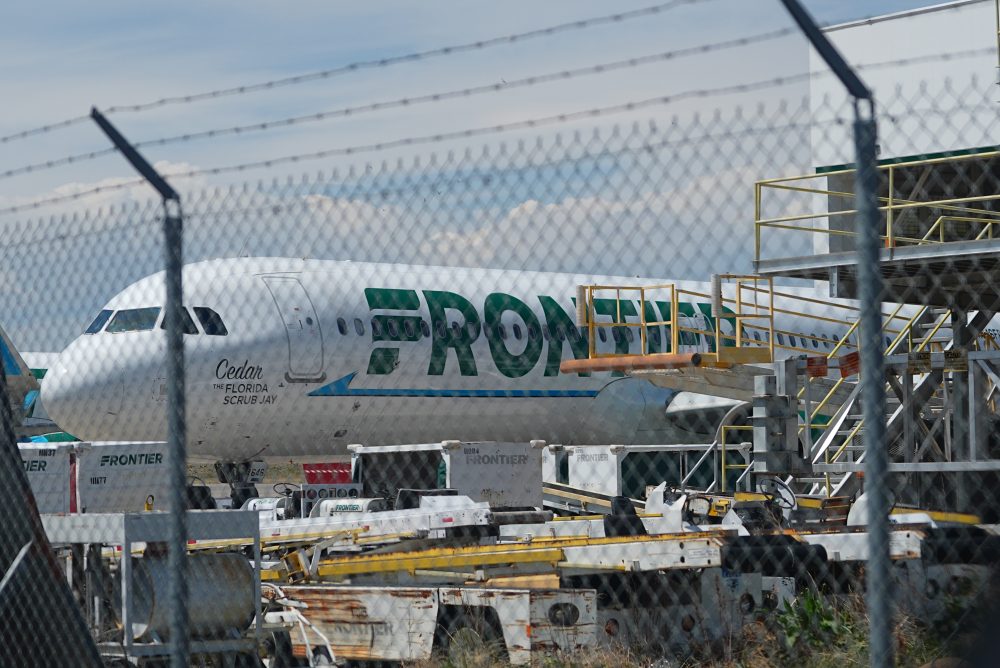
Once inside the secure area, the man walked directly onto an active runway where he was struck and killed by a departing Frontier Airlines aircraft carrying 224 passengers and seven crew members. The pilot was forced to halt takeoff procedures and evacuate all 231 people on board, with twelve individuals sustaining minor injuries during the emergency evacuation.
Video footage captured the moment the individual was drawn into the aircraft’s engine, which immediately ignited, prompting the pilot to abort takeoff while traveling at 150 miles per hour.
Security and aviation specialists have characterized the Colorado incident as a significant safety breakdown that could have resulted in catastrophic consequences had the pilot failed to stop the high-speed aircraft safely.
“People ought to be concerned. This was really an unprecedented risk. But now there is precedent,” stated Eric Chafee, a law professor at Case Western Reserve University who specializes in aviation industry risk assessment.
“The individual ended up with a bad result. But having somebody basically damage a plane is really quite concerning because of all those lives aboard any given aircraft,” Chafee continued. “There ought to be new measures put into place to prevent this type of tragedy.”
However, other industry professionals questioned whether additional regulations are necessary, arguing that comprehensive surveillance systems or impenetrable airport barriers would be financially unfeasible given how infrequently such dangerous incidents occur.
Local medical authorities have classified the intruder’s death as suicide. Airport administrators from the city-operated facility have pledged to conduct a thorough review of existing procedures while maintaining that their perimeter security systems have earned “perfect scores” in federal evaluations.
The Associated Press has requested information from the Transportation Security Administration regarding Denver’s inspection records and detailed security protocols.
“Safety is something we take very, very seriously,” airport CEO Phillip Washington stated during a Tuesday press conference.
Washington noted that increasing fence height or adding razor wire might not prevent determined individuals from finding alternative entry methods.
The security breach began when ground sensors detected movement along the airport’s eastern perimeter, located approximately 2 miles from the main terminal building. A surveillance operator monitoring camera feeds mistakenly attributed the alarm activation to wildlife in the area, failing to identify the human intruder.
According to Washington, the individual required roughly 15 seconds to clear the perimeter fence and an additional two minutes to reach the runway area. Airport personnel remained unaware of the trespasser’s presence until the aircraft pilot contacted the control tower to report the collision.
Security specialist Jeff Price, who previously oversaw safety operations at the Denver facility during the 1990s, explained that perimeter violations occur regularly at airports nationwide, potentially numbering in the dozens annually. The Colorado airport maintains approximately 36 miles of fencing that officials say undergoes constant inspection and regular security patrols.
Price emphasized that most airport trespassers do not present genuine threats to public safety. A similar fatal incident occurred at an Austin airport in 2020 when a Southwest Airlines aircraft struck an individual on the runway, which authorities also determined was suicide.
Two legal firms informed Denver officials Tuesday of their intention to file lawsuits representing Frontier passengers, seeking damages exceeding $10 million. The firms have alleged “multiple failures” in airport security systems without providing specific details.
Steven Wallace, who formerly directed accident investigations for the Federal Aviation Administration, characterized the Denver fatality as a “one-off event” that would not warrant expensive nationwide improvements to airport perimeter security programs.
Wallace acknowledged that many perimeter barriers can be easily compromised, noting that no standardized construction requirements exist and that their main function involves keeping wildlife away from flight operations.
“I just don’t see how you’re going to think of and deal with every possible way a human could get into an airport,” he explained.
Jim Hall, former chairman of the National Transportation Safety Board, warned that Friday’s incident could increase the likelihood of similar events due to potential copycat behavior. Hall recommended that Denver consider deploying additional personnel and enhanced surveillance systems to properly monitor its perimeter.
“With the amount of cameras and technology that is available, they need to address the problem,” he stated. “They’ve had a failure and they don’t need to have another one.”