The University of Maryland Eastern Shore Hawks baseball team came up short in their midweek contest against Towson University, despite a standout individual performance from one of their key players.
While the Hawks were unable to secure victory in the matchup, there was a bright spot in the lineup as Jimenez delivered his best offensive showing of the season. The player connected for four hits during the game, marking a personal season-best performance at the plate.
The loss represents a setback for the Hawks as they continue their season, though Jimenez’s exceptional hitting display provides a positive takeaway from an otherwise disappointing result against their opponents.
WASHINGTON — A top U.S. diplomat working to secure the freedom of political prisoners in Belarus has disclosed his unconventional approach to building trust with the country’s authoritarian president, including using crude language and strategically handling alcohol during negotiations.
John Coale, President Trump’s special representative to Belarus, shared details of his diplomatic tactics during a recent speaking engagement at Arizona State University’s McCain Institute. His mission focuses on securing freedom for hundreds of imprisoned political dissidents in the Eastern European nation.
According to Coale, State Department officials briefed him before his initial encounter with President Alexander Lukashenko, telling him the leader enjoys casual banter and suggested he match that energy.
“About a half-hour, 45 minutes into it, I am trying to get the feel of who this guy is and how to communicate,” Coale explained during his university appearance. “He starts complaining about the Europeans — Europeans this, Europeans that. So — and this is kind of crude and I’m sorry for the language — but I said to him, ‘Yeah, they’re a bunch of p———.’ So, I had him in my hand from then on.”
The Maryland lawyer shared this story as an example of how he’s worked to establish rapport with Lukashenko, who maintains close ties with Russian President Vladimir Putin but has shown interest in improving Western relationships since Trump took office.
When questioned about his language choice on Wednesday, Coale stood by his methods. “If I have to use locker room language to get 500 political prisoners released, I will do it every time,” he stated to The Associated Press.
This type of crude language echoes a 2016 controversy involving Trump himself, when leaked recordings of similar vulgar comments created significant political fallout during his first presidential campaign, prompting a rare public apology from Trump who dismissed it as private “locker room talk.”
Coale isn’t the first American diplomat to use undiplomatic language regarding Europeans. Victoria Nuland, formerly the leading U.S. official for European affairs, issued an apology in 2014 after private conversations containing harsh language about European Ukraine policy became public. Similarly, in 2003, State Department spokesman Richard Boucher drew criticism for dismissively calling Iraq War opponents France, Germany, Belgium and Luxembourg “chocolate makers.”
Trump has frequently clashed with European allies over various issues including trade tariffs, NATO funding obligations, and his interest in acquiring Greenland.
The attorney, who is married to television journalist Greta Van Susteren, received his appointment from Trump in March 2025 as deputy special envoy to Ukraine. By June, he had successfully negotiated the freedom of 14 political detainees from Belarus. Trump later promoted him to lead envoy for Belarus.
Speaking at the McCain Institute conference focused on hostage situations and wrongful detentions, Coale argued that his straightforward diplomatic style is producing positive results with Lukashenko.
For over thirty years, Lukashenko has maintained authoritarian control over Belarus’s 9.5 million citizens, leading to repeated Western sanctions for both domestic oppression and permitting Russia to use Belarusian territory for its 2022 Ukraine invasion.
Since Trump’s return to office, Belarus has freed hundreds of political detainees in exchange for sanctions relief, as Lukashenko pursues improved U.S. relations under the Republican administration.
Coale described his initial meeting with Lukashenko extending into a two-hour meal where he discreetly poured vodka shots onto the floor to avoid intoxication while his host wasn’t watching. He joked about limiting himself to just two drinks while some accompanying State Department officials consumed much more.
“All these toasts started — I can’t get hammered,” Coale recalled. “Of course, there were a couple State Department guys who drank all eight toasts and they were hammered.”
Lukashenko faced his biggest challenge following the 2020 presidential election, when massive street protests erupted over what demonstrators considered fraudulent results. These became the largest public demonstrations since Belarus gained independence after the Soviet Union’s 1991 collapse.
The government’s harsh response included detaining tens of thousands of protesters, many suffering police beatings. Key opposition leaders either fled abroad or faced imprisonment.
Five years later, Lukashenko secured a seventh term in what opposition groups condemned as a sham election.
Recently, Belarus has released several high-profile political prisoners in efforts to curry Western favor, including Nobel Peace Prize winner Ales Bialiatski and prominent opposition figures Siarhei Tsikhanouski, Viktar Babaryka and Maria Kolesnikova.
Just last week, Lukashenko authorized the freedom of 250 political prisoners through an agreement with Washington that resulted in lifting certain U.S. sanctions, representing his latest move toward Western reconciliation. This marked the country’s largest single release of political detainees.
Following his meeting with Coale in Minsk, Lukashenko granted these pardons. Coale praised the releases as a “significant humanitarian milestone” demonstrating Trump’s “commitment to direct, hard-nosed diplomacy.”
The McCain Institute presentation occurred just before this major prisoner release. At that time, Coale predicted the Trump administration would achieve the freedom of all political prisoners before year’s end.
“I’d be willing to bet on that,” Coale declared, mentioning plans for additional Belarus visits he expects will result in freeing “a couple hundred” more political prisoners. “I think this type of diplomacy that Donald Trump has pushed forward does work.”
Multiple safety technologies designed to prevent aircraft ground collisions malfunctioned during Sunday’s fatal crash at New York’s LaGuardia Airport, where an Air Canada aircraft struck a fire truck during landing.
Federal investigators with the National Transportation Safety Board are working to understand how the accident occurred, which claimed the lives of both pilots and left dozens injured. An air traffic controller authorized the emergency vehicle to enter the runway merely 12 seconds before the aircraft with 76 passengers made contact with the ground. Despite urgent radio calls ordering the truck to halt, the impact could not be avoided.
Aviation experts expect investigators will uncover several contributing elements, as commercial aviation employs numerous protective measures specifically designed to minimize such incidents. Officials are conducting interviews with all personnel involved, analyzing debris, and testing equipment that may have played a role. The damaged aircraft was transported to a secured facility Wednesday for detailed inspection.
LaGuardia operates one of 35 sophisticated Airport Surface Detection Systems called ASDE-X across major U.S. airports. This technology combines radar information with transponder signals from aircraft and ground vehicles to provide air traffic controllers with real-time positioning data. The system triggers audible warnings when potential collisions are detected.
The warning technology has successfully prevented accidents in recent years. Last autumn, the NTSB recognized the system for averting a collision between a private aircraft and a Southwest Airlines plane in San Diego during August 2023. Controllers received the alert with enough time to prevent contact, even though the planes came within 100 feet of each other.
Similar success stories include a prevented collision involving a JetBlue aircraft in Boston during 2023, with the system earning recognition in multiple NTSB investigations since its late 1990s introduction. Earlier versions of this technology existed in the 1980s.
History’s most devastating aviation disaster occurred in 1977 when two Boeing 747s collided on a runway in Tenerife, Spain, resulting in 583 fatalities. Another significant runway accident happened in 1991 at Los Angeles International Airport, where nearly three dozen people perished when a landing aircraft struck another plane preparing for departure.
Currently, only the nation’s busiest airports have received the expensive ASDE technology, though the Federal Aviation Administration is implementing a more affordable version at 200 additional facilities. This newer system already operates at 54 airports as part of the FAA’s comprehensive strategy to eliminate runway incidents.
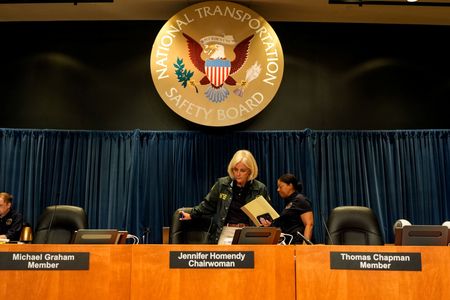
However, NTSB Chairwoman Jennifer Homendy explained that the ASDE system at LaGuardia did not activate an alarm before Sunday’s crash because it struggled to forecast the collision.
Homendy highlighted concerns about LaGuardia’s emergency vehicles lacking transponders that would supply more accurate location data to the controller monitoring system. She noted that other airports have equipped their vehicles with these devices.
While the FAA has promoted transponder installation and provided financial assistance, the agency lacks comprehensive data on their prevalence. The ASDE system continues tracking all airport vehicles through radar even without transponders.
According to Homendy, numerous emergency vehicles positioned on the taxiway Sunday complicated the system’s collision prediction capabilities. These vehicles were responding to assist a United Airlines flight that had reported unusual odors causing flight attendant illness.
Rick Castaldo, who participated in ASDE system design and installation during his FAA career, explained that the technology performs better predicting collisions involving moving vehicles or aircraft. The computer cannot anticipate stationary vehicle movements, and the fire truck only began crossing after receiving controller approval 20 seconds before impact.
Even if the system had sounded an alert, it may not have provided much additional warning beyond the controller’s urgent radio call nine seconds before collision: “Stop, stop, stop, Truck 1. Stop, stop, stop. Stop, Truck 1.”
Castaldo revealed that during system development, officials worried about excessive false alarms potentially causing controllers to disregard legitimate warnings, so “they dumbed down the alerts so that you get them just in time to look up and see the accident.”
Despite controller authorization for the fire truck to proceed, embedded pavement lights should have illuminated red to warn the driver about the approaching Air Canada aircraft. Aviation safety specialist Jeff Guzzetti stated that the driver “should have known not to cross, even if the controller told them to cross, because the runway status lights were red — flashing red.”
Both the fire truck operator and controller were likely distracted by the emergency involving the other aircraft. Mike O’Donnell, who supervised airport safety programs and accident investigations during his 17-year FAA tenure, noted that truck radios were probably active with New York Fire Department communications as responders rushed to reach the United plane.
Homendy indicated that runway lighting systems appeared functional, though investigators must examine and test them for verification. These lights utilize ASDE system data to signal aircraft landing or departure activities and operate at 20 airports nationwide.
O’Donnell emphasized that none of these technologies are intended as foolproof solutions. Each system, combined with additional safety measures, aims to reduce crash probability rather than guarantee prevention of every disaster.
“It’s just one of several layers that are designed to reduce the risk of incursions,” explained O’Donnell, now president of his consulting firm. “It’s a broader framework. There’s other things. There’s procedures. There’s communication. There’s decision-making. All those other layers are there as well.”
NEW YORK — Cleanup operations concluded Wednesday at LaGuardia Airport as workers removed the damaged Air Canada aircraft involved in Sunday’s fatal runway collision, while the airline reported that most injured passengers have been discharged from medical facilities.
Air Canada announced that only four passengers remain hospitalized following the devastating crash that claimed the lives of two pilots. Approximately 40 individuals received medical treatment at local hospitals for various injuries, with some sustaining serious trauma. The airline has not released additional information about the four patients still receiving care.
The Montreal-bound aircraft was transporting 76 individuals, including crew members, when it struck a fire vehicle that had entered the runway. Moments prior to impact, air traffic control had authorized the emergency vehicle to traverse the runway.
Since Monday, debris from the accident had occupied the tarmac, shutting down one of two runways at the heavily trafficked airport.
Removal operations began around 5 p.m. Wednesday as airport personnel used specialized equipment to clear the wreckage. Two heavy-duty tow trucks worked together to upright the severely damaged fire vehicle, which had remained overturned since the collision.
Workers placed the aircraft’s rear section on a massive dolly and used two coordinated vehicles with extended cables to transport it. Earlier Wednesday, crews had cut away much of the completely destroyed nose section. The aircraft’s middle portion rested on its undamaged landing gear during the removal process.
Air Canada stated the aircraft will be relocated to a hangar facility. The carrier plans to begin returning personal items and luggage to passengers soon.
Following the impact, numerous passengers successfully evacuated the compromised aircraft, including a flight attendant who was ejected onto the runway while still secured in her seat but survived.
Officials have identified the deceased pilots as Mackenzie Gunther and Antoine Forest. Passenger Clément Lelièvre praised their “incredible reflexes” for preserving lives, highlighting how they applied maximum braking power upon landing.
Both Port Authority Police Department firefighters aboard the emergency vehicle survived the collision.
The United States Postal Service has submitted a request for an 8% temporary price increase on several widely-used shipping services to help manage escalating transportation expenses.
On Wednesday, USPS submitted paperwork to the Postal Regulatory Commission requesting approval for the price adjustment, which would begin April 26 and continue through January 17, 2027, if given final approval.
In a news release, the postal agency explained that “This temporary price adjustment will provide needed flexibility for the Postal Service by helping to ensure that the actual costs of doing business are covered, as required by Congress.” The statement also highlighted that competing delivery companies have implemented “a number of surcharges” in response to increasing fuel costs.
The agency emphasized its restraint in pricing, stating “We have steadfastly avoided surcharges and this charge is less than one-third of what our competitors charge for fuel alone.” Should regulators approve the request, the higher rates would apply to Priority Mail Express, Priority Mail, USPS Ground Advantage, and Parcel Select services. According to the postal service, no other products or services would see price changes, including First-Class Stamps.
This pricing request comes amid ongoing financial challenges for the postal service. Postmaster General David Steiner has recently cautioned Congress that the agency faces a cash shortage within twelve months unless legislators remove existing borrowing restrictions that have been in place for decades. Steiner has also advocated for additional changes, including permission to increase postage rates sufficiently to offset financial losses, as mail delivery volumes continue to decline significantly.
WASHINGTON — An Ohio congresswoman has filed a federal court motion seeking to compel the Kennedy Center to eliminate President Donald Trump’s name from the renowned Washington performing arts facility.
Representative Joyce Beatty of Ohio submitted the legal filing on Wednesday, contending that Congress explicitly intended for the cultural institution to honor only the late President John F. Kennedy.
“Renaming the Kennedy Center for President Trump — without any authorization from Congress — undermines the Center’s raison d’être, and frustrates its purpose as the only memorial to President Kennedy in Washington, D.C.,” the motion argues.
The board of trustees, selected by Trump, voted in December to rebrand the facility as the Trump-Kennedy Center, claiming the sitting president merited recognition for his renovation initiatives. The decision immediately sparked opposition from Democratic officials and Kennedy family members, while legal experts questioned the board’s authority to make such changes.
Beatty’s legal challenge maintains that Congress has consistently emphasized throughout the venue’s existence that no additional names should be displayed on the structure.
“Congress was particularly sensitive that no other names appear on the Center’s exterior walls, other than the signage designating the institution as a memorial for President Kennedy,” according to the motion.
Within 24 hours of the December board vote, Trump’s name appeared on the Kennedy Center’s exterior, a recognizable landmark situated along the Potomac River. The name modification has also been implemented across the institution’s online presence and social media platforms.
A cornerstone of the nation’s capital arts community since its 1971 opening, the Kennedy Center will close this summer under Trump’s direction for renovations expected to span approximately two years. This closure faces separate legal opposition from eight cultural and historic preservation organizations working to prevent additional structural modifications.
Beatty serves as an ex officio board member through her congressional role. A federal judge determined earlier this month that she could attend board meetings but declined to guarantee her voting rights regarding the facility’s closure.
ORLANDO, Florida – Financial markets experienced a broad rally Wednesday as investors expressed growing confidence that diplomatic efforts between the United States and Iran may be advancing toward a peaceful resolution. The positive sentiment drove the MSCI All Country equity index to its strongest performance in six weeks.
Market analysts noted that equities climbed while oil prices and bond yields declined, reflecting investor hopes for reduced Middle East tensions. The optimism spread across global markets, creating what traders described as widespread gains.
According to market data, equity markets showed strong performance across regions. Asian markets led gains with Japan climbing 3%, while European indices including the Euro Stoxx and FTSE 100 each rose 1.4%. Mexico’s market surged 3.6%, and Wall Street’s three major indices posted gains between 0.5% and 0.8%. The MSCI World index advanced approximately 1%, marking its best trading session since February 9.
Within U.S. sectors, nine of the eleven S&P 500 categories posted gains. Materials led with a 2% increase, followed by consumer discretionaries and healthcare, each up 1%. Energy was the notable exception, declining 0.5%. Technology stocks showed particular strength, with Amazon and Nvidia each gaining 2%, while Intel, AMD, Super Micro Computers and Hewlett Packard all jumped between 7% and 8%.
Currency markets saw the dollar strengthen broadly, with the USD/JPY pair approaching the 160.00 level. The Australian dollar experienced the largest decline among G10 currencies.
Bond markets rallied as the yield curve flattened, with the 2-year to 10-year spread falling below 44 basis points – its lowest close since August. However, Treasury auctions continued to show weakness, following Tuesday’s poor 2-year note sale with Wednesday’s disappointing 5-year auction.
Commodity markets presented mixed results, with oil prices dropping 2% while gold advanced 2%. Copper futures on the Comex exchange gained 1.5%.
Economic data released Wednesday revealed that U.S. import prices accelerated at their fastest pace in four years during February, rising 1.3% following an upwardly revised 0.6% increase in January. Imported capital goods prices posted their largest gain since 1988.
Energy cost increases, driven by Middle East conflict concerns, were cited as the primary factor behind the import price surge. Oil prices had risen approximately 15% during January and February, with an additional 35% gain recorded so far this month. Economists warned that consumers and businesses should prepare for even steeper price increases in upcoming months.
Technology sector valuations showed signs of convergence with broader market metrics. The premium that U.S. tech stocks have historically maintained over the general market has nearly disappeared, with forward 12-month price-to-earnings ratios showing the smallest gap in seven years.
The Roundhill “Mag 7” ETF has declined 10% year-to-date, triple the S&P 500’s decline. Investment banks offered conflicting views on the sector’s prospects, with JPMorgan suggesting the artificial intelligence narrative is losing steam while Barclays maintained that tech growth momentum remains intact.
Foreign central bank Treasury holdings reached concerning levels, with custody accounts at the New York Federal Reserve hitting their lowest point since 2012. These holdings are positioned to drop below $3 trillion for the first time since 2010, having decreased by $75 billion over the past four weeks.
Deutsche Bank analysis indicated that approximately $60 billion of the decline represented actual selling – the highest level since 2020. While foreign central banks were modest sellers last year, private sector purchases of $440 billion offset those sales. Questions remain whether private buyers will continue filling the gap if official selling accelerates.
Israeli President Isaac Herzog is reportedly engaging in private discussions about a potential deal that could conclude Prime Minister Benjamin Netanyahu’s ongoing criminal proceedings, according to a report from Israeli news outlet Walla.
Sources familiar with these discussions indicate that no formal proposal has been developed yet. The conversations reportedly focus on whether there’s political space for an agreement that would provide Netanyahu with some form of legal protection in exchange for his withdrawal from public service.
Similar proposals have been floated previously but have never materialized into concrete action. The Walla report emphasizes that Netanyahu has not approved any such arrangement, and there’s no indication of active negotiations taking place.
Neither Herzog’s office nor Netanyahu’s team provided immediate comment following the report’s publication. The President’s Residence refused to make a statement, while Netanyahu’s office remained silent on the matter.
Sources close to Herzog indicate he has repeatedly expressed worry about the growing friction between Israel’s political establishment and judicial system over recent years. Those who have discussed the matter with Herzog describe these talks as careful explorations rather than formal initiatives, aimed at determining if the current standoff might be resolved.
The timing of these discussions is particularly notable as Israel continues its military operations alongside the United States against Iran, with ongoing missile and drone strikes targeting civilian locations. Despite the external conflicts, internal debates about leadership and Netanyahu’s legal troubles persist behind closed doors.
Netanyahu’s legal case remains a polarizing issue within Israeli society. His allies claim the charges are politically motivated, while critics, including former high-ranking legal officials, caution that any interference with the judicial process would undermine the rule of law.
The Walla report details multiple potential arrangements being considered in recent discussions. These include possibilities for presidential pardons, either before the legal proceedings conclude or afterward, as well as options connecting any legal relief to Netanyahu’s political retirement. Conversations have also touched on establishing a state commission to investigate the October 7 attack failures, though this appears to be part of broader context rather than a specific requirement.
Within Israel’s political circles, where these concepts are beginning to circulate, reactions vary significantly. Some officials view it as a possible method to end a prolonged and destabilizing situation, while others believe such steps should be avoided under any circumstances.
Currently, these discussions remain confined to private conversations with no concrete developments. It remains uncertain whether these ideas will advance further, but their reemergence demonstrates that Israel’s internal political challenges remain unresolved despite the ongoing regional conflict.
The Goldey-Beacom College Lightning baseball team put on a dominant display during their road trip to Pennsylvania, overwhelming Lincoln University in both games of a Central Atlantic Collegiate Conference doubleheader.
The Lightning opened the day with an explosive 23-3 win in the first matchup before maintaining their momentum with a commanding 13-3 victory in the nightcap at Lincoln University in Pennsylvania.
The doubleheader sweep showcases the team’s offensive firepower and marks a successful conference road trip for the Wilmington-based college program.
NEW YORK (AP) — The NBA is committed to solving its tanking problem, and the controversial 65-game requirement for awards may stay in place.
Commissioner Adam Silver announced Wednesday that the league will modify its draft system and tackle the tanking controversy before the upcoming season begins. He referenced the success of the player participation policy in reducing load management as evidence that the NBA can implement meaningful reforms.
During the two-day board of governors meeting that concluded Wednesday, team owners discussed tanking — when franchises intentionally lose games to improve their chances of securing top draft selections. Silver noted that no formal votes occurred and no particular teams were singled out for criticism.
“We are going to fix it,” Silver declared. “Full stop.”
According to Silver, the league has been analyzing recent tanking concerns for several months and has previously tackled this challenge multiple times through various modifications to the draft and lottery systems.
“I would say it seemed unanimous in the room that we needed to make a change, and we need to make a change for next season,” Silver explained during his press conference following the ownership meetings. “Exactly what that change is, we’re continuing to work on. … I think there’s also unanimous agreement that we need to make this change in advance of the draft and free agency this year, so all the teams understand the rules of the road going into next year.”
Silver indicated that a special board meeting in May will likely be scheduled to finalize the solution. League general managers have held multiple discussions on the topic, and various teams have submitted proposals for addressing the problem.
Regarding other topics discussed Wednesday:
Silver addressed the National Basketball Players Association’s Tuesday statement requesting modifications to the 65-game requirement for major individual honors.
The NBPA agreed to this rule through collective bargaining as part of their current contract with the league. The union highlighted Detroit’s Cade Cunningham as an example — he would likely earn All-NBA recognition this season but may not qualify due to the 65-game minimum.
“We always knew when there’s a line you draw that somebody’s going to fall on the other side of that line and it may feel unfair in that particular instance,” Silver stated. “Let’s see what happens at the end of this year. By the way, Cade Cunningham, he’s an incredible player. I’m sorry that he’s injured and can’t wait to see him back on the floor.
“But having said that, we also have to remember that to the extent that one player is no longer eligible, some other player will then be All-NBA and will slot into that spot. I’m not ready to stand here saying, I don’t think it’s working. I think it is working.”
The NBPA contends the rule should target “excessive load management” while ensuring players don’t lose deserved recognition or feel pressured to compete while injured to reach the games-played requirement.
Silver mentioned that NBA owners — many of whom also have investments in the WNBA — reviewed the new collective bargaining agreement between that league and its players.
“People were extremely happy about the fact that the collective bargaining situation was resolved in time to save training camp and free agency and the season,” Silver commented.
When asked about WNBA Commissioner Cathy Engelbert’s future beyond 2026, Silver responded cautiously.
“We haven’t had those discussions yet with the WNBA board,” Silver said. “I would obviously say Cathy’s done a fantastic job since she’s come to the WNBA. … I would say the results speak for themselves. I’m very happy, and I know the ownership is very happy with where things stand.”
More than seven months have passed since a deadly shooting attack at the Centers for Disease Control and Prevention, yet the federal agency’s damaged windows remain covered with paper as a stark reminder of the violence.
During a staff meeting on Wednesday, CDC employees questioned acting director Dr. Jay Bhattacharya about when the bullet-damaged window panes would finally be replaced.
“We’re working on that,” Bhattacharya responded, emphasizing it remains a top concern. A fellow CDC administrator confirmed that permanent window restoration efforts are currently in progress, according to a recording of the meeting obtained by The Associated Press.
Following the staff gathering, CDC leadership sent an email to workers explaining that repair work would commence this month. Officials noted that each window requires custom manufacturing, weather conditions affect installation timing, and the project remains on its planned timeline.
Last August, 30-year-old Patrick Joseph White unleashed more than 180 rounds of gunfire at the CDC campus, shattering approximately 150 windows. The bullets penetrated even “blast-resistant” glass panels and sent debris flying into multiple office spaces, according to internal agency documents.
CDC security personnel had initially confronted White before he drove to a nearby pharmacy and began his assault on the health agency’s buildings. Police officer David Rose arrived at the scene and lost his life in the incident. White also died during the confrontation. While no CDC staff members suffered physical injuries, many experienced terror during the attack.
White had attributed his depression and suicidal thoughts to receiving the COVID-19 vaccination.
Numerous CDC workers expressed disappointment with how U.S. Health Secretary Robert F. Kennedy Jr. handled the aftermath. Kennedy, the political appointee who supervises the CDC and other federal health organizations, conducted only a brief weekend inspection of the damaged facility without attempting to connect with agency personnel.
Before President Donald Trump appointed him to lead federal health agencies, Kennedy had been a prominent figure in the anti-vaccination movement and has spread inaccurate information regarding COVID-19 vaccines and other immunizations.
Bhattacharya revealed that he requested Kennedy’s approval to honor the fallen officer by renaming the CDC’s entrance roadway after Rose, and Kennedy has agreed to the tribute.
Authorities in New Castle County are actively searching for an elderly Wilmington man who vanished from his home earlier this week.
Police have activated a Gold Alert for James Dwyer, 82, who disappeared from his home on Maple Avenue Wednesday morning. According to the New Castle County Division of Police, Dwyer departed from his residence in the 100 block of Maple Avenue around 9:30 a.m. on March 25, 2026, and has failed to return.
The Gold Alert system is specifically designed to help locate missing adults who may be suffering from cognitive impairments or other conditions that could put them at risk.
Investigators report that following his departure from home, Dwyer made contact with someone, though additional details about this communication have not been released by authorities.
Anyone with information regarding James Dwyer’s whereabouts is urged to contact the New Castle County Division of Police immediately.
At just 16 years old, Walker Montgomery received a message on Instagram from what appeared to be a teenage girl who lured him into online sexual activity.
Hours later, the Mississippi teenager had taken his own life after falling victim to a sextortion scam.
EDITOR’S NOTE — This story includes discussion of suicide. If you or someone you know needs help, the national suicide and crisis lifeline in the U.S. is available by calling or texting 988.
Brian Montgomery will never recover from his son’s loss, but he joined other grieving parents in celebrating this week after Meta suffered defeats in two separate court cases where juries determined the company’s platforms ensnare young people without regard for their safety.
Montgomery views these rulings as long-overdue accountability.
“We’re talking about the most financially sound business that the planet has ever known. This will set an expectation,” Montgomery stated Wednesday following jury decisions in New Mexico and Los Angeles that found social media companies had failed in their duty to protect minors.
His sentiment is shared by numerous other parents who believe inadequate protections have left children vulnerable to harm.
Tuesday brought the initial victory when New Mexico jurors supported state attorneys who contended Meta — the parent company of Instagram, Facebook and WhatsApp — placed profit margins ahead of user safety, resulting in a $375 million financial penalty.
A day later, a separate Los Angeles jury determined that both Meta and Google’s YouTube created their services to deliberately engage young people without considering potential harm to their wellbeing. Both companies released statements indicating they would review their legal alternatives, including possible appeals.
These decisions reflect a changing tide in how the public views social media corporations and their obligation to safeguard minors using their services.
Social media giants have long challenged claims that their platforms damage children’s psychological health through intentional features that create addiction while failing to shield users from predators and harmful material. Multiple state and federal lawsuits are proceeding to trial this year, and despite varying specifics, all aim to establish corporate accountability for platform activities.
Montgomery, who was not involved as a plaintiff in either lawsuit, believes legislative action must follow. “They’ve proven,” he said regarding the social media sector, “that they can’t regulate themselves.”
He described his son as an athletic outdoors enthusiast who went to sleep content before encountering a fraudster operating from Nigeria.
“We didn’t get to see him the next morning,” said the farmer and crop insurance agent, with a photograph from his son’s duck hunting expedition just months before his December 1, 2022 death visible on his office desk.
He now experiences conflicting feelings of hope and grief, recognizing that the progress he witnesses arrives too late for his family. “Walker’s not coming back,” he acknowledged.
In Dedham, Massachusetts, near Boston, Deb Schmill deeply comprehends the complicated emotions these legal victories generate. Her daughter Becca Schmill was 18 in September 2020 when she died from fentanyl poisoning after purchasing drugs through a social media site.
“That’s the painful part of all of this,” explained Schmill, who also was not a plaintiff in these cases. “If this could have been done five years ago, 10 years ago. Things would be so different.”
Her daughter’s fatal overdose occurred after the teenager was sexually assaulted by an online contact and subsequently became targeted by revenge pornography.
“She was a wonderful child, but she was just tortured,” her mother recalled.
Similar to Montgomery, Schmill has supported legislation designed to shield children from social media, gaming websites, and other digital platform dangers. The proposed Kids Online Safety Act received Senate approval two years ago but has not advanced through the House of Representatives.
Given likely appeals and potential settlement negotiations, these cases against social media corporations may require years to reach final resolution. Unlike regulatory approaches in Europe and Australia, technology oversight in America progresses extremely slowly.
“We know, the parents know better than anyone that when we are unable to hold the social media companies accountable, children die,” she emphasized. “And it’s just absurd that this is happening in our country.”
Even parents who haven’t experienced such devastating losses are becoming increasingly cautious. Charles Halley, dropping his son at an Alameda, California school, explained why his fifth-grade student doesn’t own a phone due to concerns about social media’s impact on children.
“The divisiveness, the beauty standard, consumerism, just everything that’s wrong with society kind of packaged up and marketed to kids,” he observed.
He noted that parents are becoming frustrated and organizing efforts to reduce these dangers, though he questions whether complete elimination is possible.
“People my age, younger, older, have seen what social media has done to our behavior, the way we deal with each other,” he said, referencing accidents caused by individuals unable to disconnect from their devices. “And I would just assume that the effect is magnified for kids whose brains are still developing, and it’s just a shame to see them exposed that way.
Federal authorities have arrested a Palm Harbor, Florida resident on charges of making threatening phone calls to MacDill Air Force Base in Tampa, following the discovery of a suspicious package at the military installation.
The 35-year-old suspect faces federal charges after allegedly placing threatening calls to the base on March 18, according to court documents filed in Tampa’s federal courthouse. His arrest occurred on Monday.
Court records indicate the individual contacted MacDill Air Force Base twice during the morning hours of March 18, delivering threatening messages to personnel who answered the calls. The threats appeared connected to a suspicious package discovered on March 16 outside one of the base’s gates. Base officials responded by implementing a complete lockdown and issuing shelter-in-place orders that remained in effect for several hours.
Federal investigators tracked down the suspect by tracing his phone number, collecting cellular tower data, and verifying his whereabouts in the days before the threatening calls were made, according to the criminal complaint.
The court filing reveals the man has previously made similar threatening communications. Following questioning by authorities, he was transported to a mental health facility under Florida’s Baker Act provisions, which permit involuntary psychiatric holds for up to 72 hours.
The FBI announced Friday that laboratory analysis revealed the suspicious package contained materials that could potentially be used as explosives. Additional testing of the package continues.
MacDill Air Force Base serves as headquarters for U.S. Central Command, which oversees American military operations across the Middle East, Central Asia, and portions of South Asia. The installation has maintained elevated security measures since the outbreak of conflict in Iran.
TRENTON, N.J. — New Jersey’s Democratic Governor Mikie Sherrill put her signature on new legislation Wednesday that prohibits law enforcement officers from wearing face masks while performing their duties, specifically targeting federal immigration enforcement agents among others.
This makes New Jersey the second state in recent weeks to pass such restrictions, following Washington state where Democratic Governor Bob Ferguson enacted similar legislation earlier this month. Multiple Democratic-controlled state legislatures across the country are either considering or have already approved comparable measures.
Since taking office on January 20th, Sherrill has openly opposed the Trump administration’s approach to immigration enforcement. On Wednesday, she described the face covering ban as one component of a broader strategy designed to protect New Jersey residents.
“I can’t believe we have to say this, but in the United States of America, we’re not going to tolerate masked roving militias pretending, pretending to be well-trained law enforcement agents,” she said. The legislation also mandates that officers must show proper identification before conducting arrests or detaining individuals.
According to Sherrill, the face covering restriction represents one element of a broader legislative package designed to “protect people’s privacy and their rights” and “strengthen trust between law enforcement and our communities.”
Officials from the U.S. Department of Homeland Security have not yet responded to requests for comment regarding New Jersey’s new law. However, the agency previously criticized Washington state’s similar measure, calling it “irresponsible, reckless and dangerous.”
“To be crystal clear: we will not abide by this unconstitutional ban,” the department said in a statement at the time.
The federal government has already filed a lawsuit against New Jersey challenging Sherrill’s February 11th executive order, which prevents federal immigration agents from conducting arrests in restricted areas of state facilities like jails and courthouses. That order also prohibits using state property for immigration enforcement staging or processing operations.
WASHINGTON — American military forces launched a deadly attack Wednesday against a suspected narcotics smuggling vessel in Caribbean waters, resulting in four deaths, according to Pentagon officials. The operation represents part of the Trump administration’s ongoing military offensive targeting suspected drug traffickers across Latin America, even as U.S. forces remain engaged in Middle East operations against Iran.
Wednesday’s fatal strike increases the total death toll from American military boat attacks to a minimum of 163 individuals since the administration began its campaign against what it terms “narcoterrorists” in early September.
U.S. Southern Command reported the operation targeted suspected drug smugglers operating along established trafficking corridors, following the pattern of previous military statements regarding numerous attacks conducted in Pacific and Caribbean waters. Military officials provided no proof that narcotics were actually aboard the targeted vessel. Social media footage displayed a moving boat before a massive explosion consumed it.
President Donald Trump has declared the United States engaged in “armed conflict” with Latin American cartels, defending these military operations as essential measures to reduce drug imports and prevent American overdose deaths. However, the administration has provided minimal evidence supporting its assertions about eliminating “narcoterrorists.”
Legal experts and policy critics have challenged both the constitutional authority for these naval strikes and their practical impact, noting that fentanyl responsible for numerous fatal overdoses typically enters America through overland routes from Mexico, where it’s manufactured using chemical precursors from China and India.
These Latin American maritime operations have persisted despite increased U.S. military focus on Middle Eastern conflicts, where American naval vessels and aircraft continue intensive strikes against Iranian targets while additional Marine units and 82nd Airborne Division soldiers prepare for regional deployment.
The Federal Emergency Management Agency announced Wednesday it will restart applications for a billion-dollar disaster preparedness grant program, responding to a federal court mandate issued less than three weeks ago.
The agency is allocating $1 billion through the Building Resilient Infrastructure and Communities program, which provides funding to states, local governments, territories and tribal nations for projects designed to strengthen defenses against natural disasters including wildfires, flooding, earthquakes and hurricanes.
“When done correctly, mitigation activities save lives and reduce the cost of future disasters,” stated Karen S. Evans, FEMA’s acting leader, while announcing the program’s return.
The current administration has reduced funding for disaster preparedness across several FEMA initiatives. No state or tribal hazard mitigation funding requests have received presidential approval for an entire year, despite such approvals typically accompanying major disaster declarations.
However, a FEMA document describing the grant opportunity suggests the administration may now be supporting disaster mitigation efforts, noting that “BRIC aims to shift the focus of federal investments away from reactive post-disaster spending towards proactive infrastructure-focused hazard mitigation.”
This funding restoration follows FEMA’s decision last April under former acting leader Cameron Hamilton to terminate the BRIC program, which he labeled “wasteful and ineffective.” The cancellation sparked criticism from both Republican and Democratic legislators as approximately $3.6 billion in multi-year infrastructure and community protection projects nationwide were suspended.
U.S. District Judge Richard G. Stearns ruled in December that FEMA lacked authority to eliminate BRIC and mandated the agency reverse its decision after 22 Democratic-led states and the District of Columbia filed suit against the administration over the program’s termination. When the agency delayed releasing funds, Judge Stearns issued another order this month requiring FEMA to take action toward program restoration.
FEMA announced last week it would reinstate BRIC program support following the end of the DHS shutdown, stating it had completed its evaluation of the program originally enacted during Trump’s first presidency. The agency claimed that under former President Joe Biden, BRIC became overly bureaucratic and “focused on ‘climate change’ initiatives.”
States have 120 days to submit applications for the new funding cycle, which encompasses fiscal years 2024 and 2025, since last year’s opportunity was withdrawn.
Although the restored funding provides access to essential assistance for many regions, FEMA has implemented new regulations aligned with the Trump administration’s goal of transferring more disaster management responsibilities to states.
The updated regulations, which eliminate funding for hazard mitigation planning and non-financial direct technical assistance, may affect smaller communities with limited resources and expertise.
“The program now maximizes state and local responsibility for resilience and risk reduction rather than federal investing in a wide range of activities,” according to a FEMA statement.
The revised grants also establish limits on individual recipient awards and give priority to new applicants and “impoverished communities.” These modifications may address previous criticism that BRIC favored coastal states and was challenging for rural areas to access.
Other updates include prioritizing major infrastructure projects that “are ready to implement” and encouraging adoption of “the latest hazard-resistant building codes,” according to FEMA.
The timeline for resuming previously awarded grants remains uncertain.
The BRIC cancellation delayed construction of a flood barrier in his Washington district, according to Rep. Rick Larsen, a Democrat and ranking member of the House Transportation and Infrastructure Committee, who commented Wednesday. “Slowing states’ ability to prepare for disasters was shortsighted, and communities like Aberdeen paid the price,” Larsen stated.
Over the past decade, weather- and climate-related disasters causing $1 billion or more in damages have occurred nearly as frequently as they did in the previous 35 years combined, based on Climate Central data.
Research consistently demonstrates that advance investments in disaster preparedness generate substantial savings. A 2024 U.S. Chamber of Commerce-funded study determined that each $1 invested in disaster preparation prevented $13 in economic impact, damage and cleanup expenses.
Former FEMA officials, lawmakers and disaster survivors have expressed cautious optimism that newly confirmed Homeland Security Secretary Markwayne Mullin might provide greater stability to the agency following Kristi Noem’s controversial leadership period. During his Senate confirmation hearing last week, Mullin supported FEMA’s mission and endorsed initiatives to improve the agency’s effectiveness, accelerate payments to state and local jurisdictions, and better assist rural communities.
An obscure militant organization has vowed to persist in targeting American and Israeli facilities worldwide following a series of arson incidents against Jewish institutions across Europe. The pledge was made directly to CBS News as law enforcement agencies in Britain and Belgium work to address multiple fire-bombing incidents that have alarmed Jewish communities and sparked concerns about Iran-connected operations expanding outside the Middle East region.
The warning followed incidents where emergency vehicles belonging to a Jewish medical service were destroyed by fire in London, and a vehicle was torched in Antwerp. A representative of Harakat Ashab al-Yamin al-Islamia told CBS News: “We’ll keep threatening US and Israeli interests worldwide until we’ve avenged every child in Gaza, Iran, Lebanon, and the resistance nations.” The spokesperson also cautioned people to stay away from “Zionist and American interests,” and the organization subsequently took credit for an additional incident in Antwerp.
CBS News reported that this group first appeared in early March, coinciding with escalated tensions between the US, Israel and Iran, and has utilized the messaging platform Telegram to announce their involvement in incidents across Belgium, the Netherlands, and the United Kingdom.
London authorities have taken two suspects into custody, both middle-aged men of 45 and 47 years, on charges related to arson with intent to endanger lives. This followed the destruction of four emergency vehicles owned by Hatzola Northwest in the Golders Green area. Commander Helen Flanagan described the arrests as “an important breakthrough in the investigation,” though she noted that surveillance footage indicates at least three individuals participated in the attack. Detective Chief Superintendent Luke Williams announced that enhanced police presence, including armed officers, will remain deployed at sensitive locations throughout London.
Belgian officials have detained two juveniles following the car fire in Antwerp, while the government has positioned military personnel to guard Jewish educational institutions, houses of worship, and the Israeli diplomatic mission. British Prime Minister Keir Starmer condemned the London incident as a “deeply shocking antisemitic arson attack.” The US State Department has advised American citizens globally to “exercise increased caution,” citing potential threats from Iran-affiliated groups against US facilities abroad. Security experts speaking to CBS suggested the organization’s messaging and operational methods indicate either Iran-sympathetic recruits, imitators, or a loosely coordinated proxy network designed for intimidation, disruption, and maintaining plausible deniability.
Jerusalem’s Temple Mount, housing the Al-Aqsa Mosque and Dome of the Rock, faces growing danger as Iranian ballistic missiles and debris continue falling near Jerusalem’s Old City. The sacred compound, cherished by Muslims, Jews, and Christians alike, sits at the heart of religious disputes, political conflicts, and conspiracy theories that could transform a direct strike into a worldwide catastrophe.
The religious significance of this location spans three major faiths. Jewish tradition holds this as the location where the First and Second Temples once stood. Muslims consider it home to Al-Aqsa Mosque and the Dome of the Rock. Christians view it as part of Jerusalem’s holy landscape, connected to Jesus’ ministry and teachings. Rarely does such a compact area hold such enormous religious, historical, and political importance.
Currently, the Islamic Waqf, a Muslim religious organization under Jordan’s oversight, manages the site’s daily operations. While increasing numbers of Jews have visited and sometimes prayed at the location recently, the established arrangement has largely continued since Israel gained control of eastern Jerusalem in 1967. This framework allows the Waqf to handle religious and administrative matters while Israel maintains security responsibilities.
Though Al-Aqsa Mosque and the Dome of the Rock hold particular importance in Sunni Arab religious and political discussions, the location also holds meaning in Shiite Islam. Iran’s Shiite leaders have long viewed Jerusalem not merely as a religious symbol but as a central component of their revolutionary identity and anti-Israel stance, making any nearby strike particularly dangerous.
Multiple fragments and smaller explosive devices have fallen in and around the Old City recently. Last Friday, an impact created a crater in a roadway and parking area within the Jewish Quarter, merely hundreds of meters from the Western Wall and Temple Mount.
During earlier phases of the conflict, debris also hit Sultan’s Pool, an ancient water reservoir beneath the Old City walls that historically supplied Jerusalem’s water system and now serves as an outdoor concert location, along with other nearby strikes.
As the conflict with Iran progresses, experts debate whether Tehran deliberately aims at the Temple Mount or if the threat to this area results from long-distance missile inaccuracy, widespread debris from interceptions, or a combination of factors. Last week, Iran reportedly stated it directed drones toward Israel’s National Security Ministry in Jerusalem as retaliation for recent killings of senior officials. Tuesday night, footage showed Israeli Defense Forces intercepting missiles aimed at the Holy City.
Some experts have informed The Media Line that many of these missiles function essentially as suicide attacks and that Iran no longer possesses accurate guidance capabilities due to extensive Israeli damage to its launchers and airspace. Others maintain that Iran retains targeting abilities and continues using them.
The question of what would occur if a missile struck the Temple Mount has moved beyond theoretical consideration.
Hillel Fuld, an experienced high-tech marketing influencer and prominent pro-Israel social media personality, shared with The Media Line that “everyone would blame the Jews and conspiracy theories would fly.”
“I go back and forth about whether the Iranian missiles are super targeted or firing in all directions,” Fuld explained. “I really don’t know. Any normal, rational person would say there is no way Iran is targeting the Temple Mount. But Iran is so unhinged that I would not put it past them, especially if they were targeting it so the world would turn on Israel.”
Based on responses from over 100 people who answered a similar question Fuld posted on X this week, many believe the world would likely blame Israel and Jewish people.
“The world blames Israel,” one respondent commented. “Riots in the streets worldwide, Jews slaughtered. The truth comes out the next day, and no one cares that it was Iran that caused the destruction because it no longer fits their narrative.”
Another X user wrote, “Iran and bot farms scream Israel did it, false flag, and try to stir up [a] march on Jerusalem.”
Rabbi Tuly Weisz, founder of Israel365, who collaborates closely with Christian and religious Zionists on matters concerning Jewish sovereignty in Judea and Samaria and the Temple Mount, suggested that Iran might even claim responsibility if it struck Al-Aqsa Mosque.

“In some twisted way, they would probably try to prove it as being good for their version of Islam,” Weisz shared with The Media Line.
Simultaneously, Weisz proposed that worldwide reaction might not persist as long as anticipated. Several weeks ago, when debris struck near the Church of the Holy Sepulcher, major Christian organizations provided limited condemnation of Iran. One of the few statements came from the International Christian Embassy Jerusalem, an evangelical organization, rather than Orthodox Christian institutions that utilize the site. Instead, the Greek Orthodox Patriarchate criticized Israel for restricting church access for security purposes, noting the absence of bomb shelters in the Old City.
“I feel like everyone would just continue to use it to support their narrative,” Weisz stated.
He suggested that a nation like Saudi Arabia might even “rejoice” at eliminating Islam’s third-holiest site, as this could strengthen its position as the primary guardian of Islamic holy locations.
A direct impact on the compound could initiate a chain reaction extending far beyond Jerusalem, fueling existing suspicions, intensifying religious emotions, and increasing diplomatic pressure on Israel regardless of who fired the missile.
These concerns stem from more than the current conflict. The mount’s sensitivity has historically generated conspiracy theories. Since at least the 1920s, during Jerusalem Grand Mufti Hajj Amin al-Husseini’s era, allegations have spread claiming Jews sought to harm or destroy the Muslim holy sites to make room for a Third Temple.
Similar stories continue today. Repeated rumors claim Israel excavates what it calls the Kotel Tunnels beneath the compound in ways that might weaken the structure, so if a missile struck, the mosque would collapse and clear space for reconstruction. This rumor has never been verified.
Allegations about Jewish intentions toward the site have also appeared in Western media recently. American commentator Tucker Carlson has accused Israel, during interviews on his program, of seeking to rebuild the Temple and advance a “Greater Israel” vision.
While such claims spread widely online, they lack foundation in official Israeli policy or mainstream religious practice.
Carlson, in one recent episode, accused Chabad Hasidim of “pushing in a pretty subtle way … for the reconstruction of the Third Temple.”
In another episode, featuring an interview with Beijing-based educator and international analyst Jiang Xueqin, Carlson permitted discussion of a “worst-case scenario,” which “would include a nuclear strike by one or more actors and the destruction of the Aqsa Mosque complex in Jerusalem, which would spark a religious war.”
Xueqin went further, accusing various Jewish and Christian sects of working for centuries to build the Third Temple and bring the messianic age. He claimed the basic elements of that vision include “the creation of the state, the nation-state of Israel, which happened in 1948. And then you need to have the building of the Third Temple, which requires the destruction of Al-Aqsa Mosque … which could happen during this war, given what we’ve seen so far.”
He continued, “There’s actually talk among Israelis of using this plan to ignite a war between the Arabs and the Persians. … They also talk about the war of Gog and Magog between Israel and the entire world. Then, the coming of the Jewish Messiah, the creation of the Greater Israel project, the return of all Jews from the Diaspora. … If you just observe geopolitical events, we’re seeing these events converge together today.”
Jews have prayed for Temple reconstruction for nearly 2,000 years, since Roman destruction in 70 CE. However, this is not Israel’s official policy, nor do many contemporary rabbis support it, with some still prohibiting Jewish prayer on the Temple Mount.
Weisz and Fuld acknowledged that Jewish community members have prepared for the Third Temple’s return and are creating instruments for use on the mount. They emphasized, however, that these represent fringe groups and that the government would unlikely make dramatic policy changes even if Temple Mount damage occurred.
Recent political responses support this position. Even in August 2024, on the Jewish fast day of Tisha B’Av, which commemorates Temple destruction, when National Security Minister Itamar Ben-Gvir visited the Temple Mount and suggested the status quo had changed, the Prime Minister’s Office quickly responded.
“It is the government and the prime minister who determine policy on the Temple Mount,” the Prime Minister’s Office stated. “Israel’s policy on the Temple Mount has not changed; this is how it has been, and this is how it will be.”
Regardless of the motivation behind Jerusalem-area strikes, the danger is evident: A Temple Mount hit would not remain a localized military incident. It would almost certainly become a religious, political, and diplomatic crisis extending far beyond the battlefield.
Weisz, however, expressed a different vision for the mount, one that could emerge if such an attack reshaped ground realities.
“My dream is for a synagogue, church, and mosque to be built on the Temple Mount like the Abrahamic Family House in the United Arab Emirates,” Weisz told The Media Line, referencing the biblical verse in Isaiah 56:7, which states, “for my house shall be called a house of prayer for all people.”
He added, “If the territory became available, that would be a beautiful way to end this for Israel and the region.”
Defense Department officials revealed Tuesday that approximately 2,000 soldiers from the Army’s 82nd Airborne Division are being dispatched to the Middle East, expanding American military presence in the region while President Trump evaluates potential military strikes and diplomatic solutions concerning Iran, according to reports from the New York Times.
The deployment involves what’s known as the “Immediate Response Force,” a brigade of approximately 3,000 personnel capable of worldwide deployment within an 18-hour timeframe. Defense officials confirmed that the first wave includes Maj. Gen. Brandon R. Tegtmeier, who commands the division, alongside essential staff and two battalions containing roughly 800 soldiers each. Sources indicated that more elements from the brigade could be sent in upcoming days.
Marine forces are simultaneously being positioned in the area. Approximately 4,500 Marines are currently traveling to the region, and when added to the Army units, the total number of additional ground personnel deployed since hostilities started approaches 7,000. These forces are part of Operation Epic Fury, a comprehensive military effort involving around 50,000 troops stationed throughout the Middle East, Europe, and within American borders.
Military leaders have not yet announced the specific location where the paratroopers will be stationed, though they will be positioned strategically to address any developments concerning Iran. One potential assignment could involve operations at Kharg Island, Iran’s main oil shipping hub located in the northern Persian Gulf, where American warplanes recently conducted bombing missions against more than 90 military installations.
Additional reinforcements are scheduled to arrive shortly. Roughly 2,300 Marines from the 31st Expeditionary Unit are anticipated to reach the region later this week, while a comparable force from the 11th Expeditionary Unit departed southern California last week and should arrive by mid-April.
Military commanders explained that Marine units might be assigned to protect critical locations like Kharg Island or assist in reopening the Strait of Hormuz, which Iran has mostly closed to merchant vessels. They noted that Marines would probably need to restore the island’s damaged airstrip initially before additional forces, including the 82nd Airborne soldiers, could be deployed if necessary.
Pakistani officials revealed Wednesday that they have transmitted a comprehensive American peace proposal to Iran, featuring 15 key provisions designed to halt ongoing Middle East hostilities, according to the Associated Press.
Sources speaking anonymously detailed that the American proposal encompasses multiple critical areas: easing economic sanctions, cooperation on civilian nuclear programs, constraints on Iran’s atomic activities, monitoring by the International Atomic Energy Agency, curbing missile development, and ensuring safe passage through the Strait of Hormuz.
Iran has reportedly responded with its own set of conditions, according to the Wall Street Journal. Tehran’s demands include compensation for damages from US-Israeli bombing operations, shutting down American military installations in the Persian Gulf, and ending Israeli actions against Hezbollah.
While President Trump announced Monday he would delay strikes on Iranian energy infrastructure and expressed openness to negotiations, the US military continues expanding its regional presence. Approximately 1,000 soldiers from the 82nd Airborne Division are scheduled for Middle East deployment in the coming days. The Pentagon is also dispatching two Marine units, bringing roughly 5,000 Marines and additional naval personnel to the area.
Despite diplomatic overtures, Iran has maintained its aggressive stance, launching fresh missile attacks Wednesday against Israeli targets and Persian Gulf locations. One strike sparked a significant blaze at Kuwait International Airport, sending thick black smoke billowing skyward.
Tehran also maintains its blockade of the Strait of Hormuz, the vital shipping channel that handles approximately 20 percent of global oil transport, driving up energy costs and creating market instability worldwide.
The University of Delaware men’s tennis team experienced a setback during their recent road trip, falling to Miami in intercollegiate competition.
The Blue Hens faced a tough challenge against their opponents, ultimately coming up short in the match. The team traveled away from their home courts to compete against Miami in what marked another contest in their ongoing season.
This loss adds to the team’s record as they continue their campaign and look ahead to future matches on their schedule.
Investment banking firm Jefferies Financial reported Wednesday that while first-quarter earnings increased 22% driven by robust dealmaking activity, the results fell short of Wall Street expectations due to substantial losses from failed business loans.
The financial services company absorbed $17 million in losses tied to the collapse of British lending firm Market Financial Solutions and the bankruptcy of American auto-parts company First Brands, after accounting for compensation and tax adjustments. The firm’s exposure to First Brands has now been reduced to nothing.
Financial industry leaders remain optimistic about merger and acquisition activity heading into 2026, despite ongoing Middle Eastern conflicts creating market uncertainty. Expected drivers include growing artificial intelligence investments and anticipated regulatory changes favoring business deals in the United States.
“Assuming a reasonable end to hostilities in the Middle East, we should continue to have an increasingly strong M&A environment as well as an active IPO market,” Jefferies President Brian Friedman told Reuters in an interview.
The investment bank maintains operations across the United Arab Emirates, Saudi Arabia, and Israel. Some employees have been relocated from Middle Eastern offices while others continue working remotely, though trading activities remain largely unaffected, according to Friedman.
Deal announcements have exceeded $1 trillion in value this year, representing a 27% increase compared to the same period last year, based on Dealogic’s tracking data.
Investment banking revenues at Jefferies jumped 45% to reach $1.02 billion compared to the previous year’s quarter, while overall company revenues grew to $2.02 billion. The firm participated as lead underwriter in major initial public offerings during the quarter, including York Space and Forgent, and expanded its stock repurchase program authorization to $250 million.
These earnings mark the beginning of a closely monitored reporting period for major Wall Street institutions, with JPMorgan Chase, Goldman Sachs and Morgan Stanley scheduled to announce results in coming weeks.
Jefferies drew attention Tuesday following Financial Times reports suggesting Japan’s Sumitomo Mitsui Financial Group was considering a potential acquisition of the investment bank. Subsequent reports disputed this claim, indicating Japan’s second-largest banking institution was not pursuing acquisition discussions and that Jefferies had no interest in selling currently.
SMFG, which holds a board position at Jefferies, initially acquired ownership in the company during 2021. Last September, SMFG announced plans to invest an additional 135 billion yen ($912.84 million), expanding its ownership stake to approximately 20% from the previous 14.5%.
The companies previously announced plans for a Japanese joint venture combining their wholesale equities operations in that market.
“We have great ambition for that joint venture. We have lots of other initiatives and activity that we are jointly pursuing in accordance with our alliance,” Friedman said, while declining to comment if SMFG was planning a takeover of the firm.
Jefferies has faced significant investor criticism regarding its financial exposure to Market Financial Solutions and First Brands-related losses. Company shares have declined approximately 35% year-to-date.
“Management is disappointed and takes full responsibility for the losses already recognized and that may be absorbed over time in respect of First Brands, all of which are manageable,” the company said in a statement on Wednesday.
Jefferies reported adjusted earnings of 85 cents per share for the quarter, falling below analyst expectations of 96 cents per share according to LSEG data compilation.
The iconic National Mall in Washington D.C. has transformed into a visual political battleground where supporters and opponents of President Trump are competing for attention through competing displays.
Pro-Trump banners featuring the president’s image are now sharing space with satirical artwork and protest signs created by his critics, creating a stark contrast in the nation’s most symbolic public gathering place.
The competing political messages demonstrate how deeply divided opinions about the president have spilled into one of America’s most visited tourist destinations, where citizens traditionally come to reflect on the country’s history and democratic values.
NEW YORK — Miami Heat coach Erik Spoelstra, a Portland native who cheered for the Trail Blazers growing up, admits he could never support their division rival Seattle SuperSonics back in the day.
However, the prospect of professional basketball returning to Seattle — nearly twenty years after the SuperSonics moved to Oklahoma City — definitely has the veteran coach’s endorsement.
Wednesday’s announcement that the NBA will officially begin studying expansion opportunities, focusing on Seattle and Las Vegas as potential host cities, generated positive responses from Spoelstra and numerous other league personnel.
His stance is clear: he supports the move.
“It would be fun,” Spoelstra commented Wednesday. “I think all the Pacific Northwest people were sad when it left. I loved the games there. I grew up disliking the Sonics very much because I was a Trail Blazer fan, but it was an awesome environment. It’s a city that can really rally around their team.”
Expansion isn’t guaranteed to occur, and any new franchise would likely begin play no earlier than the 2028-29 season.
Nevertheless, reaching this milestone represents major progress and immediately sparked reactions from Las Vegas, Seattle, and throughout the basketball community.
MGM Resorts CEO & President Bill Hornbuckle expressed gratitude to league ownership for their decision regarding Las Vegas.
“It’s only the first step, but it’s a big step,” Hornbuckle stated. “A new team would be great for both locals and visitors, while creating jobs and providing a boost to the economy. … We would welcome the opportunity to work with the NBA on creating an unforgettable fan experience.”
Seattle’s Tod Leiweke — who serves as CEO of the NHL’s Kraken and will lead One Roof Sports and Entertainment as they pursue majority ownership of Climate Pledge Arena — believes “the hardest part of this is now done.”
“We will put together a bid that has it all,” Leiweke declared. “And I would say the most important thing in our bid is the ability to do it and do it well. And that’s going to be very important for the NBA if ultimately they push ahead and want to expand, they’re going to want to make sure that it’s done well, that there’s no drama, that there’s no slips, there’s no mistakes.”
Heat center Bam Adebayo, who dates Las Vegas Aces star A’ja Wilson — the four-time WNBA MVP — has witnessed firsthand the basketball enthusiasm in Las Vegas while attending her games. He believes an NBA franchise wouldn’t diminish the strong support for the Aces.
“Aces fans are really true to the Aces,” Adebayo observed.
Initial feedback indicates widespread support among current NBA players and coaches for league expansion.
“I think we’re adding two good teams, two good markets,” Spoelstra concluded. “It’ll be a big positive for the league.”
NEW YORK — The National Basketball Association has taken its first official step toward potentially adding new franchises, with Seattle and Las Vegas identified as the primary markets under consideration.
During Wednesday’s board of governors meeting in New York, league officials authorized the beginning of formal discussions with prospective ownership groups in both cities. This decision opens the door for serious negotiations that could begin in the near future.
NBA Commissioner Adam Silver has established a timeline requiring the league to determine whether expansion will move forward by the conclusion of 2026.
To assist with the evaluation process, the NBA has enlisted investment banking firm PJT Partners to serve as a strategic consultant. The firm will assess potential markets, ownership candidates, venue capabilities, and the overall financial impact of adding franchises.
PJT Partners’ chairman and CEO Paul Taubman brings extensive NBA experience to the role, having collaborated with the league on various projects over the years. Notably, when former Commissioner David Stern transitioned out of his role to make way for Silver’s leadership more than ten years ago, Taubman brought Stern aboard as an advisor to his firm.
Silver emphasized that no agreements have been finalized, leaving the competition completely open at this stage.
“If you are interested, and I’ll say that now to people who may be listening or watching this, if you’re interested, call the league office, call PJT Partners directly in New York,” Silver stated during Wednesday’s press conference. “I just want to make sure everybody understands there’s been no handshakes on the side. There’s been no commitments. There’s no promises to anyone. This is a completely transparent process.”
The league and PJT Partners will now evaluate potential candidates and their proposals before beginning actual deal negotiations. With expansion fees anticipated to reach $6 billion or higher, the process is expected to be lengthy.
The NBA could ultimately choose to add both cities, select just one, or decide against expansion entirely. There are no guarantees that new franchises will be added to the current 30-team structure.
While having 31 teams would create scheduling challenges, the league has previously operated with uneven conference alignments.
New teams would not debut next season or likely the season following. Industry experts believe establishing a new franchise requires a minimum of 18 months, suggesting the 2028-29 season as the earliest possible launch date.
“Our goal was in 2026 to resolve this issue one way or the other,” Silver explained. “So, my timeline — we weren’t so specific with the board — is that we need to know by the end of this calendar year what it is we’re doing. It may not be that every ‘I’ is dotted, but that would be our goal, this year.”
Should expansion proceed, the league would essentially be selling ownership stakes in its current operations during a period of unprecedented growth. NBA franchise valuations have skyrocketed recently, with the Boston Celtics selling for slightly over $6 billion and the Los Angeles Lakers valued at $10 billion.
“The only discussion in the room was understanding the math around dilution in terms of projections and what’s the direct reduction in existing revenues to teams if we were expanding beginning in ’28-29,” Silver noted. “We did not discuss franchise value per se in these meetings. Of course, certainly with our bankers, we have a sense of where we think that value exists, but at the end of the day, the marketplace will determine that.”

Officials in Israel confirmed Wednesday the identity of a young woman who died during a Hezbollah missile attack in the country’s northern region, as ongoing rocket barrages continue to injure civilians nationwide.
Twenty-seven-year-old Nuriel Dubin lost her life when a missile struck Mahanayim Junction on Tuesday. Emergency responders from Magen David Adom discovered her body upon reaching the attack site. Medical personnel transported two additional victims to hospitals, including one man who suffered head wounds from flying debris.
Local officials from Margaliot in the Upper Galilee region reported that Dubin leaves behind her parents Yoram and Shoshana, siblings Aviram and Sapir, and her fiancé Yadid. According to municipal statements, she dedicated her career to working with young people as both a youth counselor and preschool caregiver while also fulfilling duties as a reserve combat soldier. The couple had recently become engaged in September 2025 and were making preparations for their September 2026 wedding ceremony.
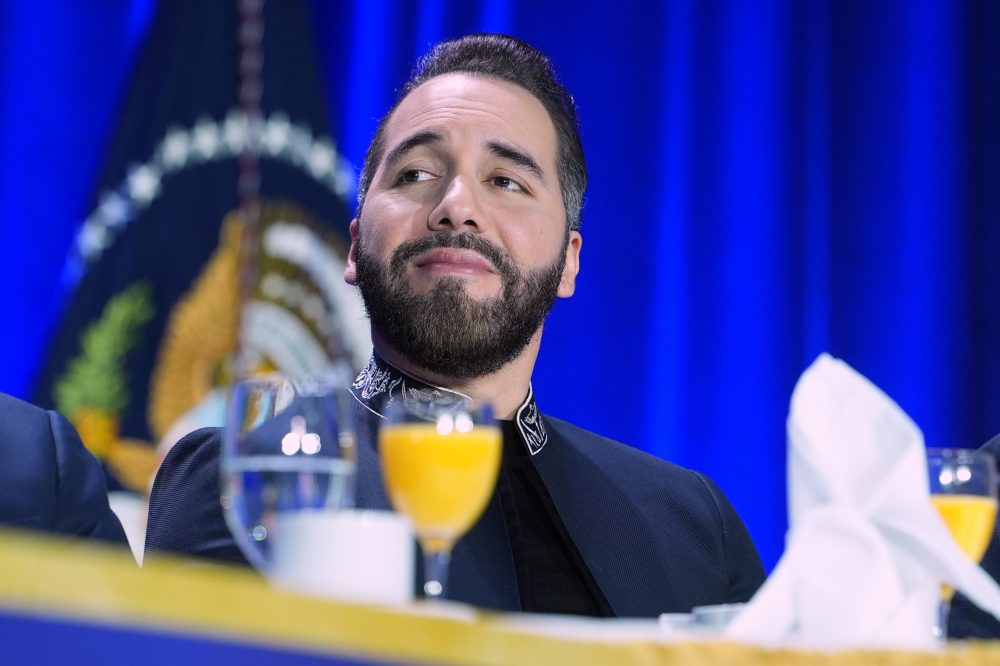
Warning sirens continued blaring throughout northern Israel following the deadly attack, alerting residents to additional incoming projectiles. Two civilians in Safed suffered minor cuts from flying glass fragments when rockets impacted their area.
Southern Israel also experienced violence when debris from an intercepted Iranian missile wounded Dr. Asra Abu Rafa, a physician in his thirties who works at Soroka Medical Center. The incident occurred near his residence in the Bedouin community of Alsira, close to Nevatim, where the missile was shot down. Medical officials reported his wife and baby daughter remained in stable condition.
Hospital staff at Soroka Medical Center provided care for 17 individuals experiencing acute anxiety reactions related to the attacks.
First responders maintained their efforts addressing rocket and missile damage throughout various locations, delivering medical assistance to injured persons in both the northern and southern territories.
JERUSALEM (AP) — A recently unsealed court document reveals that an Israeli judge has terminated an investigation into a Palestinian teenager’s death in custody, ruling that while the 17-year-old clearly suffered from starvation, investigators cannot definitively establish what killed him.
The decision offers new details about Israel’s approach to the controversial case involving Walid Ahmad, who Palestinian authorities say became the youngest Palestinian to die while in Israeli custody.
Ahmad’s family described him as being in good health before his arrest. He spent half a year at Israel’s Megiddo detention facility before collapsing this past March. While his autopsy failed to pinpoint one specific cause of death, an Israeli physician who witnessed the examination reported that starvation appeared to be the primary factor.
The unsealed decision, initially reported by Israeli newspaper Haaretz and later shared with The Associated Press, shows that Judge Ehud Kaplan ordered the investigation’s closure in December despite the autopsy results. Kaplan determined that proof of Ahmad’s starvation was insufficient to establish the cause of death.
“The fact that he was apparently starved cannot be hidden and should not be hidden,” Judge Kaplan stated in the ruling. “But I cannot determine based on the findings of the expert report that there is a causal connection between his poor physical condition and his death, and therefore I cannot determine that the death was caused by a crime.”
The judge continued: “Given this state of affairs, the investigation into his death is exhausted.”
Under Israeli law, judges may oversee investigations when detainees die in custody. These judicial officials can examine evidence to determine death causes and investigate potential wrongdoing. When evidence of misconduct emerges, judges can pursue criminal charges or, as happened with Ahmad’s case, halt the investigation entirely.
Haaretz obtained access to the ruling after successfully petitioning to have a gag order removed from the case. Most details of the decision remain confidential beyond the judge’s conclusion.
This situation has drawn attention to how Israel handles Palestinian prisoners, especially minors, within its correctional system.
According to his family, Ahmad was taken from his residence in the occupied West Bank community of Silwad during an early morning operation in September 2024, accused of hurling rocks at military personnel. His attorney, Firas al-Jabrini, reported that Israeli officials rejected multiple requests to meet with Ahmad before his death. Ahmad’s father, Khalid Ahmad, said his son was awaiting another court appearance when he died.
Dr. Daniel Solomon, the Israeli physician who observed the autopsy, documented that Ahmad suffered from severe malnutrition and displayed symptoms of colon inflammation and scabies. Solomon indicated that Ahmad likely had colitis, a medical condition causing frequent diarrhea that can sometimes be fatal.
Solomon’s findings also referenced prison medical records showing Ahmad had complained about insufficient food portions for several months.
Human rights organizations have documented extensive mistreatment, including inadequate nutrition and water supplies, at Israeli detention facilities since the October 7, 2023 start of the Israel-Hamas conflict. Former prisoners have described to the AP deplorable conditions including physical violence, extreme overcrowding, limited healthcare, scabies outbreaks, and unsanitary environments.
Israeli rights organization B’Tselem reported that as of late September, Israel’s Prison Service held 350 Palestinian minors on what officials termed “security” charges, based on government statistics. An additional 110 Palestinian youth were detained for unauthorized presence in Israel.
Neither Israel’s prison service nor police responded to requests for comment.
The prison service maintains it follows legal requirements and provides all inmates with fundamental rights.
Ahmad’s father informed the AP that Israeli authorities continue to hold his son’s remains. The family has filed court papers seeking the body’s return.
“What is happening in Israeli prisons is a real tragedy, as there is no value for life,” he told the AP in April 2025.
ABUJA, Nigeria (AP) — Eleven people died when armed militants launched an ambush against Nigerian security personnel who were responding to an emergency call in the country’s northwest Kebbi state, government officials reported Wednesday.
The deadly assault took place late Tuesday in Kebbi’s Shanga council area, where security forces were being sent to address intelligence warnings of an imminent attack, state government spokesperson Yahaya Sarki confirmed. Nine soldiers, one police officer, and one civilian were killed in the violence.
Additional soldiers sustained injuries during the confrontation in Giron Masa village, Sarki reported, while sharing images showing destroyed vehicles on a dirt road cutting through forested terrain.
State Governor Nasir Idris made a hospital visit to see the wounded troops and acknowledged the significant casualties from the incident. “Those that lost their lives, the government of Kebbi state will do everything to assist the families,” he stated.
This deadly encounter represents another episode in the ongoing violence plaguing Nigeria’s conflict-torn northwestern territories, where militant organizations regularly assault government security personnel and isolated rural settlements in regions where official authority remains weak.
While no organization has taken credit for Tuesday’s violence, local residents believe the Islamic State Sahel Province (ISSP), locally called Lakurawa, may be responsible. This group has intensified its deadly operations recently in border states including Kebbi and Sokoto, which share a porous frontier with Niger Republic.
U.S. forces conducted a strike against Lakurawa inside Nigeria during December, working alongside Nigerian military units. The American intervention followed President Donald Trump’s accusations that Christians were being systematically killed in Nigeria.
Nigerian defense officials have previously stated that Lakurawa originated in neighboring Niger and expanded its Nigerian border operations after a 2023 military takeover in Niger damaged diplomatic ties between the two nations.
WASHINGTON — The Department of Justice has agreed to pay former Trump national security adviser Michael Flynn approximately $1.2 million to resolve his lawsuit alleging wrongful prosecution, according to a source with knowledge of the matter.
While court documents submitted Wednesday don’t disclose the settlement figure, an individual familiar with the case confirmed to The Associated Press that the total reaches about $1.2 million. The source requested anonymity to discuss confidential information.
This agreement ends Flynn’s 2023 legal action where he demanded no less than $50 million, claiming the criminal charges against him constituted malicious prosecution. The settlement marks a dramatic shift for the Justice Department, which under the Biden administration had urged a judge to throw out Flynn’s complaint. Current Attorney General Pam Bondi, who previously served as Trump’s personal attorney, has been an outspoken opponent of the Russia probe that led to Flynn’s charges. Over the past year, the FBI and Justice Department have removed officials who took part in Trump-related criminal investigations.
Department officials described the settlement as a crucial move toward correcting what they characterize as a “historic injustice” stemming from the Russia investigation that overshadowed much of Trump’s initial presidency.
“This Department of Justice will continue to pursue accountability at all levels for this wrongdoing. Such weaponization of the federal government must never be allowed to happen again,” a department representative stated.
This development represents another chapter in Flynn’s extensive legal battles. He was among six Trump associates prosecuted during special counsel Robert Mueller’s probe into possible connections between Russia and Trump’s 2016 campaign.
In December 2017, Flynn admitted guilt to making false statements to FBI agents when he denied discussing with Russian diplomat Sergey Kislyak the sanctions imposed by the departing Obama administration on Russia for election meddling. Flynn had actually counseled Russia to remain “even-keeled” regarding the penalties and promised “we can have a better conversation” about bilateral relations once Trump took office.
This exchange concerned the FBI, which was then examining whether Trump’s campaign and Russia had worked together to influence the election. Additionally, White House representatives were publicly claiming that Flynn and Kislyak hadn’t discussed sanctions, which the FBI knew was false.
Flynn subsequently attempted to retract his guilty plea, claiming federal prosecutors had acted in “bad faith” and violated their agreement when they recommended imprisonment.
In 2020, the Justice Department moved to drop the case, arguing that the FBI lacked justification to question Flynn about Kislyak and that his statements weren’t relevant to the broader counterintelligence investigation. Officials also cited internal FBI documents showing agents had planned to close the investigation weeks before conducting the Flynn interview.
Trump eventually pardoned Flynn, bringing the court proceedings and legal disputes to an end.
Celebrated narrative nonfiction writer Tracy Kidder, who possessed the remarkable ability to transform ordinary subjects into compelling bestsellers, has passed away at the age of 80.
Random House, Kidder’s publisher for many years, announced his death on Wednesday, stating: “Tracy’s gifts for storytelling and tireless reporting are an enduring reflection of the empathy, integrity, and endless curiosity he brought to everything he did.”
Kidder earned both the Pulitzer Prize and National Book Award in 1981 for “The Soul of a New Machine,” a groundbreaking work that explored the inner workings of an emerging computer company during an era when few people understood or cared about Silicon Valley’s operations.
Reflecting on that experience, Kidder shared with The Associated Press: “It was like going into another country. At first, I didn’t understand what anybody was saying.”
Throughout his career spanning several decades, Kidder made it his practice to dive deep into unfamiliar territories, creating meticulously researched books on subjects that might not initially appear captivating to general readers.
His 1989 book “Among Schoolchildren” required him to spend an entire academic year observing a fifth-grade classroom, where he captured the unwavering commitment of an inner-city educator in Holyoke, Massachusetts. Four years later, “Old Friends” emerged from his observations at a nursing facility, where he documented both the harsh realities of aging in America and the inspiring way two companions preserved their dignity despite physical limitations.
Converting his observations from the Northampton, Massachusetts nursing facility into a compelling story presented unique challenges, Kidder explained to the AP.
“Not a lot happens, and yet I think when you read it, you feel that a lot does. Small things have to count for a great deal,” he explained.
Kidder’s 2003 work “Mountains Beyond Mountains” chronicled a physician’s mission to deliver healthcare services to Haiti. This book introduced Kidder’s writing to younger audiences as colleges across the country incorporated it into their curricula.
“Mountains Beyond Mountains changed my life—and the lives of so many others around the world,” author John Green, who wrote “The Fault in Our Stars,” posted on social media Wednesday.
The book’s influence extended beyond literature, inspiring the indie rock group Arcade Fire’s 2010 song “Sprawl II (Mountains Beyond Mountains).”
Throughout his writing career, Kidder deliberately avoided focusing on personal interests such as fishing or baseball, worried that spending extensive time writing about his passions might make him “feel sick of it.”
Born in New York City in 1945, Kidder pursued his education at Harvard University, where he joined ROTC hoping to avoid being drafted for the Vietnam War.
Following graduation, contrary to his expectations of receiving a Washington-based communications intelligence assignment, the 22-year-old Kidder found himself deployed to Vietnam. There, he led an eight-person rear-support radio research unit tasked with intercepting enemy communications to determine their positions.
This perplexing chapter of his life became the subject of his 2005 memoir “My Detachment,” a frequently amusing account that provided perspective on the support personnel who comprised the majority of the 500,000-plus American military members stationed in Vietnam during the peak deployment period when Kidder served from 1968-1969. For Kidder, who never experienced combat and knew enemies only as “dots on a map,” the conflict remained somewhat abstract.
Following his military service, Kidder and his bride, Frances Gray Toland, relocated to the Midwest so he could attend the University of Iowa’s renowned creative writing program. There, he embraced the New Journalism movement championed by authors such as Tom Wolfe and Truman Capote.
Kidder disliked being called a “literary journalist,” telling the Dallas Morning News in 2010 that he considered the label “pretentious.”
He also objected to the term creative nonfiction, saying: “It suggests we make things up.”
Rather, he viewed himself as someone who told stories.
“I don’t think of fiction and nonfiction as all that different, except that nonfiction is not invented,” he explained to the AP. “But I take exception to those people who think nonfiction should not appropriate the techniques of fiction … They belong to storytelling.”
WASHINGTON — Republican strategists are witnessing troubling political indicators emerge as the November midterm elections approach, with ongoing military action in Iran maintaining elevated fuel costs while Americans grapple with rising living expenses and lengthy airport security delays.
The most recent concern materialized Tuesday when Democrat Emily Gregory secured victory in a Florida special election, capturing a state legislative seat in a district that includes Trump’s Mar-a-Lago residence in Palm Beach.
With this challenging environment as context, Trump plans to energize GOP supporters Wednesday evening during his speech at the National Republican Congressional Committee’s annual fundraising event at Union Station in Washington.
The event occurs amid survey data indicating most Americans view U.S. military operations against Iran as excessive, while voters express growing anxiety about Trump’s handling of cost-of-living concerns. Combined with a softening job market and inflation fears, these factors could create significant obstacles for Republicans seeking to retain House and Senate majorities.
Alaska’s moderate Republican Senator Lisa Murkowski noted her constituents are questioning the Iran strategy and potential troop deployments there.
“There’s a lot that people want to know, so whether it’s how it’s being communicated in the media, or how it’s being communicated here in the Congress, I think it’s lacking right now,” Murkowski said.
Trump has primarily responded by highlighting previously strong stock performance and earlier low fuel costs that disappeared following the February 28 U.S.-Israel strikes on Iran. He maintains the current economic disruption will be short-lived and claims he can resolve the conflict rapidly — assertions that contradict more complex political and economic realities.
Fuel costs stood at $3.12 per gallon when Democratic President Joe Biden departed office and remained just below $3 before the Iran military action began. Current averages have reached $3.98, according to AAA data.
Elevated pump prices typically ripple throughout the economy, increasing grocery costs, service sector expenses, and other consumer areas — suggesting the most severe political consequences may emerge closer to Election Day.
Currently, approximately 59% of Americans consider U.S. military strikes in Iran excessive, while 45% express extreme or significant concern about affording gasoline in coming months, according to a Wednesday Associated Press-NORC Center for Public Affairs Research poll.
This represents an increase from 30% in an AP-NORC survey conducted after Trump’s reelection victory, when he promised economic improvement and lower living costs.
Inflation projections anticipate increases alongside rising fuel prices, while longer-term interest rates have climbed, elevating mortgage, auto loan, and business borrowing costs. These developments coincide with 92,000 job losses last month.
Adding to political difficulties, a five-week partial government shutdown has created disruptions at major airports nationwide.
The White House attributes responsibility to congressional Democrats who have blocked Homeland Security Department funding while demanding limits on enhanced immigration enforcement activities. However, negotiation efforts have stalled, with the administration refusing to compromise on immigration policies.
“The American people are tired of the chaos. They’re tired of the excuses. And they’re tired of watching Washington fail,” said Rep. Mark Alford, a Missouri Republican who participated in a Tuesday news conference at Ronald Reagan National Airport, criticizing Democrats for the shutdown.
Democrats express optimism about November prospects, noting historical patterns where the president’s party typically loses midterm seats. They believe stronger political headwinds favor their party this year due to Iran conflict consequences and economic disruptions affecting already-concerned voters.
Gregory’s Tuesday victory in the traditionally Republican district containing Mar-a-Lago provided additional Democratic momentum. While she must compete again in November with higher expected turnout, both parties recognized the result’s significance.
“If Democrats can win in Trump’s own backyard, we can win anywhere,” said Democratic National Committee chair Ken Martin.
Throughout these challenges, Trump has suggested Iran military action justifies temporary political difficulties.
“I have to do what’s right,” Trump said recently aboard Air Force One. “I can’t say that ‘Gee, I don’t want to have any impact on oil prices for three or four weeks, or two months, and we’re going to let Iran have a nuclear weapon.’”
Rep. Nick LaLota, R-N.Y., acknowledged voter concerns about affordability and safety in his Long Island district while supporting Iran policy as necessary for “America’s long-term security.”
Regarding potential Republican electoral consequences, LaLota advocated patience until November, suggesting outcomes may depend on whether the U.S. successfully halts Iran’s nuclear program and reopens the Strait of Hormuz.
“I think this could be a thing that bolster conservatives’ approach to national security,” he said.
National Republican Congressional Committee chair Richard Hudson similarly cautioned against premature political assessments.
“If we’re still at this stage in the war in the fall, then I’ll talk to you about that,” Hudson said. “But the president says it’s going to be short, so I believe him. I think he did the right thing by doing what he did.”
Addressing higher fuel costs, Hudson stated, “Voters are smart enough to know this is a temporary increase.”
House Speaker Mike Johnson expressed confidence in Trump’s assurances that Iran-related economic disruptions will be brief: “We’ll see how it shakes out, but our gameplan is exactly the same.”
“We’re going to go out and sell promises made, promises kept, our good record and we’re excited about that campaign.”
Dr. Jay Bhattacharya will remain in his role as acting head of the Centers for Disease Control and Prevention while the White House continues its search for a permanent director, according to a health department official who spoke Wednesday.
The nation’s top public health agency has experienced significant leadership turnover since President Donald Trump dismissed Director Susan Monarez last August following her resistance to vaccine policy modifications proposed by Health Secretary Robert F. Kennedy Jr. Jim O’Neill, who served as Deputy Secretary of Health and Human Services, initially took over before being succeeded by Bhattacharya, the former National Institutes of Health Director, this past February.
“Dr. Bhattacharya will continue to oversee the CDC by performing the delegable duties of the CDC director,” the health department official stated. The spokesperson noted that Kennedy is collaborating with HHS chief counselor Chris Klomp and White House officials to identify candidates for the permanent position.
According to recent Washington Post reporting, approximately six individuals are under consideration for the director role, including former Kentucky Governor Ernie Fletcher, Mississippi’s state health director Daniel Edney, and cardiologist Joseph Marine.
Former Homeland Security Secretary Kristi Noem concluded her inaugural diplomatic mission Wednesday as the newly appointed U.S. special envoy to an anti-drug cartel coalition, completing a multi-nation tour that signals her significantly reduced influence following her dismissal by President Donald Trump earlier this month.
During her final stop in Ecuador, Noem met with President Daniel Noboa, who presented her with an order of merit. She traveled aboard a DHS Gulfstream G700 aircraft with senior aide Corey Lewandowski accompanying her throughout the journey.
The former South Dakota governor and congresswoman, who arrived in Washington this past January as one of Trump’s most devoted supporters, now answers to Deputy Secretary of State Christopher Landau rather than directly to the president in her position as special envoy to the Shield of the Americas, according to an anonymous Trump administration source who discussed internal matters with Reuters.
Officials expect Noem to return to American soil Wednesday evening and anticipate she will lose access to DHS aircraft moving forward, the source indicated.
The State Department has not yet provided comment regarding Noem’s new position. When questioned about her use of government aircraft and whether DHS personnel supported the trip, a department spokesperson stated: “We are not going to comment on the whereabouts of our plane or DHS staff.”
The Shield of the Americas initiative, which launched March 7, unites primarily conservative South American leaders in what Trump has characterized as an intensive effort to combat drug cartels, representing part of his administration’s wider push to strengthen U.S. influence across the Western Hemisphere.
Noem initiated this diplomatic tour while still officially serving as DHS Secretary, and flight monitoring systems indicated she continued using the agency’s Gulfstream G700 aircraft acquired during her leadership, making stops in the Dominican Republic, Honduras, Costa Rica, and Guyana before reaching Ecuador.
During her Monday visit to Costa Rica, Noem executed a preliminary agreement allowing the nation to receive deported migrants from the United States who hold citizenship from other countries, which the U.S. Embassy in San José characterized as her “final act as Secretary and in her role as Shield of the Americas Envoy.”
Lewandowski traveled alongside Noem throughout the mission, as evidenced by photographs shared by the U.S. Embassy in Guyana showing him present during her discussions with Guyanese President Irfaan Ali. The veteran Trump advisor served as Noem’s assistant at DHS, and their professional relationship attracted attention during her time in office. During a recent congressional hearing, a Democratic representative directly questioned Noem about whether she maintained a romantic involvement with Lewandowski — an inquiry Noem rejected as “tabloid garbage.”
A State Department official, requesting anonymity, refused to clarify Lewandowski’s participation in the trip but confirmed he would not be joining the department in any official capacity. Lewandowski has not responded to requests for comment.
Two civilians died Wednesday when Ukrainian drones targeted Russia’s Belgorod region along the border, according to local authorities.
Regional Governor Vyacheslav Gladkov announced on Telegram that the strikes claimed the lives of an 18-year-old man riding a motorcycle in a border village and a woman traveling in her vehicle in the nearby town of Graivoron.
The Belgorod area has repeatedly come under attack from Ukrainian forces throughout the ongoing four-year conflict between Ukraine and Russia. Just last week, Ukrainian artillery fire on a public facility in Belgorod city resulted in four deaths.
Four individuals were killed Wednesday when American forces targeted a ship traveling through Caribbean waters, according to an announcement from U.S. Southern Command.
The military operation took place as the vessel was moving through the region, though additional details about the circumstances surrounding the strike have not been released.
U.S. Southern Command confirmed the incident and the resulting casualties in an official statement issued Wednesday.
Two groundbreaking court decisions against major technology companies are setting the stage for what could become a wave of successful litigation targeting social media platforms over alleged harm to young users.
A Los Angeles jury this week awarded $6 million in combined damages against Meta and Google in a case brought by Kaley G.M., now 20 years old. She claimed the companies’ platforms caused her to develop depression and suicidal ideation after she became dependent on their services as a child due to deliberately engaging design elements. The jury determined both companies acted negligently in creating their platforms and did not adequately inform users about potential dangers.
Meanwhile, a separate New Mexico jury delivered an even larger blow to Meta on Tuesday, ordering the company to pay $375 million. This verdict came after the state’s attorney general successfully argued that Meta deceived users about Facebook and Instagram’s safety while allowing child sexual exploitation to occur on these platforms.
These cases represent the first successful courtroom challenges testing whether major technology firms can be held accountable for application designs allegedly responsible for damaging young people’s mental health. Companies including Meta, Snap Inc., Google’s YouTube, and ByteDance’s TikTok currently face thousands of legal challenges across federal and state courts. These lawsuits claim the companies deliberately incorporated addictive features into their platforms targeting children and teenagers, contributing to widespread mental health problems.
The Los Angeles case serves as a benchmark trial for thousands of similar claims consolidated within California’s state court system. Such test cases typically help judges and legal teams evaluate the potential worth of remaining claims and inform settlement discussions. Usually, several benchmark trials occur before reaching broader settlements or resolutions.
In addition to the California state proceedings, over 2,400 similar lawsuits against Meta and other social media companies have been consolidated in California federal court. This federal litigation encompasses cases filed by state attorneys general claiming harm to their jurisdictions, plus lawsuits from school districts arguing that social media addiction has created expensive disruptions and challenges in their systems.
Both recent verdicts highlighted a crucial legal debate that will likely influence future cases: the extent to which federal law protects social media companies from legal responsibility.
Meta, Google, and other social media platforms have maintained that such lawsuits are prohibited under Section 230 of the Communications Decency Act, which typically shields platforms from responsibility over user-created content. However, plaintiffs argue their cases focus on harmful design elements rather than content itself.
The judges overseeing the Los Angeles and Santa Fe cases rejected the companies’ arguments when they permitted the trials to proceed. These verdicts may provide grounds for appeals that would allow higher courts to examine whether Section 230 protections apply to claims targeting platform design versus content moderation.
Looking ahead, the New Mexico case will continue into a second phase in May, where the state attorney general will seek court orders requiring Meta to modify its platforms along with additional financial penalties.
Both Meta and Google have announced plans to appeal their respective verdicts. Beyond the Section 230 issue, the companies may also challenge various trial proceedings, including judicial decisions regarding evidence or conduct by juries and attorneys.
Additional trials are scheduled in both state and federal courts. A federal court trial involving a lawsuit from Breathitt County, Kentucky’s school district against Meta, ByteDance, Snap, and Google is set for June. California state court has another trial beginning in July featuring claims against Instagram, YouTube, TikTok, and Snapchat.
A newly established shelter village in central Illinois is providing homeless individuals with temporary private accommodations and secure storage for their personal possessions. The facility, known as The Bridge, recently began operations as part of an innovative approach to addressing homelessness.
These shelter villages represent a different model from traditional homeless shelters, focusing on providing residents with individual private spaces where they can sleep safely and keep their belongings secure. The concept aims to offer more dignity and stability for people experiencing homelessness while they work toward finding permanent housing solutions.
The Bridge joins a growing number of similar facilities across the country that are experimenting with alternative approaches to emergency housing for the homeless population.
The Biden administration has turned down a financial proposal from tech billionaire Elon Musk to pay Transportation Security Administration workers during a partial government shutdown, according to a Wednesday report from CBS News.
Musk had offered to cover the salaries of TSA officers who would otherwise go without pay during the federal funding disruption.
The rejection comes as government shutdowns typically leave essential workers, including airport security personnel, working without immediate compensation until funding is restored.
Workers at General Motors’ manufacturing facility in Silao, Mexico are preparing to cast ballots on a proposed double-digit pay increase for their upcoming contract period.
The labor union SINTTIA has put forward a 10% wage boost covering the years 2026 through 2028, according to union president Alejandra Morales, who spoke with Reuters on Wednesday.
Morales announced that the membership vote is scheduled for April 9 and 10. Should negotiations with GM management fail to reach a resolution, the union has established April 15 as their strike deadline.
SMYRNA, Del. – Delaware residents living near nuclear power facilities will hear emergency warning sirens sound Tuesday evening during a scheduled safety drill.
The Delaware Emergency Management Agency, Delaware State Police, and Public Service Enterprise Group Inc. will perform their routine quarterly evaluation of the Salem/Hope Creek Nuclear Generating Stations’ emergency alert system on Tuesday, April 7 at 7:20 p.m.
The testing will activate 37 warning sirens positioned throughout Delaware within a 10-mile zone surrounding the nuclear power plants.
With spring officially here, Maryland fishing enthusiasts are gearing up for the traditional start of trout season. Waters designated as “closure 1” trout management areas in the central and western parts of the state will open for fishing Saturday, March 28 at 6:30 a.m., following recent stocking efforts.
Last Saturday’s Youth Trout Fishing Day proved highly successful, with young anglers like Jack Proctor enjoying memorable outings with family members. The event brought smiles to both children and their proud parents throughout the state.
Weekly Fishing Forecast: March 25-31
As daylight hours extend and temperatures climb, Chesapeake Bay waters continue their gradual warming process, encouraging gamefish to move toward spawning areas. Current buoy readings show main Bay and river mouth surface temperatures holding steady in the mid-40s, while smaller rivers and streams register temperatures around 50 degrees. Protected streams and downwind locations on sunny days often reach the mid-50s, creating ideal conditions for yellow perch as they migrate upstream from winter habitats to prepare for spawning in Maryland waters over the coming weeks.
Most Maryland rivers and streams are experiencing typical flow levels for this time of year. Water clarity remains average throughout most Maryland sections of the Bay and tributary rivers.
Upper Chesapeake Bay Conditions
The lower Susquehanna River and uppermost Bay areas continue experiencing murky water conditions, though most woody debris has now washed ashore. Anglers targeting striped bass in the Susquehanna Flats during catch-and-release season are seeing mixed results. Popular techniques include using large paddletail lures and rattling crankbaits along channel edges. Some fishermen are trying cut bait such as gizzard shad or menhaden, which also attracts large blue catfish that can be harvested. Anglers must use non-offset circle hooks, with 9/0 being an effective size for both large striped bass and blue catfish.
Catch-and-release fishing is permitted within specific upper Bay boundaries: the Susquehanna Flats upstream from a line connecting Sandy Point to Turkey Point, the Susquehanna River downstream from a line linking the Susquehanna State Park boat ramp at Lapidum to Twin Rocks to Tomes Wharf in Port Deposit, and the Northeast River.
Below the dam in the lower Susquehanna River, anglers are finding smallmouth bass and occasional walleye using jigs and crankbaits in fast-moving water over rocky bottoms. Largemouth bass fishing is productive in the Susquehanna Flats as grass beds begin emerging.
Blue catfish are providing excellent fishing opportunities throughout the upper Bay, from the Bay Bridge to Conowingo Dam. Some of the year’s largest blue catfish are currently active in the Bay, with tidal rivers also hosting active populations due to warming temperatures. Most cut baits or scented baits work well on traditional single hook bottom rigs or sliding sinker rigs paired with 8/0 or 9/0 non-offset circle hooks.
White perch anglers have exciting opportunities this week as fish move into tidal spawning rivers. The Bush, Gunpowder, Magothy, Chester, and Sassafras rivers are prime locations, while the Susquehanna River will be productive later due to cold water from Conowingo Dam. Small 1/16-ounce to 1/8-ounce jig heads with lip-hooked minnows or grass shrimp prove most effective.
Middle Bay Report
Striped bass catch-and-release fishing is available in the main middle Bay waters, though tidal rivers remain closed. Bay temperatures are holding in the upper 40s this week. Trolling along steep channel edges is popular, with regulations requiring barbless lure hooks, no stinger hooks, and maximum six lines. Jigging along channel edges or over fish located on depth finders offers exciting action using large soft plastic jigs of six inches or longer.
White perch are moving up the Choptank River and Tuckahoe Creek, with the first males reaching as far upstream as Greensboro and below Hillsboro on the Tuckahoe. Water temperatures measure 58 degrees at Denton and 52 degrees at Cambridge. Effective techniques include small jig heads or shad darts with grass shrimp or small minnows, or bottom rigs baited with grass shrimp, minnows, or bloodworm pieces.
Blue catfish action improves weekly as warmer temperatures activate smaller and medium-sized fish, while catfish exceeding 20 pounds have been active for weeks.
Lower Bay Opportunities
The lower Bay provides some of the week’s best striped bass catch-and-release fishing. Trolling and jigging are both popular methods, with trolling requiring barbless hooks, no stinger hooks, and maximum six lines. Bait fishing requires non-offset circle hooks.
Exciting news comes from District of Columbia waters, where the season’s first hickory shad were caught at Fletchers Landing. Hickory shad have entered Mattawoman Creek, providing enjoyable catch-and-release opportunities using small flashy spoons, shad darts, and colorful flies.
White perch spawning runs are creating excellent fishing this week in the Little Choptank, Nanticoke, Wicomico, Pocomoke, Patuxent, and Potomac rivers. Grass shrimp, small minnows, or bloodworm pieces work best, presented on small jig heads, under bobbers, or on bottom rigs depending on water depth.
Crappie fishing is productive whether targeting white perch with small minnows or fishing specifically for crappie near structure in non-tidal ponds, reservoirs, or tidal rivers. Look for fish around fallen treetops, sunken brush, bridge piers, and marina docks.
Blue catfish provide exciting action in the tidal Potomac, Patuxent, and Nanticoke rivers. These fish are very active, with channel areas offering the best fishing locations. Gizzard shad remains the preferred cut bait, though menhaden, white perch, chicken liver, and various scented baits work well on 8/0 or 9/0 circle hooks with sliding sinker rigs.
Freshwater Fishing Update
March 28 marks the major day for put-and-take trout anglers, as closure 1 trout management waters open at 6:30 a.m. for the traditional season opener. All locations have been stocked for this event, with each site receiving some large trout exceeding 26 inches. Other trout management waters not previously closed remain open. Morning conditions may be chilly, but fair weather is forecast. Powerbait doughballs will be the most popular bait choice, followed by garden worms. Anglers with space can cast small spinners and spoons, while fly fishermen can use nymphs.
Largemouth bass fishing is in full swing as fish feed aggressively to rebuild energy stores lost during winter. Water temperatures generally reach the 50s in most ponds, reservoirs, and upper tidal rivers, creating comfortable conditions for bass at various depths near structure. Effective lures include soft plastics like paddletails, jigs, and rigged creature baits, plus lipless crankbaits, jerkbaits, and spinnerbaits in transitional depths. Largemouth and smallmouth bass fishing remains catch-and-release only until June 16.
Spring offers prime crappie fishing in both tidal and non-tidal waters as fish hold near submerged structure before spawning. Target fallen treetops, sunken wood and brush, bridge piers, and marina docks using small minnows as bait.
Chain pickerel can be found near available structure in both tidal waters and ponds/reservoirs while waters remain cool and summer grass beds are absent. Sunken wood provides key early-season structure. Various lures will attract strikes, but anglers should consider replacing treble hooks or single inline hooks to minimize fish damage.
Atlantic Ocean and Coastal Bays
The Ocean City area is showing signs of life as water temperatures begin warming. Beach anglers await the first black drum arrivals while currently catching clearnose skates and spiny dogfish.
The season’s first flounder have been reported in Virginia back bay areas, suggesting Ocean City’s first flounder catches may occur this weekend. Some striped bass catch-and-release action is happening at the Route 90 Bridge, though fish aren’t meeting the 28-inch minimum size.
Offshore tautog fishing provides the main action, with charter boats finding productive fishing at wreck and reef sites. Anglers commonly catch their four-fish limit of hefty tautog per trip. Maryland’s tautog season continues through May 15, and fish will move into the Ocean City Inlet area as inshore waters warm.
For just the second time in NFL history, the league will kick off its season on a Wednesday evening, with the defending Super Bowl champion Seattle Seahawks serving as the host team for the 2026 season opener.
League officials made the announcement Wednesday, revealing that Seattle will take the field for the traditional championship opener on September 9, moving the game up one day from its typical Thursday night slot. The scheduling change accommodates the league’s plans for a Week 1 matchup between the San Francisco 49ers and Los Angeles Rams to be played in Australia.
NBC will broadcast the Seahawks’ home opener, though the visiting team has yet to be announced.
The last time the NFL launched a season on Wednesday occurred in 2012, when the Dallas Cowboys traveled to face the New York Giants. That game was shifted from its regular Thursday evening time slot due to President Barack Obama’s scheduled address at the Democratic National Convention.
The 49ers and Rams will face off September 11 in Melbourne for their season opener. Australian fans can expect kickoff around 10:35 a.m. local time on Friday, which translates to 8:35 p.m. Eastern Time on Thursday evening for American viewers. The network that will air this international contest remains undecided.
Over the previous two seasons, the NFL scheduled Week 1 games in Brazil on the opening Friday night of September. However, with Labor Day falling later in 2026, the first Friday of the season lands on the second Friday in September, preventing the league from broadcasting games that evening due to restrictions in the Sports Broadcasting Act of 1961.
Although Wednesday games occurred more frequently during the NFL’s early decades, this marks only the fifth such game since 1950. The other instances include two Christmas Day games in 2024 when the holiday fell on Wednesday, one COVID-19 postponed game in 2022, and the 2012 season opener.
WASHINGTON — Defense Secretary Pete Hegseth led his monthly Christian prayer gathering at the Pentagon on Wednesday, delivering pointed prayers for military success as American forces remain engaged in the Iran conflict.
During the livestreamed worship service attended by Pentagon civilian workers and military personnel, Hegseth offered what he described as a prayer originally given by a military chaplain to troops who captured Venezuelan President Nicolás Maduro.
“Let every round find its mark against the enemies of righteousness and our great nation,” Hegseth stated during his prayer. “Give them wisdom in every decision, endurance for the trial ahead, unbreakable unity, and overwhelming violence of action against those who deserve no mercy.”
The Defense Secretary told attendees it was particularly appropriate to gather “at this moment, given what tens of thousands of Americans are doing right now.” He also read from Psalms, stating: “I pursued my enemies and overtook them, and did not turn back till they were consumed.”
Hegseth regularly references his evangelical beliefs in his role leading the nation’s military, often portraying America as a Christian nation using armed force against adversaries.
His specific religious language has attracted increased attention during current global conflicts, particularly given his historical support for the Crusades – the medieval Christian-Muslim wars.
While public officials commonly make faith-based statements across party lines, Hegseth’s approach differs from typical broad religious references. Last week, he specifically asked Americans to pray for troops “in the name of Jesus Christ,” and repeated that specific invocation Wednesday.
University of California Berkeley historian Ronit Stahl, who authored “Enlisting Faith: How the Military Chaplaincy Shaped Religion and State in Modern America,” noted the distinction.
“But the shift towards the specificity of Jesus Christ and therefore Christianity and in Hegseth’s case, a particular form of Protestant Christianity, is new, especially coming from the defense secretary,” Stahl explained.
She questioned what it means “to have a leader being not just broadly religious or religious in a pluralistic sense, but religious in a very particular sense” in a nation with constitutional separation of church and state.
Hegseth belongs to the Communion of Reformed Evangelical Churches, a conservative denomination co-established by self-identified Christian nationalist Doug Wilson. CREC ministers have spoken at Hegseth’s Pentagon services multiple times, including Wilson who delivered a sermon there in February.
Americans United for Separation of Church and State filed legal action Monday challenging the services. The organization submitted a similar lawsuit against the Labor Department, where Secretary Lori Chavez-DeRemer holds monthly prayer meetings modeled after Hegseth’s gatherings.
The lawsuit aims to enforce a December public records request seeking Pentagon internal communications regarding the worship services, including costs, attendee lists and employee complaints.
“Secretaries Hegseth and Chavez-DeRemer are abusing the power of their government positions and taxpayer-funded resources to impose their preferred religion on federal workers,” stated Rachel Laser, Americans United president and CEO. “Even if these prayer services are presented as voluntary, there is pressure on federal employees to attend in order to appease their bosses.”
Military chaplains traditionally conduct worship within the Defense Department. As ordained ministers and commissioned officers, they serve their specific denominations while providing spiritual support to service members of all faiths or no faith.
On Tuesday, Hegseth announced two changes to what he calls “making the chaplain corps great again.” He wants chaplains to emphasize God more and therapeutic “self-help and self-care” less, even as the military increasingly relies on chaplains to address growing mental health challenges among troops.
In a video announcement, he said chaplains will no longer display military rank on uniforms, instead wearing religious symbols. He argued this change would eliminate “unease or anxiety” service members feel when approaching officers for spiritual guidance.
Hegseth also revealed the military is reducing recognized religious affiliations from over 200 to 31 categories. The previous system included numerous small Protestant denominations plus designations for Wiccans, atheists and agnostics.
Pentagon officials did not respond to multiple requests for additional details about these modifications. The Defense Department has not yet published the revised religious affiliation list.
Military demographics show nearly 70% of troops identify as Christian, according to 2019 congressional data. Nearly 25% were classified as “other/unclassified/unknown,” with smaller percentages of atheists/agnostics, Jews, Muslims and Eastern religion followers.
Veterans Affairs Secretary Doug Collins, who serves as an Air Force chaplain and Southern Baptist minister, delivered Wednesday’s sermon on conquering fear and following Jesus. Collins, a former congressman, continues the pattern of exclusively evangelical speakers at Hegseth’s services.
Hegseth initiated Pentagon worship gatherings in May 2025, with his Tennessee pastor Brooks Potteiger delivering the inaugural sermon. Potteiger plans to relocate to Washington D.C. to lead Christ Church DC, a new CREC congregation Hegseth has attended.
Raised Baptist, Hegseth describes experiencing a faith transformation in 2018. He began attending an evangelical church in New Jersey whose pastor later preached at the Pentagon.
He and his wife subsequently moved to Nashville’s suburbs to enroll their children in a classical Christian school connected to CREC. They joined Potteiger’s CREC congregation, Pilgrim Hill Reformed Fellowship.
Speaking to Christian broadcasters in February about his Pentagon services, Hegseth said: “We mostly do it because I need it more than anybody else.”
“We hear a lot from the ‘freedom from religion’ crowd. They hate it,” he added. “The left-wing shrieks, which means we’re right over the target.”
MILAN (AP) — Wednesday marked the resignation of Italy’s tourism minister following mounting pressure from Prime Minister Giorgia Meloni after voters decisively rejected her judicial reform proposal.
Daniela Santanchè’s exit signals potential weakness within Italy’s right-wing administration, which has held power for three and a half years, after Monday’s referendum results delivered a crushing blow to a cornerstone policy initiative.
Following the departure of two justice ministry officials in response to the overwhelming voter rejection, Meloni had pressed for Santanchè’s resignation. The prime minister issued a Tuesday statement expressing hope that Santanchè would step down “in the same spirit of institutional sensitivity.”
A prominent figure within Meloni’s Brothers of Italy party, Santanchè has faced political challenges due to ongoing legal proceedings and investigations, including charges related to fraudulent accounting and alleged fraud schemes. She maintains her innocence regarding all accusations.
Although her legal troubles persisted, Santanchè weathered a 2023 no-confidence vote and maintained Meloni’s backing until recently.
In her resignation letter to Meloni, Santanchè stated she would “obey” the prime minister’s request while referencing a tense Tuesday exchange following the resignation demand. She rejected being labeled “a scapegoat” for the referendum failure, noting the measure succeeded in her home region of Lombardy and local district.
“I won’t hide from you a degree of bitterness over how my ministerial journey has ended, but in my life I am accustomed to paying my own debts — and often those of others,” Santanchè wrote.
Meloni’s coalition had promoted the judicial reforms as essential progress toward modernizing Italy’s court system, which faces criticism for delays, excessive bureaucracy, and susceptibility to political manipulation.
However, opponents contended the proposed changes would dangerously consolidate executive power. Opposition groups, civic organizations, and legal professionals formed a coalition opposing the reform, arguing it threatened institutional oversight mechanisms.
The referendum’s failure following a campaign so closely linked to Meloni’s authority has sparked concerns about her governing coalition’s unity and long-term viability.
A pre-dawn explosion at a Mexican oil refinery has claimed five lives and triggered widespread environmental damage along the Gulf coast, raising serious concerns about the impact on local communities and marine wildlife.
Guillermo Risso, who leads the community council in Puerto Ceiba, witnessed the dramatic blast at the Olmeca refinery on March 17. “It was an explosion, the entire refinery lit up,” Risso explained. “We saw flames and were alarmed,” he added, describing how the bright flash initially made him think the entire facility was burning.
According to Pemex, Mexico’s national oil company that operates the refinery, the deadly incident occurred when oil-contaminated water spilled from the facility onto a nearby roadway and ignited when a vehicle drove through it.
The company reported that by Sunday, cleanup crews had recovered 549 cubic meters of petroleum products from critical areas around the refinery site in Tabasco state. Workers also placed protective barriers along Rio Seco, the waterway that flows around the facility and feeds into the expansive Mecoacan lagoon where local residents harvest oysters.
Environmental scientist Alvaro Hernandez expressed concern about the spill’s potential reach. “The currents are deceptive, and it is possible that uncontrolled waste could reach the lagoon,” Hernandez warned.
Despite contamination fears, Hernandez observed that affected fishermen intend to continue selling their seafood during the approaching Easter season, as they cannot afford the financial impact of halting operations during this crisis.
This disaster represents the most severe incident yet at the troubled Olmeca facility, which has struggled with production shortfalls, cost overruns, and missed operational deadlines since opening.
The refinery incident follows another oil spill discovered earlier in March along the Tabasco and Veracruz coastlines. President Claudia Sheinbaum stated that investigators have not yet determined which company caused that earlier environmental disaster, though officials initially suspected it originated from an offshore oil tanker.
Environmental regulators have not released damage assessments for the affected coastal areas from either spill incident.
The Olmeca refinery was designed to process 340,000 barrels daily, though it has not achieved that capacity as the government continues gradually increasing production levels. The facility represents a key component of Mexico’s strategy to expand domestic oil processing and reduce dependence on imported refined products, primarily from the United States.
The Gulf of Mexico Reef Corridor Network, representing fishing organizations, indigenous communities, and environmental advocates, recently documented oil contamination along beaches near Tuxpan and Cazones in northern Veracruz.
The organization reported finding at least seven sea turtles, two dolphins, two manatees, and one pelican affected by petroleum contamination, with most of the animals found dead.
The spills have also damaged red, black, and white mangrove forests in Laguna del Ostion, Veracruz. This critical habitat supports hairy crabs and endangered blue crabs, along with migrating bird species and river otters.
A groundbreaking moment unfolded at the White House on Wednesday as First Lady Melania Trump made history by hosting the first American-made humanoid robot as a guest at an official event.
The robot, identifying itself as ‘Figure 03,’ strolled alongside Trump through the East Room’s red-carpeted corridors during the ‘Fostering the Future Together’ summit, which brought together dozens of international first spouses to discuss technology in education.
Speaking in 11 different languages, the humanoid guest addressed attendees, saying: “I am grateful to be part of this historic movement to empower children with technology and education.”
Trump used the robot’s presence to advocate for stronger partnerships between government agencies and tech companies in developing AI-powered educational tools for students.
“Very soon artificial intelligence will move from our mobile phones to humanoids that deliver utility,” Trump declared during her remarks.
The former model painted a picture of future classrooms where humanoid educators could instantly tap into various academic disciplines – from classical studies to mathematics – tailoring lessons to individual students’ learning pace and “emotional state.”
Education Secretary Linda McMahon, who has been tasked with reducing the federal education department’s scope under President Trump’s directives, watched approvingly from the audience as the first lady discussed transforming educational approaches.
Trump emphasized the importance of collaboration across sectors, stating: “We can accelerate civilization’s march forward when enterprise delivers innovation, government creates scale and our capital markets finance the distribution of these emerging technologies.”
However, both Trump and France’s First Lady Brigitte Macron acknowledged potential risks associated with advancing technology. Macron highlighted France’s efforts to limit children’s exposure to screens and social media platforms.
The summit coincided with President Trump’s Wednesday announcement of three major tech leaders joining an AI policy advisory council: Meta’s Mark Zuckerberg, Oracle’s Larry Ellison, and Nvidia’s Jensen Huang. The president has positioned artificial intelligence as a crucial battleground in America’s strategic rivalry with China.
Acknowledging this international competition, particularly China’s aggressive push into humanoid robotics, the first lady stressed that embracing AI-enhanced education would strengthen America’s “long-term economic superiority” and protect intellectual property interests.
Delaware has received the green light from federal officials to move forward with an ambitious broadband expansion project that will connect thousands of residents and businesses to high-speed internet service.
Governor Matt Meyer, working alongside the Delaware Department of Technology and Information, announced that federal authorities have approved the state’s comprehensive strategy to extend broadband infrastructure throughout underserved communities. The project will utilize nearly $27.8 million in federal funding.
The approved plan targets more than 4,728 locations across Delaware where residents and business owners currently lack access to reliable high-speed internet or have inadequate service. These areas include both completely unserved locations and those with substandard connectivity.
The funding comes through the federal Broadband Equity, Access, and Deployment program, which aims to close the digital divide nationwide by supporting infrastructure improvements in rural and underserved communities.
State officials view this federal approval as a significant step forward in ensuring all Delaware residents have access to the digital resources necessary for education, healthcare, business operations, and staying connected with family and friends.
The Delaware Department of Technology and Information will oversee implementation of the broadband expansion project as it moves into the next phase of development.
Federal regulators have issued an emergency waiver that will make E15 ethanol-blend gasoline available throughout the United States, a move designed to increase fuel supplies and help drivers save money at gas stations.
The Environmental Protection Agency announced the temporary measure will take effect May 1, 2026, allowing gas stations nationwide to sell the fuel blend that contains 15% ethanol. Currently, approximately half the nation cannot access E15 during certain periods, but this waiver eliminates those restrictions through May 20, 2026.
The federal action also suspends enforcement of various state fuel requirements, creating uniform standards across the country to improve how gasoline is distributed. Officials worked with the Department of Energy on the decision, using Clean Air Act authority to address fuel supply concerns before the busy summer driving period begins.
EPA Administrator Lee Zeldin stated the policy change will boost available fuel options and give consumers more choices while keeping environmental safeguards in place. Agriculture Secretary Brooke Rollins highlighted how continuous E15 access helps both motorists and agricultural producers by creating bigger markets for American-made biofuels and strengthening the nation’s energy self-reliance.
More than 3,000 gas stations currently offer E15, which typically costs less than other gasoline options. Federal officials hope that by relaxing certain gasoline blending and volatility rules temporarily, the country can depend less on fuel imports, reduce what consumers pay for energy, and strengthen America’s domestic fuel production capabilities.
Regulators plan to keep monitoring fuel supply situations and may choose to extend the waiver beyond its initial May 20, 2026 expiration date if conditions warrant the continuation.
Agriculture Secretary Brooke Rollins has unveiled a nationwide initiative promoting revised voluntary labeling standards for meat, poultry and egg products bearing the ‘Product of USA’ designation. Under the new rules that became effective January 1st, livestock must complete their entire lifecycle within American borders – from birth through slaughter and processing – to qualify for the domestic label.
According to Rollins, these modifications aim to give shoppers better transparency while ensuring producers who maintain completely domestic supply chains can compete on equal footing in the marketplace.
Federal officials highlighted that these changes arrive during challenging times for American agriculture, with family farming operations continuing to disappear nationwide and cattle numbers reaching their lowest point in three-quarters of a century, despite rising consumer appetite for beef products.
The revised guidelines eliminate earlier policies that permitted foreign meat to receive domestic classification following basic processing steps. Businesses that opt to display the label must now satisfy the complete U.S. sourcing criteria.
Agricultural officials in Virginia indicate the federal policy shift mirrors state-level initiatives to bolster regional beef production. Virginia’s Verified Meat certification program, established in 2025, validates beef that originates, develops and undergoes processing entirely within state boundaries. This program emerged from 2024 legislative action designed to assist local ranchers, guarantee accurate labeling practices, and build consumer confidence in Virginia-produced meat. The initiative also supports recent state requirements mandating clear identification of laboratory-grown or cell-cultivated protein products to prevent deceptive marketing.
Jake Tabor, who handles livestock policy matters for the Virginia Farm Bureau, explained how federal and state regulations complement each other effectively.
‘Virginia’s livestock producers take pride in raising a high-quality product from start to finish, and both the ‘Product of USA’ and Virginia Verified Meat standards help ensure that commitment is recognized,’ Tabor said. ‘Clear labeling gives Virginia farmers the fairness they deserve and gives consumers confidence that choosing local truly supports our communities.’
This initiative represents one component of the USDA’s comprehensive strategy to enhance domestic processing capabilities and provide support for American agricultural producers.
Delaware Department of Transportation officials report that the right travel lane on northbound Interstate 95 is currently blocked just beyond the Route 896 interchange.
The lane restriction will remain in place until 3 PM today, according to DelDOT’s traffic incident reporting system.
Drivers traveling north on I-95 through this area should anticipate potential delays and consider using alternate routes if possible. Motorists are advised to merge safely into the left lane when approaching the closure zone.
Air travelers across the nation are encountering unprecedented delays at airport security checkpoints, with some passengers waiting more than four hours to clear TSA screening.
The Transportation Security Administration is dealing with a staffing crisis that has created the longest security checkpoint delays on record, according to TSA Deputy Administrator Ha Nguyen McNeill.
The agency is experiencing officer absence rates between 40 and 50 percent, McNeill reported, creating severe bottlenecks at major airports nationwide.
These extended wait times are affecting airports across the country, with passengers advised to arrive significantly earlier than usual for their flights to account for the delays.
Federal environmental regulators announced Wednesday they will permit temporary summer sales of a higher ethanol gasoline blend as gas prices continue climbing due to the ongoing Iran conflict.
E15 fuel sales are normally halted during summer months due to concerns about increased air pollution during warmer weather.
“President Trump is unleashing American Energy Dominance, and today’s action will directly lower prices at the pump and gives a clear demand signal to our domestic biofuels producers,” Agriculture Secretary Brooke Rollins stated.
Summer exemptions for E15 have become routine in recent years, with lawmakers from both major political parties pushing to make the allowance permanent and year-round to reduce fuel costs. Several states already permit such sales.
Kansas Democratic Representative Sharice Davids has successfully obtained emergency E15 exemptions for multiple years from EPA leadership under different presidential administrations. This week, Minnesota Democratic Senator Amy Klobuchar pressed the Trump administration to implement “a no-cost, immediate step” to address escalating domestic fuel expenses during the Iran conflict.
However, some experts question whether the policy change will meaningfully reduce pump prices. Kenneth Gillingham, a Yale School of the Environment professor who researches transportation regulation impacts on pricing, emissions and consumer benefits, noted that E15 isn’t accessible nationwide and many areas lack proper infrastructure or adequate ethanol supplies for expanded usage.
Gillingham warned that E15’s increased corrosive ethanol content poses particular risks to older vehicles, watercraft and recreational off-road vehicles.
University of Minnesota professor Jason Hill, who examines food and energy markets plus environmental impacts, explained that increased corn usage for ethanol production reduces availability for livestock feed. This could result in consumers experiencing lower gas station costs but higher grocery bills.
“I think it’s difficult to see when the ledger’s settled, how this is a benefit for U.S. consumers,” Hill stated.
Hill suggested the announcement primarily targets farmers struggling with elevated diesel equipment costs and fertilizer price increases caused by the Iran conflict. He noted similar previous announcements have served to demonstrate support for “agriculture and those who drive.”
Gillingham emphasized the policy carries costs beyond financial considerations.
“There’s more likely to be ozone issues in the summer and some people will die,” he warned. “It will lead to some earlier heart attacks and it will lead to some earlier respiratory issues that wouldn’t have been the case otherwise.”
While the petroleum industry has typically resisted E15 expansion, citing expensive biofuel blending that increases gasoline costs, American Petroleum Institute vice president Will Hupman endorsed this temporary measure. “By temporarily easing summer fuel requirements, this action helps ensure American consumers continue to have access to affordable, reliable energy,” Hupman said.
A former Major League Baseball umpire is expressing concerns about how new automated technology will affect the officials currently working behind home plate.
MLB launched its Automated Ball-Strike System during regular season games this year, beginning with the Yankees’ season opener against San Francisco on Wednesday evening. The system allows teams to challenge strike zone calls using data from 12 Hawk-Eye cameras.
“I think it’s embarrassing, embarrassing to the umpires that are calling the game. Nobody likes to be humiliated in front of 30,000, 40,000 people,” Garcia stated. The veteran official worked MLB games from 1975 through 1999. “What Major League Baseball is saying is: I don’t trust the umpire’s strike zone, so I’m going to use something that’s going to be operated by some computer geek that knows nothing about baseball, and he’s the one that’s going to measure this and measure that because he’s got a Ph.D. in physics or whatever the hell he’s got a degree in.”
Garcia faced scrutiny during the 1998 World Series opener when he didn’t call a strike on a 2-2 delivery from San Diego’s Mark Langston to Yankees batter Tino Martinez. Martinez subsequently connected for a game-changing grand slam that helped propel New York to a series sweep.
Despite ongoing discussions about questionable calls, umpires achieved record-breaking precision last season, though still falling short of technological standards.
MLB umpires made calls on 368,898 pitches during the regular season, averaging 152 decisions per contest. Their 92.83% accuracy represented the best performance on record, with an average of 10.88 incorrect calls per game. This marked significant improvement from 2016, when officials averaged 16.58 missed calls per game with 89.31% accuracy.
“I’m 60 and it seems to me like the younger generation really wants this technology and they want the certainty of a pitch being a ball or a strike,” commented Ted Barrett, who officiated major league games from 1994 through 2022.
The ABS system provides each team two challenges per game, with successful challenges preserved. Teams receive an additional challenge during each extra inning after exhausting their allotment.
“As an umpire, you never want to miss anything. You want to be absolutely 100% correct, but we’re all human and that’s just not possible,” explained Sam Holbrook, who served as an MLB umpire from 1996 to 2022. “Social media and the media have really been hammering the umpires for pitches that are just minutely off the zone or in the zone or whatever, and it’s just too hard to be perfect with all of this. I think it’s going to be good to correct any egregious pitches. I think it’s going to show how good the umpires actually are.”
Baseball first introduced electronic monitoring with Questec’s Umpire Information System at select venues in 2001, then expanded to league-wide Zone Evaluation in 2009 through PITCHf/x technology. TrackMan’s doppler radar replaced the previous system in 2017 as part of MLB Statcast.
Umpires have received Z-E performance evaluations for every plate appearance since 2009. Starting in 2014, they also began experiencing call reversals through expanded video replay.
“It’s tough mentally on an umpire because you failed at your job and there’s that instant feedback of failure,” Barrett noted. “Nobody wants to fail at your job, but then there’s also the, hey, thank God I didn’t cost that team a game or a run or a pennant. No one wants to live with that. And so we take the positive of that. The negative is sometimes it’s like: What am I doing over there? I got overturned twice at first base.”
The ABS defines strikes as pitches crossing the plate at its midpoint within a zone measuring 53.5% of the batter’s height at the top and 27% at the bottom. This differs from the official rulebook strike zone, which creates a rectangular area from the midpoint between shoulder tops and uniform pants down to the hollow below the kneecap.
“They’re going to change to what the ABS calls, whether it’s a challenge or not because, remember, they are getting evaluated on their performance based on that ABS,” Barrett observed.
During spring training, Philadelphia led all teams in successful batting challenges at 61%, followed by Chicago Cubs at 60%, with Boston and Seattle each at 54%. Texas and Arizona both struggled at 33%, while Kansas City managed just 34%.
For defensive challenges, St. Louis topped the rankings at 75%, with Cincinnati at 71% and Cleveland at 70%. The Los Angeles Dodgers lagged at 43%, while Baltimore achieved 45%.
Batters succeeded on 46% of their 887 challenges, while defensive teams won 60% of 1,020 attempts. The Yankees recorded the most overall challenge victories with 54, while Arizona, the Dodgers, and New York Mets each tied for fewest wins at 20.
Boston’s Willson Contreras led all batters in challenges and succeeded on six of seven attempts. Philadelphia’s Christian Cairo maintained perfect success, winning all four of his batter challenges.
Among catchers, St. Louis’s Pedro Pagés went 8-for-8, Cincinnati’s P.J. Higgins finished 7-for-7, and Milwaukee’s Jeferson Quero achieved 6-for-6.
Chicago White Sox catcher Edgar Quero struggled at 2-for-11, New York Yankees’ Payton Henry went 1-for-9, and Oakland’s Austin Wynns failed on all seven attempts.
Officials in Zimbabwe announced Wednesday that fifteen of their citizens have died after falling victim to deceptive recruitment schemes that led them into combat in the Russia-Ukraine conflict, while authorities across Africa sound alarms about similar fraudulent operations targeting their populations.
Speaking to media in Harare, Information Minister Zhemu Soda revealed that diplomatic efforts are underway to bring home 66 additional Zimbabweans who remain alive in the war zone.
The southern African nation joins South Africa, Kenya, and Nigeria in reporting cases where their citizens were deceived into traveling to Russia under false pretenses, only to find themselves forced into military service in the ongoing four-year conflict.
According to Soda, Zimbabwean victims fell prey to dishonest employment agencies that used social media as their main recruitment tool, offering enticing job opportunities.
The minister described a consistent scheme where targets received promises of high-paying positions and secure work environments, but instead had their travel documents seized and were forced into battle.
“They receive little to no training and are placed in life-threatening situations. When they are injured, killed or captured, the recruiters vanish, leaving families in Zimbabwe with no information, no support and no one to hold accountable. In many cases, the promised remuneration is never paid,” Soda stated.
Despite maintaining strong ties with Russia, Zimbabwe is now pursuing the return of survivors and working to recover the remains of those who perished, the minister explained.
This development mirrors a broader pattern across the African continent, where governments report their citizens being drawn into the deadly conflict through misleading recruitment campaigns. The war has claimed nearly 2 million lives, according to January findings from the Center for Strategic and International Studies think tank.
South African authorities questioned eleven men who returned in February after allegedly being recruited under the guise of security training, with officials later confirming two South African deaths and multiple injuries among participants.
Intelligence sources in Kenya indicate approximately 1,000 Kenyans were recruited with job promises before being deployed to Ukrainian battlefields, with dozens wounded, missing, or still engaged in combat, and at least one confirmed fatality.
Ukrainian authorities estimate over 1,700 Africans may have been recruited to serve Russian forces, with additional cases involving Nigerian citizens and others from across the continent.
Associated Press investigations from 2024 revealed recruitment networks targeting workers throughout Africa and Asia via social media ads and private agencies, advertising work-study opportunities or civilian employment that transformed into military obligations. Multiple recruits reported passport confiscation and forced combat deployment with minimal preparation.
CANTERBURY, England — In a groundbreaking ceremony, Sarah Mullally has officially assumed her role as Archbishop of Canterbury, becoming the first woman in history to hold the Church of England’s most senior position.
Mullally now oversees the worldwide Anglican Communion as its spiritual leader, guiding a vast network of autonomous churches that serves more than 100 million faithful around the globe. The Church of England has progressively expanded women’s roles in recent decades, beginning with the ordination of female clergy in 1994, followed by the consecration of its first woman bishop in 2015.
The historic installation ceremony was documented through photographs compiled by Associated Press editors.
WASHINGTON — While First Lady Melania Trump typically draws all the attention when she walks into a room, on Wednesday she had to share the spotlight with an unusual guest that stole the show.
A humanoid robot joined the first lady as she entered the White House East Room for the closing session of an international summit focused on her Fostering the Future Together global initiative. The gathering brought together leaders from multiple countries to explore how education, innovation and artificial intelligence can better serve children worldwide.
Both Melania Trump and her mechanical companion made their entrance together, walking at a measured pace down the red carpet from the far end of the corridor. The first lady stopped short of the East Room doorway as the robot continued forward, moving around the panel table before positioning itself at the room’s center.
After briefly surveying the crowd, the robot began to speak.
“Thank you, first lady Melania Trump, for inviting me to the White House. It is an honor to be at Fostering the Future Together’s global coalition inaugural meeting,” the machine stated.
“I’m Figure 03, a humanoid built for the United States of America,” the robot added. “I am grateful to be part of this historic movement to empower children with technology and education.”
The robot then offered greetings in 10 different languages before saying “Welcome” and expressing gratitude to attendees. It concluded its appearance by walking back along the red carpet.
Figure AI, a California-based startup located in Sunnyvale, unveiled Figure 03 in October 2025 as their latest third-generation humanoid designed to assist with domestic chores like doing laundry, cleaning homes and handling dishwashing duties, based on company materials and their website.
Company CEO Brett Adcock posted on social media that he felt “proud to see F.03 make history as the first humanoid robot in the White House.”
The California company faces stiff competition from established players like Boston Dynamics and Tesla under Elon Musk, along with numerous Chinese firms, all racing to develop human-like robots capable of performing everyday tasks.
The University of Delaware women’s lacrosse squad is preparing to kick off a home series this weekend, welcoming Jacksonville and Stetson to campus for a pair of matchups.
The Blue Hens will take the field at home for both contests as they continue their spring campaign. The weekend represents an opportunity for local fans to catch the team in action on their home turf.
Both games are part of the team’s regular season schedule as they work through conference play and preparation for potential postseason opportunities.
A University of Delaware women’s golf team member has earned her first conference recognition of her collegiate career.
Sophomore Kate Roberts received the Energy Transfer Conference USA Women’s Golfer of the Week honor, the league announced Wednesday from its Dallas headquarters.
The weekly recognition marks Roberts’ inaugural conference award and comes following her solid performance during The Nashville Invitational competition.
Roberts’ achievement highlights the continued success of the Blue Hens women’s golf program as the team competes throughout the spring season.
Delaware State Police have released the identity of the pedestrian who was killed in Monday’s deadly hit-and-run incident in Milford. Authorities say the victim was 74-year-old Richard Bielawski, a resident of Harrington.
Investigators with the Delaware State Police Collision Reconstruction Unit are still working to piece together what happened in the fatal crash. Officials are reaching out to the public for help, asking anyone who saw the incident or has relevant information to get in touch with Master Corporal W. Booth at (302) 698-8451. Witnesses can also share details by sending a private message to the Delaware State Police Facebook page or by calling Delaware Crime Stoppers at (800) 847-3333.
For those affected by this tragedy or other crimes, support services are available around the clock. The Delaware State Police Victim Services Unit and Delaware Victim Center provide assistance 24 hours a day through their hotline at 1-800-VICTIM-1 (1-800-842-8461). Those needing help can also reach out via email at [email protected].
BENGALURU, India — Two record-shattering transactions completed on the same day have marked a watershed moment for American investment in Indian cricket, as US-backed groups purchased teams in India’s premier sports league for unprecedented amounts exceeding $1 billion each.
The Indian Premier League, which ranks among Asia’s most-watched sporting spectacles, witnessed its first-ever billion-dollar team sale when a group supported by US entrepreneurs Kal Somani and Rob Walton — Walmart’s former chairman — completed their purchase of the Rajasthan Royals on Tuesday. Indian media reports placed the transaction’s value at $1.63 billion.
However, this milestone was quickly surpassed within hours when an even larger acquisition was revealed the same day involving defending champions Royal Challengers Bengaluru. The franchise changed hands for $1.78 billion to a partnership that features US billionaire David Blitzer’s Bolt Ventures alongside American investment firm Blackstone.
These massive transactions underscore the growing appeal of India’s beloved national sport among global investors eager to participate in the world’s most populous nation’s favorite athletic competition.
“It’s mind-boggling numbers,” Indian cricketing great Sourav Ganguly told local reporters. “But great news for Indian cricket and the way forward. I think it’s already as big as the NBA.”
The astronomical prices represent a dramatic increase from the teams’ initial 2008 purchases, when spirits magnate Vijay Mallya acquired RCB for $111.6 million while Rajasthan sold for just $67 million.
Operating only three months annually, the IPL showcases cricket’s fastest format — known as Twenty20 — and has evolved into the sport’s most coveted property. Broadcasting rights for the 2023-27 period commanded $6.4 billion from Disney Star and Reliance Viacom18 in 2022. Following Disney’s departure from its India operations, the two companies merged to create JioStar in 2025.
Blitzer characterized the IPL as “one of the great growth stories in global sport” in his official statement.
The league grew from eight to 10 teams in 2021, with newcomers Gujarat Titans and Lucknow Super Giants selling for $670 million and $940 million respectively.
For perspective, the London Spirit franchise in Britain’s The Hundred cricket competition reached a peak valuation of $370 million in 2025 — the tournament’s highest — when a partial ownership stake was offered for sale.
“Over the past two decades, the IPL has morphed to become a global sporting powerhouse that has changed the face of Indian cricket, creating enormous value for India,” said Kumar Mangalam Birla, chairman Aditya Birla Group, which is part of the consortium that includes Blitzer. “RCB, as one of the most compelling franchises in modern sport, offers us a distinctive platform to extend our legacy into the arena of global sport.”
RCB claimed their inaugural championship in 2025, though the victory celebrations were marred by tragedy when a crowd crush at the team’s stadium resulted in at least 11 fatalities.
The incoming ownership group plans to install new leadership for RCB, with Aditya Birla director Aryaman Vikram Birla assuming the chairman position and Satyan Gajwani from the Times of India Group becoming vice chairman.
Blitzer’s sports portfolio already encompasses ownership interests in the NBA’s Philadelphia 76ers, NHL’s New Jersey Devils, and Premier League’s Crystal Palace, among numerous other franchises.
Regarding the Rajasthan acquisition, Somani previously held shares in the team and moved to secure complete ownership through a transaction requiring approval from India’s Board of Control for Cricket, according to Indian media outlets. The Arizona-based technology executive also co-founded Motor City Golf Club in the TGL league established by Tiger Woods and Rory McIlroy.
Walton, age 81, is the oldest child of Walmart founder Sam Walton and currently owns the NFL’s Denver Broncos.
Although current IPL team valuations remain below top-tier global sports franchises like the NFL’s Dallas Cowboys or soccer’s Real Madrid, significant growth potential exists.
Cricket expanded into American markets during the 2024 T20 World Cup — which India won — and the sport will feature at the 2028 Los Angeles Olympics.
Times Group, another RCB co-owner, maintains substantial American cricket investments through Willow, which broadcasts major cricket competitions including the IPL throughout the United States.
Walmart holds significant Indian business interests, having purchased a controlling stake in e-commerce platform Flipkart in 2018 and operating PhonePe, the country’s dominant digital payments service, among other ventures.
Connections also exist between the IPL and Major League Cricket — a T20 tournament launched in 2023 featuring six teams across Los Angeles, New York, San Francisco, Seattle, Dallas and Washington, D.C.
MLC operates with IPL franchise support — Chennai Super Kings owns the Texas team, while Kolkata Knight Riders and Mumbai Indians control the Los Angeles and New York franchises respectively. The league anticipates expansion to eight teams by 2027, with Arizona considered a leading candidate for one of the new franchises.
LANCASTER, Pa. — A Pennsylvania judge sentenced two teenage boys to probation Wednesday after they confessed to generating artificial nude images of female students at their school using AI technology.
The defendants, both 14 years old when the incidents occurred, acknowledged creating 59 explicit images by digitally manipulating photographs of girls, primarily sourced from Instagram, and combining them with computer-generated adult content showing nudity and sexual acts.
Many of their targets attended Lancaster Country Day School alongside them, located west of Philadelphia. Court records indicate the investigation began when a parent contacted authorities after her daughter reported that a classmate was “taking photographs of students and using Artificial Intelligence (AI) technology to portray the female juvenile students as being nude.”
Lancaster County Common Pleas Court Judge Leonard Brown III conducted Wednesday’s juvenile disposition hearing, equivalent to adult sentencing proceedings. Beyond probation, each defendant must complete 60 hours of community service and avoid contact with their victims while paying undetermined restitution amounts.
Brown indicated the charges could be removed from their records after two years if they avoid further legal troubles. However, the judge noted neither teenager had expressed remorse or accepted accountability for their actions, stating that adult defendants would likely face state imprisonment for similar offenses.
Both boys remained silent when offered chances to address the court and declined media interviews afterward.
“This has been a regrettable, long torturous process for everyone involved,” said Heidi Freese, representing one defendant. “There were very interesting, underlying legal issues surrounding the charges in this case and those will be decided on a different day in a different case.”
Pennsylvania Attorney General Dave Sunday previously characterized the case as demonstrating “the dark side of modern technology and social media.”
“The conduct involved a weaponization of technology to victimize unsuspecting children who had photos online. It goes without saying that the impact on the victims is nothing short of devastation,” Sunday stated in an earlier announcement.
This resolution follows recent developments in Tennessee, where three teenagers filed suit against Elon Musk’s xAI company, alleging its Grok platform transformed their authentic photographs into sexually explicit imagery. The high school plaintiffs seek class-action representation for potentially thousands of similarly affected minors.
The 2024 Pennsylvania incident triggered student demonstrations, administrative departures, and the criminal prosecution of both teenagers.
Philadelphia attorney Nadeem Bezar, representing at least 10 victims, announced Tuesday his intention to pursue legal action “against the school and anybody else we think has culpability in these deepfakes being created and disseminated.”
Though he has not examined the images, Bezar expects legal proceedings to reveal “exactly when and where and how the school knew, how the boys created these images, what platforms they used to create these images and how they were disseminated.”
The impact on female victims has varied significantly, with some experiencing severe trauma, according to Bezar.
“You’re talking about teenage young women who are goal-driven, doing well in school, trying to do everything they can to just sort of fit in and find their way through life at that young age, where everything matters,” Bezar explained.
As artificial intelligence becomes increasingly accessible, legislators nationwide have enacted anti-deepfake measures. President Donald Trump signed the Take it Down Act last year, criminalizing non-consensual publication of intimate imagery including deepfakes while mandating website removal within 48 hours of victim notification.
According to consumer advocacy organization Public Citizen, 46 states have implemented deepfake legislation, with bills pending in Alaska, Missouri, New Mexico and Ohio.
The United States poultry industry is experiencing steady growth, according to new data from federal agriculture officials.
Recent statistics show that broiler-type egg settings nationwide have increased by 2 percent compared to previous periods. Similarly, the placement of broiler-type chicks across the country has also risen by 2 percent.
These figures, compiled by the National Agricultural Statistics Service, reflect the ongoing expansion within America’s poultry production sector. The data tracks key indicators that help measure the health and trajectory of commercial chicken farming operations.
The statistics represent important benchmarks for industry analysts and agricultural economists who monitor trends in livestock production nationwide.
LONDON — Six accomplished female writers have been selected as finalists for a significant British literary honor created to address gender disparities in the publishing world.
The Women’s Prize for Nonfiction announced its shortlist Wednesday, featuring works that explore themes from wartime survival to artistic healing. The winner will receive 30,000 pounds, equivalent to approximately $40,000.
Two of the nominated works focus on hotels serving as sanctuaries and danger zones during conflicts. Canadian journalist Lyse Doucet earned recognition for “The Finest Hotel in Kabul: A People’s History of Afghanistan,” while British author Jane Rogoyska was selected for “Hotel Exile: Paris in the Shadow of War.”
The competition also includes Indian writer Arundhati Roy’s personal memoir “Mother Mary Comes to Me” and Turkish author Ece Temelkuran’s examination of displacement titled “Nation of Strangers: Rebuilding Home in the 21st Century.”
Rounding out the finalists are two British authors exploring artistic themes: Daisy Fancourt’s “Art Cure: The Science of How the Arts Transform Our Health” and Judith Mackrell’s “Artists, Siblings, Visionaries: The Lives and Loves of Gwen and Augustus John.”
Labour Party politician Thangam Debbonaire, serving as the judging panel’s chair, praised the selected works. “These books are an urgent antidote to mis- and dis-information, written with high standards of scholarship,” she stated. “They offer rich and original insights, in what often feels like a fragmented and uncertain world.”
The literary honor serves as a companion to the established Women’s Prize for Fiction, which has operated for 31 years. This nonfiction category welcomes female English-language authors worldwide across all nonfiction categories and launched in 2024.
The award’s creation responded to concerning industry statistics showing British men purchase more nonfiction books than women and dominate high-profile nonfiction publishing. Research from 2022 revealed that women authored just 26.5% of nonfiction books reviewed in British newspapers, while male authors consistently won major nonfiction literary prizes.
British physician Rachel Clarke claimed last year’s inaugural award for “The Story of a Heart,” examining the human elements of organ donation.
Both the fiction and nonfiction prize recipients will be revealed during a June 11 ceremony in London.
LOS ANGELES — In a groundbreaking legal victory, a California jury has held Meta and YouTube accountable for causing harm to a young user, awarding $3 million in damages in what marks the first successful lawsuit of its kind against major social media platforms.
Following more than 40 hours of jury deliberations spanning nine days, the panel concluded that both companies showed negligence in how they designed and operated their platforms. The jurors determined this negligence significantly contributed to harming the plaintiff, a 20-year-old woman who claims childhood social media use created an addiction and worsened her mental health conditions. This represents the second adverse ruling against Meta this week, following a New Mexico jury’s decision that the company damages children’s mental health and safety in violation of state regulations.
The financial award is expected to increase substantially since jurors found the companies operated with malice, oppression or fraud. This finding triggers a separate phase where the jury will consider additional punitive damages after reviewing new evidence.
The jury concluded that Meta and YouTube understood their platform designs posed dangers to minors or likely would cause harm when used by children. Additionally, the platforms inadequately warned users about these risks, which contributed further to the plaintiff’s injuries, according to the verdict.
Nine of the twelve jurors needed to agree on each claim against the defendants. Two jurors consistently opposed the majority of ten regarding whether the technology companies should face liability.
The panel assigned greater blame to Meta for harming the plaintiff, identified by her initials KGM. Meta received 70% of the responsibility while YouTube was assigned the remaining 30%.
Meta and Google’s YouTube remained as the final defendants after TikTok and Snap reached settlements prior to trial proceedings.
During approximately one month of testimony and evidence presentation, jurors heard from KGM, referred to as Kaley by her legal team, along with Meta executives Mark Zuckerberg and Adam Mosseri. YouTube CEO Neal Mohan did not provide testimony.
Kaley testified that she started using YouTube when she was 6 years old and Instagram at age 9, telling jurors she spent time on social media “all day long” during her childhood.
Kaley’s legal team, headed by attorney Mark Lanier, needed to demonstrate that each defendant’s negligence substantially contributed to causing her harm. They highlighted specific design elements they claimed were created to “hook” young users, including endless content feeds, automatic video playback, and push notifications.
Jurors received instructions to disregard the actual content of posts and videos Kaley viewed on the platforms. This limitation exists because technology companies receive legal protection from user-generated content under Section 230 of the 1996 Communications Decency Act.
Meta’s defense consistently maintained that Kaley experienced mental health difficulties independent of her social media usage, frequently referencing her unstable family situation. Following closing arguments, Meta stated that “not one of her therapists identified social media as the cause” of her psychological issues. However, the plaintiffs only needed to prove social media served as a “substantial factor” in her harm, not the primary cause.
YouTube’s strategy focused less on Kaley’s medical history and mental health background, instead emphasizing her YouTube usage patterns and the platform’s characteristics. They contended that YouTube functions as a video platform similar to television rather than social media, highlighting her decreased YouTube usage over time. According to company data, she averaged approximately one minute daily watching YouTube Shorts since its launch. YouTube Shorts, introduced in 2020, features short-form vertical videos with the “infinite scroll” functionality that plaintiffs argued creates addiction.
Defense attorneys for both platforms repeatedly emphasized the safety tools and controls each company provides for users to monitor and adjust their usage.
This case serves as a bellwether trial, randomly chosen alongside several others, meaning its results could influence the resolution of thousands of similar lawsuits filed against social media companies.
Laura Marquez-Garrett, an attorney with the Social Media Victims Law Center representing Kaley, described this trial as “a vehicle, not an outcome” during deliberations.
“This case is historic no matter what happens because it was the first,” Marquez-Garrett stated, highlighting the significance of making Meta and Google’s internal documents publicly available.
Marquez-Garrett criticized social media companies, saying they are “not taking the cancerous talcum powder off the shelves,” apparently referencing a previous case handled by Lanier’s firm that resulted in a multi-billion-dollar judgment. “And they’re not going to because they’re making too much money killing kids.”
The Social Media Victims Law Center and parents who connect their children’s deaths or injuries to social media platforms will continue their legal battles, Marquez-Garrett said, wearing multiple rubber wristbands honoring victims that she has kept on since the trial started.
This trial represents one of several legal challenges social media companies face this year and beyond. These cases culminate years of examination regarding platform child safety and whether companies deliberately make their services addictive while promoting content that contributes to depression, eating disorders, or suicide.
Some legal experts compare this situation to previous cases against tobacco and opioid industries, with plaintiffs hoping social media platforms will face similar consequences as cigarette manufacturers and pharmaceutical companies, pharmacies, and distributors.
BOGOTA, Colombia — Medical examiners in Colombia continued their work Wednesday to confirm the identities of 69 military and police personnel who perished when their transport aircraft went down in the nation’s southwestern region, as officials launch a full investigation into what caused the fatal crash.
Outside Bogota’s forensic facility, Alfridis Julio anxiously awaited word about his 19-year-old son, soldier Kaleth Julio Severiche, whose name appeared on the casualty list from Monday’s tragedy in Putomayo province, though his body has yet to be positively identified. The young man had been heading home for family leave when disaster struck.
“My head is spinning. I don’t know what to do but wait,” Julio told The Associated Press.
The military Hercules C-130 transport went down moments after departing Puerto Leguízamo airport at 9:40 a.m. Monday morning. According to Colombia’s Aerospace Force, the aircraft crashed approximately one minute into flight, coming down about 1.8 kilometers from the departure runway.
Community members were first to reach the crash site, capturing video that showed thick black smoke and fire engulfing the wreckage. Several local residents assisted in evacuating survivors to nearby hospitals using motorcycles for transport.
After initial confusion about casualty numbers and passenger counts, the Defense Ministry confirmed Tuesday that 67 military personnel and two police officers died in the incident. All remains were transported to the capital for forensic examination.
The aircraft, designated FAC 1016, came to Colombia through a 2020 U.S. cooperation program that provided three used Hercules planes to the South American nation.
Records show the aircraft underwent comprehensive maintenance in 2023, including engine inspections and replacement of critical systems components.
Colombia’s Air Force has launched a crash investigation, though officials have not announced when findings might be released.
Investigators plan to analyze information from the plane’s dual flight recorders, which contain vital data about the aircraft’s altitude, velocity, and cockpit communications during the final moments.
LEWES – A major road closure is coming to Sussex County next week as state transportation officials prepare for infrastructure work.
The Delaware Department of Transportation will shut down Old Orchard Road between New Road and Savannah Road from Monday, March 30th until Friday, April 3rd. The five-day closure is needed for crews to install new water lines and complete drainage improvements, weather conditions permitting.
Motorists traveling northbound on Old Orchard Road will need to follow an alternate route: head west on New Road, then south on Nassau Road, continue south on Route 1, turn east on Savannah Road, and finally north on Old Orchard Road to reach their destination.
Drivers coming from the south on Old Orchard Road should take Savannah Road west, then go north on Route 1, continue north on Nassau Road, head east on New Road, and finally south on Old Orchard Road.
The work is part of ongoing infrastructure improvements in the Lewes area.
SALISBURY, Md. – The weekly athletic rankings for Wednesday, March 25th have been published, highlighting three Salisbury University Sea Gulls teams currently making their mark this spring season.
This week’s rankings spotlight includes the university’s women’s lacrosse squad, men’s lacrosse team, and baseball program as they continue their respective campaigns.
The rankings provide a snapshot of how Salisbury’s spring athletic programs are performing as the season progresses into late March.
MEXICO CITY — Mexican President Claudia Sheinbaum announced Wednesday that her nation will maintain its partnership with Cuban medical professionals, even as other countries throughout the Americas have terminated similar arrangements due to increasing pressure from the United States.
“It’s a bilateral agreement that helps Mexico a lot,” Sheinbaum stated during her morning press conference when questioned about whether she would maintain the partnership or yield to Trump administration pressure.
The Mexican leader’s backing of the Cuban medical initiative occurs while President Donald Trump has imposed severe restrictions on Cuba, effectively blocking the island’s oil imports and working to isolate the Caribbean nation in an attempt to force governmental change. The United States has campaigned to terminate these medical missions, with Secretary of State Marco Rubio characterizing them as “forced labor” and “a form of human trafficking.”
Several Latin American and Caribbean countries, including Honduras and Jamaica, have suddenly terminated these missions and returned Cuban medical professionals to their homeland.
Cuba’s strategy of sending doctors abroad — typically highly trained professionals skilled at providing healthcare with limited resources — serves as a diplomatic tool, though it has faced longstanding criticism from U.S. officials. Nevertheless, Cuban medical professionals have served crucial roles in underserved rural regions throughout Latin America, including the Amazon basin and portions of Central America that lack fundamental medical infrastructure.
During Wednesday’s briefing, Sheinbaum championed the initiative and emphasized that “we can’t forget” the assistance Cuban doctors provided during the COVID-19 crisis and in remote areas nationwide. The exact number of Cuban medical professionals currently serving in Mexico remains uncertain.
“It’s hard to get Mexican doctors and specialists to go out to many rural areas where we need medical specialists, and the Cubans are willing to work there,” she explained.
Sheinbaum’s support for the initiative seems to contradict Trump administration objectives, occurring while the Mexican president navigates a delicate relationship with Washington amid Trump’s threats of military intervention against Mexican drug cartels.
Mexico has historically been a strong ally of Cuba since the Cuban revolution. For many years, it has provided oil deliveries to Cuba to help prevent a more severe energy shortage on the island. However, Sheinbaum’s administration stopped these oil shipments after Trump threatened to impose tariffs on any country supplying oil to Cuba. As an alternative, Mexico’s government has provided humanitarian aid to Cuba and explored other forms of assistance.
Former Brazilian President Jair Bolsonaro is set to leave the hospital Friday and resume house arrest while serving a 27-year prison term for his role in a coup attempt, according to his physician.
Speaking to reporters in Brazil’s capital on Wednesday, Dr. Brasil Caiado confirmed that Bolsonaro’s medical condition has stabilized enough for him to return home, barring any unexpected developments.
The former leader, age 71, has remained hospitalized since March 13 while receiving treatment for pneumonia, adding to a series of medical issues that began when he suffered a stabbing attack in 2018 prior to winning the presidency.
Brazilian Supreme Court Justice Alexandre de Moraes granted permission Tuesday for Bolsonaro to complete his sentence at his residence, citing health concerns following his hospital release. However, the justice noted he would reassess this arrangement within three months.
Under the court’s ruling, Bolsonaro must wear electronic monitoring equipment and cannot access mobile phones. Law enforcement will maintain surveillance of his home in a secured residential area, where demonstrations are prohibited. His contact will be limited strictly to medical professionals and immediate family.
WASHINGTON — Progressive Democratic leaders unveiled legislation Wednesday calling for a temporary halt to new artificial intelligence data centers across the nation until comprehensive protections for workers, consumers, and the environment are established.
The proposed measure from New York Democratic Representative Alexandria Ocasio-Cortez and Vermont Independent Senator Bernie Sanders faces slim chances of passage in Congress, yet it highlights growing progressive concerns about the expanding footprint of data centers and AI technology.
Numerous communities nationwide have witnessed growing resistance to data center development due to worries about increased utility costs and environmental impacts from pollution and water usage. Concerns over higher electricity rates played a significant role in Democratic electoral victories last year across Georgia, Virginia, and New Jersey.
While President Donald Trump and other officials view AI advancement as essential for America’s economic competitiveness and national defense, the technology’s massive energy requirements pose serious challenges to the electrical grid. Trump recently hosted major tech executives at the White House, securing commitments for companies to develop their own power sources.
“They need some PR help because people think that if a data center goes in there, electricity prices are going to go up,” Trump stated.
Sanders argued Wednesday that voters deserve more than voluntary promises from technology corporations.
“AI and robotics are creating the most sweeping technological revolution in the history of humanity. The scale, scope and speed of that change is unprecedented. Congress is way behind where it should be in understanding the nature of this revolution and its impacts,” Sanders declared in advance of the bill’s official introduction.
“Bottom line: We cannot sit back and allow a handful of billionaire Big Tech oligarchs to make decisions that will reshape our economy, our democracy and the future of humanity,” Sanders continued. “We need serious public debate and democratic oversight over this enormously consequential issue. The time for action is now. We need a federal moratorium on AI data centers.”
The majority of legislators from both political parties have dismissed the moratorium concept.
Pennsylvania Democratic Senator John Fetterman expressed agreement with Interior Secretary Doug Burgum’s assessment that halting data center development equals raising a “surrender flag” to China. “I refuse to help hand the lead in AI to China,” Fetterman posted on social media platform X.
The White House announced last week that Congress should “preempt state AI laws” deemed overly restrictive, presenting a comprehensive framework for legislative AI oversight that avoids stifling sector growth or innovation.
The administration’s legislative outline presents six core principles for lawmakers, emphasizing child protection, preventing electricity cost spikes, safeguarding intellectual property, avoiding censorship, and educating Americans about the technology.
American electricity usage reached unprecedented levels in 2024 and projections show continued increases as data centers expand rapidly. A standard AI-focused data center requires electricity equivalent to powering 100,000 homes.
Tech giants that pledged support for Trump’s ratepayer protection initiative include Google, Microsoft, Meta, Oracle, xAI, OpenAI, and Amazon. These companies committed to constructing or purchasing new power generation facilities for their data centers while covering infrastructure upgrade costs.
The White House confirmed Wednesday that President Donald Trump has established new dates for his delayed China summit, scheduling meetings with Chinese President Xi Jinping for May 14-15 in Beijing.
The commander-in-chief had originally planned to make the diplomatic journey later this month but postponed those plans to remain in Washington during the ongoing U.S. and Israeli military campaign against Iran. Despite the continuing Middle Eastern conflict and ongoing American efforts to secure Iranian acceptance of a ceasefire agreement, Trump has moved forward with rescheduling the high-stakes diplomatic meeting.
When questioned about whether the newly announced travel dates might indicate Trump’s expectation of a swift resolution to the Iranian conflict, White House press secretary Karoline Leavitt expressed cautious optimism about the timeline.
“We’ve always estimated four to six weeks,” Leavitt responded. “So you could do the math on that.”
The military action against Iran commenced on February 28 with coordinated U.S. and Israeli strikes.
The diplomatic visit to China had been in development for several months but faced complications as Trump called upon Beijing and other international partners to deploy naval forces to safeguard the Strait of Hormuz, a vital corridor for global oil transportation. Iranian forces have effectively shut down the waterway by attacking energy facilities and maritime traffic passing through the region.
During an Oval Office meeting with Irish Prime Minister Micheál Martin last week, Trump revealed his intention to postpone the China visit by five to six weeks from its original late-month timing. He described his upcoming meeting with Xi as a “reset” of their diplomatic relationship.
“We’re working with China — they were fine with it,” Trump said then. “I look forward to seeing President Xi. He looks forward to seeing me, I think.”
The upcoming Beijing summit represents a chance to strengthen the delicate trade agreement between the world’s two largest economies, though it has become intertwined with Trump’s strategy to resolve the Iranian crisis. After urging China and other nations to deploy naval vessels to secure Middle Eastern oil routes, Trump suggested last week that his travel schedule hinged on Beijing’s cooperation, while also noting that American forces could handle the situation without international assistance if necessary.
A California jury has delivered a historic verdict, ordering Meta and YouTube to pay $3 million to a young woman who claims their platforms caused her addiction and mental health problems during childhood.
Following more than 40 hours of jury deliberations spanning nine days, the panel determined that both Meta and YouTube showed negligence in how they designed and operated their platforms. The jurors concluded that this negligence significantly contributed to harming the 20-year-old plaintiff, who began using these services as a child. This marks the second adverse ruling against Meta this week, following a New Mexico jury’s decision that the company damages children’s mental health and safety in violation of state law.
The financial award is expected to increase substantially, as jurors determined both companies acted with malice, oppression, or fraud. This finding means additional evidence will be presented before the jury reconvenes to determine punitive damages.
According to the jury’s findings, both Meta and YouTube understood their platforms posed dangers to minors during design and operation phases. The companies also failed to provide sufficient warnings about these risks, which contributed further to the plaintiff’s harm.
The verdict required agreement from nine of the 12 jurors on each claim against both defendants. Two jurors consistently opposed the other 10 regarding whether the technology companies should face liability.
Jurors assigned greater blame to Meta, determining the company bears 70% responsibility for the plaintiff’s harm, while YouTube carries the remaining 30%. The plaintiff has been identified by her initials KGM throughout the proceedings.
Meta and Google-owned YouTube remained as the final defendants after TikTok and Snap reached settlements before trial proceedings commenced.
During approximately one month of testimony, jurors heard from the plaintiff, known as Kaley during trial proceedings, along with Meta executives Mark Zuckerberg and Adam Mosseri. YouTube CEO Neal Mohan did not provide testimony.
Kaley testified that she started using YouTube at age 6 and Instagram at age 9, telling jurors she spent time on social media “all day long” throughout her childhood.
The plaintiff’s legal team, headed by attorney Mark Lanier, worked to demonstrate that both defendants’ negligence substantially contributed to Kaley’s harm. They highlighted specific design elements they claimed were created to “hook” young users, including endless content feeds, automatic video playback, and notification systems.
Jurors received instructions to disregard the actual content Kaley viewed on these platforms. This limitation exists because technology companies receive legal protection from content posted on their sites under Section 230 of the 1996 Communications Decency Act.
Meta’s defense consistently maintained that Kaley experienced mental health challenges unrelated to social media usage, frequently referencing her difficult family situation. Following closing arguments, Meta stated that “not one of her therapists identified social media as the cause” of her mental health difficulties. However, the plaintiff’s attorneys only needed to prove social media served as a “substantial factor” in causing harm, not the primary cause.
YouTube’s defense strategy focused less on Kaley’s medical history and more on her platform usage patterns and YouTube’s characteristics. They contended that YouTube functions as a video platform similar to television rather than social media, pointing to her decreased YouTube usage over time. Their data showed she averaged approximately one minute daily watching YouTube Shorts since its launch. YouTube Shorts, introduced in 2020, features short-form vertical videos with the “infinite scroll” functionality that plaintiffs argued creates addiction.
Both platforms’ legal representatives repeatedly emphasized the safety tools and monitoring features available to users for customizing their experience.
This case, selected randomly as a bellwether trial alongside several others, could influence how thousands of similar lawsuits against social media companies proceed.
Laura Marquez-Garrett, an attorney with the Social Media Victims Law Center representing Kaley, described this trial as “a vehicle, not an outcome” during deliberations.
“This case is historic no matter what happens because it was the first,” Marquez-Garrett stated, emphasizing the significance of bringing Meta and Google’s internal documents into public view.
Marquez-Garrett criticized social media companies, saying they are “not taking the cancerous talcum powder off the shelves,” referencing a previous case handled by Lanier’s firm that resulted in a multi-billion-dollar verdict. “And they’re not going to because they’re making too much money killing kids.”
The Social Media Victims Law Center and families who connect their children’s deaths or injuries to social media platforms will continue their legal battle, Marquez-Garrett said, wearing multiple rubber wristbands honoring victims that she has kept on since trial began.
This trial represents one of several that social media companies will face this year and beyond. These cases culminate years of examination regarding platform child safety and whether companies design addictive features that promote content leading to depression, eating disorders, or suicide.
Some legal experts compare this situation to previous cases against tobacco and opioid industries, with plaintiffs hoping social media platforms will face similar consequences as cigarette manufacturers and pharmaceutical companies, pharmacies, and distributors.
A group of 17 police officers representing 11 law enforcement agencies throughout Delaware have successfully earned their instructor certifications through a specialized training program.
The Delaware Police Officer Standards and Training Commission announced that these officers completed the POST Approved Instructor Course, which took place from March 16 through March 20, 2026. The training was hosted at the Rehoboth Beach Police Department facilities.
This instructor certification program enables these newly qualified officers to teach and train other law enforcement personnel within their respective departments and across the state’s police agencies.
Drivers in the Hockessin area should prepare for traffic delays as the Delaware Department of Transportation schedules pavement repair work on a busy roadway.
DelDOT officials have announced that Loveville Road will experience lane restrictions between Route 41 Newport Gap Pike and Route 48 Lancaster Pike while crews perform warm mix patching operations.
The roadwork is scheduled for Thursday, April 1st and Friday, April 2nd, with traffic control measures in effect from 8:00 am until 4:00 pm each day. Flaggers will be stationed along the work zone to direct vehicles through the construction area.
Motorists traveling through this section of New Castle County are advised to allow extra time for their commute and consider alternate routes if possible during the scheduled work hours.
Italy’s Tourism Minister Daniela Santanche stepped down from her position Wednesday after Prime Minister Giorgia Meloni publicly called for her departure amid ongoing legal troubles.
“Dear Giorgia, As you have officially requested, I hereby tender my resignation from the role of minister that you had wished to entrust to me, and which I believe I carried out to the best of my abilities,” Santanche stated in her resignation letter.
The departure follows Meloni’s efforts to distance herself from controversial officials after a damaging referendum loss on judicial reforms. On Tuesday, the prime minister successfully obtained resignations from two other scandal-plagued officials before turning her attention to Santanche, who has faced persistent allegations of financial misconduct.
Initially, Santanche, who belongs to Meloni’s right-wing Brothers of Italy party, pushed back against the unprecedented public request from the government leader. Under Italy’s constitutional framework, prime ministers cannot directly dismiss cabinet members.
However, she ultimately agreed to step down, saying she was leaving “only in response to a request (from) the leader of my party” and rejected being made a scapegoat for the referendum loss “which was certainly not my fault.”
“Having said this, I have no difficulty saying ‘I obey’ and doing what you ask of me,” she continued.
Following the referendum setback, media reports indicated Meloni declared she would no longer shield compromised political allies.
Santanche, recognized for her bold public persona, has been entangled in extended legal battles while previously refusing opposition demands for her resignation.
She currently faces trial on false accounting charges related to the Visibilia publishing company she previously controlled. Additionally, prosecutors are pursuing her indictment for alleged benefit fraud at the same firm during the COVID-19 crisis.
Her legal troubles extend further back, with investigations into two alleged fraudulent bankruptcy cases involving a bio-food company where she served as chairwoman.
The resignation came as center-left opposition parties prepared a no-confidence vote scheduled for next week, which could have created significant political embarrassment for Meloni. News of Santanche’s departure prompted applause in the lower legislative chamber.
“I will not hide from you a certain bitterness over the outcome of my ministerial path, but in my life I have grown used to paying my own debts, and often those of others as well,” Santanche remarked.
A Florida resident has denied charges of attempting to kill Grammy-winning artist Rihanna following allegations that she opened fire on the pop star’s Los Angeles residence earlier this month.
Ivana Lisette Ortiz, age 35, from Orlando, entered her not guilty plea during a Wednesday hearing at Los Angeles Superior Court.
The defendant faces serious charges including one count of attempted murder, ten felony charges for assault using a semiautomatic firearm, and three felony charges for discharging a weapon at an occupied residence.
A judge established bail at $1.875 million for Ortiz, who could receive a life sentence if found guilty on all charges.
According to prosecution allegations, Ortiz approached Rihanna’s Beverly Crest residence on a Sunday afternoon and discharged roughly 20 rounds from her weapon. The multi-platinum recording artist was present on the property along with her boyfriend A$AP Rocky and their three children, who were staying in a trailer at the time. Fortunately, no injuries occurred from the gunfire.
Deputy District Attorney Alexander Bott addressed the court, stating: “This is the kind of conduct that easily could have resulted in numerous homicides.”
Following the incident, Ortiz left the scene but law enforcement apprehended her shortly afterward in the Los Angeles area. Bott revealed that officers discovered her with a rifle and a wig intended as a disguise.
The targeted victim, known for hit songs including “We Found Love” and “Umbrella,” has earned nine Grammy Awards throughout her career.
Maryland’s Natural Resources Police force has grown by 16 officers following a graduation ceremony that marked the agency’s first new class since November 2023.
The ceremony at Immanuel Baptist Church in Baltimore on Tuesday, March 24, honored eight officers who completed the 67th Basic Recruit Class and eight additional officers who joined through the 66th lateral recruiting class as transfers from other law enforcement departments.
Superintendent Colonel Orlando D. Lilly spoke to the new officers during the ceremony, emphasizing their commitment to public service.
“These officers have dedicated themselves to preparing to serve Maryland’s communities and natural resources,” Col. Lilly said. “As noble representatives of our agency, NRP officers exemplify what it means to serve people with pride while conserving the public lands, waters, fish, and wildlife that we treasure. We are grateful for their commitment and sacrifice as they embark on their service to the state.”
Following speeches from invited guests and keynote speaker Dr. RaShall Brackney, the officers received their oath of office and badges from Col. Lilly.
The new recruits underwent extensive preparation at the Maryland Police and Correctional Training Commissions’ Sykesville facility, completing 39 weeks of comprehensive training and educational programs.
Their curriculum covered Maryland conservation law, criminal procedure, vehicle and traffic regulations, physical fitness, firearms training, wildlife identification, emergency vehicle operations, search and rescue techniques, land navigation, and boating navigation skills.
The newly sworn officers will now begin field assignments in patrol districts throughout Maryland, working alongside veteran officers to complete their hands-on training. Natural Resources Police officers possess full statewide law enforcement powers, including authority over criminal matters, motor vehicle violations, and natural resources regulations across all of Maryland.
Basic Recruit Class 67
Officer Ty A. Bean – Fort Washington, Prince George’s County
Officer Maranda E. Graybill – Union Bridge, Carroll County
Officer Samantha M. Harris – Pasadena, Anne Arundel County
Officer Parker W. Martin – Centreville, Queen Anne’s County
Officer Elizabeth M. Rogers – Essex, Baltimore County
Officer Justin M. Sherman – Reisterstown, Baltimore County
Officer Alexis M. Twigg – Clearville, Bedford County (Pa.)
Officer Sidney D. Vann – Joppa, Harford County
Lateral Class 66
Officer Andrew H. Anderson – Swanton, Garrett County
Officer Benjamin L. Click – Cumberland, Allegany County
Officer Mariah B. Dolan – Oldtown, Allegany County
Officer Alison P. Ferris – Glen Burnie, Anne Arundel County
Officer James A. Koscielski III – Dundalk, Baltimore County
Officer Chad S. Schroyer – Chester, Queen Anne’s County
Officer Bryant D. Simmons – Fishing Creek, Dorchester County
Officer Ryan R. Walker – Ocean City, Worcester County
The Maryland Natural Resources Police has historical significance as the state’s oldest statewide police agency, with origins dating back to 1868, making it among the nation’s earliest state conservation law enforcement organizations.
A groundbreaking fashion exhibition has debuted at London’s Victoria & Albert Museum, showcasing the innovative and surrealist creations of the Italian fashion house Schiaparelli, featuring everything from collaborative pieces with Salvador Dalí to stunning celebrity red carpet moments including Ariana Grande’s Oscar gown.
The comprehensive display chronicles 100 years of artistic innovation and craftsmanship at the prestigious couture brand, spanning from founder Elsa Schiaparelli’s pioneering work alongside prominent artists in 1930s Paris through to today’s creative director Daniel Roseberry, who continues drawing worldwide acclaim by creating sculptural masterpieces for celebrities including Margot Robbie.
Museum director Tristram Hunt announced Wednesday that “‘Schiaparelli: Fashion Becomes Art’ will celebrate one of the most ingenious and daring designers in fashion history.”
Among the exhibition’s most notable pieces from the 400-item collection is Dalí’s iconic Lobster Telephone from 1938, presented alongside the matching “Lobster Dress” – an elegant white silk creation decorated with a striking red lobster that Schiaparelli developed with the renowned surrealist painter. This particular garment gained historical significance when worn by Wallis Simpson, the American woman for whom King Edward VIII gave up his throne.
Another remarkable Dalí partnership produced the “Skeleton dress,” featuring black fabric with three-dimensional quilted details that mirror human bone structure.
Exhibition curator Rosalind McKever explained to The Associated Press: “You cannot imagine how shocking this would have been in 1938 when it was first shown. It is a kind of punk look.”
The display also includes an elegant evening coat adorned with pink silk roses, created through Schiaparelli’s collaboration with French artist Jean Cocteau, who passed away in 1963.
McKever noted that Coco Chanel, a rival designer of the era, once referred to Schiaparelli as “that Italian artist who’s making clothes.” However, McKever added, “Schiaparelli would have taken that as a compliment because she was so integrated in this artistic community. She even said, ‘For me, dress designing is not a profession, but an art.’”
The fashion pioneer launched her initial Parisian venture in 1927, creating functional everyday clothing including trouser suits – a revolutionary option for women during that period – alongside more imaginative and playful pieces such as leopard fur footwear.
Her client roster grew to include legendary figures like Mae West and Marlene Dietrich, with the latter particularly favoring Schiaparelli’s precisely tailored pantsuit designs.
Though the original designer stepped back from the industry in the 1950s and passed away in 1973, contemporary designer Roseberry has embraced the responsibility of continuing Schiaparelli’s innovative spirit and haute couture theatricality for today’s fashion world.
Among the exhibition’s most striking contemporary pieces is a ruby-encrusted red gown that Grande wore during her “Wicked” medley performance at last year’s Academy Awards ceremony. The elaborate ballgown features an actual ruby slipper emerging from the dress’s back panel as homage to “The Wizard of Oz.”
Additional displays feature glittering showcases containing jewelry, buttons, and fragrance bottles, each crafted with artistic attention to detail.
The exhibition launched Saturday and will remain open through November 8.
A Los Angeles jury delivered its decision Wednesday in a significant legal battle targeting Meta’s Instagram and Google’s YouTube over allegations of social media addiction, representatives for both the plaintiff and Meta confirmed.
The verdict was scheduled to be announced publicly on Wednesday afternoon.
This groundbreaking case could set important precedent for thousands of comparable lawsuits filed against major technology companies by parents, state attorneys general, and school systems across the country. Data from the Pew Research Center shows that more than half of American teenagers access YouTube or Instagram on a daily basis.
The central Los Angeles lawsuit centers on a 20-year-old woman who claims she developed an addiction to these social media platforms during her youth due to their deliberately engaging interface design. The legal team representing the plaintiff concentrated their arguments on how the platforms are structured and designed, rather than focusing on specific content, which makes it more challenging for the technology companies to escape legal responsibility.
While Snap and TikTok were initially named as defendants in this case, both companies reached settlement agreements with the plaintiff before the trial commenced. The financial details of these settlements remain confidential.
Major American technology corporations have encountered increasing scrutiny over the past ten years regarding the protection of children and teenagers online. This ongoing debate has now moved into courtrooms and state legislative chambers, as the United States Congress has failed to enact comprehensive federal regulations governing social media platforms.
Last year alone, at least 20 states passed new legislation addressing social media use among minors, according to tracking data from the nonpartisan National Conference of State Legislatures.
These new state laws include measures that control cellphone usage within schools and mandate age verification processes for creating social media accounts. NetChoice, an industry trade group supported by technology giants including Meta and Google, is currently challenging these age verification mandates through the court system.
A separate federal lawsuit involving social media addiction claims, filed by multiple states and school districts against technology companies, is scheduled for trial this summer in Oakland, California federal court.
Attorney Matthew Bergman, who represents plaintiffs in these cases, announced that another state-level trial is set to begin in Los Angeles this July, involving Instagram, YouTube, TikTok, and Snapchat.
In related legal developments, a New Mexico jury ruled Tuesday that Meta violated state regulations in a lawsuit filed by New Mexico’s attorney general. The state accused the company of providing misleading information about the security of Facebook, Instagram, and WhatsApp, while also facilitating child sexual exploitation across these platforms.
TAPACHULA, Mexico — Roughly 500 migrants walked through southern Mexico on Wednesday, demanding faster processing of immigration documents and requesting permission to relocate to regions with better job opportunities.
The demonstration began Tuesday evening when the group departed from Tapachula, a city located close to the Guatemala border, aiming to draw attention to their circumstances and secure authorization to seek employment in other areas while their legal status remains under review.
The border city of Tapachula has historically functioned as a gathering point for migrant populations. Recent months have brought an increase in third-country nationals, especially Cubans who were deported during the Trump administration, though Mexican officials have not yet published official statistics on these new arrivals.
Although walking demonstrations occur regularly in this area, they no longer aim to reach the United States. Throughout the previous year, similar groups consisting of several hundred migrants have generally broken up within a few days without venturing beyond Mexico’s southern region.
“Without papers, there are no opportunities. We migrants feel like prisoners in Tapachula,” said Joandri Velázquez Zaragoza, a 40-year-old Cuban national who supports a wife and two children back home, where a worsening crisis is marked by widespread power outages and food shortages.
The evangelical pastor, who also works as a mason, reached Tapachula in August 2024. He initially pursued an asylum appointment in the United States through the CBP One mobile application but was denied. After the program ended with the Trump administration’s return to office, he applied for asylum in Mexico, but both his initial request and his appeal were turned down.
The demonstration proceeded under surveillance from the National Guard, the National Migration Institute, and local law enforcement, with no attempts made to halt their progress. Coinciding with the march’s start, Mexican officials announced a fresh agreement designed to enhance job opportunities for people traveling through southern states including Campeche, Chiapas, Tabasco and Quintana Roo.
The Southern Border Monitoring Collective, an alliance of civil society organizations, issued a warning this week that travelers are being charged as much as 40,000 Mexican pesos (approximately $2,300) for documentation that should be provided at no cost. The group also criticized the growing militarization of Mexico’s southern border and the Northern Triangle, arguing that enhanced security protocols have escalated dangers and mistreatment of migrants.
Earlier this week on Monday, Mexican officials found 229 migrants confined inside a truck in Veracruz. The vehicle had been impounded at a police lot after being reported stolen, but authorities only discovered the people inside when the migrants started calling for assistance.
NEW YORK (TV Delmarva) — In an overwhelming vote Wednesday, the United Nations General Assembly approved a measure labeling the enslavement of Africans as humanity’s most severe crime and demanding reparations to address past injustices.
The measure also demands the immediate return of cultural artifacts — such as art pieces, monuments, museum collections, historical documents and national records — back to their home countries at no cost.
The final tally in the 193-nation assembly was 123 in favor, 3 opposed, and 52 countries abstaining. The United States, Israel, and Argentina cast the only votes against the measure.
While General Assembly measures lack the legal force of Security Council decisions, they serve as significant indicators of global sentiment.
Ghana’s President John Dramani Mahama, who played a central role in crafting the resolution, addressed the assembly prior to voting. “Today, we come together in solemn solidarity to affirm truth and pursue a route to healing and reparative justice,” Mahama stated.
“The adoption of this resolution serves as a safeguard against forgetting,” he continued. “Let it be recorded that when history beckoned, we did what was right for the memory of the millions who suffered the indignity of slavery.”
Britain’s acting UN representative James Kariuki acknowledged that the legacy of slavery and “its devastating consequences and long-lasting impacts” must never be forgotten.
He emphasized that Western countries remain dedicated to confronting persistent root causes today, including racial discrimination, racism, xenophobia and intolerance. Kariuki noted that “the scourge of modern slavery” — encompassing trafficking, forced labor, sexual exploitation and forced criminality — also requires attention.
The resolution “unequivocally condemns the trafficking of enslaved Africans and racialized chattel enslavement of Africans, slavery and the transatlantic slave trade as the most inhumane and enduring injustice against humanity.”
Through this approval, the General Assembly recognizes the significance of confronting slavery’s historical wrongs “in a manner that promotes justice, human rights, dignity and healing.”
The measure urges UN member countries to participate in discussions “on reparatory justice, including a full and formal apology, measures of restitution, compensation, rehabilitation, satisfaction, guarantees of non-repetition and changes to laws, programs and services to address racism and systemic discrimination.”
It also encourages voluntary donations to support education about the transatlantic slave trade and requests the African Union, Caribbean Community and Organization of American States to work with UN agencies and other countries “on reparatory justice and reconciliation.”
In a historic legal decision, a Los Angeles jury has determined that technology giants Meta and Google are responsible for their role in causing mental health problems for a young woman through their social media platforms.
This landmark ruling represents the conclusion of the very first jury trial to examine whether major technology companies should face accountability for creating addictive social media experiences. The case centered on allegations that these tech corporations intentionally engineered their platforms to hook young users.
Meta CEO Mark Zuckerberg appeared in court to provide testimony during the proceedings at Los Angeles Superior Court in February 2026, as the legal system grappled with questions about social media’s impact on youth mental health.
The significance of this verdict extends far beyond this single case, as legal experts suggest it could set important precedent for approximately 2,000 additional lawsuits currently awaiting resolution. These pending cases similarly challenge whether social media companies deliberately created addictive features targeting children and teenagers.
The jury’s decision marks a pivotal moment in the ongoing debate over corporate responsibility in the digital age and the psychological effects of social media platforms on young people’s wellbeing.
SAN FRANCISCO (AP) — Federal education officials have issued San Jose State University a 10-day deadline to address what they consider Title IX violations related to transgender student athletes, warning the institution could face litigation and lose federal dollars if it doesn’t meet their demands.
In January, the Education Department determined the California university violated federal law by permitting a transgender student athlete to compete on its women’s volleyball squad. Officials delivered their ultimatum through a letter sent Tuesday.
Assistant Secretary for Civil Rights Kimberly Richey explained that federal authorities had offered the university several options to address the alleged violations, including requiring athletic participation based on the current administration’s interpretation of biological sex categories.
“Yet, SJSU remains obstinate, choosing a radical ideology over safety, dignity, and fairness for its own students,” she said. “With today’s action, the Department is putting the university on notice: comply with the law or risk losing its federal funding.”
University representatives and California State University system officials had not responded to requests for comment by Wednesday.
Title IX represents landmark 1972 legislation designed to ensure gender equality in education.
Federal education authorities have initiated enforcement actions against multiple states and educational institutions that permit transgender athletes to compete on sports teams aligned with their gender identity, fulfilling President Donald Trump’s campaign pledge to eliminate such policies.
The San Jose State inquiry began in February 2025 along with a parallel investigation at the University of Pennsylvania. Penn subsequently reached an agreement resembling what’s being proposed to San Jose State, altering records established by a transgender swimmer and issuing apologies to other team members.
ORLANDO, Fla. — A special election upset in Florida has energized Democrats across the nation after Emily Gregory captured a state house seat in the district that encompasses Donald Trump’s Mar-a-Lago estate in Palm Beach.
The victory marks another Republican seat that has switched to Democratic control since Trump began his second term, providing the party with renewed confidence heading into November’s midterm elections where congressional seats and numerous state legislatures will be contested.
Florida Democratic Party Chair Nikki Fried expressed enthusiasm about the results during a press conference. “The pendulum swings in both directions,” Fried stated. “Last night it swung hard in the state of Florida.”
Fried continued with optimism about future races, declaring, “If we can win in Donald Trump’s backyard, we can win anywhere.”
Gregory, a 40-year-old fitness business owner making her first run for office, found herself thrust into national attention following her unexpected triumph.
“I believed in myself the whole time,” Gregory explained, characterizing her political inexperience and unfamiliarity with the district’s Republican tendencies as beneficial rather than harmful.
Speaking with reporters, Gregory emphasized that her campaign avoided targeting Trump directly, instead concentrating on local economic concerns and daily financial pressures facing residents — including rapidly increasing insurance costs in the hurricane-vulnerable area, along with rising grocery and fuel prices.
While identifying as a lifelong “proud Florida Democrat,” Gregory clarified she didn’t seek to become a party spokesperson or lead anti-Trump efforts. Her legislative priorities will center on proposals to control insurance premium increases, broaden healthcare availability, and reduce “huge, crushing burdens on the average Florida family.”
“I just see myself as very embedded in my community, very representative of District 87,” Gregory remarked. “And I’m so humbled and proud to be their representative.”
Trump had backed Gregory’s Republican challenger, Jon Maples, and submitted a mail-in ballot in the race. The president reinforced his endorsement of Maples just before election day through social media, noting the Republican candidate had support “by so many of my Palm Beach County friends.”
By Wednesday afternoon, Trump had not publicly addressed the election results.
Fried commended both Gregory and Brian Nathan, a 45-year-old military veteran and union member who maintains a slim lead in a Tampa-area state senate race that remains too close to call and falls within Florida’s automatic recount threshold.
“The type of person and connection on the issues matters,” Fried observed.
Gregory’s victory flipped a district where the previous Republican representative had won by 19 percentage points. According to Fried, Trump carried the same district by 11 points in 2024.
Despite continued Republican control of Florida’s legislature and their favored status to retain the governor’s mansion in November — four years after Gov. Ron DeSantis secured a decisive reelection — Fried argued the recent trends indicate a more competitive political environment.
She pointed to Tuesday’s wins following two congressional special elections in 2025 where Florida Democrats, though unsuccessful, significantly reduced typical Republican victory margins in strongly conservative districts.
“You’ve seen tremendous overspending by Republicans,” Fried said regarding current campaign cycles. “It’s not working.”
A representative for Republican Congressman Byron Donalds, who has Trump’s endorsement for Florida governor, acknowledged the latest election outcomes.
“We constantly assess how we execute our strategy — that’s just good campaigns,” stated Ryan Smith, Donalds’ chief campaign strategist. “What won’t change is our mission: President Trump endorsed Byron Donalds to deliver real results and defend the Florida Dream, and that’s what voters can expect to see from us.”
Gregory expressed readiness to serve all constituents in her new role — including her most prominent constituent who didn’t support her candidacy.
“I should have a constituent service office available soon, and I would love to have a conversation,” she said when asked about her message to the president. “He’s welcome to call me, as I am his new state representative.”
CARACAS, Venezuela — At a Saudi-sponsored investment conference in Miami on Wednesday, Venezuela’s acting President Delcy Rodríguez made a compelling case for long-term investment opportunities in her nation’s energy sector, highlighting recent reforms designed to attract foreign capital to the country’s oil industry.
Speaking virtually to the Miami conference from Venezuela, Rodríguez outlined an overhauled petroleum sector that now welcomes private investment, international dispute resolution, and external oversight—changes implemented in the roughly three months since U.S. forces apprehended her predecessor Nicolás Maduro and Washington began executing a staged recovery plan for the struggling nation. Notably absent from her remarks was any reference to Maduro, as she concentrated on convincing prospective investors that Venezuela now offers secure investment opportunities due to recent industry restructuring.
Rodríguez forecasted that the nation would experience double-digit economic expansion this year and through the next two years, establishing conditions “where investors know that, regardless of political changes or restrictive circumstances, there is security, that Venezuela has laws that allow for the safe return of their investments.”
“We are in a process of stabilization, implementing the reforms needed for a productive environment and to attract investments that will diversify the engines of the Venezuelan economy,” she stated during her presentation, which was delivered completely in Spanish.
The South American nation possesses the globe’s most extensive oil reserves and previously leveraged them to fuel what was formerly Latin America’s most robust economy. However, widespread corruption, poor management, and U.S. economic penalties caused output to drop dramatically from the 3.5 million barrels daily produced in 1999, when Maduro’s political mentor Hugo Chávez assumed leadership, to fewer than 400,000 barrels daily by 2020.
During 2019, the U.S. Treasury Department under the initial Trump presidency effectively banned Venezuela from international oil markets by imposing sanctions on the government-controlled Petróleos de Venezuela S.A., or PDVSA, as part of measures targeting Maduro’s administration for corrupt practices. This action compelled the government to market its remaining petroleum production at reduced prices—approximately 40% under market value—to purchasers including China. Venezuela even began accepting payment in Russian rubles, trade goods, or digital currencies.
The nation presently generates roughly one million barrels daily.
During Wednesday’s presentation, Rodríguez emphasized Venezuela’s minimal production expenses and flexibility in negotiations.
“When we consider a barrel of oil, its production cost, 64% of that barrel has room for negotiation with the investor regarding royalty reductions, income tax reductions, and most importantly, the dividends the investor receives,” she explained. “If there is a large investment, obviously the return will be higher on that 64%.”
Rodríguez assumed office following Maduro’s and his wife’s apprehension on January 3 in Venezuela’s capital city, Caracas, before being transported to New York to face drug trafficking allegations. Both individuals have entered not guilty pleas and are scheduled for a court appearance Thursday.
Upon taking leadership, Rodríguez, facing Trump administration pressure, rapidly restructured petroleum industry regulations. New legislation now permits private enterprises to control oil production and marketing, eliminating PDVSA’s exclusive authority over these operations and pricing decisions. The law also establishes independent arbitration for conflicts, replacing the previous requirement that disputes be resolved exclusively through Venezuelan courts, which remain under ruling party influence.
In response, the U.S. Treasury Department has relaxed sanctions. Last week, it issued comprehensive authorization permitting PDVSA to directly market Venezuelan oil to American companies and international markets, representing a dramatic policy reversal after years of largely prohibiting transactions with Venezuela’s government and energy sector.
WASHINGTON — Travelers across the nation are facing unprecedented delays at airport security checkpoints as the government shutdown stretches into its sixth week, the Transportation Security Administration’s acting director warned Congress Wednesday.
Acting TSA Administrator Ha Nguyen McNeill painted a grim picture of the crisis affecting unpaid federal workers during testimony before lawmakers, describing employees who are receiving eviction notices, accumulating debt, and even selling blood plasma to survive financially. She urged Congress to prevent such situations in the future.
“This is a dire situation,” McNeill stated during her testimony.
Despite entering the 40th day of the Department of Homeland Security funding standoff, political leaders showed little sign of reaching an agreement. Republican senators who presented the most recent proposal and Democrats demanding additional immigration policy reforms remain far apart on a solution.
President Trump, who initially seemed supportive of the proposed agreement, has not provided his complete endorsement or used his influence to push for its passage.
During the House Homeland Security Committee hearing, senior officials from DHS agencies outlined serious concerns about potential security vulnerabilities if the partial government closure continues.
The Department of Homeland Security has operated without regular funding since mid-February. Democratic lawmakers are pushing for modifications to the Trump administration’s immigration enforcement and mass deportation programs following the deaths of two Minneapolis residents killed by federal agents during demonstrations.
The current proposal would provide funding for most DHS operations while excluding the enforcement and removal divisions of U.S. Immigration and Customs Enforcement that have become the focal point of negotiations. The plan would support other ICE functions along with Customs and Border Protection operations.
Although the offer included additional restrictions on immigration officers, such as requiring body cameras, it omitted other measures Democrats have sought.
New York Senator Chuck Schumer, the Democratic leader, emphasized the need for substantial reforms. New York Representative Hakeem Jeffries, the House Democratic leader, called for significant changes at ICE.
Republican leadership accused Democrats of endangering national security.
“They know this is crazy,” House Speaker Mike Johnson of Louisiana declared.
However, conservative Republicans also criticized the proposal, insisting on complete funding for immigration operations and expressing doubt about GOP leadership promises to address Trump’s citizenship verification voting legislation in future bills.
McNeill informed legislators that numerous airports are seeing absence rates exceeding 40% among staff, while more than 480 transportation security officers have resigned since the shutdown began.
She highlighted the mounting economic pressure on TSA employees.
“Some are sleeping in their cars, selling their blood and plasma, and taking on second jobs to make ends meet, all while being expected to perform at the highest level when in uniform to protect the traveling public,” she testified.
McNeill also revealed that TSA officers at airports nationwide have faced a more than 500% surge in assault incidents since the shutdown started.
“This is unacceptable and it will not be tolerated,” McNeill declared.
Houston’s airport chief executive warned that security queues forcing travelers to wait four hours or longer could become even worse without a swift resolution to the political deadlock.
The extensive lines snaking across multiple levels at George Bush Intercontinental Airport result from TSA’s ability to operate only one-third to half of the normal number of security checkpoints, explained Jim Szczesniak, who directs Houston’s airport system.
Trump’s directive to deploy ICE agents at airports threatens to worsen conditions, according to lawmakers. Video showing federal officers detaining a distressed woman at San Francisco International Airport sparked anger from local leaders Monday, though the incident was not connected to Trump’s immigration officer deployment order.
The FEMA Disaster Relief Fund is “rapidly depleting,” Victoria Barton, a FEMA external affairs representative, informed Congress members.
FEMA can maintain its disaster response and recovery operations only while funding remains available, with approximately 10,000 disaster response workers continuing to receive payment through the fund.
Relief organizations throughout Hawaii are mobilizing donation efforts as residents work to recover from the most severe flooding the islands have experienced in more than two decades. The catastrophic weather has prompted charitable groups, community aid networks, and foundations to launch fundraising campaigns supporting affected families, agricultural operations, and animal welfare organizations statewide.
The devastation resulted from two separate Kona low pressure systems that struck approximately one week apart, dumping massive amounts of rain onto already saturated ground unable to handle additional water. The flooding destroyed agricultural crops, damaged hundreds of residential properties, impacted multiple educational facilities, and affected one medical facility.
Hawaii Governor Josh Green estimates the combined storm damage may surpass $1 billion, leading him to request major disaster designation from President Donald Trump to secure federal recovery resources.
“These storms have impacted every county in our state and stretched our emergency response capabilities,” Green said in a statement. “This request is about getting our communities the support they need to recover quickly and safely.”
Community members and assistance organizations are working together to help displaced families find temporary shelter, replace lost food supplies, access healthcare services, and remove debris from damaged properties.
“So many families have been displaced, homes have been damaged, and communities are facing immediate needs,” said Hawaiian Council CEO Kuhio Lewis. “The path to recovery begins now — it cannot wait.”
Several organizations are currently accepting financial contributions to support recovery efforts.
The Lahui Foundation is gathering funds for its community assistance programs that distribute essential supplies and direct financial help to North Shore Oahu families. The organization is also coordinating volunteer teams to assist residents with home and neighborhood cleanup efforts. Musician Jack Johnson, who was born on the North Shore, promoted the Lahui Foundation’s efforts through his Instagram account.
Aloha United Way on Oahu has launched its Community Relief Fund to deliver emergency aid to individuals and families while supporting frontline nonprofit organizations. Maui United Way is providing assistance to communities on Maui and neighboring Molokai island. Hawaii Island United Way is gathering contributions for Big Island households, requesting donors specify their contributions are intended for flood recovery efforts.
The Hawaiian Council, an organization focused on Native Hawaiian development, created the Kako’o Oahu program to assist residents with housing stability programs, financial support, and additional future services. The organization is providing matching funds up to $200,000 for donations received.
The Hawaii Community Foundation has activated its Stronger Hawaii Fund to distribute resources throughout the state for emergency response, recovery operations, and future preparedness efforts.
Maui Rapid Response is utilizing collected funds to provide community aid to underserved populations on Maui and Molokai, including homeless individuals and regions temporarily isolated by floodwaters.
GoFundMe has established a centralized location featuring verified fundraising campaigns for Hawaii flood victims.
Help Maui Rise is maintaining a database of donation opportunities for directly affected individuals, with community member verification, according to the organization.
The Hawaiian Humane Society on Oahu is conducting operations in flooded areas and supplying pet food and materials to displaced families. They are accepting monetary contributions and updating their Amazon wishlist based on current needs. Maui Humane Society is collecting donations to assist remote communities like Hana, which was temporarily isolated from aid due to damaged roads, and Molokai island.
Hawaii Farmers Union Foundation established the Hawaii Flood Response Fund to help agricultural producers throughout the state recover, rebuild, and restore Hawaii’s local food production system, according to the organization. Agriculture Stewardship Hawaii reports that estimated farm damages statewide have already exceeded $15 million.
Healthy Mothers Healthy Babies Coalition of Hawaii and Hawaii H.O.M.E Project have deployed mobile medical units on Oahu’s North Shore, collaborating with partners including Direct Relief, which is helping distribute water purification equipment, antibiotics, insect repellent, tetanus vaccinations, and other essential medical supplies.
Skeletal remains discovered beneath a church floor in the Netherlands could belong to the real-life French soldier who inspired one of literature’s most famous characters, according to archaeologists and church officials who announced the finding Wednesday.
The bones were uncovered in February when floor tiles at St Peter and Paul Church in Maastricht began sinking, revealing a burial site directly in front of the altar. The discovery has launched an intensive DNA investigation to determine if these are the long-lost remains of Charles de Batz de Castelmore d’Artagnan.
Archaeologist Wim Dijkman described the significance of the potential discovery to Reuters: “This has truly become a top-level investigation, in which we want to be absolutely certain — or as certain as possible — whether it is the famous musketeer, who was killed here near Maastricht.”
While many know d’Artagnan as the fictional hero of Alexandre Dumas’ 1844 masterpiece “The Three Musketeers,” the character was based on an actual 17th-century military officer. The historical d’Artagnan served under France’s “Sun King” Louis XIV and rose to become captain-lieutenant of the royal musketeers.
His life ended abruptly on June 25, 1673, when enemy fire struck him in the throat during France’s siege of the Dutch city of Maastricht in the Franco-Dutch War. The church where the remains were found sits close to where French forces had established their military camp during the siege.
Researchers are now comparing DNA extracted from the skeleton’s jawbone with genetic material from known descendants of the musketeer’s family line. The church had long been considered a likely burial location for the fallen soldier.
Several pieces of evidence support the theory that these bones belong to the famous musketeer. Investigators found a coin dated to 1660 and fragments of what appears to be a lead musket ball at the burial site.
Church Deacon Jos Valke pointed to historical records indicating d’Artagnan received burial in sacred ground, noting the location’s significance. “Well, under an altar – it couldn’t be much holier than that,” Valke explained.
The deacon acknowledged that while the evidence appears promising, definitive proof remains elusive. “When you add it all up, then, it seems plausible to us. But of course nothing is certain yet,” he stated.
The practical challenges of the era also support the theory that d’Artagnan was buried locally rather than transported back to France. Despite his heroic status, moving his body to Paris during the summer months would have presented significant logistical difficulties in an age before refrigeration.
Computer system failures at the NYSE American Options exchange disrupted trading activities and market information distribution on Wednesday, according to the exchange operator Intercontinental Exchange.
The technical problems affected multiple areas of operations including trading functions, post-trade processes, and the flow of market data to investors and traders.
“All systems are currently operational,” representatives from the exchange announced after resolving the computer issues.
Former Google executive Tejpaul Bhatia believes he owns part of Elon Musk’s SpaceX, though he admits he cannot be completely certain.
When Bhatia entered the aerospace sector in 2021, SpaceX had already become one of the globe’s most coveted private enterprises, worth approximately $75 billion, with ownership concentrated among original investors and entities connected to Musk. Unable to purchase stock directly, Bhatia accessed the secondary marketplace where an informal network of dealers trade shares of private corporations.
With SpaceX potentially heading toward a public offering this year at nearly $1.75 trillion in value, Bhatia might possess a profitable investment, though his shares came through intermediaries that complicate ownership verification.
“I hope I didn’t get duped,” stated Bhatia, who previously served as Axiom Space’s chief executive. “I don’t think I did, but again, there’s no way to know.”
Bhatia chose not to disclose his investment amount or identify his broker.
The potential returns from holding SpaceX stock before its market debut are substantial enough that many investors willingly pay extra for access while accepting the uncertainty. “It’s the hottest IPO opportunity in history,” Bhatia commented.
Bhatia represents part of an expanding group of investors who have invested in SpaceX through the unclear private company share market. These transactions frequently depend on special-purpose vehicles, or SPVs, which don’t directly hold company shares but instead combine investor funds to secure rights for future share purchases.
“You are relying on the counterparties in these transactions and their reputations,” explained Mitchell Littman, a New York attorney who counsels SPV managers and secondary market participants. He noted, “Every time there is hype around these type of things, inevitably the fraudsters come out of the woodwork because they smell an opportunity.”
The overwhelming interest in SpaceX shares has caused investors to accept remarkably complicated structures, based on interviews with 10 investors, industry specialists and analysts conducted by Reuters.
SpaceX, the Securities and Exchange Commission and the Department of Justice did not provide responses to requests for comment.
The emergence of SpaceX and other popular private enterprises like OpenAI has transformed the initial public offering environment. Currently, many of the world’s most valuable businesses remain private for extended periods, developing brand awareness and generating intense investor interest, unlike previous eras when rapidly expanding technology companies went public relatively quickly.
This shift has driven investors anxious about missing opportunities into secondary markets, where shares trade before IPOs. As interest has increased, so has the utilization of complex investment structures. Shares may move through up to five intermediaries, each adding their own fees and obscuring ultimate ownership, according to two brokers.
“It’s getting a little loosey-goosey,” said Namek Zu’bi, who oversees a fund managing over $500 million in assets. He rejected requests from his own investors to participate in SpaceX transactions due to fraud concerns.
“A lot of people are going to make a lot of money,” Zu’bi said. “But you’re also going to get a lot of people who are surprised or shocked” that they don’t own any shares.
In numerous SPV arrangements, investors only see the entity immediately above them, not whether actual shares exist at the top level. “That’s not enough to be certain the shares exist,” said one senior executive in the secondary market industry.
Additional layering increases costs, effectively reducing potential profit margins and benefits for IPO investors.
“The bigger dangers are overpaying and then multiple layers of fees,” said Jay Ritter, a University of Florida professor emeritus who studies IPOs, adding that beginning from an already elevated valuation provides limited growth potential for investors, with historical data showing that companies at high revenue multiples have typically underperformed the market.
As SpaceX’s worth increases, some investors worry that many could possess nothing more than documents when it becomes public.
Recently, SPVs have faced increased examination following several prominent pre-IPO fraud incidents. In December, financier Giovanni Pennetta was taken into custody at New York’s JFK airport on allegations that he created a fraudulent investment vehicle to sell non-existent shares in defense technology firm Anduril. Pennetta admitted guilt to wire fraud charges earlier this month.
In 2023, a financier received an eight-year prison sentence after deceiving over 50 investors who provided him nearly $6 million to purchase pre-IPO shares in various companies, including SpaceX.
The Department of Justice has not publicly disclosed a pre-IPO fraud case involving SpaceX since that time. However, investors and industry leaders said the company’s appeal has increased the dangers.
Last month, Peter Wright, who occasionally serves as an intermediary between investors and brokers, got a text from another broker representing an Emirati sheikh seeking a significant SpaceX position.
“We have a family office interested in buying about $1.2 billion of SpaceX stock immediately, and are looking for a seller,” stated the message, which Reuters reviewed.
However, even such a large offer did not lead to a completed transaction. Wright and the sheikh’s broker informed Reuters that the client could not purchase shares directly, and the deal fell through.
Wright said his company refuses transactions involving more than one intermediary, citing difficulties in verifying ownership. “At that point, diligence is impossible,” he stated.
Zu’bi said interest often stems from fear of missing out rather than company fundamentals.
“They want to say to their yacht friend, ‘Hey, I’m in SpaceX. Are you in SpaceX too?’” he explained.
United Nations Secretary-General Antonio Guterres announced Wednesday the appointment of seasoned diplomat Jean Arnault to serve as his special representative in efforts to resolve the escalating Middle East crisis.
Speaking to reporters at UN headquarters in New York, Guterres expressed grave concern about the expanding conflict, warning that the “world is staring down the barrel of a wider war.”
The UN chief revealed he has maintained regular communication with regional leaders and international partners, noting that multiple peace and dialogue initiatives are currently in progress.
Guterres emphasized the urgency of these diplomatic efforts, particularly highlighting how the extended blockade of the Strait of Hormuz is severely hampering the transport of oil, natural gas, and fertilizer during a crucial period for global agricultural planting.
“It is time to stop climbing the escalation ladder – and start climbing the diplomatic ladder,” Guterres declared during his New York address.
The Secretary-General confirmed that UN mediators have made their services available, with Arnault committed to doing “everything possible” to advance peace initiatives.
According to UN records, Arnault brings over three decades of international diplomatic experience specializing in peace negotiations and conflict mediation, having served in UN operations across Africa, Asia, Europe, and Latin America.
His latest role came in 2021 when Guterres appointed him as special envoy for Afghanistan and related regional matters.
The ongoing conflict’s impact extends beyond the immediate region, as interrupted fertilizer deliveries and rising energy costs threaten to trigger another wave of food price increases in vulnerable countries, potentially reversing years of recovery from previous global crises, according to UN and international experts.
A recent UN World Food Programme assessment cautioned that tens of millions additional people could experience severe food insecurity if the Iran conflict persists through June.
Guterres noted that Gulf nations serve as key sources of raw materials needed for nitrogen-based fertilizers that are essential for developing countries’ agricultural needs.
“Without fertilizers today, we might have hunger tomorrow,” the Secretary-General warned.
The National Basketball Association’s governing board gave the green light Wednesday for league officials to examine potential franchise expansion into two specific markets: Las Vegas and Seattle.
NBA Commissioner Adam Silver released a statement saying, “Today’s vote reflects our Board’s interest in exploring potential expansion to Las Vegas and Seattle — two markets with a long history of support for NBA basketball.”
Silver added, “We look forward to taking this next step and engaging with interested parties.” While Wednesday’s decision doesn’t guarantee either city will receive a franchise, it opens the door for official discussions with potential ownership groups. Industry analysts project each expansion franchise could cost investors anywhere from $7 billion to $10 billion.
Seattle previously hosted the SuperSonics until 2008, when team ownership moved the franchise to Oklahoma City following unsuccessful negotiations for a new arena facility.
Las Vegas has never hosted an NBA franchise but has established itself as a growing sports destination, currently housing NFL and NHL teams, while Major League Baseball’s Athletics are also planning to relocate to the city.
Should the expansion move forward, both franchises are anticipated to debut during the 2028-29 season, representing the league’s first growth since the Charlotte Bobcats entered in 2004.
League insiders anticipate both new teams would join the Western Conference, likely prompting either the Minnesota Timberwolves or Memphis Grizzlies to move to the Eastern Conference to maintain equal 16-team divisions.
The Twin Cities are making their play to bring one of the NFL’s biggest events to Minnesota, with officials confirming they’ve officially entered the race to host the 2028 NFL Draft.
Minnesota Sports and Events Commission President and CEO Wendy Blackshaw verified to ESPN on Wednesday that the organization has submitted their formal proposal to stage the event at U.S. Bank Stadium.
The league’s annual draft event is scheduled for Pittsburgh in the coming month, followed by the nation’s capital in 2027.
According to ESPN, the NFL generally makes its hosting decisions approximately two years in advance, meaning Minneapolis could learn their fate in the near future.
The draft event underwent a major transformation starting in 2015, moving away from its longtime New York home where it resided from 1965 through 2014. Since then, the selection spectacle has traveled to various cities including Chicago for two consecutive years in 2015-16, followed by stops in Philadelphia, Arlington in Texas, Nashville, Cleveland, Las Vegas, Kansas City, Detroit, and Green Bay scheduled for 2025.
The only interruption to this traveling format occurred in 2020 when the coronavirus pandemic forced organizers to conduct the event virtually.
The Federal Reserve announced Wednesday that it reduced its operational deficit significantly in 2025, according to newly released audited financial records.
In its comprehensive financial statement, the central bank disclosed annual losses totaling $19.6 billion for 2025, marking a substantial improvement from the $77.5 billion deficit recorded in 2024 and the $114.6 billion shortfall from 2023. The Fed’s last profitable year was 2022, when it generated $76 billion in returns for the federal government, though this was below the $109 billion it contributed in 2021.
The Federal Reserve’s financial difficulties stem directly from its expanded balance sheet, which grew dramatically during the coronavirus pandemic. During that period, the central bank purchased massive quantities of Treasury securities and mortgage-backed bonds to steady volatile financial markets and stimulate the economy when traditional interest rate cuts were no longer possible due to rates already being near zero.
Scientists have made a groundbreaking discovery about humanity’s oldest companion, identifying the most ancient known dog through genetic analysis. The canine remains, found at an archaeological site in Turkey called Pinarbasi, date back an remarkable 15,800 years.
This ancient dog pushes back the timeline of confirmed canine domestication by approximately 5,000 years compared to previous discoveries. The remains were uncovered at a rock shelter where prehistoric hunter-gatherer communities once lived.
Researchers published their breakthrough findings Wednesday in two separate studies in the journal Nature. The work reveals that dogs had already spread across wide areas of Europe and Asia, becoming deeply embedded in human societies long before people began farming.
William Marsh, a postdoctoral researcher at London’s Francis Crick Institute who co-authored one study, explained that genetic evidence points to dogs being present throughout western Eurasia by 18,000 years ago. At that time, they had already developed significant genetic differences from their wolf ancestors.
“We putatively predict that dog and wolf populations diverged a lot earlier, likely before the last glacial maximum (of the Ice Age), so before 24,000 years ago. Although saying that, there is still a great degree of uncertainty,” Marsh said.
The research shows dogs evolved from an ancient wolf population that’s separate from today’s wolves, making them humanity’s first domesticated animal. Other animals like goats, sheep, cattle and cats were domesticated much later.
Anders Bergström, a geneticist from the University of East Anglia in England who led the second study, emphasized the special relationship between humans and dogs throughout history.
“Dogs have been by our side as humans underwent major lifestyle transitions and complex societies emerged,” said Bergström.
“I think it’s also interesting that, unlike most other domesticated animals, dogs do not always have very clearly defined roles or purposes for humans. Perhaps their primary role is often just to provide companionship,” Bergström said.
Bergström’s research team conducted an extensive analysis of ancient remains from across Europe, examining 216 specimens ranging from 46,000 to 2,000 years old. The bones came from nine countries including Belgium, Denmark, France, Germany, the Netherlands, Scotland, Sweden, Switzerland and Turkey, representing the most comprehensive study of its kind.
Through their analysis, scientists successfully identified 46 ancient dogs and 95 wolves. This genetic testing proved crucial because early domesticated dogs looked so similar to wolves that visual examination alone couldn’t distinguish between them.
The oldest dog identified by Bergström’s team lived 14,200 years ago and was found in Switzerland’s Kesslerloch Cave. Importantly, the European dogs shared common ancestry with canines from Asia and other regions, indicating that dog domestication likely happened once rather than multiple times in different locations.
The Turkish Pinarbasi dog from Marsh’s study provided fascinating insights into how much ancient people valued their canine companions.
“At Pinarbasi, we have both human and dog burials, with dogs buried alongside humans,” Marsh said.
Evidence also suggests these ancient people fed fish to their dogs, showing deliberate care and feeding.
Marsh’s research identified five dogs living between 15,800 and 14,300 years ago, including remains from England’s Gough’s Cave near Cheddar.
“At Gough’s Cave, we have butchering and processing of humans after death that included cannibalism, as a funerary behavior akin to burial. Similar post-mortem modification, albeit not definitively for consumption, was found on the dog remains,” Marsh said.
Analysis revealed that both the Turkish and English ancient dogs were more genetically similar to modern European and Middle Eastern breeds like boxers and salukis, rather than Arctic breeds such as Siberian huskies.
Beyond providing companionship, these prehistoric dogs likely assisted with hunting or served as early warning systems during the Ice Age, researchers believe. Unlike today’s diverse dog breeds, these early canines probably still looked very much like their wolf ancestors.
Despite these new discoveries, many questions remain about humanity’s relationship with dogs.
“The questions of when, where and why people domesticated dogs still remain largely unanswered,” Bergström said. “We think it probably happened somewhere in Asia, but more precisely remains to be determined.”
Delaware Department of Transportation officials are reporting a lane closure on northbound Interstate 95 that is impacting traffic flow in the area.
The right lane is currently blocked on I-95 North immediately beyond the Route 896 interchange, according to DelDOT’s traffic incident reporting system.
Motorists traveling northbound on I-95 through this section should expect potential delays and are advised to move to the left lane when approaching the area.
DelDOT has not provided information about the cause of the closure or an estimated time for reopening the affected lane.
Today Show co-host Savannah Guthrie has broken her silence about her mother’s disappearance, speaking publicly for the first time since 84-year-old Nancy Guthrie went missing nearly two months ago.
In a deeply personal and emotional two-part interview with her Today Show colleague Hoda Kotb, Guthrie opened up about the devastating impact her mother’s disappearance has had on her family. “I imagine her terror,” Guthrie said during the heartfelt conversation.
Nancy Guthrie vanished from her Tucson, Arizona home, leaving the family searching for answers. Outside the 84-year-old’s residence, yellow flowers and handwritten messages pleading for Nancy’s safe return have been placed by community members showing their support.
The interview marks Guthrie’s first public comments since her mother went missing, as she discusses the emotional toll the situation has taken on her and her loved ones during this difficult time.
Rideshare giant Lyft announced Wednesday the launch of a temporary assistance program designed to help drivers manage the financial strain of escalating gasoline prices across the United States.
The surge in fuel expenses, stemming from energy supply chain disruptions connected to the continuing U.S.-Israeli conflict with Iran, has created significant financial pressure for gig economy workers.
Gas prices nationwide have surged more than 30% over recent weeks, with costs now averaging approximately $4 per gallon.
The company’s two-month relief initiative, scheduled to operate from March 27 through May 26, provides enhanced cash-back rewards and fuel discounts for drivers who use Lyft’s Direct debit card at participating gas stations.
Through this program, the highest-performing drivers will earn an additional 2% cash back on fuel purchases, while mid-tier drivers will receive an extra 1% back, supplementing current reward rates that span from 1% to 10% depending on driver performance levels.
When combined with partner offers, the total savings could amount to as much as 94 cents per gallon for elite drivers, calculated using the national average fuel price of $3.97 per gallon, according to company officials.
Competitor DoorDash announced a comparable relief program on Monday, with their initiative set to continue through April 26.
NEW YORK — The NBA has taken a significant step toward bringing professional basketball back to Seattle and establishing a new franchise in Las Vegas.
On Wednesday, the league’s board of governors gave their approval for NBA leadership to “formally explore potential team expansion” in both cities, which have been widely considered the leading candidates for new franchises.
“Today’s vote reflects our Board’s interest in exploring potential expansion to Las Vegas and Seattle — two markets with a long history of support for NBA basketball,” NBA Commissioner Adam Silver said. “We look forward to taking this next step and engaging with interested parties.”
Silver planned to address reporters later Wednesday about future steps in the process. The NBA announced it has enlisted investment bank PJT Partners “as a strategic adviser to evaluate prospective markets, ownership groups, arena infrastructure, and the broader economic implications of expansion.”
While expansion remains uncertain, the formal exploration marks a major milestone beyond mere speculation.
New Orleans guard Dejounte Murray was just 11 when Seattle’s NBA franchise disappeared. Growing up, he idolized players like Gary Payton, Ray Allen and Shawn Kemp, and even recalls a young Kevin Durant during his rookie season with the SuperSonics.
Nearly twenty years have passed since that era concluded. However, Wednesday’s decision should generate genuine optimism for basketball’s return to Seattle — and the beginning of a new era in Las Vegas.
“It’s a basketball city, basketball culture, so it’s mandatory I think that they get it back over there,” said Murray, who hails from Seattle.
Orlando’s Paolo Banchero, also a Seattle native, added: “I think it’s been a long time coming for the city. I think everybody was pretty bummed out when they left. And since then it’s just been waiting and hoping that one day they will come back. I’m sure with the news, everybody’s excited. I know I’m excited for all the kids growing up because Seattle’s a really big basketball city.”
Las Vegas has also established itself as a basketball hub, despite lacking a franchise.
The NBA’s Summer League takes place annually in Las Vegas and has evolved into an essential gathering for team executives, coaches, media, agents and even non-participating players. The NBA Cup championship rounds have also been staged in Las Vegas. Historically, the city has hosted occasional regular-season contests; notably, in 1984, the Los Angeles Lakers’ Kareem Abdul-Jabbar set the league’s career scoring record there during a matchup with the Utah Jazz — who were using Las Vegas for some home games at the time.
The concept of placing a franchise in Las Vegas might have seemed far-fetched twenty years ago. That’s no longer the case, particularly with the NFL’s Raiders, NHL’s Golden Knights and WNBA’s Aces already established there, plus Major League Baseball coming soon.
“I’m very excited to see the NBA advance this process toward a Las Vegas expansion team,” Nevada Gov. Joe Lombardo said. “Today’s vote by the NBA Board of Governors is a testament to the incredible growth we’re seeing in Southern Nevada and our state’s business-friendly environment. Las Vegans have already shown unwavering support for our professional sports franchises, and a new NBA team will provide even more entertainment, more jobs, and more small business growth for the region.”
Speaking in Las Vegas during December’s NBA Cup, Silver had previously stated: “I think Seattle and Las Vegas are two incredible cities.”
Should owners ultimately choose to expand beyond the current 30-team structure, numerous details must be resolved. Key considerations include: the expansion fee (anticipated to exceed $6 billion), the implementation timeline (2028-29 appears to be the earliest possibility) and Western Conference restructuring (at least one team would likely move to the Eastern Conference).
Golden State coach Steve Kerr described the SuperSonics as “one of the iconic franchises in the NBA.” The franchise relocated in 2008 and became the Oklahoma City Thunder.
“I was shocked when the league left Seattle,” Kerr said. “Incredible fan base. Great basketball market. A ton of talent coming from Seattle. Top 10 media market. Incredible sports city. So, it was kind of shocking to all of us when the league left Seattle. And I think we all hoped it would be a lot sooner than 18, 19 years, whatever it’s going to be, before they got back in the league.
“They belong in that city, and a team belongs there,” he added. “Those fans deserve it.”