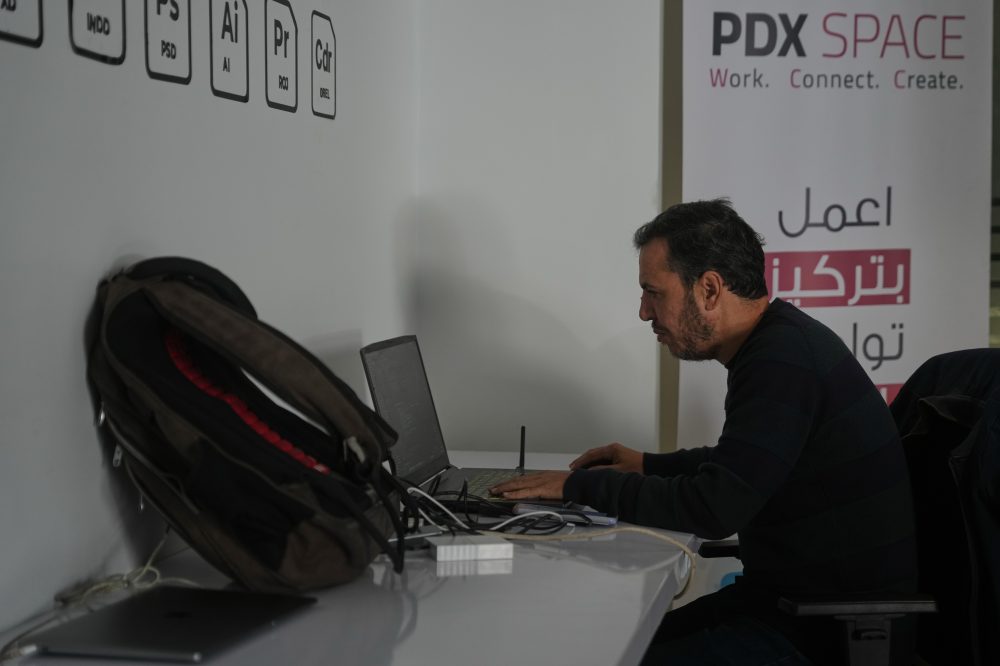

GAZA CITY, Gaza Strip — While Israeli drones fly overhead and emergency vehicle sirens echo in the distance, Tarik Zaeem remains focused on his computer, developing code for a valet parking application based in Saudi Arabia and fixing issues with its barcode scanning feature.
During the week, the programmer navigates through Gaza City’s bomb-damaged streets to reach a shared workspace where independent contractors can power their equipment and connect to reliable internet service. This remote employment offers crucial financial support and mental relief from life in the impoverished and heavily damaged Gaza Strip.
“When I work, I forget everything and focus on the coding. I stop thinking about my family’s basic needs,” said the 44-year-old developer, referring to his spouse and three children who escaped to Egypt when the conflict began. “I stop thinking about airstrikes or searching for drinking water. When I’m on my laptop, I shut everything else out.”
Zaeem belongs to a network of independent contractors who create code, develop designs, and build programs for overseas customers. Online platforms that link them with clients — such as Freelancer.com, Upwork and Mostaql — have registered thousands of Palestinian workers from Gaza.
Similar to other Gaza residents, these workers have sometimes faced difficulties obtaining food, water and housing, lost friends and family members, and watched their homes and communities destroyed by Israeli bombing campaigns. While many ceased working, others continued their projects, creating brand logos for Canadian pizza restaurants, developing reservation systems for Palestinian barbershops, and building websites for companies in Kuwait and Turkey.
Following two challenging years of intense warfare, their employment situation is becoming more stable, though broader recovery and rebuilding initiatives remain stalled seven months after an unstable ceasefire began in October.
Online freelance work gained popularity over ten years ago in Gaza. Conventional industries declined after Hamas took control of the territory in 2007, as Israel’s strengthened blockade severely damaged farming, manufacturing and other economic sectors.
Widespread joblessness and improved internet access — over 90% of Gaza households had online connectivity before the war — drove thousands of tech-savvy university graduates to pursue work opportunities overseas.
International donors and non-governmental organizations recognized this trend, funding coding competitions, business incubators and programming schools. The United Nations Development Program stated in 2018 that “freelancing and online jobs are considered to be among the best temporary solutions to the unemployment problem.”
Prior to the conflict, the U.S.-based organization Mercy Corps operated Gaza Sky Geeks, which managed active coworking facilities featuring glass walls and graffiti artwork displaying the word “entrepreneur” in Arabic. According to senior program manager Rand Safi, enthusiasm grew dramatically when it became evident that remote workers from Gaza could successfully compete in international markets.
Most of this progress disappeared during the war that began with Hamas’ Oct. 7, 2023, attack, when Hamas-led fighters killed approximately 1,200 people and took 251 hostages. Israel’s counterattack resulted in more than 72,700 deaths, according to local authorities, and forced most of Gaza’s 2 million residents to relocate — frequently several times. Hundreds of thousands found refuge in overcrowded tent settlements, while electrical and internet service interruptions became common.
Gaza Sky Geeks reported that two of its three facilities were destroyed in bombing raids. Business owners, program participants and teachers have been killed or lost touch. Currently, the organization is among those working to revive the industry, supporting operations at five independent shared workspaces where digital freelancers can resume their activities.
“They want the vibes, and I think they want a piece of their past,” Safi explained. “There is a sense among people of not wanting to be dependent on humanitarian aid. They want an income.”
More than three-quarters of Gaza’s communication infrastructure sustained damage during the war, and electrical outages frequently made completing contracts difficult.
“When we first started, the main problem was electricity and internet access. Now that’s less of an issue because workspaces have opened across Gaza,” said software engineer Sharif Naim.
During the conflict, Naim established Taqat Gaza, a shared workspace running on solar power systems, providing remote workers the chance to work in three-hour time slots. Currently, it serves over 500 freelancers, providing full-day internet connectivity and professional networking opportunities that Naim described as equally valuable.
“The focus (today) is creating a proper work environment, training and helping freelancers rebuild skills lost during the war so they can compete in the global market again,” he explained.
Some of these efforts have targeted women, many of whom became primary earners or needed additional income during the war.
Reem Alkhateeb, a mother and graphic designer, explained that she attempts to find time for online work while handling daily survival challenges, including standing in lines for food and water. Costs have increased dramatically and her husband lost his employment, transforming her freelance work from extra income into the family’s primary financial support.
“Our dreams are no longer about luxury or big ambitions. We dream about the simplest things that should already be basic human rights: having electricity, having internet access, being able to live and work normally,” she stated.
With banking services frequently unavailable in Gaza and payment systems like PayPal blocked for users with Palestinian addresses, freelancers have needed to discover alternative payment methods. Some direct payments through family members living abroad who can receive transfers for them, while others use cash intermediaries who accept electronic payments for high fees.
Several programs have emerged to assist freelancers in managing complex payment obstacles. Following the deaths of her husband and daughter in 2024, Salsabil Bardawi created “Gaza Talents” as a service to connect Gaza freelancers with international customers and support their career development. The platform has generated over $600,000 in earnings for workers, collaborating with the Bank of Palestine and the digital payment system “PalPay.”
“A lot of people can work, all they need is a laptop, internet, electricity and clients,” she said.