
The international players’ union for soccer expressed fresh worries Thursday following a new scientific study that shows dramatically increased chances of hazardous heat conditions during the 2026 World Cup tournament.
Research conducted by the World Weather Attribution climate group revealed that approximately 25% of the 104 scheduled games in the expanded championship spanning the United States, Mexico and Canada will likely occur under temperatures that surpass safety guidelines established by FIFPRO. This represents nearly double the heat danger present during the 1994 World Cup held in the United States.
The study indicates that roughly five contests may happen under conditions deemed too risky for play, where delays would be recommended, according to the research team.
The risk assessment utilized scheduled start times along with the Wet Bulb Globe Temperature measurement system, which evaluates the human body’s ability to regulate its internal temperature through cooling mechanisms.
Vincent Gouttebarge, who serves as FIFPRO’s medical director, stated: “The calculations to estimate the likelihood of 2026 FIFA World Cup games being played in high WBGT conditions are in line with FIFPRO’s calculations published in 2023.”
He continued: “These estimations justify the need for – and implementation of – a series of mitigation strategies with a view to better protecting players’ health and performance when they are exposed to hot conditions.”
FIFPRO’s guidelines call for cooling interventions when WBGT measurements climb beyond 26 degrees Celsius and recommend match postponements if temperatures reach 28C, which corresponds to approximately 38C under dry conditions or 30C when humidity levels are elevated.
FIFA responded to inquiries by stating it has developed comprehensive heat-management protocols, featuring three-minute water breaks during both halves of matches, cooling systems for spectators and athletes, modified work-rest schedules, and heightened medical preparedness that adjusts based on live temperature readings.
The international soccer federation declared: “FIFA is committed to protecting the health and safety of players, referees, fans, volunteers and staff.”
Chris Mullington, a consultant anaesthetist at Imperial College London NHS Trust and clinical senior lecturer at Imperial College London, suggested that extreme temperatures will more likely affect game quality rather than create widespread health crises among athletes.
“It will be more of a performance issue than a health issue,” Mullington explained. “These players are elite athletes and acclimatised. You’ll see players self-pacing. That behavioural thermoregulation is very difficult to override.”
“So you may end up with more conservative football,” he added.
Air conditioning systems are anticipated to lower some dangers at three of the 16 tournament locations, the research indicates.
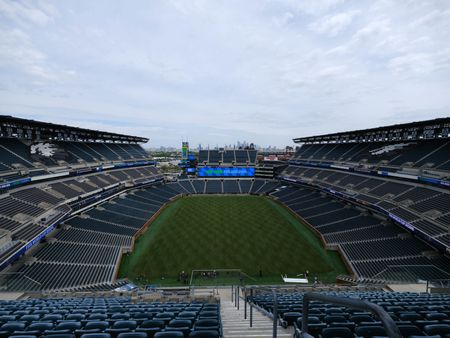
Nevertheless, more than one-third of matches with at least a 10% probability of surpassing 26 C WBGT are planned for venues lacking climate control, including facilities in Miami, Kansas City, New York and Philadelphia.
This encompasses the championship game at MetLife Stadium in East Rutherford, New Jersey, which currently has a one-in-eight probability of exceeding the 26 C benchmark and roughly a 3% chance of reaching the more hazardous threshold – approximately twice the danger level it would have faced in 1994, the study concluded.
Friederike Otto, a professor of climate science at Imperial College London, said the research underscores the importance of FIFA reconsidering scheduling for future World Cup tournaments, especially in areas prone to severe summer heat.
“From a health point of view, it would be advisable to have these (World Cups) either earlier or later in the year, so you can have a football party rather than something that is a massive health risk for the whole city,” Otto stated.
FIFPRO additionally cautioned that while climate-controlled venues in locations such as Dallas and Houston might safeguard players, supporters attending games and outdoor viewing events could still face extended exposure to hazardous temperatures.