Japan’s export sector continued its impressive streak in April, with government figures released Thursday showing an eighth consecutive month of growth amid persistent global supply chain challenges stemming from the U.S.-Israeli conflict with Iran.
The data comes after Tuesday’s economic report revealed Japan’s economy expanded at an annualized rate of 2.1% during the first quarter of 2026, surpassing expectations thanks to strong export performance and consumer spending, though analysts warn the current quarter may present greater challenges.
April’s export figures climbed 14.8% compared to the same period last year, significantly outperforming the 9.3% growth that market analysts had predicted and building on March’s revised 11.5% increase.
Trade with the United States saw exports climb 9.5% year-over-year, while shipments to China jumped 15.5%, according to the government data.
Import activity also strengthened, rising 9.7% from the previous year and beating the anticipated 8.3% gain. This growth occurred despite crude oil imports plummeting 64%, representing the sharpest decline since 1980, according to a finance ministry official. Increased crude oil purchases from the United States helped partially balance this drop.
The trade figures resulted in Japan recording a surplus of 301.9 billion yen ($1.90 billion), a stark contrast to forecasts that had predicted a 29.7 billion yen deficit.
While the blockade of the Strait of Hormuz has driven up energy prices and created supply chain bottlenecks for petroleum and other materials, Japan’s export performance has remained steady as manufacturers continue operating with existing stock levels, bolstered by the nation’s substantial strategic oil reserves.
However, analysts warn that continued disruptions to Middle Eastern shipping lanes could eventually impact both import and export activity by increasing manufacturing costs and dampening global demand, especially in energy-dependent industries such as chemicals.
Motorists should expect delays at a major intersection along S. DuPont Highway as construction crews have temporarily shut down right turn lanes.
The intersection of US Route 13 and Old North Road currently has right turn lane closures in place due to ongoing construction activities. Officials indicate these traffic restrictions will continue until 5AM.
Drivers traveling through this area should plan for potential delays and consider alternate routes if possible while the construction work continues.
OKLAHOMA CITY — San Antonio’s All-Star guard De’Aaron Fox attempted another pregame warmup session, but his troublesome right ankle continued to cause problems.
The Spurs announced Fox would sit out Wednesday night’s Game 2 of the Western Conference finals matchup with the Oklahoma City Thunder, marking the second straight contest he’s been unable to play due to the ankle injury. Dylan Harper was expected to remain in the starting five as his replacement.
San Antonio maintained optimism about Fox’s availability until roughly one hour before tip-off Wednesday, with head coach Mitch Johnson stating — similar to his comments Monday — that Fox’s participation will be determined on a game-by-game basis for the remainder of the postseason. The organization has not disclosed the specific cause of the ankle discomfort.
“It’ll be pretty status quo moving forward, I believe, regardless of if he plays in games or not,” Johnson said. “This’ll be just kind of the world we live in.”
Fox earned All-Star recognition this season for San Antonio, posting 18.6 points per contest during the regular season — ranking second on the roster behind only Victor Wembanyama’s 25 points per game.
Harper — who received NBA All-Rookie first team honors earlier Wednesday — delivered an outstanding performance in San Antonio’s Game 1 victory, recording 24 points, 11 rebounds, six assists and a franchise playoff record seven steals.
Harper, who celebrated his 20th birthday on March 2, ranks as the second-youngest player to participate in this year’s playoffs, trailing only Minnesota’s Joan Beringer and Phoenix’s Khaman Maluach — both still 19 years old. Beringer and Maluach have totaled 24 points combined throughout these playoffs, equaling Harper’s single-game output against the Thunder.
“He didn’t just get this talented or this good,” Johnson said. “For him to buy into the role that was in front of him, for him to do what was asked and be held accountable and learn what it took and what we needed to win games and be a part of it — while probably suppressing some of his individual capabilities — is hard to do for a 19- to 20-year-old.
“For him to be able to do that and grow as a winning team player and then have his individual talent pop as well — it’s hard to do in this league at any time. Doing it as a rookie in the playoffs is ridiculous.”
NEW YORK (AP) — The NBA revealed its All-Rookie team selections Wednesday evening, with Cooper Flagg of Dallas, Kon Knueppel of Charlotte, and VJ Edgecombe of Philadelphia earning unanimous spots on the first team.
Rounding out the first-team honors were Dylan Harper from San Antonio and Cedric Coward of Memphis. Harper received recognition on every ballot cast by voters, earning 93 first-team selections and seven second-team mentions out of 100 total votes.
These same five players were the sole recipients of votes in the Rookie of the Year competition, where Flagg narrowly defeated Knueppel for the top prize.
Second-team All-Rookie recognition went to Jeremiah Fears and Derik Queen from New Orleans, Ace Bailey of Utah, Maxime Reynaud from Sacramento, and Collin Murray-Boyles of Toronto.
The league plans to reveal its All-Defensive team Friday, followed by the All-NBA team announcement Sunday. The Coach of the Year award will be announced next Tuesday.
A 34-year-old Brooklyn mother received a sentence of 20 years to life in prison Wednesday after killing her three young children by drowning them in ocean waters off Coney Island’s well-known boardwalk.
Erin Merdy had entered guilty pleas earlier this year to charges of first-degree murder in connection with the 2022 deaths of her children: 7-year-old son Zachary, 4-year-old daughter Liliana, and 3-month-old son Oliver.
Brooklyn District Attorney Eric Gonzalez released a statement saying “No sentence can fully measure the loss of a seven-year-old, a four-year-old and a three-month-old baby, or the grief their loved ones will carry forever.” He described the children’s deaths as occurring “in the most heartbreaking and unthinkable way.”
Attempts to reach Merdy’s legal representative for comment were unsuccessful.
The urgent hunt for the three children started during the early morning hours of Sept. 12, 2022, when New York City police got a phone call from family members who were worried that Merdy planned to hurt her children.
Police located the mother first, found without shoes and completely drenched, about 2 miles away on the boardwalk from where she resided in the Coney Island area. According to prosecutors, she kept stating that her children were gone and expressing remorse.
Several hours afterward, authorities pulled the children’s bodies from the Atlantic Ocean shoreline, located just steps away from the boardwalk and roughly a dozen blocks from where the Brooklyn Cyclones minor league baseball team has their stadium.
The city’s medical examiner determined the deaths were homicides caused by drowning.
Prosecutors said surveillance footage captured Merdy walking with her children toward the water shortly before 1 a.m., which served as evidence in the case.
Family members indicated at the time that she might have been experiencing postpartum depression.
A federal civil rights lawsuit filed Wednesday alleges that a real estate broker was denied the chance to buy property in an Arkansas development because of her Jewish heritage and her interracial family.
The legal action, brought on behalf of Michelle Walker, targets Return to the Land — a development organization whose leadership reportedly requires personal verification that all applicants are white before approval — along with its Ozarks chapter and five officials. The complaint alleges Return to the Land’s founders are “explicitly attempting to establish an all-white community.”
The filing characterizes Return to the Land as a white nationalist group operating in violation of federal and state housing and civil rights laws.
“Its founders believe that white people are genetically superior to other races, advance the view that Jewish people are engaged in a plot to eliminate the white race, and advocate for segregated white communities for the purpose of creating a separate all-white nation state that will help avoid ‘white genocide,’” the lawsuit said.
Historical housing discrimination through racial covenants in mortgages and leases, along with redlining practices that denied loans based on race, prevented Blacks and other minorities from purchasing or renting homes in certain neighborhoods for many years.
Walker, who works as a real estate broker in St. Louis, sought to purchase property last year in Ravenden, Arkansas, attracted by pricing below market rates. The town sits roughly 150 miles northeast of Little Rock, near the Missouri state border.
During the application process, Walker faced questioning about her family background, religious beliefs, and ancestry, the lawsuit states.
Walker identifies as white and attends a Christian church, with Jewish heritage through her mother’s lineage.
Legal representation for Walker includes attorneys from the Relman Colfax law firm, the Legal Defense Fund, and Legal Aid of Arkansas.
Return to the Land has not responded to requests for comment from The Associated Press regarding the lawsuit.
The organization’s website describes itself as a private membership group “for individuals and families with traditional views and common continental ancestry.” Beyond its Ozarks Regional Chapter spanning parts of Arkansas, Missouri and eastern Oklahoma, Return to the Land claims to operate chapters nationwide.
When reports emerged that Return to the Land was considering the Springfield, Missouri area for a whites-only development, Springfield’s city council declared in a Facebook statement last July that such “divisive and discriminatory vision” had no place in their city or anywhere else.
Pennsylvania’s state House approved legislation in April by a narrow 101-100 margin to prevent the establishment of whites-only housing developments. House Bill 2103 emerged following Return to the Land’s reported plans to expand operations into Pennsylvania and additional states.
The Pennsylvania Senate is currently reviewing the proposed legislation.
An artificial intelligence startup based in San Francisco is approaching a significant financial milestone as it prepares to report its first quarterly profit, according to a source with knowledge of the company’s finances.
Anthropic has informed potential investors through recent fundraising documents that revenue for the June quarter may hit at least $10.9 billion, representing more than twice the $4.8 billion the company generated during the recently completed March quarter, the source revealed while requesting anonymity.
This revenue surge is expected to drive the company’s second-quarter operating profit to approximately $559 million, the source indicated.
The financial details were initially reported by The Wall Street Journal on Wednesday.
These impressive numbers highlight the growing appetite for Anthropic’s Claude AI technology, which software developers are increasingly using for computer programming tasks, while some businesses are implementing the company’s advanced Mythos model to identify security weaknesses in their systems.
Such profitability stands out in an AI sector that continues to struggle with the technology’s substantial operational expenses.
The industry’s massive computing requirements were further illustrated Wednesday through SpaceX’s initial public offering documents, which revealed details about AI-related costs at the space and AI company owned by Elon Musk.
According to the filing, Anthropic has committed to paying SpaceX $1.25 billion monthly through May 2029 for computing services that will utilize both of SpaceX’s AI training facilities, known as Colossus and Colossus II.
The agreements include termination clauses allowing either company to end the arrangement with 90 days’ advance notice, and the filing noted that payments would be adjusted during capacity increases scheduled for this month and next.
Musk announced on X that SpaceX was exploring opportunities with additional companies to “offer AI compute as a service at significant scale,” which could help offset losses in the company’s AI division.
SpaceX’s AI operations reported approximately $2.5 billion in losses during the March quarter, despite generating $818 million in segment revenue, according to the IPO documentation.
WASHINGTON, May 20 – Nexstar Media Group filed a request with a federal appeals court on Wednesday evening, asking judges to speed up their examination of a court ruling that put the brakes on its acquisition of competing broadcaster Tegna. The company argues the postponement has resulted in tens of millions of dollars in lost operational savings that cannot be recovered.
On April 17, a judge in California issued a temporary halt to the $6.2 billion transaction after facing opposition from twelve state attorneys general along with DirecTV.
If completed, the acquisition would form the nation’s most extensive broadcast station network, with programming reaching 80% of American households. Nexstar is pushing for the appeals court to set oral arguments for August regarding the proposed transaction.
A South Korean news outlet reported Wednesday evening that Chinese President Xi Jinping could travel to North Korea within the coming week, according to a high-ranking government official.
The Yonhap news agency cited another government source who indicated that Chinese security and protocol personnel had recently been present in Pyongyang, suggesting Xi’s trip could occur in late May or early June.
According to the senior official quoted in the report, Xi plans to serve as an intermediary between U.S. President Donald Trump and North Korean leader Kim Jong Un, following Xi’s recent hosting of Trump.
South Korea’s foreign ministry has not yet provided a response to the reported information.
As North Korea’s primary economic and political partner, China has worked to strengthen relationships that had deteriorated during the COVID-19 pandemic.
Kim Jong Un traveled to Beijing last year, where he appeared with Xi and Russian President Vladimir Putin during a significant military parade.
Trump, who previously held three meetings with Kim during his earlier presidency to discuss North Korea’s nuclear activities, has indicated willingness to engage with the North Korean leader again, citing their positive working relationship.
Elon Musk’s social media company X Corp has acknowledged violating Australia’s internet safety regulations by failing to respond to official requests for information about child protection measures, according to attorneys representing both sides in the case.
During Federal Court proceedings on Thursday, Christopher Tran, an attorney representing the eSafety Commissioner, stated that “The respondent admits that it contravened the Act,” in reference to Australia’s Online Safety Act.
The case centers on X Corp’s failure to comply with regulatory demands to disclose details about the platform’s efforts to combat child exploitation on its service.
China is delaying a planned visit from a senior Pentagon official while pressuring the United States over a massive $14 billion arms deal with Taiwan, according to a Financial Times report published Thursday.
The Pentagon’s under-secretary of defence for policy, Elbridge Colby, had been in discussions with Chinese officials about a summer trip to Beijing. However, sources familiar with the negotiations told the Financial Times that China has indicated it cannot green-light the visit until President Donald Trump makes a decision about moving forward with the weapons package.
Neither the Pentagon nor China’s foreign ministry immediately provided comment when contacted by Reuters, and the news agency said it could not independently confirm the Financial Times reporting.
Following his recent Beijing trip last week, Trump told media he remains undecided about whether to move ahead with the substantial weapons sale, creating uncertainty around American support for the democratically-run island.
In an unusual step for an American president, Trump announced Wednesday he plans to have a conversation with Taiwan’s President Lai Ching-te, a move that could strain U.S.-China relations. According to a source briefed on the matter, no call has been arranged yet between the two leaders.
China typically responds with anger to any direct communication between the United States and Taiwan, viewing the island as part of Chinese territory.
While Trump administration officials point out that the president has authorized more Taiwan weapons sales than any previous U.S. leader, Trump has also consistently praised his relationship with Chinese President Xi Jinping as “amazing.”
Federal law mandates that Washington supply Taiwan with defensive capabilities, and lawmakers from both parties have pushed the Trump administration to move forward with arms sales.
Taiwan’s Defence Minister Wellington Koo expressed being “cautiously optimistic” about future U.S. weapons sales during remarks made Tuesday.
Drivers traveling on Indiantown Road should plan for potential delays as flagging operations continue in the westbound lanes through this afternoon.
The traffic control activity is taking place on the westbound side of Indiantown Road in the stretch between Hudson Road (Route 407) and Mumford Road. Officials indicate the flagging operation will remain in effect until 5 PM today.
Motorists are advised to allow extra travel time or consider alternate routes to avoid potential backups in the area.
A recent survey conducted by Reuters indicates that approximately one-third of Japanese businesses have either implemented or are exploring the use of artificial intelligence-powered robotics technology.
The research, released Thursday, shows that manufacturers of transportation equipment and automobiles are at the forefront of this technological adoption trend.
Japanese officials view the integration of AI robotics in business operations as essential for addressing the nation’s ongoing workforce shortages while maintaining its status as a premier supplier of industrial robotics worldwide.
Japan houses major robotics companies including Fanuc, Yaskawa Electric and Kawasaki Heavy Industries, establishing the country as a dominant force in traditional industrial robotics manufacturing.
However, the nation now encounters increased competition from China and the United States in the development of AI-enhanced robots, which possess autonomous capabilities to assess their surroundings and make independent decisions, moving beyond simple repetitive programming.
Survey results indicate that 4% of participating companies currently utilize AI robots, while 5% have definite deployment plans and 25% are evaluating potential implementation. The remaining 66% reported no current plans for AI robot adoption.
Transportation equipment manufacturers demonstrate the highest adoption rates, with 80% either currently using or investigating AI robot implementation. Conversely, 94% of wholesale sector respondents indicated no intentions to deploy AI robotics.
Among companies that are using, planning to use, or considering AI robots, 71% identified manufacturing as their primary application, 19% selected hazardous task operations, and 11% chose customer service functions. Respondents were permitted to select multiple applications.
The polling was executed by Nikkei Research on behalf of Reuters between May 1-15. Researchers contacted 492 companies, receiving responses from 220 businesses under anonymity agreements.
The survey also addressed government recommendations encouraging publicly traded companies to utilize their appreciated financial holdings more effectively for growth initiatives. Sixty percent of respondents believed individual companies should maintain decision-making authority on asset utilization, while 44% suggested corporate size should influence policy application.
Additionally, 24% indicated that maintaining certain financial asset levels remains necessary to enable salary increases. Multiple responses were allowed for this question.
Last month, the Financial Services Agency and the Tokyo Stock Exchange developed a preliminary revision to Japan’s corporate governance standards, requiring companies to demonstrate efficient asset utilization for growth purposes.
Japanese companies with capital exceeding 1 billion yen ($6.9 million), excluding financial and insurance sectors, held cash and deposits totaling 83 trillion yen in 2024, representing a 54% increase from ten years prior, prompting discussions about improved asset deployment for economic growth.
“What the draft revision is calling for is to make checks and explain if business resources are at appropriate levels. A rise and fall in cash and deposits itself should not come under scrutiny,” an official at a ceramics maker wrote in the survey.
The proposed revision also encourages listed companies to file securities reports at least three weeks before shareholder meetings.
In the previous year, approximately 58% of companies with March fiscal year-ends submitted securities reports prior to general shareholder meetings, but 80% of those submissions occurred just one or two days before the meetings.
When asked about the feasibility of submitting securities reports three weeks ahead of shareholder meetings, 33% described meeting this timeline as challenging and burdensome, while 26% indicated they would need to implement measures such as rescheduling shareholder meeting dates to meet the requirement.
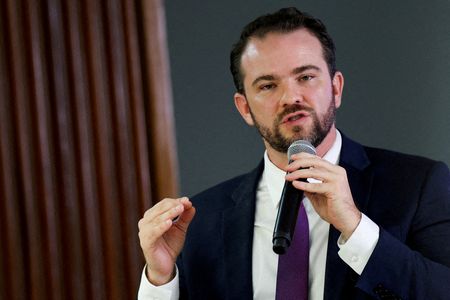
Brazilian officials are on the verge of completing a debt restructuring initiative for agricultural producers, according to Finance Minister Dario Durigan’s announcement on Wednesday. The minister indicated the plan will incorporate a credit guarantee fund designed to assist farmers.
Speaking to members of the media, Durigan revealed that ministry officials reached an understanding with senators that the agricultural debt restructuring initiative should feature extended repayment timeframes beyond what officials originally suggested.
According to the minister, the grace period for these transactions will span two years, extending beyond the Finance Ministry’s original one-year proposal. Officials anticipate the complete repayment timeline will stretch to 10 years, a significant increase from the initially projected six-year period.
Durigan emphasized that officials maintain their position requiring producers to demonstrate genuine losses from unfavorable weather conditions to qualify for renegotiation benefits.
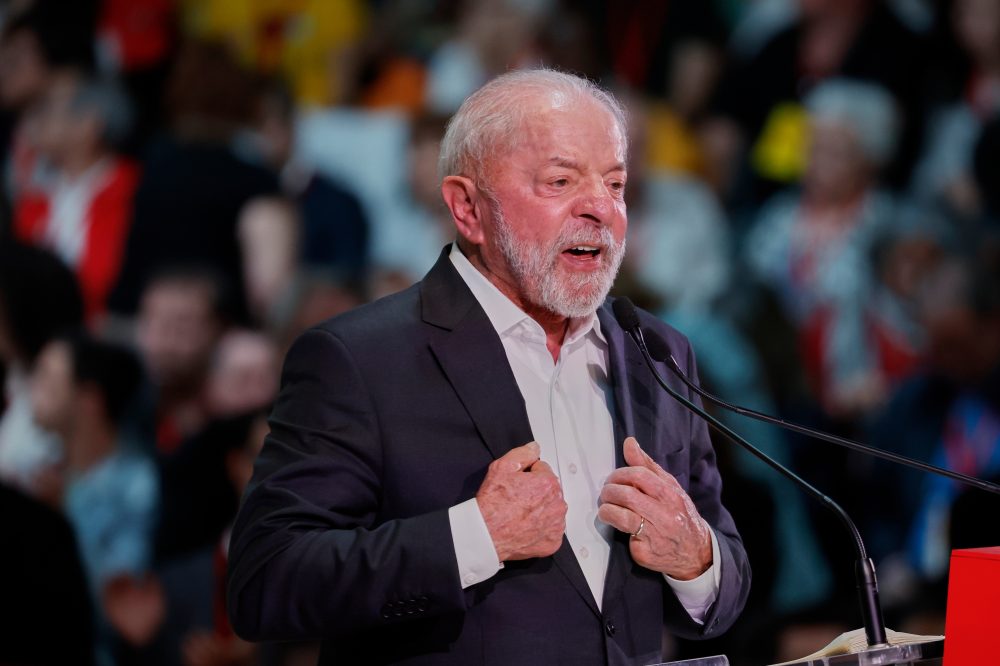
The government recently revived a consumer debt relief initiative that was first introduced in 2023, designed to reduce interest obligations and increase available income as President Luiz Inacio Lula da Silva prepares for his re-election campaign in October.
The NHL Coaches Association is criticizing the Vegas Golden Knights for blocking their former head coach Bruce Cassidy from pursuing interview opportunities with other teams.
Cassidy, who guided the Golden Knights to their 2023 Stanley Cup title, was dismissed on March 29 during his fourth campaign with the organization. The team brought in veteran head coach John Tortorella as his replacement.
According to ESPN’s Tuesday report, both the Edmonton Oilers and Los Angeles Kings have sought permission to interview Cassidy for their head coaching vacancies. Vegas has rejected these requests, citing that Cassidy remains under contract for another year with $4.5 million still owed to him.
“The NHLCA has been closely monitoring the situation involving Bruce Cassidy,” the association said in a statement. “While we respect the league’s rules and processes, it is our position that coaches who remain under contract, but are no longer working for their Club, should not be prevented from pursuing other employment opportunities.
“It would be unprecedented at the head coaching level should multiple teams be denied permission to speak with Coach Cassidy. The situation is still unfolding, but our priority is to protect the interests of our members in this type of circumstance.”
Vegas General Manager Kelly McCrimmon stated Tuesday that he has discussed the matter with Cassidy, who “understands” the circumstances. McCrimmon noted that the Golden Knights’ current playoff campaign — they begin Game 1 of the Western Conference finals Wednesday evening against Colorado — is another consideration in their decision-making process.
The National Weather Service office in Mount Holly, New Jersey issued a severe thunderstorm warning on Monday evening that remained active for nearly an hour.
The weather alert went into effect at 5:29 PM EDT on May 20th and was scheduled to expire at 6:15 PM EDT the same day.
No additional details about the specific areas affected or the severity of the storms were provided in the original weather service alert.
Weather officials issued a severe thunderstorm warning Monday evening, alerting residents to potentially dangerous conditions.
The National Weather Service office in Mount Holly, New Jersey, released the warning at 5:18 PM EDT on May 20th, with the alert remaining active until 6:00 PM that same day.
The brief but potentially impactful weather event prompted meteorologists to notify the public about the approaching severe conditions during the early evening hours.
Media heir James Murdoch has completed a major acquisition deal to purchase New York magazine, the Vox Media Podcast Network, and the Vox editorial brand from digital media company Vox Media, vowing to support “ambitious journalism and agenda-setting conversations.”
This acquisition marks a significant step for the 53-year-old son of media mogul Rupert Murdoch as he builds his own media holdings. Notably, his father previously owned New York Magazine between 1976 and 1991. The transaction comes after recent family agreements regarding control of the elder Murdoch’s media empire, which will maintain Fox News’ conservative direction under his chosen successor, Lachlan Murdoch.
The transaction, set to finalize in the coming weeks, will see James Murdoch’s investment firm Lupa Systems take control of approximately half of Vox Media’s operations. While neither company revealed the purchase price, The New York Times reported sources indicating the deal exceeded $300 million. The purchased properties will function as a Lupa subsidiary operating under the Vox Media name.
The acquisition excludes several Vox properties including Eater, Popsugar, SB Nation, The Dodo, and The Verge. However, it encompasses New York magazine’s various sections including The Cut, Vulture, Intelligencer, The Strategist, Curbed, and Grub Street.
The deal also incorporates the Vox Media Podcast Network, home to highly successful programs such as “Criminal” and “Pivot” featuring Kara Swisher and Scott Galloway. According to Vox’s announcement, this network “has been the fastest growing business within Vox Media and will immediately put Lupa at the top of the podcast field.”
James Murdoch, who previously served as CEO of 21st Century Fox before leaving the News Corporation board in 2020 due to disagreements over editorial direction, is recognized for holding more liberal political views than his father. In last year’s family settlement, James and his two elder sisters, Prudence MacLeod and Elisabeth Murdoch, relinquished control claims over Fox in return for stock worth $3.3 billion at the time.
That agreement established a trust giving Lachlan Murdoch control of Fox Corp., alongside his younger sisters Grace and Chloe.
Discussing the Vox acquisition, James Murdoch stated the purchase “aligns well with our existing holdings and investments and reflects both our interest in the forward edge of culture and our deep commitment to ambitious journalism and agenda-setting conversations.
It will allow us to apply new tools across the businesses we are building, adding substantial production, distribution, and editorial capability to our group,” Murdoch explained.
Jim Bankoff, current Vox chairman and CEO, will head the restructured Vox Media as CEO of the new entity once the deal closes.
“We are incredibly proud to have built and scaled several of the leading media properties of this generation,” Bankoff stated. “Together under Lupa’s stewardship we are primed to be the best home for talent and the most dynamic media company of this new era.”
New York magazine’s editor-in-chief David Haskell informed subscribers via email that Lupa represents the publication’s sixth ownership change since 1968.
Haskell assured readers the magazine would maintain “the fearless, independent journalism that you expect from us.”
“We will continue to create news cycles, start conversations, contribute to the most important debates in politics and society, identify and explore what’s most interesting in contemporary culture, and always do our best to challenge our readers, surprise them, and help them make sense of the modern world,” Haskell promised.
GREENBURGH, N.Y. — The Eastern Conference finals were marketed around the exciting matchup between Jalen Brunson and Donovan Mitchell.
For the Cleveland Cavaliers, the reality became Brunson targeting James Harden during the final quarter of Game 1.
Brunson repeatedly exploited that defensive assignment to fuel one of the most dramatic postseason rallies in recent memory, with the New York Knicks overcoming a 22-point fourth-quarter deficit for a 115-104 win. Following the defeat, Cleveland dismissed criticism suggesting that one of basketball’s most prolific scorers might be too much of a defensive liability to reach the NBA Finals.
“I know everybody’s putting it on James, but I’d say a lot of, it’s on the team, our team defense,” coach Kenny Atkinson said Wednesday after the Cavaliers practiced at Madison Square Garden. “And we were great for three quarters. Like, really, really great. So we can do it.”
Cleveland aims to bounce back Thursday, seeking to tie the series before heading home for the Memorial Day holiday weekend.
Atkinson faced criticism equal to or greater than Harden for delaying a timeout during New York’s surge, as Brunson repeatedly drove at Harden during an 18-1 scoring burst.
“Kenny’s a great coach and we know that they’re going to come out ready to play,” said the Knicks’ Mike Brown, who worked with Atkinson when both were assistants to Steve Kerr in Golden State. “They came to New York to get one game and it’s still within reach.”
Cleveland recognizes they should already possess that victory. They dominated the second and third quarters against a Knicks squad showing obvious rust in their first contest since May 10. Far from resembling the team that averaged 19.4-point victories in the prior two playoff rounds, New York eventually implemented an offensive strategy that forced Harden to defend Brunson, leading to four consecutive Knicks baskets during their decisive run.
Cleveland backup guard Dennis Schroder praised Brunson rather than criticizing Harden.
“Jalen Brunson is one of the most clutch players in the NBA. Social media for that is just in a bad place,” Schroder said. “I think that we lost the game. Basketball is a team game. It’s everybody on the bench, coaches, the guys who were on the court. At the end of the day, he made some tough shots and good credit.”
The Cavaliers improved dramatically after trading for Harden from the Los Angeles Clippers late in the season. Harden ranks ninth in NBA history with nearly 30,000 career points and 12th in assists. The 2018 NBA MVP was competing Tuesday on an MSG floor where he shares the opponent scoring record with Kobe Bryant at 61 points.
However, he’s struggled at times during the playoffs, and Game 1 continued that trend. Harden managed just 5 of 16 shooting overall and 1 of 8 from beyond the arc, while committing six turnovers against three assists. He’s recovered from poor performances previously, and Atkinson expects another rebound.
“I said, ‘Without you, we’re knocked out in the first round.’ That’s my first (opinion). My personal opinion,” Atkinson said. “So, let’s just stop that. We’re in a great position. ‘You’ve played great.’ You know, sometimes micro experiences get exaggerated. ‘So, you know, keep being yourself.’”
The Knicks, winners of eight consecutive games, empathize with Cleveland’s disappointment after experiencing similar heartbreak in Game 1 of the 2025 East finals.
New York held a 14-point advantage over Indiana with less than three minutes left in regulation. The Pacers forced overtime when Tyrese Haliburton’s long-range attempt bounced high off the rim before dropping through at the buzzer, then prevailed 138-135 in the extra period.
“Obviously they’re looking at it like that was our game that we gave away,” Knicks forward Josh Hart said of the Cavaliers. “And they’re looking at film of, ‘If we fix this here or fix this here, we would have won the game.’ And that’s what they’re going to try to do tomorrow.”
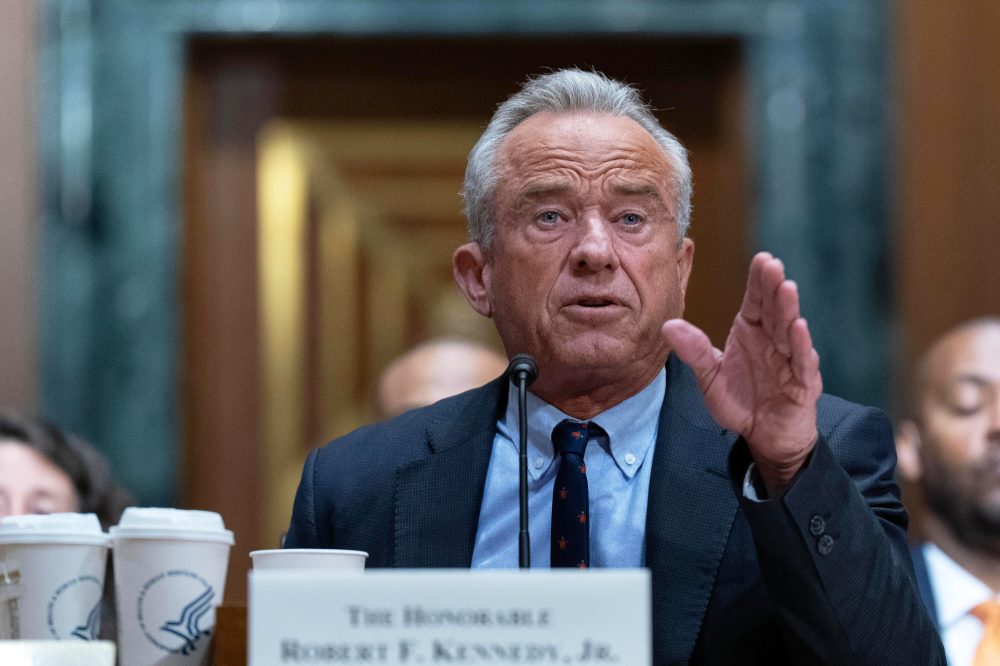
WASHINGTON — Two leading physicians who headed a federal panel responsible for establishing preventive healthcare coverage requirements have been dismissed by the Trump administration.
Health Secretary Robert F. Kennedy Jr. sent termination letters dated May 11 to the co-chairs of the U.S. Preventive Services Task Force, ending their appointments before their scheduled terms were complete.
The Department of Health and Human Services has already significantly reduced the task force’s activities, suspending planned public sessions throughout the past year and delaying anticipated updates on topics including cervical cancer screening protocols.
Established in the 1980s, the task force consists of medical experts who evaluate scientific research supporting various disease prevention measures, including depression screenings and statin medications for heart attack prevention. The group assigns letter ratings based on the strength of scientific evidence. Through provisions in the Affordable Care Act, insurance providers must offer preventive services rated “A” or “B” without patient copayments.
Kennedy’s dismissal letters did not specify reasons for removing Drs. John Wong and Esa Davis from their positions. His correspondence praised their “leadership, contributions and expertise” in advancing the task force’s mission “to improve the health of Americans” and invited them to submit new applications. Kennedy stated he was examining task force memberships “to ensure clarity, continuity and confidence” in HHS supervision.
The New York Times initially reported on these letters. An HHS representative did not answer inquiries about the dismissals.
During testimony before lawmakers last month, Kennedy described plans to reform what he called a “lackadaisical” task force, promising more frequent meetings and “for the first time, transparency.” The panel currently conducts open meetings, solicits public feedback on preliminary recommendations, and releases supporting scientific documentation.
Health policy advocates have expressed concerns that Kennedy might replace experienced panel members with less qualified political appointees, similar to changes made to an important vaccine advisory group. According to former task force chairman Dr. Michael Silverstein, a pediatrician, the panel has been prevented from publishing final cervical cancer screening updates and advancing maternal depression recommendations over the past year.
“This is a level of government intrusion into scientific processes that I’ve not experienced in my 10 years on the task force,” he said.
Aaron Carroll from the nonpartisan policy organization AcademyHealth explained that overlapping appointment terms typically allow health secretaries to gradually introduce new members and influence the task force without completely disrupting its operations.
An uprising at a southeastern Cuban farm in October 1868, called “The Cry of Yara,” began the island’s long struggle for freedom from Spanish rule.
Independence finally came on May 20, 1902, but only after decades of conflict including the “Great War” lasting almost a decade, the “Little War” spanning more than a year, the Cuban War of Independence, and the Spanish-American War.
Despite achieving independence, Cuba’s current socialist leadership refuses to commemorate May 20, and their supporters across the island follow suit.
The 1902 independence came with strings attached through the Platt Agreement, crafted by a U.S. senator from Connecticut. This arrangement granted America authority to interfere in Cuban matters “for the preservation of Cuban independence” and permitted the U.S. to acquire or lease territory for military installations on the island.
Though former U.S. President Franklin D. Roosevelt later abolished the agreement, it created lasting resentment among many Cubans.
“There is only one thing to be grateful for on that day,” Cuban President Miguel Díaz-Canel posted Wednesday on X. “It instilled in Cubans of that time an anti-imperialist sentiment that each subsequent generation has felt deepen with new and constant threats to the independence and sovereignty of the nation.”
The president characterized May 20 as representing “intervention, interference, dispossession, frustration.”
However, Cubans and Cuban-Americans who oppose the revolution and current government do honor May 20.
“It is their 4th of July,” explained Jason Reding Quiñones, Miami’s top U.S. federal prosecutor and son of a Cuba political refugee.
Wednesday found him joining other officials to reveal charges against former Cuban President Raúl Castro, accused in the 1996 destruction of civilian aircraft piloted by Miami-based exiles over Cuban waters.
Reding stated that May 20 “reminds us that the pursuit of freedom, dignity and accountability spans generations and still lives alive and well in the heart of the Cuban community.”
The White House released an extensive presidential statement Wednesday honoring May 20. It praised and remembered those “who have sacrificed for a free Cuba,” while announcing fresh sanctions and cutting financial connections to the island.
“The regime in Havana today is the direct betrayal of the nation their founding patriots bled and died for,” the statement declared. “For nearly seven decades, the island’s communist government has violently dismantled political freedom, denied its people fair elections, viciously silenced dissent, and strangled the Cuban economy into a state of collapse.”
Cuban officials quickly responded to the criticism.
Cuban Foreign Affairs Minister Bruno Rodríguez denounced the statement as “superficial and ill-informed” in an X post, calling it an “insult” to Cuba’s citizens.
Cuban leadership also criticized U.S. Secretary of State Marco Rubio for releasing a Spanish-language video message on May 20, just hours before Castro’s indictment became public. Rubio claimed the Cuban government has stolen billions while leaving citizens without power, fuel, or food, rejecting claims that a U.S. energy embargo was responsible.
Instead, the Cuban government marks Jan. 1, 1959 as its authentic Independence Day, when revolutionary forces succeeded and forced dictator Fulgencio Batista into exile.
Rodríguez maintained that “the Revolution put an end to almost six decades of economic and political control by the United States, with three military interventions and the political and military support of two bloody dictatorships.”
The island also observes July 26, designated as National Rebellion Day, remembering an unsuccessful 1953 assault that preceded the revolution.
The foreign affairs minister emphasized that Cuba “has every right” to remain a free and independent nation controlling its own political and economic destiny: “Cuba will defend that right at any cost.”
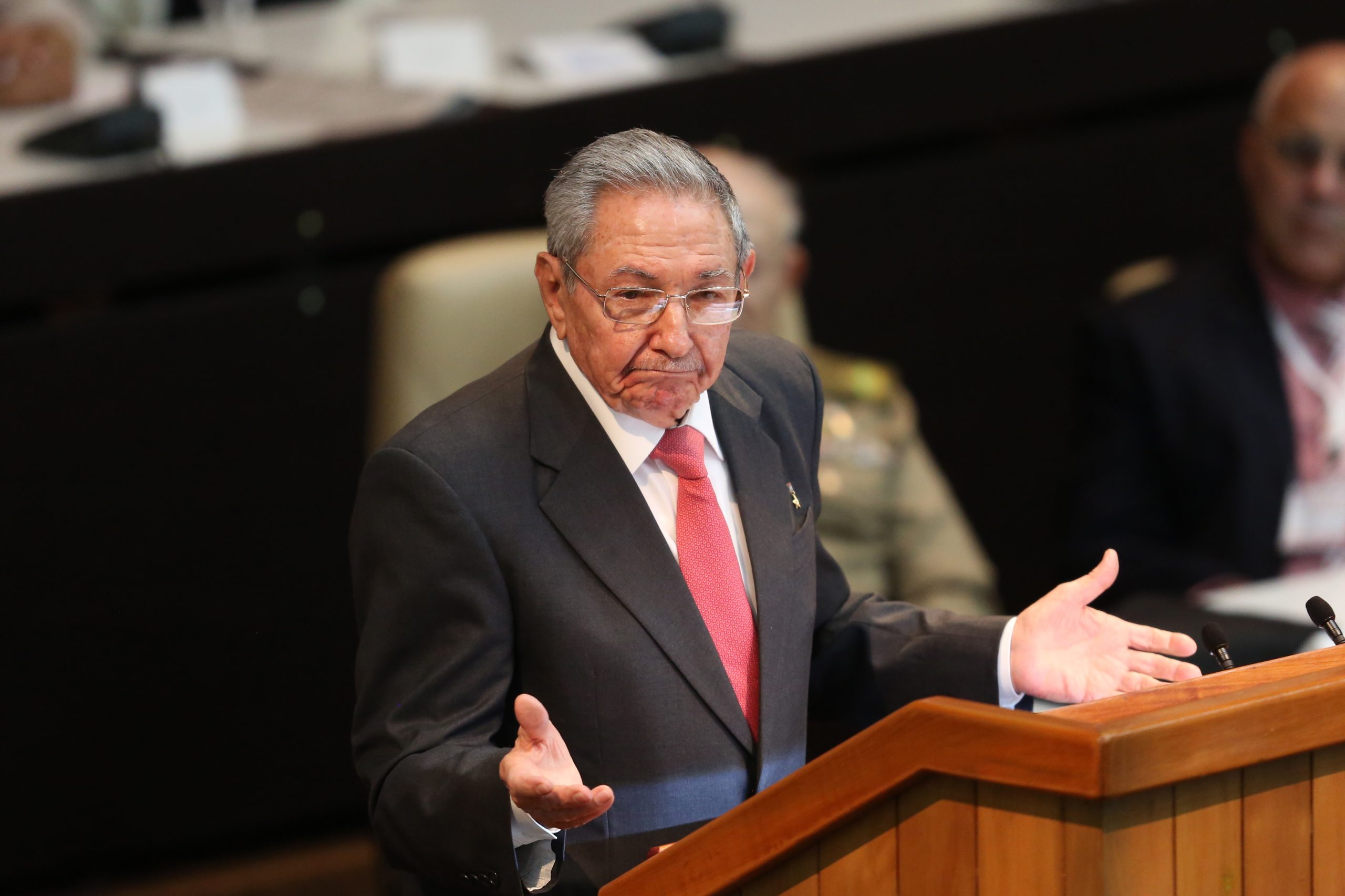
Federal prosecutors have filed criminal charges against former Cuban President Raúl Castro, accusing him of murder and conspiracy in the 1996 shooting down of two civilian aircraft flown by Miami-based Cuban exiles near the Caribbean nation.
The charges represent part of increased pressure from the Trump administration on Cuba’s socialist leadership to open its markets to American businesses and distance itself from U.S. enemies. Meanwhile, a U.S. embargo on fuel and other essential supplies has led to widespread power outages, food scarcity and economic crisis across the nation.
At the time of the aircraft downing, Castro, who is now 94 years old, held the position of Cuba’s defense minister. The two small aircraft belonged to Brothers to the Rescue, an exile organization that had been releasing leaflets over Havana encouraging Cubans to rebel against their leadership. Soviet-manufactured military jets destroyed the two unarmed civilian aircraft, resulting in the deaths of all four men on board.
Here’s what to know about Castro, the indictment and the 1996 incident.
According to the indictment, Castro is charged with approving the use of lethal force against Brothers to the Rescue following the organization’s January 1996 flights that dropped pro-Democracy materials over Cuba. Federal prosecutors stated that Castro and his elder brother, Fidel Castro, who held the presidency then, made the final decisions regarding the kill orders.
The indictment alleges that in February 1996, Raúl Castro directed Cuban military leaders to begin preparation using Russian MiG fighter aircraft to locate, monitor and intercept the organization’s small aircraft near the nation’s coastline. On Feb. 24, the two aircraft were destroyed, resulting in the deaths of four U.S. nationals, including three American citizens. A third aircraft successfully fled.
The indictment names Castro along with five other individuals, including MiG aircraft operators. Castro faces charges of conspiracy to kill U.S. nationals plus multiple murder counts and aircraft destruction charges. The murder and conspiracy allegations carry maximum penalties of death or life imprisonment if convicted, though it remains uncertain whether Castro will ever appear in a U.S. legal proceeding.
Acting U.S. Attorney General Todd Blanche, who revealed the indictment Wednesday in Miami, stated he anticipated Castro would come to the U.S. for trial, either “by his own will or by another way.”
Blanche explained that the federal government frequently charges individuals located outside the United States and employs various approaches to bring them before the courts.
Former Venezuelan President Nicolás Maduro was indicted on drug-related charges before he and his wife were seized by U.S. Special Forces in the Venezuelan capital in January.
Around 1:30 p.m. on Feb. 24, 1996, the three Brothers to the Rescue aircraft departed from an airport in Miami-Dade County, Florida.
While flying over international waters, beyond Cuban territorial airspace, two of the three unarmed Cessna aircraft were destroyed by the Cuban MiG operators without any advance notice, federal prosecutors stated. The MiG operators then pursued the third aircraft, which managed to avoid destruction, officials said.
However, a Cuban representative maintained at a United Nations Security Council session in late February 1996 that the two aircraft were breaching Cuban territorial airspace when destroyed and one civilian pilot had disregarded warnings against entering that airspace, according to Security Council documentation. The representative also claimed the U.S. failed to take adequate steps to prevent such airspace breaches by U.S. pilots, despite Cuban warnings.
Brothers to the Rescue originated in 1980, during the unexpected migration of 125,000 Cubans to the United States. The organization sought to assist Cuban refugees in the Florida straits by releasing supplies from small aircraft and notifying the U.S. Coast Guard throughout the months-long emergency.
Cuba’s current president, Miguel Díaz-Canel, criticized the indictment against Castro and accused U.S. authorities of misrepresenting the 1996 aircraft destruction. He described it as “a political action without any legal basis, that only seeks to bolster the case they are fabricating to justify the folly of a military aggression against Cuba.”
He posted on X that the aircraft destruction represented “legitimate self-defense” following repeated and dangerous breaches of Cuba’s airspace by “notorious terrorists.”
The Cuban government issued a statement declaring that the Cuban people completely support Castro. “Homeland or Death, We Will Prevail,” the statement said.
Marlene Alejandre-Triana, whose father, Armando Alejandre Jr, was among those killed in the 1996 shootdown, called the charges “long overdue.” She said her father only wanted to bring freedom to his Cuban homeland.
The charges against Castro were also welcomed by members of the Cuban community in Miami.
“He’s a criminal,” said Peter Hernandez, whose family owns a fruit and vegetable market in the Little Havana neighborhood and whose parents moved from Cuba to South Florida before he was born. He added he would support the U.S. sending its military to arrest Castro.
Castro held the role of minister of the Cuban military throughout his brother Fidel Castro’s multi-decade presidency. He assumed the presidency in 2006 during his brother’s illness and remained in office until 2018, when he transferred authority to Díaz-Canel, a trusted ally.
In 2008, Castro initiated a series of reforms that expanded Cuba’s private sector and allowed citizens greater freedom to travel and access information. In 2014, he led historic talks with former U.S. President Barack Obama that resulted in the reopening of embassies and the re-establishment of diplomatic relations.
While he retired in 2021 as head of the Cuban Communist Party, he is widely believed to wield power behind the scenes.
A 95-year-old Michigan woman whose identity became the foundation for a Grammy-winning rock band’s name has passed away.
Gretna Van Fleet died Monday at a senior living facility in Frankenmuth, Michigan, the same town where the rock group Greta Van Fleet formed in 2012 during her eighties, her obituary states.
While she never performed alongside the musicians who borrowed her name, Van Fleet found humor in the unexpected connection to fame.
“I think they checked out my background to make sure I wasn’t on the Ten Most Wanted list or something, and they went ahead with it,” Van Fleet jokingly told MLive.com in 2019, ahead of the band’s appearance on “Saturday Night Live.”
“But later, when I met the boys, I said, ‘That’s OK.’ But, no, they did not approach me to begin with,” Van Fleet said.
The band’s name origin traces back to drummer Kyle Hauck, who played with the group in its early formation. Hauck has shared in interviews that when the band needed a name for an upcoming local show, he remembered hearing his grandfather mention assisting a friend named Gretna Van Fleet. The name resonated with him, and after removing the ‘n’ from Gretna, the band’s identity was established.
The musical group achieved significant recognition, earning a Grammy in 2019 for best rock album with “From The Fires” and receiving additional nominations that same year. Their album “Starcatcher” received a nomination for best album in 2024.
According to her obituary, Gretna Van Fleet possessed considerable musical abilities herself, demonstrating skill with multiple instruments including saxophone, violin, tuba and piano.
During her 2019 interview, she revealed that “Flower Power” was her preferred song from the band’s catalog.
“There’s a couple others that I like, but that’s not really my style,” Van Fleet said of the music. “It’s not my era that they’re making popular come back.”
UNITED NATIONS (AP) — In an overwhelming show of support, the United Nations General Assembly endorsed a resolution Wednesday calling for robust climate action, despite diplomatic pressure from the United States to scuttle the proposal.
The 193-nation assembly backed a non-binding measure that supports a groundbreaking advisory ruling issued last July by the UN’s highest court. That opinion declared that nations failing to safeguard the environment from climate impacts are breaking international law.
“The world’s highest court has spoken. Today, the General Assembly has answered,” UN Secretary-General António Guterres said in a statement. “This is a powerful affirmation of international law, climate justice, science, and the responsibility of states to protect people from the escalating climate crisis.”
The final tally showed 141 nations in favor, 8 opposed, and 28 abstaining. Among those voting against were the United States, Russia, Iran and Saudi Arabia — countries that rank among the world’s top oil producers and greenhouse gas contributors. Climate change stems primarily from burning coal, oil and natural gas.
The approved text calls for nations to develop climate action plans aimed at keeping global temperature increases under 1.5 degrees Celsius (2.7 degrees Fahrenheit), eliminate subsidies for fossil fuel development and extraction, and demands that violating countries provide “full reparation” for environmental harm.
The 2015 Paris climate accord established the goal of capping warming at 1.5 degrees Celsius above pre-industrial levels from the mid-1800s, spawning the rallying cry “1.5 to stay alive.” However, scientists now warn that even their most optimistic projections exceed that critical threshold.
The UN measure originally contained more forceful language from the International Court of Justice ruling that would have created an “International Register of Damage” to document evidence and compensation claims. That provision was stripped after nearly twelve rounds of negotiations to gain broader backing.
The resolution’s passage occurred despite reporting by The Associated Press in February revealing that the Trump administration had been lobbying other countries to pressure Vanuatu — the small island nation that originally proposed the draft — to pull it from consideration.
In instructions sent to all US embassies and consulates, the State Department stated it “strongly objects” to the initiative and warned that approval “could pose a major threat to US industry.”
During Wednesday’s proceedings, Tammy Bruce, the deputy US ambassador to the UN, criticized the measure again, describing it as “highly problematic” and asserting that Washington maintains significant legal and policy objections despite modifications to the proposal.
“The resolution includes inappropriate political demands relating to fossil fuels and on other climate topics,” Bruce addressed the assembly prior to the vote.
However, delegates from Vanuatu and fellow island states, who worry about their nations’ survival due to climate impacts, emphasized the importance of the General Assembly supporting the court’s ruling, which has been praised as a watershed moment in international climate law.
“We should be honest with one another about why this matters,” Odo Tevi, the Vanuatu ambassador to the UN, stated before the vote. “It matters because the harm is real and it is already here, along our islands and coastlines, for communities facing drought and failed harvests.”
He continued, “The states and peoples bearing the heaviest burden are very often those who contributed least to the problem.”
The world body’s decision follows years of mounting frustration among Pacific island nations witnessing their territories vanish.
In Tuvalu, where land sits merely 2 meters (6.6 feet) above sea level on average, over one-third of residents have sought climate migration visas to Australia, though only limited numbers receive approval annually. Projections indicate much of the nation will be submerged during high tides by 2100.
In Nauru, officials have started marketing passports to affluent foreigners — providing visa-free travel to numerous countries — as a strategy to raise funds for potential relocation initiatives.
Louis Charbonneau, UN director of Human Rights Watch, stated Wednesday that by supporting the court decision, the UN “reaffirmed the global commitment to protect human rights.” He observed that this occurred “despite efforts by the US and other oil-producing states to stifle attempts to combat climate change.”
Elon Musk disclosed Wednesday his intentions to launch one of the largest public stock offerings in history for his aerospace company, despite the firm hemorrhaging billions in losses annually.
Documents filed Wednesday reveal that Musk’s SpaceX suffered operational losses of $2.6 billion during the previous year against revenues of $18.7 billion, with red ink continuing to flow in early months of this year.
While the filing doesn’t specify an exact fundraising target, industry estimates suggest Musk aims to collect approximately $75 billion. Such a massive offering would dwarf the existing record held by Saudi Aramco, the petroleum company that raised $26 billion when it went public seven years ago.
Space Exploration Technologies Corp., SpaceX’s official name, states the capital will support ambitious projects aimed at establishing human presence on the moon and potentially Mars as part of efforts to transform humanity into an intergalactic civilization facing potential extinction-level events.
“We do not want humans to have the same fate as dinosaurs,” the filing stated.
The public offering could potentially elevate Musk, who established SpaceX in 2002 and remains a major stakeholder, to become the planet’s first trillionaire. Forbes currently estimates Musk’s wealth at $839 billion.
Beyond manufacturing reusable rockets for astronaut transport, SpaceX operates various business divisions with mixed performance records and uncertain prospects.
Financial documents indicate Starlink, the globe’s largest satellite internet provider, serves as a significant profit center, producing $4.4 billion in operational earnings last year. This division operates 10,000 low-orbit satellites delivering internet access to 10 million customers across 150 countries and territories.
However, two recently acquired Musk ventures now under SpaceX ownership are struggling financially — his social media platform X, previously known as Twitter, and his artificial intelligence company, xAI. Some SpaceX shareholders have criticized these acquisitions as rescue operations for failing enterprises.
The filing indicates the AI division alone lost $6.4 billion operationally last year.
SpaceX’s core rocket manufacturing and launch operations have benefited significantly from substantial government contracts, raising questions about potential future complications. Due to Musk’s tight connections with the current administration, ethics experts and oversight groups question whether he receives preferential treatment in securing taxpayer funding and if this advantage might disappear when the administration changes.
According to USAspending.gov, SpaceX has secured government contracts totaling $6 billion from NASA, the Defense Department, and other federal agencies over the past five years. Company filings note that one-fifth of last year’s revenue came from federal government sources.
Musk contributed more to the current president’s campaign than any other donor and continues supporting the administration despite occasional tensions following his leadership of the government efficiency initiative known as DOGE early last year.
Filing documents also demonstrate Musk will maintain significant corporate control.
The paperwork shows Musk and select other investors will receive special stock classes providing 10 votes per share owned. These stakeholders will possess power to elect most board members, among other privileges.
“This will limit or preclude your ability to influence corporate matters and the election of our directors,” SpaceX cautioned potential investors.
The company can begin presenting the offering to investors through traditional Wall Street “road show” presentations starting 15 days after publishing its prospectus, which falls on June 4.
A Toronto-based mining company has reached a preliminary agreement to transfer majority ownership to an investment firm with ties to a former adviser of U.S. President Donald Trump, as the miner works to address sanctions affecting its Cuban operations.
Sherritt International Corp. announced Wednesday that it has entered into a non-binding deal with Gillon Capital LLC, which would grant Gillon the opportunity to acquire a controlling 55% ownership position in the mining firm.
This development follows Sherritt’s Tuesday announcement that it was abandoning plans to dissolve its Cuban joint venture operations, a reversal of its previous week’s decision made in response to heightened U.S. sanctions against the island nation.
Under the proposed private placement arrangement, Gillon would receive a warrant enabling it to purchase sufficient shares for majority control. Sherritt indicated that if finalized, Gillon’s purchase price would be below the company’s May 15 closing share value.
The mining company, which has operated on the island for 32 years, halted direct involvement in its Moa joint venture in Cuba this month following increased U.S. pressure on the Caribbean nation.
Gillon serves as the family investment office for the Washburne family. Ray Washburne received a Trump administration appointment to lead the U.S. development bank known as Overseas Private Investment Corporation from 2017 to 2019. He subsequently joined the president’s intelligence advisory board. Washburne served as vice chairman of the Trump Victory Committee in 2016 and has been a significant Republican fundraiser.
Gillon did not provide an immediate response to requests for comment.
Regarding the agreement, Sherritt confirmed that U.S. State and Treasury Departments have indicated no objection to Gillon’s negotiations with the company, though any final deal would need their authorization.
“Sherritt has engaged constructively with the United States Department of State, which has confirmed that the Department of State and Department of Treasury do not object to Gillon Capital’s engagement in negotiations with the Corporation and, based on the information provided to date, do not consider such negotiations to be contrary to U.S. law,” Sherritt said in a statement.
WASHINGTON — The president has historically shielded his financial records from public view, claiming this secrecy was required due to continuing IRS examinations of his taxes.
However, he indicated this situation might shift following a recent agreement his attorneys secured with the Justice Department that permanently ends tax-related claims against the president, his relatives and business partners.
“I may even release my current returns,” the president stated to members of the press on Wednesday.
Should the president follow through on this indication, it would conclude years of questions about his financial obligations to the federal government. However, the Republican president has previously made multiple pledges over the years to make his returns public, following standard practice of other presidents, but has consistently failed to honor these commitments.
This week, the Justice Department announced the government is “forever barred and precluded” from continuing or initiating current tax reviews of the president, his sons and the organization bearing his name — elements of the settlement agreement designed to resolve the president’s $10 billion legal action against the Internal Revenue Service concerning leaked tax documents.
The Justice Department clarified the settlement applies exclusively to current audits, not potential future reviews.
The development followed the Justice Department’s announcement, as part of the legal settlement, establishing a $1.776 billion compensation fund for allies of the president who claim they faced unjust investigation and prosecution. Democratic lawmakers and oversight groups have labeled this arrangement “corrupt” and unconstitutional.
Given the settlement’s termination of ongoing financial examinations of the president, questions remain about whether he will actually make his returns public. The White House directed The Associated Press to the president’s remarks when asked about timing for potential release.
The president has repeatedly stated over multiple years that he would make his tax documents available. In May 2017, he mentioned during an interview that he “might” release his tax returns following his departure from the presidency.
Throughout his initial presidential campaign, he pledged to make his tax returns public once audit processes concluded.
In 2022, following the president’s departure from office, Congressional Democrats made public thousands of pages of his tax documents covering 2015-2020, demonstrating how he utilized tax regulations to reduce his tax burden and disclosing information about international accounts, charitable giving and the financial performance of his prominent business operations.
Party officials within the Democratic organization are working to stop Maureen Galindo, a congressional hopeful who has made multiple antisemitic statements, from securing the party’s nomination in an upcoming Texas runoff election, while also claiming that Republicans are secretly backing her candidacy.
The runoff pits Galindo against Johnny Garcia for the Democratic nomination to represent the state’s 35th Congressional District, which covers the San Antonio region. Texas Republicans redrew the district boundaries with the goal of improving their party’s odds of retaining control of the seat during this year’s midterm elections.
Democratic officials grew concerned after Galindo topped the March 3 primary results with 29% of the vote compared to Garcia’s 27%. Party leaders believe the district could stay within reach, regardless of the redistricting efforts, if Democrats perform well nationally, and they want to avoid having a nominee whose controversial statements could hurt their chances.
The runoff election occurs during a period of increased worry about antisemitism spreading throughout different political movements and debates over how to address candidates who hold extremist positions.
Among Galindo’s statements were demands to jail “American Zionists” and convert a federal immigration detention facility into a prison for this purpose.
“She’ll turn Karnes ICE Detention Center into a prison for American Zionists and former ICE officers for human trafficking,” Galindo’s campaign Instagram account said. It added: “(It will also be a castration processing center for pedophiles, which will probably be most of the Zionists).”
A political action committee known as Lead Left PAC, which describes itself as opposing President Donald Trump, has endorsed Galindo. Nevertheless, Democrats contend the organization receives Republican funding, and the New York Times published reporting suggesting possible connections.
“House Republican leadership must immediately cease propping up this antisemitic candidacy,” Democratic House Leader Hakeem Jeffries and Democratic Congressional Campaign Committee chair Suzan DelBene said in a statement.
The National Republican Congressional Committee avoided addressing Democratic accusations about backing the Lead Left PAC, instead attacking the Democratic candidates for “embarrassing fundraising numbers, zero grassroots energy, and no real support from Texans.”
Through email, Galindo claimed her proposal was “NEVER for Jewish Zionists — it’s for BILLIONAIRE Zionists.” She argued that national Democratic leaders were trying to make her comments sound worse than intended.
Democratic officials have rejected Galindo’s language. Beyond the DelBene and Jeffries statement, Democratic Rep. Alexandria Ocasio-Cortez of New York called it “disgusting” and said it shouldn’t be near “our politics.”
Representatives Josh Gottheimer of New Jersey and Jared Moskowitz of Florida said in a statement Wednesday that if Galindo were to win election to Congress, they’d force votes to expel her “every single day we are here.”
Garcia said in a video posted on social media that the comments have no place in the race.
“We should be bringing people together, not spreading hate, division or dangerous rhetoric,” he said.
Lead Left PAC did not respond to requests for comment.
Capitol riot defendants and supporters of President Donald Trump are working to determine how they might benefit from a newly established $1.776 billion compensation fund designed for Americans who believe they suffered from political targeting.
The former leader of the Proud Boys, Enrique Tarrio, who received a 22-year prison sentence for seditious conspiracy related to the January 6, 2021 Capitol incident, stated he intends to submit an application to the fund. He estimates he might receive between $2 and $5 million.
“I’m not greedy,” Tarrio stated. “But my life was all fucked up because of this.”
More than 1,500 individuals connected to January 6 received presidential pardons last year from Trump. Many are now tallying expenses related to their prosecutions, incarceration periods, and lost business opportunities as they seek reimbursement for what they consider misconduct by the Justice Department during former President Joe Biden’s tenure.
An attorney named Peter Ticktin, who represents over 400 January 6 defendants, expressed doubt about whether the fund contains sufficient resources.
“People lost multi-million dollar businesses while they were locked up,” he explained. “I don’t think the DOJ is ready for us yet.”
Trump also indicated the fund might be inadequate in size. “You’re talking about peanuts,” he remarked to reporters at Joint Base Andrews. “It destroyed the lives of many, many people.”
Both Democratic lawmakers and some Republicans have raised concerns about the fund’s legal standing, along with a settlement provision that permanently prevents the IRS from conducting audits of previous tax filings by Trump, his family members, and his companies.
On Wednesday, two law enforcement officers who protected the U.S. Capitol during the January 6 events initiated legal action aimed at stopping the compensation program, characterizing it as a “taxpayer-funded slush fund” benefiting Trump supporters who participated in violent activities.
Acting Attorney General Todd Blanche informed congressional members on Tuesday that individuals who committed assaults against police officers on January 6 would remain eligible for compensation.
Tarrio believes those who attacked law enforcement officers should receive funding.
“The Justice Department overprosecuted for political gain,” he argued. “So everyone deserves to get money.”
Democratic Representatives Jamie Raskin and Richard E. Neal sent a letter on Wednesday to Treasury Secretary Scott Bessent, Blanche, and IRS CEO Frank Bisignano, who helped negotiate the settlement. They inquired about potential limits on individual payments and what information would be made available to the public.
“Never in American history has a President pursued corruption this brazenly or on such a colossal scale,” they stated in their correspondence.
Delaware’s Democratic Senator Chris Coons announced Wednesday his intention to oppose the fund through amendments to spending legislation, though he recognized the matter might require separate resolution.
Ticktin, the attorney for January 6 cases, plans to submit hundreds of applications once the Justice Department establishes the application procedures and the attorney general names the five-person panel that will oversee the fund. He mentioned suggesting this concept to Trump, his former high school classmate, in a March email, but remains uncertain whether that communication influenced the fund’s establishment.
Several January 6 defendants expressed approval that the Justice Department has adopted terminology they have consistently used — such as “lawfare,” “weaponization” and “victims” — and view the fund as compensation for years of perceived unfair treatment.
“Now liberals wanna cry about righting the wrong, too bad,” posted Jennie Carso-Heinl, who entered a guilty plea for parading, demonstrating or picketing in a Capitol building, on social media platform X. “Justice is coming.”
One Trump associate has already submitted an official request: Michael Caputo, a former administration official, requested $2.7 million in “restitution” from Blanche regarding investigations conducted by the Biden administration and special counsel Robert Mueller.
Several Democrats have suggested they might also apply, contending that Trump’s Justice Department has initiated weak political cases against them. Blanche told lawmakers Tuesday that the fund could provide compensation to politicians from both parties.
Former FBI Director James Comey, who has faced two indictments since Trump’s second term began, mentioned on CNN that he has thought about applying.
“It’s to compensate people who’ve been targeted by the Justice Department for, they say, personal, political or ideological reasons,” Comey explained. “So I’m guessing I’ll be in line.”
However, some Trump supporters believe the fund may be insufficient.
Barry Ramey, a Proud Boys affiliate who was convicted of assaulting police officers, expressed uncertainty about applying because accepting compensation might harm his legal case against the Bureau of Prisons.
“My commitment to justice is not about the money,” he stated. “I want to show they acted illegally.”
However, he indicated that securing $2 million might change his perspective.
Legal scholars say critics of President Donald Trump’s massive settlement with the Internal Revenue Service will encounter substantial barriers when attempting to contest its $1.776 billion compensation fund for those claiming government “weaponization” and its clause preventing tax audits of the president.
Democrats in Congress have criticized the Anti-Weaponization Fund as essentially a political slush fund designed to channel public money to Trump’s supporters, while oversight organizations have declared the tax protection agreement unlawful. Some Republicans have also voiced concerns, with Senate Majority Leader John Thune stating he was “not a big fan” of the arrangement.
A pair of law enforcement officers who protected the Capitol during the January 6, 2021 incident, when Trump supporters attempted to prevent Congress from confirming Democrat Joe Biden’s 2020 electoral win, have filed a lawsuit. These officers contend the fund will benefit and strengthen rioters who have intimidated them and issued death threats.
Legal analysts noted uncertainty about whether challengers can stop fund distributions or reverse Trump’s protection from past tax audits, particularly if the Republican-controlled Congress remains inactive.
The challenge is complicated because Trump withdrew his $10 billion IRS lawsuit before announcing the settlement, eliminating the court’s jurisdiction over the matter.
“There’s no longer a venue to challenge the legality of this settlement,” explained Danny Werfel, who served as IRS commissioner under the Biden administration.
The Justice Department revealed the fund Monday, following Trump’s voluntary dismissal of his lawsuit alleging IRS misconduct in leaking his tax documents during his initial presidency.
Trump additionally abandoned claims regarding government probes into his 2016 campaign’s Russian contacts and the FBI’s 2022 search of his Mar-a-Lago Florida residence for classified materials he kept after leaving office. The agreement also includes a government apology to Trump.
On Tuesday, the Justice Department quietly issued an addendum signed by acting Attorney General Todd Blanche, which “FOREVER BARRED and PRECLUDED” government prosecution or pursuit of outstanding tax matters against Trump, his relatives and his companies. Blanche previously worked as Trump’s personal attorney.
The $1.776 billion fund, seemingly referencing America’s founding year, will operate under Trump ally oversight.
The money will compensate individuals claiming harm from government “weaponization or lawfare.” Trump has alleged the Biden administration and other political adversaries inappropriately utilized law enforcement, intelligence and regulatory departments to target him and his supporters.
Funding will come from the Judgment Fund, established by Congress in 1956 for government legal claims.
Blanche informed senators Tuesday that precedent existed for the anti-weaponization fund, referencing a $680 million fund established in 2010 for Native American farmers during Democratic President Barack Obama’s term to settle prolonged litigation called the Keepseagle case.
While that settlement received federal court approval as fair and reasonable, Blanche said the IRS agreement won’t undergo judicial review. He also indicated January 6 defendants, already granted clemency by Trump, could receive payments.
Legal experts explained opponents will struggle establishing standing to sue, as proving harm may prove difficult.
The two officers who sued in Washington federal court argued they face injury because the fund would motivate January 6 defendants to continue threatening them and potentially commit violence.
“The increased risk of threats, harassment and violence our plaintiffs are suffering as a result confers standing,” stated Public Integrity Project CEO Brendan Ballou, who filed the suit.
Some specialists suggested the strongest challenge opportunity might arise later when claimants, including Trump critics, could argue they suffered harm through inadequate payouts.
Josh Gardner, an attorney who managed the Justice Department’s Keepseagle case, highlighted Hunter Biden, the former president’s son.
Hunter Biden faced tax and gun crime convictions during his father’s presidency through a case led by a Trump-appointed federal prosecutor later promoted to special counsel. President Biden pardoned his son seven weeks before Trump’s return to office.
“If Hunter Biden were to submit a claim and his claim were rejected, he would have standing to challenge not just his denial, but I think the entire structure of this settlement,” Gardner explained.
Should litigants establish standing, they could argue the IRS settlement breaks multiple laws, according to legal experts.
One concern involves whether the fund violates the Constitution’s Appropriations Clause, granting Congress spending authority, since lawmakers didn’t authorize it. Ninety-three Democratic legislators filed a legal brief raising this point after Trump dismissed his lawsuit but before the judge officially closed the case.
Another issue questions whether the fund might breach laws governing the Judgment Fund if payments go to people without pending or imminent federal claims.
“The real problem is, Congress has been remarkably loose in controlling these kinds of payments,” said Paul Figley, an emeritus law professor at American University. “It’s wrong, but not illegal.”
Questions also exist about whether Trump’s tax immunity provision violates laws protecting against political interference in taxpayer audits.
Werfel, the former IRS commissioner, noted that future administrations frequently reverse non-legislative actions from previous administrations.
Some experts said one or both congressional chambers, though not individual members, could challenge the fund. This appears unlikely currently, with Republicans controlling both the House and Senate.
“There’s a ferment of outrage that is justifiable against this deal, and that will bring off the sidelines many people who are hurt by it,” said Norm Eisen, co-founder of Democracy Defenders Action, a Democratic-leaning legal advocacy group representing the 93 lawmakers in the IRS case.
MOUNTAINAIR, N.M. (AP) — A deadly incident in New Mexico has claimed three lives and sent 18 emergency responders to the hospital Wednesday following contact with an unknown substance during what authorities initially believed was a drug overdose call.
According to New Mexico State Police, emergency crews discovered four unresponsive individuals at a residence located east of Albuquerque. Three of those people have since died, while the fourth person remains hospitalized in Albuquerque receiving treatment.
The situation became more complex when 18 emergency personnel who responded to the scene came into contact with the unidentified substance and developed concerning symptoms, including feelings of nausea and dizziness. Medical teams transported all affected first responders to the University of New Mexico Hospital, where they remain under quarantine while doctors monitor their condition.
Officer Wilson Silver with New Mexico State Police reported that two of the emergency responders are currently listed in serious condition.
Specialized hazardous materials teams from Albuquerque Fire Rescue have been deployed to the scene in Mountainair, a rural area east of Albuquerque, working to determine the identity of the dangerous substance.
“At this time, investigators believe the substance may be transmitted through contact and do not believe it to be airborne,” Silver said.
Local officials in Mountainair have assured residents that the public faces no danger and have established a safety perimeter around the affected residence.
A Heat Advisory remains in effect for New Castle County, Delaware until 8 PM tonight as dangerous heat index values climb toward 98 degrees across the northern Delmarva region.
The National Weather Service issued the advisory Monday afternoon, warning residents that the combination of hot temperatures and high humidity could lead to heat-related illnesses. The advisory covers New Castle County along with surrounding areas in southeastern Pennsylvania and southern New Jersey, including Philadelphia and Camden.
Health officials urge residents to take precautions during the hottest part of the day. Stay indoors in air-conditioned spaces when possible, drink plenty of water throughout the day, and avoid prolonged outdoor activities. Check on elderly neighbors and relatives who may be more vulnerable to heat-related health problems.
Relief is on the way. Meteorologists expect showers and thunderstorms to move through the region late this afternoon and evening, bringing an end to this early season heat wave.
The Heat Advisory expires at 8 PM tonight. Temperatures are expected to drop significantly once the storms pass through, providing much-needed relief from the oppressive conditions. Stay with TV Delmarva for continued weather updates throughout the evening.
College graduation speakers are discovering that discussing artificial intelligence during commencement addresses can lead to unwelcome reactions from students in the Class of 2026.
Recent ceremonies have seen speakers face audible disapproval from graduates when they mention the transformative effects that artificial intelligence is having across various sectors.
Real estate executive Gloria Caulfield encountered student pushback during her address at University of Central Florida’s graduation ceremony. Similarly, Big Machine Records CEO Scott Borchetta experienced booing from students at Middle Tennessee State University’s commencement when he referenced artificial intelligence topics.
The negative student responses suggest that graduating seniors may be resistant to hearing about AI’s role in shaping their future careers and society, despite the technology’s growing influence across industries.
Weather officials issued a severe thunderstorm warning Monday evening, alerting residents to potentially dangerous conditions.
The National Weather Service office in Mount Holly, New Jersey, activated the warning at 5:35 PM on May 20th. The alert is set to expire at 6:15 PM the same day.
The warning indicates that meteorologists have detected severe thunderstorm activity that could pose risks to public safety during the specified time period.
A University of Maryland Eastern Shore baseball player has wrapped up his collegiate career with both individual accolades and a place in the record books.
Jonathan Gonzalez Perez concluded his time with the Hawks by establishing a new modern single-season home run record for UMES while simultaneously earning First Team All-Northeast Conference recognition.
The achievement marks the culmination of what the university describes as a record-breaking career for Gonzalez Perez, who has left his mark on the Hawks baseball program through his power hitting and overall contributions to the team.
The All-NEC honors recognize Gonzalez Perez among the top performers in the Northeast Conference, highlighting his exceptional play throughout the season that also saw him rewrite the Hawks’ home run record book.
Federal transportation safety officials revealed Wednesday that a fatal UPS aircraft accident claiming 15 lives last year could potentially have been avoided if stricter maintenance inspection requirements had remained in place, rather than being reduced at Boeing’s request.
During testimony before the National Transportation Safety Board, investigators learned that Boeing used outdated information when requesting extended inspection intervals in 2015, failing to properly consider seven documented cases of engine mount component failures on similar aircraft models. The Federal Aviation Administration approved Boeing’s proposal after just one month of review without requesting additional data.
“Safety is a shared responsibility between the airline, the manufacturer, and the regulator. And the NTSB is attempting to parse out the roles and responsibilities of each of those three entities,” aviation safety expert Jeff Guzzetti said.
The expert, who previously worked as a crash investigator, noted that the two-day proceedings revealed critical safety data wasn’t being properly communicated between all parties involved, and suggested federal regulators should have been more questioning of Boeing’s proposal.
Representatives from both Boeing and the FAA admitted they failed to fully comprehend the dangers associated with potential failures of steel bearings and metal sheaths within engine mounting systems prior to the accident. They didn’t realize these components could cause the attachment points securing engines to MD-11 aircraft wings to break. These bearings are located deep within the engine pylon area, making defects difficult to detect without complete engine removal for thorough examination.
Boeing successfully obtained approval to extend mandatory inspection requirements from every 19,900 flight cycles to every 29,260 cycles, allowing airlines to coordinate major maintenance work more efficiently with reduced aircraft downtime. The manufacturer pursued this modification despite having received reports about seven bearing defects that occurred well before aircraft reached their original inspection thresholds. Following the relaxed schedule implementation, three additional instances were identified before the crash occurred.
The aircraft that crashed after losing its engine during takeoff acceleration at Louisville’s Muhammad Ali International Airport had completed 21,043 flight cycles, meaning it would have undergone comprehensive inspection under the previous requirements. The accident resulted in the deaths of all three crew members and 12 individuals on the ground, with 23 others sustaining injuries. Only one other crash involving a similar aircraft model losing an engine has occurred in decades, but that incident was attributed to maintenance errors rather than the same structural defect.
Aircraft operators typically don’t deviate from federally approved maintenance protocols, according to Greg Raiff, who owns multiple aviation maintenance businesses and operates aircraft through Elevate Aviation Group.
“I would not expect UPS or any other operator to do it unless it’s specifically on the manufacturer’s design maintenance programs,” Raiff said. “Surely everyone at UPS feels awful about this tragic accident, but it’s not up to individual airlines to reinvent the inspection program for the airplane.”
NTSB Chairwoman Jennifer Homendy criticized the FAA for not adequately challenging Boeing’s 2015 request, noting that even if regulators weren’t aware of all component failures, they knew the manufacturer had issued service notifications about them and had previously documented two instances.
“I’m confused on why you wouldn’t ask for more information, more testing, and why you would just accept information that Boeing provided in the late 80s during certification, 30 years earlier basically,” Homendy said.
Boeing’s Director of Airframe Service Engineering Justin Konopaske couldn’t always explain his company’s decision-making process because documentation wasn’t available. The MD-11 and its predecessor the DC-10 were originally developed by McDonnell Douglas before that corporation merged with Boeing in 1997. However, he acknowledged Boeing should have provided complete details about known issues to the FAA when requesting the extended inspection schedule.
“I believe transparency is critical in that process. I don’t know what the engineers were considering or how they were considering, or if they considered those bearing failures in that discussion, I can’t say,” Konopaske said.
The NTSB will continue examining all potential contributing factors to this accident before releasing its final report, expected either late this year or next year.
Meanwhile, FedEx has returned its MD-11 fleet to service this month after the FAA approved Boeing’s safety assurance plan. Engine mounts received detailed inspections following the November crash, and new procedures require spherical bearing replacement every 4,000 flight cycles. Homendy noted that documented problems from 2002 to 2009 all occurred between 6,058 and 13,650 cycles.
The semiconductor giant Nvidia delivered quarterly financial results that topped Wall Street predictions, driven by robust demand for its advanced artificial intelligence processors.
The technology company announced Wednesday that it generated $58.32 billion in earnings, equivalent to $2.39 per share, during the February through April timeframe, compared to $18.78 billion, or 76 cents per share, during the corresponding period last year. When adjusted for one-time expenses, the company posted earnings of $1.76 per share.
Total revenue climbed 85% to reach $81.62 billion, up from $44.01 billion in the prior year.
Wall Street experts had predicted earnings of $1.75 per share and revenue totaling $78.91 billion, based on FactSet polling data. The chip manufacturer has consistently outperformed analyst forecasts that influence investor sentiment ever since its premium processors became the preferred foundation for AI development three years ago.
“The buildout of AI factories — the largest infrastructure expansion in human history — is accelerating at extraordinary speed,” said CEO Jensen Huang in a statement.
Looking ahead to the upcoming quarter, the company projects revenue will reach approximately $91 billion. Wall Street analysts are anticipating $87.29 billion.
Stock prices for the Santa Clara, California-headquartered corporation fell modestly in after-hours trading to $222.12, following a regular session close of $223.47. Based on Wednesday’s closing price, the company maintained a market capitalization of $5.4 trillion.
Defense lawyers for a Tennessee death row prisoner scheduled for execution Thursday are raising alarm that the state may intend to use expired lethal injection drugs, reflecting a nationwide problem as states maintain secrecy around their execution drug supplies.
Legal representatives for Tony Carruthers sent two requests to the Tennessee Department of Correction last month, seeking confirmation that proper drugs had been obtained for his execution date and requesting assurance that the chemicals had not passed their expiration dates.
Assistant Attorney General John W. Ayers’ reply avoided directly addressing the question but stated the department would follow its lethal injection protocol — which requires regular drug inventory checks to track expiration dates.
Carruthers, 57, received a death sentence following his conviction for the 1994 kidnappings and murders of Marcellos Anderson, his mother Delois Anderson, and Frederick Tucker.
When contacted Wednesday by The Associated Press, the Tennessee Department of Correction refused to confirm whether the drugs intended for Carruthers’ execution have expired. Gov. Bill Lee’s office did not immediately respond to a similar request.
Federal Public Defender Amy Harwell explained in an email that expiration dates indicate when a drug can no longer be safely relied upon to achieve the intended outcome.
“In the execution context, this may mean a slow, lingering death without a reliable loss of consciousness, as the body painfully and fitfully shuts down,” Harwell wrote.
Growing public resistance to executions has complicated prisons’ efforts to secure execution drugs, creating ongoing challenges for facilities that use lethal injection. Some states have had to accelerate executions or halt them completely because of drug expiration dates.
South Carolina suspended executions for 12 years while officials struggled to procure drugs. The state only managed to obtain them after enacting a shield law to protect supplier identities.
Tennessee has maintained in court that its shield law covers revealing expiration dates. Prior to Harold Nichols’ December execution, Tennessee Deputy Attorney General Cody Brandon offered instead to provide a sworn statement “attesting that the chemicals to be used in Mr. Nichols’ execution will not expire before his execution and have not expired,” according to court transcripts.
“The fact that TDOC was willing to provide such assurances to Mr. Nichols, but not Mr. Carruthers, raises serious concerns that TDOC is, in fact, intending to use expired drugs,” Harwell wrote in a May 18 follow-up to Ayers’ letter.
In 2017, Arkansas’ then-Gov. Asa Hutchinson signed death warrants for eight death row prisoners in a rush to use lethal injection drugs before they expired. The state executed four of the men, while four others received stays.
Arkansas has conducted no executions since then, partly due to drug procurement difficulties.
A group of Texas inmates in 2023 unsuccessfully attempted to prevent the state from using drugs they claimed were expired and dangerous. Prison officials rejected their allegations and maintained the state’s drug supply was safe.
Legal counsel for Idaho’s death row inmates expressed similar worries in 2024, when the state planned a second attempt to execute Thomas Creech after the initial try failed.
The Federal Defender Services of Idaho informed a federal judge that prison officials apparently neglected to verify the execution drugs’ expiration date before securing a death warrant for Creech in October 2024. Nine days afterward, the drugs were sent back to the supplier due to expiration, court records show. A new Idaho law has switched the state’s primary execution method to firing squad partly because of lethal injection drug procurement challenges.
Tennessee has experienced previous issues with its execution drugs. In 2022, Oscar Smith was minutes away from execution when Tennessee Gov. Bill Lee issued an unexpected reprieve that exposed the state’s failure to properly test lethal injection drugs for purity and potency. Executions were suspended for two years to permit an independent review of the problems.
The state attorney general’s office was also compelled to admit in court that two individuals primarily responsible for overseeing Tennessee’s lethal injection drugs at the time “incorrectly testified” under oath that officials were testing the chemicals as mandated.
Tennessee unveiled a new lethal injection procedure in December 2024, and resumed executions in 2025. Multiple death row inmates have filed lawsuits challenging the new protocols, claiming the Correction Department ignored investigation recommendations.
The new process has not proceeded without issues. When Byron Black was executed by lethal injection in August, he said he was “hurting so bad.” Prison officials have provided no explanation for what might have caused the pain.
The University of Delaware women’s basketball team welcomed a new player to its roster Wednesday as head coach Sarah Jenkins announced the addition of Regina Donanu.
Donanu joins the Blue Hens program after playing at Barton Community College. The transfer brings junior college experience to Delaware’s squad as the team continues building its roster.
Jenkins made the announcement from Newark, marking another recruiting addition for the women’s basketball program.
A University of Delaware men’s lacrosse player has earned recognition for his humanitarian efforts off the field.
Jason Kolar was selected to receive the 2026 Liam Gleason Humanitarian Award, according to an announcement made Wednesday by the Intercollegiate Men’s Lacrosse Coaches Association.
The award recognizes student-athletes who demonstrate exceptional commitment to humanitarian causes and community service.
Financial markets experienced a dramatic surge Wednesday as investor optimism mounted over the possibility of an imminent peace agreement between the United States and Iran, while technology giant Nvidia saw its shares fluctuate in extended trading following quarterly earnings.
Market analyst Jamie McGeever noted that equities climbed while petroleum prices and government bond yields declined sharply amid speculation that diplomatic progress could ease regional tensions.
In his market analysis, McGeever examined President Donald Trump’s shifting stance on monetary policy. As inflation pressures mount and borrowing costs rise, Trump has moderated his previous demands for incoming Fed Chair Kevin Warsh to implement interest rate reductions.
The trading session delivered broad-based gains across major indices, with U.S. markets posting advances of 1% or higher and Brazilian markets jumping 2%. Asian markets showed mixed results while European exchanges gained 1%, with British markets leading at 1.5%.
Within individual sectors, technology shares advanced 2% while consumer discretionary stocks climbed 2.5%. Energy companies bucked the trend, falling 2.6% as crude oil prices tumbled. Aviation stocks soared 9% and semiconductor shares gained 4.5%, though Nvidia experienced volatile after-hours trading following its earnings release.
Currency markets saw the dollar weaken 0.2% against a basket of major currencies, while Australian, New Zealand, and South African currencies posted the strongest gains among developed and emerging market currencies respectively.
Government bond markets rallied significantly, with 10-year Treasury yields dropping 10 basis points despite a disappointing 20-year bond auction. British government bond yields posted double-digit declines across all maturities.
Commodity markets reflected geopolitical optimism as crude oil prices plunged 5.5%, even as U.S. petroleum inventories showed a sharp decline.
Regarding potential diplomatic breakthroughs, Trump indicated negotiations have reached the “final stages,” though market observers noted similar claims have emerged previously without resolution. Wednesday’s market action suggested investors believe this round of discussions may yield different results.
The petroleum price collapse, Treasury market rally, and equity gains that ended a three-day losing streak demonstrated significant pent-up demand for risk assets. However, analysts cautioned that failed negotiations combined with disappointing technology earnings could create market volatility.
Consumer spending resilience remained a focal point as major retailers reported quarterly results. Target delivered strong performance and doubled its sales growth projections while expressing caution about future conditions. TJX, which operates discount retailer TJ Maxx, raised its outlook as budget-conscious consumers sought value deals, suggesting shoppers are becoming more selective with spending.
In international monetary policy discussions, U.S. Treasury Secretary Scott Bessent offered pointed commentary about Japanese central banking independence during a Reuters interview in Paris. Regarding Bank of Japan Governor Kazuo Ueda, Bessent stated he would “undoubtedly do a great job if they will give him the room to do what he will do.”
This apparent criticism of Prime Minister Sanae Takaichi highlighted ongoing global debates about central bank autonomy and their ability to operate without political interference, a discussion particularly relevant in current U.S. policy circles.
Looking ahead, market participants will monitor Middle East developments closely while awaiting key economic data including manufacturing surveys from Japan, Europe, Britain, and the United States. Additional focus will center on employment data from Australia, trade figures from New Zealand and Japan, and speeches from Bank of England officials.
Domestic economic indicators will include weekly unemployment claims and the Philadelphia Federal Reserve’s regional manufacturing index, while the Treasury Department conducts a $19 billion auction of inflation-protected securities. Walmart’s earnings report will provide additional insight into consumer spending patterns.
Elon Musk’s space exploration company SpaceX revealed its initial public offering documents on Wednesday, providing the first public look at the financials of a business that has transformed rocket technology while setting its sights on Mars colonization and artificial intelligence ventures in space.
The stock market debut is expected to become the first trillion-dollar U.S. public offering and may pave the way for several major IPOs in the coming months, potentially including technology companies OpenAI and Anthropic. The public sale would instantly establish SpaceX among the world’s most valuable publicly traded corporations, marking the second company in Elon Musk’s extensive business portfolio to exceed $1 trillion in market value.
Since its establishment in 2002, SpaceX has evolved into the globe’s biggest space enterprise by deploying thousands of Starlink internet satellites. The company’s groundbreaking approach to reusable rocket technology has reshaped space economics, leaving rivals such as Jeff Bezos’ Blue Origin working to catch up.
Although SpaceX built its reputation through rocket construction and satellite launches, the majority of its $18.67 billion in revenue last year originated from its Starlink satellite internet operations, with much of its projected growth tied to artificial intelligence ventures. According to the filing, its developing xAI division continues to operate at a loss.
A successful public offering could establish a record-breaking company valuation of $1.75 trillion, potentially positioning its founder to become history’s first trillionaire, proving the worth of years spent challenging conventional wisdom through developing rockets capable of landing and flying multiple times.
The regulatory filing arrives during an important week for the rocket manufacturer, as it prepares for a test flight of its next-generation Starship rocket.
Musk’s ambitions for lunar and Mars missions, along with expanding the Starlink satellite internet service, rely on this new rocket. The test launch, initially planned for Tuesday, is now anticipated later this week.
The board has granted Musk authority over the company while linking much of his pay to ambitious goals of creating a permanent human settlement on Mars and constructing space data centers with computing power equivalent to 100 terawatts, or 100,000 one-gigawatt nuclear reactors, Reuters previously reported.
SpaceX hopes to begin trading its shares as soon as June 12, with a roadshow launch planned for June 4 and the share sale potentially starting June 11, Reuters reported last week.
Musk’s celebrity status as CEO may carry more weight with certain investors than SpaceX’s core business metrics, analysts and academics noted, since no comparable companies exist for valuation benchmarking.
The company stated it was pursuing a potential total market worth $28.5 trillion across its various businesses, with most of that possible revenue connected to AI.
These numbers, revealed publicly for the first time in its S-1 regulatory document, support Reuters’ earlier reporting, demonstrating SpaceX’s reliance on Starlink-generated revenue while believing its future success depends on artificial intelligence and related infrastructure operations that currently lose money.
The $1.75 trillion valuation goal, if reached, would surpass Saudi Aramco’s 2019 offering, which established a record for the world’s largest IPO when it launched on Riyadh’s exchange valued at $1.7 trillion. SpaceX had intended to raise more than $75 billion in the offering, Reuters previously reported.
The magnitude of this offering has highlighted the growing interconnected nature of Musk’s business empire, frequently called the “Muskonomy,” which encompasses leading electric vehicle manufacturer Tesla, along with his artificial intelligence and brain-chip implant ventures.
SpaceX combined with Musk’s artificial intelligence startup xAI in a transaction that assigned the rocket company a $1 trillion value and the Grok chatbot developer a $250 billion value.
Worries about Musk’s capacity to manage multiple companies with combined market values exceeding trillions could affect investor confidence, analysts suggested.
The competition to commercialize space has grown more intense as private companies led by SpaceX and Blue Origin work to reduce launch expenses, establish satellite networks and obtain government contracts.
Previously controlled by government agencies like NASA and Russia’s Roscosmos, the industry now attracts billions in private investment.
SpaceX’s income comes primarily from Starlink, the world’s biggest satellite operator. The network of approximately 10,000 satellites provides broadband internet to consumers, governments and business customers. However, the company’s growing presence in aviation, maritime and enterprise markets is helping transform expensive space projects into a steady revenue source.
Prominent AI companies, including OpenAI and Anthropic, are also considering potential public listings later in 2026. Interest in SpaceX’s listing could affect the timing and demand for other upcoming IPOs.
SpaceX intends to reserve a substantial portion of shares for individual investors and will host approximately 1,500 of them at a June event following the IPO roadshow launch, Reuters reported in April.
The company expects to trade on the Nasdaq using the ticker symbol ‘SPCX.’
Goldman Sachs, Morgan Stanley, Bank of America, Citigroup and J.P. Morgan serve as the bookrunners.
The Interior Department announced Wednesday that a federal oil and gas lease auction covering lands in New Mexico and Texas has broken all previous records, bringing in $4 billion in winning bids.
The astronomical total far surpassed any previous onshore federal oil and gas lease auction, coming at a time when the Iran war has reduced global oil supplies and increased demand for American crude.
According to the Western Energy Alliance trade group, the previous record for a Bureau of Land Management oil and gas lease auction was $972 million in 2018.
Wednesday’s auction involved 74 parcels spanning 33,530 acres, with most of the land located in New Mexico’s Permian basin, which ranks as the country’s top oil-producing region.
Officials said the record-breaking results demonstrate robust industry interest in drilling opportunities on federal property.
“This over $4 billion lease sale is another sign that President Trump’s American Energy Dominance Agenda is delivering results,” Interior Secretary Doug Burgum said in a statement. “By cutting costs and removing barriers to development, we are unleashing American energy, strengthening national security, creating jobs and generating significant revenue for taxpayers and local communities.”
The most expensive single parcel sold for $405.8 million and covered 1,280 acres in Lea County. The highest per-acre price reached $357,129 for a 640-acre tract, also located in Lea County.
The Interior Department has not released the identities of the successful bidders.
Three decades of tight controls on extracting valuable metals such as gold in Montana may be coming to an end, coinciding with a resurgence of the mining sector across the United States.
Weather authorities issued a severe thunderstorm warning on Monday evening, alerting residents to potentially dangerous storm conditions.
The National Weather Service Mount Holly New Jersey office released the warning at 4:50 PM on May 20th, with the alert remaining in effect until 5:30 PM the same day.
The 40-minute warning period covered the early evening hours when severe weather conditions were expected to impact the area.
As FIFA host cities prepare to welcome massive crowds for upcoming World Cup soccer matches, Kansas City is making significant investments in public transportation infrastructure. The city is expanding its bus fleet and creating additional routes to handle the expected influx of thousands of soccer fans traveling to stadium venues.
Kansas City’s transportation upgrades are part of broader preparations taking place across all FIFA host cities as they get ready to accommodate the large numbers of spectators expected for the international soccer tournament.
A prominent Jewish Republican organization celebrated Captain Ed Gallrein’s primary election victory on Tuesday after he defeated incumbent Rep. Thomas Massie in Kentucky’s 4th congressional district.
The Republican Jewish Coalition issued a statement from Washington, DC, on May 19, 2026, with CEO Matt Brooks calling the outcome “decisive” and stating that Kentucky Republican voters had sent a clear message.
“The RJC congratulates Ed Gallrein on his decisive primary victory tonight,” Brooks said. “Kentucky Republicans sent an unmistakable message: there is no place in the Republican Party for those who turn their back on the MAGA agenda.”
Brooks delivered harsh criticism of Massie’s congressional voting record, claiming the incumbent had consistently voted against Republican initiatives and aligned himself with progressive Democrats on important legislation. The CEO specifically pointed to Massie’s votes against Working Families Tax Cuts, border security funding, Holocaust education funding, and aid to Israel after the October 7, 2023, Hamas terrorist attack.
“Massie has been a thorn in the side of President Trump, the Republican Party, and the Jewish community writ large,” Brooks said.
The organization further accused Massie of “trafficking in antisemitism and bottom-of-the-barrel nativism at a time when Jew-hatred is on the rise,” characterizing such behavior as “wildly unacceptable and outrageous from an elected member of Congress.”
Brooks praised Gallrein as “a 5th-generation Kentucky farmer, decorated Navy SEAL, and true MAGA patriot,” predicting that the candidate “will serve with honor and distinction.”
The Republican Jewish Coalition and its affiliated RJC Victory Fund committed $5 million to back Gallrein’s campaign, characterizing the contest as a “record-breaking Congressional primary.”
During the campaign, the organization produced three television advertisements supporting Gallrein with the titles “Ed Gallrein: Hero,” “Ed Gallrein: Trump-Endorsed,” and “Gallrein & Trump or Massie who Stands with Iran.”
The Republican Jewish Coalition identifies itself as a national grassroots organization that represents tens of thousands of Jewish Republicans throughout the United States.
A federal judge has placed significant limitations on evidence that can be presented during the upcoming arson trial of the individual charged with igniting the catastrophic Palisades Fire near Los Angeles last year.
Jonathan Rinderknecht, 29, has entered a plea of not guilty to charges that he initiated what would become one of California’s most devastating wildfire disasters. According to prosecution claims, Rinderknecht ignited a blaze on Jan. 1 that continued burning unnoticed in underground root systems before resurging seven days later. The Palisades Fire erupted on Jan. 7, 2025, consuming hillside communities in Pacific Palisades and Malibu and claiming 12 lives.
The trial is scheduled to commence June 8. Rinderknecht’s primary defense counsel, Steve Haney, has maintained that his client is being made a scapegoat for the Los Angeles Fire Department’s inability to completely extinguish the initial fire.
At Wednesday’s court session, Judge Anne Hwang determined that depositions from fire department personnel and a state park ranger would not be admissible during trial proceedings, citing concerns that such information lacks relevance to the charges and might mislead jurors.
The blocked defense evidence contained statements from a firefighter, fire captain and state park ranger indicating that the New Year’s Day 2025 fire was still visibly smoldering when emergency responders departed the location. This testimony had been collected during litigation brought by fire victims against the city.
Hwang additionally prohibited prosecutors from presenting AI-generated images depicting a burning city that authorities claim Rinderknecht produced several months prior to the fire.
Haney described the exclusion of the ChatGPT images as significant for his client, calling them “very, very prejudicial” and contextually misleading.
Other fire department activities remain permissible for discussion, including the department’s original response to and examination of the Jan. 1 brush fire. Haney indicated he intends to challenge whether the government possesses conclusive evidence connecting Rinderknecht to that incident, noting that first responders had detected fireworks near the fire’s origin point.
Prosecutors outlined their approach in an April 29 pretrial document from the U.S. attorney’s office, detailing the defendant’s alleged mental state before the initial fire occurred. They plan to argue that he was frustrated about lacking New Year’s Eve plans and expressed anger toward the world prior to the first blaze being ignited.
Motorists traveling on Abelia Lane are experiencing intermittent lane restrictions today due to ongoing construction work.
The lane closures are affecting the stretch of roadway between Oakridge Place and Willow Creek Lane, with work expected to wrap up by 5:30 PM this evening.
Drivers are advised to allow extra travel time and use alternate routes when possible to avoid delays in the area.
WASHINGTON — Members of a House committee voiced bipartisan concerns Wednesday about ensuring Transportation Security Administration workers receive compensation during government shutdowns and have access to modern equipment, as the Trump administration pushes to transfer airport screening duties to private companies.
The House Committee on Homeland Security conducted a hearing focused on updating the TSA nearly 25 years since its establishment following the September 11 attacks. However, discussions about advanced equipment and stable funding were dominated by concerns over TSA employee morale after workers went unpaid during three recent funding interruptions since October 1, amid administration plans to replace them at smaller airports nationwide.
“Between the 2025 and 2026 shutdowns, transportation security officers endured a total of 119 days impacted by shutdown conditions,” stated Republican Andrew Garbarino of New York, who chairs the committee. “That means TSA officers spent roughly 40% of this fiscal year reporting to work without a paycheck while continuing to carry out one of the most important security missions in the federal government.”
Multiple committee members highlighted Congress’s failure to approve pending legislation that would ensure TSA workers continue receiving pay during shutdowns. California Democrat Rep. Lou Correa suggested that if TSA employees don’t receive compensation during shutdowns, lawmakers shouldn’t either.
Correa also criticized President Donald Trump’s budget proposal, which allocates $477.3 million for private companies to assume airport screening responsibilities at approximately 250 airports while eliminating more than 4,500 TSA jobs to achieve $529.3 million in savings from compensation and benefits. The TSA recently permitted contractors in its airport staffing initiative to purchase and maintain screening equipment, a responsibility previously reserved for government agencies.
“Technology alone can’t replace the experienced people who make the security checkpoints work as they have for the past 25 years,” Correa stated. “It’s about pushing an antigovernment privatization ideology.”
Approximately 20 airports across the United States currently operate their security checkpoints through the Screening Partnership Program. Presently, airports can choose whether to participate. Trump’s budget proposal would mandate participation for smaller airports.
Hearing witnesses included Christopher Sununu, president and CEO of airline industry organization Airlines for America; Dallas Fort Worth International Airport CEO Chris McLaughlin; and American Federation of Government Employees President Everett Kelley, whose union represents TSA employees. All three testified that airports should retain the authority to decide whether to use private screening personnel.
“Ensuring SPP remains an option for airports and does not become a mandatory program is paramount to the U.S. aviation industry,” Sununu testified.
Kelley voiced strong opposition to the privatization elements in Trump’s budget.
“I’m totally against the privatization of any airport,” he declared. “You don’t contract out the CIA, do you?”
After several Democratic committee members expressed concerns that transferring airport security to private companies would increase vulnerabilities in U.S. airspace, Garbarino responded by noting that “the very conservative cities of San Francisco, Seattle and Atlanta” all utilize private screeners at their airports, adding “so yeah, maybe it’s not a Republican thing.”
DOVER, Del. — Medical professionals, state officials, emergency personnel, and hospital representatives came together Tuesday at Legislative Hall to mark the 30th milestone of Delaware’s Trauma System of Care, celebrating three decades of coordinated emergency medical response throughout the state.
The comprehensive trauma care network was created when legislation was signed into law in 1996 by then-Gov. Thomas Carper, establishing a framework for lifesaving emergency medical care across Delaware.
The severe dry conditions that have struck the southeastern United States this spring are creating significant challenges for Virginia’s aquatic wildlife beyond just affecting agricultural operations. Reptiles and amphibians that depend on water environments for reproduction and daily living are experiencing major disruptions to their normal patterns.
These creatures rely on various water sources, from temporary seasonal wetlands to lasting water bodies like lakes and reservoirs. When drought causes these areas to shrink and dry up, the animals become vulnerable to birds and mammals that prey on them, or they must search for alternative water sources. Some amphibians may choose to skip reproduction entirely during drought years. To survive these challenging periods, amphibians and reptiles often hide in nearby forests or dig deep into mud while waiting for rainfall to return.
Despite the challenges, occasional dry spells can actually benefit certain species and play an essential role in their long-term survival. Chicken turtles, barking treefrogs, and tiger salamanders are examples of creatures that need environments without fish to successfully reproduce and thrive. Regular drying cycles in their habitats, including sinkholes, Carolina bays, and other temporary wetlands, prevent fish populations from taking hold. The Cat Ponds sinkhole complex in Isle of Wight County serves as an example of this type of habitat, typically containing 3-5 feet of water during normal spring seasons.
This natural cycle of abundance and scarcity represents a normal pattern that typically doesn’t threaten the long-term survival of these species, provided the dry periods remain infrequent. However, if drought conditions become more common due to shifting climate patterns, these animals may lose their ability to bounce back, potentially resulting in local population losses.
American military forces intercepted an Iranian oil vessel in the Gulf of Oman on Wednesday, marking another escalation in the ongoing standoff over the critical Strait of Hormuz shipping route.
The boarding of the tanker comes as President Donald Trump faces mounting domestic pressure from his own party. Republican lawmakers are grappling with political challenges before November’s midterm elections as fuel costs surge and international energy markets remain volatile.
In a significant congressional move Tuesday, the Senate pushed forward a bill aimed at compelling Trump to end military involvement in the Iran conflict, with the measure passing 50-47 as more Republicans broke ranks with the president.
According to U.S. Central Command’s social media announcement, military personnel searched the vessel M/T Celestial Sea and diverted it after intelligence suggested it was attempting to reach an Iranian harbor. This incident represents at least the fifth commercial ship boarding since the administration established the Iranian shipping blockade in mid-April, implemented during a ceasefire period to force Tehran into reopening the strait and negotiating a war settlement.
The tanker seizure followed Trump’s Monday announcement that he had canceled planned military strikes against Iran to allow room for diplomatic progress. The president revealed he had authorized “a very major attack” scheduled for Tuesday but postponed it after Gulf allies requested a two to three-day delay, believing they were close to reaching an agreement.
The president has established multiple deadlines for Tehran, only to extend them repeatedly.
Prior to the American blockade, Iranian authorities had permitted certain vessels they deemed favorable to transit the waterway while imposing substantial transit fees, drawing criticism for essentially holding the world economy hostage.
Military officials recently reported that 1,550 ships from 87 nations remain trapped in Persian Gulf waters.
Nearly three months after hostilities commenced with American and Israeli air operations on February 28, Iran continues controlling the strategic strait while U.S. forces maintain their blockade of Iranian harbors and Iranian-connected vessels across distant waters beyond the Middle East.
Last month, American forces seized an oil tanker in the Bay of Bengal that had previously faced sanctions for smuggling Iranian petroleum. Days afterward, U.S. personnel captured another vessel linked to Iranian oil smuggling operations in Indian Ocean waters between Sri Lanka and Indonesia.
In early May, Trump announced the military would begin “guiding” stranded vessels out of the Iranian-controlled strait. The following day, he suspended the ship protection mission to explore potential diplomatic solutions.
Several days later, American forces engaged and disabled two Iranian oil tankers following an exchange of gunfire with Iranian military units in the Strait of Hormuz. Military officials stated the tankers were attempting to break through the blockade. The previous day, the military reported preventing Iranian attacks on three Navy vessels and conducting retaliatory strikes on Iranian military installations.
The company that owns TurboTax announced Wednesday it will eliminate nearly 3,000 positions worldwide while raising its yearly financial projections, as it concentrates more heavily on artificial intelligence-driven financial software during a period of strong customer demand.
The workforce reduction, which represents 17% of global staff and was first reported by Reuters earlier Wednesday, aims to simplify the company’s organizational framework and focus on key priorities including AI initiatives, according to a company-wide message from CEO Sasan Goodarzi.
The tax and accounting software company said it anticipates restructuring costs between $300 million and $340 million related to the layoffs, which will be recorded in the fourth quarter. Company records show it employed approximately 18,200 people across seven countries as of July 31, 2025.
The company has increased its yearly revenue projection to between $21.34 billion and $21.37 billion, higher than its earlier estimate of $21 billion to $21.19 billion.
Annual adjusted profit predictions were also raised to a range of $23.80 to $23.85 per share, compared to the previous forecast of $22.98 to $23.18 per share.
The most recent tax filing season boosted the company’s February-April revenue by 10% to $8.56 billion compared to the same period last year, although this figure came in below the average analyst prediction of $8.61 billion according to LSEG data.
The company’s TurboTax Live service, which links taxpayers with professional advisors, has gained traction and may help address investor worries about generative AI technology potentially threatening the company’s profitable consumer tax business.
Collaborations with AI firms, including a long-term agreement with Anthropic revealed in February, form the cornerstone of the company’s plan to integrate AI capabilities throughout its platforms while incorporating its customized tax, financial, accounting and marketing services into AI applications.
WASHINGTON – The Federal Reserve announced Wednesday a new proposal that would create restricted payment accounts designed specifically for fintech companies and similar firms.
The central bank’s plan would grant these companies access to the Fed’s payment system infrastructure while withholding certain privileges typically reserved for traditional banking institutions. Under the proposal, these limited accounts would exclude access to intraday credit facilities and the Fed’s discount window. Additionally, companies holding these accounts would not receive interest payments on funds kept with the Federal Reserve.
According to the Fed’s announcement, this initiative builds upon previous research the central bank conducted regarding these streamlined account types. The effort represents the Fed’s attempt to find a middle ground between expanding access to its payment infrastructure while maintaining appropriate risk management within the financial system.
The world’s top-ranked golfer Scottie Scheffler returns to Texas this week hoping to capture back-to-back victories at the CJ Cup Byron Nelson.
Last year’s tournament saw Scheffler dominate from start to finish, opening with a spectacular 61 in the opening round followed by matching 63s in rounds two and four. The 29-year-old Dallas resident cruised to an eight-stroke triumph while establishing both a tournament record and matching the PGA Tour record with his impressive 31-under par total of 253.
“Yeah, definitely good memories from last year,” Scheffler commented Wednesday, just one day prior to this year’s tournament beginning at TPC Craig Ranch in McKinney, Texas.
“I had a really nice week, just played a lot of really solid golf. I was fortunate to be the winner at the end of the week.
“In terms of just getting ready for this week, it was nice to have a home week, especially coming off a major championship. Got some rest Monday, did some practice at Royal Oaks yesterday, Pro-Am today, and go home and get some rest and get ready for an early one tomorrow.”
This tournament holds special significance for Scheffler, as it marked his PGA Tour debut back in 2014. Over the years, he has refined his skills to reach his current status as the world’s premier golfer.
This year’s event features a dramatically transformed venue following a $25 million renovation project overseen by World Golf Hall of Fame member Lanny Wadkins.
“I actually came up and played the course a few weeks ago,” Scheffler explained. “I think tee-to-green it is definitely better than what it was before. I think it’s a more interesting test. The greens have added a significant amount of slope to them, and some are a bit aggressive, but overall I think (Wadkins) did a really good job of creating some nice pin locations, and you definitely have to think your way around this place a lot more than you did before.”
Scheffler enters this week’s competition seeking redemption after struggling with his putting during last weekend’s PGA Championship, where he finished tied for 14th place.
“Yeah, I think — I guess just putting specific … you kind of just go through ebbs and flows, and putting is something, especially when you’re putting in wind and on greens without much slope, there’s going to be variants and how things are going,” he explained.
“Overall, I feel like I’m in a good spot. I’ve actually putted the best that I have in my career so far this year and just kind of get a reset, get on some new greens, work on my reads, make sure I’m checking all my fundamentals.”
Federal cybersecurity officials conducted a briefing with major artificial intelligence companies regarding a proposed executive order that would grant intelligence and other federal agencies authority to examine advanced AI systems prior to public deployment, according to a Wednesday report from the Information.
The Office of the National Cyber Director organized Tuesday’s meeting with several AI companies, including OpenAI, Anthropic and Reflection AI, the publication reported, referencing sources with knowledge of the discussions.
According to the report, U.S. President Donald Trump may sign the executive order as early as Thursday. The proposed order would create a voluntary system requiring developers of cutting-edge AI models to alert the federal government before major product launches.
Under this proposed framework, AI companies would have the option to provide their advanced models to government agencies as much as 90 days prior to making them available to the public, the report indicated.
When contacted by Reuters for comment, OpenAI, Anthropic and Reflection AI had not provided immediate responses.
Delaware State Police are looking into a deadly motorcycle accident that happened in the early hours of Wednesday in Selbyville.
Around 1:20 a.m. on May 20, 2026, a Harley-Davidson Road King was heading east on Lighthouse Road near Fenwick Shoals Boulevard in Selbyville. Investigators say the motorcycle was unable to make it through a gentle left turn and veered off the road, colliding with a concrete-and-metal safety barrier.
The rider, a 56-year-old Frankford, Delaware resident who was not wearing a helmet, was thrown from the bike and declared dead at the crash site.
Traffic was blocked for about four hours while police conducted their initial examination of the scene.
The Delaware State Police Collision Reconstruction Unit continues to examine the incident. Officials are asking anyone who saw the crash or has relevant information to reach out to Master Corporal R. Albert at (302) 703-3266. Tips can also be submitted through a private Facebook message to the Delaware State Police or by contacting Delaware Crime Stoppers at (800) 847-3333.
Anyone who is a victim or witness of a crime or has experienced the sudden loss of a loved one and requires support can contact the Delaware State Police Victim Services Unit / Delaware Victim Center. Services are available around the clock through a toll-free hotline at 1-800-VICTIM-1 (1-800-842-8461). The Victim Services Unit can also be reached by email at [email protected].
Delaware State Police have taken into custody Mark Waters, a 56-year-old Wilmington resident, for allegedly breaking into two dining establishments on Miller Road during the middle of May.
Police officers were dispatched to Evergreen Chinese Restaurant at 3608 Miller Road around 1:20 a.m. on May 16, 2026, following reports of an activated security alarm. Upon arrival, officers found that someone had shattered the restaurant’s front entrance. Investigators also discovered that the adjacent business, Walt’s Flavor Crisp Chicken at 3612 Miller Road, had suffered identical damage to its front door.
The case was transferred to the Delaware State Police Criminal Investigations Unit. Investigators concluded that a masked individual wielding a hammer broke the glass entrance doors of both establishments before going inside. The perpetrator searched for money inside each restaurant before escaping the scene on a bicycle.
Following their investigation, detectives identified Waters as the suspect and discovered he had also recently taken items from a Home Depot store in the same shopping plaza.
Three days later on May 19, 2026, Home Depot staff called 911 to report that Waters was stealing merchandise inside their store. Officers arrived and spotted Waters on the same bicycle he had used in the restaurant break-ins. When police tried to stop him, Waters took off, prompting a short chase. He rode into an alley near the 2700 block of North Pine Street and tried to get into his home. Officers eventually found him and arrested him peacefully.
Police obtained a search warrant for Waters’ home and found more evidence connecting him to the restaurant burglaries.
Waters was transported to Troop 1, where he faced multiple charges, appeared before Justice of the Peace Court 2, and was released on his own recognizance.
The charges include:
Wearing a Disguise During the Commission of a Felony (Felony) – 2 counts
With Memorial Day weekend approaching and recent hot weather signaling summer’s arrival, more families and friends are heading out on the water to enjoy quality fishing time together.
Weekly Outlook: May 20 – May 26
Water temperatures are expected to drop slightly this week due to anticipated rainy weather across Maryland’s Bay region. Monitoring buoys indicate main Bay surface temperatures and river mouth areas have reached the low 70s. Smaller waterways have warmed to the low to mid 70s. However, protected streams and downwind locations on sunny days will heat up more quickly and often maintain temperatures in the low to mid 70s.
Most Maryland rivers and streams are anticipated to have below normal flow levels. Water clarity should remain typical for most Maryland sections of the Bay and tributaries. Above normal tidal movement is expected Wednesday and Thursday due to the May 16 new moon.
For current detailed fishing conditions in your Bay area, visit Eyes on the Bay’s Click Before You Cast.
Upper Chesapeake Bay
The Susquehanna River and Flats stay closed for striped bass targeting above the line from Abby Point to Worton Point until June 1. Below that boundary, south to the line from the south corner of the Hart-Miller Island dike to the end of Route 21 in Tolchester, only catch and release is permitted. South of the Hart-Miller Island/Route 21 Tolchester line allows striped bass fishing to the Virginia border. Fishermen may retain one striped bass daily within the 19-inch to 24-inch size range.
Fishermen in the Susquehanna River are landing large blue catfish and flathead catfish in the Conowingo Dam pool. Moving downstream from the Susquehanna and beyond the river mouth, the target shifts to a combination of blue catfish and channel catfish. Cut bait including gizzard shad, menhaden, white perch, or scented options all prove effective. Department of Natural Resources invasive fishes program manager, biologist Branson Williams, anticipates larger female blue catfish will begin spawning late this month through June around cavities and structure.
At the Susquehanna Flats, fishermen are experiencing excellent action for largemouth bass and Chesapeake Channa in the extensive grass beds covering the flats. Various topwater options including buzzbaits, chatterbaits, and frogs work well, as do weedless flukes and paddletails. Chesapeake Channa spawning occurs now through June into July in thick vegetation. Once they start defending fry schools, noisy topwater lures perceived as threats to the young fish effectively trigger parent strikes.
Fishing for both largemouth bass and Chesapeake Channa remains productive in many upper bay tidal rivers with brackish water. Extensive grass beds draw both species. The upper sections of the Bush, Gunpowder, Patapsco, Magothy, Sassafras, Bohemia and Chester rivers offer excellent fishing opportunities.
Striped bass are appearing in multiple upper bay locations this week. Fishermen report success casting paddletails and soft plastic jigs around Pooles Island, Love Point rocks, lower Patapsco and Baltimore Harbor waters, and the Magothy River mouth. Jigging along channel edges and drop-offs in these areas also produces results. Trolling channel edges with umbrella rigs provides another productive striped bass technique.
White perch are appearing in traditional late spring to early fall locations. Anglers find white perch over oyster bars, knolls and deep structure in the Bay and lower portions of regional tidal rivers. Bottom rigs with grass shrimp or bloodworm pieces are favored baits. During morning and evening periods, casting small spin-jigs, soft plastic jigs and spinners near shoreline structure offers enjoyable white perch fishing.
Middle Bay
Striped bass anglers have success anchoring up-current from Bay Bridge piers and drifting cut baits, soft crab and small live white perch back to pier foundations. Most striped bass activity occurs on the bridge’s east side. Other fishermen drift near piers while casting soft plastic jigs and paddletails to pier bases. Anglers on the Bay Bridge west side in shallower water report good white perch results.
Striped bass appear in numerous locations along Bay shores, Eastern Bay, and the Choptank and western shore tidal river mouths. Casting five-inch soft plastic jigs along channel edges has gained popularity. Shallower areas with shoreline structure produce good catches for anglers casting paddletails. The rocks at Poplar Island, Thomas Point and other preferred structure provide excellent morning and evening fishing.
Fishermen spot striped bass suspended along channel edges in the main Bay, Eastern Bay and Choptank mouth. Jigging with soft plastic jigs becomes very popular once fish are located. Trolling offers another option and excellent way to search for scattered fish. Umbrella rigs remain the most popular method for reaching fish depth. In shallower Eastern Bay channels or locations like the False Channel at the Choptank mouth, tandem rigged bucktails with twistertails or sassy shads work effectively.
White perch now occupy traditional summer habitat locations and will provide enjoyable fishing through summer months. Fishing from docks and piers with grass shrimp or bloodworm pieces on simple bottom rigs works well. During morning and evening hours, they gather along shorelines with attractive structure and respond to small lure casting.
Lower Bay
The lower Bay region offers exciting fishing this week, with newly arrived red drum and bluefish creating additional angler opportunities. Reports indicate the first spot and croakers have appeared in recent days. Striped bass and black drum fishing remains productive.
Red drum are appearing on the Bay’s eastern side in Tangier Sound, above the Middle Grounds, and near the Target Ship. They respond to soft crab baits dropped to them when located on depth finders, similar to black drum targeting methods. Red drum also strike large soft plastics when jigged after marking on depth finders, or trolling with large spoons for exciting catch and release action.
Jigging soft plastics along channel edges effectively catches striped bass and bluefish entering the region. Channel edges in the bay, lower Potomac and Patuxent rivers provide good locations for suspended striped bass. Bluefish reports come from the Bay near the Target Ship area, Patuxent mouth and off Point Lookout.
Shallow water striped bass fishing delivers exciting action this week from Tangier Sound to the Potomac and Patuxent rivers. During morning and evening periods, casting poppers and paddletails are popular shallow water techniques for striped bass, with potential speckled trout encounters.
White perch now inhabit regional tidal creeks and rivers. In deeper waters, bottom rigs with grass shrimp or bloodworms prove effective. Casting small soft plastic jigs, spin-jigs and spinners provides enjoyable shallow shoreline fishing during morning and evening hours.
Blue Crabs
Dedicated recreational crabbers are deploying trotlines and collapsible traps in bay tidal rivers. The lower Eastern Shore offers the best opportunities, though crabs are caught in middle and upper Bay regions. Catches range from several dozen to half a bushel or more. The 2026 Chesapeake Bay Winter Crab Dredge Survey results show promise for the crabbing season.
Freshwater Fishing
Anglers observe the spring trout stocking program’s final stages moving toward the western region where cooler temperatures better support trout survival. These stockings will also decrease as the spring trout stocking season concludes.
Due to warming water temperatures, some delayed harvest trout management waters in central and western regions will open for trout harvest from June 1 to September 30. Other Group 11 areas in the western region open for trout harvest from June 16 to September 30. This strategy allows catch-and-release during cold water months providing good trout survival, and keeping five trout daily when temperatures become too warm for good survival.
Upper Potomac River water flows remain very low and clear, creating challenging smallmouth bass fishing conditions. Long casts and light lines improve odds of fooling smallmouth bass. Forecast rain may increase river flows.
Many freshwater anglers focus on largemouth bass fishing now that spawning has ended in most Maryland areas. Bass feed aggressively, and water temperatures remain cool enough for all-day fishing success. Developing grass beds and emergent vegetation provide good focus areas for topwater and weedless lures. Waters outside grass beds work well for paddletails, crankbaits and spinnerbaits.
Crappie gather near structure including sunken brush, rocks, marina docks, fallen treetops and bridge piers. Drifting small minnows or marabou jigs under slip bobbers are popular targeting methods. Chain pickerel position near grass beds, often within them covering open water edges. Chesapeake Channa begin spawning in the thickest grass beds, potentially making them difficult to attract with buzzbaits, chatterbaits, or similar lures.
Atlantic Ocean and Coastal Bays
Surf anglers using large cut baits of mullet and menhaden catch and release striped bass above the slot, some large bluefish and a few inshore sharks. Those fishing with sand fleas or clams catch black drum, with recent red drum surf reports.
At the inlet and Route 50 Bridge area, anglers casting soft plastic jigs catch striped bass, though most require release for failing to reach the 28-inch minimum. Anglers drifting cut baits in the inlet area at night catch and release striped bass outside the 28-inch to 31-inch slot. Flounder remain available in the inlet area. The tautog season is closed until July 1.
Back bay channels leading from the inlet provide the destination for flounder drifting plans. Boat traffic remains manageable, even on weekends, though this will change as summer progresses.
Boats taking anglers to wreck and reef sites report good black sea bass catches. Limit catches are common with flounder and ling or red hake also possible. Farther offshore in the canyons, anglers find excellent dolphin numbers and some yellowfin tuna. Deep drop anglers discover good numbers of golden and blueline tilefish.
The University of Delaware ice hockey team has received its conference game lineup for the 2026-27 season from Atlantic Hockey America (AHA), according to an announcement made in Boston.
The Fightin’ Blue Hens will compete in their second year in the conference and are set to participate in 24 conference matchups throughout AHA competition. Delaware’s schedule includes playing each of the six other teams in the league twice, with both home and away games against every opponent.
PITTSBURGH (AP) — Veteran quarterback Aaron Rodgers deliberated extensively before committing to return for his 22nd NFL campaign. The Pittsburgh Steelers signal-caller has already reached a decision regarding a potential 23rd season: it will not happen.
“This is it,” Rodgers declared Wednesday when the four-time NFL MVP was questioned about whether this upcoming year would mark his retirement.
The 42-year-old veteran chose not to elaborate on his reasoning behind this decision during his initial public statements since inking a one-year contract to rejoin the Steelers on Monday.
Instead, Rodgers is focusing on the current moment, particularly his partnership with first-year Steelers head coach Mike McCarthy. The pair collaborated for 13 seasons in Green Bay during earlier portions of their careers, with Rodgers identifying McCarthy’s appointment as Mike Tomlin’s successor as a significant influence in his choice to return for one final campaign.
“It is like a (bunch of) ‘pinch me’ moments that have happened in the last few days,” he commented after Pittsburgh’s second day of voluntary organized team activities.
McCarthy and Rodgers captured a Super Bowl championship together in Green Bay following the 2010 season, and they maintained regular communication throughout the winter and spring months while Rodgers considered whether he wanted to endure the physical demands of a 17-game schedule.
Rodgers eventually decided affirmatively, seeking the most uncommon of career conclusions: one he can control according to his own preferences.
NASHVILLE, Tenn. — Music City offered a preview Wednesday of what the NFL and football enthusiasts can anticipate in 2030 when Nashville hosts Super Bowl 64.
Television broadcaster Jim Nantz served as master of ceremonies, while country music star Eric Church occupied a front-row seat at a press conference that resembled more of a celebration for securing what officials call Tennessee’s largest sporting event in history. NFL team owners unanimously decided Tuesday to grant Nashville the rights to host the 2030 Super Bowl.
Nantz, who has provided commentary for seven Super Bowls on CBS and now calls Nashville his home, emphasized that Music City excels at organizing major events.
“We are, among many things, we’re in the entertainment business, and I don’t have a doubt that we’re going to entertain the people that travel to our city and our state to the greatest experience they’ve ever had at a big event,” Nantz said. “That’s what we do, and now we get to show them.”
Depending on weather conditions, a public celebration was scheduled for Wednesday evening on Lower Broad, the same location that anchored the 2019 NFL draft festivities, featuring live music, special appearances, and a drone display.
The proposal team that helped Nashville secure this Super Bowl featured comedian Nate Bargatze, Church, and another celebrity in Tim McGraw.
Speculation has already begun regarding the halftime entertainment, with Taylor Swift emerging as a favored recommendation.
Peter O’Reilly, NFL executive vice president of club business as well as international and league events, remembered a massive thunderstorm approaching 200,000 attendees during the 2019 draft, only to divide and bypass the city. O’Reilly described that occurrence as Nashville magic.
Nashville concluded with record-breaking attendance figures, establishing new benchmarks for future host cities. O’Reilly anticipates Nashville will repeat this success.
“Super Bowl 64 in 2030 is going to be a game-changer for the Super Bowl,” O’Reilly said. “Super Bowl 64 in 2030 is going to be a game-changer for the NFL.”
The same organizers who helped Nashville execute the 2019 draft remain in their positions. Burke Nihill, the Tennessee Titans’ president and CEO, confirmed they will participate in planning as Nashville applies its Music City identity to all aspects leading up to and including the Super Bowl at the new Nissan Stadium.
“Let’s not start with a base understanding of how it’s always been done,” Nihill said of exceeding the NFL’s expectations. “How can we create something new that’s very different?”
Nantz also serves as co-chair of Nashville’s Super Bowl host committee alongside Bill Haslam, a former Tennessee governor and majority owner of the NHL’s Nashville Predators. Nantz expressed confidence that 2030 will mark only the first Super Bowl held at Nissan Stadium, which is scheduled to open in 2027.
Deana Ivey, president and CEO of the Nashville Convention & Visitors Corp, stated her concentration remains on 2030 initially.
“I haven’t asked that question,” she said. “I’m focused on the first time.”
Brazilian President Luiz Inácio Lula da Silva enacted two executive orders Wednesday that intensify regulatory oversight of major technology companies by strengthening their accountability for illegal user-generated content and creating pathways for government investigations into their content moderation practices.
The new regulations create a more challenging operating environment in Brazil for technology giants like Google, Meta and TikTok, companies that have historically sought to distance themselves from criminal activities conducted by users on their platforms.
The initial executive order modifies existing government regulations to comply with a Brazilian Supreme Court ruling that holds major technology companies accountable when they fail to remove content following judicial directives. The order also authorizes the country’s national data protection agency to conduct investigations in such instances. The second order creates standards for protecting women in digital spaces.
According to a government statement, platforms will now be required to review all complaints and immediately delete content determined to be criminal while notifying the responsible party of their action. Companies that fail to comply may face warnings, financial penalties, or temporary service suspensions.
Major technology companies have not issued statements regarding the Brazilian government’s decision.
Patricia Peck, who serves on Brazil’s Data Protection Authority council and has written 46 books on law and technology, noted that the country’s executive and judicial branches have encouraged technology companies to take active measures against online crimes despite apparent legislative gridlock in congress.
“We don’t have specific legislation to hold these platforms responsible, we are taking a side road,” Peck told The Associated Press. “Those who develop these technologies must think about it with perspective of ethics, privacy, and security as a standard.”
Following last year’s Brazilian Supreme Court decision, these companies have been required to actively monitor content involving hate speech, racism and incitement to violence and take action to eliminate it.
The president’s action also broadens existing legal frameworks to address increasing digital fraud, online scams and emerging forms of digital violence.
Mattheus Puppe, a specialist in Brazil’s digital law, explained that the executive orders aim to prevent platforms from generating revenue from illegal content while reinforcing the Supreme Court’s ruling. However, he questions whether the government’s efforts will effectively reduce online criminal activity.
“It is not clear how well this will work because the agency that was chosen to investigate cases can barely do its job now,” Puppe said. “But it is true that it shouldn’t be up to companies to know what is lawful and what is not.”
Brazil’s regulatory strategy toward technology companies increasingly mirrors that of the European Union, which has worked to limit the influence of social media companies and other digital platforms.
However, this approach has created tension in the relationship between the South American country and the U.S. government. Critics have raised concerns that the measures could endanger free speech if platforms begin removing potentially problematic content as a precautionary measure.
A law took effect earlier this year designed to protect minors from addictive, violent, and pornographic online material. The legislation mandates that minors under 16 connect their social media profiles to a legal guardian for oversight and prohibits platforms from implementing addictive design elements such as infinite scroll and automatic video playback.
SALISBURY, Md. — Salisbury city officials have announced a complete road shutdown on Old West Vine Street as part of construction work tied to TidalHealth’s observation unit expansion.
The street will be completely blocked to traffic from Thursday, May 21, 2026, until Friday, May 22, 2026, while construction teams perform repaving and road marking work across roughly 130 linear feet. Officials expect the project to wrap up in one day if weather conditions cooperate.
City workers will install detour signs and traffic management equipment during the construction period to safely redirect drivers around the blocked area. Officials are asking both local residents and visitors to make alternative travel plans, choose different routes where feasible, and drive carefully near the construction zone.
City officials expressed gratitude for public patience and understanding while these infrastructure upgrades are underway.
Those seeking project updates and further details can check the official social media accounts maintained by the City of Salisbury, Maryland.
THE HAGUE, Netherlands — United Nations courts established to pursue justice for war crimes during Yugoslavia’s brutal breakup in the early 1990s and Rwanda’s 1994 genocide concluded their final proceedings Wednesday, marking the end of a multi-decade international justice effort.
Presiding Judge Iain Bonomy called the session “a truly historic milestone,” officially closing proceedings related to Félicien Kabuga, the suspected genocide financier who passed away Saturday.
Kabuga, believed to be in his 90s with disputed exact age and battling severe dementia, had been held at the United Nations detention center in The Hague after being declared unfit for trial in 2023. No nation agreed to accept him, extending his case indefinitely.
Lucy Gaynor, a historian at the University of Amsterdam, described the Kabuga case being the final proceeding as “symbolic of the state of international justice,” noting the field currently faces crisis.
“Countries put limits on what they are willing to do,” she said.
Medical experts had determined travel posed too great a risk for Kabuga, and despite tribunal efforts, no neighboring nations offered him asylum, leaving him in legal uncertainty.
His death occurred exactly six years after his 2020 arrest near Paris, following nearly twenty years as a fugitive.
Kabuga’s matter was the final active case at the International Residual Mechanism for Criminal Tribunals, the UN-operated entity that assumed remaining cases when the International Criminal Tribunal for Rwanda closed in 2015 and the International Criminal Tribunal for the former Yugoslavia ended operations in 2017.
These twin tribunals, both created by UN Security Council mandate in the early 1990s, secured convictions against 155 individuals for atrocity crimes and established groundwork for the International Criminal Court’s 2002 creation.
Situated just 2 miles from the former insurance facility that housed the residual mechanism, the ICC was designed as a permanent global court to prosecute humanity’s gravest crimes and eliminate the need for conflict-specific ad hoc tribunals.
U.S. President Donald Trump has imposed sanctions on the ICC for pursuing investigations involving American and Israeli officials, as neither country belongs to the court’s 125-member coalition.
Multiple nations have declined to apprehend Russian President Vladimir Putin and Israeli Prime Minister Benjamin Netanyahu, both subjects of ICC arrest warrants, while Italy refused to surrender a Libyan warlord last year, instead returning him to Tripoli via government aircraft.
For Rwandans, Kabuga’s death underscores accountability system failures. Genocide survivor Agnes Mukamurenzi, who was familiar with Kabuga, believed he deserved prolonged imprisonment. “I wish he lived longer in prison to feel the pain. During the genocide, he played a key role that saw many innocent lives taken,” she told AP.
Wednesday’s 12-minute session occurred in an adapted conference room one floor above the building’s main courtroom, where Ratko Mladic, the military leader dubbed the “Butcher of Bosnia,” received a genocide conviction and Croat commander Slobodan Praljak consumed lethal poison during an appeal hearing.
The residual mechanism abandoned the courtroom last year, reducing to minimal staff, and now confronts an uncertain future. Its authorization expires in June without any transition plan for remaining responsibilities, including monitoring detention conditions for 41 individuals still serving sentences.
The fate of millions of archived document pages and thousands of evidence items remains unclear, including Mladic’s personal handwritten diaries and copies of the inflammatory newspaper Kangura that Kabuga allegedly funded.
In January, Trump withdrew the U.S. from the organization, eliminating millions in financial backing.
Upon learning of Kabuga’s death, Dr. Philibert Gakwenzire, who leads IBUKA, the umbrella organization representing survivors of the 1994 Rwanda Genocide, stated that although Kabuga died without facing trial, “history is the true judge.”
The Justice Department has reached a historic agreement with Trump and his family members that shields them from future tax audits, according to reports.
The unprecedented settlement also creates a massive $1.8 billion compensation fund designed to assist victims of what the agreement describes as ‘government weaponization.’
A former government lawyer, Andrew Weissmann, provided analysis of the unusual settlement terms and their implications.
The agreement marks a significant development in ongoing legal matters involving the former president and his family members.
The Colorado Avalanche will be without their star defenseman Cale Makar for Wednesday evening’s opening game of the Western Conference Final against Vegas due to an upper-body injury.
Head coach Jared Bednar made the announcement following the team’s morning practice, describing the elite defenseman’s status as “day to day.”
“I think he’s doing a lot better,” Bednar said. “He’s on the ice again this morning, feeling pretty good.”
The injury occurred when Makar sustained a collision during the final moments of Game 5 against Minnesota last Wednesday, causing him to leave the ice while clutching his right arm. Despite the injury, he managed to return to action as Colorado secured an overtime victory. Earlier in that series, Makar had also temporarily exited Game 1 after being checked into the boards, which sent his right leg airborne before he crashed to the ice.
This setback represents a significant challenge for the Avalanche, who have compiled an impressive 8-1 record throughout this postseason. The upcoming game marks Makar’s first playoff absence due to injury, though he previously sat out one game in 2023 during the Seattle series due to a suspension for interference.
The Norris Trophy candidate has contributed four goals and one assist while logging nearly 25 minutes per game during the first two playoff rounds. His role extends beyond regular play, as he serves as a crucial component of Colorado’s power play and penalty kill units.
“Best defenseman in the world,” Avalanche forward Logan O’Connor said. “He’s not going to be easily replaced. There’s not one guy that’s going to be able to do it. I think the advantage we have with the group we have in the game tonight is a lot of guys can be minute-munchers for us.
“Cale presents a dynamic ability that is super-unique in the league. No one’s going to replicate that tonight, but it’s on the D-core as a whole, and our group as a whole, to try and pick it up when we can.”
Bednar confirmed that defenseman Jack Ahcan will enter the starting lineup as Makar’s replacement. Ahcan appeared in his first Stanley Cup playoff game during Game 4 against Minnesota and saw limited action in Game 5. This season, he also participated in four Calder Cup playoff contests with the Colorado Eagles in the American Hockey League.
The team expects forward Artturi Lehkonen to return to action after missing the final two games against Minnesota with his own upper-body injury.
“He touches every aspect of our game, five-on-five, power play, penalty kill,” Bednar said. “He’s a big-time playoff performer, a great two-way player, so just helps us slot all of our lines where we need them in order to play a team like Vegas.”
A California court has ordered the charity Kars4Kids to modify its advertising or cease broadcasting within 30 days due to disclosure issues.
The ruling requires the organization to either pull its commercials from California airwaves or revise them to reveal that the charity is connected to a Jewish nonprofit organization located in the Northeast.
The advertisements in question feature the organization’s distinctive jingle performed by children, but according to the court decision, they fail to inform viewers that the majority of donated funds support a Jewish charity’s programming aimed at young adults.
The colorful television spots, known for their memorable tune incorporating the charity’s phone number, have now come under legal scrutiny for their lack of transparency about where the money actually goes.
The United States poultry industry is experiencing growth according to new agricultural statistics, with broiler-type egg production climbing 2 percent nationwide.
The data also shows that broiler-type chick placement has increased by 3 percent across the country, indicating continued expansion in the poultry farming sector.
These figures reflect the ongoing activity in commercial chicken production, which supplies much of the nation’s poultry meat to consumers and restaurants.
Weather officials have issued a severe thunderstorm watch for this evening, warning residents to stay alert for potentially dangerous conditions.
The National Weather Service office in Mount Holly, New Jersey issued the watch at 2:10 PM today, with the alert remaining in effect until 9:00 PM this evening.
A severe thunderstorm watch means conditions are favorable for the development of severe weather, including damaging winds, large hail, and heavy rainfall. Residents should monitor weather conditions closely and be prepared to take shelter if warnings are issued.
The weather service will continue monitoring conditions throughout the evening and will issue any necessary warnings as storms develop.
Culinary professionals across Maryland have an opportunity to showcase their talents at an upcoming state event celebrating local ingredients and products.
The Maryland Department of Agriculture revealed plans for the 2026 Governor’s Buy Local Cookout, scheduled for Friday, July 17, 2026 in Annapolis, Maryland. The department expressed enthusiasm about the upcoming event in their announcement made on May 12, 2026.
Selected chefs who advance to the final round will have the chance to prepare their dishes as part of the festivities during Buy Local Challenge Week. The cookout represents the state’s ongoing effort to promote locally-sourced food and support Maryland’s agricultural community.
Details about submission requirements and the selection process for participating chefs were not immediately available in the initial announcement.
MONTGOMERY, Ala. — A Republican runoff election has been set for Alabama’s open U.S. Senate seat, with US Rep. Barry Moore and former Navy SEAL Jared Hudson emerging as the top two candidates on Wednesday.
Moore, who has served three terms in Congress and received President Donald Trump’s endorsement, will face Hudson, who is making his first run for political office. Moore has stated that Alabama needs a “Trump conservative” representing the state in the Senate, while Hudson has pledged to serve as “a warrior for President Trump’s ‘America First’ agenda” should he win the election.
The Senate position will become available when Sen. Tommy Tuberville steps down to pursue the governor’s office.
Both Republican and Democratic primary runoff elections are scheduled for June 16.
Scientists announced Wednesday that Neptune’s distant moon Nereid might be the final remaining original companion of the planet that managed to survive an ancient cosmic collision.
Neptune is surrounded by 16 known moons, making it the eighth and furthest planet in our solar system. The planet’s largest moon, Triton, arrived from the cold outer regions of the solar system billions of years ago, disrupting Neptune’s original moons and sending them on paths that led to their destruction.
Researchers from the California Institute of Technology utilized NASA’s Webb Space Telescope to examine Nereid. Their findings indicate that Nereid is not an intruder like Triton and probably survived by moving into its unusual, elongated orbit around Neptune.
“What we know about Nereid is very limited. For its size, Nereid is extremely understudied,” said study author Matthew Belyakov, of Caltech.
Only one spacecraft has ever visited Neptune – NASA’s Voyager 2 in 1989. Nereid was found 40 years before that mission by Dutch astronomer Gerard Kuiper, who gave the moon its name based on the sea nymphs from Greek mythology.
Measuring approximately 220 miles (350 kilometers) in diameter, Nereid follows an unusually eccentric path for a moon. The moon requires nearly a full Earth year to complete one orbit around Neptune, coming within less than 1 million miles (1.4 million kilometers) of the massive icy planet at one point in its oval-shaped journey and traveling as far as 6 million miles (9.6 million kilometers) away at the opposite end.
Similar to many other moons in the outer solar system, Nereid was previously thought to have traveled to Neptune’s vicinity from the cold distant region called the Kuiper Belt. However, using the Webb telescope, researchers found that Nereid’s makeup was different from Kuiper Belt objects – containing too much ice. This discovery suggests it belonged to Neptune’s system from the beginning.
“We don’t have all that much evidence left around Neptune — the system doesn’t have very many moons left,” Belyakov said in an email. But the latest observations “strongly rule out” that Nereid wandered by like so many others and got ensnared by planetary gravity.
The research was published in the journal Science Advances.
This is “an exciting result,” said Carnegie Science planetary astronomer Scott Sheppard, who was not part of the study.
The observations demonstrate for the first time that Nereid’s unusual orbit aligns with “the history we might expect from a moon that originally formed close to Neptune and was later pushed outward from the capture of Triton,” Sheppard said in an email.
According to Belyakov and his research team, Neptune’s closest moons probably developed from the broken pieces of the original moons that were destroyed when Triton arrived.
The solar system’s other three giant planets all have more moons than Neptune, with Saturn leading with 292.
According to scientists, a future spacecraft mission could confirm the origin story of Neptune’s moon system, though no such missions are currently scheduled.
ROME — For more than two decades, tourists visiting Rome have purchased a calendar showcasing attractive young men dressed in clerical clothing, but a recent investigation reveals most of the subjects aren’t actually clergy members.
The main face of this so-called attractive priest calendar has been Giovanni Galizia, who has graced the cover for most of the past 23 years. The recurring image shows Galizia sporting clerical attire with a mysterious grin reminiscent of da Vinci’s famous masterpiece, photographed against a church’s stone exterior in his hometown of Palermo.
“It was the smile of an embarrassed kid, because I saw all my friends in front of me laughing out loud because I was dressed like I was a priest,” Galizia explained to The Associated Press during a Wednesday conversation at his Verona residence.
The photo session was simply a playful experience that had little impact on his existence until a Rome newspaper story this week exposed that the “sexy priest calendar” might be better described as “the fake priest calendar,” capturing national media attention.
The publication has no connection to the Vatican, which chose not to provide a statement.
Currently working as a 39-year-old cabin crew member for a Spanish carrier, Galizia was merely 17 when mutual acquaintances connected him with photographer Piero Pazzi, who has also produced a calendar showcasing Venetian boat operators and established feline history museums in Budapest and Montenegro.
Known formally as Calendario Romano, each yearly edition displays 12 monochrome portraits of men primarily wearing religious garments — many images reused annually. Galizia was familiar with only one other model, a French individual who also wasn’t ordained.
Pazzi informed the AP that approximately one-third of the men featured in the already published 2027 edition are genuine clergy members but offered no additional information.
Galizia mentioned he’s never been recognized publicly, although his relatives once presented the calendar to their grandmother as a present, “and they all died laughing.”
Galizia views the photographs showing priests as belonging to an artistic heritage, pointing out that television drama viewers don’t expect actual clergy to portray religious characters.
“Of course, it winks a bit at the dynamic between the sacred and the profane, because it is clear that seeing a world that is distant and in some ways so lofty as the ecclesiastical world, with such a fresh-faced young man, creates a kind of dissonance,” he explained.
However, he also expressed confusion about why the monochrome close-up images have been viewed as attractive. Pazzi similarly stated that wasn’t the intention.
“There’s a tendency to confuse what is beautiful with what is sensual, because nowadays, especially in today’s world, which is quite sexualized, beauty is expressed only through sensuality,” Galizia observed.
“That said, I appreciate the observation and take it as a compliment — because managing to be sexy in a priest’s collar is no small feat.”
Pazzi refuses to disclose sales figures for the Roman calendars but estimates thousands are purchased annually. While Pazzi collects royalties, Galizia, who signed authorization paperwork during the shoot, stated he’s never pursued compensation.
The publication retails for approximately 8 euros (roughly $9.30) in stores surrounding the Vatican and throughout Rome’s historical district. Store employee Hassam Mohammad reported selling several copies daily.
Pazzi incorporates Vatican information within the calendar, though its creation remains separate from and unconnected to the Holy See.
A South Korean priest walking near the Vatican recently noted the calendar’s popularity in his homeland, particularly among younger generations who find it amusing.
“They often think priests are stiff and distant,” explained the priest, who gave his name informally as Father Domenico. “But looking at this calendar, they think priests are more familiar, and priests can be funny. I think in Korea this calendar is very famous, and it is OK.”
MEXICO CITY — As the 2026 FIFA World Cup approaches with less than 30 days remaining, travelers landing at Mexico City’s Benito Juárez International Airport find themselves walking through what looks like an active construction zone, complete with drilling sounds, scattered construction materials, and incomplete floors.
The ongoing construction work exists alongside numerous World Cup promotional displays, including oversized soccer ball replicas and trophy displays that serve as distractions from the renovation disruptions that have been ongoing for twelve months.
Sitting near one of six cranes still positioned at Terminal 1’s entrance, 28-year-old engineer Luis Ibarra expressed no frustration with the construction activity. He pointed out that the airport has long dealt with water damage, roof leaks, and serious overcrowding issues.
Airport officials informed The Associated Press that completing this major renovation at Mexico’s busiest airport requires more than 3,000 workers operating in 20-hour shifts daily.
The project has faced significant challenges.
After one full year of renovation work — with the initial phase now over 90% finished — difficulties have been “more than we expected,” Juan José Padilla, general director of the Benito Juárez International Airport, told the AP. He said the unforeseen obstacles resulted from infrastructure that’s five decades old and missing original construction plans for certain sections.
“We are facing years of neglect,” said Padilla, recognizing that prolonged underinvestment had impacted the terminals that process approximately 120,000 passengers each day.
Under these circumstances, work commenced in May 2025 on a $500 million modernization effort. The extensive project receives complete funding from the airport operations, which have been under Mexican Navy management since 2023.
Project coordinator Capt. Arturo Flores explained that the comprehensive upgrade encompasses new exterior terminal designs, updated bathroom facilities, improved baggage collection areas, and replacement of almost 100,000 square meters of flooring and lighting systems. Internal redesign efforts have also recovered 30,000 square meters of passenger waiting areas. The second phase will start in August — after the World Cup concludes — and continue until December.
The improvements also feature expanded security camera coverage — increasing from 2,200 to more than 4,000 units — which will utilize artificial intelligence technology to identify suspicious vehicles, baggage, or people.
Padilla mentioned that an anti-drone system is also planned for installation soon to handle any emergency situations.
This month, Mexico’s foreign ministry revealed an agreement with the U.S. Department of Transportation to implement the 2015 bilateral transportation agreement through additional new measures.
These measures involve increasing the number of slots — designated time periods for aircraft departures and arrivals — which Washington had sought for U.S. carriers. Under the former administration, available slots at the capital’s airport dropped from 61 to 43 hourly, before rising slightly to 44 last year.
Regarding this matter, Padilla announced that slot availability for both international and domestic carriers will soon expand to 46.
This current airport enhancement represents a significant project by President Claudia Sheinbaum, coming after a difficult period under her predecessor, Andrés Manuel López Obrador, who had tried to redirect capital aviation operations to a new, military-operated airport at a different site — a plan that never succeeded in gaining support.
A former federal prosecutor from Miami is now facing criminal charges after authorities say she illegally copied a confidential report examining the investigation into President Donald Trump’s handling of classified materials, according to court documents made public Wednesday.
Carmen Lineberger, who previously served at the U.S. attorney’s office for the Southern District of Florida where she oversaw the Fort Pierce office, entered a not guilty plea during her Palm Beach court hearing on theft of government property charges. Her legal representative has not yet responded to requests for comment.
Federal prosecutors allege that Lineberger forwarded the restricted report to her personal Hotmail address, cleverly disguising it with the subject line “chocolate cake recipe.”
Officials claim she unlawfully attempted to transfer the portion of the report focusing on the classified documents case from her official government email after a Trump-appointed judge prohibited its public disclosure.
This section of the report, which details the special counsel’s conclusions regarding a criminal probe that once threatened significant legal consequences for Trump, remains hidden from public view. U.S. District Judge Aileen Cannon supported Trump’s legal team’s position that releasing the document would create unfair prejudice, especially after the special counsel dropped the case following Trump’s 2024 electoral success.
Lineberger was employed within the same court jurisdiction where the special counsel’s case against Trump was originally brought. That legal action alleged Trump unlawfully kept numerous classified documents at his Mar-a-Lago estate in Palm Beach from his previous presidency and interfered with federal attempts to retrieve them.
Students at Harvard University will find it significantly more challenging to achieve top grades under new academic policies approved by faculty members.
The Faculty of Arts and Sciences announced Wednesday that they have voted to cap the number of A grades given to undergraduate students, representing one of the most sweeping attempts by a prestigious university to address rising grade averages. The faculty decision was reached during a vote conducted earlier this month.
The policy change addresses concerns that excellent grades have become too widespread to effectively identify outstanding academic performance. Faculty members supporting the new rules pointed to university statistics showing that over 60% of undergraduate grades awarded in recent years fell within the A category.
Harvard joins other prestigious institutions that have grappled with similar grading concerns. Princeton University implemented a 2004 policy restricting A-level grades to 35% of all awarded grades, but eliminated the system ten years later following complaints that it hurt students competing for employment and graduate school opportunities.
According to U.S. Department of Education statistics, grade-point averages at four-year public and nonprofit institutions increased by more than 16% from 1990 to 2020.
“The Harvard faculty voted to make their grades mean what they say they mean,” stated members of the faculty subcommittee responsible for proposing the modifications.
The committee members explained that the changes would guarantee that “a Harvard A grade will now tell students, as well as employers and graduate schools, something real about what a student has achieved.”
Amanda Claybaugh, Harvard’s dean of undergraduate education, described grade inflation as a “complex and thorny issue” and a “problem that many people have recognized, but no one has solved” in her Wednesday statement.
Starting in fall 2027, professors teaching letter-graded classes at Harvard College will be permitted to give A grades to a maximum of 20% of enrolled students, plus four additional students. The restriction will not apply to other letter grades, including A-minus marks.
Faculty members also approved using average percentile ranking instead of grade-point average when evaluating students for academic honors, awards and prizes.
A different proposal that would have permitted classes to bypass the A-grade restriction by switching to a pass/fail system with a new SAT+ designation for outstanding work was rejected.
The new grading policies will undergo evaluation after three years of implementation. The Faculty of Arts and Sciences represents Harvard’s largest academic division, encompassing 40 departments and housing both Harvard College’s undergraduate programs and all doctoral degree programs.
Senate Democrats are preparing to challenge Republican solidarity this week through strategic votes targeting President Donald Trump’s controversial $1.776 billion compensation fund for political allies, as tensions rise within the GOP ranks.
The confrontation centers around a roughly $72 billion measure aimed at restoring funding to U.S. Immigration and Customs Enforcement and the Border Patrol after Democrats previously blocked the appropriations for several months.
However, what began as straightforward legislation has become increasingly complex after Republicans inserted $1 billion in security funding for the White House campus and Trump’s proposed ballroom, while some GOP senators express mounting dissatisfaction with the president. The settlement fund has drawn Republican criticism, and many were angered by Trump’s Tuesday endorsement of Texas Attorney General Ken Paxton in next week’s party primary runoff against Sen. John Cornyn.
“It’s been a hell of a bad week for Donald Trump and his Republicans,” Senate Democratic leader Chuck Schumer of New York said on the Senate floor. “And it’s only Wednesday.”
Democrats see an opportunity to force settlement fund votes because Republicans are attempting to advance the immigration enforcement measure through a complex budget procedure requiring numerous amendment votes. Democratic lawmakers are weighing several amendments targeting the settlement fund, including proposals to eliminate it entirely or prohibit payments to Trump supporters who attacked law enforcement officers during the Jan. 6, 2021, Capitol assault.
These amendments could potentially succeed as increasing numbers of Republicans voice opposition to the fund and other elements of Trump’s policy agenda.
Senate Majority Leader John Thune, R-S.D., expressed skepticism Tuesday about the new fund, which the administration unveiled as part of a settlement resolving the president’s IRS lawsuit over leaked tax returns, saying he was “not a big fan.” Republican Sen. Bill Cassidy, who lost Saturday’s Louisiana primary to a Trump-endorsed opponent, denounced it as a “slush fund” and declared “you can’t just make up things.”
The expanding GOP division is intensified by Trump’s unexpected Paxton endorsement, an intervention that has Republican senators privately expressing anger over potential damage to their November majority prospects, as they consider the incumbent the stronger general election candidate.
“There’s always a consequence with taking on United States senators,” Thune said Wednesday. Trump “obviously has his favorites and people he wants to endorse and that’s his prerogative. But what we have to deal with up here is moving the agenda, and obviously that can become slightly more complicated.”
Facing Republican resistance to portions of his agenda, Trump responded with a social media attack on the Senate.
He demanded Republicans dismiss Senate parliamentarian Elizabeth MacDonough, who ruled that sections of the $1 billion security proposal cannot be included in the ICE and Border Patrol legislation. Trump also reiterated longstanding demands for Senate passage of the SAVE Act, a Republican measure requiring all voters to demonstrate U.S. citizenship, and elimination of the Senate filibuster.
“Republicans play a very soft game compared to the Dumocrats,” he wrote. “It is their single biggest disadvantage in politics.”
Trump warned that Democrats would abolish the filibuster “on the First Day” if they regain complete Washington control and urged Republicans to “get smart and tough” or “you’ll all be looking for a job much sooner than you thought possible!”
While Republicans have generally supported Trump on most matters, they have consistently rejected his repeated appeals — including during his first presidency — to eliminate the filibuster, which establishes a 60-vote requirement in the Senate.
Although some Republicans have expressed support for the administration’s settlement fund, several have raised concerns. Senators questioned acting Attorney General Todd Blanche about it during Tuesday’s hearing, where he characterized the fund as “unusual” but not unprecedented.
Sen. Thom Tillis, R-N.C., warned it presents a “real risk” that rioters who were charged and subsequently pardoned by Trump in the Jan. 6 attack might receive compensation through the fund, calling such an outcome “absurd.”
On Wednesday, two police officers who defended the Capitol during the 2021 attack filed a lawsuit to prevent the payouts. Blanche, who served as Trump’s personal lawyer before joining the Department of Justice in Trump’s second administration, declined to exclude the possibility that rioters who assaulted police on Jan. 6 would qualify for compensation.
Republican leadership continues revising the $1 billion security provision after the parliamentarian deemed it too complicated for the budget measure. The funding could be reduced or eliminated from the legislation.
Thune acknowledged “ongoing vote issues” as leaders assess Republican backing, and “ongoing parliamentarian issues” as they determine what Senate rules will permit in the bill.
Democrats and some Republicans have questioned whether Congress should authorize White House ballroom funding while voters face affordability concerns. According to the Secret Service proposal, approximately $220 million would fund ballroom-related security enhancements while the remainder would support a new visitor screening facility, training, and additional security measures.
Tillis argued the bill should have excluded the other security improvements “because it’s just giving everybody the ‘billion dollar ballroom,’ and it’s just a bad idea.”
He indicated insufficient Republican support exists for the complete $1 billion in funding or even the $220 million request.
“I still want private donations to pay for it, they need to explain to me why we need this,” Tillis said, pointing out that Trump had initially promised the project would be entirely privately funded.
WASHINGTON — Federal prosecutors have filed charges against former Cuban President Raúl Castro, marking the most recent escalation in the Trump administration’s ongoing pressure campaign targeting the Caribbean nation’s socialist leadership.
Castro faces allegations related to his involvement in the 1996 downing of two aircraft operated by Brothers to the Rescue, a Miami-based exile organization. Castro served as defense minister during that incident.
President Donald Trump has intensified discussions about regime change in Cuba following military operations in Venezuela earlier this year that resulted in President Nicolás Maduro’s capture. Additionally, a White House-imposed economic blockade has caused power outages, food scarcity, and widespread economic collapse throughout Cuba.
The charges arrive during a period of escalating friction between Trump’s administration and Cuban leadership. Simultaneously, the United States maintains an unstable ceasefire in its conflict with Iran.
Following the Venezuelan operation that led to Maduro’s capture, Secretary of State Marco Rubio stated Cuba’s government was “in a lot of trouble,” while the president renewed demands for American control of Greenland.
Trump issued a stern warning to Cuban leadership as Venezuela’s close ally prepared for possible civil unrest after Maduro’s removal. Trump urged the Cuban government “to make a deal BEFORE IT IS TOO LATE.”
Cuba’s president, Miguel Díaz-Canel, replied, “Those who turn everything into a business, even human lives, have no moral authority to point the finger at Cuba in any way, absolutely in any way.”
Trump enacted an executive order establishing tariffs on goods from nations that sell or supply oil to Cuba, a measure that could further devastate the island’s economy.
One day before the Iranian conflict commenced, Trump revealed the United States was conducting discussions with Havana and suggested the possibility of a “friendly takeover of Cuba,” without providing specifics.
Trump mentioned that Rubio was engaging with Cuban officials “at a very high level.”
While Trump didn’t elaborate on his statements, he appeared to suggest that the Cuba situation, involving one of Washington’s most bitter enemies for decades, was reaching a crucial juncture.
Raúl Guillermo Rodríguez Castro, Castro’s grandson known as “Raúlito,” conducted a private meeting with Rubio during a Caribbean Community summit in St. Kitts in February.
Díaz-Canel confirmed that Cuba and the United States conducted negotiations, representing the first official acknowledgment by the Caribbean nation of widely speculated discussions with the Trump administration during an energy emergency.
He explained the talks “were aimed at finding solutions through dialogue to the bilateral differences between our two nations. International factors facilitated these exchanges.”
A sanctioned Russian oil vessel reached Cuba, marking the first fuel delivery to the island in three months.
Díaz-Canel declared he would not step down from office.
Two high-ranking State Department officials — Jeremy Lewin, who oversees all U.S. foreign assistance, and Michael Kozak, the senior U.S. diplomat for Latin America — headed a delegation to Havana and conducted meetings with Rodríguez Castro, according to a U.S. official with knowledge of the encounters.
Díaz-Canel stated in an interview that he would not resign and that the United States lacks legitimate grounds to conduct military action against the island or attempt his removal.
During an appearance on NBC’s “Meet the Press,” the president indicated that a Cuban invasion would be expensive and threaten regional stability.
Díaz-Canel addressed a rally attended by hundreds to mark the 65th anniversary of the Cuban Revolution’s socialist declaration.
“The moment is extremely challenging and calls upon us once again, as on April 16, 1961, to be ready to confront serious threats, including military aggression. We do not want it, but it is our duty to prepare to avoid it and, if it becomes inevitable, to defeat it,” Díaz-Canel stated.
Reports surfaced that an American delegation recently conducted meetings with Cuban government representatives, indicating renewed diplomatic efforts. This marked at least the third encounter with Rodríguez Castro.
A senior State Department official met with Rodríguez Castro earlier that month, according to a department representative who wasn’t authorized for public comment and spoke anonymously regarding the sensitive issue.
The official didn’t identify which U.S. representatives met with Rodríguez Castro, whose grandfather reportedly maintains significant influence in Cuban government despite lacking an official position. A second U.S. official confirmed Rubio wasn’t part of the Havana delegation.
A Cuban diplomat at the United Nations declared that Havana would reject any American “ultimatums” demanding political prisoner releases as part of renewed negotiations.
In an Associated Press interview, Cuban Ambassador to the U.N. Ernesto Soberón Guzmán said internal matters concerning detainees “are not on the negotiating table.” Political prisoner releases were a primary U.S. requirement as the longtime enemies conducted discussions in Cuba for the first time in ten years.
Senate Republicans blocked Democratic legislation that would have required Trump to terminate the U.S. energy blockade on Cuba without Congressional authorization.
The war powers resolution vote demonstrated continued Republican support for Trump as he acts independently to project American power across various global conflicts, including Venezuela, Iran and Cuba — among the U.S.’s nearest neighbors.
U.S. officials stated the United States wasn’t considering immediate military action against Havana despite Trump’s repeated warnings that “Cuba is next” and that American naval vessels deployed in the Middle East for the Iran conflict could return via the island.
Officials participating in preliminary discussions with Cuban authorities also informed the AP that they remain pessimistic about the communist government accepting an offer including tens of millions in humanitarian aid, two years of complimentary Starlink internet service for all Cubans, agricultural support and infrastructure assistance.
However, they noted Cuba hadn’t completely rejected the proposal, which included conditions the government has historically opposed, even after the Trump administration implemented additional sanctions on Havana.
U.S. and Cuban officials confirmed that CIA Director John Ratcliffe conducted meetings with Cuban representatives including Raúl Castro’s grandson during a senior-level island visit.
Ratcliffe met with Rodríguez Castro, Interior Minister Lázaro Álvarez Casas and the Cuban intelligence chief, discussing intelligence collaboration, economic stability and security matters. A CIA official verified the meetings to the AP.
The Justice Department was preparing to pursue charges against Castro, three sources familiar with the situation informed the AP.
One source indicated the potential charges were related to Castro’s suspected involvement in the 1996 downing of two aircraft operated by Miami-based exile group Brothers to the Rescue. Castro held the defense minister position during that period.
All three sources requested anonymity because they weren’t authorized to discuss an active investigation. The Cuban government didn’t respond to requests for comment regarding the potential charges, which CBS initially reported.
The State Department implemented additional sanctions on multiple Cuban government entities, including the Interior Ministry and National Police and Intelligence Directorate, as the Trump administration continued increasing pressure on the island.
Federal prosecutors announced grand jury charges against Castro regarding the downing of the two Brothers to the Rescue aircraft in 1996.
Civil rights lawyers filed legal action Wednesday representing students and advocacy groups in Massachusetts, claiming the state unlawfully operates racially divided schools that funnel Black and Latino children into underfunded, high-poverty districts with limited educational resources.
The legal challenge targets Massachusetts’ system of enrolling students in schools based exclusively on residential address, a practice attorneys say mirrors housing segregation within educational systems.
This litigation represents another attempt to combat educational segregation and funding disparities through state court action. Integration initiatives have declined significantly from their height decades earlier when federal authorities stepped into school systems nationwide, even before the Trump administration moved to ease court-mandated desegregation requirements in Southern states.
Nine students and four advocacy organizations from segregated school systems throughout Massachusetts brought the case, representing districts in Springfield, Holyoke, Boston, Lawrence, Brockton, Lynn, and Worcester. These districts sit adjacent to wealthier, majority-white school systems where the students cannot gain admission.
The Massachusetts Department of Elementary and Secondary Education responded that it lacks authority to alter district boundaries or force schools to accept students from neighboring areas. The agency stated in writing that the state has funded initiatives to close graduation rate disparities and pursued additional resources for high-poverty districts.
“Massachusetts leads the nation in student achievement, and we are committed to building on this progress to strengthen our education system for every student in our state,” spokesperson Jacqueline Reis said.
A state advisory council report from 2024 determined that 63% of Massachusetts schools are segregated or intensely segregated, finding the state education department had not met its oversight responsibilities. Schools with higher percentages of students of color showed poorer results in areas like graduation rates and college enrollment.
Though the state constitution promises students adequate education and equal legal protection, it has not delivered on that promise for Black and Latino students in reality, according to Jillian Lenson, senior attorney at Lawyers for Civil Rights, which brought the case alongside Brown’s Promise.
“It’s not student potential, it’s the conditions of their schools that drive these disparate outcomes, conditions that the state has maintained and perpetuated for decades,” Lenson said.
The case filed in Massachusetts state court in Suffolk County seeks to force the state to remedy inequities created by policies that place students in schools based on where they reside.
GeDá Jones Herbert, chief legal counsel at Brown’s Promise, explained the lawsuit does not demand forced integration, but rather investment in research-supported approaches that help all students.
These strategies include growing regional magnet school programs and increasing funding for under-resourced schools. While the state operates regional vocational schools and voluntary inter-district transfer programs, complicated opt-out systems and limited program capacity block equal access, according to plaintiffs.
“Black and Latino students are blocked out of access to those opportunities, and that’s unconstitutional,” Jones Herbert said.
Similar state-level legal challenges have also concentrated on tackling residential segregation effects.
In 2018, the Latino Action Network and New Jersey’s NAACP chapter, along with other plaintiffs, filed suit claiming the state’s residence-based student assignment system created racially segregated schools. In Minnesota, a 2015 case alleged that school segregation in Saint Paul and Minneapolis resulted in inadequate and unequal education for students of color.
Both cases continue moving through state court systems without final resolution.
These state lawsuits emerge as federal school desegregation enforcement has shifted. By the early 2000s, multiple Supreme Court decisions had severely restricted districts’ available tools for meaningful racial integration in schools.
State constitutions, which frequently contain equality and education provisions, can provide avenues for challenging segregation stemming from economic and housing patterns, said Robert Williams, professor of law emeritus at Rutgers University.
“The government knows about it, but it’s not the government that did it directly,” Williams said. “These cases argue that having so many different school districts that align with housing patterns and having laws that say that you have to go to school where you live, all of those things sort of amount to government segregation.”
Nine individuals deported from America touched down in Sierra Leone on Wednesday, according to officials from the West African nation, marking another instance of controversial third-country deportation agreements implemented by the Trump administration.
The group included five people from Ghana, two from Guinea, one from Senegal, and one from Nigeria, the ministry of information reported. These arrangements have sparked concerns about whether the rights of those being deported are being properly protected.
Officials stated that the newly arrived individuals “have been checked into their hosting facilities, are comfortable and receiving the necessary support.” Authorities had originally anticipated 24 people would arrive but did not explain the discrepancy.
Alma David, an immigration attorney with the U.S.-based Novo Legal Group who assists deportees, suggested the reduced number could be due to several deportations being stopped just before the aircraft departed from the United States.
Court records reviewed by The Associated Press show that a U.S. federal judge prevented one woman’s deportation to Sierra Leone after authorities failed to allow her to pursue protection under the Convention Against Torture, which is legally required.
Sierra Leone’s foreign minister, Timothy Kabba, informed local news outlets Wednesday that his government has agreed to temporarily house migrants deported by the Trump administration, explaining it only takes West African citizens and the arrangement is backed by a $1.5 million U.S. government grant.
America has established third-country deportation agreements with at least eight additional African countries, many of which are among those most affected by the Trump administration’s restrictions on trade, assistance, and immigration. The other African countries known to have signed such deals include Congo, Equatorial Guinea, South Sudan, Rwanda, Uganda, Eswatini, Ghana and Cameroon.
Multiple nations on this list have notably oppressive administrations and troubling human rights histories, including Eswatini, South Sudan and Equatorial Guinea.
According to State Department documents, some countries have received millions of dollars in exchange for these agreements. Most deal specifics remain confidential.
Legal experts and advocacy groups have questioned the nature of these arrangements with African and other countries.
A week ago, a federal judge commanded the Trump administration to return a Colombian woman to the United States from Congo after she was sent there despite that country’s refusal to accept her due to its inability to address her medical requirements.
Two players from the Boston Fleet have been selected as finalists for the 2026 PWHL Defender of the Year award, the league announced Wednesday. Captain Megan Keller and teammate Haley Winn will compete for the honor alongside Sophie Jaques from the Vancouver Goldeneyes.
The recognition goes to the defensive player who demonstrates exceptional performance at their position during the regular season. A selection committee determined the three finalists, with the winner set to be revealed on June 16 in Detroit.
Keller, age 30, tied a league record for defensemen by recording 22 points through seven goals and 15 assists. She topped all defenders with three game-winning goals and ranked second league-wide in average ice time at 26:40.
The 22-year-old Winn completed her first professional season with 19 points, including five goals and 14 assists. She led all players in average ice time at 26:45 and placed fourth among league defenders by blocking 45 shots.
Jaques, 25, placed second among defensive players with 20 points through nine goals and 11 assists across 30 games for the first-year Goldeneyes. She stood as the lone PWHL defender to record multiple three-point performances, achieving this feat twice.
Last season’s Defender of the Year winner was Renata Fast from the Toronto Sceptres, who defeated finalists Jaques and Claire Thompson of the Minnesota Frost.
OTTAWA, May 20 – Canadian Prime Minister Mark Carney delivered sharp criticism of Israel on Wednesday, calling the nation’s handling of Gaza flotilla activists “abominable” in an unusually strong rebuke of a close ally.
The Canadian government announced plans to call in Israel’s ambassador following the release of a video by National Security Minister Itamar Ben-Gvir that showed him mocking the detained activists, who were forced into kneeling positions with their hands bound behind their backs.
“The abominable treatment of civilians aboard the flotilla, including that which is documented in footage shared by Itamar Ben-Gvir, is unacceptable,” Carney wrote on social media.
“Canada has already imposed strict sanctions on Mr. Ben-Gvir, including asset freezes and a travel ban, in response to his repeated incitement of violence.”
Israeli naval forces had stopped the activist flotilla in international waters on Tuesday before bringing those aboard to an Israeli port.
Under Carney’s leadership, Canada has taken an increasingly firm stance toward Israel. Carney became head of the Liberal Party and Prime Minister in March 2025, succeeding Justin Trudeau.
Last September, Carney declared Canada’s recognition of Palestinian statehood, a move that drew anger from Israeli officials.
On Wednesday, the Seattle Mariners brought back right-handed pitcher Matt Brash from the injured list while sending left-handed pitcher Robinson Ortiz down to Triple-A Tacoma.
The 28-year-old Brash was placed on the 15-day injured list back on May 1 due to inflammation in his right lat muscle. This season, he has posted impressive numbers with a perfect 2-0 record and 0.00 ERA across 14 relief outings for Seattle. The team has found success when Brash takes the mound, going 12-2 in games where he has appeared.
Since joining the Mariners for his big league debut in 2022, Brash holds a career record of 16-11 with a 3.10 ERA and eight saves over 184 appearances, including five as a starter. He sat out the entire 2024 campaign while recovering from Tommy John surgery.
The 26-year-old Ortiz was brought up from Tacoma just this past Monday but has not yet appeared in a major league game. In Triple-A action this year, he carries a 0-1 record with a 2.81 ERA through 15 relief appearances.
A Heat Advisory remains in effect for northern portions of the Delmarva Peninsula through 8 PM tonight, as dangerous heat index values climb toward 97 degrees.
The National Weather Service issued the advisory this morning for New Castle County in Delaware, warning residents that the combination of hot temperatures and high humidity could lead to heat-related illnesses.
The advisory also covers areas just west of Delmarva, including Philadelphia and surrounding counties in Pennsylvania, plus parts of southern New Jersey including Camden, Gloucester, Mercer, and northwestern Burlington counties.
Health officials urge residents to take precautions during the peak heat hours. Stay indoors in air-conditioned spaces when possible, drink plenty of water throughout the day, and avoid prolonged outdoor activities, especially during the afternoon hours.
“This is particularly important for our elderly residents and those with underlying health conditions,” said local emergency management officials. “Check on neighbors and relatives who may not have adequate cooling.”
Never leave children or pets in vehicles, even for short periods, as interior temperatures can become deadly within minutes.
The Heat Advisory is set to expire at 8 PM tonight, with cooler conditions expected by tomorrow.
A Heat Advisory remains in effect for New Castle County and surrounding areas until 8 PM tonight, as dangerous heat index values climb near 98 degrees across the region.
The National Weather Service is warning residents in New Castle County, along with parts of southeastern Pennsylvania and southern New Jersey, to take precautions as the combination of hot temperatures and high humidity creates potentially hazardous conditions.
“Hot temperatures and high humidity may cause heat illnesses,” officials warn, urging residents to drink plenty of fluids, stay in air-conditioned spaces, and avoid prolonged sun exposure.
This early-season heat wave is particularly concerning as many people haven’t yet acclimated to summer-like conditions. Health officials stress the importance of checking on elderly relatives and neighbors who may be more vulnerable to heat-related illness.
Relief is on the way, however. The Weather Service says showers and thunderstorms are expected to move through the area late this afternoon and evening, bringing an end to the oppressive heat.
The Heat Advisory will expire at 8 PM tonight. Until then, residents should limit outdoor activities during peak afternoon hours and never leave children or pets unattended in vehicles.
A United States federal grand jury has issued criminal charges against Raul Castro, who previously served as Cuba’s president.
Castro, now 94 years old, is facing multiple serious criminal charges. Among the accusations are four separate murder charges connected to an incident targeting a humanitarian organization that took place more than three decades ago.
The indictment represents a significant legal development involving the former Cuban leader who stepped down from power years ago.
Weather officials have issued a heat advisory for Monday, warning residents to take precautions during the hottest part of the day.
The National Weather Service office in Mount Holly, New Jersey issued the advisory at 1:53 PM on May 20th, with the warning remaining in effect until 8:00 PM the same day.
Residents are advised to stay hydrated, limit outdoor activities during peak heat hours, and check on elderly neighbors and relatives during the advisory period.
Virginia Farm Bureau has served as the voice for the state’s agricultural community for nearly a century, with farmer members directing every policy stance the organization takes. The relationships these farmers build with legislators across rural and urban districts prove essential in advancing farming-related issues.
During the recent General Assembly session, Virginia Farm Bureau pursued numerous legislative priorities with mixed results. Many of their goals saw positive outcomes, though several matters remain in limbo due to the legislature’s adjournment without approving a state budget. As of mid-May 2026, Virginia’s General Assembly has yet to pass a new state budget, with discussions stalled over a proposed two-year spending plan. A special session is currently underway to resolve the deadlock before the new fiscal year begins in July.
SUCCESSFUL POLICY ACHIEVEMENTS
The organization secured several important victories for Virginia’s farming community. They successfully preserved the farmworker exemption from overtime requirements, protecting the economic viability of farming operations across the state. Additionally, they maintained exemptions for H-2A and H-2B workers from minimum wage requirements.
Virginia Farm Bureau also strengthened food labeling accuracy by securing requirements that products made from manufactured proteins cannot be labeled or marketed as animal-based foods. They established a producer-first definition of agrivoltaics and granted local governments authority to require solar canopies over parking lots, reducing pressure on agricultural and forest lands from solar development.
Other wins included giving localities authority to evaluate how data centers and other high energy use facilities affect water resources, agriculture, parks, historic sites, and forestland. The organization protected farmers’ ability to use biosolids while creating testing protocols and safeguards against dangerous PFAS levels.
Additional successes included preventing efforts to ban paraquat use by farmers, streamlining the kill permit process for farmers dealing with deer damage, and directing the Secretary of Agriculture and Forestry to develop economic development plans for agriculture and forestry at the beginning of each new gubernatorial administration.
POLICY SETBACKS
Despite these victories, Virginia Farm Bureau faced several defeats during the legislative session. They failed to maintain the broad farmworker exemption from minimum wage requirements and saw reduced decision-making power for local governments when positioning utility-scale solar facilities through the creation of state standards for ordinances.
The organization also encountered increased employer mandates through establishment of higher minimum wages, paid family medical leave, and paid sick leave programs. Additionally, they were unsuccessful in creating a tax incentive program to attract sustainable aviation fuel manufacturers, which would have increased market opportunities for biomass from wood residuals or grain.
DALLAS (AP) — The president of the Dallas Mavericks acknowledged Wednesday that dismissing Jason Kidd from his head coaching position was a challenging choice that he made independently after five years with the franchise.
Following Tuesday’s announcement of Kidd’s exit, the team president explained Wednesday that he believed the franchise required a fresh beginning.
“What he’s done for this organization we truly respect, so this was a very, very tough decision,” the president stated.
“I have to be accountable with a decision like this,” he continued. “I also have to be very active in how I look at the organization from top to bottom.”
The president, who assumed his role as team president and governor fourteen days earlier, clarified that the coaching change was unrelated to the February 2025 trade involving Luka Doncic or anyone associated with that transaction.
During his May 5 introductory press conference, the president avoided committing to Kidd’s future, indicating he would speak with the coach while assessing the team comprehensively.
Tuesday evening’s official announcement from the Mavericks characterized Kidd’s departure as a joint decision between both parties.
Under Kidd’s leadership alongside Doncic, Dallas achieved two significant postseason campaigns, advancing to the NBA Finals in 2024 and suffering a Western Conference finals defeat to Golden State two seasons prior.
During the 2024-25 campaign, the Mavericks dealt Doncic to the Los Angeles Lakers, receiving Anthony Davis as the primary asset in an exchange that proved disastrous for Dallas. The team failed to qualify for the playoffs that year and again in 2025-26, when Davis was subsequently traded.
The former Hall of Fame point guard, who helped deliver the franchise’s sole championship as a player in 2011, concluded his coaching tenure with an even regular-season record of 205-205 wins and losses.
Soccer enthusiasts in Botswana who support Arsenal believed they had extra cause for celebration when their team claimed its first Premier League championship in over two decades – a supposed government-declared day off work.
However, officials in Botswana quickly dismissed a circulating announcement that promised Wednesday as a public holiday in honor of the victory, calling it completely fabricated.
Botswana’s government shared the fraudulent document on X, marking it with red “FAKE” text overlay. Officials clarified in their post: “No, there is no holiday for Arsenal fans.”
The bogus announcement that spread across social media included authentic-looking elements such as the Republic of Botswana’s official coat of arms and presidential office markings. It claimed President Duma Boko had granted the holiday to recognize Arsenal supporters for their “passion, loyalty and unwavering support.”
Observant supporters might have spotted a telltale sign of the document’s fraudulent nature – it bore Sunday’s date of May 17. Arsenal only secured their championship victory on Tuesday following Manchester City’s 1-1 tie with Bournemouth.
A social media user jokingly suggested on X that the phony announcement might have originated from a Manchester United supporter.
NEW LONDON, Conn. — During a Wednesday commencement ceremony, President Donald Trump addressed graduating cadets at the U.S. Coast Guard Academy, praising their “unbelievable heroism and exceptional selflessness” while warning that greater challenges await them in their military service.
The speech to the class of 2026 marked the first occasion Trump has delivered a graduation address at a military academy while American forces are engaged in active combat operations.
Trump emphasized to the graduates that they would serve as America’s “first defenders” and “first responders.”
“You’ve all been tested. You’ll be tested further and probably at higher levels as your career goes on,” Trump said.
The president briefly referenced the ongoing conflict with Iran, now entering its 12th week, highlighting it as evidence of American success in “the hottest country anywhere in the world.”
“The only question is, do we go ahead and finish it up or are they going to be signing a document? Let’s see what happens,” Trump said.
The Republican leader had considered launching additional military action against Iran this week amid stalled diplomatic discussions and concerns about a fragile ceasefire. However, on Monday, Trump indicated he would allow Iran additional time due to “serious negotiations” taking place.
Trump has previously stepped back from threats against Iran, claiming diplomatic progress that has not been publicly confirmed.
Earlier Wednesday, he informed reporters that he was “in no hurry” to reach an agreement ending the conflict, citing political considerations and the upcoming November midterm elections.
The graduation ceremony took place under extreme heat conditions with minimal shade available for attendees waiting for the event to commence.
Medical personnel assisted at least one individual who collapsed from the heat. Family members requested that elderly guests be allowed to sit under shaded tent areas. While cold water bottles were provided, they quickly warmed in the intense temperatures.
Trump, who previously spoke at the academy’s 2017 graduation during his first presidency, expressed pride in becoming the first president to deliver two commencement speeches at the institution.
“We’re going to have to try it maybe a third time, too, to keep that record intact,” Trump said Wednesday.
The president characterized the graduates as entering service during “an incredible, exciting time for our nation,” describing it as a period of renewed national strength, morale and confidence.
While declaring “America is back,” Trump deviated from the typically nonpartisan nature of military commencement addresses by criticizing previous administrations, claiming the nation had been “run by foolish politicians.”
He advocated for his trade tariff policies and immigration enforcement measures, stating that “under this administration, we don’t apologize for American power or wealth.”
“What we do really is we want to maximize it. We take advantage of it,” he said. “We unleash it, and we wield it to pursue our country’s glorious destiny and our beautiful American Dream.”
According to tradition, the president and vice president annually speak at military service academies. Vice President JD Vance is scheduled to address graduates at the U.S. Air Force Academy on May 28.
Prior to traveling to Connecticut, Trump indicated his message to cadets would be, “Just enjoy your life.”
“You know, you don’t really realize how important Coast Guard is until you have a hurricane,” Trump said while commending the maritime service.
Students and teachers across the eastern United States endured a second consecutive day of unseasonable heat on Wednesday, forcing some school districts to make difficult decisions about classroom conditions.
Philadelphia’s school system moved to virtual instruction for pupils at 57 facilities, acknowledging that despite improvements, many buildings still lack sufficient cooling systems to handle the extreme temperatures.
Weather forecasters predicted another day of record-setting heat across the region stretching from the mid-Atlantic through New England, though relief is expected when a cold front arrives with rain later this week. Temperature records fell on Tuesday, with Portland, Maine reaching 92 degrees Fahrenheit (33 degrees Celsius) and Boston hitting 96 degrees (35.5 degrees Celsius).
At a Boston high school in the Dorchester area, administrators brought in fans, distributed water bottles and relaxed dress codes to allow students to wear shorts and T-shirts rather than standard uniforms.
“The heat outside feels like it’s manageable because of the wind but inside it feels just tight and burdening because we also have to go through quizzes, exams, there is no excuse,” student Ariolainy Baez told CBS News.
Weather officials issued heat advisories for parts of New York, New Jersey, Pennsylvania, Connecticut, Massachusetts and Rhode Island lasting through Wednesday evening.
New York City authorities opened cooling centers across the five boroughs to provide residents with air-conditioned relief from the dangerous temperatures.
“Just as New Yorkers look out for one another through the coldest days of winter, we must do the same through the hottest days of the year,” Mayor Zohran Mamdani said.
LOUISVILLE, Ky. – Salisbury University’s men’s lacrosse program continues its streak of national excellence, as faceoff specialist Blake Malamphy earned the prestigious USILA Face-Off Player of the Year honor on Tuesday.
The United States Intercollegiate Lacrosse Association announced Malamphy’s selection, marking the third consecutive year that the Sea Gulls have captured significant national recognition from the organization.
The award highlights Malamphy’s exceptional performance at the faceoff position throughout the season, cementing his status as one of the top specialists in collegiate lacrosse.
An environmental organization is challenging coffee giant Starbucks over claims that its plastic single-use cups can be recycled, saying a tracking study shows the containers end up in landfills instead.
The Vermont-based environmental nonprofit Beyond Plastics conducted an experiment earlier this year, placing tracking devices on 36 polypropylene cups and depositing them in recycling containers at Starbucks locations nationwide. According to the organization’s findings released Wednesday, not one cup reached a recycling facility. The majority—33 cups—wound up in landfills or incinerators, while three were last detected at sorting facilities.
These cups display recycling symbols prominently and are shown as recyclable on bins inside stores. In February, Starbucks declared its polypropylene cups “widely recyclable” across the United States after receiving approval from How2Recycle, a labeling organization.
When contacted Wednesday, a Starbucks spokesperson expressed doubts about Beyond Plastics’ research methods, though specific concerns were not detailed. The representative noted that recycling success varies by local infrastructure and stated the company “work closely with others, including the recycling companies, to help expand access and help improve the system.”
Trade organizations, including the Association of Plastic Recyclers representing mechanical recyclers, suggest that tracking devices might cause items to be removed from recycling processes.
The coffee chain made a 2020 pledge to ensure all customer packaging becomes reusable, recyclable or compostable before 2030. This year, Starbucks began accepting customer-provided cups for mobile and drive-through purchases. Under CEO Brian Niccol’s leadership, the company policy calls for serving café customers with reusable ceramic mugs, though Beyond Plastics reports many in-store patrons continue receiving plastic cups.
Judith Enck, who leads Beyond Plastics and previously worked for the Environmental Protection Agency, called on Starbucks to discontinue labeling plastic cups as recyclable. She also advocated for a complete transition to fiber-based cups, similar to what the company uses in certain markets. Such a change would represent “one of the most significant plastic-reduction corporate policies in the world,” she stated.
The Iran war has increased global plastic prices, as these materials derive from oil or natural gas, according to an April Reuters report.
Beyond Plastics reports that plastic recycling rates in the United States remain below 6%, with most recycled plastic not being polypropylene, which the group says has limited processing facilities capable of handling it.
A major British theatre company that operates venues worldwide is being positioned for a potential sale, according to four sources with knowledge of the situation.
ATG Entertainment, formerly called Ambassador Theatre Group, is in the preliminary phases of sale preparation by its private equity owner, marking a potential turnaround for an entertainment sector severely impacted by pandemic-related shutdowns.
Providence Equity Partners has engaged in recent discussions with advisers regarding the sale of its majority ownership in London’s biggest theatre operator, which presents hit shows such as The Book of Mormon, Wicked and The Lion King, three sources revealed.
The company could fetch a price exceeding 4 billion pounds ($5.38 billion), according to a fourth source, based on recent financial performance and comparable valuations of industry competitors like Live Nation.
Two sources indicated that a formal auction process might begin during the latter half of this year, though they requested anonymity due to the confidential nature of the discussions. No final determination has been reached, the sources noted.
Neither Providence nor ATG Entertainment provided responses to requests for comment.
Providence gained control of ATG Entertainment in 2013 through a 350 million pound acquisition, according to media reports from that period. A minority investment was made by another firm in 2024, based on news reports at the time.
According to company filings, ATG Entertainment manages and owns over 70 performance spaces throughout the United Kingdom, United States, Germany and Spain, serving more than 18 million patrons annually. Its U.S. operations include Broadway theaters such as the Lyric, the Hudson and Al Hirschfeld.
The European aircraft manufacturer has notified select customers about additional delays affecting A350 aircraft deliveries planned for later this decade, according to three industry sources who spoke about fresh concerns regarding production at a U.S. components facility the company recently purchased.
According to the sources, the setbacks primarily stem from continued challenges in obtaining essential fuselage components from the former Spirit AeroSystems facility located in Kinston, North Carolina.
Additionally, cargo doors manufactured by the company in Spain for the upcoming A350 Freighter are experiencing some production issues, the sources noted.
The aircraft manufacturer stated it does not provide commentary on delivery schedules.
A company spokesperson confirmed that the A350 Freighter’s inaugural flight, scheduled for later this year, and its initial delivery planned for 2027 continue as planned.
The company acquired the Kinston manufacturing facility, alongside Spirit’s Belfast-based wing production plant for the smaller A220 aircraft, last year when most of the supplier company returned to its previous parent company Boeing.
The 500,000-square-foot Kinston location, equipped with robotics, produces composite panels for the long-range A350’s upper fuselage section and manufactures a carbon-fiber spar, or structural beam, for each wing.
Industry sources indicated the ownership transfer has been complicated partly by workforce challenges, with some workers choosing to return to former Spirit operations now under Boeing.
“The transition hasn’t gone smoothly,” a senior aerospace source shared.
The aircraft manufacturer informed analysts last month that no unexpected problems were discovered at Kinston, though CFO Thomas Toepfer emphasized the logistical challenges involved in deploying European specialists to assist with production increases.
Major chocolate manufacturers are bringing real cocoa back to their products following a dramatic 70% drop in bean prices from record highs reached in late 2024.
The price decline has prompted companies to reverse course from last year’s trend of smaller candy bars, additional wafers, and cocoa-light alternatives that emerged when bean costs soared above $12,000 per metric ton due to weather problems and crop disease.
Confectionery giant Hershey has announced plans to increase cocoa content in its chocolate alternatives, which the company labels as chocolate candy. Following criticism from the grandson of Reese’s founder over recipe changes to classic Reese’s items, Hershey committed to restoring original formulas for all Hershey’s and Reese’s products starting next year.
Industry experts predict other manufacturers will follow this trend. Independent consultant Roger Bradshaw stated: “Absolutely it makes sense to switch back to real chocolate at current cocoa price levels.”
When contacted for comment, snack producer Mondelez did not respond regarding recipe modifications, while Nestle provided no immediate statement. Ferrero indicated its formulations aren’t influenced by temporary ingredient price changes but declined to discuss cocoa usage adjustments.
The dramatic price swing occurred after cocoa costs nearly tripled in 2024, forcing manufacturers to reduce bar sizes, incorporate more nuts and fruit, and develop cocoa-free alternatives. Companies also depleted cocoa reserves, increased consumer prices, and invested in products like ChoViva, a chocolate substitute made from sunflower seeds and oats created by German startup Planet A Foods through its collaboration with Barry Callebaut, the world’s largest chocolate manufacturer and cocoa processor.
These industry changes triggered a significant decline in cocoa demand that analysts believe caused the 70% price drop from late 2024 peaks. Veteran analyst and cocoa expert Steve Wateridge projects demand could reach nine-year lows in the 12 months ending in September, though he expects recovery beginning in the year’s second half.
“The factors that pushed us to these price lows are all likely to unwind,” Wateridge explained.
Price changes typically take about 10 months to reach retail chocolate prices because manufacturers secure purchase agreements months ahead and maintain substantial inventories. Supermarkets and retailers have pressured chocolate makers for lower prices since mid-2025, with some companies responding.
Mondelez reported reducing European chocolate prices last month and observing increased sales volumes. Barry Callebaut, whose ingredients appear in 25% of global chocolates, anticipates volume growth of 1% to 5% in the six months through August compared to the previous year, based on first-half financial results.
The company, which provides chocolate for Nestle’s Kit Kat bars and The Magnum Ice Cream Company, notes that current cocoa prices make traditional chocolate production less expensive than creating chocolate-flavored alternatives using vegetable fat instead of cocoa butter.
This shift means “some customers (are) going back to chocolate,” Chief Executive Hein Schumacher said in April, without identifying specific companies.
Legislative changes are also driving the return to cocoa in certain regions. Brazil, ranking as the world’s sixth-largest chocolate consumer per capita, enacted legislation this month requiring products labeled as dark chocolate to contain minimum 35% cocoa solids. This regulation aligns Brazil more closely with European and North American markets by strengthening cocoa content standards.
The transition back to traditional chocolate would benefit nearly 2 million impoverished cocoa farmers in leading producers Ivory Coast and Ghana, as increased demand should support bean prices. However, returning to pre-rally volume levels will require time.
“I expect it will take 2.5 years to get back to where we were before 2023/24” regarding demand, said a veteran cocoa consultant and former trader who requested anonymity. This timeline reflects various trends including Gen Z’s openness to innovations like cocoa-free chocolate and weight-loss medications’ impact on eating patterns.
Nevertheless, chocolate makers remain concerned about potential price increases, suggesting some alternatives will persist. These products maintain profitability in mass-market segments, according to Vontobel analyst Jean-Philippe Bertschy.